Celebrity Interview – Gareth Malone

He’s encouraged schoolchildren, the partners of military personnel and young offenders to sing. Now Gareth Malone, “the nation’s most loved choirmaster”, wants to get everyone exercising their vocal chords as he tours theatres with his new show Sing-Along-A-Gareth. It’s an idea that grew out of lockdown when Gareth was concerned that people weren’t allowed to come together in large groups and sing. So he introduced The Great British Home Chorus on YouTube. An average of 20,000 amateur and professional singers joined in the daily sessions, prompting Gareth to go out on the road and get everyone singing again. “I’ve been practising on my own in my garden shed for a really long time,” he told me, “and I can’t wait to hear the sound of lots of people singing all at once.” One of the venues on the tour is Nottingham Playhouse. Gareth will encourage everyone to belt out some of the songs he did on The Great British Home Chorus including Elton John’s I’m Still Standing, Bridge Over Troubled Water by Simon and Garfunkel, Ben E King’s Stand By Me and Oh, What A Beautiful Mornin’ from the musical Oklahoma! But joining in won’t be obligatory: “Not everyone wants to sing and I think there’ll be a few reluctant partners but that’s fine.” Gareth is more than a singer and choirmaster. In the first half of the show he’ll demonstrate other talents, playing bass guitar, acoustic guitar, electric guitar, ukulele and piano. “It’s funny really because I probably do more of that than I do actually running choirs. I think it’s one of those things about television that you get rubber-stamped as one particular thing. “On all my recent series I’ve been songwriting and playing lots of different instruments. I love it. It’s really fun to be on stage.” Gareth has assembled some impressive singers and musicians who will join him on the tour. Sara Brimer Davey was in The Swingles – formerly known as the Swingle Singers – for about ten years and recently backed multi-award-winning singer Sam Smith. “She’s an absolutely awesome session singer – she’s incredible,” says Gareth. Laurel Neighbour is a “great” singer and choir director who will help Gareth to lead the audience. Richard Beadle was until a few months ago the musical director of the hip-hop show Hamilton in the West End and percussionist Molly Lopresti worked on the new Abba avatar show at London’s Queen Elizabeth Olympic Park. The second half of Gareth’s touring show will involve a local choir joining him on stage “and helping to raise the rafters”. In Nottingham it will be Totally Vocally and Gareth will come to the city the week before the Playhouse show to rehearse with them. And in every venue there will be a new, local song. “We’re definitely going to write a song about Nottingham,” says Gareth. “I’m hoping it will go deeper than Robin Hood riding through the glen. I’m looking for people to come with suggestions of a line or two. “I never have anything in my head when we walk into the room. Somebody suggests a tune, we harmonise it and within five or six minutes the entire room is singing some newly created masterpiece which is really fun because that’s not going to happen in any other venue. That makes it special. “I’m on stage for the whole two hours, talking to the audience, playing, singing, leading. You come off stage and you know you’ve worked. “It’s that funny thing with music: it might seem like you’re doing two hours in the evening, which is nice and easy. I think it was Charlie Watts of the Rolling Stones who said his career was 15% playing the drums and the rest was waiting around in order to play the drums. “Music is like that – there’s so much background stuff going on and mental preparation and you can’t do anything else that day.” Gareth is in no doubt why so many people enjoy singing: “It’s got a magical quality to it. It’s healing, it’s fun, it bonds you together with people who are standing next to you, it’s just a great thing to be in a room full of people singing. There are proven mental and physical health benefits to it.” Gareth Edmund Malone was born on 9 November 1975 in London. He was educated at Bournemouth School before studying drama at the University of East Anglia, Norwich. He was in the university choir and composed music for theatre productions. After graduating he gave private tuition and then ran the London Symphony Orchestra’s youth and community choirs. In 2005 he was approached by a production company to make a television series about singing in schools. The result was The Choir. “Going into a school and doing a programme about getting kids singing doesn’t sound like the stuff that TV dreams are made of. But The Choir was life-changing and it’s given me amazing opportunities to go to places and have some really great experiences.” Nearly four million viewers watched the first series of The Choir which won a BAFTA in 2007. Two years later the follow-up, Boys Don’t Sing, picked up a similar award. “It was unbelievable to have got two in a row. It was a great start to a career in telly. I thought that’s what happened all the time – you made a series and then won a BAFTA!” jokes Gareth who is just as endearing off screen as he is on television. After that Gareth formed a choir, Military Wives, to help the wives and girlfriends of servicemen deployed to Afghanistan to express themselves through song. In 2011 their single Wherever You Are entered the UK singles chart at number one. He cites that as one of his proudest achievements along with being at the Queen’s Diamond Jubilee in 2012 and making a series with young offenders at Aylesbury prison. In 2010 he was awarded the Freedom of the City of London in recognition of
Lost Houses of Derbyshire – The New Inn Derby
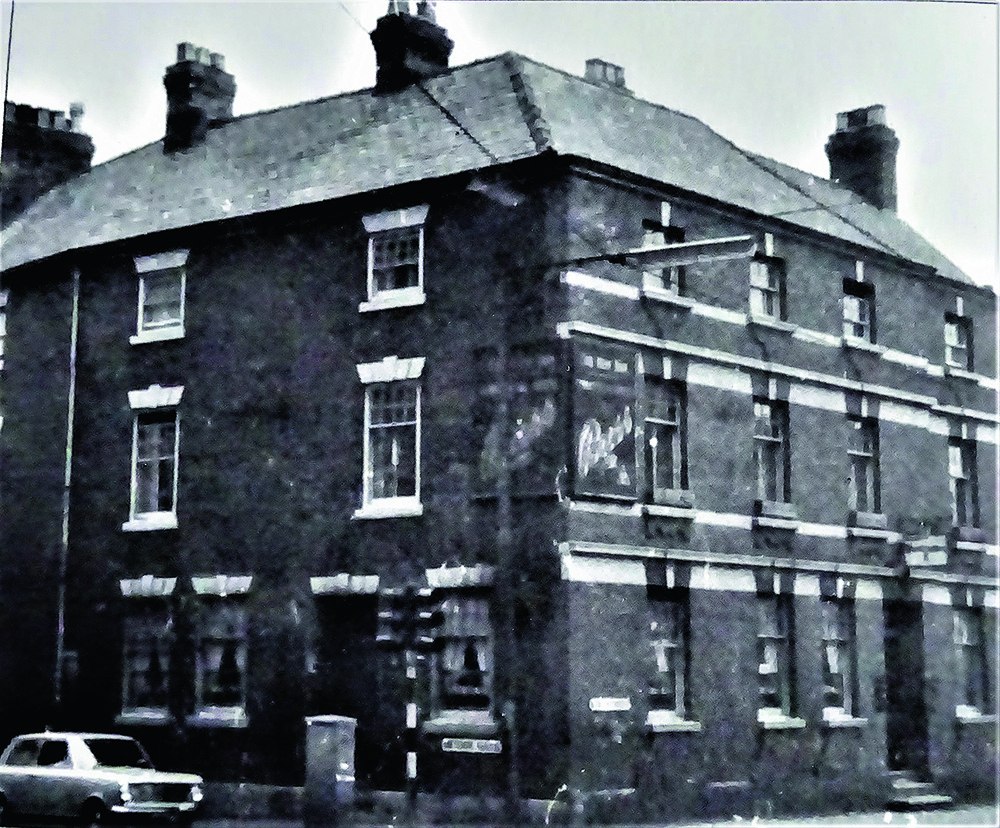
by Maxwell Craven I decided to take a break from country houses this month and mention a licensed house – not that I have run out of the former, but I felt a building as substantial as this merited inclusion, especially as it had a notable place in the history of local coaching and for its connections with the great and good of Derby. As one travels about and, from time to time, calls at inns for refreshment, one is often amazed by the number which style themselves coaching inns without the slightest justification. The coaching inn was, after all, effectively home from home for the well-heeled traveller, aiming to provide the sort of accommodation as a modest country house for the convenience of the inside passengers, extensive stabling for teams of horses, and accommodation for the crews as well. Frequently, the stops en route, rather than overnight ones, were done with enormous speed, such was the competition and tight scheduling on the turnpike roads of the 18th and 19th centuries. Hence, they tended to be spaced at approximately a half-day’s drive between each other on major routes and were mainly in towns and always in the turnpike roads rather than down narrow lanes. One of the last of the celebrated coaching inns in Derby to be built, between 1761 and 1766, was the appropriately named New Inn at the corner of Bridge Gate and King Street and opposite St. Helen’s House. Like the latter, it was probably designed by Joseph Pickford of Derby (1734-1782), although stylistic confirmation is not possible due to a thorough rebuilding some-time after 1873, when a part of it had been lost to street widening and a new façade was put onto the original two and a half storey brick building – and rather awkwardly, to boot, as its cornice stood forward of the roof eaves by a foot. The new King Street front, however, was handsome enough, the window openings almost certainly corresponding to those originally existing, although the sashes were of the upper leaf with glazing bars over plate glass type. Below, the sills were shaped aprons of rubbed brick which, with the playful interplay of string courses, banding and keyblocks, evoked the style of the young Alexander MacPherson (who was a Nottingham man with a busy Derby office) as having been the architect for the alterations. The side elevation was also re-fenestrated at the same time, but within the old openings with their rusticated lintels retained. The inn was built for George Wallis, a relative of Joseph Wright and of the Gells of Hopton; indeed, Sir William Gell is known to have stayed there when in Derby in 1793, on the occasion on which he painted old St Helen’s House from an upper window, giving us a vital record of its appearance seven years prior to its demise. The Wallises were probably the single most important inn-holding family in Derby’s history, and the New Inn remained in their family through three generations and four proprietorships. George Wallis (1694-1780) was the son of a John Wallis, both blacksmiths in King Street, the site of their works – almost opposite the site of the inn – being so occupied until the later 1960s. George’s son, George Wallis I (1731-1786) was a born entrepreneur, and probably had access to the funds he needed through his marriage in 1753 to Rebecca, daughter of John Clarke, a Nottingham Road maltster, whose family ran the Derby Brewery right through the 19th century. George had, though, been apprenticed to his father, becoming a freeman of the Borough in 1754, and initiated a series of stage coach and mail services from his newly founded inn from the start, buying up others’ routes and consolidating his hold both regionally and nationally in a remarkably short period of time. Notable amongst these coaches was the Derby Diligence (‘Dilly’), a service which, amongst others, he later franchised out (to the Bell in this case) simply because the New Inn could not alone cope by the dawn of the following century, with the pressure of all the Wallis services running through Derby. The ‘Dilly’ ran from Derby to Nottingham on Mondays, Wednesdays and Fridays at a fare for inside passengers of 4/- (20p). Wallis also had, by 1773, a mourning coach and hearse for hire and did a roaring trade in funerals and wakes. His sister, Sarah married Dr. Richard Wright, the painter Joseph’s older brother, in 1774 but the absence of any known portrait of a Wallis by the artist seems strange: perhaps they are out there still, but the identity of their sitters has got lost. On George Wallis’s death, he was succeeded by his eldest son William Wallis I (1763-1791). His wife was a cousin of Alderman Samuel Rowland, the co-proprietor of the Derby Mercury, and his elder sister, Sarah married Alderman Dr. Thomas Haden, Richard Wright’s young partner, later father-in-law of Kirk Boott, the founder of Lowell, Massachusetts, USA. Although Wallis died young, like his father, he left three children, of whom the only son, George Wallis II (1788-1834) was too young to succeed him at the New Inn but later married the widowed Mrs. Hoare and through this astute move became also the proprietor of the King’s Head in Corn Market, another much more venerable coaching inn. One of William’s daughters, Sarah, became related by marriage to William Billingsley, the celebrated Derby China painter, and through him to William Wheeldon, another China painter, whilst the other daughter, Anne, married one of Billingsley’s former colleagues, the talented George Robertson. In 1791, therefore, William Wallis’s widow Felicia took the inn over, but was quickly supplanted by her brother-in-law, Alderman John Wallis (1776-1821). He was a prominent Tory, the founder of the Derby True Blue Club (which, inevitably, met at the inn, but later at the King’s Head). He was also the All Saints’ team leader in the Derby Shrovetide football. He, too, ran a tavern, the Black Boy, St.
Walk Derbyshire – Around Kedleston, Woods & Parkland

Opening my latest copy of WALK DERBYSHIRE the seventh no less, I realised that the first walk in the guide took in much of Kedleston’s parkland, but less than half of its beautiful woods and plantations. As enjoyable as the walk maybe, it would be a great pity to exclude the extensive woodlands covering North Park and Hay Wood just across the ponds in front of the hall. A signposted path starting near North Lodge on the back road from Derby, winds its way in and out of woodlands. This is where mature oaks have grown for so long that the Ordnance Survey has confidently marked them on its maps covering the area between Quarndon and Kedleston. Starting from the National Trust car park to the rear of Kedleston Hall, at first the walk follows the hall’s access drive, round the front of the hall, and then down to the graceful bridge designed by Robert Adam to make a perfect foil for the view of the hall built to architect Paine’s plans. A long stretch of narrow lakes created by damming Blind Brook reach out on either side of the bridge, with the drive continuing, past a golf course before joining the main road at North Lodge, the main entrance to Kedleston Park. A path starting on the edge of woodland enclosing North Lodge, bears left along the edge of the wood before swinging left to follow the boundary of Bracken Wood. A narrow belt of trees shelter a side track which is crossed, (it leads to the estate‘s saw mill). On the far side of the track, the path continues, slightly uphill through Hay Wood for about three quarters of a mile in order to reach the head of the long line of narrow ponds. At this point the walk ignores a footbridge and bears left along the side of Upper Lake, where a seat offers both a resting place and a view opposite an attractive old boat house. Continuing beside the ponds, the bankside path reaches the Adam Bridge, and then crossing it to continue along the opposite side of the lower pond, as far as woodland sheltering the park. Entering Shady Oaks Wood, the way continues through what has been called Derby Screen and then winds its way upwards towards Vicar Wood with its attractively screened views of the south side of Kedleston Hall, continuing above its Pleasure Grounds where the privileged once took their ease. From here the path continues all the way back to the car park. Kedleston is one of the oldest stately homes in Derbyshire. Its founding was created by generations of Curzons who began to build in 1215, but only the Norman-style doorway into the church remains from that time. Loyal to King Charles 1st, John Curzon still managed to be made a baron. Under the family name of Scarsdale, the first Lord Scarsdale set about building what we see today after his elevation in 1761. Paine a prominent eighteenth century architect was employed to design the exterior and general layout of the rooms, and Robert Adam for the interior. In the manner of the time Lord Curzon had the old village of Kedleston moved away from the hall, only leaving the church door in memory of the old settlement. George Nathanial Curzon is the most distinguished member of the Curzons. He is best known as the Viceroy of India where he acquired many fabulous treasures such as the silver and ivory howdah and Lady Curzon’s fabulous Peacock Dress embellished with thousands of glittering beetle wings. It was designed for a special durbar held at Delhi in honour of the Viceroy. Normally these treasures are on display in the hall, but currently the National Trust has removed them for restoration. Lord Curzon was a keen supporter of the National Trust – he even bought an ancient castle in Sussex just to please his wife. Time should be allowed on this walk, in order to visit the magnificent stately home, one of Derbyshire’s finest. Please note that the museum is temporarily closed while many of its treasures, including the Peacock Dress, are being restored. USEFUL INFORMATION: A 5½mile (8.8km) of easy woodland and riverside walk on well-maintained paths. Chance of muddy sections around Vicar Wood after heavy rain. RECOMMENDED MAP: Ordnance Survey 1:50,000 scale, Landranger Sheet 128: Derby and Burton upon Trent. The National Trust also have a free map of Kedleston Park’s walks available at the Visitor Centre near the main car park. This walk combines parts of two of them. PARKING: Next to the Visitor Centre. National Trust members have free parking and entry into the hall, ACCESS: Minor side roads from Belper or Derby via Mackworth are signposted ‘To Kedleston’. REFRESHMENTS: National Trust café in Kedleston Hall close to the car park and Visitor Centre. THE WALK STEP BY STEP From the car park walk back towards the hall and then bear left down its access drive. Go past Bentley’s well in its surrounding iron fence, the last remnant of a failed attempt to create a fashionable spa at Kedleston. Cross the attractive bridge and admire the views up and downstream, plus the great hall topping the gently rising grassland grazed by the estate’s sheep. Walk on down the drive, with the estate golf course on your right – please note there is no access to the golf course, however tempting it might look. Within sight of the North Lodge entrance to Kedleston, look out for a footpath on the left, following the boundary of a small wood. Keeping with the path, bear left and leave the wooded boundary to cross an open field. Continue as far as a second wood and, on reaching it, turn left along its edge. Cross a minor side track and go forwards into Hay Wood. A reasonably straight path continues forward for about a quarter of a mile in order to reach the northern bank of the upper pond. Do
Celebrity Interview – Oddsocks

“Many people who struggled with Shakespeare at school must laugh when they see Oddsocks’ website. And that’s exactly what the Derbyshire theatre company wants its audiences to do.” A quote from a four-star review sits on the front page of the Oddsocks website proclaiming that it makes Shakespeare “such enormous fun”. There’s also the declaration that Oddsocks is “one of the UK’s best-loved touring theatre companies” serving up “entertaining, bold and adventurous adaptations of Shakespeare and classic stories”. That’s pretty impressive for a family-run business which survived the devastating effects of Covid-19 and is now preparing for a full-scale tour in 2023. Coronavirus meant Oddsocks had to perform online. Amazingly thousands of people around the world tuned in to see its work. But without any government funding, the company decided to be in greater control of its own destiny – by buying an old chapel which came with its own rehearsal space. Husband and wife Andy Barrow and Elli Mackenzie set up Oddsocks – the name stems from the odds and ends they used to do – in 1989. They’d met at the Webber Douglas Academy of Dramatic Art in London. They combined their classical acting skills with clowning techniques and by 1993 the different style of theatre they produced was so popular that they arranged their first summer tour. Since then they’ve taken two shows on the road most years. Artistic director Andy and creative producer Elli describe the challenges they’ve faced over the past decade. A typical married couple – they have been together 38 years and wed in 2002 – they often finish each other’s sentences as they talk with passion and dedication about their unusual life. Elli explains that about ten years ago they faced a crossroads: “We started to realise the challenge facing us was there were a lot of companies starting out doing work that undercut us. “They were fresh out of uni or drama school and there were a lot of people who were doing what we were doing but on a much smaller scale and therefore charging less.” Andy jumps in: “It was either a race to the bottom or invest, set ourselves apart and be a quality act . . .” “. . . and produce something which people would find hard to copy,” says Elli. That involved altering Shakespeare plays by taking out some of the text and replacing it with recognisable songs. Again, it proved a hit. “It was just getting to the point in 2019 where we were having another revelation and saying for various reasons this just doesn’t seem right any more, how do we change? And then the pandemic hit and decided it for us,” says Elli. “Six months of the year we were effectively on the road and six months of the year we were preparing to be on the road or recovering from being on the road!” laughs Andy. “Suddenly in 2020 you couldn’t go anywhere. You couldn’t do anything, you couldn’t work. So there was the initial fear of how do we pay the mortgage? How do we exist?” Oddsocks started by putting some of its old productions onto YouTube before hitting on Stay Home Shakespeare, live-streaming Macbeth, A Midsummer Night’s Dream and King Lear with only three or four actors. They roped in their children, 25-year-old Felix who’s a musician and Charlie, 21, who works in the creative industries, to take part both behind and in front of the camera. “It came at exactly the right time,” says Elli. “People had got over the novelty of not having to go to work and being at home to the point where they were saying ‘this is a bit dull, now’. “It was a hugely exciting thing to do. We had 3,000 people across the world watching Macbeth live from our little house in Darley Abbey which was quite daunting.” She admits that technically it was demanding because Oddsocks used the talents of two people who’d worked with the company as actors before they diversified. Key Ramsorrun mixed and edited everything live from Ramsgate while Kevin Kemp looked after the streaming from Los Angeles. That kept Oddsocks going for three months before the company returned to outdoor productions with socially distanced performances for Derby LIVE. But the prospects of facing another lockdown loomed large. Touring looked impossible and applications for funding were turned down. Andy outlines the decisions they had to make: “We thought that at some point we were going to run out of money to pay our mortgage, so we had to get another loan and load ourselves up or maybe sell the house. “The house market was going up and up. We thought we could sell our house in Darley Abbey so we worked out what we could pay and started looking around. It was quite depressing.” Eventually Andy and Elli came across Chapel House, built in 1671 at Upper Lea near Matlock and perfect for preparing Oddsocks’ shows. They successfully bid for it at auction. They rehearsed their next show at Chapel House and were able to stage half a dozen performances – but then that was cancelled at the last minute,” laments Andy. After that they had to get Chapel House ready to live in. “It was freezing cold, damp, dark and it was an adventure,” he recalls and relates how they came to know their neighbours who they’d not been able to get to know because of the pandemic. “A delivery driver tried to turn round in our garden and ended up slipping. So the neighbours came over and saw what was going on. We said hello and ended up towing him out with a Land Rover. “Normally we’d be seeing people all the time. It took a while to actually meet people in the area.” Last year Oddsocks was able to mount its first full summer tour since lockdown, The Comedy of Errors, returning to many of its usual venues including a ten-day stint at Coronation
Places Pevsner Forgot by Maxwell & Carole Craven
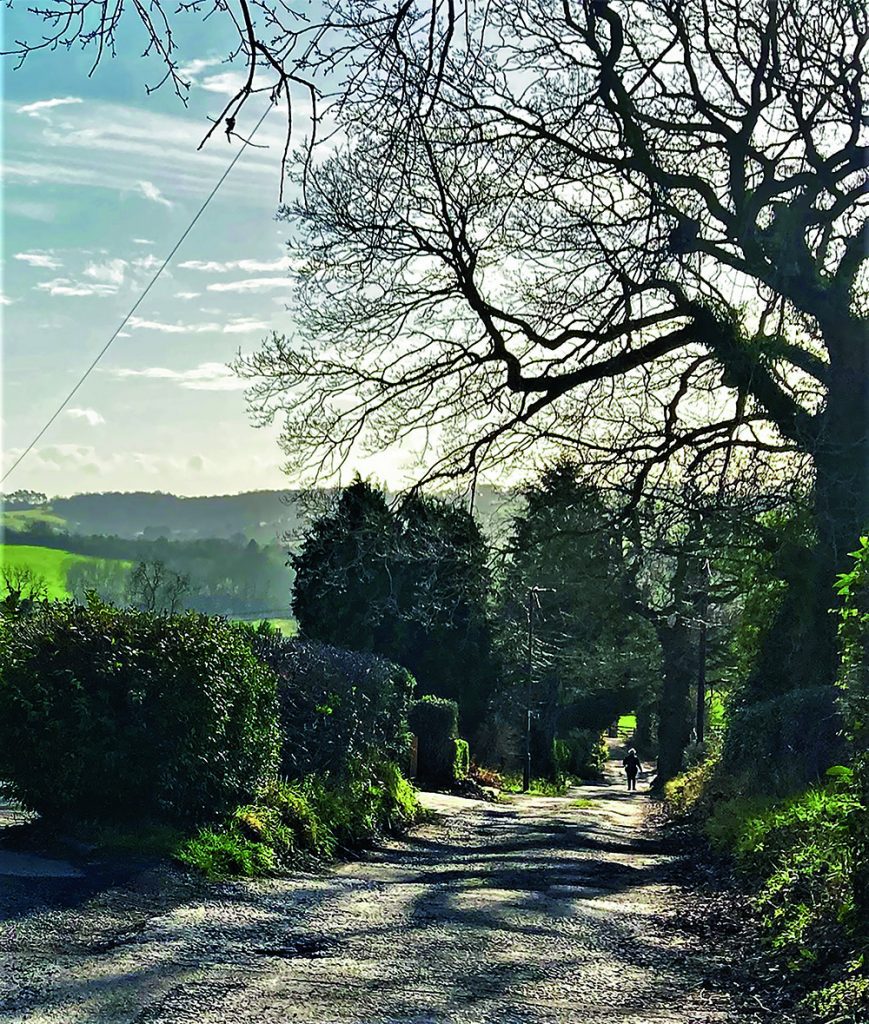
We supposed that Sir Nikolaus Pevsner missed Horsley Woodhouse because he probably travelled north along the Derby to Heanor road, and was thus able to enjoy Smalley, and on another occasion doubtless journeyed south west from Denby towards Coxbench (neither of which he missed) passing by Horsley Woodhouse at Four Lane Ends where that road crosses the Smalley to Kilburn Road (A609), upon which, straggling along a ridge, Horsley Woodhouse lies. Indeed, the ridge is relatively high and gives a superb view north towards Denby and indeed Ripley, and a less spectacular but more charming one into the shallow valley of Gipsy Brook running parallel to the south, in a vale called locally Golden Valley. One hundred and fifty years or so ago, it would have looked a lot different however, for Horsley Woodhouse was then a small mining settlement, coal mines, many of them adits, driven horizontally into the hillside rather than vertically downwards. Indeed, coal extraction probably accounts for the original settlement, first recorded as Wudehus in a fine of 1225 and as Horselewodehus in the patent roll for 1303. ‘Woodhouse’, essentially means the ‘house in a wood belonging to [the manor of] Horsley’ in which parish it lay until 1878. This house was probably later the residence of William de Stainsby, who settled there by inheritance at the east end of Golden Valley in around 1328. His house later became Stainsby House, the occupants of which, latterly the Wilmot-Sitwells, were local coal owners until the first part of the twentieth century. Indeed, the coat-of-arms of their predecessors the Fletchers, were adorned with miner’s dials, to advertise the source of their rise in status into the landed gentry! Driving along Main Street, one might be forgiven for dismissing the place as a rather dreary collection of 19th century miners’ cottages. Whilst this is to some extent true, there is much to enjoy in them and more so scattered amongst them. It is not easy to find a safe place to park, so we chose the car park of the Old Oak, situated about half way along on the north side, a pleasant stuccoed early 19th century building built in two phases, and recorded as a pub only from the later 19th century. Being reasonably responsible people, we called to refresh ourselves and asked the landlord if he would mind if we had a wander before returning for the car, to which he raised no objection; after all, it was a quiet day in mid-January. Thus fortified, we turned west, toward Four Lane Ends. Noting the stunning views to the north from a lane beside the pub. Here the houses gradually become early twentieth century although there are a few older ones, including an oddity, No. 121 (south side) a Victorian three bay villa turned into a bungalow with its first floor removed (perhaps after a fire?) but still displaying Flemish bond brickwork and a fine stone front doorcase. The semi-detached former council houses on the north side are well designed and matured well. The only interesting aspect of the village here is the Roman Road, Rynkneild Street, about the course of which we wrote in Country Images some years ago. This runs north-south here and is marked by a hedgerow to the north, but from the road only by the oddly off-line western boundary of No. 216. To the south, a track called Golden Valley (worth exploring if only for the glorious countryside) runs off parallel but it is otherwise not readily apparent, although also parallel to it to the west is a once fine terrace of cottages called Horestan Place, much marred by later alterations and ‘improvements’ but probably a lot easier to live in for all that. Returning eastwards, past the very useful Co-op, back past the pub, we noted No, 94 (south side), another cut-down former three storey dwelling, probably of around 1790 with posh lintels and keyblocks but again, reduced by a storey and even then, the surviving first floor has been further diminished in height. It suggested to us that the emphasis of the village economy had changed from a preponderance of agriculture and framework knitting to an increased mining population from c. 1800, causing houses to be reduced and in one or two instances subdivided into smaller cottages. Yet the age of this house did suggest that we were entering the original core of the village and immediately, on both sides the cottages are terraced with doors opening onto the street. Just beyond these on the left is a pretty impressive Arts-and-Craft house, 1920s rather than Edwardian, representing another of the settlement’s pubs, this time, long closed. This began as a beerhouse, the Knife & Steel, in the 19th century, but this ambitious rebuilding must have marked an attempt to go up-market – but to no avail, for it had closed for ever by the outbreak of war, to be converted into two houses called – inevitably Knife and Steel. Just beyond, we found Fairfield Road running downhill to the north, a chance to discover what delights might lie behind the main drag. We were not disappointed, for beyond further mid-19th century and later miners’ cottages and a post-war estate, we encountered The Crescent. Situated at virtually the lowest point we found what is surely the oldest surviving building in ‘’Ossly Woodus’: a stone-built cottage with much altered fenestration – amazingly un-listed. This was built, presumably in the 17th century (or earlier) and was for many years the Old Knife and Steel, prior to being re-named the New Inn, when its name migrated to the pub on Main Street. The building is dated 1672 on a chimneypiece, the front door and upper windows have been neatly blocked and an extension added: a very attractive ensemble, again with wonderful views from the rear. Further along Main Street, a plethora of new walling and gate-piers marks Willow Grove, an early Victorian villa recently rebuilt almost out of recognition, but the local doctor’s
The Lost Houses of Derbyshire – Old Kedleston Hall by Maxwell Craven

No-one knows what the ancient hall at Kedleston looked like, except that it was built before 1198 by one the earlier Curzons, which family had inherited the estate by 1100 probably through marriage from the Domesday Book holder, Wulfbert, who held it from Henry de Ferrers. We do know, however, that a new house had been built by about 1600, but whether it was an Elizabethan prodigy house, or a late Medieval pile, we do not know, only that by 1664 it was taxed on a pretty substantial 22 hearths, making it about the same size as Calke Abbey and Drakelow then, both of which were taxed on 23 and both of which have either gone or been rebuilt entirely. Barlborough Hall, a miniature version of Hardwick is the only house in the county to survive of equivalent size, having been taxed on 21 hearths. However, the Curzons, by 1641 honoured with a baronetcy, decided to replace the house entirely around 1700, and the resulting very handsome house had been completed before the end of the decade, for it was described by county historian William Woolley in 1713 as having been ‘built a few years ago’. He then goes on to describe it as ‘a very useful noble pile of building of brick and stone on a little eminence which is pretty conspicuous,two of the fronts are to be good building.’ A painting fortunately survives, showing the house as it was about 1750, surrounded by its brick stables and late Medieval or early Tudor outbuildings, the latter closely resembling those once at Markeaton Hall, being of box-frame timber on a buttressed stone plinth. The house was of two storeys and attics, with hipped roofs punctuated by dormers, and with projecting full height pavilions at the angles. One or two windows appear to have crossed mullions and transoms, and most have pediments, possibly added later. As the family would have had to reside in the house’s predecessor during building, we presume that it was erected on a new site, probably slightly to the west of the old one, hence the proximity of the church to the present house, a similar situation to that prevailing at Sutton Scarsdale, where the parish church (which after all originated as a domestic chapel) was perilously close to the south front. Perhaps the National Trust should have taken advantage of the dry summer to fly a drone over the site to see if any vestiges were showing up under the parched grass – but then again, they were probably too busy fighting their culture wars. Fortunately, a plan also survives, confirming the existence of the two bay pavilions at the angles, much like those at Calke Abbey, built at a similar date, and establishing that each symmetrical front was nine bays wide. The real prototype of this plan lies with Robert Hooke’s Ragley Hall, Warwickshire of the 1680s, and William Smith had used a variant of it already at Umberslade, in the same county. The entrance, to the south, gave into a spacious hall with a second large room, the saloon, beyond which was a lobby from which steps led down to the north terrace, where today’s main entrance is. Three of the pavilions contain a staircase, whilst the SE one merely houses the breakfast room. The west front, facing the church, consisted of a columned loggia. We know the architect was either William or Francis Smith of Warwick (probably the two working together, as at St. Modwen’s church, Burton), because the painting, which hangs in the SE quadrant corridor of the present house, is so titled, but we do not know of the precise date of building nor which Smith designed it. Two celebrated craftsmen worked on the house, the Derby plasterer Joshua Needham and joiner Thomas Eborall, the latter charging a considerable £63 – 10s – 6d (£63.521/2). This building is usually assigned to Sir Nathaniel Curzon 2nd Bt. (1635-1719) who in 1671 had married Sarah, daughter of William Penn, whose kinsman gave his name to the American state. Yet he was already 51 by the time he inherited, and a dizzying 65 (for the time) when the house was probably started. Why would he go through all the upheavals of building a whole new and very grand house at that age? His two sons John and Nathaniel, though, were 26 and 24 respectively, and the elder, a barrister, was elected Tory MP for Derbyshire in 1701, and one suspects was the driving force behind the move, no doubt supported by his brother, who entered Parliament for Derby just when Woolley was writing about the house, in 1713 and whose Parliamentary career continued until 1754. Woolley, in his account of the house includes an odd passage, writing, ‘There may be, perhaps, some deficiency in the roof as some critics have reported’ which is quite strong criticism for the time, but might well be the reason why Francis Smith had to return in 1724 and charged £54 – 1s – 0d (£54.05) for ‘alterations’. This visit may well have been to re-design whatever fault was found with the roof, at the behest of Sir John, 3rd Bt. Sir John also called in Charles Bridgman to design new park and gardens in 1724, and James Gibbs, fresh from designing Derby Cathedral, to design garden pavilions. Yet the house cannot still have been entirely satisfactory, for whilst Gibbs was there, he was asked to design a whole new house too, but Sir John died in 1727 and was succeeded by his brother, Sir Nathaniel, 4th Bt., whom he succeeded as MP for the county. Gibbs’s new house and the garden pavilions were set aside but instead, Francis Smith was called back again to re-design the interior of the house that same year, possibly on Gibbs’s recommendation, as the two frequently worked together (Smith as Gibbs’s contractor at Derby Cathedral, for instance). This must have been very drastic, for work did not conclude until 1734, which cost a
Looking Around Duffield
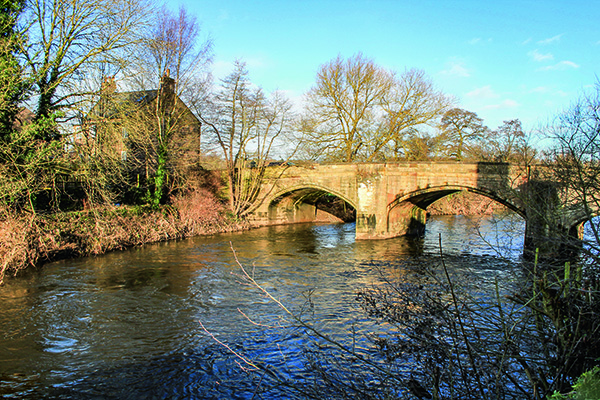
Leafy side roads lined with pleasant houses, home for many Derby commuters, fill a sheltered hollow where the Ecclesbourne meets the River Derwent. Regular flooding by the latter meant that development was kept well above the water meadows lining both sides of the meandering river. After the Norman Conquest, the village became a kind of administration centre controlling Duffield Frith, a royal hunting forest, but the only reference to its earlier Saxon occupation was in the Domesday Book when Duvelle was part of the Wapentake of Morleyside. It was in this time that foundations of the parish church were laid close to the river crossing at the opposite end of the to, and closer to the river. Dedicated to the eighth century martyred Northumbian prince St Alkmund, the church is one of only six in the country. Its position, well away from the town and close to the flood plain is explained by its original purpose, as a place of refuge for travellers crossing the hazardous River Derwent. The scant remains of a castle that once had one of the tallest keeps in Britain, stand above the north end of the village. In medieval times Duffield’s purpose in life was serving the needs of royal huntsmen who came to enjoy the chase across the Chevin and beyond. Until the 13th century wolves abounded in the area and one of the jobs of the steward in charge was to prevent them killing off the fallow deer. Duffield Frith extended from Wirksworth and the then tiny hamlet of Belper in the north, through Heage, Mackeney and Hazelwood and across to Windley. Hardly anything remains of the castle built by Henry de Ferrers. Standing on a high earthen mound above what is now the A6 before it crosses the railway line near Chevin Golf Club, there are only a few stones left plus the top of a deep well to indicate the position of the motte and its outer bailey. Originally the settlement’s main occupation was farming. Flaxholme, the area a little to the south of the main village was where flax was grown, providing textile fibres before the advent of cotton. Many of the farm houses still standing in and around the village date from at least the seventeenth century. Ashtree Farm on Duffield’s main street occasionally has cattle that seem to hark back to older times. These are English Longhorn Cattle, a beef breed whose long curling horns seem to hint of a certain wildness; wild they may look but they are remarkably docile, even if not exactly disposed to being photographed. Nearby textile magnates like Richard Arkwright and Jedediah Strutt provided cotton thread for the framework knitters who comprised the non-agricultural workers and Duffield’s gradual expansion took place in three stages. The first was when the Derby to Chesterfield turnpike replaced the old coach road on the far side of the valley in the 18th century. Several of the older buildings in and around the centre of the village date from this time and at least one of them, Archway House looks very much as though it was originally a coaching inn. The second phase was when the railway came to Duffield, offering communications into and out of Derby. This eventually led to the third and currently the greatest spread of residential properties. Starting at the north end of the village where the A6 crosses the main line, the first feature is the Chevin Golf Club and its carefully manicured greens. Next come the castle remains, the stronghold of Henry de Ferrers, steward of the royal hunting grounds. It is reached by a short flight of steps through dense undergrowth currently being cut back by the National Trust. A nearby descriptive poster shows that the scant remains look as though the castle was composed of an outer wall surrounding a palisaded tower on top of a man-made earth mound; a stone beehive structure now protects the top of the castle’s well. The main road leads through the village centre where an attractive line of shops and pleasant cafes provide for both residents and visitors alike. Just before the road swings left to cross a railway bridge, there is a side road off to the left. This goes down to Duffield’s two railway stations, but main line trains do not stop here. The Derby to Matlock trains do however, and are well used by commuters and shoppers travelling to and from Derby. The second station is adjacent, but no longer connected to the mainline. This is the southern terminus of the Ecclesbourne Valley Line from Wirksworth. Unlike many post-Beeching closures, the line was abandoned piecemeal, first to passenger services in 1947 and then to freight in 1964, but even then the line was kept open for occasional goods traffic until 1989. In 1992 a group of enthusiastic volunteers got together to found Wyvern Rail; keeping the history of the line alive by using the original logo of what became the London, Midland and Scottish Railway. Gradually and with thousands of voluntary man-hours’ labour, by 2011 the ten-miles of track was finally reopened from Wirksworth to Duffield. Running to an advertised timetable of five return trains each way, it is now possible to enjoy the unspoilt scenery of the little known Ecclesbourne Valley. For train times and running days together with details of special events throughout the year, check the web site – www.e-v-r.com Known only to narrow gauge railway enthusiasts, from 1874 until 1916 there was a fifteen-inch mile long narrow gauge track on the far side of the valley directly opposite Duffield’s twin stations. This was the brain child of Sir Arthur Heywood who lived at Duffieldbank. Something of an experimenter he not only used the line to link nearby quarries as well as running passenger services, he also saw the military advantages of the quickly laid track and lightweight rolling stock. Despite the ‘blimpish’ attitude of the military, narrow gauge railways systems were used extensively to
Product Test – Miller Harris

For more information and to buy online visit www.millerharris.com Scherzo Body Wash £24 Lose yourself in your own story with the unique character and intensity of our Scherzo Body Wash. Every lather unleashes a new chapter of lavish richness with the heady combination of Davana, Patchouli and Oud. With coconut extracts and vitamin E to nourish, and floral energy to excite, every shower becomes a plot twist that leaves your skin silky and your mind intoxicated. Scherzo HandCream £22 Delve into the dramatic sensation of our intensely scented Scherzo Hand Cream. The complex characters of rose, oud and patchouli meet the richness of shea butter, argan oil, glycerin, and aloe vera in a story of sensorial pleasure for the hands. Tell a tale with every application; the plot twists are sure to be many. Scherzo Body Cream £40 Adorn yourself with a vibrant and heady cloud of scent rich with bold contrasts. Sweet, sugar flowers and opulent roses dance beneath a haze of smoky oud and golden olibanum, creating an intoxicating and addictive signature. Scherzo Body Cream is richly scented and nourishes the skin with shea butter, coconut oil and organic argan oil, skin softening vitamin E and vitamin B5, and white tea extract, leaving it smoothed and moisturised. PRODUCT TEST :: PRODUCT TEST :: PRODUCT TEST Body Cream “Superbly scented body cream which leaves the skin nourished and feeling soft.” – VP Hand Cream “This lightly scented cream that reminded me of sitting in a floral garden in the middle of summer. I found it a good moisturiser and yet it didn’t leave my hands feeling sticky but nice and smooth” – JP Body Wash “Gorgeous body wash. It smells so amazing and it lingers on your skin long after you use it, a small amount makes a rich lather. Highly recommended” – CB 00
Lunch at Meynell Langley

There aren’t many of them left; I’m talking about nurseries. Not the ones where you abandon your offspring but the places where you can buy plants that have probably been grown from seeds or cuttings by the person who served you. The family-run Meynell Langley Gardens is one such place. It’s a retail nursery and tea rooms offering a wide range of garden plants, trees and shrubs. Susan and myself visited the nursery on a week-day lunch time. In our own garden I’d moved a Victorian, crown topped chimney pot from obscurity at the side of the shed to a more prominent position close to the house. We wanted to use it as a planter… but needed a plant. Meynell Langley Gardens is an ideal place to combine lunch, plant shopping and a chat with knowledgeable staff. Pot plants, herbaceous perennials and bedding plants are all grown and sold from the nursery. The evidence that it’s a working nursery is all around you and to my eyes, a welcome sight. The nursery’s tea room, close to the entrance, is a purpose built summerhouse of generous proportions complete with air conditioning. The first thing you notice as you enter the huge café come summerhouse, is the extensive display of cakes and scones and the lunch menu displayed on the wall. One of the friendly staff explained that we could sit at any vacant table, make our lunch selection, order at the till and the lunch would be served at our table. And what a selection! There are paninis with a choice of five different filling: bacon and brie, tuna and cheese, Stilton and apple, mozzarella and tomato or good old fashioned cheese and onion. All served with a salad garnish. 3 types of quiche: Cheese and onion, Stilton and broccoli or the classic Lorraine; served with salad, coleslaw and chutney. Two very popular dishes on the menu are the homemade lasagne and a fish platter of salmon, mackerel and prawns dressed with Marie Rose sauce. I chose one of the salads that are on the menu: the ploughman’s. A very filling and tasty lunch. There were two large wedges of cheese: a mild and tasty red Leicester and a full flavoured crumbly mature cheddar along with a small tub of dark pickle. A small pork pie accompanied by pickled onion and beetroot. To offset the sharpness there was mound of sliced dessert apple. A creamy homemade coleslaw, a fresh salad, potato crisps and a couple of slices of wholemeal bread completed the plate. The other salads are ham, prawn or tuna. Plus a Greek salad with feta, black olives and a balsamic dressing. Susan selected the jacket potato with prawns in a Marie Rose sauce. The potato skin was crisp and the inside fluffy. A generous portion of prawns, in the classic delicate pink sauce, was served in a separate dish enabling you to top up the jacket as you progressed through lunch. As with the other fillings of cheese, beans and tuna the plate was garnished with coleslaw and salad. If you’re looking for something a little lighter for lunch there is a selection of sandwiches including ham, tuna and cheese. Plus, for the more chilly days, a fresh soup. And after the hearty lunch if you need a dessert there are three all time favourites to choose from: hot apple pie, chocolate sponge or sticky toffee pudding. Fully fed and watered (we’d ordered a large cafetière to drink with lunch) we decided to take a stroll through the Meynell Langley Trial Garden. It’s attached to the nursery and used as a showcase for their finest, home-grown produce, from bedding plants to fruit trees. With it’s imaginative planting ideas and a large pond fed by an elevated rill, it’s a garden layout that encourages you to sit and admire the carefully constructed views. Seeing garden ideas like the grass path edged with clipped box and espalier apple trees makes you want to try them in your own garden. The Trials Garden is well worth a visit. There are also regular open days for the National Gardens Scheme charity. Later in the year there are demonstrations of fruit pruning and interestingly, apple tasting days. Plus autumn bedding ideas followed by their home-made wreaths, poinsettias and cyclamen, so completing the gardening year before they start sowing again for the next year. The nursery is on the outskirts of Derby between Kedleston Hall and Kirk Langley and the tea rooms are open daily from 10 a.m. till mid-afternoon serving delicious homemade cakes and cream teas along with the hot and cold lunches. Meynell Langley Gardens, Lodge Lane, Kirk Langley, nr Derby DE6 4NT tel. 01332 824358 00
Walk Derbyshire – Bretton Clough

Starting from a popular pub, the Barrel Inn, which is the focal point of the hamlet of Bretton, a small hamlet high on Eyam Edge, the walk enjoys delightful views over the surrounding countryside. Wooded valleys, one of which, Bretton Clough, is the focal point of this walk. By tradition Bretton Clough is where the last Britons lived. Unfortunately there is no evidence to support this story, but it is good to imagine these ancient Britons holding out against the invading Roman legions, invaders who came this way in search of lead, for which they planned to use local tribesmen as slave labour. The only proof backing this legend are the remains of a Roman fort called NAVIO near Bradwell, an ancient lead mining settlement. Two historic small towns or villages lie close to Bretton Clough. Eyam to its south east has gone down in history as the village which managed to stave off the worst rigours of an outbreak of the dreaded plague by isolating itself for over two years. Bretton Clough points the way to a much larger village, Hathersage. It became Morton in Charlotte Brontë’s Jane Eyre. She also used places such as North Lees Hall as settings for much of the ever popular story-line. Earlier still, Hathersage is said to have been the home of Little John, Robin Hood’s friend and right-hand man. Who this man as is uncertain, but a grave close to Hathersage church door, when it was excavated, proved to contain the skeleton of a very tall man, as confirmed by his 32 inch thigh-bone. Both these villages can be seen from views over the northern portion of the White Peak, together with the gritstone outcrop of Stanage Edge escarpment filling the eastern distance beyond the walk. Gliders soaring gently on thermals above Bretton Clough and Hucklow Edge are from the local gliding club. Many by skilful use of updrafts manage to circle Mam Tor at the head of the Hope Valley before returning to their hilltop landing field. Bretton Clough itself is too steep to farm and, as a result the land is given over to natural scrubland favoured by a wide range of birdlife. To reach this attractive area, the way from the main roads is via the almost hidden side road through Eyam and then up on to Eyam Edge by way of Mompesson’s Well, one of the places where money was left in return for essential goods by the brave young parson who kept his flock together throughout the horrors of what could have ended in total disaster. A left turn near the well joins a narrow road just waiting to be followed all the way to the Barrel. The walk turns back along the edge-top road, before swinging left to descend into Bretton Clough. It follows farm tracks and moorland paths, downhill into the bottom of the Clough. From here a wide path climbs alongside Abney Clough as far as its namesake hamlet. A left turn here for about 220 yards joins a field path going back downhill into Bretton Clough. By crossing the valley bottom stream, where the start of the last climb begins, it rises by a meandering path as far as a remote cottage whose driveway joins a narrow lane. A right turn along this lane passes the now privately run Bretton Youth Hostel on your right. This is a pleasant spot, ideal for families and small groups enjoying a break in these delightful surroundings. The Barrel Inn stands beside the junction of the lane and the road along Eyam Edge, the perfect place to finish this perfect walk. USEFUL INFORMATION: A moderate walk over 5 miles (8km) of moorland paths with two fairly steep climbs. RECOMMENDED MAP: Ordnance Survey Outdoor Leisure 1: Sheet OL24; The Peak District, White Peak Area. CAR PARKING: Barrel Inn, or nearby roadside if not planning to visit the pub. PUBLIC TRANSPORT: Busses from Sheffield and Chesterfield. REFRESHMENTS: Barrel Inn at the start and end of the walk. THE WALK – STEP BY STEP Follow the edge-top road uphill and away from the Barrel Inn for a little under half a mile in order to reach a side track on your left. Turn left on to the track and follow the walled, grassy way, keeping ahead at a track crossing. Go past a small wood and out into open fields. Keep well to the left of an old farmhouse. Follow a grassy path on the right of the first of a trio of pine plantations and go through the second, and then right again at the third. After half of a mile, bear left at a path junction and go over a stile, then turn to the right along a grass-topped, rocky terrace in order to walk down into the valley bottom at Stoke Ford, which is where Abney and Bretton Cloughs join. Cross Bretton Clough and follow a field path beside Abney Clough, going steeply uphill until the stream makes a sharp left turn. Take the streamside path uphill, bearing right in its final stages in order to reach Abney hamlet. Turn left and walk along the village street for a little over 200 yards. Beyond the last houses, turn left over a stile signposted to Nether Bretton. Walk steeply downhill, keeping left past Cockley Farm and out into the valley bottom, following waymarks over a series of meadows. Cross two plank bridges and follow the path steeply uphill through unspoilt scrub. At the top of the hill go to the left of the cottage, keeping between it and an old barn. Reaching the surfaced lane, turn left to walk uphill, past the hostel and turn left at the road junction, directly next to the Barrel Inn. 00