The World’s Greatest Accidental Explosion

Brian Spencer investigates the worst military disaster to occur on British Soil. The Ordnance Survey map for Derby and Burton on Trent shows a strange feature in the countryside near the village of Hanbury, a little to the west of Tutbury, in Staffordshire. It is oval in shape and obviously deep, but too small for a quarry. As it is certainly not natural and as it intrigued us, we had to investigate. Following the success of D-Day five months earlier, by late 1944, the war in Europe was going well for the Allies; local soldiers from north Midlands’ regiments were slogging their way steadily through the Netherlands and into north-west Germany. Italy had capitulated and a joint task force of American and French air and sea-borne troops, part of Operation Dragoon were clawing their way through Central France, steadily overrunning determined German defences. At home, excitement was building up as pupils from Hanbury’s tiny village school began to look forwards to the December holidays. In the ground deep beneath strata running roughly east-west between Hanbury and Tutbury is composed of alabaster and gypsum, valuable forms of limestone used for purposes ranging from plasterboard, to plaster of Paris. A worked-out section of this area was used by the RAF as a bomb store. It was run by a labour force composed of RAF technicians based nearby at RAF MU 21, plus civilians and Italian prisoners of war, POWs. Being out of the war and mostly non-fascist, the latter were only too happy to help the allied cause. The bomb store was a busy place with ordnance personnel supplying bombs for the steady pounding of German industries and cities taking place day and night, almost non-stop, using thousands of tonnes of high explosive and incendiary bombs. Stores of unprimed bombs came by rail directly from manufacturing points throughout Britain, perfectly safe, that is until primers were installed prior to loading into the bomb bays of heavy bombers such as the famous Lancasters. Unfortunately this system was not fool-proof, unused, but still primed bombs had to be taken back into store with their primers removed, a potential reason for subsequent failure. On a typically dull November day, with children in the village school settling to their lessons, and everyone going about their everyday work; at 11:11 a.m. on Monday 27 November 1944 a massive explosion rent the air as the RAF bomb storage depot at Fauld near Tutbury exploded with a power that was heard scores of miles away; the seismic disturbance was even recorded at the Moroccan national laboratory in Casablanca. The explosion was caused by the spontaneous detonation of upwards of 4000tons of high explosive bombs and 500million rounds of rifle ammunition stored in the underground storage depot, in a disused gypsum mine beneath Upper Hayes Castle Farm near Fauld. How it happened will never be known, but it is suspected that it was triggered off by someone accidentally letting a primed bomb fall on its nose, or maybe using a wrong tool to remove the primer from a bomb on its return to store. This triggered off the largest explosion ever to happen prior to the atomic bombs dropped over Nagasaki and Hiroshima. The Fauld explosion is said to have killed around 70 people both above and below ground. The crater when the series of linked explosions finally stopped was about three quarters of a mile in circumference and a hundred feet deep. Alongside local people as well as the RAF technicians, inexperienced Italian POWs had been drafted in from nearby prisoner of war camps. Whether it was one of these unskilled workers who accidentally caused such a catastrophic explosion will never be known. Maybe one of the live bombs on being returned fell on the floor, or what is more likely, someone was clumsy while unscrewing a primed detonator. Whatever the cause, the result was a huge loss of life. One subsidiary theory voiced during a later enquiry was that it was known for workers unscrewing the detonators to use brass tools rather than wooden mallets as strictly instructed. Metal on metal could easily have caused a spark. Eyewitnesses on the fateful day reported seeing two distinct columns of black smoke in the form of a mushroom cloud rising several thousand feet into the sky; they also saw flames pouring out of the ground at the base of the column. According to the commanding officer of RAF 21 MU at the time, Group Captain Stores, there was also an open dump of incendiary bombs nearby which caught fire, but it was allowed to burn itself out, causing no further damage or casualties. All the loss of life and damage was the result of the underground explosion. 52 civilian workers, RAF technicians and Italian POWs were killed outright and another 18 died on the surface. Almost all the houses, together with the village school in nearby Hanbury were severely damaged and the village pub, the Cock Inn had to be completely rebuilt. Upper Hayes Farm that stood more or less directly above the explosion simply disappeared, killing seven people and all the farm animals along with wrecking farm equipment – the farm was literally wiped off the map. A nearby reservoir containing 450,000 cubic metres of water was breached and the subsequent flooding caused further damage to nearby farms and lime works further down the valley. Fields in the surrounding area are still littered by debris contaminated by gypsum, leaving poor grazing where once lush grass flourished. As bad as it was the explosion could have been far worse if it wasn’t for the fact that the storage areas were separated by impenetrable rock barriers left when the gypsum mine was dug. At the time there would have been upwards of 129,000tons of bombs in store, but only a third of them exploded, enough to cause the biggest explosion ever to occur in Britain. Since 1944, the land taken up by the crater has been made as secure as
Celebrity Interview – Andy Hamilton
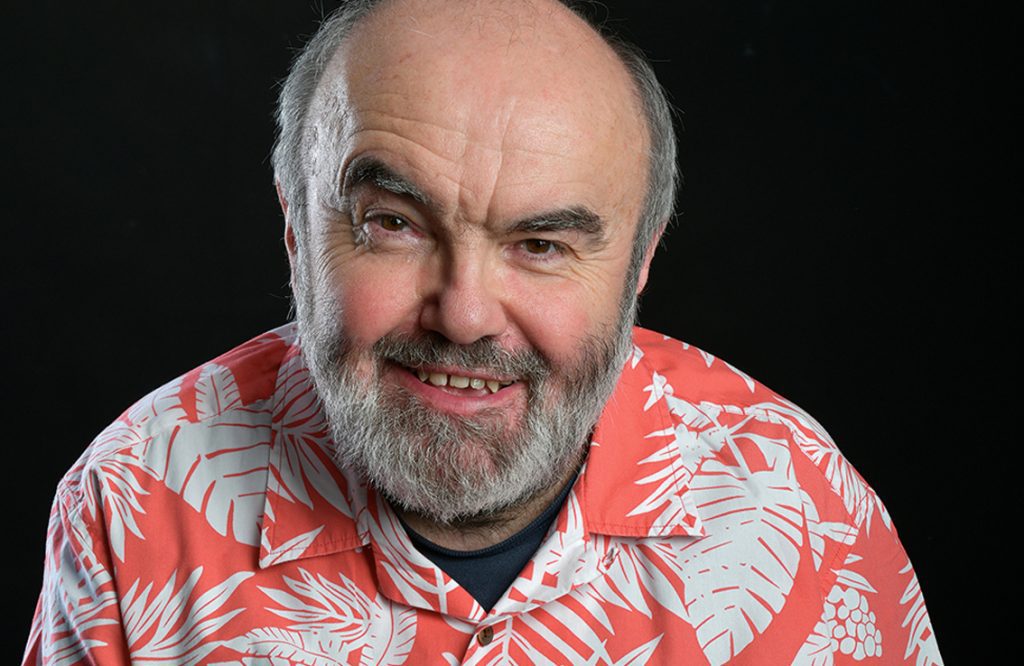
Andy Hamilton is holed up in a hotel in Ireland. A week’s holiday with his wife Libby has turned into a fortnight because both have caught Covid. But he assures everyone he’ll be fine for the start of his new tour in Nottingham. He has managed to avoid the virus for two years and describes it as “just like a nasty bug” and “we could be in worse places.” The man who’s known as a comedian, writer and game show panellist – he can often be seen on the BBC’s satirical programme Have I Got News For You – was unable to tour during the pandemic. So he’s delighted to be getting back on stage and entertaining audiences again. “I did various methods of doing a show virtually where there was an audience but you could hear them only a second after you’d said something. “So having real, live human beings sitting there, interacting with them – there’s no substitute for that.” Obviously laughter will be a key ingredient of An Evening Out With Andy Hamilton. In the first half he will talk on various subjects and have fun with the audience. “At the interval I leave a bucket at the front of the stage and invite the audience to write down questions and put them in the bucket. So the second half is constructed entirely around the questions that the audience ask me. “On a good night you get a really interesting mix of questions and for me that’s fun. It stops the show getting into a routine, keeps it fresh and quite often I end up talking about things that I know nothing about.” Andy admits the experience of having to live on his wits is to a certain extent similar to a particular television show. “Have I Got News For You is edited so it always makes you look quicker than you actually are. “I’m 67 now and I’ve got quite a big reservoir of stories, experiences, opinions and jokes, so I’ve got quite a lot to draw on. I enjoy it and it’s lovely for me to meet the audience who watched Outnumbered or Drop The Dead Donkey or listened to Old Harry’s Game or The News Quiz on Radio 4. Andrew Neil Hamilton was born on 28 May 1954 in Fulham. He read English at Downing College, Cambridge where he was a member of the Cambridge University Light Entertainment Society. His early work was on radio, mainly Radio 4. He is renowned for creating the sitcom Old Harry’s Game and played the lead role of Satan. He has also had considerable success on television, coming up with shows with his writing partner Guy Jenkin including the comedy Drop The Dead Donkey, set in the offices of a fictional TV company; five series of the sitcom Outnumbered starring Hugh Dennis and Claire Skinner; and their most recent success Kate And Koji, featuring a working-class café owner in a neglected coastal resort who develops a strong friendship with a regular customer who is an asylum-seeking doctor. Andy says Guy is “lovely” to work with. He explains the idea for Kate And Koji was formed over several conversations and they wanted to write a sitcom about an asylum seeker, a sympathetic figure who would get a lot of love from the audience. Brenda Blethyn, known more recently for playing Detective Chief Inspector Vera Stanhope in the crime drama series Vera, is also a comedy actress. Both Andy and Guy had worked with her in the past and thought she would be ideal for the role of Kate. “Luckily we were able to get her. She’s a brilliant actress. There’s nothing she can’t do. I would work with Brenda any day of the week,” says Andy. He is keeping his fingers crossed that Kate And Koji will be commissioned for a third series. He admits that the most difficult part of his job these days is getting TV companies to stump up the money so that he can make programmes. “You’re competing with lots of people. Money is spread more thinly across different outlets. It’s a more chaotic environment than it used to be. I don’t think there’s necessarily less money – knowing where to find it is a little bit harder. “There are a lot more platforms and a lot more channels so it’s become more complicated for both the viewer and the programme maker. It’s still fundamentally what it always was which is a mixture of very good stuff and terrible stuff. That hasn’t changed. There’s never been a golden age and there never will be.” While Andy is recognised for his scripts, he has also written a book called Longhand – a novel published in his own handwriting. “It’s unique in that it’s a novel published in my handwriting. We think it’s the first work of fiction to be published in manuscript since the days of the Venerable Bede. It’s about a huge Scotsman with a secret. “It’s in the form of a very long letter that a man is reading to the woman he loves explaining why he’s had to abandon her and it just felt right for it to be in handwriting.” He reveals that Longhand stemmed from a visit to the British Library where he saw a letter from Queen Elizabeth I to her courtiers explaining why she felt she should be allowed to decide who she married. “As she gets more and more angry with them there’s more and more crossing out. I thought it would be interesting to write something where you could see the state of mind of the writer actually in the handwriting. It’s a great story as well.” By the wonders of technology the novel is even available as an ebook! Andy writes left-handed after having the thumb removed from his right hand when he was a child. “It was a congenital defect – it wasn’t a practical joke! “I trained myself to be left-handed. But when
The Lost Houses of Derbyshire – The Grove, Darley Dale

The name Alsop (with multitudinous variations of spelling) is by no means uncommon in Derbyshire, if only because it derives from an unique place name, Alsop-en-le-Dale, next to Parwich, just north of Ashbourne. The Alsops had a Norman or Norse ancestor, called Gamel (probably derived from the Latin for ‘twin’- gemellus), who took his name from the place when granted the sub-tenancy of the manorial estate there by Henry de Ferrers before 1086. His descendant remained there until poverty forced a sale in the late 17th century and a tall portion of the family’s Elizabethan house remains as an ornament to the village to this day. As the place name is unique, it is likely that all Alsops today descend from Gamel, although you would need to DNA test everyone bearing the name to establish that most were actually of the same blood, so to speak. Furthermore, the preservation of the uniform spelling of names was in the hands, before the 1870 School Board Act, of semi-literate parish clerks which is why many surnames have sometimes quite extraordinary phonetic variants. With the Alsops, it rested with the duplication or otherwise of ‘l’s and ‘p’s. Hence, TV personality Hon. Kirsty Allsopp and her ancestors, back to Derby tobacco merchant Thomas, all spell with two of each. When her ancestor, Sir Samuel Allsopp, Bt., 1st Lord Hindlip, was first ennobled, he wanted to take the title Lord Alsop of Alsop, but he failed to establish his descent from the ancient family, and the Heralds in 1886 refused and whilst such a descent seemed likely, lack of proof forced him to take the name of his Worcestershire country house, Hindlip Hall (now the West Midlands Police HQ) as his title, becoming ‘Lord Hindlip of Hindlip and of Alsop-en-le-Dale’ (of which parish he had thoughtfully acquired a modest amount of land). He also had to accept changes to the historic coat-of-arms. Back in Derbyshire, lead trader John Alsop of Snitterton who wrote his will in 1798, was a similar case. His descent, possibly from Luke Alsop of Wirksworth, living in 1693, cannot be provably traced to Alsop-en-le-Dale either, although for all his family’s skyrocketing wealth, he was never offered a peerage! John Alsop had two sons, the elder Anthony, was barmaster (legal controller of lead mining) at Wirksworth and was ancestor of the Alsops of Wensley Hall, three generations of whom were barmasters at Wirksworth. The younger son, John Alsop was a lead merchant like his father and settled at Lea Wood, dying there in 1831; his memorial still graces the wall of the former chapel there to this day. He had two sons and two daughters, of whom the elder son Luke lived at Lea Hall, a delightful Baroque villa (albeit facing the chilly north winds) high up in Lea, and married Lydia the daughter of his father’s brother Anthony. The house at Lea Wood stayed in this branch. The younger son was John who was also a lead merchant and acquired some land on the east side of the main road (now the A6) through Darley Dale. Here, about 1790, he built a decent, four-square three storey and three bay wide villa with a top parapet, which he named The Grove. Some twenty-five years later he decided to increase the size of his house, adding a pediment over the whole width of the original villa, and two bay wings of two storeys on either side, but containing somewhat loftier rooms than those in the original part, with the result that the wings were nearly as tall as the main, central, block. At the same time, he provided the garden front with a cast iron trellis verandah with an iron roof. The grounds ran to over 50 acres, but who undertook the landscaping is not known. John Webb, in the 1790s active at Willersley Castle, is a possibility. Indeed, we was working in conjunction with Thomas Gardner of Uttoxeter there, formerly assistant to Joseph Pickford of Derby, and it is not impossible that Gardner might have built Alsop the original villa. The finished house was, therefore, of some size, and was inherited in 1834 by John Alsop, the son, also a lead merchant who, for reasons not wholly clear to me (one assumes financial difficulties or the lure of becoming a gold trader) emigrated to Australia in about 1850. He let the house to Revd. William Hiley Bathurst (1796-1877) the second son of Charles Bathurst MP (formerly Bragge) who had inherited the Lydney Park estate in Gloucestershire from an uncle, Poole Bathurst, in 1804. Incidentally, the ‘a’ in Bathurst is always short. W. H. Bathurst himself had married Mary Anne Rhodes, the daughter of a Leeds businessman, but in 1863, his brother died and he inherited the Lydney Park estate, moving there that year. His successor was a lowland Scot and an Indian ‘nabob’, Robert Keith Pringle (1802-1897) of an old Selkirk family, who had risen high in the Indian Civil Service at Bombay (now Mumbai) under the Honourable East India Company. In 1848 he married Mary Jane, daughter of General George Moore of the Indian Army, but the couple had moved back to England in 1862, following the changes brought about in the wake of the mutiny. At the Grove, now re-christened Darley Grove (confusingly, bearing in mind there was then a substantial house in Derby of the same name – see Country Images August 2015) the couple added a canted bay to the south front along with a conservatory, supplied by Messenger & Co. of Loughborough. Here, at Darley Grove, they reared a brood of five sons and five daughters, and it may have been lack of space that persuaded them to sell up, in 1876 to a Manchester millionaire, William J. Roberts. Within a few years, Roberts decided to replace the house with something more befitting his status, so in 1884 demolished The Grove and set about building a completely in-your-face essay in Jacobean revival, of
Product Test – Weleda

Treat soil, the skin of the Earth, as you would your own skin. Soil, just like our skin, is a living, breathing eco-system. It is the living skin of our Earth. But a third of the Earth’s soil is degraded, threatening animal and plant habitats, and increasing greenhouse gas emissions. For over a century, Weleda has been growing the plants used to make our iconic products using natural, soil-friendly methods. We keep soil healthy and make it as biodiverse as possible by using soil-friendly biodynamic farming methods and collaborating with regenerative farming projects around the world. Our commitment to soil is at the heart of all our ingredient sourcing because it is the key to thriving ecosystems. Without healthy soils, we cannot tackle the crisis facing nature today. Skin Food £8.25 The ultimate natural moisturiser for dry, rough skin everywhere.Our best beauty secret – we’ve shared it with our customers since 1926. Now it’s your turn to discover the secret to soft skin. Harmony AromaShower £8.25 Experience the fresh woody scent of silver and Siberian fir trees, bringing the harmony of the forest to your shower. Harmony Aroma Shower allows you to experience the harmony of the forest in the shelter of a woodland glade. The fresh woody scent of silver and Siberian fir trees mingles with a hint of aromatic lavandin combining the harmony of the forest with a relaxing moment. Arnica RecuperatingBath Milk £4.95 An aromatic sensation, Arnica Recuperating Bath Milk combines the natural power of arnica – potent for aching, bruising and strain – with sensual rosemary and lavender essential oils, and invigorating birch leaf extract. Relaxing in warm water imbued with this soak brings relief for tired body and spirit. Lean back and let recovery soak into you as the steam rises. PRODUCT TEST :: PRODUCT TEST :: PRODUCT TEST Arnica Recuperating Bath Milk As the gardening season gets well under way so my muscle ache increases. Adding this to a warm bath in the evening helped to relax my muscles. The essential oils were subtle but created a relaxing atmosphere too. GPWeleda Skin food Using this on my hands and legs I was impressed by the long-term benefits of this cream. It is not the easiest to rub in, but it made a significant difference which lasted, reducing the dryness. JP 00
Restaurant Review – The Fishpond, Matlock Bath

Myself and Susan had been invited to sample the Sunday carvery at The Fishpond. It had been a pleasant mid-day drive through the quieter country lanes to our destination: Matlock Bath. It was a warm Sunday and although the main roads were busy the car parks were a long way from being full. The day was beautiful and Matlock Bath was humming with life. After a five minute stroll we entered the tastefully refurbished bar of The Fishpond. The pub attracts families and this is reflected in the pleasant, relaxed atmosphere. It was busy but, with plenty of out door space, it wasn’t packed. We chose one of the many empty tables and enjoyed a pre-lunch drink. The non alcoholic bottled beer I’d ordered was served, with a smile, and in a chilled glass; nice touch. Many of the beers behind the bar are from local brewers. The menu at The Fishpond caters for all tastes and reflects the informal atmosphere. There’s a grill selection that ranges from grilled halloumi with Mediterranean vegetables to sirloin steak with chips, mushrooms and onion rings. Nothing can be more casual than a burger or pizza and the menu offers more than 10 different burger combinations and an equal number of topping combinations for their stone baked pizzas. There’s something for everyone from beer battered fish and chips to linguine served with a choice of sauces. Plus a selection of ‘small plates’ for the youngsters. However, I think there’s nothing better than a lovingly cooked lunch on a Sunday afternoon. On Sundays the first floor ballroom at the Fishpond is dedicated to the carvery where you can choose from the delicious selection of roast meats, a nut roast or homemade cheese and onion pie. The meats on offer when we visited were leg of lamb, roast pork shoulder, honey glazed gammon, turkey, chicken and four different beef roasts. The roast beefs ranged from a well done silverside to a rare fore rib and all presided over by the chef, Elmer de Villa. I selected the rare fore rib. Elmer generously sliced the beef, laid it onto a warm plate and topped it with a Yorkshire pudding. I then helped myself to the delicious looking freshly prepared vegetables. There was roast and mashed potatoes. Carrots and broccoli. Both with a little bit of bite; not overcooked. Sweet roast parsnips, peas, French beans and a delicious cauliflower cheese. Along with the tasty homemade gravy was an onion sauce, a good old fashioned accompaniment to the lamb. Large bowls of all the usual extras were available: cranberry sauce, mint sauce, horseradish, apple and mustard. The beef was delicious. It had good depth of flavour and melted in the mouth, enhanced by the sweet and warm notes from the horseradish. All the vegetables had retained their flavour and the smooth, rich gravy didn’t overpower the meal. Surroundings in the ballroom were very comfortable and the service was extremely friendly. The 1920s ballroom has been restored and decorated in a contemporary style. The room has a fully equipped bar adjacent to a large bay window that overlooks the road and floods the space with natural light. This versatile space is not only used for weddings and the carvery but also live music events and a beer festival. The outdoor space at The Fishpond comes as a surprise to those who only view the venue from the main road. At the front there are a few tables where you can sit and watch the lively A6. At the rear it’s more relaxed with a landscaped, multi-tiered patio. At ground level there’s seating and a Koi pond fed by a natural waterfall. 2 more paved levels have extensive seating plus, during the summer months, an open-air bar. The Fishpond is establishing its self as a wedding venue with the ballroom and its dedicated bar being much sought after. The Raft dining room, an intimate space on the first floor, is also available for hire and private dining, and has been cleverly decorated and restored; retaining many of the buildings original features. The Raft, along with the ballroom, is licensed for civil wedding ceremonies. Our Sunday had been a relaxing day at the end of a busy week. A cool beer, a proper lunch and an afternoon stroll through a picturesque Derbyshire town. 00
Restaurant Review – Denby Lodge
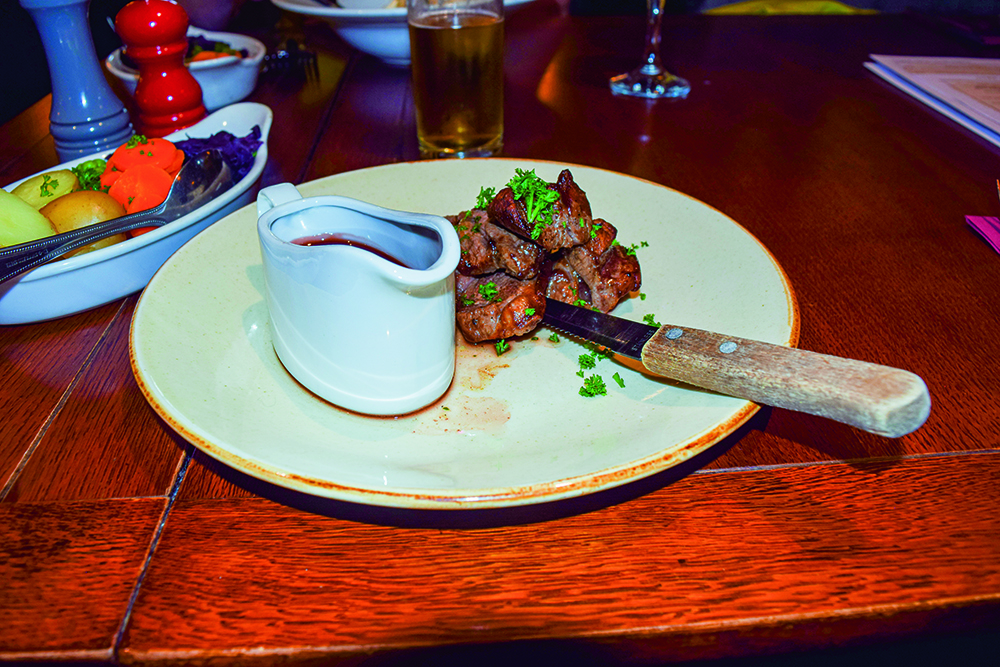
It was a mid-week evening and Susan and myself were out to sample the new menu at the Denby lodge. There’s something homely and relaxed about the Denby Lodge that I can’t quite put my finger on. It feels familiar. The decor helps with its modern, soft palette and mix and match furniture. The staff are friendly and attentive. And the recognisable dishes, on the diverse menus, have home cooked food written all over them. Perhaps the secret is a combination of all of the above. The Denby Lodge was known as a steakhouse and that reputation continues to this day. They serve meat that has been hung for 28 days and is sourced from farms in Derbyshire and Nottinghamshire. However we chose to ignore the extensive beef steak ‘grill’ selection and instead opted for two meals from the ‘main course’. Susan had the chicken in a creamy leak and Stilton sauce and I selected the lamb rump in a redcurrant gravy; quite the best lamb I have had in a while. My char grilled lamb was presented on the plate with a jug of glossy red current and red wine jus and accompanied by a dish of fresh and tender vegetables. The lamb was cooked just how I like it. It was not overcooked and had just a hint of pink when cut into. It had a slender outer layer of fat that was well grilled and crispy. The fat rendered down and had kept the meat moist and tender, adding to the flavour. The jus had a hint of sweetness from the red currants and a depth of flavour and acidity from the red wine. A perfect balance to the tender rump. Susan had chosen the chicken breast in a leek and Stilton cream sauce. The chicken breast had been poached and was lean, tender, juicy and flavourful. The cream sauce was a careful balance of flavours. The yeasty sweetness and a salty taste of the creamy cheese didn’t overpower the tender leeks but was a perfect counter point to the subtle chicken. Both our dishes of vegetables were identical. Boiled new potatoes, peas and carrots that still had a little bit of bite and a serving of flavourful, sweet, red cabbage that had not lost its colour. And then came the sweet; what a beauty. I’m not a fan of very sweet puddings and the lemon tart appealed to me. A thin pastry case filled with sharp, not too sweet lemon with a hint of a burnt sugar crust came with a dish of vanilla ice cream. Quite excellent. The main menu, that we made our selection from, also has a grill section, burgers and salad. There is also a childrens section, Sunday roast, lite bite and take-out menus. From lunch time till late afternoon there’s a ‘Two Meals for £14’ menu. The bar has an excellent array of cask ales including Marston’s Pedigree and local beers. It’s a popular destination. Whether it’s a table for two or a large party I’d recommend a table reservations for the evenings, particularly at the weekend. There’s also plenty of outdoor seating in the terraced beer garden for those warm summer days and nights. We found the Denby Lodge an enjoyable and relaxing place for a drink and a meal. It has a large, well lit car park and is in the centre of Denby Village, on Church Street. 00
Walk Derbyshire – The Four Villages Walk – Brassington, Ballidon, Parwich & Bradbourne

I am indebted to Amber Valley Group of the Ramblers Association, as it is they who first planned this interesting walk. Despite their good work, especially in producing the excellent leaflet I picked up way back in 2005, regrettably the leaflet is now out of print, but luckily I came across a rather dog-eared copy the other day, which helped me to follow my version of their described walk. I enjoyed it so much that it prompted me to carry out some research into the history of these ancient places of worship, together with the villages they have served since Saxon times. Here is my version. Starting from the small car park above Brassington, the route soon passes St James,’ a church with at least Norman foundations, if not earlier. It has served the village for centuries, a focal point for generations of lead miners who delved far beneath the nearby grassy moors. The only link with this long-dead industry is in the name of one of the local pubs, The Miners’ Arms, and a smoke-stained cave high on jagged Rainster Rocks. This is where a miner and his family lived as described by Daniel Defo in his book about a journey through England in the early 1700s. His description of the family living like a group of troglodytes clearly brings to life the harsh conditions of a life dependant on living and working in stygian gloom for days on end. First mentioned in local records around 1281, when its Norman foundations were laid on the site of an earlier Saxon oratory, is St James’ church. The present church, Grade II Listed, is the result of the Victorian craze for ‘improvements’, such as the embattled parapet added to the Norman tower, but at least they left the plain bowl of the font, untouched since Saxons ruled the land. Many of the cottages in Brassington date from a time when they housed families more prosperous than Defo’s troglodytes. The village layout would not pass today’s planners, and as a result we are left with a cat’s cradle of narrow streets and ginnels, all just waiting to be explored. Moving out of the village and following a narrow lane, the walk crosses the B5056 Bakewell to Fenny Bentley road. Joining a short section of the Limestone Way, it skirts Ballidon where a tiny chapel originating from the 13th century is built on the footprint of a much older edifice. The village itself is tiny, sheltering under the protection of White Edge and Blackstone’s Low, today it caters mainly for the needs of quarrymen’s, or heavy goods drivers and their families. The Limestone Way is followed through fields, as far as Parwich. This time it is the Victorian adaptation of a Norman church and many of the game animals inhabiting the district in medieval times are represented within. Once a subsidiary Chapel in Ashbourne parish, it stands as it has done since the first monk, preaching beside a rough stone cross, brought Christianity to the pagan Saxons. They were the earliest settled people to live in this sheltered hollow. The church we see today is listed Grade II and seems to have ministered to the needs of a gradually swelling population, one of whom at least, if his 12th century grave cover is anything to go by, joined one of the Crusades in medieval times. Parwich is sheltered from cold winds blowing from the north, by a grassy hill. Here an 18th century Manor Hall surrounded by pretty gardens, overlooks the grey-stone village houses surrounding a small green. Finally Bradbourne’s Grade I Listed All Saints, dates back to the 13th century, but like the others in this quartet, probably dates from a much earlier chapel. A weathered Saxon Cross has stood in the churchyard since around 800AD. The Old Hall and other interesting des-res buildings line the surrounding village. The actor Alan Bates is buried in the graveyard to the rear of the church, alongside other members of his family. A quiet stroll along a farm lane leads back to Brassington by way of a series of fields lined by farm houses and a scattering of other attractive houses. The track reaches Brassington conveniently close to the Gate Inn, but if it is crowded the Miners’ is an alternative just a little further into the village. USEFUL INFORMATION: A moderate walk by field paths through meadows and along quiet country lanes, covering 9miles, (14.5km). One busy road, the B5056 Bakewell/Ashbourne road is crossed twice. Muddy sections in fields between Ballidon and Parwich. RECOMMENDED MAP: OS Explorer 1:25000 OL24, the Peak District, White Peak Area. CAR PARKING: Small car park in Brassington Quarry off the Wirksworth road out of Brassington. PUBLIC TRANSPORT: Buses from Ashbourne. REFRESHMENTS:Pubs in Brassington and Parwich. THE WALK – STEP BY STEP Turn left outside the car park and walk down Dale Road for about 100yards towards the village, and then go right on into a narrow road leading towards the church – (use the church tower as a guide). Follow Church Street until it joins Hillside. Turn right here and walk uphill for about 150 yards, then go left at a footpath sign, following it until it reaches the head of a field track going left. Turn left along the track, and follow it downhill when it becomes Pasture Lane and is metalled. Cross the main road with care and go through the gate opposite. Follow the gently rising track as far as a solitary standing stone. Turn left off the track here and keep to the left of the stone, aiming for a stile in a stone wall about 100yards away and cross the stile. Beyond the stile go steadily downhill, soon to aim for tiny Bradbourne Chapel. Follow the concrete path behind the church, down to the road used by heavy traffic serving the nearby quarry. Turn left and walk in single file on your right of the road and look out for a footpath
Celebrity Interview – Patrick Kielty

The future of Britain after Brexit, national identity and political upheaval don’t appear to be subjects that would have you guffawing with mirth. But these are the themes that Northern Ireland comedian and television presenter Patrick Kielty has chosen for his new stand-up show Borderline which will visit Nottingham next month. While he’s primarily known for making people laugh, he also has experience of dealing with serious subjects. In 2007 he was invited to conduct an in-depth interview at 10 Downing Street with Prime Minister Tony Blair and Irish Taoiseach Bertie Ahearn about the Northern Ireland peace process. His personal involvement goes much deeper. He was 16 in 1988 when his father Jack was shot dead by loyalist paramilitary group the Ulster Defence Association. Yet in a referendum for the Good Friday Agreement – the accord that ended most of the Troubles which had been going on since the late 1960s – Patrick voted yes. Even though it meant his father’s killers were released from prison. He explains why he did that. “It was an easier decision than maybe you think because if you go through something like that, one of the first things that’s in your head is you don’t want anyone else to go through it,” he says in his unmistakeable Northern Ireland lilt. “I also think that sometimes we paint ourselves into corners. Making peace is very hard. If you look at what’s going on in the world right now, making peace with people that want to kill each other is very difficult. “One of the things in the show, weirdly on a personal level, is when you actually go through all that, you can look at situations slightly differently. If you share your story, people might think about their story in a different way.” Patrick is quick to point out that his new show isn’t a lecture. He should know what an audience wants: during the Northern Ireland Troubles he set up a comedy club in Belfast, “probably the most successful comedy club in the UK because people wanted to come and hear satire about bigger politics and they wanted a release from the tension that was going on around them. “When you look at where the UK is at the moment, with borders and protocols and Brexiteers and Remainers, sometimes you need a little pressure valve and go ‘there’s funny stuff in here that we can all laugh at.’ “If you look at how people are living at the moment with rising prices and a shortage of oil, none of those things is funny but when you see how we get to certain places and where we’re going, there’s funny in there.” Patrick Kielty was born on 31 January 1971 in County Down. As a teenager he was a talented Gaelic footballer. He began performing while a pupil at St Patrick’s Grammar School, Downpatrick when a teacher spotted him impersonating politicians, sportsmen and celebrities. His professional career started while he was still a psychology student at Queen’s University, Belfast. After presenting television shows in Northern Ireland, he came to the attention of London-based broadcasters and fronted programmes including Fame Academy, Love Island and The One Show. In 2012 he married the TV presenter Cat Deeley. They have two young sons. They moved to Los Angeles so that she could host the show So You Think You Can Dance but they came back to London two years ago after Patrick and their elder son narrowly avoided a shooting in a shopping mall. Patrick is undertaking his first UK tour in seven years. Most of the gigs are towards the end of the week. Patrick quips: “I don’t look on it as a three- or four-month tour – I look at it more as a series of mini-breaks!” Borderline started in Northern Ireland and he’s pleased with the reception so far. “In your head you think to yourself that stand-up is like putting on a pair of slippers – but it’s not like that at all. It’s like putting on a new pair of high heels! You’re trying to squeeze your toes in and learn how to walk in them again. “I’m now at the stage where I’m able to walk and dance in them. We’ve been selling out pretty much everywhere, people have been saying nice things and audiences seem to be enjoying it. There’s always that wee bit of relief whenever you get something up and running and people like it.” The proceeds from the second date, in Larne, went to the Unicef Ukraine appeal. “That was the week when things really started to get bad there (Ukraine)”, says Patrick. I’ve got two young kids myself and you’re seeing kids on TV and everything that was going on. I just wanted to do something. It’s a very small thing but every little helps, I suppose.” Patrick explains why he called the tour Borderline. “I wanted to write something about Northern Ireland and the second new border. There’s talk of Scottish independence, there’s talk of Boris Johnson presiding over the break-up of the Union – all these weird things that you never really thought would even be on the table. “We live in a world where people go ‘I’m right, you’re wrong’. It seems to me that people want to see the world in black and white. “To come from a polarised society that actually managed to come together to see a little bit of what the other side thinks and make peace by letting go of preconceptions a little bit – it was an interesting time for me to see the world going the other way. “So I thought now is a good time to get on stage and talk about national pride, nationalism and where that leads us.” Patrick always knows roughly what he wants to say in his shows. He explains that the skill is to weave it all together and say it in a funny way. “I think one of the
Happy Trails – Riding the railways that turbocharged Derbyshire’s industrial revolution
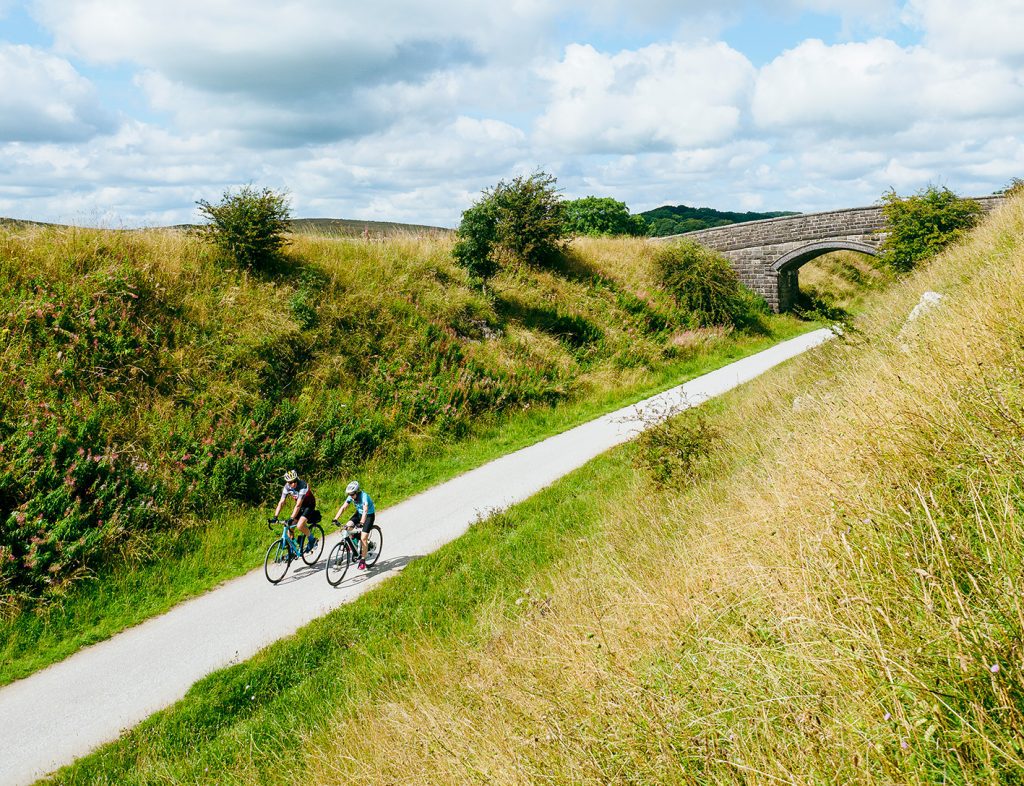
Derbyshire has done more than any county in England to convert its disused railways into traffic-free greenways for cycling and walking. This route is a variation on the classic ‘trails triangle’ that combines two of the most popular Peak District cycle trails — the High Peak Trail and the Tissington Trail — with the traffic-free path around Carsington Water. The route starts at the railway station in Cromford, but starting at Middleton Top C would avoid the steep climb up from the Derwent Valley and reduce the overall distance by 7 miles. Cromford was one of the most important locations in the early years of the Industrial Revolution. It was here in 1771 that self-made inventor and entrepreneur Richard Arkwright built the world’s earliest water-powered cotton spinning mill. It is regarded as the first modern factory, a system of production that would quickly wipe out traditional artisan cottage industries. Working conditions were severe. Two thirteen-hour shifts a day kept the factory in continuous production. Whole families were employed, including large numbers of children, as young as seven. Workers had a week’s holiday a year, on condition that they didn’t travel beyond Cromford. Arkwright made a fortune and set to building a country seat to match his elevated status. Willersley Castle can be seen from the bridge, though he died before it was completed. The mill complex is now part of the Derwent Valley Mills UNESCO World Heritage site and hosts a visitor centre, shops and two cafés A. From Cromford it’s a stiff climb up Intake Lane to join the route of the Cromford and High Peak Railway. One of the earliest railways in Britain, it was built to carry minerals and goods between the Derwent Valley and the canal network around Manchester, as an alternative to the lengthy canal route to the south of the Pennines. Wagons were hauled up the many steep inclines by chain, and later by wire cables, wound by stationary engines. It ran until the 1960s and now lives a second life as the High Peak Trail for walking and cycling. On the way up you’ll pass the National Stone Centre, an educational charity based in an old limestone quarry. It offers a short self-guided fossil and geology walking trail, and runs courses in dry stone walling and stone carving – including for absolute beginners B. Once onto the high plateau at Middleton Top, it’s pleasant, traffic-free riding all the way towards Parsley Hay, where there’s a café and bike hire shop E. Before you get there, just off the route and accessible by a permissive footpath, is Minninglow Hill. At the top, in a wooded clearing, is the largest Neolithic chambered tomb in Derbyshire and two Bronze Age bowl barrows D. A little further along, the route passes the Friden brickworks, a major local employer for over a century, which specialises in making heatresistant bricks for blast furnaces, glass making and other high temperature applications. The critical ingredient is silica, which for decades was quarried from local deposits, though now it is imported. Two miles past Parsley Hay, the route leaves the High Peak Trail for an interlude of splendid gated roads, initially along Dovedale, then through Hartington. Once a local centre for the mining of ironstone, lead and limestone, Hartington is also known for its cheesemaking: its creamery is the only one in the county where Stilton is made (by law Stilton can only be made in Derbyshire, Nottinghamshire or Leicestershire). From Hartington, a classic Peak District farm track leads to Biggin, where the route picks up another ex-railway line cycleway, the Tissington Trail. It’s worth a short deviation from the most direct route to visit the pretty estate village of Tissington F. The current lord of the manor is the amiable Sir Richard FitzHerbert, who inherited unexpectedly from his uncle and can often be seen lending a hand at the bustling cycling-friendly café opposite the church, as well as giving regular tours of the manor house. In 2007 Tissington Hall was among several historic houses to draw attention to its involvement in the slave trade and the wealth it derived from sugar plantations in the Caribbean. From Tissington it’s rolling lanes via Bradbourne to Carsington Water G, a reservoir ringed by a shared use cycling and walking path, followed by one last climb back to the High Peak Trail, and the return to Middleton Top. If you’ve ridden up from Cromford, the way back follows the same route – take care as it’s steep and the surface is loose in places. 00
Lost Houses of Derbyshire – Lockett’s House Wardwick, Derby
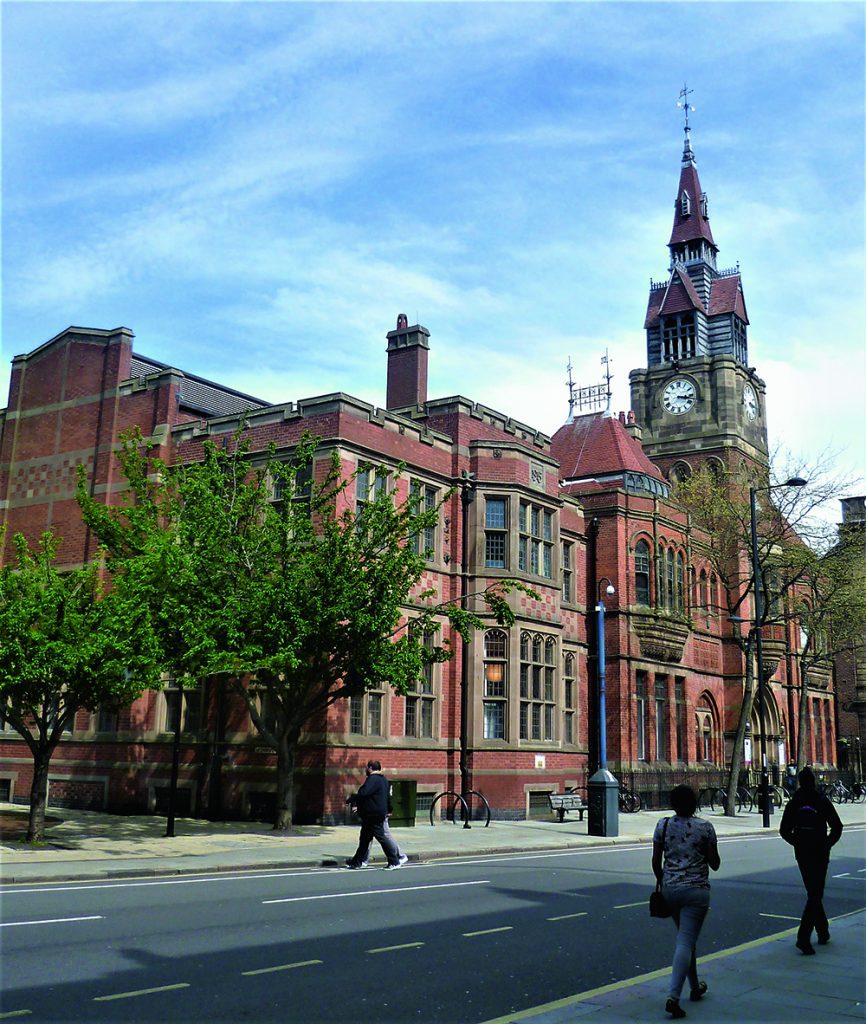
The Wardwick is, even today, one of Derby’s most elegant streets; in Georgian times it was the bees’ knees as a place to live, despite having Markeaton Brook flowing along the back gardens of the houses on the north side and the Odd Brook as a meandering feature in the pleasure grounds of those on the south. Originally a pre-Norman settlement, separate from Derby, Wardwick, with its parish church dedicated to the Mercian Princess, Werburgh, was absorbed by its bigger neighbour after the Conquest, but the name survived in the street, which ran from St. James’s Bridge westward to join the main road to Ashbourne, where now is Ford Street. The south side has survived tolerably well, although the pitching of Becket Steet, resulted in the loss of two thirds of the Jacobean House, but the north side suffered more ‘improvement’, with the Mechanics’ Institute being built on the site of a town house and a jumble of cottages, in 1836, the Museum replacing the impressive town residence built for the Locketts of Clonterbrook , Swettenham, Cheshire, in 1879, and its extension plus road widening put paid to Dr. Francis Fox’s house in 1913. The house built for the Lockett family boasted a facade less than seven bays wide, three full storeys high and the three bay centrepiece broke forward about a foot and contained the porticoed entrance, reached up steps to a perron embellished by iron railings, probably by Benjamin Yates, Robert Bakewell’s foreman and successor. It was entirely of brick, very severe, with a banded parapet and gauged brick lintels over the windows. A single storey Regency brick bow was later added to the west (garden) front in the 1810/1820 period. However, the only known picture of it, by S. H. Parkins of Derby, was done retrospectively, so we cannot fully rely on it as a true rendering of the original. One is inclined to suspect that it was a lot better proportioned and may also have included more detailing; one suspects a first-floor sill band might have been included, for instance. The house was built for William Merrill Lockett (1732-1777) in 1751, on the legacy left by his father, William, an opulent parson, who had long been incumbent of the combined parishes of St. Werburgh and St. Michael, Derby, as well as serving as perpetual curate of Osmaston-by-Derby. He was the second son of Jeffery Lockett of Clonterbrook, Swettenham, Cheshire, a house built in 1697, sold by the parson’s cousin once removed (another William who preferred to live in Knutsford) and re-purchased by the family in 1939. The family had extensive trading and shipping interests in Liverpool. William Merrill Lockett himself went to Derby School and Inner Temple, before setting himself up as an attorney in 1757, and being appointed Town Clerk of Derby in 1765. The plain-ness of the house is typical of the period, and it is not impossible that the architect was a London acquaintance of the young Lockett. The alternative is that it may have come from a London pattern book and have been put up by a Derby builder. Certainly, it is unique in Derby in its austere façade. Unfortunately, Lockett died in 1777, unmarried, and the property devolved upon his cousin twice removed, William Jeffery Lockett (1768-1839), in whose time Stephen Glover described the place as ‘a large and handsome house’. However, W. J. Lockett was only nine when he inherited his cousin’s Derby property, and it is likely that the house was let in the interim. In the event, he took up occupancy there on his marriage in 1794 to Anne, daughter of William Bilbie of Berry Hill Hall, Mansfield, whose mother was an heiress of a member of the Barber family of Greasley; Anne Lockett’s bother was indeed another lawyer, and it may be that he occupied the house for a while. Prior to being culverted to create The Strand in 1870 (at the expense of opulent railway contractor Sir Abraham Woodiwiss) the Markeaton Brook, running along the northern boundary of the property, tended to overflow when it backed up, due to the Derwent, into which it flows, being in spate. The Revd. Thomas Mozley – brother-in-law to Cardinal Newman – knew Lockett’s House well, writing in around 1825: The gas came in 1820, sponsored by William Strutt. Thomas Mozley described W J Lockett as ‘Copley’s friend’, here referring to the Anglo-Irish but American born artist, John Singleton Copley (1738-1815), who came to England in 1774 and never returned to his native land. The friendship’s origin is difficult to disentangle, but it is said that Copley and his wife were frequent visitors to the house, and that Lockett stood by him during his least, lean years, during the French wars. Indeed, Lockett’s influence may have been seminal in inspiring their son John (later 1st Lord Lyndhurst, thrice Lord Chancellor) to take up law. There must be a portrait of Lockett by Copley (whose portraits are highly rated over his historical scenes) and it may be it is with the family still, in Cheshire. The only surprise is that there are not more Derby or Derbyshire people amongst his known commissions, but maybe his visits were to escape the tyrany of his easel. Lockett became a member of the Derby Philosophical Society at about the time that Copley died, where he was befriended by William Strutt. He served on the Derby bench and, on his death in 1839 – the year of the first great exhibition of the arts and sciences in the new Mechanics’ Institute next door – the house passed to his only child, William, then forty-two and his father’s partner in his legal practice, which he continued until his own death, unmarried, in 1848. Following the success of the exhibition of 1839, those behind it, including William Strutt’s son Edward (later 1st Lord Belper), Douglas Fox (whose family lived next door to the Locketts) and other members of the Derby Philosophical Society had gathered together a