Dining at Binary, Derby
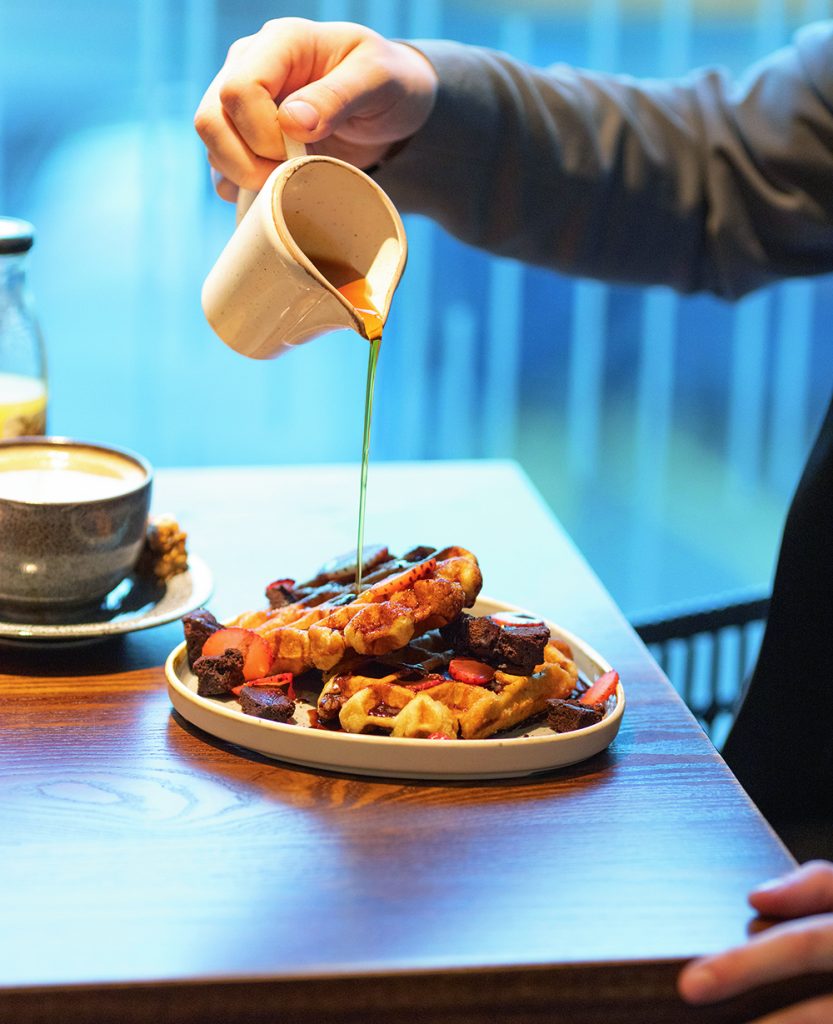
Binary Bar and Restaurant, Bespoke Inns newest addition, has continued to prove itself over the months to be a jewel in the crown by winning the coveted ‘Best Newcomer’ at the Marketing Derby Food and Drink Awards. If you haven’t tried it yet then you’re missing a treat. We took the opportunity, over a coffee, to chat to General manager Francesca Kirk about this exciting award and how, over the past few years, the Binary Bar and Restaurant has developed and grown in popularity. Fran has been with the company (Bespoke Inns) for many years and has got to know and appreciate what the local dining populace really need, and in this way Binary Bar and Restaurant has tailored itself to the demands of both city and village life. Being just a short drive from the city centre and nicely positioned in the village of Mickleover, the restaurant enjoys the best of both worlds. Building a professional team around her that can look after both regular and new clients has been pivotal in getting this relatively new restaurant to where it is today, and Fran is always pleased to hear customer feed back. Fran talked passionately about her role and the vital part the chefs play in creating seasonal menus which keep up with the rapidly changing world of dining. Head Chef Andres Nojiri, leads a team of talented chefs who present high quality, carefully crafted dishes, suitable for special occassions through to just a pleasant lunch out with a friend. Here is just a snapshot of what you will experience at the Binary. The former large two floored, industrial space is totally transformed into a contemporary restaurant with a flexible layout which can accomodate larger groups while not intruding on customers who want a more private and intimate experience. Here you can drink, chat and eat in the relaxed environment the Binary creates. Behind the scenes head chef Andres Norjiri directs a creative team of chefs, his Japanese and Italian heritage influences the menu and the way the food is prepared and presented, all showing attention not only to detail but also the way ingredients interact with each other bringing exciting tastes and textures to the palette. Let’s start in the morning… If it’s a good breakfast that you enjoy then from Wedneaday to Sunday (9-11) breakfast is served. From Full English to bacon & maple pancakes, vegan to toast and preserves and you can add a glass of Champagne to make it extra special. At lunchtime you can go for the Bubbles and Brunch menu from 11am or select from the main menu which is also served in the evening. Various appetites are also catered for with a variety of on trend ‘small plates’ that you can share, adding further to that continental feel. It’s a great way to spend an evening, sitting and relaxing with friends whilst sharing a variety of dishes, very ‘tapas’ style. Popular themed evenings are scheduled regularly ranging from Mexican nights to Murder Mystery events. But if it’s just to relax and chat then the bar area serves a vast array of cocktails, beers and wines and of course coffee. A visit to the website will reveal all the menus (13 in total) and times of opening. To book a table in the restaurant or for any of the upcoming events then please ring 01332 413545 or visit the web site https://binarybarandrestaurant.co.uk where a full list of events for the months that lie ahead can be viewed. Binary Bar & Restaurant, Limes Avenue, Mickleover, Derby. DE3 0GR 00
Dining at Fairways Chevin Golf Club
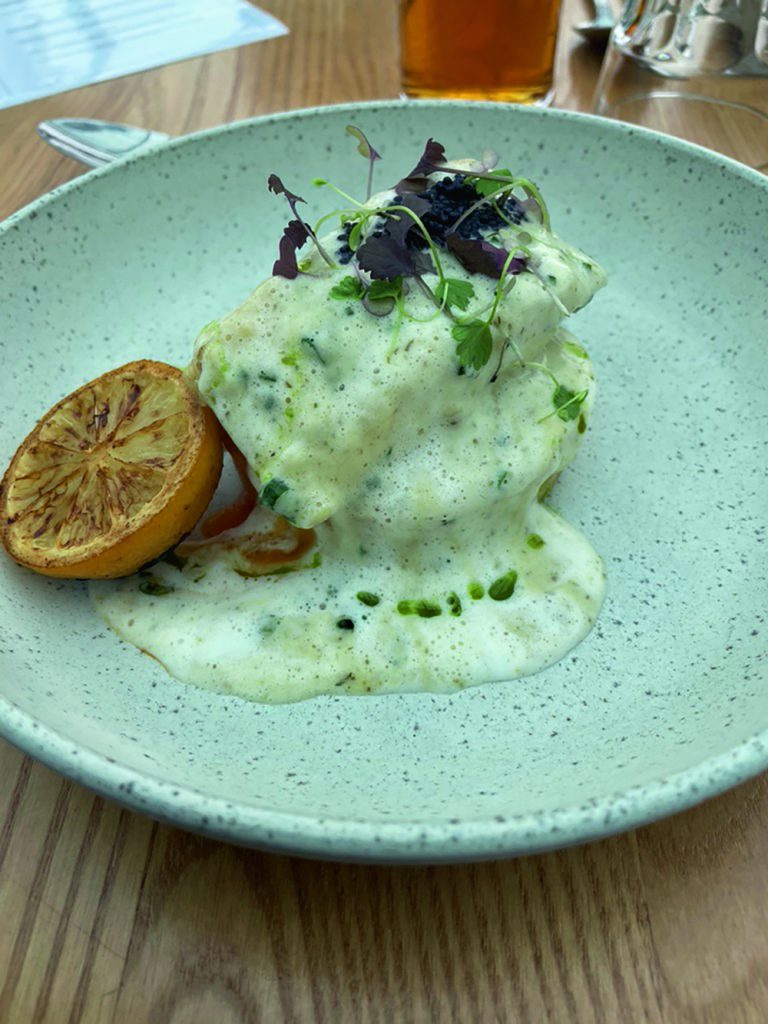
It was a very different day when we arrived at Fairways, Chevin Golf Club from over a year ago, the bright sunshine was replaced with a soft grey mizzle, but driving down the lane, the beautiful landscape that opened up still brought a smile to my face. We had last visited for a summer lunch here, enjoying the blue skies as we sat in the sunny conservatory. This time, over eighteen months later, it was Autumn and the immaculate curves of the greens, punctuated by trees in their differing stages of changing colours was equally captivating against the gentle wash of a grey sky. Our lunch had been memorable, as it was Tom, a young, talented chef who had created and cooked for us previously. Tom, it must be said, is still young and has created an extensive function menu which we were privileged to be one of the first to enjoy. To set the scene though I need to tell you that Fairways, Chevin Golf Club is open to everyone, that is members and non-members and the welcome as you walk through the door is extremely welcoming and warm. There are plenty of areas where you can choose to sit and have pre-diner drinks and the conservatory dining is light, spacious and as I said, has a beautiful aspect. Hollie, the manager has a contagious warmth, and her staff are polite, efficient and helpful so it was lovely to be greeted by her again. Drinks in hand, our starters were served, both fish based. Elegant in its presentation and garnished with charred lemon and asparagus spears, my lightly poached fillet of salmon was surrounded in the most delicious lobster bisque, intensely rich and smooth, it was topped with a ravioli parcel filled with white lobster meat. This was perfectly partnered by a langoustine which nicely contributed a change of texture. I was intrigued by the description on the menu of my husbands ‘Cod quiche Lorraine’, but the soft and sweetly roasted onions which filled the pastry case, salty bacon lardons and deep yellow confit egg yolk formed the quiche on which sat a piece of cod smothered in a light and bubbly white wine sauce, topped with caviar and chive emulsion. Very creative and delicious. Moving on to our main courses, a butternut squash puree formed the base for my duck breast, slowly roasted with a glazed skin, extremely tender and not overly fatty. A crisp pastry tart was filled with shredded duck leg and topped with finely sliced baby red grapes. The red wine jus stopped the dish becoming dry and tied all the flavours together beautifully. A piece of puffed crackling crisp dusted with five spice added crunch and just a hint of cinnamon to compliment the tartlet flavours. Lamb was the theme for my husbands main, a herb crusted rack of lamb, pink and succulent, a mini shepherd’s pie topped with smooth, piped, thyme infused mash and a croquet of lamb dusted in breadcrumbs and herbs. Pea puree and glazed heritage carrots with a rich minty jus complemented each aspect of the dish. This was served with a white bread bun made with rendered lamb fat and topped with a mixed herb crumb, meant for dipping and soaking up all that leftover sauce. The first mention of apple crumble and my husband is straight there, but as you would expect from this creative chef there was a twist. A soft apple and white chocolate mousse was dipped in a fine green mirror glaze to create the illusion of a perfect green apple, and at its heart was soft pureed apple, the whole picture sat on a bed of crumbed shortcake, wrapped in a white chocolate collar. What an imagination to create such a delicious illusion. Not to be out done, my coconut mousse, surrounded by flakes of coconut, biscuit crumb and cubes of coconut sponge sat in a dark chocolate shell. Passion fruit was a sharp addition and the malibu granita melted slowly in your mouth. A honeycomb tuile and tempered ‘Fairways’ logos really emphasise the attention to detail in all these dishes. This had been a dining experience on a whole new level. Each dish well thought through, where no ingredient was included that didn’t bring something special to each dish, nothing too overpowering and nothing without its own characteristics. Tom is an outstanding young chef and although he pushes the boundaries, he also understands ingredients that traditionally complement each other and uses these to their strength. Tom’s skills also lie in his ability to train and relate to his own team of young chefs in his kitchen, and to mentor, influence and encourage them in these skill sets. What a delightful dining experience this had been. Fairway’s is at Chevin Golf Club, as you turn off the main A6 through Duffield on to Avenue Road where very quickly you’ll see Golf Lane, this takes you to the Fairways Restaurant. Our thanks to everyone at Fairway’s and for the lovely welcome we received. 00
Walk Derbyshire – A Walk From Pentrich to Crich & Back

At the forefront of the Pentrich Rising were Jeremiah Brandreth, a 31-year-old unemployed stocking knitter who had a wife and two children; Isaac Ludlam, a bankrupt farmer who owned a small quarry where he had built up a small supply of pikes; and William Turner, a stonemason and ex-soldier. From Pentrich this walk will take you over to Crich which has its own fair share of history. The almost alpine village of Crich makes a breezy welcome to travellers. Field paths skirting the northern limits of Crich lead to two unexpected features, Crich Stand below which is a section of an abandoned quarry with trams running on a short length of track would once have graced the streets in places as far apart as Portugal’s Lisbon, or Blackpool promenade. In 1840 George Stephenson discovered deposits of coal at Clay Cross and formed what later became the Clay Cross Company. He realised that burning lime would provide a use for the coal slack that would otherwise go to waste. He leased Cliff Quarry and built limekilns at Bullbridge. They were connected by wagonway known as “The Steep”, a 550 yards incline at a slope of 1 in 5. Crich Chase Meadows was designated as an extension of the Crich Chase Site of Special Scientific Interest (SSSI). The meadows stretch out over a steep slope, joining a patch of ancient woodland called Smith’s Rough. USEFUL INFORMATION DISTANCE: Moderate trails, field-paths and country lanes. With some muddy sections. RECOMMENDED MAP: Ordnance Survey 1:25000 scale OS Explorer, Chesterfield & Alfreton. PUBLIC TRANSPORT: Stage Coach East Midlands No.148 is hourly from Ripley to Pentrich and goes on to Alfreton. CAR PARKING: Parking on the main road in Pentrich REFRESHMENTS: Various pubs, cafes and shops along the route. THE WALK :: THE WALK :: THE WALK From The Dog Inn Pentrich go up the main road towards Swanwick, then turn left onto Riley Lane, signposted Fritchley and Crich. At the bottom of Riley Lane cross Chesterfield Road onto Park Lane to Wingfield Park, past Weir Mill farm and eventually turn left onto Lynam Road signposted Fritchley, and through the hamlet of Boden. Go past Boden House and Boden Farm and straight up the steep lane that veers to the right. A short walk up the lane gives fine views of Wingfield Manor to the right. Go to the top of the lane and follow the beaten path through the woods. At the stile follow the directions on the yellow arrow left as it marks a pathway through the second part of the woodland. Eventually you will reach a stone stile to cross. Turn immediately left and go through the second stile. Turn right and walk to the end of the lane. At the end of the lane turn right. Fifty yards before the cottage named The Hat Factory follow the footpath sign to the right and through the woodland for just a short distance and then cross the stile on the left marked by a yellow arrow. Keep to the right hand side of the field by the hedgerow via a stile and metal gate. Follow the pathway and keep the woodland to your left. Keeping the woodland to your immediate left cross over the gated stile and continue a short distance on and cross another stile. Turn left and immediately right over a metal gated stile and continue onto the top of the lane and into Crich Market Place. Cross over the Market Place and up by the Baptist Chapel and onto Sandy Lane . After 100 yards turn left up by the pathway marked Derwent Valley. Walk as indicated by the yellow arrow on the post. Follow the metal sign marked Chadwick Nick and continue on this pathway for approximately half a mile. The views to the right are of the spectacular Derwent Valley. The pathway via a set of stone steps leads to the tarmac road of Chadwick Nick where we turn right. After 200 yards turn left at the signpost with the orange sticker on it. At the end of the pathway turn left. Continue on the pathway ahead, don’t be tempted to veer off to the right or left. This pathway slowly meanders through some beautiful woodland for about a mile and leads to a stone bridge that crosses the Cromford Canal. Go over the bridge and cross back under it as though heading for Ambergate Follow the towpath all the way to the end and cross a white painted bridge. Follow the path ahead keeping close to a wired fence all the way until it goes through a canopy of trees then follow the path inclined upwards. After 3/4 of a mile or so the path will lead to a stone stile with barred wooden gate . Cross onto the lane which leads to Chadwick Nick and turn left up the lane. Follow the lane to the top, up the stone steps on the right and turn right on the pathway which leads us back into Crich. At this point I recommend a pint in the Black Swan or coffee and cake in The Loaf and then wander your way back. Turn left out of the Black Swan or straight out of The Loaf and walk down Dimple Lane following it to the end where it forks left and then turn left. After half a mile or so ahead cross the stile on the right, marked Buckland Hollow and cross the field through the gate to the stone wall on the left. Cross here and turn right. Follow the lane through the farmyard and left down the hill. At this point the pathway becomes ill defined, so at the property marked The Hall Gardens, cut left over the fields and follow closely the contour of the river At the end of the path, cross a small bridge and turn right onto a busy road. A few yards ahead on the left is a signpost and a path to Pentrich
Celebrity Interview – Shane Richie
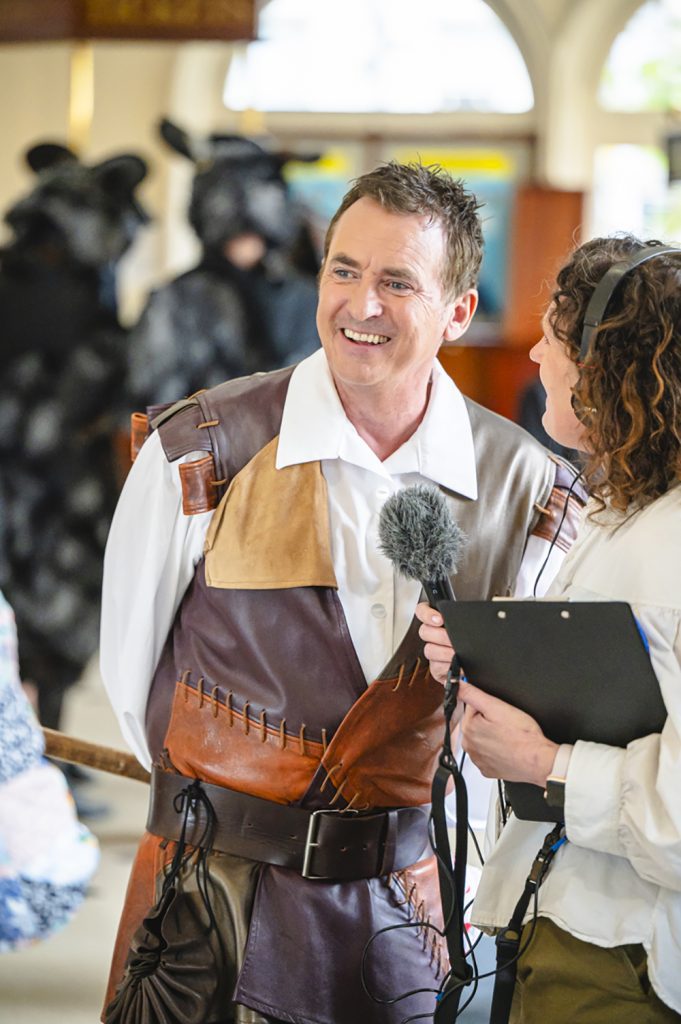
By Steve Orme According to Greek philosopher Plato, art imitates life. That’s clearly evident when you look at some of the storylines in today’s soap operas. EastEnders is no exception, with Shane Richie’s character Alfie Moon suffering from prostate cancer – a storyline that has left an impression on so many people. He returned to the BBC programme in autumn last year when a new EastEnders’ boss decided that Walford couldn’t do without Alfie. Shane says he was delighted to be asked to go back. “Where the BBC and EastEnders lead the way is in telling stories that hit a nerve and raise awareness. I’ve been inundated with families, mostly mums and wives, who’ve said since watching EastEnders their dad or husband has gone to have a check (for prostate cancer) and thankfully is in the clear or they’ve caught it early. To play a part of that has been a real honour.” The producers of EastEnders consulted Prostate Cancer UK about the storyline and Shane spoke to a man who’d been diagnosed with the disease. “He talked to me about what he’d been through. He was very candid, very open and very honest. He didn’t have a chip on his shoulder and he wasn’t angry. He had his prostate removed and he said he’d been badly affected by some of the treatment. “I just sat and listened. He was about the same age as me, had a family, a successful career, had a few quid. And it just made me realise this cancer can get anybody at any time. It just opened my eyes about how naïve I’d been about it and in denial. “You get to a certain age where you get up in the morning and say your back or your knees have gone. There’s a reason why: your body starts giving you messages that you may have jumped out of bed once upon a time but them days are gone. “There are no symptoms to prostate cancer and it’s very important that we get ourselves checked.” Shane says filming some of the EastEnders’ scenes were tough but it was heart-warming to see people’s reactions. “Thankfully this story’s going to play and play. We’ve seen Alfie have his prostate removed and we’re going to see the after-effects, how it affects him, his family and his friends.” So has 59-year-old Shane been examined for prostate cancer? “Yes! Blimey, I’ve become a bit of a hypochondriac. Funnily enough the week I was approached about this storyline I’d just been for a check-up. I try to go once a year. I had a digital examination and thankfully it was all clear. “I’ve got a young family and the road ahead is much shorter than the one behind.” Shane was in Nottingham for the unveiling of the stars of this year’s Theatre Royal panto Dick Whittington. He’s playing the lead in the Crossroads Pantomimes’ production which will feature sets and props which were used in the same show in the West End. Before I could chat to him he did television and radio interviews, posed for selfies with passers-by who were delighted to see him outside the theatre and made time for fans. Then he nipped backstage where the cast of Everybody’s Talking About Jamie were preparing for the matinee. Coincidentally Shane appeared in that musical a couple of years ago when it toured to Nottingham. Some people might say that Shane has made enough money from EastEnders that he doesn’t need to do panto. He brushes off the suggestion. “There’s a big difference between fame and success. You get fame as a by-product of having some success. Am I successful? Yeah. Am I minted? No.” There are several reasons why Shane does panto. “Maybe it’s just that I’m wired differently. I enjoy being around the general public. I enjoy seeing smiling faces and I enjoy the instant recognition of what you’re doing on stage whether that’s applause, laughter or booing. Only panto gives you that where you can sit a four-year-old to a 94-year-old and they’ll all enjoy something very different. “Doing something like panto makes me enjoy EastEnders even more because it gives me a chance to come to somewhere like Nottingham where I’ve got a lot of friends. I’ve done stand-up here, I’ve done plays. “I’ve got a hand in writing Dick Whittington so the jokes write themselves. The parameters are whatever I want them to be. I break that fourth wall – I talk to the audience which no one else does on stage. I’m the only one that does it (in Dick Whittington) and the audience become an integral part of the show. If they’re having a good time, I have the best time.” As with most pantos, no two shows will be the same, as Shane points out: “There are times when I’ve sat in the audience and watched the show when I should be on stage performing. A lot of the cast who are working with me for the first time had better be on their toes because I love improv’ and just taking off at a tangent.” Shane Patrick Paul Roche, known professionally as Shane Richie, was born to Irish parents on 11 March 1964 in Kensington, London. He began his career as a bluecoat entertainer at a Pontins holiday camp on the Isle of Wight. He progressed to the stand-up circuit, moved into television, branched out into hosting game shows and appeared in musicals including Boogie Nights and Grease. In 2002 he joined the cast of EastEnders, bringing humour to a programme often known for its depressing outlook on life. His current stint is his fourth on the show. Three years ago he appeared on the 20th series of I’m A Celebrity… Get Me Out Of Here, finishing fourth. Shane has been married twice, first to the singer and television personality Coleen Nolan – they have two sons – and then to actress Christie Goddard in 2007. They have three children
The Lost Houses of Derbyshire – Lea Hall, Tissington

by Maxwell Craven Lea Hall is a sequestered little paradise, half lost between the villages of Tissington and Bradbourne which, as readers will probably know, lie in the White Peak, almost east-west of each other, although the road between the two villages, south of which Lea Hall lies, is something of an adventure, taking one high over the intervening moor and down through the Bradbourne Brook via a ford, before gaining the main road from Ashbourne. Today all there is to see is an agreeable 17th century farmhouse (in which you can stay, should you feel motivated – see their website) with a late Regency hipped roof, all enlivened by original chamfered mullioned windows of millstone grit, contrasting well with the light grey carboniferous White Peak limestone from which the house was built. Nearby, however – surrounded by much newer such structures – is a large two storey barn of random rubble limestone with a tall gabled roof and with angles sporting almost cyclopean quoins, the walls penetrated here and there by inserted windows, interspersed with traces of others, long since blinded. Both gable ends have kneelers and coping, rising to stone finials, all very reminiscent of Dethick Manor Farm, which is a similar survival of a similar period, but less heavily disguised by centuries of agricultural use. Historic England’s list (on which it is listed grade II) claims that the barn at Lea Hall is 18th century, but even on a cursory examination (which I made about 40 years ago, I must admit) that is clearly quite wrong. However, it would take a detailed examination to be precise about its origin. Both, incidentally, are grade II listed. Lea Hall (which took its name from the hall which, from its name, must have been built prior to the scatter of other houses which make up the hamlet) was once an outlier of the Domesday manorial estate of Bradbourne and was long an extra parochial township, until tidy-minded bureaucrats in 1887 decided to transfer it to the parish of Tissington, on the eastern border of which parish it then lay. We know that from Domesday Book until 1268, Bradbourne was one of the 100 or so Derbyshire manors held by Henry de Ferrers and his heirs, the de Ferrers Earls of Derby, but the book fails to name Ferrers’ under-tenant. However, by about 1180, we become aware of Robert de Bradbourne and his brother Godard, both sons of Gerard de Bradbourne, who must have been in his prime about 1150 and, bearing in mind that Gerard took his surname from the place of which he was the Earl of Derby’s sub-tenant, the likelihood is that he was a direct descendant or heir of the Domesday holder of the manor. Lea Hall, The present farmhouse Godard de Bradbourne’s grandson, Sir Roger, before 1296, managed to purchase Hough Park, in Hulland (which we have yet to look at) and married Philippa, daughter of Thomas Ferrers of Loxley, Staffordshire, a member of the family of the recently disgraced Earls of Derby. He also had a house in Ashbourne and was father to six sons and three daughters, the eldest of whom married Henry de Meynell of Langley. Of the sons, the eldest, Henry, was executed at Pontefract in 1322 for having rather rashly backed Edward II’s cousin, Thomas, Earl of Lancaster’s rebellion, and having thus been on the losing side at the Battle of Boroughbridge. Mind you, it was fairly natural that Henry should have supported Thomas, for Thomas’s father had been granted all the de Ferrers family’s expropriated land by Edward I, his brother. This made Thomas of Lancaster Henry de Bradbourne’s feudal lord at Bradbourne: the latter was thus hardly in a position to refuse to support him in his bid for the throne against the unfortunate and unpopular Edward II. Neither of his two sons lived long enough to be disinherited as a result of their father’s treasonable activities, both having died relatively young. Sir Henry FitzHerbert, 3rd Bt., as painted by Ashbourne born William Corden (1797-1867) [Private Collection] Prior to this, the second brother of the unfortunate Henry was living at Lea Hall and was still there in 1331 when the attainder on Henry de Bradbourne was revoked and Bradbourne itself was returned to the family. Yet only the youngest of his three sons survived his father, and is recorded as having been as of Brassington at his death around 1383. It was the rebel’s third brother’s posterity who ended up with Bradbourne (having previously lived at Parwich), Roger Bradbourne being MP for Derbyshire 1397 to 1405, but Lea Hall only re-surfaces on the record in 1439. It was then home to one of this Henry’s younger sons, passing back in 1519 to his descendant Humphrey Bradbourne. It is not at all clear to what use Lea Hall was put during these years, as the family lived at Bradbourne Hall (which is still there), but one suspects that The Hough and Lea were granted to one or other of the plethora of younger sons produced by each generation of this family. However, in 1594, William Bradbourne sold all his estates to Sir Humphrey Ferrers of Tamworth Castle and, despite having married two wives, seems to have dropped from record. However, one can see the logic, as William’s youngest sister, Anne, was Sir Humphrey’s wife. The Ferrers family, apart from Tamworth Castle, also held the (old) Hall at Walton-on-Trent and cannot have had any use for Lea Hall, and if the ancient hall there had not decayed completely by the date of the sale, it must have done so soon thereafter. It was probably his descendant John Ferrers (or more probably his father) who built the present L-plan farm house, which would originally have been gabled. This John Ferrers also eventually sold Lea Hall and its modest estate (essentially two upland farms) to Samuel Swann of Hurdlow in 1679. The property was with the Swann family for three generations,
Sales Executive Role
00
Dining in Derbyshire – Donington Manor Hotel
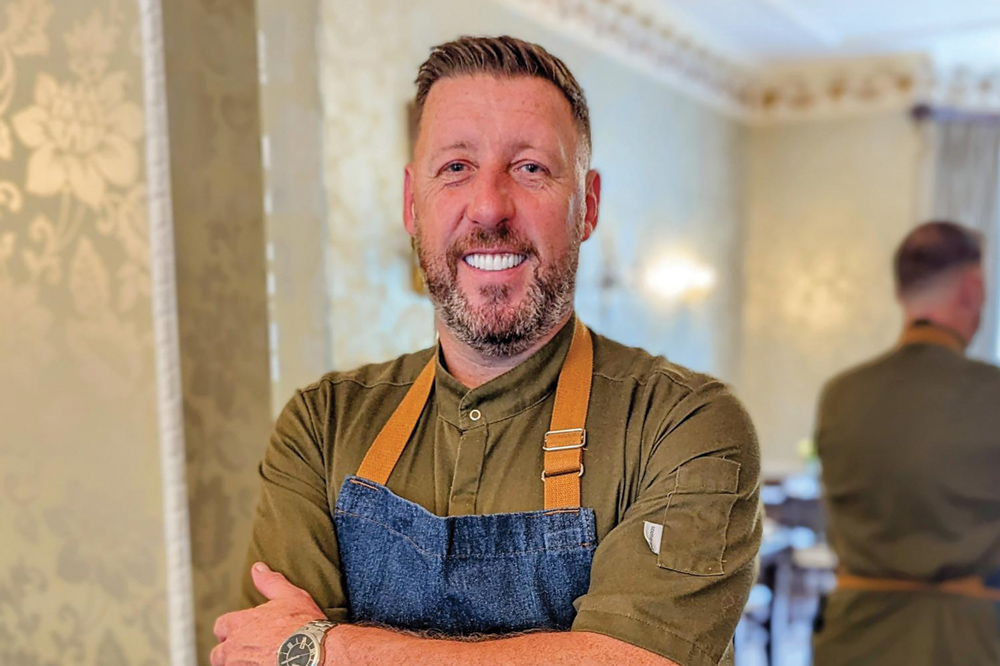
Castle Donnington is a market town in the true sense of the word as it was granted a charter for a weekly market by King Edward I in 1278. In the centuries that followed lace making rose and declined and in 1965 the airport opened close by. The Donington Manor Hotel, situated on the high street, also has a lengthy history stretching back to 1795. Incredibly many of the impressive, historic features are untouched, as becomes apparent when you walk through the entrance. Majestic Georgian bow windows flank the doorway and flood the rooms either side with natural light. However fascinating all this history may be, Donington Manor Hotel has entered a new era with the appointment in December last year of experienced chef Craig Riley. Craig has worked in many parts of the world as private chef to the well-heeled; as well as working with many famous names. In the middle of a steady plan of refurbishment, Craig’s flair has been given a free hand to flourish creating an impressive new menu for the restaurant and elevating what’s on offer to a new level of dining. We met owner James Blick, head chef Craig and their team on a beautiful early September day when we were invited to sample their new menu. Sitting in the bay window James explained that being close to Donington Park race track the hotel has been host to many a racing personality. We were sitting in the actual spot where Murray Walker and Barry Sheene once sat. As we looked out of the window all that went through my mind as a car passed, was Murray my favourite commentator saying “There’s nothing wrong with the car except that it’s on fire”. We were here though, to dine and started with a selection of canapés in the bar. Our favourites were the small crispy mushroom arancini and the cornets filled with smooth liver parfait. These were topped with black cherry; this was a great sharp contrast. Moving into the elegant dining room we were served firstly with a tray of warm small breads. One being a black olive bread accompanied with an aubergine dip. The other being a cheese bread with a crispy chicken skin butter, the addition of which made the butter even richer and slightly salty. This was followed by an amuse bouche of foaming celeriac mousse with truffle oil, finely diced Granny Smith apples were a beautiful surprise as you reached the bottom of the dish; so tart and fresh against the creamy foam. My starter was cured salmon, a pretty pink from the heritage beetroot curing, strips of pickled cucumber, colourful heritage beetroot and a quenelle of creamed horseradish sorbet, a traditional pairing but one that works extremely well. My husband chose the smoked chicken ravioli with braised endive and crispy chicken skin. The pasta parcel was soft and the chicken within delicious. So simple but well executed. At this point I need to say that the menu is very well thought through, with fish, red meat, chicken and vegetarian dishes all represented, but not so extensively that you would question the freshness of each dish. My main course arrived. On top of a pea puree sat half a chargrilled fennel, with a fillet of roasted sea bream to the side. Small roasted new potatoes were scattered on the dish with wild mushrooms. All tied together with fennel seeds which run as a theme through the whole dish. A lovely crisp skin to the fish and mild, sweet flavour with a hint of liquorice made all the ingredients come together. Selecting the lamb, Craig explained to my husband that the rump was first poached and then roasted with a bon-bon of lamb shoulder, served with a chargrilled courgette, red pepper gel and lamb jus. The lamb, cooked in this way cut so easily and had an immediate crispy and slightly salty outer. Accompanied by potato terrine and courgette purée this was really delicious. Chefs artistry really shone through in the presentation of the desserts, often just an afterthought, but here given due care and attention. Light vanilla Pana cotta, a fresh strawberry sorbet, deconstructed meringue, with a strawberry, basil parfait and basil gel all on one plate, what a selection of textures and flavour and looking pretty as a picture. We hope this has given you a hint of what enjoying the a la carte menu at the Donington Manor Hotel can offer you. So much thought and effort has gone into this creation with the hope that it provides people who love the best of ingredients, locally sourced and prepared with skill a new level of dining. Although this is in its infancy, it was a truly memorable experience. 00
Dining in Deryshire – Southwell Garden Centre
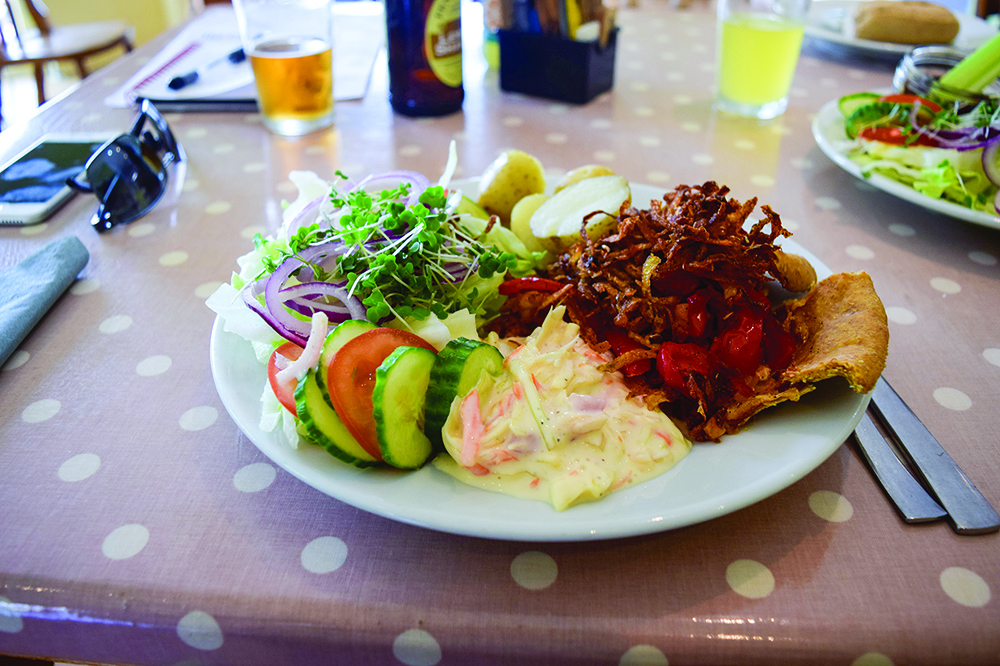
The sansevieria is better known as a mother-in-law’s tongue. The one Susan and myself purchased from Southwell Garden Centre, on a warm mid-week afternoon at the beginning of September, is a fine looking specimen… and the red pepper tart was delicious. At home Susan looks after the house plants, bar one: the multi stemmed miniature olive that was my responsibility and had adorned a gloomy corner close to my desk. Note the past tense. I’d neglected it for many years and, like the famous Monty Python Norwegian Blue parrot, it ceased to exist and was bereft of life! So, on a warm early afternoon, mid-week, we set off on a leisurely drive through the Dukeries for a replacement house plant and a casual lunch. However, the Tour of Britain cycle race had decided to use the same roads, on the same day for their Sherwood Forest to Newark-on-Trent stage. As roads on our route were temporally closed we caught site of a multi-coloured blur that was the cycle races’s peloton; several dozen, fit, lycra clad individuals moving faster through the picturesque Nottinghamshire countryside on two wheels than I’d dare do on four. They were followed by cohorts of amateur cyclists. Many of them heading to our destination: the bike friendly Southwell Garden Centre and tea rooms. The family run garden centre is on the outskirts of Southwell and easy to find. It has the feel of a nursery. Plants, containers and compost taking centre stage. We spent some time wandering through the outdoor plants before the thought of lunch got the better of us and we made our way to the tea room. There is extensive outdoor seating and on this warm (Tour of Britain) afternoon it had attracted a lot of cyclists enjoying an al fresco lunch. And they can keep an eye on their bike in the purpose built cycle rack. We selected a couple of drinks: a chilled, citrus flavoured water for Susan and bottle of Fentimans lemon shandy for myself, and drank these as we chatted to Dan, one of the co-owners, and Sheryl. Dan is responsible for the savoury side of the menu; often beginning his baking at 6am. Sheryl bakes the cakes and puddings, a vast array of which greet you from behind a chilled display cabinet as you enter the tea room. Wherever possible they use local ingredients. And North Nottinghamshire isn’t short of excellent market gardeners and butchers. For my lunch I decided to try one of Dan’s open, savoury tarts from the specials board: roasted red pepper, tomato and brie. A slice of shortcrust pastry tart stuffed with a soft, tangy brie under a thick layer of roasted tomato and red pepper. All topped with a stack of crispy, deep fried potato strings was the main attraction. The pastry was light and crumbly and the peppers added a note of sweetness that enhanced the tomato flavour. It was accompanied by a fresh crispy salad of lettuce, tomato, cucumber, red onion and cress. A helping of warm new potatoes and a mound of creamy coleslaw completed the ensemble. Susan made her selection from the ordinary lunch menu: a ploughman’s. It had two wedges of tangy cheese filling a quarter of the plate. It had the same generous salad but instead of the coleslaw there was a pot of Branston pickle and two batons of celery to scoop it up with along with a choice of white or wholemeal roll. The lunch time menu ranges from home made soups and sandwiches through to battered haddock and chips. There’s a soup and sandwich combo; a sort of mix and match. For the cooler days there are toasties, jacket potatoes and a Growler that consists of ham, chips and cheese in a soft bap. On the day we were there the tea room had around eight specials available for lunch. Loaded fries with pulled pork or southern fried chicken. A cheese, tomato and onion quiche, a broccoli and Stilton quiche or a bacon and cheese quiche; both with salad. Southern fried chicken burger with chips. Smoked haddock and mozzarella fishcakes. Pan fried plaice with lemon and mashed potatoes. They open at 9am when the breakfast menu is available. There’s toast with various toppings. Breakfast cobs with fillings ranging from just egg to bacon, sausage and egg. And a full English they call The Works with all the usual suspects. Sunday lunch is very popular at the garden centre. Dan tries to include at least two crowd pleasers: his steak and ale pie and the rich flavour and beautifully tender texture of a slow cooked roast brisket. Booking is advisable. And to finish there’s a large selection of pies, puddings and cakes. Large, traditional fruit filled pies ready to be sliced. Crumbles ready to be scooped. Chocolate and coconut coated, generously proportioned individual cookies and brownies ready to be nibbled. A lemon meringue begging to be eaten. And a Fairtrade coffee to linger over. A large, old fashioned, deep filled, egg custard attracted my attention. Dusted with nutmeg, pale golden on the top, and just the merest tremor in the centre when Sheryl moved the dish. It made my mouth water and was something to bear in mind for the next time we visit. 00
Dining In Derbyshire – Anila Indian Restaurant
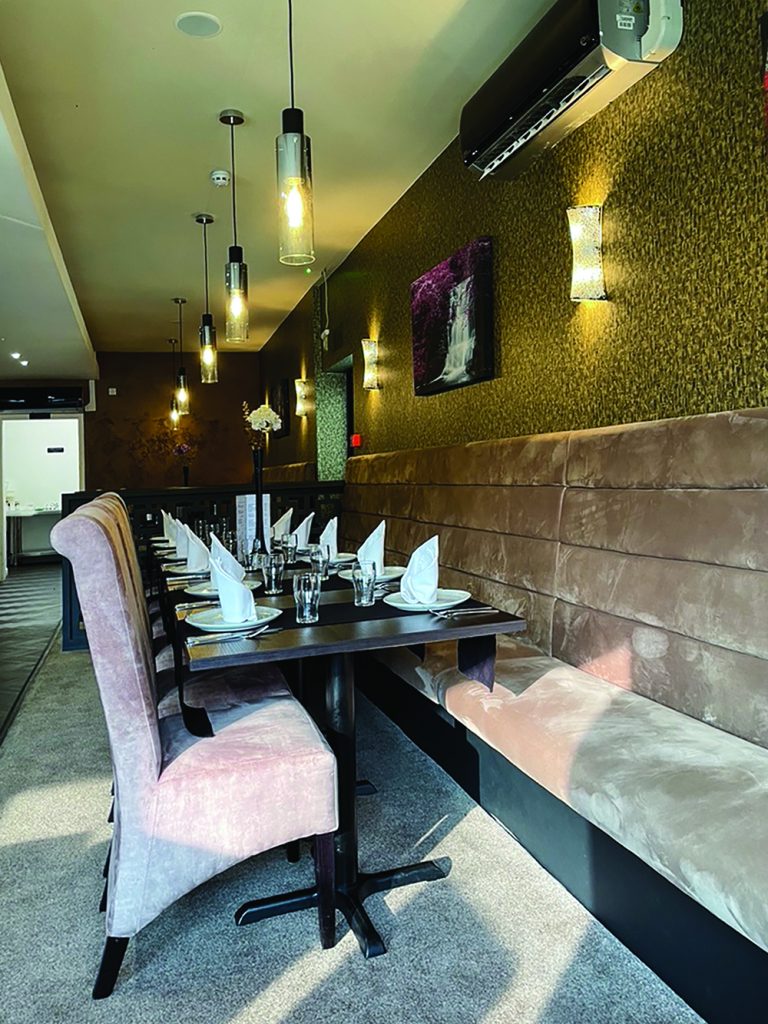
For many years I’ve driven past the little single storey building that sits katy corner wise on the green at the junction of the A610 and the A6 at Ambergate. My first memories are when it was the Little Chef and we considered it a treat for the family. Times change however and during lockdown it again became a firm family favourite when it opened as Anila, serving time honoured Indian cuisine and somewhere we could safely drive to where the kitchen would bring our order out to the car. Recently Anila opened its doors after a lengthy refurbishment, as a modern restaurant offering, as we were to appreciate, a lovely relaxed dining experience. On our visit we were greeted by courteous staff who showed us over to a quiet table by the window. The menu outlines the fascinating history of Indian cuisine and the influence Mogul rule had over the centuries, this is reflected in the variety and styles offered. Anila also source local, fresh ingredients where ever possible. Poppadoms and a pickle tray are always a good way to start and build anticipation for what is to come. My companion began with Paneer Achari Tikka, described as roasted Indian cottage cheese, although the texture is not as we would expect cottage cheese, but has much more flavour as it is marinated in Achari pickle before it’s lightly grilled. Served with a side salad it’s a starter which compliments many dishes. I chose the Salmon Macher Tikka, chunks of salmon with just a light touch of Indian spices, and cooked over a charcoal grill, served with a crisp salad and slice of lime, the garnish added texture and flavour and was gentle on the palate. I followed this with a house speciality, Murgh Makhni, a dish I hadn’t tried before, but our waiter described perfectly. The chicken was tender and buttery, and the Makhni sauce mild but with distinctive flavours including ginger and garlic but executed with a light touch. Pilau rice was all that was needed as an accompaniment. My companion enjoys his dishes with more of a medium heat and so ordered the Hydrabadi Biryani Chicken, a mix of basmati rice, chicken and onion with aromatic spices and a separate sauce. This was well presented and had a lovely balance of spices. We decided to share a Peshawar naan cooked in the traditional way. To finish our evening a dish of cooling ice cream was a simple but perfect finale, followed by a coffee. Just a note here, Anila don’t serve alcohol ( just soft drinks) but are happy for you to take your own alcohol. In all honesty I’m amazed at the skill set of the chefs to achieve these beautifully balanced dishes, each so individual with its own characteristics. They embody a rich heritage and culture going back thousands of years, and we found here at Anila they really were top of their game. We regularly enjoy a takeaway, but will in future add Anila to our list of favourite places to dine in. Our thanks also to the waiters who so patiently answered our questions and offered advice, making sure we had a very enjoyable evening . 00
Celebrity Interview – Chris Amoo founder of The Real Thing

No matter how talented you are, you need a fair amount of luck if you’re to succeed in the music business. And Chris Amoo, a founder of pioneering, million-selling soul and funk band The Real Thing who are best known for their massive hit You To Me Are Everything, knows that well. During our chat about his career and the band’s upcoming gig in Chesterfield he mentions three times that fortune has played a large part in their becoming the longest-established black group in the history of UK entertainment. The Real Thing were formed in 1972. As soon as legendary manager Tony Hall saw them he signed them up. Within days they became the first all-black group to appear on a television talent show. Viewers loved them and they won Opportunity Knocks by a huge margin. They toured extensively with David Essex and sang backing vocals on his album All The Fun Of The Fair. Producer Jeff Wayne got them to sing on the soundtrack of his concept album War Of The Worlds, with Chris taking lead vocals on Forever Autumn. But bad luck – before the album was released Wayne changed record companies and Justin Hayward from the Moody Blues was asked to sing the track which went on to reach number five on the UK singles chart. The Real Thing struggled for chart success until songwriters Ken Gold and Michael Denne wrote You To Me Are Everything for them. Their fortunes changed: they were the first all-black UK group to have a number one hit. It stayed at the top for three weeks and sold an incredible 30,000 copies a day. They followed that with Can’t Get By Without You which got to number two in the charts and later Can You Feel The Force which helped to establish them as Britain’s best-selling black band of all time. “We’ve been very fortunate,” says Chris who speaks in a pronounced Liverpool accent. “You always need luck in this business. It’s right place right time.” As well as maintaining he’s “extremely lucky” to have achieved success, Chris took time out to explain how the music industry has changed over the past half century – and how he became a champion dog breeder. Can he believe the band is still going after all these years? “We were never going to do anything else, to be quite honest with you. You never know how long a career like ours is going to last. A lot of it depends on (a) the success you have and (b) the passion you’ve got for what you’re doing.” Chris who is 70 obviously has passion for what he does. He says things haven’t got harder as he’s got older – it’s always been tough. “This business isn’t easy – it never has been. That’s what makes it so fascinating. You’ve always got to be at the top of your game because if you’re not you get found out. And when you get found out your career doesn’t last that long.” Chris and another original member Dave Smith have been together for more than 50 years and still love being on the road. Anyone who goes to see them at the Winding Wheel will hear all their hits because “there’s always going to be a sense of nostalgia about our music. It’s the soundtrack to so many people’s lives and that will never die.” The Real Thing will also be performing songs from A Brand New Day which was released last year – their first new album of original material in more than 40 years. Chris wrote most of the songs and revisited some old tracks including Children Of The Ghetto which he brought up to date. He points out that it’s become a lot easier to make records these days. “You used to have to go to London or go into a studio to record. I can now do it all at home. Because of technology, all our musicians can send their parts to me, I can listen to them and suggest changes. Then when we’ve got the whole product it can be mixed and fine-tuned at home. “This is one of the most fantastic things that’s happened in the business because it means even if there’s no record company interested, you can still record your product and you’ve got a platform in which to get that product played.” Social media now plays a crucial part in marketing records – but Chris points out one of the disadvantages. “We wanted to be able to sell A Brand New Day physically on Amazon and they refused to sell it. It made the download charts but they wouldn’t sell CDs. Speaking to a lot of people who do this type of thing, we discovered that since the pandemic Amazon are cutting down on this. They’re dealing mainly with larger companies who can give them good deals and discounts. When you do it on a small scale like us, you can’t do that. “A lot of people who dig Real Thing songs aren’t necessarily the people who are that much into social media, which is a younger thing. But at least the platform’s there. We got our album out and a lot of people heard it. We got a lot of television because of it. Happy days.” Speaking of television, Chris reveals there’s been increased interest since a documentary about the band was released in 2020. It’s called Everything – The Real Thing Story. It was shown on the BBC and Netflix. It recounts how four lads from Liverpool, “dubbed ‘the black Beatles’ by the British tabloids”, went “from the tough streets of Toxteth to the bright lights of New York”. “We’re hoping that the film is going to be shown in Showcase Cinemas,” says Chris. “It was just about to go into that chain when the pandemic happened. It’s also been released in Europe so we’re going to be going over there doing a lot of promotion.