Walk Derbyshire – A Walk to the Bull Ring at Snitterton

By Rambler Before I begin my description of this walk, I must put in an explanation of what I mean by Bull Ring. First and foremost I have no intensions of sending walkers all the way down the A38 in order to walk round Birmingham’s busy Bull Ring commercial district. The bull ring (notice the use of lower case ‘b’ and’ ‘r’), we are referring to is a four or five inch iron ring set in a flat low stone in the corner of a tiny roadside green at Snitterton village near Matlock. Its original purpose was to tether a bull as part of the barbaric so-called ‘sport’ of bull baiting by teams of dogs, a practice banned in 1835. The walk starts and ends on Matlock Bridge, near to which is currently the site of an extensive flood prevention scheme. The work involves the use of a massive crane that currently dominates the town centre skyline. The crane has become such a popular item, that a fund-raising competition to give it a name was arranged – the winning title was (drum roll), ‘Liftymacshifty’. From the bridge and its interesting civil engineering works, the walk leaves the main road where it bears left. Continuing forward, the way is past a wine merchant’s warehouse and over the railway bridge. Continuing forwards and steadily uphill through a small farmyard, steps lead to a stile giving access to a path climbing steeply towards a wood next to a tree shaded house. Across its access drive and through the belt of trees, the way then continues uphill on a field path heading towards a farm. A right had turn on the farm lane and then almost left through a kissing gate opposite leads on to another path bearing half right and then uphill beside a hedge in order to reach another track. Here a right hand turn takes the walker past a welcoming seat with a delightful view over Matlock, an ideal place for a rest. Slightly to the right above the seat, a field path continues to climb the hillside, then crosses a farm lane. Beyond the far side of the lane, a level path crosses meadowland, past two old stone barns until it reaches a five-way path junction. Taking the second path to the right of the one you are on, walk beside a stone boundary wall to reach a narrow road – this is Salter’s Lane once used by teams of packhorses carrying salt from Cheshire onwards to North Sea fishing ports. Across the road, a signposted path leads to a five-way junction of paths, and then downhill to Jug Holes, an abandoned lead mine. Swinging left from the mine, we follow the path downhill and then right at a cottage to Leawood Farm. Its access lane leads downhill into the attractive hamlet of Snitterton. This is where in the corner of a small roadside green marked by a wooden seat the bull ring can be found, set in a flat low stone next to the road. The road makes a tight right hand bend beyond the ring; follow it for about 100yards and then go left through a stile. Ignoring a path leaving to the left, the walk continues forwards as far as the road which is joined almost opposite a minor side lane. Follow this lane, to the right, almost as far as the river. Turn right along its bank and continue over a series of meadows until the path reaches a factory producing macadam blocks, the shaded riverside path continues all the way back into Matlock and its bridge. USEFUL INFORMATION: A moderate walk of 4½ miles (7.25km) on field and riverside paths. One steep uphill climb at the start of the walk. Good views of the Derwent valley as it curves away to the hills and moors of the Dark Peak. Muddy sections of the riverside path, especially in wet weather. RECOMMENDED MAP: Ordnance Survey Explorer Map Sheet OL24, 1:25000 scale The Peak District – White Peak area. PARKING: Roadside to the right above Sainsbury’s petrol station, although all day pay and display parking can usually be found in the riverside car park on the Matlock Bath side of the railway bridge over the A6. PUBLIC TRANSPORT: Rail from Derby. Bus from Derby or Ripley. REFRESHMENTS: Pubs and cafes in and around Matlock town centre. THE WALK STEP BY STEP The walk starts at Matlock Bridge. Cross it and walk on beyond the road junction opposite. Continue over the railway bridge and then onwards and upwards to a farmyard. Climb the stone steps next to the farm house and go through a stile to enter a field. Climb the steep grassy path directly uphill until it reaches the lane to a large house. Cross this lane and walk through a small belt of trees. Climb the stile at the far side of the trees and then follow a path alongside a hedge. Swap sides with the edge and continue uphill towards a farm. Cross the farm’s access drive by going right and left as indicated by the position of two stiles. Walk uphill diagonally half right, crossing the line of a mature hedge. Continue uphill, the path now bearing half left to reach a tumbled down wall; (hopefully the wall may be repaired in the near future and a stile restored). Cross the rough farm lane immediately below the wall. Directly opposite, the twin stones of a squeezer stile in a dense hedge give access to a level path crossing a series of meadows marked by two abandoned stone barns. Where the path reaches a five way path junction, take the second path on your right. Go down to and cross Salter’s Lane, part of the old Saltway between Cheshire and the east coast. Begin to go downhill, steeply at first, then bear left next to the lower entrance of Jug Holes Mine (lead). From the mine go directly downhill for a short distance to link with a
Places Pevsner Forgot – Hardstoft & Astwith

Hardstoft and Astwith lie atop a pair of west-east ridges, with the Dawley stream rising in between and running down to the Doe Lea, above which towers Hardwick old and new halls, which visually dominate both hamlets from the east. We first made the acquaintance of Hardstoft around 1980, when, with my colleague Mick Stanley and his wife, we were moving about the county looking at the country houses whilst preparing the first edition of The Derbyshire Country House. After visiting Newton Old Hall at Tibshelf, we headed north but needing lunch, stopped at the Shoulder of Mutton, Hardstoft, which lies at the end of a row of 18th century cottages on Deep Lane, leading off the B6039 towards the heart of the hamlet. Then, the pub was a fairly run-of-the mill local one, and if Pevsner saw it in 1951 he perhaps did not require a pint and a sandwich and pushed on in blissful ignorance of the delights of the invisible settlement, in which case he missed a treat, albeit a gentle, unassuming, one. Yet it is not without interest, as there are two listed buildings in Hardstoft and one in the adjacent but far more sequestered hamlet of Astwith. The name commemorates one of those Norse settlers of the ninth century whose name is found nowhere else in the annals of the English Danelaw for it means ‘Hjǫrtr’s farmstead’, in contrast to Astwith, which is also a Norse derived name but means merely ‘east clearing’. Both are part of the parish and manor of Ault Hucknall, held by Steinulf of Calow under Norman grandee Roger de Poitou in Domesday Book (1086) and, from the 16th century, if not before, were long part of the Hardwick Hall estate. Indeed, when the late Duke of Devonshire gave Hardwick to the National Trust in 1950, the Chatsworth estate quite probably retained the working part of the estate, less whatever the Trust required as an endowment. So much for history: we started at the pub which, we were amused to see, had dumbed down its name to The Shoulder, which, let’s face it, sounds more like a painting by Salvador Dali – odd, even in the context of pub names. It is the end element of a row of three 18th century double fronted estate cottages built, like most houses in the two hamlets, of Coal Measures Sandstone, but with most engaging paired chimneystacks with chamfered angles in 18th century brick – no doubt a conceit of the Hardwick estate foreman of the time. We were able to trace the inn back to the 1820s, but it may well have flourished before that. From the early 19th century until the First World War, it was run by the Clay family, several of which were called Sampson; after the war the Tagg family took over for a couple of decades at least. Nevertheless, it was pleasant within and welcoming, and our modest requirements were met with creditable aplomb. We then set off along Deep Lane, which runs from the main road towards the heart of the settlement but turned off right along Farm Lane, a tributary running off it, parallel to the main road and behind the inn with its attendant buildings. At its south end this afforded excellent views south to Biggin Lane and over a declivity in which stood a white painted former farmhouse called Whitton Lodge, about which we were able to discover little other than it is now a roomy holiday let. It boasted a good cartshed or barn, now converted. A much more unspoilt seventeenth century farmhouse lay on the east side of the lane with Hardwick Old Hall across the valley seeming almost within touching distance. The fenestration had been modernised, but otherwise it was charming and largely original; how it escaped listing we couldn’t work out. Further east, on Deep Lane, The Green presented us with a group of engaging stone houses and farms with a neat row of cottages bookended between two of them. Slightly north, was The Yews (alternatively Yew Tree Farm), another farmhouse, one of Hardstoft’s listed buildings, under restoration and empty when we saw it. Historic England reckons it’s mid-18th century, but we reckoned that, with its paired mullioned lights and elegant simplicity it could be late 17th century with an extension to the east. It was probably amongst the buildings on The Green that much of the working life of the hamlet took place, for in 1827 one William Haslam is listed as a gunsmith there and a succession of William Halsams continued the tradition of white-smithing into the 20th century and latterly as ‘hot water engineers.’ Indeed, George Haslam was still pursuing this trade in 1928. There was also a shoe and boot maker, estate gamekeeper and, on the main road further north, the New Inn (a beerhouse long closed) and a school. One of the most notable craftsmen to have graced Hardstoft was Joseph Kirk (1681-1735) who made exceptionally fine clocks, including one at Hardwick and another in a chinoiserie lacquered case. He seems at first to have been based here, but later signed clocks from Nottingham (eg. that in Derby Museum’s Prince Charlie Room) and latterly from Skegby, where his London-trained father, John, had also lived latterly, where he died. A Kirk clock made in Skegby was sold from Chatsworth a decade or so ago, and he also made the stable clock there which survived to be transferred into James Paine’s new, bravura, structure in the 1750s. The old directories mention that the Wesleyan Methodists once had a chapel here, although we couldn’t work out which building it had occupied, but the school, founded as a Church of England School in 1858 (and so dated) lies on the main road between Deep Lane and Astwith Lane. Built of hand-made brick and stone dressings, it has a steep gabled portico with the date, and a bell turret. This pretty little building with its iron railing, long derelict,
Haddon Hall – A Sleeping Tudor Beauty

by Brian Spencer “What we see today is basically the unaltered fortified manor house developed between the late 12th century, and 1620 when the last and minor ‘improvements’ were made” One autumn evening a few decades ago, driving home along the A6, just short of the entrance to Haddon Hall I was stopped by a police barrier, complete with bollards and flashing blue lights. Unable to see any problems ahead or behind, I sat there and waited for developments. The answer soon became clear when a large black car drove quickly past and turned left into the hall’s entrance. As the car overtook me, I got a glimpse of its passenger, the then young Prince Charles, the Prince of Wales. Apparently, he and his sister Princess Anne used the castle when visiting Derbyshire and needing overnight accommodation they slept amidst Tudor grandeur! Their signatures together with that of their grandfather HRH King George V, are etched in the plaster above a small fireplace in the Earl’s Apartment. That their visit must be a privilege no one could deny, but who would turn down the chance of staying in this romantic relic of time gone by. What we see today is basically the unaltered fortified manor house developed between the late 12th century, and 1620 when the last and minor ‘improvements’ were made. Throughout that time Haddon Hall was owned by only three families, the Avenels, the Vernons and the Manners. It was the Avenels from Northamptonshire who built the original house, and it was lived in permanently until the Manners more or less abandoned it when Sir John Manners, 9th Earl of Rutland was created the 1st Duke of Rutland in the early eighteenth century, and the family moved to the much grander Belvoir Castle, leaving Haddon Hall suspended in time. Before that time, Haddon had been owned by the Vernons for ten generations between 1262 and 1514 with Sir George Vernon’s legendary parties which could last for weeks, earning him the title of ‘King of the Peak’. His daughter Dorothy Vernon became the best known female family member. When she eloped with Sir John Manners by crossing the pack horse bridge below the house, her escapade laid the foundations of another legend; romantic though it may be, the trouble with it is that the bridge did not exist at that time. However, one way or another, she did marry Sir John Manners, and so the Manners dynasty are still the owners of Haddon. For almost three centuries Haddon Hall remained empty and almost but not quite unloved until the 10th Duke opened the house to visitors. Little is known about the origins of Haddon, but there seems to have been a small manor house based on Saxon foundations either on the site of the present building, or nearby. The estate on which it stood stretched almost as far as Sheffield. Together with farming and lead mining, from entries in the Domesday Book of 1086 it sounds as though whoever owned the estate became very rich. The Avenels acquired the property in the 12th century, originally being tenants of William Peverel, one of King William the Conqueror’s knights. How they managed to expand these interests can only be guessed, but we can assume that their wealth grew by hard work and perhaps more than a little grovelling at the feet of their lord and master, William Peverel. What we do know is that the first mention of a house and chapel stood on the site and were thought to have been built around the mid-1100s. This was when it was mentioned in the marriage settlement of Avice Avenel, William Avenel’s eldest daughter, to Richard de Vernon in 1189. Haddon remained with the Vernon family until it passed to the Manners when Dorothy Vernon married Sir John Manners in 1567, with whose family it has remained ever since. Visitors entering the Haddon estate walk in through the gatehouse away from the car park on the opposite side of the main road. Beyond the gatehouse, the gravelled drive winds its way, over the beautiful River Wye before dividing in front of the excellent café and tea rooms. The hall sits high above to the right, on an imposing limestone outcrop. Built from local stone Haddon looks just like the setting for a Sleeping Beauty pantomime. A weathered oak door opens directly on to the gritstone flagged surface of the lower courtyard and in its right hand, south-east corner, the Tudor chapel projects like a bastion on an impregnable fortress wall. Fading yet still vibrant frescoes line the chapel walls and a jumble of box pews fill what little space the tiny nave can provide. To one side is the poignant stone effigy of a young boy, nine year old Lord Robert Charles Manners, known as Lord Haddon. This one is the copy of the sculpture now in the chapel at Belvoir Castle and was carved in 1894 by his grief-stricken mother. If Lord Haddon had lived, he was destined to become the 9th Duke of Rutland. The sloping gritstone slabbed yard is surrounded by a complex of mysterious doorways and time worn steps. The first door on the left of the entrance door gives access to a small room where many of the odds and ends found when it became necessary to lift centuries old floors during maintenance work are displayed. The museum is full of everyday items ranging from a remarkably well-preserved shoe, to a still readable child’s prayer-book. There are even accounts of worker’s wages, such as what a skilled craftsman was paid for three day’s thatching. Steps on the north-east side of the courtyard lead, on the left, to the kitchens, where the banquets prepared for the enjoyment of Sir George Vernon earned him the title, ‘King of the Peak’. We can imagine him and his guests warming themselves before a roaring log fire in the nearby Banqueting Hall. These feasts were legendary, especially when
The Lost Houses of Derbyshire – Hearthcote House, Swadlincote

by Maxwell Craven Hearthcote House was a deceptively ancient and complex building by the time of its demolition in 1980. At first glance, it appeared to be an eighteenth century two storey L-plan brick farmhouse, lit by sash windows both conventional and side opening (the latter usually called York sashes), under cambered heads and with brick string courses in between – all reminiscent of the later Georgian Era. In fact, this external fabric was dated 1793. The entrance looked plain, too, but showed signs of having once had a stone surround, but at the NW end, there rose a mighty stone built external chimney breast which once rose in stages and which was latterly topped by a brick chimney stack, also in two stages. This feature betokens an early Tudor date or even the mid-to late-fifteenth century and was clearly once attached to a much more ambitious house. Inside, all was not as it seemed, for it was actually box framed in timber, in the style of the mid-17th century, with a particularly interesting oak staircase with balusters tenoned into two posts which ran up the whole height of the house, a feature only paralleled to my knowledge by the 1640s staircase at (not lost!) Sturston Hall, near Ashbourne, also a timber framed house of similar size, later cased in brick (and stucco in this case). I might add that this important staircase was safely removed from the house prior to demolition in 1979 and stored dismantled with the County Council’s important collection of agricultural machinery at the excellent Working Estate Museum, Elvaston Castle, from which, needless to say, it was subsequently lost when the museum was suddenly closed by the County Council and the collections – including much agricultural material given by the late Lord Vernon – auctioned off. No one has been able to discover its fate, despite efforts by the South Derbyshire District Council heritage officer, Philip Heath. At the time Domesday Book was compiled, Drakelow and Hedcote are combined as one manorial estate, listed at the head of the list of those held directly from the King by Nigel de Stafford, whose posterity settled here and took the name of another manor, Gresley, as their surname, but they lived at Drakelow until 1933. The name Hearthcote is directly analogous to ‘Heathcote’, meaning the house or domestic property on the heath, and indeed the area is well scattered with names ending in ‘-cote’: Swadlincote, Brizlincote and Chilcote being further examples. The spelling varied wildly, but remained mainly as ‘Heathcote’ until the Stuart period but, by the time Peter Burdett drew his map of the County in 1767, he had labelled it ‘Hearthcote’ although 19th century directory compilers must have become confused on hearing the name spoken in the local argot, rendering it both as ‘Earthcote’ in 1846 and as ‘Arthcote’ in 1895! It was reckoned part of Stapenhill by 1185 when the place was granted to Burton Abbey, and it may well have had a capital mansion on the site, as the grant included a long vanished chapel, almost certainly a domestic one. Later though, it seems to have reverted to the Gresleys, for Sir John de Gresley granted it to Gresley Priory in 1363. It was leased by the Prior to the Verdons, one of whom appears to have had a capital mansion here – presumably on the site of Hearthcote House. By 1296, Hearthcote was held from Theobald de Verdon, with Newhall and Stanton (by Newhall), by Robert de la Warde of Upton, Leicestershire. Three years later he was summoned to Parliament as 1st Lord Warde of Alba Aula, which quaint Latin designation probably equated to the appearance of his newly built seat at Newhall and indeed, there was a Whitehouse Farm there until a century ago, having survived Lord Warde’s new seat by several centuries. Also, from that time and for many centuries, Hearthcote, Stanton and Newhall all had the name ‘Ward’ suffixed. The descent of the estate went from his son to Sir Hugo de Meynell and the evidence seems to be that he lived at New Hall and members of his family occupied the secondary houses at Stanton and Hearthcote, but after his male line failed, it passed to the Dethicks and thence through several successive heiress. When Gresley Priory was dissolved in 1536, the estate at Hearthcote was valued by the commissioners at £13 – 6s – 8d (£13.33) the same as Church Gresley, which they also held, suggesting both were then pretty small. The Commissioners sold Hearthcote to the Alleynes of The Mote in Kent, who built Gresley Old Hall, and the house became attached to their estate there, although Hearthcote itself seems to have become an extra parochial liberty of Church Gresley – that is, separate from the main parish and free from shrieval control. The Alleynes pulled down the old medieval Hearthcote House (probably built around a courtyard) and replaced it with a timber framed farmhouse attached to a stone chimney breast retained from the old house, being strongly built of ashlared stone – waste not, want not! This probably happened after 1597 when Hearthcote was still described in a document as ‘an old howse’. In 1730 John Alleyne sold the estate, including Hearthcote, to the somewhat egregious Littleton Poyntz Meynell of Bradley, who intended to use it as a shooting box, but his son decided to move to Leicestershire the better to hunt and, in 1775, the Meynells sold it all to the Gresleys, so Hearthcote thereby came full circle. It was without doubt the Drakelow estate that re-cased the old house in brick, and seems to have continued with the three-life tenancy of the Newbold family. However, change was again on the cards for, in 1828, Sir Roger Gresley, Bt. sold Gresley Old Hall and Hearthcote separately, the latter becoming the property (probably due to the lure of good quality coal being available on the estate) of Stanley Pipe-Wolferstan DL JP (1785-1867),
Images 2023 BIG Quiz

00
Derbyshire’s National Heritage Corridor

by Brian Spencer It is wrong to suggest that the Industrial Revolution began in and around the Derwent Valley, but even so the new order was given a massive push forward by the innovations of two mill owners, Richard Arkwright and Jedediah Strutt. They were, as the saying goes, ‘standing on the shoulders of giants’. Even though there is an older mill in Derbyshire, which operated as a silk mill in Derby (now used as the Museum of Making), in 1771, it was Richard Arkwright who built the first cotton mill in Derbyshire. From his previous knowledge of the district, he chose the safety of Cromford, well away from the danger of mobs intent on wrecking his invention that was to change the history of cotton spinning world-wide. In order to fulfil the booming world-wide demand for woven cotton fabrics, it was necessary to develop a speedier method of spinning the raw material brought to England by sailing ships from India and America. As a young man, Arkwright worked as a barber and wig maker in Preston, his hometown. He had a keen eye for anything new or needed by the world around him and he soon realised that so far the only alternative to this laboriously slow method of spinning cotton on a hand and foot operated machine was by a slightly more efficient machine that had been developed by James Hargreaves, a fellow Lancastrian. Called the ‘Spinning Jenny’, but even though it was marginally faster than hand spinning, it didn’t completely answer the problem. The answer came to young Richard Arkwright when he watched iron-workers feed red hot iron into a system of rollers, each one running slightly faster than its neighbour in order to turn iron ingots into workable strips. Arkwright experimented with a system which was based on a smaller and faster version of the machine used by the metal workers. With this he came up with the idea of a system of pairs of vertical rollers, each pair travelling faster than its neighbour. As anyone who has been in a cotton spinning mill knows, the noise of his machine was deafening, giving already suspicious hand spinners the idea that Arkwright was in league with the devil. Moving away from Preston, he opened a mill in Nottingham powered by horses, but he soon realised that he had to think on a much larger scale if he was going to gain the full advantage of his new invention. He needed to run his mill not by horse-power, but by water, giving him a far more satisfactory answer to his problem – which he found near Cromford. From his days as an itinerant barber and wig maker, Richard Arkwright was a regular visitor to the village; here was a plentiful supply of both water and a willing army of workers looking for work as an alternative to the declining lead mines. The mill system he designed for Cromford was built in four stages over twenty years between 1771 and 1791, close to an existing corn mill. Ever fearful of coming under attack from those who spun the yarn by hand, his early mills were more like fortresses than work places. Walk down Mill Road from the A6, and the mill’s walls tower like something out of medieval history – there are no widows along the roadside on what will be level with the ground floor; the only entrance to the mill yard curves inwards to give ever watchful guards the ability to fire their muskets down onto anyone attempting to force the firmly shut gates. Overseeing all movement in and out, the mill manager lived directly opposite, watching the comings and goings of the workforce, especially anyone coming in late, when they would be fined a day’s pay unless they had a genuine excuse. Water was the essential means of driving the mill and at first this was readily available from a pond behind the Greyhound Hotel. It was supplied by Bonsall Brook which flows down the Via Gellia and there was also another source of water power which came from beneath the ground. This was water from a sough which drained lead mines running beneath Cromford Hill. This water could be diverted or held back when necessary by a complex system of culverts filling what the locals call the Bear Pit. Unfortunately this was not very popular with the mining fraternity, because whenever the flow of water from the sough was allowed to build up, especially at times of drought, the result was that flooding occurred further back into the mines. The demand for water increased with the expansion of the number of spinning frames brought into operation. This was supplied by building a weir in the River Derwent behind what became Masson Mill alongside the main road. The extra water supply came from deepening the Derwent as far back as Matlock Bath. The only mill not requiring water power was the subsidiary mill Haarlem Mill at Wirksworth. Being one of the last to be built and away from an easy source of water, it was powered by another innovation – a steam engine. Bringing water power to the mill was not all that was done to alter the appearance of what was originally a tiny village. Being so far from other areas of population, Arkwright decided to build homes for his employees, many of whom, like those in North Street welcomed the upper room. These allowed the male member of the family to follow their profession, as a hand and foot operated stocking frame worker. Arkwright’s sons and grandsons continued to develop Cromford; a school was built at the top of North Street and there was even a cosy lock-up for the occasional criminal. The Greyhound Hotel was built to accommodate the world and his son who came to learn how to train their operatives using spinning frames bought under licence from the by now wealthy and knighted Sir Richard Arkwright. Mills
Tried & Tested with Weleda

All Purpose Balm 25g £7.95 The tiny tin with big benefits! This neat little pot contains a soothing balm with a multitude of uses – to intensively nourish or protect any dry patches, chapped skin or dry lips. Ideal to pack in a changing bag when out and about. Made with nourishing organic sunflower and avocado oils, luxurious cocoa seed butter, protective candelilla and carnauba waxes, infused with skin-caring calendula extract. Suitable for redness, chafing or dryness – from dribble rash to sore noses. Try it on the upper lip to soothe skin irritated by the constant nose blowing of seasonal sniffles. Or apply a little balm around the rim of each nostril as a barrier to help trap dust, pollen or other allergens. COMFORT Aroma Shower 200ml £8.25 Ease into the sublimely comforting spicy scent of winter holidays with our limited edition Comfort Aroma Shower. The natural fragrance is a mix of pure essential oils and plant extracts – with mellow vanilla, refreshing lemon and warm spicy undertones of star anise, conjuring up memories of cosy winter holidays and leaving mind and body feeling pampered and relaxed. It’s like a hug in a tube. Its formulation, which has been dermatologically-tested for suitability on sensitive skin, contains organic sunflower seed oil and gentle plant-based cleansers that leave skin feeling nourished and soft. The creamy formulation is NATRUE-certified natural and biodegradable* – as eco-friendly as it is skin-friendly. (*as defined by OECD) Sensitive Body Lotion 200ml £12.95 This calming and soothing lotion contains organic coconut and jojoba oils to provide a richer, thicker lotion that protects and comforts reactive and easily irritated skin. The fast-absorbing lotion was developed with dermatologists to deliver long-lasting moisturisation, and bears the ECARF allergy-friendly quality seal. Its fragrance-free formulation contains no essential oils, and just leaves the subtle scent of coconut oil on the skin. The lotion is NATRUE certified natural, with 76% organic content. PRODUCT TEST :: PRODUCT TEST :: PRODUCT TEST All Purpose Balm This all-purpose balm is extremely gentle and is even recommended by midwives to be used on baby’s skin. I chose to use it as a lip balm, with no fragrance and not greasy it was lovely and smooth and long lasting. The little tin also makes it easy to carry with you. CB Comfort Aroma Shower In winter I find a shower comforting and relaxing, and the natural fragrance of this product, enhanced by the warm water did both. No artificially strong perfumes but just a gentle, creamy body wash. Weleda products also give me confidence as I know they use only pure oils and plant extracts. VP Sensitive Body Lotion At first, I found this took a little while to be absorbed but on reflection I think this is due to the rich oils and organic beeswax it contains. The results however were really excellent and long lasting, making my skin feel smooth even the following day. JP 00
Walk Derbyshire – In the footsteps of Florence Nightingale – The Lady with the Lamp

Following her sterling work amongst wounded soldiers in the Crimea, Florence Nightingale returned to England. After spending a few days in London, she boarded the London to Manchester train at St Pancras Station. Leaving it unannounced at the tiny halt serving Whatstandwell, she set off to walk quietly along the hillside road, climbing steadily to Holloway and Lea Hurst, summer home of the wealthy Nightingale family. The only people she met along the climb would have been local quarrymen and one or two farmers, whose polite greeting she acknowledged with a friendly smile. This winter warmer walk follows her hillside route as far as Holloway, before dropping back into the valley and returning along the canal, which would have been far busier in her day, but with more wildlife than today’s. Florence was a member of the Nightingale family, owners of a successful mill and hat factory at Lea Mills, as well as having profitably run lead mining and smelting interests. Her immediate family inherited Lea Hurst, but her mother was unhappy living there so far from London society. Living on a cold hillside was not for her, and in any case, the house was too small, having only 15 bedrooms! As a compromise, Florence’s father bought a more suitable property at Embley Park in Hampshire, but still using Lea Hurst purely as a summer residence. Florence was named after the Italian city where her parents were living at the time, likewise her elder sister Parthenope was named after the Greek settlement in Naples. It was during her visits to Lea Hurst that Florence’s commitments to nursing began to take shape. At first she spent her time ministering to the local sick and poor, along with people living in and around Holloway. This hardly met with the standards of her socially minded mother, but eventually a compromise was reached whereby Florence was allowed to nurse her grandmother in her final years, and following the latter’s death, she looked after her old nurse until she also died. Unfortunately this didn’t satisfy her mother’s idea of the proper way for a gentle young woman to act, but Florence, realising where her vocation lay persuaded her mother to support her scheme, which was to convert the inherited family property of Cromford Bridge House into a nursing home. Realising that it would be almost impossible to find a source for training nurses in England, Florence set about acquiring everything that had been written on the subject, before visiting a German nursing institute in Kaiserwerth. At the end of this hard fought struggle, and despite continuing family opposition, she was appointed to manage The Institution for the Care of Sick Gentlewomen in Distressed Circumstances in London. In 1854 and with little or no logistical planning on the British side, a war broke out in the Crimea. Such was the lack of support at all levels that little or nothing was known at home about conditions on the Crimean battlefield until The Times reporter William Howard Russell sent regular dispatches to London, using the then newly invented electrical telegraph network across Europe. Horrified by the almost daily reports coming out of Crimea practically as soon as they happened, especially his reports about conditions of the wounded, the Government were forced to act with consummate speed. The Secretary for War was prompted to write to Florence, inviting her to lead a small party of nurses to Scutari in neighbouring Turkey – in fact she had already been planning a similar, but privately organised team. In less than a week she left London accompanied by 3 volunteer nurses, arriving in Scutari where she soon had to face the enormity of tasks facing her team. Conditions were so appalling that they had to cope with a death rate of 75% from cholera alone. Such was her strength of will that Florence Nightingale was able to cope with the horrors of wounded soldiers struggling to survive under the terrible conditions surrounding them. Walking through the wards late at night, despite being a strict disciplinarian she managed to offer comfort to all of the sick and wounded, becoming a ministering angel with a gentle touch. Probably the first forces sweetheart, she was known as The Lady of the Lamp, and bed-bound soldiers kissed her shadow as it passed them. Returning to England a little less than two years later, she found herself in the midst of being treated as a national icon, something she hated and made every endeavour to shun publicity, especially when summoned to Balmoral by Queen Victoria. After a short one-night stay in London, she caught the train to Whatstandwell and the home comforts of Lea Hurst. Back home once more, almost immediately she returned to her ‘good works’, helping those in need as well as setting up reading rooms in Holloway and Whatstandwell, along with providing books for pupils at Lea Primary School, she also paid for the services of a doctor to attend to the needs of the poorer inhabitants of the district. Florence set up a penny bank, encouraging the local children to become thrifty. Following her death in 1910, there was a small legacy in her will for the school’s headmaster. From her nursing training, she was able to care for her grandmother and her mother during their final years. Throughout the last years of the nineteenth century typhoid fever became rife and an outbreak overtook Holloway. During the epidemic she arranged for improvements to be made to the water supply and foul water drainage. Florence Nightingale spent the last thirty years of her life in London until her death in 1910. USEFUL INFORMATION: An easy 3½mile 3.5 (5.6km) walk mainly along byways and the canal towpath. With one steady climb along the byroad from Whatstandwell to Holloway. RECOMMENDED MAP: 1:25000 scale Ordnance Survey Outdoor Leisure, White Peak Area. Sheet OL24 PARKING: Canal-side (free) at Whatstandwell, or station car park (pay & display). PUBLIC TRANSPORT: TP from Derby to Whatstandwell railway station. REFRESHMENTS: Family
Celebrity Interview – George Telfer

At the age of 61 many people may be starting to think about retirement. But not Derbyshire actor George Telfer. He’s working on one of the most exciting productions that’s been seen in the West End for many years and regards it as a “huge opportunity”. George is understudying four roles in the new version of Harper Lee’s To Kill A Mockingbird. It’s been written by Aaron Sorkin, one of the hottest properties in the entertainment business who penned the television series The West Wing as well as screenplays for the films The Social Network and A Few Good Men. George will go on stage as Mr Cunningham and Boo Radley when the actor playing those roles is away in the middle of January. “They’re rather small parts but they’ve both got really good moments in the play.” He’s also understudying Dr Reynolds and the best part of all, Judge Taylor. “That’s a brilliant part,” says George. “I just need the actor playing him to go on holiday!” He’s excited about appearing in To Kill A Mockingbird because “it’s major, top-tier British theatre. It’s the equivalent of Broadway, top-of-the-range stuff.” He’s contracted to appear until 20th May in the show which features Matthew Modine in the role as Atticus Finch. Modine is known for appearing in Stanley Kubrick’s film Full Metal Jacket as well as playing the villainous Dr Martin Brenner in the Netflix sci-fi horror drama series Stranger Things. “It’s a fantastic production,” says George of To Kill A Mockingbird. “It’s a really good credit to put on my CV.” George has come a long way since he decided to go into acting after realising he wouldn’t follow in his parents’ footsteps by becoming a doctor. “I wanted to be a doctor from when I was three or four but I realised the academic requirements for medical school weren’t going to happen. Science and maths weren’t for me at all.” “I did a few plays at school and they seemed to go quite well, so I thought I’d have a go at that.” George who is from Newcastle had to try for three years before getting into drama school, finally being accepted by the Royal Scottish Academy in Glasgow. After graduating, George began to pick up work and his life changed 35 years ago when he was cast as Jack Worthing in Oscar Wilde’s The Importance Of Being Earnest. Playing Cecely Cardew was Susie Hawthorne. They have been together ever since. For about five years they lived in London but were unable to buy a house in the capital because it was too expensive. They’d already started working for legendary producer Colin McIntyre who had a base in Chesterfield and ran weekly rep sessions all over the country. So George and Susie moved to Derbyshire. “It’s right slap bang in the middle of the country and great for touring. “We did so much for Colin. We did 12 or more years for him doing different plays every week. It was really good training. “There was a period when snooty casting directors would say ‘weekly rep is appalling’ but it’s come back round now and people like Imelda Staunton and Derek Jacobi are saying what brilliant training weekly rep was.” Over the years George has performed a huge number of stage roles. He fondly recalls working for director Pete Meakin and Derby LIVE on two Shakespeare productions, Much Ado About Nothing at the Guildhall in 2009 and The Merchant Of Venice at Derby Theatre in 2011. “I love Shakespeare,” says George. “I’m re-reading Hamlet at the moment because something might happen this year which isn’t Hamlet itself but it’s about Hamlet. “I do struggle to understand it. But if you read it carefully and think very much to the right and left of the words and then trace a word back to four lines before, you suddenly find links. They’re almost like road maps. Shakespeare was so clever. But you have to be patient.” Some non-theatrical people might regard standing on a stage on your own trying to enthral an audience for a couple of hours to be their worst nightmare. But not George who has done several solo shows including ones about Richard Burton, John Gielgud, Graham Chapman of Monty Python fame and Prince Philip, the Duke of Edinburgh. “Generally speaking, you don’t come off script and talk to the audience if something happens – it’s not really right” “But I realised the Duke of Edinburgh solo show was completely different: if you’re doing a solo show about an actor, they’ve become well-known because of stage and cinema where they generally wouldn’t ad lib. But the Duke of Edinburgh is famous for doing just that, making it up as he goes along. So that was just wonderful for me, doing Do You Still Throw Spears At Each Other?” In recent years George has taken parts in plays for Derbyshire-based Rumpus Theatre Company at the Pomegranate in Chesterfield and has appeared in the Classic Thriller Season at the Theatre Royal in Nottingham. Last summer George and Susie’s 26-year-old son Ed played Constable Jones in Agatha Christie’s Spider’s Web alongside his dad who was Inspector Lord in the classic thriller. He usually works backstage for Chesterfield council. George’s daughter Lucy, who is 27, aims to follow in her father’s footsteps. George has also worked with indefatigable Brian Blessed, the man with the unmistakable booming voice, who has directed George in five plays at the Berkshire theatre The Mill at Sonning. That started when George appeared alongside Blessed’s wife Hildegarde Neal in the play The Holly And The Ivy. She told Brian he had to sign George up for the role of the butler in the Agatha Christie thriller The Hollow in Berkshire and further productions followed. “Brian is just extraordinary. A one-off. He’s just as you imagine he would be in day-to-day life. He can literally talk while he breathes in. “We probably lose an hour a day in rehearsals
Lost Houses of Derbyshire – Stapenhill Hall
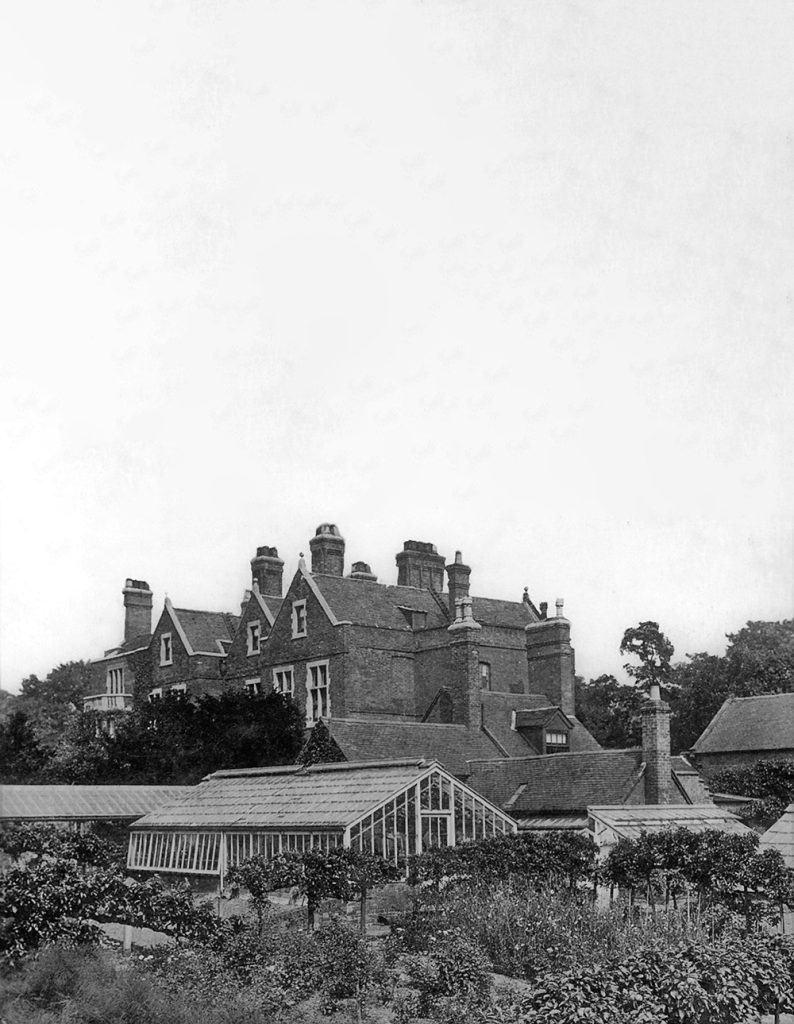
By Maxwell Craven Derbyshire lost more parishes to Staffordshire than it gained under the local government reforms of 1887 and thereafter: Clifton Campville, Croxall, Edingale, Winshill and Stapenhill among them. The desire of the Borough Burton-upon-Trent to increase rating revenue, for instance, added to a sort of municipal tidy mindedness, resulting in the transfer in 1894 of Stapenhill and Winshill to that Borough as well. There was some logic in this, as Stapenhill and Burton face each other across the Trent, the former on a bluff and the latter upon water-meadows prone, since the fourteenth century climate anomaly and the ‘little ice age’ which followed, to flooding. Even by 1894, the great and good of the Borough tended to build opulent villas there (mainly brewers or their well remunerated legal advisors), giving them splendid views west and south west over the river and town. Here, the brewers could keep an eye on their works from the comfort of their smoking room banquettes. Until 1538, Burton was dominated by its Abbey, founded by the Saxon grandee Wulfric Spot in 1004. Their land holdings grew to include part of Stapenhill, enhanced in 1192 by bequest on the death of its long-standing lord, Bertram de Verdon. According to the Staffordshire Victoria County History, there was a capital messuage at Stapenhill by the time the abbey was dissolved which, in 1546, was acquired with the rest of the abbey’s property, by William, 1st Lord Paget of Beaudesert, whose family were to dominate the history of Burton for the next four centuries, rising in eminence to become Marquesses of Anglesey. The Abbey’s leading tenants of the estate were the Abell family, originally recorded at Ticknall in the early 14th century, and who continued in occupation under the Pagets. John Abell was tenant at the dissolution, and his family must have built the first hall. His descendant, George Abell had his coat-of-arms confirmed in 1611, but his son Robert decided for reasons of religion (he was a Puritan) to migrate to America and settled in Massachusetts, where his family continued to flourish. The house as recorded on an early map and later in 1731 by Samuel and Nathaniel Buck, was a relatively simple L-plan brick house of two storeys and attics with an extension added to its rear. The only clue we have to the successors of the Abells as tenants is that Edward Hunt was taxed on nine hearths there in 1670, indicating that the house was of a pretty reasonable size. Nothing much can be discovered about Hunt, who was probably the person who married Dorothy Parker at Lichfield in 1659. It may be that he was steward to 6th Lord Paget, an eminent diplomat and consequently rarely in Staffordshire. However, thanks to Derbyshire historian William Woolley, we know that the house was renewed or replaced in the late 17th century by Hunt’s successor Charles Blount, who, he stated in 1713, ‘… had an estate here and not long since built a pretty good house on the banks of the Trent., which runs under it, who sold it to Paul Ballidon, Esq.’ Charles Blount was the younger son of Sir Henry Blount of Tittenhanger, descended from the Blounts of Blount’s Hall, a long-vanished house in Burton itself. The family, which also had Stenson House for a while, were a junior branch of the Medieval Blounts, Lords Mountjoy, of Barton Blount. The transaction implies, also, that the property had become detached from Lord Paget’s estate by that time, too. Ballidon married Sarah, daughter of Sir Thomas Gresley of Drakelow, Bt., at Stapenhill in 1715, suggesting he was already in residence by that date, but he died in 1729 without leaving any surviving issue, being followed by his widow in 1736, both being interred at Derby, where Paul’s grandfather (another Paul) had been a merchant and his great-grandfather, a mercer, had been Bailiff in 1574. The family took their name from Ballidon, in the White Peak, where one Peter de Ballidon was recorded as early as 1201. It has proved impossible to identify exactly what happened then. There was a cousin, Robert in London and others at Trusley, so one or other branch of the family probably inherited the estate, and perhaps sold it, but to whom is a mystery, although Paul’s will would no doubt make matters a little clearer. Stapenhill Hall next appears on record in 1833 when John Levett (of the family then living at Wychnor Hall) was the owner and also in residence, as a notice in the Derby Mercury assures those interested in the house and 15 acres of gardens, that he would be available to show them round. Clearly the Levetts had acquired the estate and John lived there while his father, Theophilus, was alive, moving to Wychnor once his Stapenhill residence was let. The new tenant was Thomas Allsopp of the brewing family, who later moved to The Mount at Newton Solney. Yet, ten years previously, the Levett family had sold the estate (but retained the house and gardens) to banker and brewer Joseph Clay in 1823. The Clays were directors of Bass, who had been building up a portfolio of property in Stapenhill from 1817 when Joseph had acquired the Stapenhill holdings of Thomas Lea, bankrupt, against a mortgage of £1,280 and, also through marriage with Sarah, only daughter of John Spender of Stapenhill. His eldest son Henry, soon afterwards bought the house as well into which he moved, although he much later settled grandly at now derelict Piercefield Park, on the edge of Chepstow racecourse. He thereupon rebuilt the house, subsequently re-named and described as ‘Stapenhill House…a handsome mansion’. The rebuilding, completed by 1857, was fairly drastic, providing the south (garden) front with three stone coped gables and fairly deep mullion and transom cross windows also in stone. To the west there was an extension of another wide bay, carried towards the rear by a further four bays, the central pair, like the central bay of