






Since the time of the Industrial Revolution, the moorlands of the Peak District and South Pennines have been suffering from the legacy of centuries of pollution from the coal-fired factories that once surrounded them. However, these precious landscapes are gradually being brought back to life, thanks to organisations working in partnership to reverse this damage. And, while this work has achieved great improvements in the last 20 years, there is still work to be done to ensure these habitats can look after themselves
Once-desolate hilltops have become green again, thanks to a combination of keeping them wetter and planting moorland plants. This landscape-scale transformation couldn’t have happened without human intervention, funded by a range of partners, both public and private. But the work isn’t complete yet. Vast expanses of bare peat may largely be a thing of the past, but only by continuing the work to re-store wetter conditions and by planting the amazing sphagnum moss in these restored areas can they begin to look after themselves.
Since 2015 Severn Trent have been part of a partnership, restoring life to large areas of the Peak District and South Pennine moors. These precious moorlands were damaged by the pollution of the Industrial Revolution and it is through partnership working that these habitats have been brought back to life. Around eight million people across the Midlands receive their water and sewerage services from the company, activities which lay the foundation for Severn Trent’s extensive work in the conservation of landscape and biodiversity.
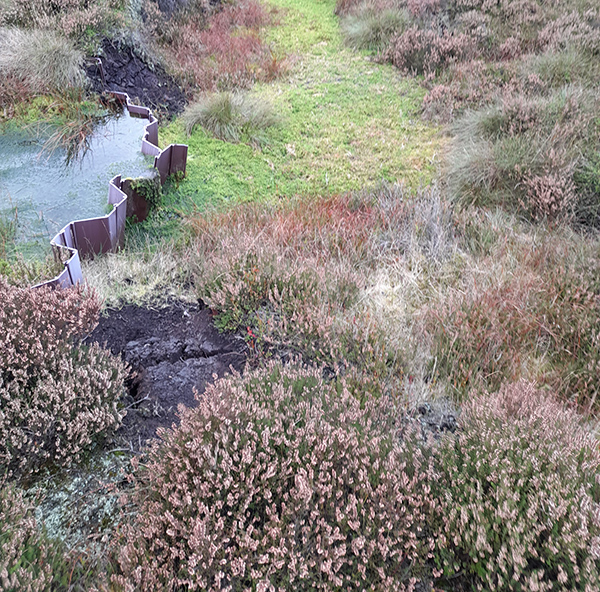
70% of the drinking water in the UK begins its journey into reservoirs from remote upland areas like the Peak District. For the past decade, Severn Trent – which has been part of the Moors for the Future Partnership since 2015 – has invested in the condition of the habitats within the Bamford Catchment – the area around the Derwent Valley and Ladybower Reservoirs – which sits within the protected landscape of the Peak District National Park and the South Pennine Moors Special Area of Conservation (SAC). This has included working in collaboration for shared outcomes with multiple partner members of Moors for the Future Partnership, including the National Trust. This collaboration has seen landscape-scale outcomes achieved for nature recovery in the High Peak through successive projects including, most recently, the Moor Water project (2020–25). The project set out to build on the achievements of earlier collaborations to restore blanket bog, re-establishing the characteristic plant and moss diversity of these habitats, and thus providing a better home for nature on the moors. Bringing life back to the moors also brings other benefits: it improves the quality of the water running into the reservoirs and slows the flow of water from the hills during storm events, contributing to water security and natural flood management in a changing climate.
Before the works began, blanket bogs in this area had been badly damaged by 200 years of atmospheric pollution, as well as a host of other factors. This had led to a severe loss of vegetation on the moorland plateaux, resulting in vast areas of bare peat exposed to the elements. Thanks to this essential project, the moors are being revived for generations to come.
The Moor Water project began in 2020 and in the last five years, the Partnership has:
- planted 657 hectares of sphagnum (the equivalent of 920 football pitches), with the work continuing in the Great Big Nature Boost project, which led to the planting of a further 917 hectares (1,284 football pitches). Sphagnum can soak up to 20 times its weight in water, slowing its flow and sieving out impurities, as well as holding carbon in the ground.
- engaged with the public at events throughout the Moor Water and Great Big Nature Boost projects, taking the Bogtastic van all over the Severn Trent catchment and engaging with over 2,000 people.
- hosted a range of workshops to engage children and young people in science, natural flood management and fire prevention methods to introduce the next generation to moorland conservation. These engagement activities allow the public to understand why it is important to preserve moorlands, and their part in protecting it by avoiding wildfire.
- completed reports based on the science and monitoring work done as part of the project. The work of the project is underpinned by a programme of monitoring and research to ensure the changes made are based on evidence rather than assumptions. The full reports under this project can be found at moorsforthefuture.org.uk/our-work/our-projects/moor-water-severn-trent
Following the success of the Moor Water and Great Big Nature Boost projects, the Partnership is looking forward to a new, five-year period of moorland restoration, science & monitoring and communications, which will begin in the coming weeks and months.
Matt Scott-Campbell, Partnership Manager at Moors for the Future Partnership said: “Through our Partners’ ongoing commitment to collaborative working the Moor Water project with our Partners Severn Trent has enabled the Partnership to continue its work towards our shared vision of a sustainable and resilient upland landscape for the Peak District and South Pennines. This successful collaboration has once again seen positive investment into the long-term recovery and improving condition of a significant area of degraded blanket blog, building on our shared achievements to date. Our collective efforts for nature, people and place remain vital in the face of climate change, and we look forward to working in close Partnership Severn Trent Water into the future as we continue together.”
Samantha Wilson, Environmental Comms Lead at Severn Trent said: “We’re proud to have played our part in restoring these incredible landscapes over the last decade, which are vital for nature and water quality. Healthy moorlands don’t just look beautiful, they help store carbon, slow the flow of water and protect the habitats that make the Peak District so special and an integral part of our community. It’s a real privilege to continue to work collaboratively in this way and means we can achieve so much more together. We’re committed to continuing this work so these moors thrive for generations to come and look forward to this ongoing this valuable partnership.”