Bowes Museum – Barnard Castle
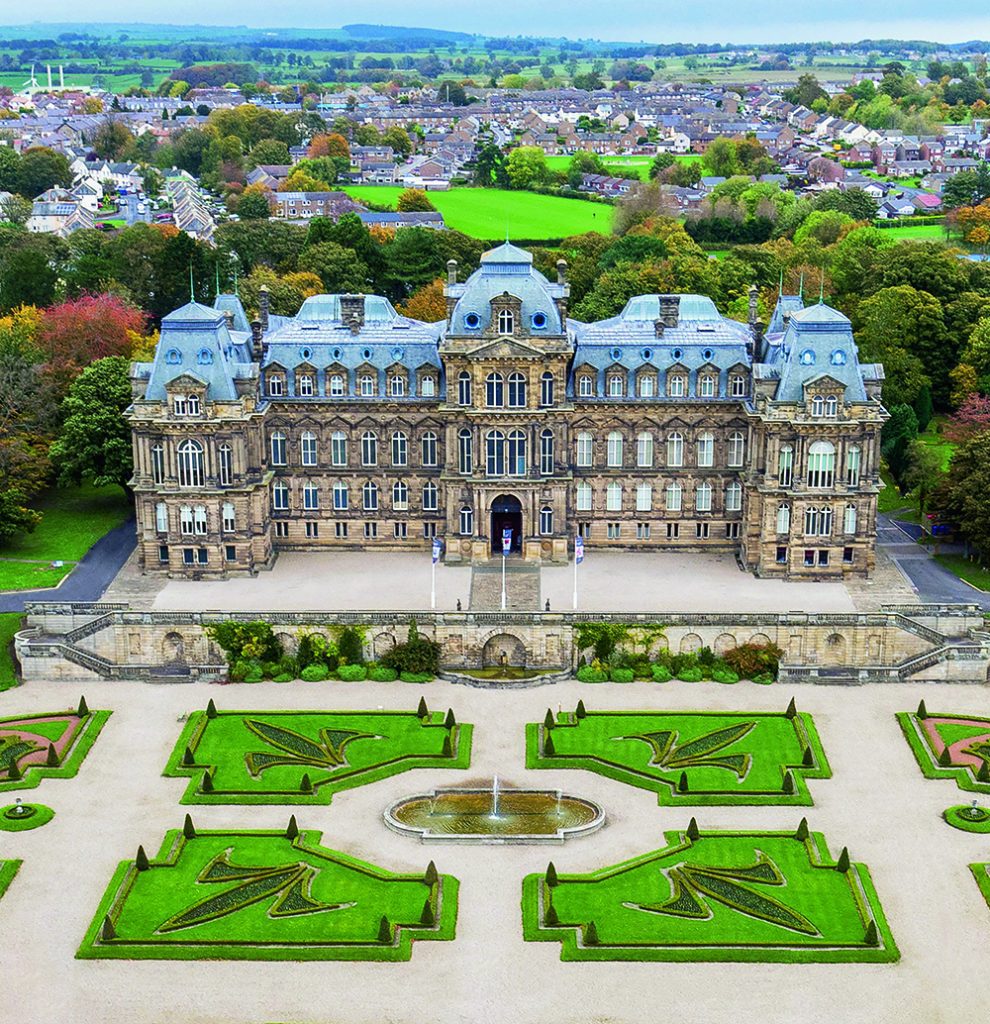
When Dominic Cummings, Prime Minister Boris Johnson MP’s political aid made his controversial dash to Specsavers in Barnard Castle, it is doubtful he had the time to visit the Bowes Museum. This was a pity, because it is nearby, on the outskirts of the town. If he had managed the short diversion away from the town centre, he and his family would have been rewarded by a trip round what is arguably Britain’s most unique museum. It is not simply the collections of treasures within Bowes Museum that is the attraction. The result of a lifetime’s collection by a philanthropist couple, it is it’s venue that first hits the senses, making jaws drop and eyes widen. The reason? No matter how well prepared visitors might be, here in the heart of the Durham countryside is a French château. It was built for John and Joséphine Bowes in order to display a lifetime’s varied collection of European fine and decorative arts. John Bowes was a wealthy landowner with coal mining and shipping interests – through family connections he was an ancestor of the late Queen Elizabeth, the Queen Mother. His French wife Joséphine also inherited wealth. A talented amateur artist, she became a moderately successful actress on the French stage. From all accounts the relationship was a happy one, despite their inability to produce a family, probably due to John Bowes catching a venereal disease during one of his European journeys. Even though their individually accrued wealth suggested an introduction into high society, Joséphine’s Bohemian background did not meet the snobbish Victorian standards of the day. Such was their joint affection that they were able to ignore this snub allowing them to devote their energies by increasing a joint art collection along with planning a suitable home for it. Together they worked tirelessly, developing their unlikely plan to open a French-style, purpose-built museum in rural Teesdale. Sadly both died before it was opened in 1892, but were buried in the museum garden. A collection which John started in his youthful travels around Europe grew steadily, so much so that he had to employ a team of specialist agents to scour major exhibitions. His working relationship with his agents grew on mutual trust, especially when he accepted their suggestion to move on to the work of up and coming artists. This seems to have worked and as a result, the galleries at Bowes now hold paintings ranging from 17th century Dutch and Flemish masters to Impressionists and English landscape masters like J.M.W. Turner, a policy continued by recent purchases of modernistic works. One of the results of this policy based on mutual trust was that many paintings now worth hundreds of thousands of pounds, were frequently bought for as little as £10. Although their purchase price is uncertain, two large paintings by the Venetian artist Canaletto were bought this way. They are displayed alongside works by el Greco and Francisco Goya, just a selection of the famous artists whose work adorns the walls of Bowes Museum. Paintings by Joséphine Bowes mingle at Bowes Museum along with those by better known artists, but they can claim to be there by their own quality and not simply due to her influence. Joséphine worked tirelessly alongside her husband, each keeping to the idea of building a museum in England where anyone could enjoy the results of the Bowes couple’s ambition. For a time the collection was held in the Château du Barry near Louveciennes west of Paris, the one-time home of the mistress of Louis XV, which John Bowes gave to Joséphine as a wedding gift. During the Second Revolution (les Miserables is set in this era), an attempt was made to use the château as a store for military equipment. Concerned about the safety of his prized collection, John Bowes managed to pay off the authorities. A French architect who specialised in designing museums was employed to design the building housing the Bowes collection. It was planned to build on the site outside Barnard Castle, but unfortunately for the Bowes couple, although comparatively small the site was divided into several small parcels, each owned by a separate person. John must have had almost bottomless pockets, for after extensive negotiations, he managed to start building his dream museum. As Joséphine did not relish the thought of crossing the Channel, she kept her visits to England to the bare minimum. However, she braved the hazardous journey and arrived in Barnard Castle in time to lay the foundation stone, and turning to her husband, said ‘I lay the foundation of our dream. You John, will lay the cap stone’. Three stories high and built of locally quarried sandstone, building Bowes Museum, more château than municipal began in 1869 and, costing around £100,000 (equivalent to £9.3 million in today’s money), was ready to receive its valuable collection by 1892. Far sighted as well as being a philanthropist, John Bowes left a substantial legacy to help with the future running of the museum; but by dying comparatively young, this was something neither of the Bowes could predict, and what is there is for all to enjoy. In the heart of rural County Durham there now stands a light and airy building housing a well-run museum and art gallery, open for all to enjoy. Entering through the imposing wrought iron gates, visitors can wander past the well-kept parterre garden, onward to the steps climbing to this unexpected addition to the local countryside. To the left of the main doors, a heraldic shield with three archer’s bows makes a pun on the name Bowes. The ground floor is divided, on the right, the reception and shop area, then, to the left two rooms, one for toys enjoyed by children in Victorian times, the other a small area given over to prehistoric items such as an urn found in a neolithic grave, or enigmatic cup and ring stones. Alongside these curios is a Penny Farthing bicycle and of all things, a