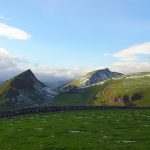










The Manifold Way (also known as the Manifold Track) is a favourite for walkers, cyclists and horse riders. It follows the route of the disused Leek and Manifold Light Railway, through the Manifold and Hamps Valleys from Hulmes End to Waterhouses. The track is surfaced and fairly level throughout its length, making it ideal for wheelchair users, those with buggies or prams and people with limited mobility. Watch out for the rivers of the Manifold and Hamps as they disappear beneath the porous limestone and reappear in Ilam Country Park. Climb the steps to Thor’s Cave (250 ft above the track) for magnificent views across the valley. There are Car Parking areas at both ends of the track and at Intermediate locations. Cycles can be hired at Hulme End where there are picnic tables, cycle racks and fully accessible toilets. The full Mainfold Way runs for 8 miles, but a short 2 mile accessible walk includes the disappearing stream and Thor’s Cave is a great family friendly option. For more information visit here Related posts: Walk Derbyshire – Thor’s Cave & The Manifold Valley The Manifold Valley Walk Derbyshire – A Walk over 2 Dales Walk Derbyshire – Miller’s Dale