Celebrity Interview – Joe Absolom
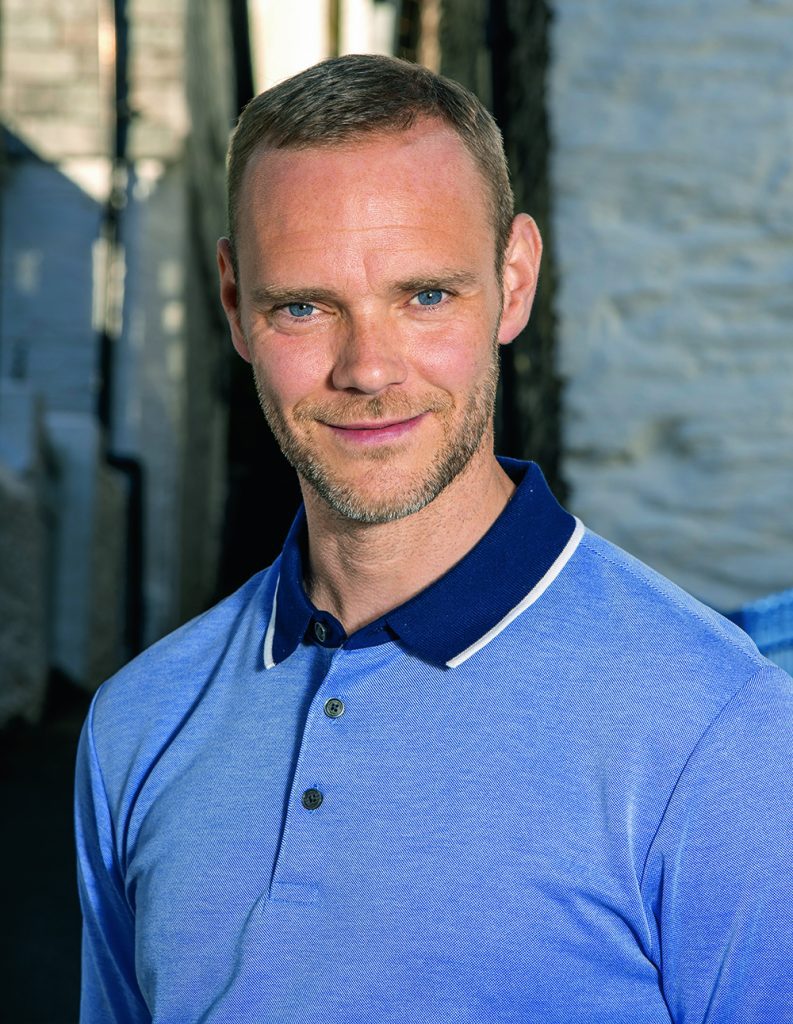
By Steve Orme Reading an obituary of the award-winning thespian Sir Antony Sher was the start of an epiphany for Joe Absolom. The 43-year-old actor who came to prominence as Matthew Rose in the BBC soap EastEnders noted Sher’s success and thought that if anyone read Joe’s obituary, it would be really boring. “He did The Bill, he did a peanut butter advert and then he did Doc Martin,” says Joe self-deprecatingly about his own career even though he won the best actor accolade in the British Soap Awards in 2000 and was nominated in the best supporting actor category in the BAFTA TV Awards in 2020. That was for his role in the ITV drama A Confession. “I thought as a proper actor maybe I should try a bit more theatre,” remarks Joe before telling the story which convinced him that theatre should be his next step. He was invited to a rehearsal of a one-person show, an abridged version of one of Charles Dickens’ best-known tales, at a church hall in Cornwall. “There was a 6ft 2in blonde woman in a miniskirt with her back to me. And I thought ’wow’. It was Eddie Izzard! Eddie walked out and did two hours of Great Expectations. I thought it was fantastic and inspiring. And I thought anything’s possible. I got in touch with my agent and said I really want to do some theatre.” The result is that Joe is playing Andy Dufresne, a bank manager who is wrongly accused of murdering his wife and her lover, in the Bill Kenwright production The Shawshank Redemption. It has just started a tour and Derby Theatre will be the second venue it visits. You may know The Shawshank Redemption from the 1994 film starring Tim Robbins and Morgan Freeman or the Stephen King story on which the movie is based. It’s difficult to believe that this will be Joe’s first theatre tour. When he speaks he is effervescent, passionate and jovial – nothing like the sulky teenager he played in EastEnders or the likeable but unsuccessful guesthouse owner and pub landlord Al Large in Doc Martin. “When we do Doc Martin it’s nice and we have a fantastic time but you don’t get nervous or get sweaty palms. You turn up and have a really good time for five months. You know your lines, you run through them and that’s it. You probably get three minutes’ television a day, if that. Doing a play, everyone does a lot of rehearsals and lots of talking about the intentions of the characters.” Andy Dufresne is different from many of the roles Joe has taken in his career. “A lot of the parts I’ve played have been horrible murderers or useless red herrings. This is cool. It’s an older role and as I get older as an actor the roles are changing a little bit. “When I was a child actor I did adverts, a kid drinking Sunny Delight. As you get older you end up like Andy Dufresne the bank manager stuck in prison.” Joe Absolom was born on 16 December 1978 in south east London. When he was nine, interest rates were at 16% and someone told his parents they could supplement their income by getting work for Joe. So his father sent Joe’s picture to an agent. Joe did several commercials, including one for peanut butter, but didn’t totally enjoy it. “When you turn up for auditions for adverts, it’s full of really annoying kids who are all good at dancing and singing. I was just a little kid from Lewisham.” That prompted Joe to try for speaking parts because fewer children were going for them. It led to a part in a play on BBC2 and from then on the work continued. “It was never something I really wanted to do. I wanted to be a Stormtrooper or a pilot. I wanted to be something useful because an actor’s not very useful . . .” After an appearance on the BBC crime drama Silent Witness, EastEnders came up. “I actually knew the casting director and the director because I’d worked with them before. I felt it was an easy shoe-in,” says Joe matter-of-factly without a hint of big-headedness. “But it was a big decision to do EastEnders because I was at college and had to pull out of education. I was doing A-levels – media studies, French and politics. I was hoping to go to university. “I remember speaking to my mum and dad and they said ‘do whatever you want’.” Joe spent 18 years on Doc Martin doing ten series and a Christmas special. Martin Clunes who plays the central character says there won’t be any more episodes after the current series has aired. Joe is sad to see Doc Martin finish but he feels the time is right for it to end. “We’re going out with all guns blazing. There’s no point turning up every 18 months flogging it. Yes, it’s popular, yes we can sell it around the world, but let’s keep the quality high.” He’s grateful to the series for introducing him to Cornwall where he now lives with his wife Liz and children Lyla who is 16, Casper who is 11 and nine-year-old Daisy. All of them have appeared in the show and Casper who wants to follow in his father’s footsteps had a small speaking part. This year has been a busy one for Joe. He started work on the final series of Doc Martin in February, had a week off and then began rehearsals for The Shawshank Redemption. It will tour to nine venues over 11 weeks. “All I’m focussed on now is getting the play as good as we can. I’m a bit of a perfectionist – I want everything to be fantastic. “I’ve got a lot to do before I start worrying about the next job. I’m going to try to enjoy the tour and working with other actors in
A quick look at … Earl Sterndale & The Upper Dove Valley – part two
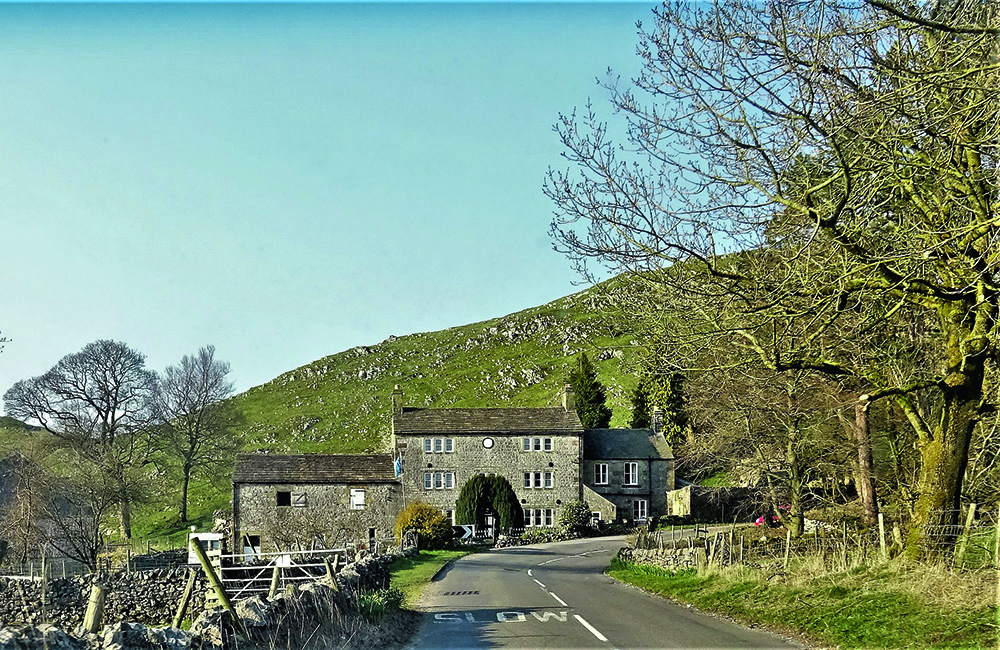
Having adjourned to the Pack Horse Inn at Crowdecote, we felt duly refreshed, and continuing our journey took the turning north, back alongside the Dove, out of the hamlet heading for Earl Sterndale. The road soon leaves the river and climbs gradually, passing the diminutive settlement of Abbot’s Grove; until the 20th century Abbots Grove House was a farm of the Finney family, who also farmed Broadmeadow after the sale by the Batemans. The frequency of dwellings thereafter suddenly increased, and at once a greensward opened out in front of us, wide side furthest away and embowered with trees (and cluttered with parked motorcars): Earl Sterndale, the only really substantial settlement on our tour. The village takes its name from Sterndale, a declivity (Barkdale) which ascends east from the Dove and (its trackway having crossed the old Roman Road, now the A515 on the ridge beyond) descending via Deepdale to the Wye. The name means ‘a valley with rocky ground’ and was first recorded as Stenridile in 1244, becoming Erlisstenerdale by 1330. The ‘Earl’ prefix represents its possession from 1086 until 1265 by the de Ferrers family, Earls of Derby. The eastern settlement, beyond the ridge, King Sterndale, lay in the Royal Forest of the Peak, and took its prefix from the monarch himself. The two most prominent buildings on the green are the stone built 17th century pub on the west side and the much more recent church of St. Michael and All Angels on the east (upward) side. The former, famously named The Quiet Woman, is recorded back into the 18th century, and claimed even greater age, although the building itself appears to have been formed from a row of about three early cottages. The sign depicts a headless woman and, misogynistic by today’s standards or not, was once fairly common, although few so-called survive to day – indeed apart from one on Houfton Road, Bolsover, others have long closed: that at Halstock, Dorset is now holiday accommodation and that on the corner of Brook Walk and Ford Street in Derby went as long ago as 1878. Tragically, the landlord of the inn at Earl Sterndale died in August 2020, causing it to close; it has yet – to the regret of many – to re-open. Whilst the north of the settlement was expanded with 20th century housing (with the Regency and Victorian vicarage above), the rising ground to the east is embellished by the church and school, the church yard forming a visual extension to the green. There was a chapel-of-ease of Hartington here from the fourteenth century – perhaps longer, if the 12th century date for the font is correct – which was falling down in the 18th century and which was finally replaced to the designs of George Ernest Hamilton of Stone in 1828, a simple rectangular building in ‘carpenter’s Gothic’, of carboniferous limestone and gritstone dressings, with a square tower. In 1860 it became a parish church in its own right and, in 1877, R. R. Duke of Buxton added the rather inconsequential-looking chancel. The church had the dubious distinction, on the night of 9th June 1941, of having been gutted by a stick of incendiary bombs, jettisoned by a passing Heinkel 111 en route home from attempting to bomb Manchester, but was well restored by Naylor, Sale and Widdows of Derby in 1952. To its north stands the absolutely delightful school (listed grade II), seemingly straight from the playbook of Sir Joseph Paxton, with its corniced end stacks, gothic traceried fenestration with hood moulds and rusticated quoins. The porch is dated 1895 however, but we were not convinced that this was its true date. After all, the money had been raised by farmer Thomas Lomas of Glutton Grange and the plot donated by the Bachelor Duke in 1853, which would sit much better with its exterior and accord well with a design sent over from Chatsworth by Paxton. We reckoned that the porch was a matching later addition of 1895. Apart from the not wholly successful replacement of the windows in uPVC, it makes a delightful ensemble with the church, all set off the magnificent granite Doric column erected in the church yard in 1919 as a truly heroic war memorial. There was also a flock of chest tombs in the church yard, two to the Finneys of Broadmeadow and Abbot’s Grove, including the unfortunately named Minnie Finney. Coming through the church yard’s iron gates, we turned south to see the miniscule Methodist Chapel of 1860 and the 17th century grade II listed hall beyond, sitting, with Regency-replaced fenestration, behind a fine gritstone pair of ball finialled gate piers and with a superb stable range beyond. Whilst we were unclear which family built it, we noted that in the later 19th century it was home to the splendidly named Prince Beresford, a junior member of a very distinguished Dove Valley family. Unfortunately, of the two rows of 18th century and later cottages opposite some had been disfigured by the insertion of uPVC windows. Coming back to the car, a rather well-spoken villager asked us if we were thinking of buying a house there, to which I replied ‘too bally bleak for us!’ We must have aroused suspicion, snooping round the village; I recall Roy Christian telling me of similar incidents during his village tours in the 1960s! Our last port of call was to leave Earl Sterndale northwards to the junction with the B5053 Brierlow Bar to Longnor road. This winds down towards the Dove again, by High Wheeldon (National Trust, but yet to be fingered with ‘problematic’ associations!) through a charming rocky defile, down to Glutton and then Glutton Bridge. The name, from Middle English gluton (which originated as a surname and means exactly what you’d expect it to mean) reminded us that we had passed other gastronomic sounding names, if less straightforward, like Custard Field (Middle English costard = apple) and, of course, Parsleyhay. We also passed
The Lost Houses of Derbyshire – Culland Hall

by Maxwell Craven It is perhaps quite a stretch to envisage the sheer antiquity of the site of Culland Hall, were you to visit the place today, the splendid gardens which are occasionally open to visitors and which are well worth visiting. Indeed, the present house is an agreeable neo-Georgian brick mansion, much in the later style of Sir Edwin Lutyens, and was built for the late Col. Sir Edward Thompson (1907-1994) – of Marston, Thompson & Evershed, brewers of the incomparable Pedigree ale – in 1939-41 to the designs of George Morley Eaton PRIBA of Derby who indeed died in office whilst building was going on. These works, however, necessitated the demolition of the previous house, by then apparently exceedingly dilapidated, having been in use for some generations as a farmhouse. The place gets its first mention in a charter of 1220, when it was granted to Nicholas de Caveland, second son of Henry de Osmaston and grandson of Eutropius of Brailsford . Thus, both Eutropius’ son and grandson had taken their surnames (then something of an innovation) from the place settled upon them by inheritance. Eutropius, in turn, descended from the Domesday tenant, Elfin (correctly Aelfwine), one of the few Anglo-Saxon grandees to retain their estates through the upheavals of the Conquest. And, of course it tells us how the place name Culland was rendered in the 13th century: Caveland, meaning ‘the land of Cufa’, an attested personal name, and presumably a long-forgotten pre-1066 owner, seemingly of Norse descent. This family continued there for a couple of generations and, one must assume, built a capital mansion, for which no direct evidence survives, although a moat was traceable in the 1930s, a short way from the present house. This modest estate had passed by 1380 to the Montgomerys of Cubley, then a very powerful and influential family, and was settled on a younger son, Thomas, who was recorded there also in 1401. Some time prior to 1470, the estate and presumably the ancient house, was sold or passed by inheritance to the Shaw family, whose origin is not clearly understood, and remained with them until 1497 when Thomas Shaw died. His successor was his brother, Robert, who was disbarred by being a lunatic: people with mental disability were in those days deemed incapable of administering property and were thus prevented from inheriting by statute. Thus in 1519 after a number of lawsuits, the heiress, Joan, brought the estate to Sir Ralph Shirley of Brailsford, Shirley and Staunton Harold, upon whose younger son Francis it was settled, only for him to dispose of it, before 1600, to one James Draper. The heralds’ Visitation of Derbyshire tells us that he was previously of Dockenfield, Hants., although in reality, this village is in Surrey, nearer to Farnham. The 1634 heralds’ visitation of the county informs us that arms were borne without authority and that his wife was Mary, daughter of a former London pewterer living at Bradley called John Morrey; the 1662 Visitation, contrarywise, calls her the daughter of the somewhat grander John Merry of Barton Blount. Whoever she was, they had a son called Thomas who died in 1646 leaving, by Dorothy, daughter of Robert Port of Ilam, two sons and four daughters. The eldest son was Robert (1625-1689), and he is reputed to have built a new house, of which the stable block survives, albeit extended and slightly altered in the nineteenth century. It is of red brick with Keuper sandstone dressings, gables decorated with small ball finials, flush quoins, oeil-de-boeuf windows and a plat band, now listed grade II. We may safely assume that the new house was similarly constructed and was probably a gabled, E-plan house with end gables flanking a central two storey gabled porch. It was assessed on 6 hearths in 1664, so it was only of modest size. Robert Draper married Elizabeth, daughter of Richard Harpur of Littleover Old Hall (see Country Images of June 2014) but there were no surviving children and on his death his brother Thomas, a Coventry businessman, was passed over (or had died without issue) and the youngest daughter Prudence, succeeded, having married George Newall of Windle Hill in Thurvaston. It was in his rime that William Woolley described the house in 1713 as ‘a pleasant seat – a small manor on a hill about one mile south west of Brailsford….and pretty good enclosed land.’ This period also saw the drawing of an estate map by the ubiquitous Thomas Hand (dated 1709) showing the house with two storeys and attics and three gables, all facing south west across a small park with a miniscule lake, still discernable on the 1922 6 inch OS map. The estate then ran to a modest 4191/2 acres. A generation later and George Newall had sold the estate to his cousin John Port of Ilam Hall and in 1794, the whole lot was sold to Derby lead trader William Cox of Brailsford Hall (builder in 1809 of the Derby shot tower), whose family owned it from then until the end of the Victorian era. Cox, a great improver, decided that the house should henceforth be run as a tenanted farm as part of his Brailsford hall estate (see Country Images April 2019), and decided to reduce and extensively rebuild the hall again, early in the nineteenth century. He re-orientated the main part of the house, providing two brick parallel ranges running east-west with gabled ends, stuccoed, and leaving only one range of the older house which, oddly, was retained and, being orientated SE to NW, gave the post-rebuilding plan a rather odd look. The new south front was given superimposed Regency tripartite windows flanking a central pedimented entrance with a single sash above. There were lower extensions to the east and west, that to the west being very much lower, probably older, and was presumably a service wing. The stables lay behind, with other ‘model’ farm buildings provided to the north, now amply
Exploring The Castle, Colleges & Cathedrals of Durham City

By Brian Spencer Having only seen Durham city from the train stopped at Durham Station, perched on a ledge high above the River Wear, Brian Spencer vowed that one day he would spend more time exploring the city, but it took a short break with Slack’s Coaches, basically to visit the unique museums nearby (see Country Images, July and August editions 2021), before he managed to get a closer look at this ancient city. Even though recent excavations indicate there was a Roman settlement at Durham, we have the marauding Danes to thank for the origins of the present city. When they stormed across the North Sea in their longboats around AD 875, monks living on Lindisfarne fled inland, carrying with them the coffin of St Cuthbert, after wandering about the North of England for over a century. In AD995 the monks eventually settled on a site high above a tight loop of the River Wear, founding what became the City of Durham. The site chosen for their abbey was perfect and used the natural defences offered by the steep rocky peninsula, almost surrounded by the sharp meander of the River Wear. William the Conqueror established a palatine, or semi-autonomous region based on Durham to protect northern England against the Scots. Prince Bishops ruled this country until 1836, formulating their own laws, levying taxes and minting their own currency. They even had powers to raise their own army. The original wattle church, the simple building erected by the monks of Lindisfarne, was pulled down and in 1093 the Norman Prince Bishop William began building Durham Cathedral. This magnificent soaring construction, the greatest piece of Norman architecture in northern Britain, took only 40 years to build – lasting–testimony to the devotion of its creators. The Norman castle was built nearby, soon after the Conquest, and became the key defensive point against attacks from over the Border. Durham grew as a city around the cathedral and castle, the narrow streets or ‘vennels’ reached down to the Wear. Easily protected by gates, the vennels closed off the city at night, or whenever danger threatened. A college developed by the monks has grown into one of the major universities of England. Today the city is still centred upon its ancient bastion and original street pattern. More recent development has been on the relatively flat ground away from the river. Durham grew first to the east around Elvet Bridge and, later, to the west around the London-Edinburgh railway line. The railway skirts the older part of Durham on high viaducts on either side of the station. This was where I gained my first tantalising glimpse of cathedral, castle and rooftops, peeping as it did on that occasion, through swirling early morning mist. Durham University grew around the cathedral, its antecedents in the teaching activities of monks and clergy’s teaching activities. It was established as England’s third university by an 1832 Act of Parliament. Outgrowing their ecclesiastical foundations, the modern colleges and campuses now spread themselves across the wooded slopes of Elvet Hill to the south of the river. A striking modern bridge by Ove Arup links Palace Green with Dunelm House over the river. We found the most natural way of exploring Durham was on foot, starting at the oldest and finest building, the cathedral. A monster’s head in bronze pierced it is said by a Scottish arrow serves as the sanctuary knocker on the main door. This is only a replica (the original is preserved in the cathedral’s Treasury Museum), but this is a faithful copy. The first impression a visitor has on entering the cathedral is of the massive strength embodied in the Romanesque pillars supporting the nave roof. At the west end beyond the font, a line of Frosterley marble is the demarcation beyond which women were once forbidden to pass. At that time they had to worship in the Galilee Chapel, built in 1175 and now the resting place of the Venerable Bede (born AD672, died at Jarrow monastery AD735). It was he who wrote the Ecclesiastical History of the English people – a source vital to the history of the conversion to Christianity of the Anglo-Saxon tribes. In the south transept an astronomical clock from around 1500 only displays 48 minutes. Behind the high altar is the beautiful Neville Screen, carved in 1375 from Caen stone. It acts as a backing for the simple tomb of St Cuthbert who has rested here since 1104. Traditionally St Cuthbert’s body did not decompose while it was being carried around the North, but when the tomb was opened in 1827, only the remains of a skeleton and a second skull, thought to be that of St Oswald the great Northumbrian king, were found. Relics of the saint, are on display together with other precious items in the Treasury Museum. The chapel of the Nine Altars, built in the Early English style, fills the eastern transept and dates from 1242. Since the Dissolution, monks no longer live in close proximity to the cathedral. Their dormitory, dating from 1400, now serves as the Library. Behind the cathedral are several elegant private houses, together with the 18th-century water tower and the well-kept memorial gardens to the 7th Durham Light Infantry. Palace Green fronts Durham Cathedral, leading by cobbled ways to the castle. Begun as a motte and bailey mound, the fortress withstood attacks by the Scots as late as the 17th-century, when it was held for the crown during the English Civil War. Later maintenance and additions to the castle were the prerogative of incumbent bishops until it became University College and later Bishops of Durham made Auckland Castle, in Bishop Auckland their official residence. The castle is open throughout the summer. Georgian buildings line North Bailey, which leads to the Market Place where the 14th-century Elvet Bridge is surrounded by some fine medieval buildings. Further along is Hallgarth Street where the medieval Tithe Barn stands. Attractive small restaurants and pubs lining the
Earl Sterndale & The Upper Dove Valley pt.1
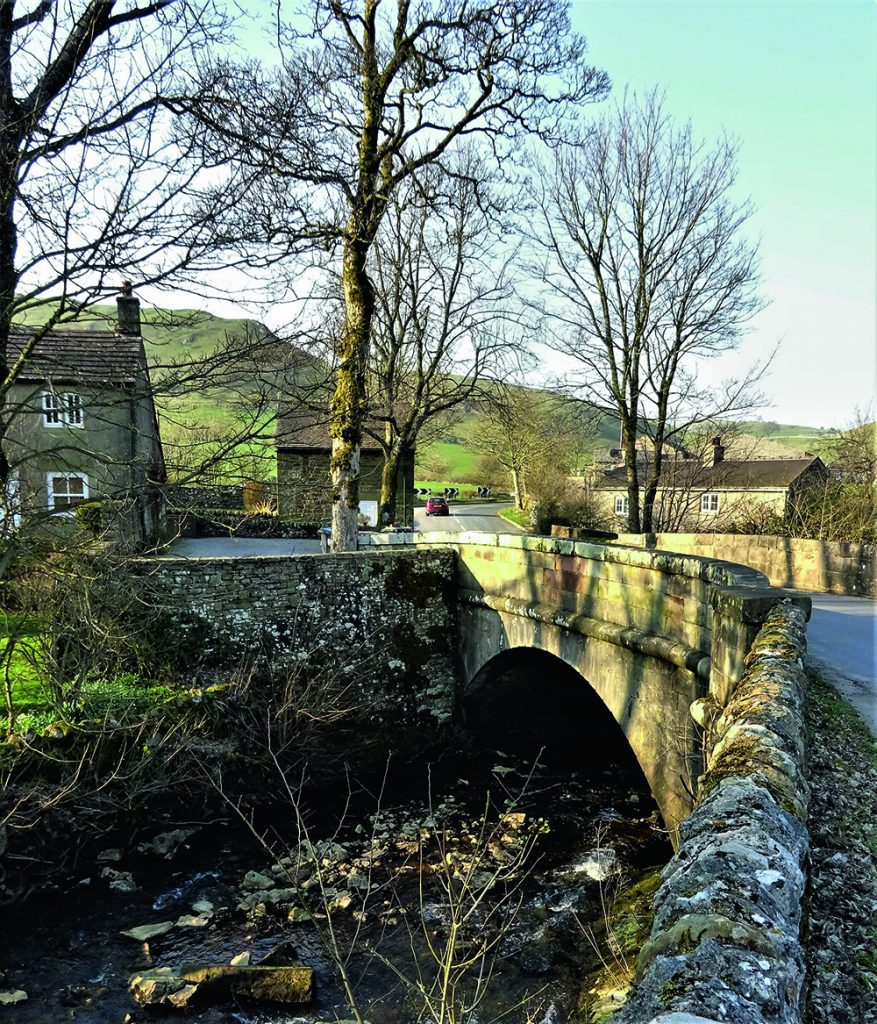
Nucleated settlements are fairly scarce in the White Peak and the upper Derwent Valley, partly because the relief is challenging, not to mention the constant outcropping of limestone. Partly also it is because Saxon settlement came late to this part of Derbyshire, probably not starting in earnest until after around 640, and post-Roman British settlement – as is evident in much of upland Wales to this day – was always discrete, that is to say scattered, with only churches as focal points. This is why the parish of Hartington used to stretch almost to Buxton, being divided into three parts going north from the parish church: Town Quarter, Middle Quarter and Upper quarter, each scattered by diminutive townships, some of which have virtually disappeared over time. The original parish probably represents a pre-Norman and indeed, pre-Anglo-Saxon land unit, utilising the Dove as its western boundary. We had decided to take our tour – necessarily motorised; you would require at least a day and a decent level of fitness to cover our route on foot – of Middle Quarter, centered upon Earl Sterndale, but starting at Hartington so we could enjoy a spectacular view of the Dove’s lush valley as we moved north. Thus, we left Hartington Market Place along Dig Street which leads out of the built-up part of the village to Wallpit Lane, which meanders, very much a single track and gated road, alongside the Dove all the way to Pilsbury. The views are indescribably memorable: the valley is gently enclosed by the riding limestone ridges either side and each minor turn brings further prospects to the north and west. As we progressed, we saw 17th century grade II* listed Broadmeadow Hall, opposite on the Staffordshire side: a striking sight. The last time we saw it, about 1980, it was a picturesque roofless shell, but has since been put back into use, which is gratifying. Once the property of the Poles of Pool Hall, Hartington, it passed to the Sleighs of Pilsbury Grange in 1573. They sold in 1709 to the Haynes of Ashbourne from whom it came to the Batemans of Hartington Hall before becoming a separate freehold on the death of Sir Hugh Bateman 1st Bt., in 1824. We would recommend taking this route by car out of season, as passing would be a problem in places, and in season it might well prove a nightmare. The two and a quarter miles we took at a fast walking place: no-one came up behind and no vehicle approached: perfect. “Most of the area has been part of the Duke of Devonshire’s estate since the 17th century, and much, I suspect, still is. Farms are beautifully kept and the larger farmhouses, like mid-18th century Pilsbury Grange, are very much estate foreman-built pattern book farms: three storeys, three bays wide and still using mullioned windows.” At Pilsbury – Pilsberie in 1086, (‘the fortified place of Pil’, cf. Pilsley) – there are a pair of substantial farms and the road suddenly climbs steeply to the moor above in a series of sharp ascending turns. At the start of the first turn a track continues the route along the Dove’s bank, which those on foot can enjoy, for although Pilsbury Castle, about 600 yards along, is an impressive motte, probably set within a pre-Roman earthwork and well worth a visit, there is nowhere safely to leave a car. The Castle was built by Henry de Ferrers as the focus of his Dove valley holdings not long after the conquest., but was of timber, and never replaced in stone. We drove up onto the moor, therefore, enjoying awesome views southwards and passed Pilsbury Lodge, which has a caravan facility; the presence of farms with ‘lodge’ in the title suggests relics of an ancient hunting preserve, and those with ‘grange’ represent former monastic owned farms. Indeed, continuing east along our way, we eventually met the more easily motorable (but much less scenic) Hartington-Earl Sterndale Road and, turning left, quickly reached a crossroad marking the centre of one such place, Needham Grange at High Needham, embowered by windswept trees, the settlement itself having long since shrunk to three farms. First recorded in 1244, like nearby Heathcote it gave its name to a distinguished Derbyshire family, today represented by the 6th Earl of Kilmorey, an Irish peerage thus an honour which did not prevent him from representing Chippenham in Parliament and serving as a minister under John Major. Here we turned west again, the road winding sinuously and spectacularly back down toward the Dove, crossed by a stone bridge at Crowdecote – ‘the dwelling place of Cruda’ – which is another very small township within Hartington Middle Quarter, with a cluster of stuccoed cottages where the road divides above the bridge itself. We noted a rarity, looking rather forlorn beside a K6 telephone box: an early 19th century iron water spout, much like those provided in more profusion, by the Harpurs at Ticknall. The sight of this made us thirsty, so we adjourned to the Pack Horse inn opposite, and enjoyed excellent blond ale and a snack. It is delightfully unspoilt, aided by being a listed building in a conservation area, having been formed from a pair of cottages of 1727 with later alterations, but still with cosy rooms and friendly staff. Having felt duly refreshed, we took the turning north, back alongside the Dove, out of the hamlet heading for Earl Sterndale. 00
Walk Derbyshire – Historic Deepdale – A walk back into history

Deepdale you may ask, for the name doesn’t appear on any Ordnance Survey map? Now better known as Dale Abbey, the village was once called Depedale, then Deepdale and eventually the modern name, Dale Abbey in remembrance of the abbey that flourished here from 1162 until Henry VIII’s quarrel with Rome in 1536. A lonely stone arch that once framed a glorious east widow, is all that is left of a Premonstratensian abbey taken over from Augustinian monks who came to this spot from Calke Abbey in 1162. They managed to begin building, but lack of funds led to the work being transferred in 1204 to an off-shoot of the wealthier Premonstratensian French foundation based in Lincolnshire. Small by monastic standards, their work led to the draining of surrounding boggy land and the expansion of farming began alongside iron production using raw materials dug from the local countryside. All went well until the Dissolution when the governing abbot managed to stave off the abbey’s closure by payment of a fine. Unfortunately this was wishful thinking and gradually the abbey fell into disuse. Stones from the abandoned abbey found its way into the walls of surrounding cottages and local churches. It is still possible to trace the use of these stones in some of Dale Abbey village’s older houses. The best example is in a cottage close to the village green. Its foundations and the lower walls support attractive half-timbered main walls. Apart from the lonely arch of the east window, a section of the abbey, in this case part of the kitchen, has been incorporated within a cottage close to the field containing the grassed over remains of the rest of the abbey. Unlike other and more extensive monastic relics, the abbey ruins stand on private land, but permission to get closer to the ruins is usually given by the owner of the nearby cottage. Carved stones discovered by occasional excavations are stored in the shed situated in the bottom corner of the site. A short distance along the road leading from the abbey, there stands what is probably one of, if not the most unique churches in the land. Tiny All Saints the Grade I Listed Parish Church is thought to be part of the abbey infirmary, where the local sick and infirm were cared for. It is a strange combination of house and church all under the same roof. The two-roomed half-timbered medieval house used by the verger, was improved in the nineteenth century, but the church is almost untouched. A mere twenty-six feet by twenty-five feet, inside it is a wonderful jumble of props and posts, all set at strange angles; the oak pulpit leans sideways due to the passage of over 300 years since it was made and the only space for worshippers is in one of the 17th century box-pews. But the oddest seating arrangement is on the massive, uncomfortable-looking chair donated in 1824 by an Earl Stanhope who fell in love with the idiosyncratic church. Despite its discomfort, it became known as the Bishop’ Chair, although it is doubtful if one ever sat there. By strange chance the tiniest church in the land, produced one of the largest chalices. Made in 1701, it measures 9 inches high and 15 inches round. The 15th century font is here with worn carvings of the Madonna and Child and the Crucifixion; fragments of coloured glass rescued from the abbey and the remains of wall paintings reward a careful search. A path winds away from the church around the back of a modern house, then on and into Hermit’s Wood. It covers an escarpment composed of easily worked red sandstone. This was used to full advantage by the man who built his home and hermit’s cell, and became known in myth and legend simply as ‘Thomas the hermit’ of Depedale. Before cutting himself off from society, he lived in Derby where in the early thirteenth century, he carried out his profession as a baker. A kind hearted man, he frequently gave away his bread to many who were unable to pay for his produce. One day he had a vision of setting himself apart from the rest of his fellow tradesmen. A few years before building work began on the nearby abbey, somehow or other he was drawn to the spot where easily worked red sandstone lined the edge of a wooded escarpment. Here he carved out a series of rooms for himself and his animals, welcoming passers-by who knelt with him in prayer. Even now it is easy to seek comfort in his hideaway. As the rock was so easy to work he managed to fit a door and two windows to keep out the draft on cold days. He even made a kind of lean-to conservatory, supported by planks set into post holes that still survive. Thomas the Hermit even had a benefactor, Ralph Fitz Geremund, who came across the hermit while out on a hunting trip. Industry developed over time, first mining ironstone and coal, industry that lead to the founding of the Stanton Ironworks. Narrow gauge railways, some of which are covered on this walk, criss-cross the fields between Dale Abbey and Kirk Hallam. There are also traces of small-scale foundries, such as at Furnace Pond Farm beyond Hermit’s Wood; it is likely the name comes from a nearby pond used to provide power for bellows used to melt iron ore in the production of iron. THE WALK STEP BY STEP From Pioneer Meadows car park, turn left along the curving road around the limits of Kirk Hallam, going past houses for about a quarter of a mile. Look out for a footpath sign on your left pointing to Dale Abbey. Follow field boundaries across four fields, passing well to the right of Ladywood Farm. Cross a deep gulley by means of a footbridge and, bearing very slightly left, cross the field beyond the gulley. In the far corner
Celebrity Interview – Adrian Scarborough
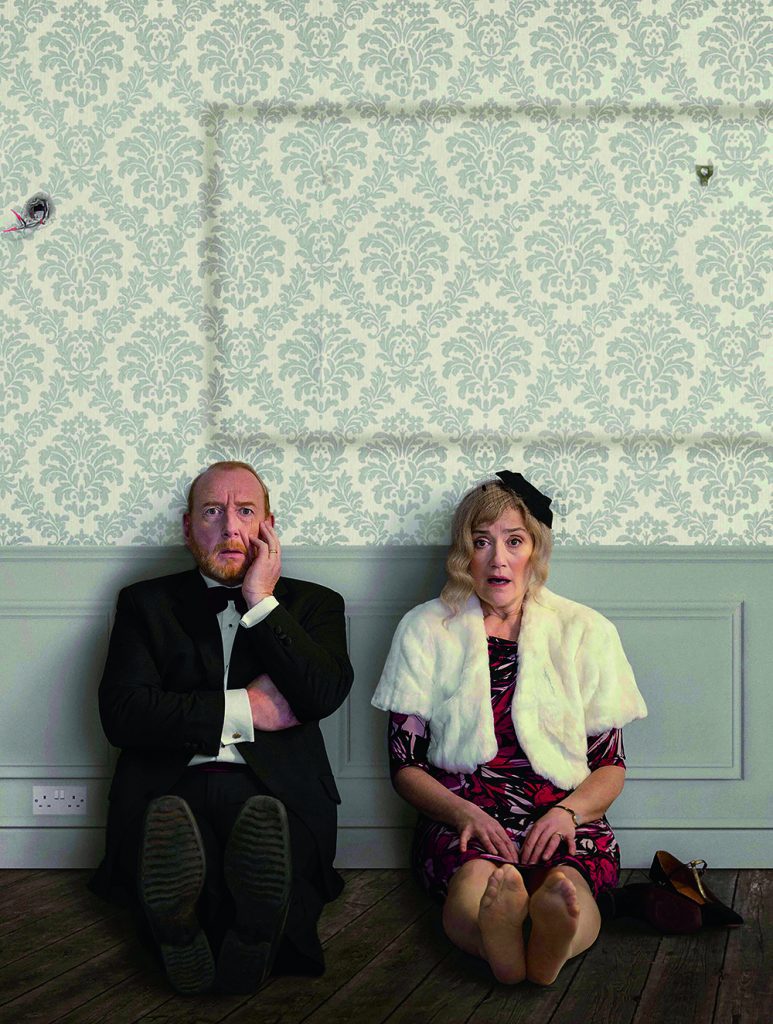
When an actor says this is a “very exciting time”, you have to think that there are some fascinating projects on the horizon. When that actor is Adrian Scarborough who you may know from Gavin And Stacey, Killing Eve and many other shows on the small screen, you’re inclined to take notice. Adrian will shortly be returning to Nottingham to appear in an Alan Bennett story which Adrian himself has adapted. He will also be shooting another television series which for him is a “dream come true” because it’s named after his character. And there’s other work in the pipeline that he can’t talk about yet. Exciting times indeed. The last time Adrian was at Nottingham Playhouse was in 2018 when he played Dr Willis in Bennett’s The Madness Of George III which featured Mark Gatiss in the lead role. He will come back as solicitor Maurice Ransome in The Clothes They Stood Up In, Alan Bennett’s first novella which he wrote in 1996. Adrian explains how he came to adapt it: “I’d always loved the story, so much so that my wife Rose bought a copy of Alan reading it on a cassette. We got to know it incredibly well. “I had a conversation with Alan about it and said he ought to turn it into a play. About five years later we had the same conversation. I said ‘did you ever make it into a play?’ and he went ‘No, I haven’t had time. You should do it’. “I laughed, thinking it was a bit of a joke. Eventually my wife said ‘I don’t know why you don’t just sit down and write the darned thing’ because I’d been talking about it so much. Which is what I did.” Adrian sent it to Alan Bennett who said he was very happy with it and gave it his blessing. Described as a “bittersweet exploration of marriage, dreams and lives unlived”, The Clothes They Stood Up In features mild-mannered couple Maurice and Rosemary Ransome who return from a night at the opera to discover their flat is completely empty. Burglars have taken everything – light bulbs, carpets, toilet paper, even their chicken casserole. Adrian says the play is both moving and funny. “The story is about how one side of the partnership is liberated by the loss of the belongings and the other side does the opposite. These people are together just by the fact that nobody else would marry either of them. It’s rather wonderful.” Rosemary Ransome will be played by Sophie Thompson, an Olivier Award winner who has appeared in both EastEnders and Coronation Street, was in one of the Harry Potter films and has taken roles in many major theatrical productions. Adrian says it is “the casting coup of the decade” because she wanted to do the play and was available. “She said she’d carried it around with her in her pocket because it was something that she really desperately wanted to do, which was terribly flattering. “We’ve worked together before on screen but never on stage and we’ve certainly never played man and wife. I can’t think of anyone better than Sophie to play the part. So to get your first choice is always a coup and something that doesn’t always happen in this profession. “It’s a real treat. She was born to play it and she’ll be absolutely magnificent in the role.” The rest of the cast features Ned Costello, Natasha Magigi and Charlie de Melo. Charlie played Imran Habeeb for five years in Coronation Street and Adrian thinks it’s another coup to get him. “I hope people will come because they want to see him do something very different from Corrie. And they’ll get to see him do THREE different things, so that’s fabulous. “I’ve cast those three actors as everything else in the play. Each of them is playing at least three other parts which is a big ask but hopefully it will keep them occupied and interested. I think it’ll be great for an audience to see how fantastically versatile they all are.” Adrian Philip Scarborough was born on 10 May 1968 in Melton Mowbray, Leicestershire. He credits his mum for taking him to many theatres in the East Midlands including Nottingham Playhouse, the city’s Theatre Royal, the Haymarket, the Phoenix and De Montfort Hall in Leicester and Melton Theatre “which at the time attracted a huge number of very interesting plays and tours”. He says: “We had theatre everywhere we looked. I was truly blessed in that regard.” That inspired him to become an actor “because I was so hopeless at everything else”. After going to Brooksby Melton College he trained at Bristol Old Vic Theatre School, winning an award for best actor. His big-screen debut came in 1994 in The Madness Of King George. Since then his film appearances have included Gosford Park, Vera Drake, The History Boys, The King’s Speech and Les Misérables. On television he was Pete Sutcliffe in Gavin And Stacey and psychopathic assassin Villanelle’s new handler Raymond in the second series of Killing Eve. On stage he’s frequently appeared in the West End. His versatility means he can turn his hand to almost anything. “Somebody once gave me a bit of advice which was to be a jack of all trades, master of none. For a character actor I think that really is a very good piece of advice because if you’re looking to put Marmite on the table for 30 years, then you have to be adaptable. “The chances are you’re not going to be leading actor material. So you’ll always be second or third man down and invariably be paid a lot less than the star. And although it’s not all about money, being able to work in lots and lots of different ways has meant that I have enough money in the bank to be able to sit and write or go to Nottingham for a month. I pour a lot of
Product Test – Charlotte Tilbury

Magic Serum Crystal Elixir 100ml £130 Supersize your skincare with the NEW! XL 100ml bottle of the award-winning Charlotte’s Magic Serum Crystal Elixir! This hydrating face serum is the secret to your skin’s best future. Collaborated with expert scientists to bring you a ground-breaking serum for hydrated, youthful-looking skin. A magic matrix of ingredients, expertly blended in a high-performance elixir to give your skin a magic boost! Awaken your skin’s potential with the power of potent ingredients, featuring Replexium™ for younger-looking skin, Golden Vitamin C for a brighter-looking complexion, and hydration powerhouse Polyglutamic Acid – a supercharged skincare ingredient that’s over 4X more hydrating than Hyaluronic Acid. Immediate effects + lasting action in a single, one-size-fits-all formulation! Suitable for all skin types Beautiful Skin Sun-Kissed Glow Bronzer £42 This cream bronzer blurs, hydrates and adds a wash of sun-kissed colour to your complexion, while improving the look of your skin every time you wear it! Like a portal to your best self, this NEW bronzing beauty secret will transport you to the world’s most mesmerising beaches to unlock that summer glow look and feeling! Pillow Talk Push Up Lashes! Mascara £25 Unlock the secret to instant length, weightless volume, stretch and a 24-hour vertical lift effect for the lashes of your dreams! TRIED & TESTED :: TRIED & TESTED :: TRIED & TESTED Magic Serum Crystal Elixir I found a few drops went a long way, and that moisturizer was easy to apply after. It contains ‘Golden Vitamin C’ which is enhanced to help the skin absorb it. After only 6 weeks, my skin had an improved, firmer texture especially around my central face area. My colouring was more even too. An impressive product. JP Sun-Kissed Glow Bronzer This is a beautiful creamy bronzer that blends effortlessly and gave my skin a smooth, even finish and a beautiful healthy glow. The packaging is gorgeous and has a large mirror. You get a lot of product so it’s excellent value for money. CB Mascara Amazing mascara! I chose black and it lengthens, separates and curls the ends of the lashes. You can add one or more coats for a dramatic effect. Lasts all day long. VP For more information and to buy online visit www.charlottetilbury.com 00
The Lost Houses of Derbyshire – The New Hall Buxton by Maxwell Craven

From considerable prominence during the Roman period as Aquae Arnemetiae, Buxton drops from record almost completely (avoiding an entry in Domesday Book) until it re-surfaces as Bawkestanes in a document of 1108. Yet the hot springs and associated bathing facilities may well have survived and in use, if only informally, throughout the 600 or so years intervening, for we find a few modern (that is, medieval and later) buildings in the town actually built directly onto the footings of their Roman predecessors; normally, there is a good thickness of what archaeologists call ‘dark earth’ and other debris between the remains of Roman buildings and those built thereon much later. The New Hall at Buxton was built on the initiative of the Elizabethan grandee George Talbot, 6th Earl of Shrewsbury KG, in 1572-1573. It was so called because there had been a previous hall there, latterly belonging to Henry Sacheverell of Ratcliffe-upon-Trent. It had probably been previously in the possession of the elder line of the Pole family (of Radbourne, Kirk Langley and Barlborough) for a considerable time before (hence, no doubt, Pole’s Cavern at Buxton, allegedly the refuge of a member of the family who had been an outlaw). The heiress, Lucy, daughter of John Pole of the eponymous Pool Hall, Hartington (now a farmhouse) had married Henry Sacheverell’s father. This previous house, called the Auld Hall, later Auld Hall Farm, was sold to Lord Shrewsbury in 1578, which is why much of the east side of the Dove north of Hartington became part of the Chatsworth estate, for in 1615, Auld Hall was granted to Bess of Hardwick’s son, Sir Charles Cavendish, his father’s widow and wife of the long-suffering Lord Shrewsbury. It lasted well into the 17th century, but was clearly inadequate for Shrewsbury’s purposes, which were twofold: to build a house sufficient to house Mary, Queen of Scots (of whom he was effectively gaoler) and to welcome in adequate style friends and relations from amongst the grandest families in the land to come and benefit from Buxton’s celebrated hot springs. Consequently, he erected a two pile (i.e. two parallel ranges longitudinally attached) four storey tower house topped with merlons (ornamental battlements) with his lordship’s arms in stucco high on the south front, complete by 1573. He already held some land at Buxton, but acquired more by sale from the Cotterells of Marple, including the well chapel (which may have been very ancient) and Bath Croft, which included the Roman baths. Dr. John Jones wrote of it when it was about finished: ‘…a very goodly howse, four square, four storeys hye, so well compact with houses of office beneath…[and] round about with a great chambre and other goodly lodgings to the number thirty.’ When you look at the best surviving illustration, done by John Speed in or just before 1610, it is difficult to conceive how all this was encompassed, but the diagrammatic treatment of the attached service and accommodation ranges is the key: they were clearly much more substantial than his drawing admits. Speed captures the tower-like appearance of the building, but shows four bays of windows on the east side (in shadow) whereas we know there were three with the central one horizontally off-alignment due to the windows there lighting the staircase. We also suspect that there were three little towers on the rood, rather than the one rather unsophisticated one shown, as a drawing of 1631 by William Senior shows three of them, probably with cupolas. Indeed, his plan, although but tiny, almost suggests a central courtyard, but what remains today does not support this. This building, which was taxed on 12 hearths in 1670 suggesting it was indeed of some size, was innovative. The desire to build upwards in Derbyshire seems to have begun with Prior Overton’s tower (1432), now part of Repton Hall and continued by the Reresby’s of Thrybergh at Eastwood Hall, Ashover (see Country Images in April). It set the standard, not only in height with skied reception rooms, but with a longitudinal hallway the substantial walls of which housed all the chimneys internally, instead of attaching them to the exterior, as was then much more normal. The almost contemporary Mary’s Tower, Sheffield Manor, also intended for the Scottish Queen’s house arrest, probably echoes New Hall in plainer guise. Others followed: the Hunting Stand at Chatsworth. Complete with domed cupolas (1580s), North Lees, Hathersage (1594), Stydd Hall, Yeaveley (c. 1610), Tupton Hall (1611), Bolsover’s Little Castle (1612) and Holme Hall, Bakewell (1636), whilst Wollaton Hall and Worksop Manor (both 1580s) and Hardwick Hall (1594) are much expanded versions. All hark back to Bess of Hardwick’s Chatsworth (1550s-1570s). Bearing in mind that Lord Shrewsbury was Bess’s fourth husband, one can see these architectural developments in terms of the personalities: all were built by people in Lord Shrewsbury’s circle, imitation being the sincerest form of flattery. In the event, the house was a success, harbouring Queen Mary at least five times, certainly in 1573, 1576, 1580, 1582 and 1584 (she suffered from rheumatism), and there are records of numerous other grandees staying to sample the waters. The bath house was next door to the north and interconnected. In the end it ceased to be a country house, but a very grand lodging, the running of which was eventually franchised out. Charles Cotton, however, in 1670 recorded the building in decay, but in that same year (following a fire and so dated on the fabric) it appears to have undergone a substantial refurbishment, costing the Earl of Devonshire £1,168 (paid six years later, needless to say!). Sometime before 1690 the lantern on the roof (possibly of 1670) put in to light the staircase, was removed and an inventory records the ‘Scotch Chamber’, which establishes that the room occupied by Mary Stuart was still known. However, after mixed reports over several decades as to its standards of cuisine and comforts, it was decided to totally rebuild the edifice with a view to providing up-to-date
Great Northern Railway and The Bennerley Viaduct – by Brian Spencer

The first time I came across the Bennerley Viaduct was one foggy November day, a few years back. We were following the twists and turns of the Nottingham Canal along the Erewash Valley and decided to swap sides and cross the valley in order to reach the Erewash Canal on our way back to Ilkeston. The word ‘Viaduct’ on the Ordnance Survey map seemed to offer a high level way, over the river and the branch linking the London to Sheffield lines via Derby and Nottingham, in order to join the Erewash Canal near the Bridge Inn at Cotmanhay. Suddenly, out of the mist there appeared what can only be described as a piece of a giant’s Meccano modelling. This was the latticework of the Bennerley Viaduct, then but wonder of wonders, not now, a way across the Erewash Valley. In order to reach a suitable valley crossing, we had to follow the remains of the Nottingham Canal tow-path all the way to Shipley Gate where a short length of boggy path took us across the valley and link up with the Erewash Canal tow-path. Since our abortive attempt to cross the viaduct, teams of dedicated volunteers have restored the viaduct’s track-bed, created access links to the canals at either end, making a delightful high level footpath, cycleway for all to enjoy. Sweeping curves of the access paths on either side of the valley, make it an easy way for disabled explorers to enjoy the delights of this one-time industrial valley where nature again holds say. The viaduct and the ornate cast-iron bridge over Derby’s Friargate Bridge over the Ashbourne road, are the only links with a railway that appears to have been built with no thought to cost. They and other bridges carried what was known as the Great Northern Railway. The line was created in 1879 in order to join rail services both east and west, linking Grantham on the east coast main line, to Stafford in the west. The line made a huge loop, going north, then west, away from Nottingham; very little is left of this section as housing is now built over much of its city-length, or some now enjoys a new life as a tram-track. When the Great Northern reached the boggy width of the Erewash valley, it had to span two canals, the river and also the route of the Nottingham section of the Erewash Line from Nottingham to Sheffield. Designed by the Richard Johnson, Civil Engineer to the Great Northern Railway, with Samuel Abbot acting as resident engineer. Rather than build a conventional structure of building in bricks and stone, it was decided that the viaduct would be made from wrought iron. This would create a latticework structure of girders, each spanning 76feet in order to support the locomotive deck. Each supporting upright would rise from low brick pillars capped with gritstone topping. Running from Awsworth in the east to Ilkeston above the river’s western bank, it created a unique structure, one of the first metal railway bridges in the world. Three additional skewed spars at the Ilkeston end carried the line over the Erewash Canal, then onwards by conventional tracks, through Ilkeston and onwards to Derby and Stafford. Bennerley Viaduct was opened in 1877 and was in use until the Beeching ‘Axe’ dictated its closure. Unusually for lines suffering closure, the Great Northern’s goods carrying trade was the first to be abandoned, on 7th September 1964. Passenger services continued until they were also abandoned almost three years later on 4th September 1967. During its lifetime, the Great Northern Railway carried both passengers and goods, mainly coal from mines throughout the region. Scores of short branch lines snaked across the north Midlands, carrying coal to fuel Britain’s Industrial Revolution. Life got a bit exciting during a zeppelin raid in the Great War when a flotilla of the inflated sausages attacked Nottingham. Small bombs were dropped all around the marshalling yards near Awsworth, but no lasting damage was done. One of the attackers ran out of fuel on its way back to Germany and drifted over to Norway where it went aground on rocks off a tiny island in the south-west of Norway. Luckily no one was harmed either on the ground in the Nottinghamshire countryside, or members of the crew of the zeppelin. BENNERLEY VIADUCT, A LISTED BUILDING IN NEED OF PRESERVATION With the closure of this two-star, listed build in need of protection, when Bennerley Viaduct finally closed in 1967, caring voices began to be raised, with ideas floating to and fro about what could be done. Several organisations stepped forward with ideas and early plans for the future. The first was called Railway Paths Ltd, an organisation as the name suggests, dedicated to preserving paths and access surrounding rural lines. Their idea was to use Bennerley Viaduct as a link between paths surrounding the Nottingham and Erewash Canals in between. Unfortunately for them, railway bureaucracy came along in the shape of Sustrans, the national railway maintenance company who scotched any idea of a voluntary organisation taking over responsibility for the viaduct. Fortunately the parlous state of the country’s economy unexpectedly came to the aid of those keen to save Bennerley Viaduct when Sustrans so to speak, threw in the towel, allowing voluntary organisations to take over and commence restoration work. Another voluntary organisation, Friends of Bennerley Viaduct came forward, offering to work alongside Railway Paths Ltd. Sustrans one must feel was only too pleased to be rid of this massive problem and willingly sold the viaduct at a peppercorn price. As joint owners, the two sets of volunteers could then settle down to the real job of restoring this historic addition to the local heritage. Armed with a grant of £40,000 from the National Lottery Fund restoration work and the construction of access paths began at an amazing speed, and in a matter of months the tow-paths of Erewash and Nottingham Canals were linked, making opportunities’