Win Tickets to Autosport International

00
A look at Derbyshire’s Melbourne
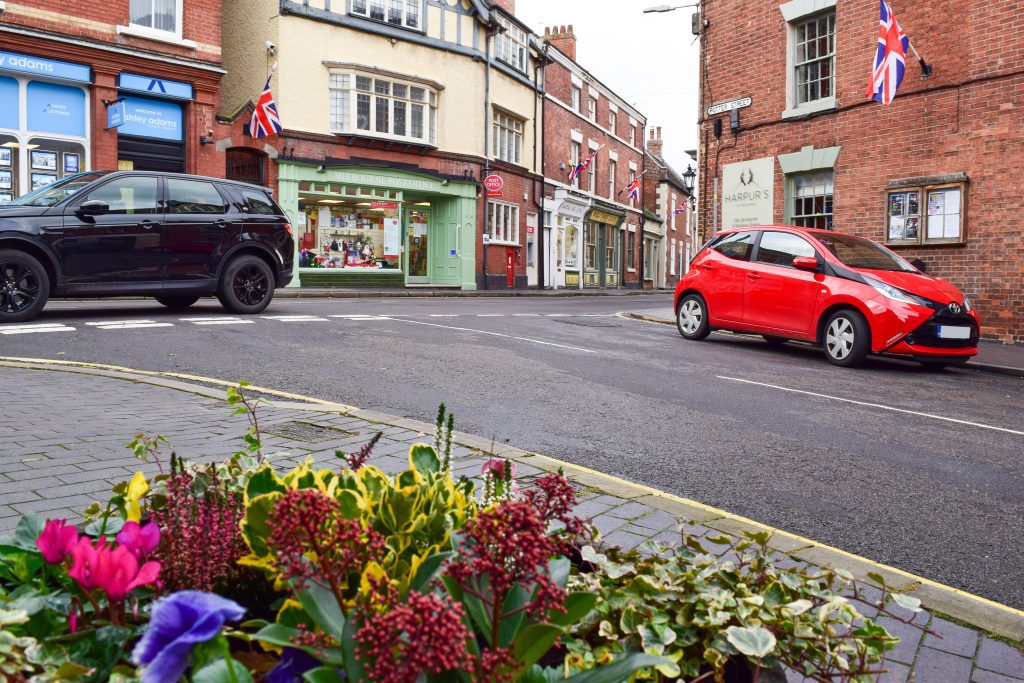
by Brian Spencer Sited comfortably above Trent Valley’s flood plain, and away from busy through roads, Melbourne has grown from the original settlement around the ancient market cross. Georgian town houses and small independent shops and cosy pubs, together with an attractive manor house record the oldest part of Melbourne, allowing modern development to fill spaces beyond the town centre. Australian visitors to Derbyshire are often disappointed when they learn that the illustrious city is not named after an attractive south Derbyshire town, but in honour of Queen Victoria’s first Prime Minister, Lord Melbourne. We went along there recently to learn a little more about its history. Entering the township from the north by way of the sinuous medieval causeway of Swarkstone Bridge, it is soon obvious that Melbourne has become a popular commuter town. Convenient to both Derby and Burton and beyond, it is home for many of those who work either in the air, or on the ground at East Midlands Airport; others are engineers based at Toyota or the highly technical sections of Rolls Royce or, maybe those who travel westwards every morning as part of the massive brewing complex that developed around the special kind of water pumped from deep beneath Burton. The old part of Melbourne town still fits snuggly around its hall and Norman church. With the open space and roofed market stand at the top of the street beyond the hall, the rest of the town centre is mostly late Georgian. Above the frontages of small independent butchers, bakers, florists, tea shops and the odd pub or two, it is easy to trace the elegant lines of what were once the homes of Georgian merchants. As befits a town where tradition still holds sway, Melbourne Hall at the bottom of Church Street dates from Tudor times, but was refashioned around three centuries ago. Most of the work was carried out by Francis Smith of Warwick who added graceful new rooms and with his son, William, completing the work in 1744. The work, it must be added, was a little unusual, for the house has two frontages, one overlooking the garden and the other, more public front, overlooking the large pond, and therefore open to the full gaze of passing strollers. Unusual though the design may be, nevertheless the Hall is attractive, both inside as well as out. Outside and adorned with lead statues, fountains and an ornate wrought-iron summerhouse, dubbed ‘The Birdcage’, the walled garden was laid out by Thomas Coke, who was born at the Hall and is buried in the chancel of the nearby parish church. He was Chamberlain to Queen Anne and it was she who gave him the lovely ornament that stands near one of the urns. It was made by the Dutch craftsman, Jan van Nost, and has carvings represent the four seasons. On the stone pedestal is a lead vase supported by four monkeys crowned by a bowl of fruit and flowers; 24 children play around the edge of the vase. Today, Melbourne Hall is the home of Lord and Lady Ralph Kerr, who open the gardens Wednesdays, Saturdays, Sundays and Bank Holidays from April to September between 1:30 and 5:30pm. The House is open every day in August (except the first three Mondays), from 2:00 until 4:30pm. Pre-booked parties by arrangement with the Administrator. Telephone 01332 862502. Located next to Melbourne Hall in the beautiful Georgian market town of Melbourne, you will find a courtyard teeming with local crafters and craft shops. Whether you have a taste for fine French wines, an Italian stockist, ageless antiques and collectables and the Brew House, you are sure to be able to while away a morning browsing the shops and talking to the local people. The Courtyard is just a couple of minutes walk from the town centre, but before you leave to explore the rest of the town, refresh yourself with a coffee and cake, a savoury snack or hearty meal in Melbourne Hall Tea Rooms – a tasty treat. At the far end of the yard, the Hall’s old kitchen block is now a cosy tea room, a far cry from the time when dishes had to be kept warm on their way to the comfort of the family dining room. Beyond the Hall and its ornate gates (private), the parish church is one of the finest and most complete Norman churches in England. Built in the shape of a cross and with a central tower; the two small unfinished western towers have a fine doorway between them. One row of Norman pillars supporting the nave roof is carefully copied by a second row erected in the 13th century. It is a few feet beyond the originals in order to widen the nave. Unlike many old churches, subsequent builders have added to the original without detracting from the original Norman style; even the Victorians in their zeal for ‘improving’ churches managed to carry out work without altering the designs of the original mason trained architects. Overlooked by the South Front of Melbourne Hall, the pool is said to be a flooded quarry which provided stone for the church and, it is said, for Melbourne Castle to the north of the town centre. How true this may be is open to conjecture, because so little remains of a fortification once governed by Sir Ralph Shirley, who fought at Agincourt. By the time of Charles I, the castle had fallen into ruin, and now its only remains are a fragment of a once massive wall. When Australian visitors arrive they must usually be taught how we pronounce the name of the town. While we place emphasis on the second part of the name, Mel-bourne, their version while still spelled the same way, is pronounced Mel-burn. What became one of the chief cities in the Commonwealth was named after Queen Victoria’s first Prime Minister. Prior to being ennobled, he was plain William Lamb MP and he took his title
DOWNLOAD THE IMAGES APP
00
Celebrity Interview – John Thomson

He’s known for playing one of the main characters in the ITV comedy drama Cold Feet and for being the voice of the Channel 5 show Bargain Loving Brits Under The Sun. Now John Thomson is perfecting his Derby accent to play Abanazar in Aladdin at Derby Arena. The jovial actor, comedian and narrator is delighted to be back in panto, as he told me from his home in Didsbury, Manchester. He explained who was responsible for getting him the part of Abanazar, how a Coronation Street regular is helping him to sound like a Derbyshire native, the debt he owes to Steve Coogan and one of the surprising ambitions he’d like to fulfill. You may have seen John in October making a guest appearance in the ITV crime drama Professor T which stars Ben Miller as Professor Jasper Tempest, a genius criminologist with OCD. John’s on-screen wife was played by Rita Simons, formerly Roxy Mitchell in EastEnders, who was wicked fairy Carabosse in Sleeping Beauty at the Arena last December. Rita spoke to the panto’s producers Little Wolf Entertainment about John’s availability and he was offered the part of Abanazar. “I sent Rita a whopping great big bouquet of flowers for brokering me a panto,” says John. “I’ve not worked for this company before but we shot a promo (at Pickford’s House in Derby) which was great fun. I’ve seen stills of previous pantos at the Arena and it looks really impressive.” It will be his second stint as Abanazar after playing the role at Manchester Opera House in 2016. He’s delighted that the billing for Aladdin in Derby describes Abanazar as a “devilishly handsome rogue”. “I’m in my early 50s so I can’t thank them enough for that. I like Aladdin as a panto – I think it works. Some don’t work too well at all. “I like it when a venue is full and the audience are roaring. That’s why I do it. I absolutely love it when the audience is up for it, there’s a real buzz in the auditorium and they’re getting everything.” John is also looking forward to working alongside Morgan Brind from Little Wolf who won best dame in the UK Pantomime Association Awards for his part as nurse Nancy Nightly in Sleeping Beauty. “I think we’ll have a hoot,” says John. He is getting tips on how to speak Derbyshire from his old friend Chris Gascoyne who was Peter Barlow in Coronation Street. “He’s from Mansfield. There’s a very fine line between Derby and Nottingham. I love doing accents and I try to perfect them. I want to know the subtle differences between Nottingham and Derby,” maintains John. John Patrick Thomson was born Patrick Francis McAleer in Lancashire on 2nd April 1969. His mother Mary McAleer gave him up for adoption when he was six weeks old. He was adopted by Andrew and Marita Thomson, a businessman and a bookseller from Didsbury. While at school he was described as “clearly having a talent for comedy”. When he went to Manchester Metropolitan University he met Steve Coogan who suggested John sent an audition tape to Spitting Image. The programme signed him up and he impersonated everyone from Brian Clough and Frank Bruno to Robin Day and the Queen Mother. “We got together and we worked together and we wrote together. We just hit it off,” says John of his relationship with Steve Coogan. The two then co-wrote Knowing Me, Knowing You … With Alan Partridge before they won the Perrier Comedy Award in 1992 for their act at the Edinburgh Fringe. Then came Cold Feet, with John playing Pete Gifford for six years and reprising the role when the series was brought back in 2016. “It had been absent for 13 years and people would stop me in the street and ask when it was coming back.” According to John, Cold Feet could return again. “The idea was to shoot a 90-minute special in Barcelona. We were all set to do that but then the pandemic put paid to it. I’d like to think a summer special or a Christmas special could happen because the demand’s there. The public still love the show and they love the characters. I was very fortunate after all that time to have been brought back and for it to be a success. I couldn’t be more grateful. “If it did come back I’m hoping the Giffords would have a lottery win. I had depression (as Pete), my wife got breast cancer and then her mum died. I don’t think our middle name’s Lucky. It’s about time our karma changed.” The pandemic also persuaded John that the time was right to convert a cubbyhole in his house into a studio so that he can record voiceovers for Bargain Loving Brits Under The Sun and the Channel 5 factual programme Police Interceptors which sometimes features the work of the Nottinghamshire force. He points out that voiceovers are his bread and butter: “Bargain Loving Brits started on a Sunday night and when it was repeated in the daytime the viewing figures were amazing. So they commissioned 40 more. I have to try to do four a week if I can.” John admits that acting is a very precarious profession which is why he diversifies as much as possible. As well as being a comedian, impressionist and voiceover artist, he’s also a drummer and a bit of a magician. He can also sing which led to his being cast as Wilbur Turnblad in the musical Hairspray last year. “Norman Pace (of the comedy double act Hale and Pace) was the normal Wilbur and he wanted Christmas off, so I stepped in for the run at Blackpool. “The problem was that because of the pandemic I learned a lot of the choreography on Zoom calls. One review said ‘John Thomson is brilliant but struggles with the dancing’. By the end of the run I was great but it’s hard to learn
Walk Derbyshire – Following the Magpie Sough

By Rambler ‘Sough’ is the lead miner’s term for the method of draining water from a mine. One of the most attractive roads through the Peak District, the one between Bakewell and the A515 Buxton/Ashbourne road takes some beating. Around a mile beyond the cut-off for Monyash, to the right two small chimneys indicate the presence of a major relic of local industrial heritage. The chimneys and ancillary buildings, plus an old stone cottage are all that is left of boom to bust underground activity in the search for lead. This is the site of Magpie Mine where fortunes were made by intense inter-companies rivalry that even lead to murder. While lead ore mining may have been active in small near-surface activity for hundreds of years, the earliest recorded evidence of miners beginning to explore ever-more deeply came in a report dating from 1740, the start of upwards of a dozen small lead mines that developed as time went by. Local and even itinerant Cornish miners, searched for the riches available in upwards of eight major veins running roughly east/west ever deeper beneath the site. It was also quite normal for abandoned mines to be re-opened by other companies, simply by asking permission from the local Barmote Court, the traditional means of controlling lead mining activities in the Peak. Due to the proximity of adjacent veins, two or more mines could be operating within only a few feet of rock between them. This was the case in 1833 when teams of Magpie miners from Maypit and Great Redsoil mines came into dispute over the right of Maypit miners to open a side passage, inevitably connecting to Redsoil. Appeals to the local Barmote seemed to be getting nowhere and arguments, sometimes verging on violence, broke out from time to time. All this came to a head when Magpie miners lit a fire in the connecting Maypit passage. Regrettably this led to a number of Redsoil miners being suffocated by the fumes. Twenty-four Magpie miners were accused of murder and taken for trial at Derby Assizes. Luckily for them their counsel was the wily William Brittlebank of Winster who argued that the Magpie/Maypit miners were carrying out a traditional method of breaking down the rock within the passage. Unfortunately, or so Brittlebank claimed, the wind direction changed, blowing smoke into Redsoil, rather than into the Maypit workings. With this evidence, the Jury acquitted the 24 Magpie/Maypit miners, but they left the court with the widows’ curses ringing in their ears; learning all too soon that their mine would never again make a profit. A boundary wall to the east (right hand) side of the field beyond the cottage and the prominent chimneys leads to the capped-off shaft into Redsoil and Maypit Mines. A few yards away there is the reproduction of a horse-drawn gin, a system operating the lifting of ore to the surface. The gin is just one of the many features to be seen when passing through the Magpie Mine site. Starting with the cottage, a combination of the mine agent or captain’s house and smithy, it sits within the shade of two chimneys, both part of steam engines that once drew ore to the surface and lowered men to their work. The chimneys give a clue of where their builders came from; the round one was built by Cornish miners trying their luck in the north, they built it in the style they were accustomed to. The square profiled chimney was made by Derbyshire Miners. Various small buildings dot the area around both engine houses. There is an ore store, or coe, not far from the square chimney. This was climbed recently by a courageous Duchess of Devonshire while it was being repointed. Apart from Britain’s only Grade II Listed corrugated iron hut near the round chimney, the final building of note while at the site, is another of Cornish design. This is where explosives were stored and the idea behind the stone hut, or powder house design is for the effect of any accidental explosion to travel upwards, not outwards. Passages within the Magpie complex were frequently flooded and in 1873 work began on digging a tunnel, or sough in order to drain the mine. Due to difficult conditions, mainly with very hard rock, and driving the shaft downwards for about 575 feet before it could make contact with the level of the River Wye; all this took until 1881 before it could carry water away from the workings, but the sough did have one extra advantage when small boats could carry ore to the surface, rather than being manhandled along difficult underground passages and then winched by horsepower into daylight. The sough, starting beneath the round chimney engine house follows a route flowing below the village of Sheldon. The walk as described below follows a surface route above the sough all the way to its confluence with the river. In 1973 the sough became blocked which members of the Peak District Historical Mines Association managed to clear. The story goes that when a huge body of withheld water was expected, an angler was spotted tranquilly fishing in the Wye, more or less opposite the sough. Despite being warned, the angler continued to fish, that is until the inevitable happened and a wall of water hurtled towards him. Fortunately he managed to escape in time and in any case, the water level very soon went down to normal. Traditional lead mining was carried on until as recently as the 1950s, or whenever prices became attractive, but that hasn’t happened for a long time now. USEFUL INFORMATION: A moderate walk covering 5 miles (8km) of field paths and woodland tracks. 575feet, (175.09metres) down along Deepdale and then uphill through Great Shaklow Woods. RECOMMENDED MAP: Ordnance Survey Outdoor Leisure Map Number 1, Sheet OL 24; the Peak District, White Peak Area. PARKING: Roadside near Sheldon, but please keep well away from field access gates. Alternately use the roadside car park
Lost Houses of Derbyshire – Eaton Dovedale Hall
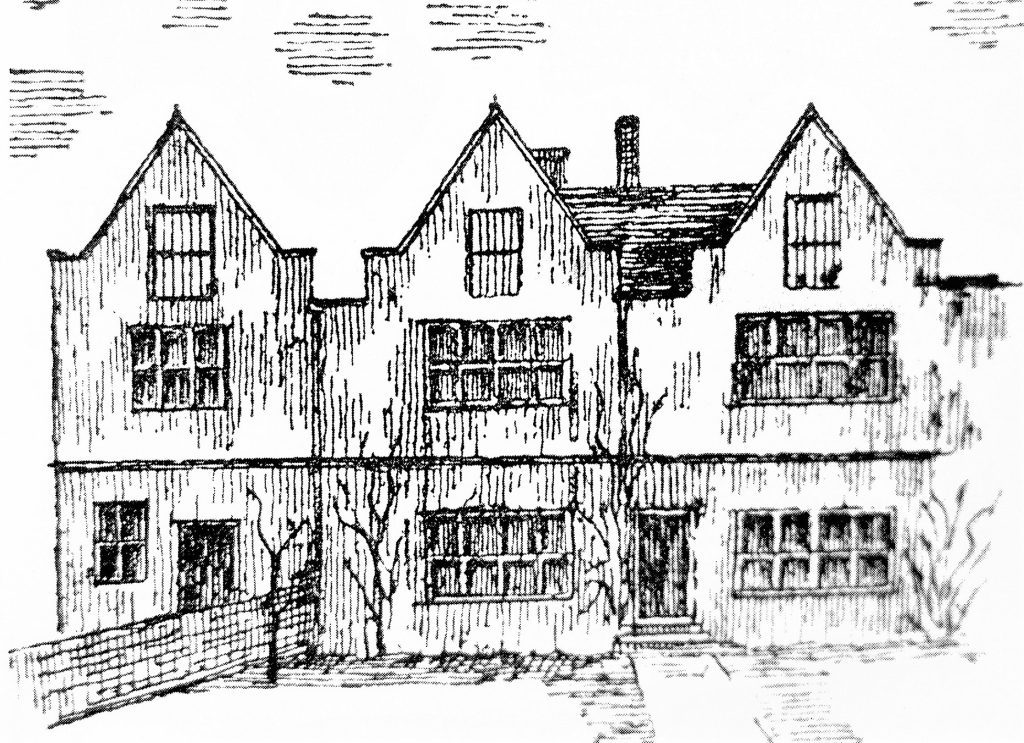
by Maxwell Craven Neither Eaton Dovedale, which sits adjacent to Sedsall, are exactly well known locales, even to keen followers of local history and topography, but they lie just north of the much better known village of Doveridge, in which parish they lie. About thirty years ago I visited to attend a clay shooting tournament, but a quick recce failed to discover any real traces of the old house, but confirmed the belief that Eaton was a deserted medieval village (DMV) as indeed is Sedsall to its north. Whilst Sedsall is only recorded from c. 1200 (the name means ‘Secq’s corner of land’) Eaton Dovedale is recorded in Domesday Book, wherein it was a portion of Doveridge held under Henry de Ferrers by one Alcher, displacing the Saxon Wulfric. Alcher is also known as the lord of Sudbury, and was the ancestor of a Shropshire family called FitzAer. Subsequent record of Eaton resurfaces when it was held in 1231 by the Norman, William de St. Pier(re), who was succeeded by his son Nicholas in 1251. Whether they had a house at Eaton is not clear, but it is possible. There were, however, two daughters and co-heiresses of Nicholas, and the estate was split between them, Sedsall going to the Marshall family of Upton whilst the Eaton part and the original St. Pier house went by marriage to the Cokesay family. They certainly did have a house at Eaton, and a small park by all accounts. In 1356, Sir Walter Cokesay was living there and his daughter and sole heiress eventually brought the estate to the Russel family. They had estates elsewhere, and it may be that the original house was, at this stage abandoned or cleared away. As it was undoubtedly of timber, the structure would have been re-used, as was then invariably the case. Sir John Russel died in 1556 and after an interval, the estate and lordship of the manor were bought by William Milward. He was already living in the locality, his father Robert having acquired land there in 1471. This Robert was fourth in descent from one Owen Milward, living in 1374, and one gets the impression that the family’s rise to the gentry was greatly helped by their having survived the Black Death (1347-1349 locally) when they doubtless bought up property being sold cheaply by the heirs of grander families decimated by the plague. The name Milward (mutated to Millard in their later US branch) means guardian of keeper of a mill, so they may have made their money in just such a manner, although we do not know where the family lived prior to buying land at Eaton-in-the-Dale as it was then sometimes called; circumstantial evidence suggests Staffordshire. The Milwards became very numerous and indeed successful, marring local heiresses: Palmer of West Broughton Hall, in Sudbury, Beresford of Alsop and Fleetwood of Calwich (Staffs.). Sir Thomas Milward (1575-1658) was a successful lawyer and served as Chief Justice of Chester 1638-1647, when the civil war cut his tenure short, for he was a staunch Royalist, in 1651 helping to rescue Charles II’s Garter regalia from falling into Commonwealth hands after the escape from the Battle of Worcester. Sir Thomas’s father William seems to have built the house – judging by a datestone of 1576 recorded as having been set above the door – probably at about the time he was born in 1575; perhaps his parents’ marriage was the spur. What we know of it from a drawing done by (or for) Joseph Tilley in the mid-19th century shows a typically Derbyshire manor house of three gabled bays, quite steep ones, with prominent kneelers, the house being of two storeys with attics. It was presumably of brick, had a string course between the main floors and eight-light mullioned and transomed windows on both main floors at the central bay and the right hand one, but the left bay boasted only a six light window above a rather inconsequential looking door. The engraving also suggests that this left bay was actually the end of a cross wing, perhaps added later, for no roof ridge appears between the left and central gables, which later seem to have acquired Georgian sashes. The first floor windows also appear deeper in the illustration, suggesting that the first floor included the loftier state rooms and that only family rooms inhabited the ground floor. That there were state rooms is reinforced by at least one visit by King Charles I, who left behind (or more likely gave Sir Thomas) a pair of embroidered doeskin gauntlets which have miraculously passed down amongst his descendants. In 1664, the family had to pay tax on no less than fifteen hearths, but what we see in Tilley’s woodcut suggests that the house had later been much reduced. What remained then much resembles contemporary Duffield Hall, which was only taxed on nine hearths. The suspicion is that it boasted a cross wing at either end of the façade, of which only part of one remained. Quite where the ceremonial entrance once was remains something of a mystery. That the house ended up being reduced so drastically was down to the implosion of the Milwards. Sir Thomas’s son Robert was equally successful as his father, despite being a second son, for the eldest William, was settled at the family’s estate at Chilcote, on the Staffordshire border. Robert was born in 1616, was called to the bar (being made a KC in 1668) and was appointed a Justice in the Chester circuit, like his father, in 1661 (probably as a reward for the family’s loyalty to the exiled Charles II during Cromwell’s ‘crowned republic’); he was also Recorder of Stafford and was elected MP for that borough in 1661, serving until his death in 1674. Unfortunately, his wife, Isabella, daughter and co-heiress of Sir John Zouche of Codnor Castle, died without having had children and Robert took up with another lady, unnamed, but called his wife in the
Exploring Kent

by Brian Spencer The only time I have previously travelled through Kent was on my way to Dover for the crossing to France. Even from the motorway it looked an attractive place, well earning its title as the Garden of England. Both Sheila and I had decided that if the opportunity ever arose, then we would take advantage of whatever was on offer. When Slack’s Travel brochure offered a few days in this corner of England, we quickly booked our seats on one of their comfortable coaches leaving from Matlock. The comfort of well-appointed Bridgewood Manor Hotel outside Chatham was our base for the short exploratory trip to Kent. This is one of the Royal Navy’s bases where warships of all shapes and sizes are maintained and revituled. We tried to include a visit to the extensive dockyards, but as luck would have it, opening times were severely restricted and we just didn’t have the time to do it justice. This was because our planned itinerary was to take us to Leeds Castle; it has nothing to do with anything in Yorkshire by the way, simply a fact of local geography. Leeds Castle, is rightly dubbed as the ‘loveliest castle in the world’. Maybe that is stretching the description of a castle where time holds its breath. A minor road off the M20 winds its way through woodland centuries old. A slight rise tries to hide the first view of this magnificent 12th – 14th century castle rising in fairy tale splendour from the middle of a lake. Often referred to as the Queen of Castles, it was the home – one could also say prison, of Catherine of Aragon, the first of Henry VIII’s wives and his queen until their marriage was annulled, bringing about the King’s schism with the Church of Rome. Many other queens lived there, including Princess Elizabeth until she was crowned Queen of England. With its history and magical appearance, it is hardly surprising that Leeds Castle was owned by an American heiress and became the popular venue for Hollywood’s finest during the rip-roaring days of the 1930s. To wander inside the castle is like stepping back to a time when only the American society had the wealth needed to maintain and generally run such as Leeds Castle. We wandered along medieval stone-walled passages, and suddenly enter a wealthy lady’s chambers, with luxurious beds where expensive dresses in the 1920s style were thrown carelessly over silk bed covers; then through another door into a bathroom dripping with mid-century opulence. Parkland surrounding Leeds Castle has miles of footpaths and Rights of Way, there is also a ferry that can be used to link several of the walks to and from the castle, and one walk has the advantage of passing an attractive lakeside restaurant. A quick side trip found us in Maidstone, straddling the river Medway, the county town of Kent. As we only had an hour or so at our disposal, we quickly went to the Tudor Archbishops’ Palace next to a 14th-century church with some fine memorial windows. The palace is no longer used by the Archbishops of Canterbury, but the fine panelled banqueting hall has become a popular venue for weddings. Directly opposite the palace the huge tithe barn has been converted into a museum of old carriages. Rochester was an important town as far back as Roman times, being a place of great strategic importance. It is here that Watling Street still crosses the river Medway, albeit by a modern road. The river Medway opens out here, forming a large natural harbour, in use since Rochester was a major Roman town. In A.D. 604, Augustine founded the third English bishopric here. On the site of his church the Normans raised a cathedral which we thought was a delight, quietly welcoming us into its tranquil beauty. The Normans also built a great castle almost beside the cathedral and the remains of these two buildings are still historic features of the town. Rochester has many associations with Dickens; his home at Gad’s Hill is on the north western outskirts of the town. The town of Whitstable sits on Kent’s northern coast, where the Thames estuary joins the crowded English Channel. Although oysters were out of season, it was easy to recognise their links with the town; all along the shelving beach, piles of oyster shells speak of their enjoyment by others in nearby restaurants. Strange lines of poles, part of farmed oyster beds are a permanent reminder of this unusual industry. Narrow old timber houses line the shore, some are conversions of tall net drying houses, but being made of timber makes them an ever-present fire hazard. George Stephenson designed and laid the Canterbury-Whitstable railway, the first passenger line to be opened (in 1830). The steam engine which pulled the first train the Invicta, still stands by the south east gate of Canterbury’s city wall. To visit Kent without exploring Canterbury Cathedral is well on the way to being unforgivable. Approaching the square on which we were expecting to find the cathedral, we began to come across groups of young people wearing gowns – they were there for their graduation ceremony. Were we going to be thwarted yet again? Luckily the cathedral and college authorities had made provision for general visitors, alongside excited graduates. We were allowed access to most of the cathedral, leaving the Nave open for private ceremony. Canterbury Cathedral is just one of the historic remains left over by previous developers. While St Augustine is credited with bringing Christianity to England in A.D. 597 by way of Canterbury, he found there was already a small church dedicated to St Martin; although this church has been extensively restored, it is probably the oldest in England. Easily missed if you don’t look up when searching for Thomas a Becket’s tomb, the delicate tracery of the fan-like tops of pillars supporting Bell Harry Tower – it fair takes your breath away
Win A ProDetailer Gift Set

00
Dining In Derbyshire – The Bear Inn, Alderwasley

When you plan to visit a country inn the imagination can run wild. What’s its history? Is it still original or has it been spoilt by modernisation? Having visited the Bear many times during the years before lock down and way before that, my memory was of log fires, oak beams, stone walls and a very tasty pint of Bass with a traditional carvery. ‘I so hope it hasn’t changed’ I thought as we set off one evening. Well one thing you can’t change is the view of delightful surrounding countryside, perfect walking territory, neither can you change it’s history as the list of previous owners, landlords, tenants, etc. have their names etched in the pubs illustrious past along with its tales of Mary Queen of Scotts stopping here while the horses were watered or a nights stay was required as this was on the main coaching road from Birmingham to Chatsworth. These are the stories that make a 1528 oak beamed property what it is. Innkeeper Claire greeted us warmly and gave us a tour to highlight the work they have done since taking over a year or so ago. We were so pleased to see the way the building had been sympathetically decorated to show off the existing features to their best. Bear Hall is the main function room seating around 80 comfortably, making it ideal for a special occasion such as a wedding or anniversary. It comes complete with its own bar too. The decor is rich and comfortable here, where old paintings and maps compliment the leaded windows and old oak floors. Most of the guest rooms were occupied but we were able to take a peek at a couple that were empty and again each room was individual, with it’s own quirky features adding character and yet in sympathy with its age. Each named after animals that you may find wandering in the local countryside. Except Bear Hall that is! I was delighted to see that the bar area was just as I remembered it – a roaring log fire, a selection of fine ales and the buzzing hub-hub as locals and visitors engaged in friendly good humoured banter. Casting my eye along the bar I noticed Timothy Taylors Landlord was on offer, but then the Bass caught my eye especially as Claire said I could have it from the back, flat with no head! Ah yes now I remember that phrase. It was perfectly clear, the glass brimming and not a sign of a sparkle. If you ever look up flat beer on the web this is what it says ‘Serving flat beer will quickly drive away customers’ what total rubbish, they were serving it at a nice steady rate. It allows you to taste the hops, it’s smooth and delicious and this particular Bass was extremely well kept…I’d recommend it. A little history from the Bear Inn’s web site for you. In 1690, the building became the property of the Hurt family, when it then became an alehouse and soon after was known as the Olde Brown Bear Inn. The Bear Inn, as it became known by 1735, lay on the Birmingham-Derby-Chesterfield-Sheffield turnpike road. By 1764 it had become a prominent coaching Inn. The names and dates of all Innkeepers and owners from 1735 – 2008, 2022 are listed in the entrance hall of The Bear. In recent years, the fame of the Inn has spread across various counties and continents – mainly as a Gastro pub of note, a hotel, carvery, and a real ale venue. The menu is easy to follow, well explained, gives you a good choice and is not too expensive to visit on a week day, with pie and chip specials on Tuesdays and curry on Thursdays to temp you. We were dining early in the evening and with no rush, so we began with starters. The arancini were mozzarella and tomato, lightly cooked and rich and soft inside; mental note to myself to try these on our next visit! I had the crispy tiger prawns in the lightest of tempura batter and with a tasty tequila mayo for a dip, lovely.Then for main course my husband chose the chicken leek and ham pie with chunky chips and lashings of gravy. A hearty pie with short pastry and plenty of filling, a generous portion to boot. My appetite isn’t quite as robust so the pan fried sea bass fillet was perfect, served with tomato salsa and garlic, rosemary new potatoes with asparagus. Now have you ever fancied something sweet and clean tasting to finish but can’t manage a whole pudding, well I found the small carton of locally made (Ashbourne) ice-cream was just perfect. True to character, my husband tucked into his fruit crumble and custard, with gusto!! This is a treasure of an old inn with plenty of cosy corners for an intimate meal, but also good size square tables where families and friends can gather. The atmosphere is warm and friendly where the staff are cheerful and happy to help. Long may inns of this calibre continue to offer true, traditional hospitality. Monday – Thursday Lunch: 12pm – 4pm Dinner: 5pm – 9pmFriday and Saturday Breakfast: 8.30am – 11.00am Lunch: 12pm – 4pm Dinner: 5pm – 9pmSunday Breakfast: 8.30am – 10.00am Carvery 12pm – 5:45pm Accommodation. Choose from two individually designed and newly renovated self-contained holiday cottages. Or stay in one of the seven stylish hotel rooms, all equipped with their very own en-suites, and shared access to the private residents’ lounge. Ample free parking is available for all guests! 00
Walk Derbyshire – Toad’s Mouth, Carl Wark & The Upper Reach of Burbage Brook
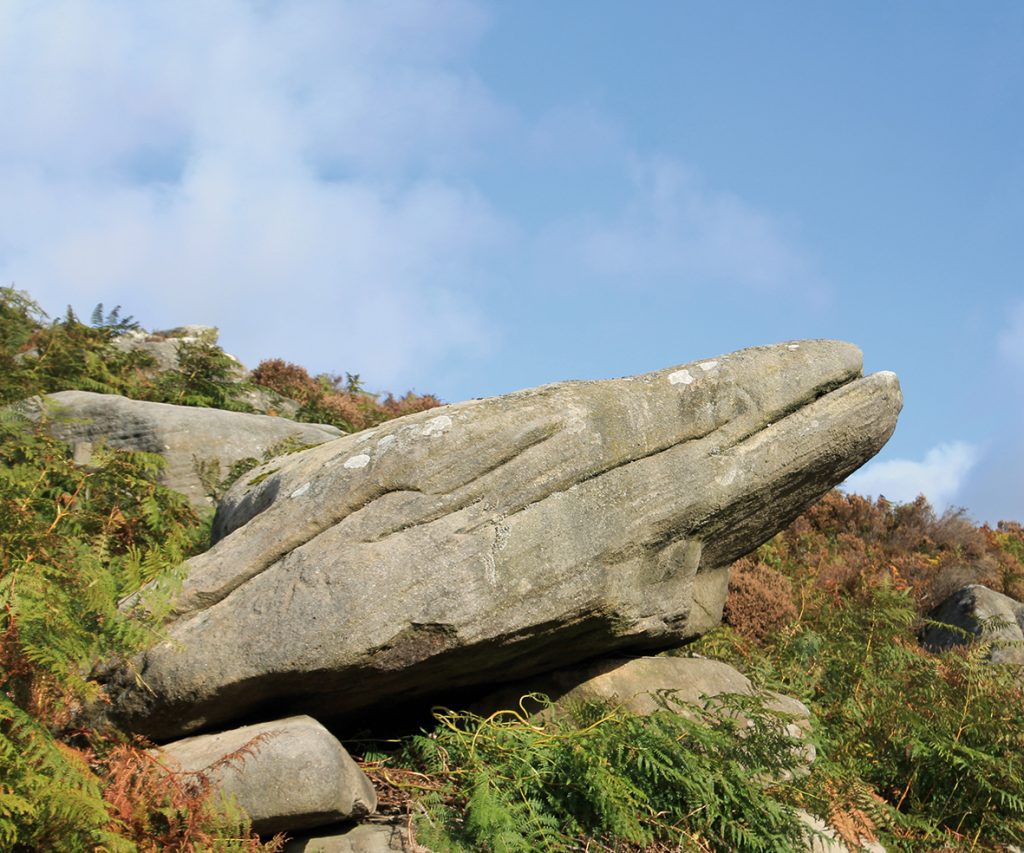
There are many enigmatic remains throughout the Peak District; stone circles, cairns and burial mounds were left by people who did not tell us who they were. Carl Wark the focal point of this walk is one such relic, but we have no way of telling if it was Iron Age or post-Roman, but it tells us that the people who used it had to protect themselves from attack by unfriendly others. When gentlemen took their ease by squinting along the barrel of an expensive shot gun aimed at some innocent moorland grouse, or semi-wild deer, chances are that many of them would have used nearby Longshaw Lodge for their accommodation. During the Great War, the lodge was used as a convalescence hospital for wounded Canadian Soldiers; there is a photograph of a group of them in the snow below the house; it stands beside the path in front of the lodge. With the decline of moorland shooting for so-called pleasure, the moors over which the hunters stalked has been handed over to the National Trust where anyone can wander freely along footpaths crossing the unspoilt moors and wild oak woods covering the valley sides of the lower Burbage River, all the way down to Grindleford. This walk starting from Longshaw joins a roadside path beside the aptly named Toad’s Mouth rock, before wandering out on to Hathersage Moor. At its centre the well-preserved prehistoric fort of Carl Wark sits enigmatically below the wild rocks of Higger Tor. Despite its condition, little is known about the fort’s history, remaining as a potential site for some future teams of archaeologists to work on. A path climbs directly across the moor to reach the massive stone defending walls of Carl Wark fort, by one of its two entrances. At this point the walls make an inward curve, creating overhangs from which defenders using crude bows and arrows could fire down on attackers trapped in the narrow gaps rising to the dual entrances. Today’s visitors can explore the site in total safety, while searching for the enigmatic rocking stone hidden amongst the remains of long abandoned hut circles. The fort is well-sited, at the centre of a nearby series of tracks leading the eye along a path climbing to the summit rocks of Higger Tor, the potential route of an extension to the walk. Our route turns immediately right at the foot of the fort’s rear walls. Here it follows an ancient pack horse track, down to a stone clapper bridge across one of Burbage Brook’s tributaries. On the far side of the bridge, the path climbs steadily uphill to join a path, part of Sheffield Country Walk, one of the long distance routes in this part of the Peak District. A right turn follows this path, later passing an abandoned large stone water trough. Unfortunately it was cracked by an ill-judged final chisel. From the path end beyond the ruined trough, another path starting beside the stream a little way before the Toad’s Mouth bend in the main road, to your right joins the brook which is then followed, past a small weir to a narrow footbridge. Crossing this, the way is gently uphill, past a small lake and then onwards to the lodge where refreshments are on sale. For something stronger there is always the Fox house Inn nearby where Jane Eyre descended from her coach. 00