Lost Houses of Derbyshire – Old Walton Hall, Chesterfield
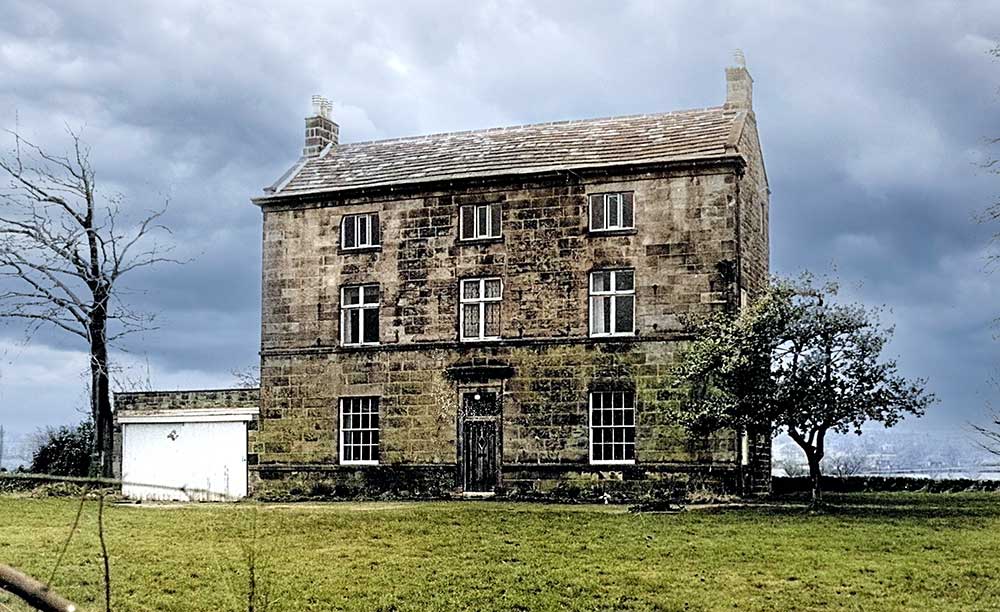
The present Walton Hall, built in the closing decade of the 18th century as a fairly substantial farmhouse, nowadays survives entirely surrounded by modern housing, its lush farmlands lost to a succession of extractive industries followed by the SW expansion of Chesterfield, which gobbled the unpretentious village of Walton up towards the close of the 19th century – and didn’t stop. The site, however, is an ancient one, held by an otherwise unknown man called Hardulf at the time of the Norman conquest, and from him, doubtless compromised by supporting or fighting on the losing side at Hastings, it came into the hands of the King. Who the King’s tenant was at Walton, we seem not to know, but by the next generation it was in the hands of Roger le Brito, otherwise le Breton. Roger, whose name suggests Breton origin – a good number of William the Conquerors comrades-in-arms were Bretons – is otherwise thought to be identifiable with Roger, son of Steinulf, the Domesday Book tenant of Calow, but as the name Steinulf is Nordic not Breton, this may not be a tenable supposition. However, whilst Calow descended amongst more easily attested descendants of Steinulf (bearing the name Calow, of course), Walton descended to the posterity of this Roger. His grandson, Sir Robert le Breton, received a licence from the king to found a chantry on his land at Walton, clearly suggesting he also had a capital mansion there, too. Nevertheless, the family continued for eight generations until Isabella, daughter and sole heiress of another Sir Robert brought the estate to the Lowdhams of Lowdham, in Nottinghamshire. In the next generation another heiress brought it to Thomas, a younger son of the Peakland grandee Sir Thomas Foljambe of Tideswell, around 1390 and his family held it until 1633. The old house was one of many Derbyshire manor houses to host Mary Queen of Scots, in this case, for two nights in February 1568. The last hall to be occupied prior to the building of the present one was that built by Godfrey Foljambe, who inherited the estate on the death of his father, Sir Godfrey, in 1585, and the existence of two chimneypieces and overmantels bearing his initials and dated 1591 (one was dismantled and reconstructed for installation at Dene Park in Kent; the other came into the hands of Sir George Sitwell but is lost) suggests that his new house was being fitted out in that year and was thus ready for re-occupation, perhaps before the end of the year. The house’s predecessor was set in a park, bordered on the north by the Hipper and this had a tower therein, which can be picked out on both the map of Christopher Saxton of 1577 and that of John Speed of 33 years later, probably a hunting stand, like that at Chatsworth. The new house is only known from a survey of 1633 by surveyor William Senior, and consisted of an entrance front with end gables, from which ran cross wings, with two further lesser gables flanking the entrance. This ensemble formed a deep courtyard, and was closed at its open end by a timber screen, beyond which lay the stable block. On the other side of the house was the domestic chapel, founded as a chantry by Sir Robert le Breton, by 1623 embellished with a tower, spire and extended chancel. Sir Godfrey Foljambe, who lived there ‘wherein great contynewall housekeeping was mayntayned’, died in 1595, whereupon his widow, Isabella, was left a life interest in the estate, allowing her to live there with her second husband Sir William Bowes. She outlived him, too, and died in 1623; both were very keen Puritans. In 1609, they had been host to Lady Arbella Stuart, the King’s cousin and Bess of Hardwick’s grand-daughter. The house by then was surrounded by gardens, orchards, a bowling alley and pleasure grounds extending to twelve acres, the estate itself running to over 2,336 acres. The building itself was described as in good repair. However, once Lady Bowes had died, the male heir, Sir Francis Foljambe, 1st Bt. (the title created in 1622) inherited it. He was MP for Pontefract (his main estate then lay at Aldwarke in Yorkshire) and High Sheriff of Derbyshire in 1633, in which year he decided to sell up and the house seems never to have been properly lived in ever again. The purchaser was Sir Arthur Ingram MP of Temple Newsham, Yorkshire, a colourful character described by one contemporary as ‘a rapacious, plausible swindler who ruined many during a long and successful criminal career’, but it would seem that his purchase – at an eye-watering £16,000 – may have been an element of some other transaction, for within three years he too had sold the estate, this time to Paul Fletcher, a local ironmaster. Fletcher’s heir was another local merchant, Richard Jenkinson, who in 1648, with the Civil War still raging, decided that the old house – un-lived in since 1623 and in decay – was too large for him and he reduced it considerably, supposedly to make it more convenient. His son, Sir Paul, was created a baronet (of Walton) in 1685, but the family allowed the building to continue to decay, until in 1713 William Woolley could write of it: “The ancient seate Walton nere Chesterfield….is utterly ruyned, plucked downe, and sould, no materiall, as ys reported left, nor almost any mencyon made were so greate hospytality, and that in my tyme used.†With the death of Sir Jonathan Jenkinson, 3rd Bt. in 1739, his niece and heiress inherited it and forthwith bestowed it upon her mother Barbara, widow of Sir Paul, who had died in 1714. By this time, she was married to John Woodyear who, like the Jenkinsons, lived elsewhere and promptly cleared the site of the old hall, in order to convert what was left of the estate (after several parcels had been sold off to local coal-masters) into a working farm.
Derbyshire Makers – Wheeldon Homes
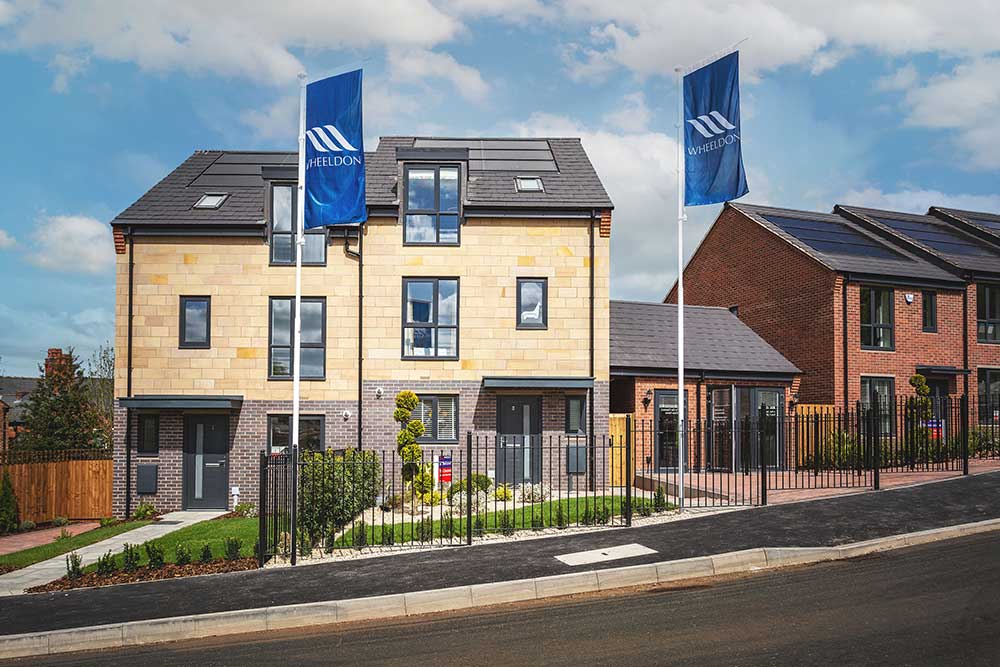
When it comes to established Derbyshire companies, not many have the pedigree of Wheeldon Homes. With a proud heritage dating back over 157 years, Wheeldon has remained a house builder of choice for many local house purchasers across the East Midlands for generations. As a company they have an excellent reputation for the quality, design and specification of all their homes. The company was first set up by brothers George and William, both joiners in Belper way back in 1867. They worked hard and quickly developed a name for themselves for excellent quality of workmanship, building much needed homes around Derbyshire. Today the company is based near the heart of Derby in Chester Green and continues to foster an ethos of quality in everything they do. All their homes are constructed by selected workmen, chosen by Wheeldon for their proven expertise in local house-building. These skills are self-evident in the quality and range of houses they build, from starter homes through to spacious family houses. 2025/2026 sees the company in excellent shape with several developments under construction across Derbyshire, with new locations promised for the future. All Wheeldon new homes enjoy bright living rooms, high specification kitchens, dedicated dining areas, principle bedrooms with Gliderobes fitted wardrobes and bathrooms with sanitary ware by Ideal Standard, all complemented by Porcelanosa wall tiling. The kitchens enjoy the convenience of an integrated oven, hob and extractor canopy as standard, with a choice of cabinets and drawers providing plenty of storage space. Wheeldon has always been keen to assist its purchasers and offers a number of incentive packages totally tailored to suit individual needs on a selection of their properties. When purchasing a new-build home, short term savings mean that people can enjoy the peace of mind that no major costly projects like repairing leaking roofs or replacing electrics lie around the corner. Likewise, a new home is a blank canvas allowing each purchaser to personalise their own home without the extensive labour of stripping off wood chip wallpaper and redecorating. This simply means that people can move into their home and enjoy living knowing that they have the protection of a 10-year warranty backed by NHBC should anything go wrong Debbie Smith, Sales and Marketing Director at Wheeldon Homes says: As a smaller independent house builder we understand what really matters to our purchasers and that is pounds in their pocket. For this reason, at Wheeldon we offer a range of features as standard – meaning that the savings in your pocket come as standard.†Designed to comply with the very latest building regulations, our new homes are fitted with high efficiency heating systems, excellent insulation, fire resistant materials, circuit breakers, alarms, water efficient taps and toilets, triple glazed windows and French doors. In addition to the above, Solar Photo Voltaic Panels (PV) are fitted as standard with most of our properties featured for sale; ensuring we achieve an ‘A or B’ rating in SAP energy calculations. The Solar Photo Voltaic Panels (PV) are an ‘in-roof’ solar panel system, which combine slimline black cells and a black frame, strong, durable and water-tight, these fully framed panels, with no exposed edges, produce an all-black panel looking a lot sleeker on the roof. At Wheeldon the benefits do not end there…. many of our new homes are also provisioned with a 7.2kw Type 2 Rapid Vehicle Charging Point which will enable fast and convenient home charging of electric vehicles and plugin hybrids, further future proofing your property. New homes are already six times more energy-efficient and generate over 60% less CO2 emissions than older style homes, which is the equivalent of driving 10,000 miles less a year per household. So, our new homeowners can take comfort that they are doing their bit for the environment. But it’s not just about the planet, improved energy efficiency saves money too and living in a new home can reduce energy bills by more than £550 per year. “Our specification is designed to save people money – something that we all need in a world that is seeing huge increases in the cost of food and energy. To find out more we are urging interested parties to visit one of our developments and speak to the sales adviser about what Wheeldon can do for them.†Debbie concludes, Wheeldon developments offer a range of homes to suit all tastes and budgets. No matter which Wheeldon home you choose, you can rest assured all the developments are truly designed to make life more comfortable and to ensure that their owners will be proud of their property for years to come. For details on the full range of homes currently available or indeed future developments, please contact the Wheeldon Homes Sales Hotline on 01332 388 388 or alternatively visit the website – www.wheeldon.co.uk 00
Derbyshire Makers – John Stevenson Jewellers
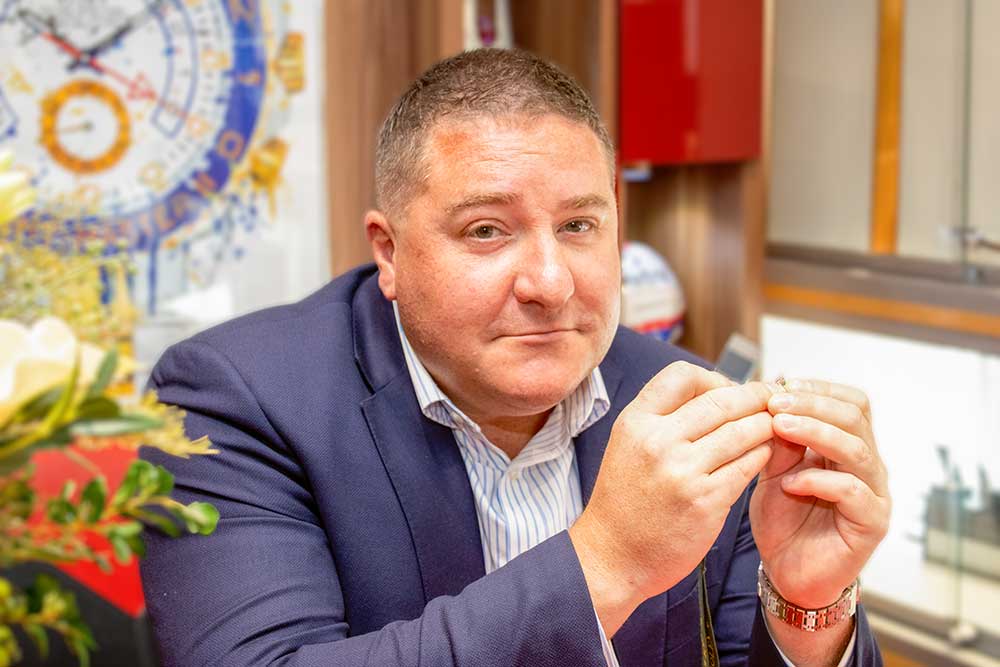
A Derbyshire Tradition of Trust and Quality From heirloom pieces to modern masterpieces, John Stevenson Jewellers offers personalized service and exceptional craftsmanship. For more than 50 years the name Stevenson has been synonymous in Derbyshire with not only quality jewellery but also trust. And the number of people returning throughout their lives to the Chesterfield company shows that they trust the family business implicitly. As an example, the genial Ben Stevenson, director of the firm established by his father John, tells how one customer has returned again and again to the company’s shop on Glumangate. “She started off with a three-stone diamond ring. For her 40th wedding anniversary she changed the centre stone for a ruby. For her sapphire anniversary she changed the ruby for a sapphire. And at the weekend she collected an emerald for her emerald anniversary. “We think that’s a fun thing that shows how long people stay with us. We can know what they want and they’re happy with us. A lot of the jewellery business is about trust, whether you like what we do and whether you trust what we do. I think that’s the most important thing.†John Stevenson Jewellers has an unrivalled reputation for unique jewellery which is designed in-house; jewellery repairs; and servicing of the top brands of watches. John Stevenson started his career as a news photographer. He then went to work for Shiphams which had a jewellery shop on Stephenson Place in Chesterfield. He enjoyed it so much that he set up on his own and the business grew and grew. Ben was working in London until ten years ago when his father made the decision to retire – sort of – and Ben returned to Derbyshire. John who turns 80 next year still goes into the shop every Friday and other days too. “He can’t keep away!†says Ben who explains the principles on which his father founded the business: “Doing something that was a bit different from everybody else. “You can make jewellery by mass-producing it. Nothing wrong with that. Why people come here is they want something that’s individual. We’re an individual, stand-alone shop – there’s not another one.†Go into the shop and you’ll be served by John, Ben or John’s daughter Polly: “There’s always one of us here and that means you always get the service. “If you want to design something from perhaps your grandma’s or your parents’ jewellery which is of its time – you don’t necessarily want to wear it but you don’t want to get rid of it because it’s sentimental – what do you do? “We might say you’ve got five lovely things there – let’s make one pendant or one ring. Recently, for example, a grandmother died and left a five-stone diamond ring. We melted the gold down and a little bit of the gold went into five new rings. That meant a sister, three daughters and a niece have all got part of grandma’s ring. “The great thing with gold and gems is you can turn them into as many things as you want. We do a video of us melting the gold down so you know it’s your gold you’re getting back. People like that provenance.†Ben designs the jewellery which is created by the company’s workshop team in Birmingham. He brings to the business 20 years’ experience working for luxury jewellers Hirsh, first in London’s Hatton Garden and then in Burlington Arcade on Piccadilly. “That was a great success. We had people from all over the world buying crazy, expensive things, putting a credit card through ten times to buy a million pound necklace because you couldn’t get anything over £100,000 to go through the machine! “We used to go to exhibitions every year in Switzerland, Hong Kong and New York. So I know the right people around the world for sourcing stones and that’s what I’ve brought to the business. If you need something super-unusual, I know where there’ll be one.†John Stevensons Jewellers sells new and pre-owned watches, especially Rolex. Ben says there are two types of people who want a Rolex. “You’re either a very wealthy person who goes ‘I must have a Rolex’ which is fine. A lot of people have a collection of them. A Rolex is an asset. It goes up in value far more than bank rates have been going up in the past few years. “Then there are people who’ve worked hard all their life, maybe they’ve just retired, and they say ‘I’ve always wanted to own a Rolex’. You can see it really means something to them when they leave. And you think that’s what it’s all about – you’re actually buying happiness.†The company also services Rolex watches and Ben advises that they have to be looked after. “You keep your car MoT’d and take it in for a service. If you think about it, the car’s probably worth the same as a Rolex. There are about 200 moving parts in each Rolex; they all need lubrication and they all need tender, loving care. “As they get older, they perhaps need a little bit more attention, like a vintage car. But that’s the fun of having something that’s genuinely old. The great thing is you can be wearing a Rolex from 100 years ago as a daily watch and it still works.†A large part of the business is servicing watches including Rolex, Omega and Cartier. “We’re very lucky that people come from far and wide to bring their watches to us and again it’s a trust thing,†says Ben. “If it’s your pride and joy that you’ve been wearing since your 21st birthday, you don’t want to be handing it over just anywhere.†During the pandemic, like many other businesses John Stevenson Jewellers had to close. When they reopened they had their busiest ever year. “Interest rates were at zero, so no one was getting interest on their money. No one had spent anything,
Derbyshire Makers – Heldrich
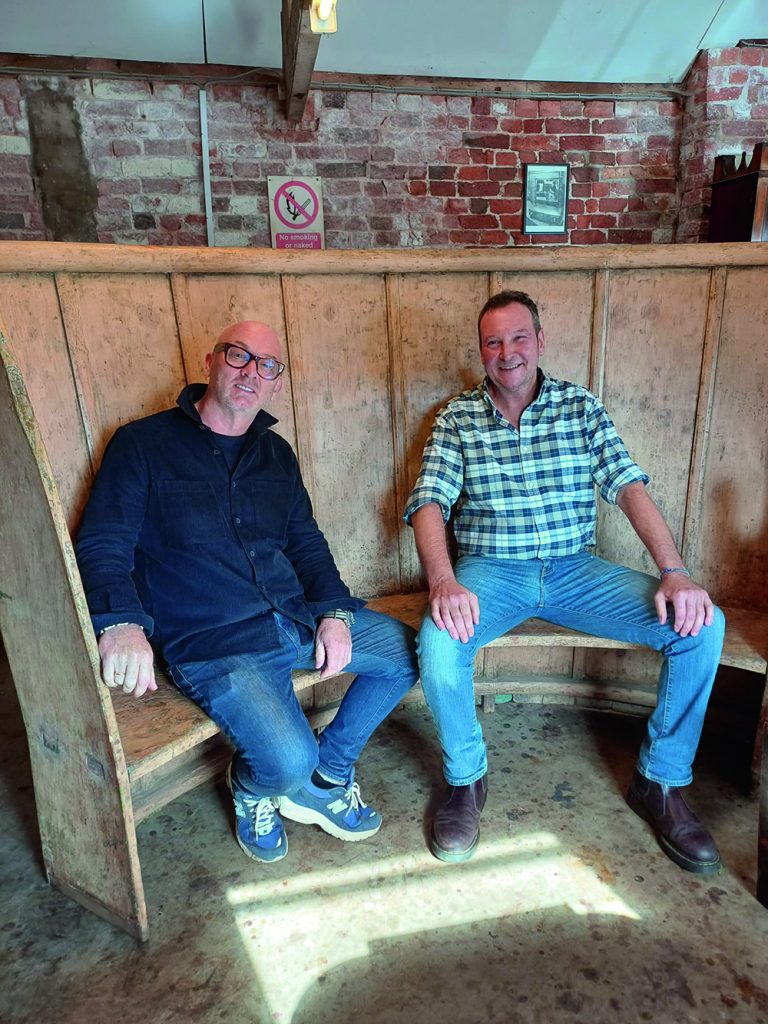
“A Lifetime of Craftsmanship: Derbyshire’s Neil Heldreich Reflects on the Timeless Art of Antique Furniture Restoration†After nearly 40 years in the trade as an antique furniture restorer I have seen many fashions in collecting come and go, but one thing that always remains consistent is the recognition of the skills required to create these pieces of the past, compared to the soulless modern machine made furniture of today. Whether it be a fine mahogany or walnut piece designed and made by a well known maker, such as Thomas Chippendale, Robert Adams or Gillows of Lancaster, or a vernacular country or town piece made by a local craftsman using materials they had to hand, sometimes with their own unique style. The finer pieces were of course functional but were mostly for aesthetic effect for the customer who could afford the latest fashion in furniture design. Where as the vernacular pieces, which sometimes tried to emulate the latest fashions, were almost always made as a functional working piece of furniture. They were again finished with what was to hand, for example, varnishes, paints, pigments and oils. These methods also reflected how these pieces eventually aged and created their own unique patination. The fine pieces were usually finished using materials that would enhance the full beauty of the expensive and often imported timbers from which they were constructed. I may be biased but, I think we have the most varied, beautiful and skilfully made antique furniture in the world which reflect the rich history our Island has had over the centuries. TV programs such as salvage hunters, have begun to highlight these attributes and the appreciation of the history of such pieces , sometimes focusing on the story, originality and patination of the items and not just its monetary value. Drew Pritchard and his dealer friend Alistair from TV’s Salvage Hunters visited me last September for a day of filming for his new series and the episode was aired this October on Quest (season 19 ep 1). I spent a pleasant day with Drew and his team through out which we talked about and looked at various items I had for sale and some that were not. He has a genuine love and understanding of what makes a piece desirable to ether a seasoned collector or a novice buyer who just appreciates the history of an item and it was great fun to converse on this subject with a fellow antique geek. It takes many years of working and handling such pieces to understand which materials to use and how to approach the restoration of them, with my training and experience, so far, these are the principles I strive to achieve and if possible, to preserve these precious qualities our treasured antique pieces hold. 00
Dining Out – The Boat Inn, Pinxton
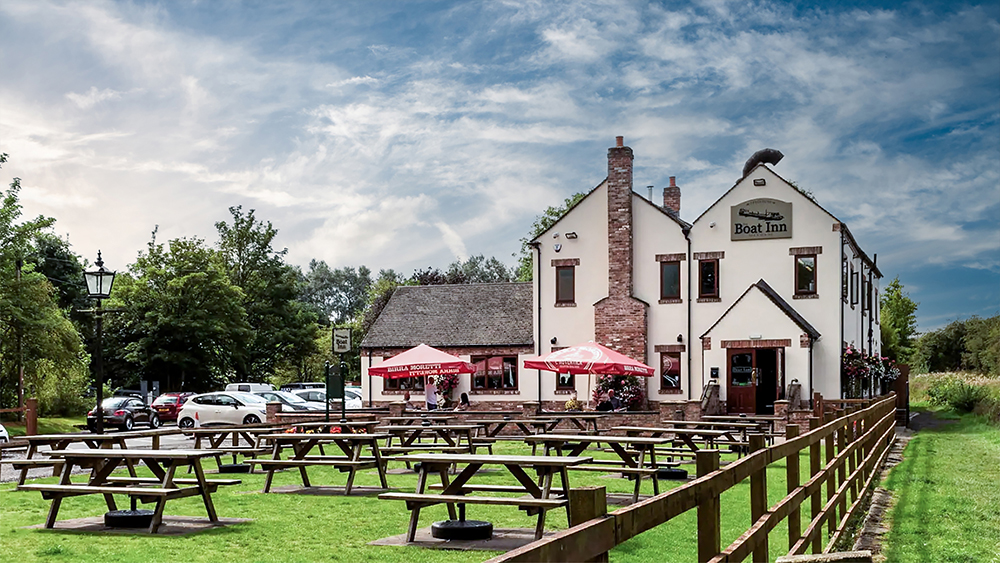
The Boat Inn at Pinxton demonstrates the importance of legacy, why rebirth doesn’t have to mean revolution, and how the perfect setting is best served water-side. The quaint village of Pinxton, running alongside the two Derbyshire mammoths, the M1 and A38, is used to its fair share of travellers and passersby. Housing its own Pinxton United Football Club and Parish Council Offices, it’s in the margins, down by the River Erewash and at the head of the Pinxton Wharf where The Boat Inn lies, snug and quietly buzzing with revellers and families looking for the affable equality of taproom ambience and rustic eatery. The Boat Inn is a reflection of their past, and they make no bones about flaunting it, as proudly boasted by the staircase mural. Reading through it uncovers a starting date in the 1790s and how it was created to coincide with the development of the Pinxton Arm Mill on the newly built Cromford Canal. Designed to give collieries access to the River Trent, the methods of transport were updated again in 1819 with the Mansfield & Pinxton Railway, allowing goods to be efficiently convoyed across the region. Interestingly, this permitted the evolution of The Boat Inn to become the first railway waiting room and ticket office, allegedly. But the start of the 21st Century looked bleak for The Boat Inn. 2008 called for the closure of the building due to repeated flooding, making it in dire need of restoration. Then, the folks at Lowe Leisure Ltd stepped up with a last-ditch purchase and thus began an unprecedented transformation over 10 years. Re-opening in 2018, The Boat Inn has been dressed up with a fresh bar, lounge area and dining room. Ensuring the classic canalside pub vibe was maintained, The Boat Inn today continues to present an attractive and hospitable spot for every type of customer and, considering the pub’s history spans over 200 years and they’ve almost definitely served multiple generations of Pinxton families, it’s safe to assume the local’s tastebuds have been won. When we arrived on a wet and dark Wednesday evening, The Boat Inn emerged out of dense forestry and gravelly roads like a home-from-home. Spacious parking, an expansive outdoor seating area that covers a patio and a beer garden, we assumed that these elements would likely be well-populated in the warmer months, and the weary parent would welcome the high-quality children’s play area opposite. Situated within the Pinxton element of the sprawling Cromford Canal, nature rules the day and, especially due to Springtime blooming, it adds an element of persistently shifting, kaleidoscopic tranquillity to the area. The Boat Inn is keen to offer an overall experience, opposing the usual sit-down-eat-and-leave routine most restaurants employ. The staff were warm and attentive from start to finish, allowing the courses to run seamlessly. Being afforded both Al Fresco dining on the patio or the option to sit in the tasteful, countrified restaurant is a luxury not many places can attest to. The Boat Inn has meticulously ensured to play to its strengths, resulting in a structured environment that distinguishes the socialites from the foodies, and the lively carousers from the introverted romantics. The Snug, as they have rightfully named it, yields a warming log burner, and the dining room opts for a stripped-back design with wooden beams against exposed brickwork. The restaurant area is perfectly set up, meaning you don’t feel adrift from other restauranteurs, nor are you getting overly intimate with the locals. Open Tuesday through Saturday from 11:30 AM to 9:00 PM and Sunday from noon to 9:00 PM, its selection of seating arrangements will not disappoint. Be aware that the kitchen closes at 5 PM on Sunday, so get down quickly for an end-of-week meal. Whether you have a dog or have to organise a large group booking, The Boat Inn can accommodate each demand. They aren’t stuck in the past. Just check out their Facebook page to see a demonstration of how active these guys are! Hosting Bingo Night on Saturdays and their exceptionally generous children eat for £1 menu over the winter period, be assured that The Boat Inn have its fingers on the community pulse. The Bar Lounge is a refined, modern addition that does not disrupt its rustic surroundings. It is a place to lounge and indulge in the pub’s inspired drinks and cocktail lineup. Is anyone up for a Pinxton Passion Martini or Canal Collins? These will be coming in the Summer! The Boat Inn broke down its locally sourced food options into several easily discernable menus, covering the kids’, lunchtime deals, their traditional Sunday courses, and the main menu that my partner and I worked through. A brief chat with Chef Julie confirmed the level of pride and thought that goes into the options. She excels in producing a cohesive menu that spans most people’s appetites, including her very own “Julies Homemade Cheesecake†that even the waiter attested to being sublime! So, we chose Baked Gnocchi and Sticky Hoisin & Sesame Pork Belly Bites, Salmon and King Prawn Oriental Noodles and an 8oz Rump Steak, and to clinch the perfect evening, we indulged in, would you believe it, Julies Homemade Cheesecake, made with lemon and ginger for that electric zing. We expect great things from the Boat Inn and imagine it will continue to lead as Pinxton’s cherished culinary heartthrob. Shall we see you there? To book a table or learn about upcoming events, visit https://theboatinnpinxton.co.uk/ or call 01773 861600. The Boat Inn, Pinxton Wharf, Pinxton, Derbyshire, NG16 6PN Tom Bell 00
Celebrity Interview – Pam Ayres
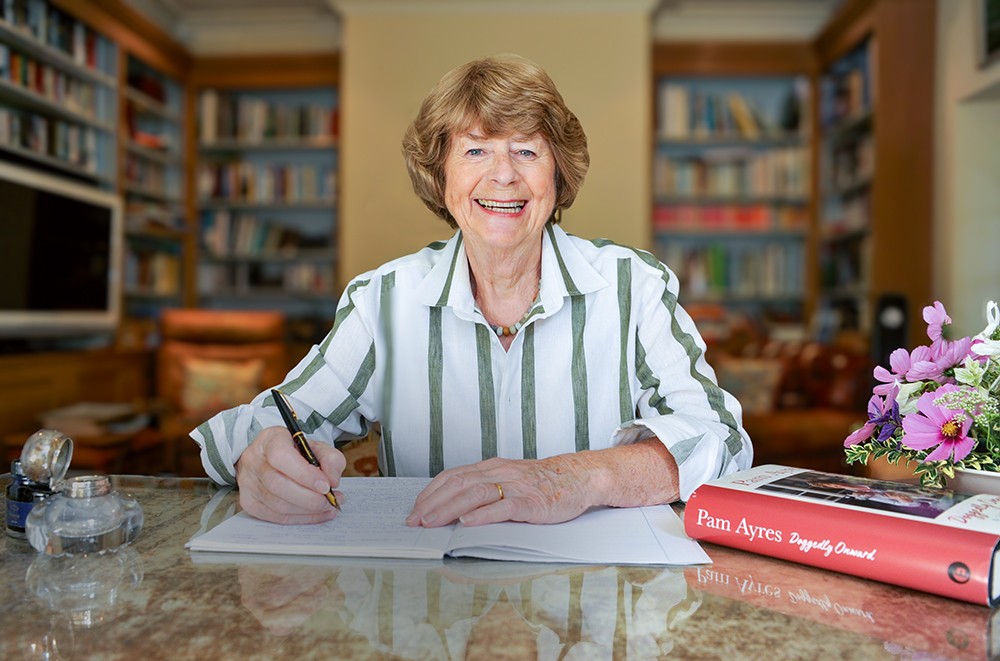
by Steve Orme “…the loss of control was heartbreaking. I was very naïve. I was signed up to London agents and they put me on stage in great big theatres for which I was ill-equipped.†She’s been described as a “poet for the people†with a wicked sense of humour who deals with subjects not normally thought to be worthy of poetry. Now, 50 years after winning the television talent show Opportunity Knocks, Pam Ayres is on the road with her show Doggedly Onward in which she presents poems and anecdotes from her life. Speaking to me from her home in Gloucestershire, Pam is totally forthright and open about her fascinating career. She explains the downside of fame, how she never set out to be a poet and the surreal experience of playing Glastonbury, “the largest greenfield music and performing arts festival in the worldâ€. She confessed that although Opportunity Knocks was “fantasticâ€, it was also a nightmare. “At the age of 28 I suddenly started earning money. I was able to buy a house and it cost £11,500. The idea of me ever having a house was ludicrous.†She stretches out that last word to give it emphasis. “It was extraordinary. But the loss of control was heartbreaking. I was very naïve. I was signed up to London agents and they put me on stage in great big theatres for which I was ill-equipped. “I was given a television series which I shouldn’t have touched with a barge pole because I didn’t have the ability to produce enormous amounts of material. They brought in all these tired old scriptwriters to write the series for me and I hated it. “On the one hand I had money. I was able to help my family and I bought myself a house and a car. It was amazing. But as a writer and as somebody who had done so well on my own, although in a small way, it was heartbreaking really.†The turning point for Pam came when she met a theatre producer, Dudley Russell. He not only enabled Pam to take back control of her work, he became her husband and they’ve been together for more than 40 years. Pam describes herself as a “village girl†who just wanted to succeed. After Opportunity Knocks “you sign everything they give you to sign and I didn’t have any legal advice. “I’m not giving you a hard-luck story. Everyone was patting me on the back and saying ‘you’ve made it’. Yet I lost control of my copyright, everything I’d written, everything I was going to write. “Dudley was lovely. He’s from my part of the world and he was savvy. He knew his way around the business. He looked at the various things I’d signed and took me off to a QC for legal advice. I got my copyright back at huge cost. “If it hadn’t been for my husband I would have just floundered endlessly. It was awful. But there wasn’t much protection for people on Opportunity Knocks – no legal advice or anything. I hope it’s not the case nowadays.†Pam says her television debut seems a lifetime ago because since then she’s had children and grandchildren. But she can still recall how she felt. “I can remember how scared I was. I can remember the talcum powder smell of the dressing room at Thames Television, and the fact that it was a proper dressing room with lights around the mirror and it just seemed so glamorous.†She points out that the purpose of going on Opportunity Knocks was to find out whether her act would appeal to a wider audience. “I’d found that reciting my poems which I’d written in my own style had made people laugh locally. I wanted to see if it would work on a larger canvas. It suddenly got enormous.†Pamela Ayres was born on 14th March 1947 at Stanford-in-the-Vale, Berkshire. She was the youngest of six children. She left school at 15 and got a job as a secretary. She couldn’t stand it, so she joined the Women’s Royal Air Force. A few years later she started reciting her poems in her rural Berkshire accent in folk clubs. But she admits she was never drawn to poetry. “I was interested in writing from the time I was able to write at school. I loved writing stories because of the power. You can invent people, you can make them do things – you can make them be horrible, you can make them fall in love. I adored it.†She joined the likes of Billy Connolly, Max Boyce and Jasper Carrott who were working at that time in folk clubs: “I’d written a few poems that I hoped would make people laugh and they did. They were falling about laughing. But I never set out to be a poet. I’m certainly not knowledgeable about poetry. I look at my stuff more as comedy that rhymes.†You may remember one of Pam’s more popular poems, Oh, I Wish I’d Looked After Me Teeth. She says that will probably be carved on her gravestone. Another favourite is They Should Have Asked My Husband – about a man who knows absolutely everything – and she’s currently working on one called The Bank Of Mum And Dad. “I try to write about things that people will recognise. I don’t want to write about anything too rarified. I like to write about ordinary things but come at them from a surprising angle.†Pam accepts she was a trailblazer because the only person doing performance poetry when she came on the scene was Cyril Fletcher. “He used to sit in an armchair and recite what he called his odd odes. There certainly weren’t any women doing it but now there’s a whole range of good women who are performance poets.†Pam’s popularity has continued and she is one of the few authors who has had books in the Sunday Times bestseller
The Lost Houses of Derbyshire – Kirk Hallam
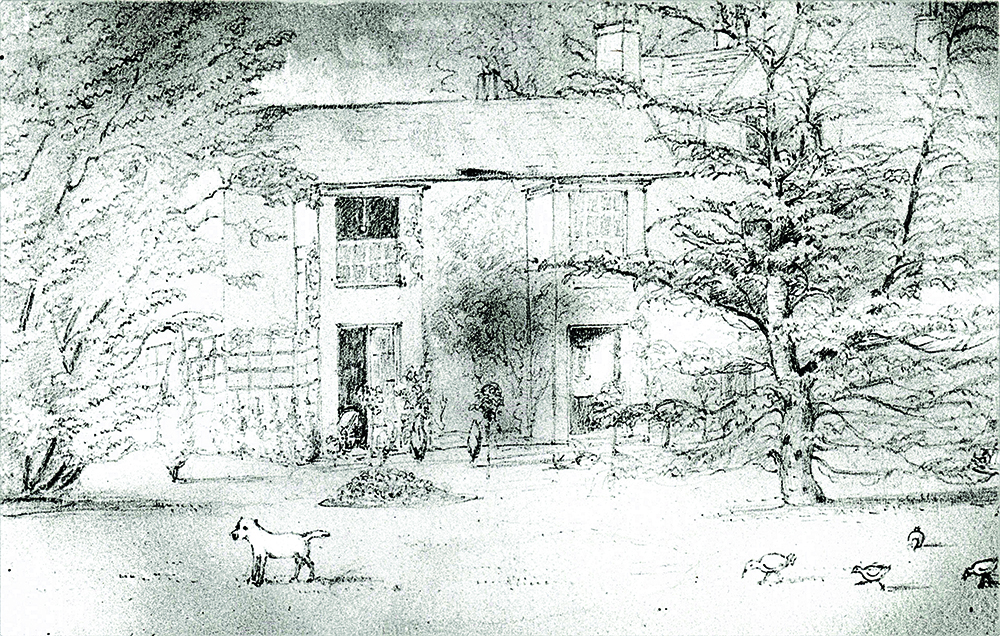
by Maxwell Craven Kirk Hallam was originally a small hamlet atop the ridge that overlooks the Nut Brook and the homonymous canal as one travels east towards Little Hallam and Ilkeston. It takes its name from the Old Norse hallr (= a hill) + kirk (= church) which perfectly describes the settlement, even as it appears on the 1880 OS map, on which there is little to be discerned bar the church, the hall and a scatter of houses to the south of the main road. It is thought that the ‘Kirk’ element was added in the early 12th century as the later settlement that became West Hallam expanded, to differentiate the two. In 1066, the manorial estate was held by one Dunstan, but two decades later, when Domesday Book was compiled, it had come into the hands of Ralph de Burun, one of the great barons and few chief lords holding land in Derbyshire and, under him it was held (so later charters establish) by a family taking their name from the place. In 1155, Hugh de Burun of Horsley Castle, the last of his line, died and the estate passed via his daughter Aelina to Peter de Sandiacre, son of a Viking called Toli, who not only held Sandiacre, but a great amount of property in Derby, too. His son, another Peter, married Beatrice de Hallam, a member of the family that were Peter’s sub-tenants at Kirk Hallam, and we can only presume that they had a capital mansion of some description there. From maps, we know that the later hall lay just slightly SSW of the ancient church of All Saints, and it would be reasonable to assume that the ancient manor house would have been on or very near the same spot. As with one of two of the other lost houses we have looked into, it was never the chief seat of the family that owned the land, so always ranked as a secondary residence. Furthermore, in 1260 John de Sandiacre granted the patronage of the church and much of his estate at Kirk Hallam to the Abbey of Dale, so whoever lived in the manor house was from the later 12th century, a tenant of the Abbot and Canons there. In fact, the generous John de Sandiacre died shortly after his gift to the Abbey, in 1277, leaving two daughters and co-heiresses, of whom one carried Sandiacre and Kirk Hallam to her husband, John de Grey, a younger son of Henry de Grey of Codnor. The estate remained thereafter with the great English baronial house of Grey until it was bestowed upon the daughter and co-heiress of the last de Grey who brought it to John Leake of Hasland in 1409. Yet, once again, the manorial estate had fallen into the hands of a fairly grand, but definitely upwardly mobile, family with a primary residence elsewhere, this time at still extant Hasland Manor House. They also inherited Sutton Scarsdale from the de Greys, too, and the family had also married another heiress, that of the d’Eyncourts of North Wingfield, so they found themselves, by the time of the beginning of the Tudor dynasty, very rich and well endowed with estates, in Derbyshire particularly. The Leakes later built a great house at Sutton Scarsdale and Sir Franics Leake, made one of the very first baronets by James I in 1611, added a hunting lodge nearby called Staveley Hagg, which survives as Hagg Farm. He also aggrandized Sutton Scarsdale, and found much favour with Charles I, who made him 1st Lord Deincourt (the title chosen from his antecedents the d’Eyncourts), a favour he returned by great loyalty to his sovereign during the Civil War, for which he had his estate compounded by Parliament as a ‘delinquent’. The impecunious King rewarded him with an earldom for his pains, and he became 1st Earl of Scarsdale in 1645. We have no information about the manor house at Kirk Hallam through all this time, and it may have decayed through neglect, as we saw at Chellaston. However, the Leakes got their estates back at the Restoration, and the 1670 hearth tax records a house assessed on five hearths at that time, split between a father and son, both called William Blunstone, and it seems likely that the elder was then the tenant. Indeed, the Blunstones were long lived in that area, having come from Sandiacre – probably co-incidentally – at the beginning of the 17th century. However, another William Blunstone was farming in Kirk Hallam in 1827 and his family were still there a generation later, but by then at Ladywood Farm as copyholders, rather than as tenants of the Hall. One wonders if any descendants still live in the area. Meanwhile, their feudal masters had been going from strength to strength until, that is, the time of Francis Leake, 4th Earl of Scarsdale, who managed to blow the family’s considerable fortune, mainly through the expense of building a vast new house (but incorporating parts of its predecessor) at Sutton Scardsdale, designed by Francis Smith of Warwick in 1724 (see Country Images May 2021). Having completed it, he gambled away much of what remained, before dying, broke, in 1736, the last of his line. The estate was, needless to say sold, including the Kirk Hallam elements of it. The purchaser was Francis Newdigate of Nottingham. He, for once, actually decided to live at Kirk Hallam, and elected to build himself a new house. We only have a pencil sketch of this house, although it survived well into the 20th century, so it is difficult to say just what it was like. It appears to have been of brick with gabled cross wings with attic windows, the rest being of two storeys. The roofs were tiled and it was set on a modest park just west of the church. Clearly, Mr. Newdigate was a modest sort of fellow, although by the time of his death in 1764 he
COSY GARDEN ROOMS – THE BEST USES FOR A GARDEN ROOM

A garden room is more than just an extension of your home – it’s a versatile space that can transform how you live, work, and relax. As specialists in bespoke garden rooms, we’ve seen countless creative ways our clients have utilised these spaces. Here’s our guide to the most popular and practical uses for your garden room. Additional Living Room & Lounge The most popular choice among our clients is creating an additional living space. A garden room offers the perfect retreat from the main house while maintaining a connection to your outdoor space. With full insulation and heating, these rooms become cosy sanctuaries all year round. Large windows flood the space with natural light while providing beautiful garden views, making it an ideal spot for relaxation or family gatherings. Add comfortable seating, entertainment systems, and ambient lighting, and you’ve created a versatile space that the whole family can enjoy. Multi-Purpose Family Room Flexibility is key in modern living, and a multi-purpose family room delivers exactly that. These spaces can easily adapt to your family’s changing needs throughout the day. Morning yoga sessions can transform into afternoon homework spots, then evening entertainment spaces. With clever storage solutions and versatile furniture arrangements, these rooms become the heart of family life. Many of our clients particularly appreciate how these spaces give teenagers their own territory while keeping them close to home. Home Office Sanctuary With remote working becoming increasingly common, a dedicated home office in the garden has never been more valuable. Our garden offices provide the perfect professional environment, completely separate from domestic distractions. We ensure excellent insulation for year-round comfort and can incorporate features like high-speed connectivity points, air conditioning and sound insulation for video calls. Built-in storage and ergonomic design elements create a productive workspace that’s just steps from your home. Garden Bar & Games Room Transform your garden room into the ultimate entertainment space with a custom-built bar and games area. These popular spaces often become the focal point for family gatherings and social events. From pool tables to dart boards, comfortable seating areas to integrated sound systems, we can create a bespoke entertainment hub that suits your specific interests. Many clients opt for large opening glass doors or full height windows to create a seamless indoor-outdoor entertainment space perfect for summer parties. Creative Arts Studio Whether you’re an artist, craftsperson, or musician, a garden room can provide the perfect creative sanctuary. These spaces benefit from excellent natural light and can be designed with specific activities in mind. Built-in storage keeps supplies organised, while dedicated workstations and display areas help create an inspiring environment. The separation from the main house also means creative pursuits won’t disturb family life. Home Gym & Fitness Space A private gym in your garden offers the ultimate convenience for maintaining your fitness routine. These spaces can be equipped with mirror walls, proper ventilation, and robust flooring suitable for exercise equipment. The privacy and accessibility of a garden gym eliminate many common barriers to regular exercise, while the garden setting provides an inspiring workout environment. Guest Suite For those needing additional accommodation, a garden room can be transformed into a luxurious guest suite or annexe. These spaces can include sleeping areas, en-suite facilities, and even compact kitchenettes, providing comfortable, private accommodation for visitors or family members. It’s an ideal solution for multi-generational living or creating rental opportunities. Making Your Garden Room a Reality At Cosy Garden Rooms, we understand that each client’s needs are unique. That’s why we offer: • Free site surveys and CAD design services with unlimited changes • Fully installed and insulated rooms built to your specifications • Premium options including sedum green roofs and solar panels • Bespoke wall coverings and finishing touches • A comprehensive 10-year guarantee • Price-beating promise for competitive rates Our experienced team handles everything from initial design to final installation, ensuring a seamless process throughout. Each garden room is crafted to exacting standards, providing a high-quality space that can be used comfortably throughout the year. Whether you’re looking to create additional living space, a dedicated work area, or something entirely unique, a garden room offers endless possibilities. Our expert team can help you explore these options and design the perfect space for your needs. To discuss your garden room project or arrange a free site survey, contact us on 0115 77 22 715. Our team is ready to help you create your perfect garden room. 00
Derbyshire Makers – Martin & Parker
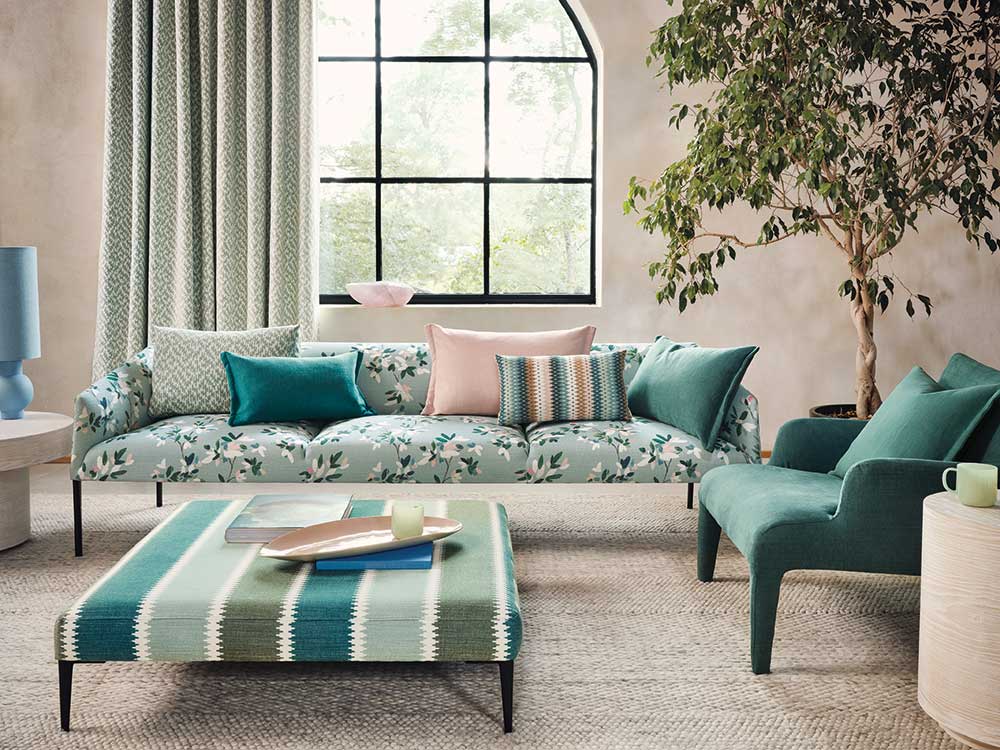
Looking for the perfect sofa, corner unit or chair to bring comfort and style to your home? Look no further! Since 1980 family-run Martin & Parker in Derby have been handcrafting high quality bespoke furniture designed and made to last. Located on Ascot Drive in Derby, they specialise in creating handmade sofas, corner units and chairs, tailored to your unique style and needs. With over 45 years of experience and with a loyal customer base, they take pride in exceptional customer satisfaction. Visit them today to experience the craftsmanship that has made them a trusted name in furniture. Whether you have your heart set on a specific piece or you would like something made uniquely for your home, come to Martin & Parker. Their extensive furniture range is handcrafted by their skilled and talented team. A vast number of pre-made pieces are on display while they also craft bespoke furniture in line with your specification. For people with a discerning taste in soft furnishings and sofas, 1980 was a good year. It was the year that they opened their first sofa factory. Their aim was to produce quality, handcrafted soft furnishings and sofas and soon built a reputation for the quality of their excellent products. Martin and Stephen are very proud of their skilled craftspeople and their numerous, happy clients have since provided testimonials to say they too are very pleased with their work. They rapidly grew and went from strength to strength. If it’s a piece of handcrafted, upholstered furniture look no further. Based in Derby they produce bespoke furniture made from the finest materials in line with your customer specification. Each piece is handcrafted in their workshop to provide you with many years of uninterrupted comfort. Getting the measurements right is crucial, so for customers who would like a piece of furniture made for an alcove, corner or even a boat they provide a made to measure service. Martin & Parker provide a contract service for companies in the licenced and leisure industries. Over the years, a number of reputable companies and establishments have used their corporate service, all have received a first-class product as well as unrivalled customer service. Martin & Parker also offer a re-upholstery service from their Derby workshop. What’s more they stock a co-ordinated range of soft furnishings to compliment your main furniture, including window dressing with their custom made curtains and blinds, including swags, tails, tab tops, eyelets, pencil pleats and pinch pleats. All of their curtains and blinds are made to measure. Providing a soft feeling under foot and patterns to add to your interior, carpets are a stylish addition to your home. At the Martin & Parker showroom, they stock an extensive range of modern, attractive carpets from leading flooring companies Corman Carpets and Abingdon Flooring. When it comes to supplying high quality wicker, cane or rattan furniture for your conservatory Martin & Parker is the only place to go. With styles and designs to suit every taste, all of their conservatory furniture is supplied by Daro, an industry-leading company. The Daro company name has always been synonymous for their top quality handmade products. Handmade furniture is a wonderful addition to any home and there is only one place to go for handcrafted brilliance. With our illustrious range of chairs, two and three seater sofas, sofa beds, armchairs and footstools you’ll find exactly what you are looking for at Martin & Parker. Check them out now on Ascot Drive in Derby. 00
Derbyshire Makers – Rockfall

Founded in 1997, family-owned Rock Fall has revolutionised the health and safety footwear industry, while remaining loyal to their grand Derbyshire roots. During a conversation with one of the Directors, Richard Noon, Richard explained the growth and development of Rock Fall from their humble origins. “We started in the markets back in the late eighties selling slippers and sports trainers. Eventually, we moved into retail shops, but the market had become saturated with people selling footwear. So, the decision was made to specialise in developing a new brand of safety footwear.†Rock Fall are now a prominent industry player winning awards such as ‘Best Innovation in Footwear’ at the Annual Professional Clothing Awards in 2017, 2018 and 2019. An amazing three years in a row! We can understand why these awards were well deserved by looking at their array of new and innovative products such as the RF002 Zinc. This fully conductive trainer is an industry first in Europe, and was designed in collaboration with contractors in the aerospace and defence industries to counter explosive atmospheres. They herald health and safety, not only as an integral principle, but also as a creative canvas, allowing them to stand at the forefront of the safety footwear industry. Using world first innovations to provide safe, durable footwear that can withstand the most extreme challenges and environments. Now into their second generation under the care of Stephen’s sons, Richard and Matthew, their head offices are on Wimsey Way, Alfreton. Locals may have spotted the famous, red three-mountain logo atop the business. Working solely with world-leading component manufacturers such as LWG-accredited tanneries, FORCE10, BOA and Ortholite, Richard explains how their business operates. “Regarding our customers, we don’t sell directly to the consumer, but supply businesses via Authorised Distribution partners who work closely with major end-users.†While they don’t deal directly with the customer, they ensure the businesses they supply have the diverse products needed to suit every industry each step of the way. Richard gave us a little more insight into the company’s current developments, and future plans. “We’re opening up distribution warehouses across the globe. We currently have one in America, and are opening another in the Republic of Ireland, and the Netherlands. We also have plans for the Middle East and Africa. Regarding UK production, we have plans to open a new factory on the outskirts of Manchester by September 2025. Furthermore, we’re looking into other markets, such as hiking and leisure.†Richard and his team are no strangers to choppy waters, but they have sailed through with a positive attitude and mindset. “The key is to keep adapting. We follow market trends closely and always try to stay ahead of the game. Don’t get us wrong, COVID-19 certainly wasn’t a glamorous year, but we adapted massively during 2020, including putting up gazebos so our guys could sell shoes outside shops. I wouldn’t say it’s a positive, but we made the best of a bad situation!†The number of world firsts that document their success indicates their ability to grow as a brand. Each boot is carefully curated and meticulously designed for each industry, regardless of the wearer’s gender. As one of the only British brands to release a range of women’s safety footwear, they are light-years ahead regarding social vision. Speaking of championing equality, they are even verified by the Vegan Society. As per their mission for sustainability, they have delivered on their promises by using fully recyclable shoe boxes with renewable and biodegradable soy ink and installed LED lighting across the business to reduce the amount of CO2 previously produced by 15 tonnes per year. The future for Rock Fall looks very bright, as Richard spells out in no uncertain terms his ambitions. “We have many new products coming through which use hugely sustainable properties, such as bio-based and recycled materials. We are looking towards smart footwear, including footwear that identifies foot issues. One particular product, where the wearer taps their feet together twice and the emergency services will be automatically called, is in the pipeline. This is perfect for high-risk environments such as security personnel. We’re even working on one that can measure the sweat content that the wearer produces which from there could measure potential health issues.†Most importantly, we are assured they’ll continue to keep their Derbyshire roots, and maintain their triumphant position as offering the industry’s finest boot. 00