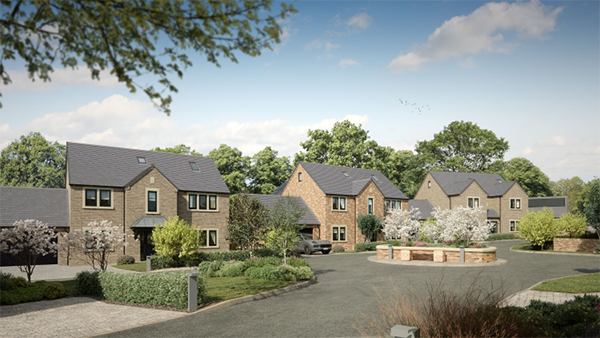
The Lost Houses of Derbyshire – Hoon Hall

By Maxwell Craven Hoon is a strange little place, a civil parish created from the larger ecclesiastical parish of Marston-on-Dove by some zealous bureaucrat in the early 20th century, which stretches from the low hills on the north side of the Dove down to the river itself, yet is barely a mile and a half wide, east to west. It was called ‘Hougen’ in 1086, when there were two manorial estates there, one of which was given to the Abbey of Burton and the other, which was granted to the Norse-descended grandee Saswalo or Sewallis, ancestor of the Shirley family. The name itself derives from the old Englishword (in the ablative) for ‘by the barrows’, and indeed a large barrow – presumably Bronze Age – survives to this day. The name later mutated to ‘Howen’ and ‘Hone’ before the OS settled on the present spelling in the earlier 19th century, suggesting that the name was traditionally pronounced with an ’oh’ sound instead of an ‘oo’ one as its current spelling would suggest. The Shirley family held the estate until 1559 when George Shirley of Staunton Harold sold Hoon to Roger Palmer of Kegworth, whose grandson, Robert, lived at Church Broughton, when he is said to have built the first hall in 1624. We know little about the house, but it must have been very modest, for it is unlocatable in the 1670 hearth tax returns, although by that date, it had been sold to John Stafford of Blatherwick in Northamptonshire who in turn had sold it on during the Civil War. The purchaser in those lean and uncertain times was Robert Pye (1585-1662), who, it must be confessed, shared a common ancestry with your author, from the Pyes of The Mynde and Kilpeck in Herefordshire. Indeed, I had a kinsman who even bore the Pye name as his given name: I used to joke that it was a mercy the names were not deployed the other way round, strongly suggesting some dubious comestible. Pye was a Royalist and had been nominated as a baronet on the outbreak of civil strife by Charles I but, with the upheavals, the honour failed to pass the Great Seal, and it was his son John (1626-1697) who, after the Restoration, did actually receive a baronetcy. Normally, in those circumstances (as with the Boothbys of Broadlow Ash) the baronetcy would have been confirmed to the father (alive or dead) but, as the elder son had been a keen Parliamentary commander, this idea failed to find favour with Charles II, so John received a fresh baronetcy – of Hoon, where he then lived. The house of 1624 was probably timber framed, for in 1816 the Lysons described it as ‘an ancient half timbered building’. However, the latter add that it had ‘pointed gables’ and our only picture, a woodcut of 1892, shows just that, three of them, but with any timber framing stuccoed over. It also shows a pretty modest house – a farmhouse – with early 19th century cambered headed casement windows in place of the mullion and transom cross windows that must originally have graced the façade. Furthermore, the fenestration is clustered centrally, suggesting that, when the house was adapted as a tenanted farm, it underwent a drastic reduction and a re-façading, possibly even in brick, where previously there had been timber framing. There were almost certainly cross-wings at each end of the façade, the loss of which might have necessitated the change to the fenestration and its disposition that we see in the drawing. The somewhat complex subsequent history of the house does throw some light on the matter, however. Sir Robert soon after moved to Faringdon, where he had acquired a larger property, to which he repaired, leaving his son, Charles, to go and live at Hoon after he came of age in 1672, although he was later described as ‘of Derby’ in 1713. He died in 1721, and his son only three years later, leaving it to his grandson, the dilletante Sir Robert, 4th Bt., but who lived at Clifton Campville, Staffordshire, leaving Hoon Hall empty after 1724, when he succeeded. Sir Robert died in 1734 aged only 38 leaving no male heir , whereupon the baronetcy became extinct. His heiress had married Thomas Severne, whose son died in 1787 leaving the estate to Charles Watkins of Aynho, Northamptonshire. Watkins, like the Pyes, had little need of Hoon Hall and he is the one who reduced it, sometime prior to 1812, when he died, leaving the – now tenanted – farm and estate to a kinsman. That kinsman, however, brings us almost full circle, for ironically he was Henry John Pye of Clifton Campville, who had just succeeded his father there. The father, Henry James Pye MP (1745-1813) was a descendant of then first Sir Robert Pye’s Cromwellian brother, Robert, who was excluded from the grant of the by then extinct baronetcy, but who had succeeded to all the other Pye properties except Hoon, in 1734. H. J. Pye the elder is also of interest because from 1790 until his death in 1813, he had been poet laureate, a position he had been given not for being in the slightest bit talented as a poet, but in exchange for political favours toward William Pitt the younger, the prime minister. Pye was the first poet laureate to receive a fixed salary of £270 instead of the historic tierce of Canary wine – Madeira to you and me, these days a rather unfashionable drink. Nevertheless, young Henry Pye’s ownership of the estate was relatively brief for, being so far from his other properties, it was difficult in those days to administer and the house, of course, was by this time a working farmhouse. He therefore sold it to the Derby attorney William Jeffrey Lockett the younger (see Lockett’s House, Derby, Country Images, May 2022). Lockett died unmarried in 1848 aged 51, whereupon the house and farm were sold to Thomas Orme from whom
Ashbourne’s Take on Football – (Temporary) Anarchy In The UK

By Tom Bell “If you thought running the pitch when your favourite team won a trophy was the closest you’d get to the action, the Royal Shrovetide Football Match is perhaps a step too far for you. “ A damning title or a fair assessment of an age-long heritage in Ashbourne? We could ballpark about the pros and cons of the sport, what constitutes violence and assault in a partisan, law-abiding society, or go even grander with a rigorous debate on the lust for war that’s seemingly built into a monopolising, endlessly competing human race (no comment on our overseas allies…) But, we’d be giving an unfair reading. Rugby sees men clatter into each other, with broken bones and bloody noses being a reasonable fare for the game. Sure, football may have gotten a little soft glove since the days of Vinnie Jones and Jaap Stam, yet boxing and UFC still claim incredible viewership, and for the latter, we see two people battering seven bells out of each other, albeit with high levels of skill and athleticism. And this is where the line is drawn. Highly qualified individuals, even way back to the gladiator days when seasoned warriors took to each other with sword and shield, are the ones who compete, while the rest of us stand by as celebrating spectators. If you thought running the pitch when your favourite team won a trophy was the closest you’d get to the action, the Royal Shrovetide Football Match is perhaps a step too far for you. Dare you even learn more? Of course,you want to! Totalling just one of fifteen festival football games that are still being played in Britain, the Shrovetide Football match remains a steadfast part of Ashbourne and national interest. Unfortunately, if you are an Ashbourne resident, don’t even think that you can get past the event. Most roads are shut, and congestion from visitors and residents will ensue. It’s estimated that the game started around the 12th Century, and has traditionally been played on Shrove Tuesday and Ash Wednesday every year since 1667. Since then, not much has changed in terms of how the game is played, and who the players are. Defined as the Up’ards and the Down’ards, the boundary is split between those south of Scolebrook and north of Henmore Brook. The game is started in the Shaw Croft car park, wherein the ball is thrown from a turn-up plinth. The game begins! The game is played throughout the streets, alleyways and everywhere else including the park pond and the surrounding fields. The aim is to try and score as many goals as possible, and each respective goal is gleaned at Sturston Mill for the Up’ards and the Clifton Mill for the Down’ards. Separating them is 3 miles of everything urban and natural in Ashbourne. Back in the day, the goals were scored by entering either wheelhouse and tapping the ball 3 times against the mill wheel. In the words of Bob Dylan, the times they are a changin, and so has the scoring system for the Royal Shrovetide Ashbourne Football. Since the mills are no longer in operation and have long since been demolished, the way to score is by tapping the ball exactly 3 times, directly in the centre of the purpose-built stone millstones. This is all to be done by a player standing in the river. Scoring systems and standing in rivers? Ripping Bob Dylan lyrics quicker than a Rolling Stone? We hope your mind isn’t Tangled Up In Blue! The physical playing of the game is not too difficult to do. Therefore, anyone from all experiences and skills-sets will easily pick up the gameplay. You will very rarely see the ball kicked, yet players are allowed to do so, alongside carrying and throwing it. Don’t expect to be an individual dynamo like Messi in this contest. You simply will not have the space! Most of the time, you will be locked into “hugs” with your own teammates and the opposite, and you will sway to-and-fro, washing towards each millstone as the ball makes it’s way over sweaty heads. You’ve cut through the masses, broken the lines and thrown yourself and the ball against the millstone. You’ve scored! Something quite strange may happen, but it’s not an instance of you being kidnapped in broad daylight. Tradition shows that the scorer is carried on their teammates shoulders, back towards the courtyard of the Green Man Royal Hotel. For the ball itself, this is not your standard accompaniment that you’ll bring to a kickabout. Instead, you will be enjoying this “beautiful game” with a ball that’s larger than your normal Nikey. Named a “Shrovetide Football’, the ball is filled with Portuguese cork in order to allow it to float in rivers. Hand-painted by professional local craftsmen, the balls are typically decorated with emblems and themes specific to the dignitary that will be first presenting it at kickoff. Usually, the ball will be given to the scorer, and it will be repainted and designed to suit their aesthetics. Plus they can keep it as a souvenir. Seems like scoring a hard-earned goal isn’t the only treat for braying players… Starting at 2:00 pm and playing until 10:00 pm, the game may last 2 days, but it is likely not a spectacle to forget. Usually, if a goal is scored before 6:00 pm, a fresh ball is released into the town centre and the game continues. But, if a goal is scored after 6 pm, the match is wrapped up for the day, hands are shaken and a few post-game drinks are supped. Anyone who’s anybody has been involved in the festivities, including King Charles through to Brian Clough and the Duke of Devonshire. They weren’t explicitly involved in the scrummage, but they kicked things off by playing the role of the “turner up”, and threw the ball from a plinth into the hoarded masses. Luckily, rules are rules, even when things get a little tense
Derbyshire Makers – Richdale Sofas
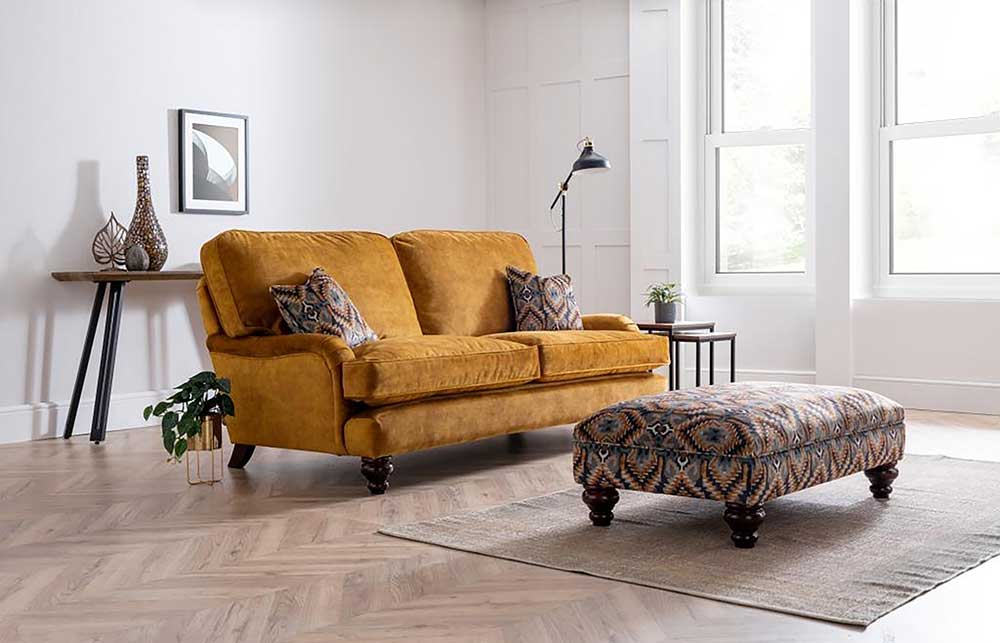
For over 20 years, Richdale Sofas has been a family-run business proudly serving the Derbyshire community. Established in 2004 by husband and wife team Richard and Rachael, they started as a sofa manufacturer, but their passion for furniture has seen them grow into a leading retailer of home furnishings in Ilkeston. Their success lies in a simple philosophy: offering a friendly and knowledgeable approach to every customer. The Richdale team takes pride in helping you find the perfect sofa, chair, corner sofa, or carpet for your needs. This dedication to personalized service has built them a loyal customer base who keep coming back and recommending them to friends and family. Today, Richdale Sofas boasts a wide range of competitively priced, high-quality furniture, all conveniently located in their showroom. From British-made sofas and chairs to carpets and oak furniture, they offer a variety of pieces to create the perfect living space for your home. As a celebration of Richdale’s 20-year anniversary, they are proud to announce their most innovative, sustainable and comfiest suite yet, the Green Cheltenham Sofa. The Derbyshire based company have used their expertise and experience to create a sofa for the future, finding both comfort and the environment can be prioritised. Try it out at The Old Co-op Building, 51a Wharncliffe Rd, Ilkeston DE7 5GF or for more information visit their website at https://www.richdalesofas.co.uk/green-sofa/ Over recent months, the company has undertaken a comprehensive overhaul of the Cheltenham’s manufacturing process to ensure every aspect of its production is sustainable. The result is a sofa that is not only stylish and comfortable but most importantly, kind to the planet. The Cheltenham sofa features FSC certified hardwood frames made in Long Eaton, Derbyshire, offering a lifetime guarantee. In a shift from traditional foam fillings, Richdale has opted for natural fibres such as cotton, wool, felt, and feathers. The springs are locally manufactured and designed to be recyclable, supporting local industry and minimising waste. Each sofa is handmade in Derbyshire and can be tailored to any size, ensuring a perfect fit for your home. Customers can choose from a range of natural fibre fabrics, including cotton and wool, or fabrics made from recycled materials, offering not only a wide range of colours and patterns but also a variety of eco-friendly options. Additionally, the sofa incorporates eco-adhesives and other sustainable components, further enhancing its green appeal. Deliveries are conducted using reusable packaging, reducing the environmental impact of distribution. The company is also proud to be celebrating 20 years of service this year with the new design being a celebration of their dedication and development throughout this time. Richdale Sofas is justifiably proud of their achievement. “We’ve tried to make this sofa as sustainable as possible and can’t wait to show you all,” said a spokesperson for the company. For more information about the innovative green sofa check our website at:www.richdalesofas.co.uk/green-sofa/or come and see us at:The Old Co-op Building, 51a Wharncliffe Rd, Ilkeston, Derbyshire DE7 5GF 00
Dining Out – Harpurs, Melbourne

Harpurs Melbourne is a prime example of why Bespoke Inn’s five-strong lineup has become a tour de force in the culinary, bar, and hotel industries. Invited to see Harpurs Melbourne firsthand, we met General Manager Mark Nellist and Head Chef Daniel Wujkiewicz to learn what makes the venue so popular and to try and make a small dent in their delectable menu. After some gentle ribbing about my South Yorkshire accent and his Lancashire lineage (the grand battle of the Pennines ever rages on), Mark shared his journey. Following a brief voyage to South Wales, he arrived in March 2023 to become Harpurs Melbourne’s General Manager. Despite being a fairly recent addition, his impressive knowledge and loyalty to customers and staff are evident. Mark has overseen impressive events, from hosting a family gathering of 83 to managing bookings for 135 (and counting!) this December. He expects big things for Harpurs, and they’re on track to deliver. Harpurs remain in demand even during the quieter Monday–Thursday period, thanks to deals like two woodfire pizzas for £15.99 and small plates for £4 each from 12–3 pm and 5–9 pm Monday–Friday, and 12–5 pm Saturday. For the cost of living crisis, this is a welcomed addition and allows people to have some good food in a friendly environment, even on a shoestring budget. Takeaway options are also available, so you can enjoy a quick pint and still catch your favourite TV series. Head Chef, Daniel Wujkiewicz, started his role as a significant kitchen player back in 2010. Later cutting his teeth in Buckinghamshire, he became the head chef of an award-winning Italian kitchen. At Harpurs for two months so far, we expect that the end-of-year awards will shortly come pouring in. Well, Daniel certainly hopes so! As noted by Mark, The dishes between Harpurs and their sister restaurant, The Dragon in Willington, bear a consistency in their styles of cuisine. Ever the innovator, Daniel is already looking post-Christmas to keep the dishes refreshed. Keen to get things in motion, he aims to produce new weekly menu specials. He hinted at a possible duck breast and tantalising wine sauce combo, but his mischievous smile left a lot to be interpreted… Daniel has mastered the originals, yet isn’t afraid to shake things up. Seeking to introduce Melbourne to the wonder of Italian calzones, fresh from his wood-fired pizza oven, he similarly insists that none of the classics, like their crunchy fish cakes and a plethora of steak cuts, will be put to pasture. Harpurs sprawling location on the competitive Derby Road is a major draw, plus they seamlessly offer multiple atmospheres to cater for every customer. For a relaxed meal or family gathering, the upstairs seating area provides a quiet, cosy environment with contemporary brickwork walls and an exposed pizza-oven station, alongside rustic country pub vibes with soft pastel paints, wooden beams and more. For those wanting a more lively scene, the bar downstairs is always buzzing, complemented by a separate ground-floor restaurant for a more social dining experience in a modern setting. Along with exceptional food, Harpurs offers nine rooms: six on-site and three in a nearby house. Dare you stay for the champagne breakfast in the morning, or stick around for their great cocktail list? It’s 5 o’clock somewhere! The captious food critic will surely be dismayed as Harpurs culinary capabilities are truly a spectacle to behold. Fresh is what they stand by, including sourcing their meat from a close butcher, Owen Taylor, creating fresh dough for the pizza oven, and utilising the kitchen management tool, Procure Wizard, to ensure that all their vegetables are sourced from local suppliers. The majority of the intoxicants are from equally close proximities, including sourcing their wine and beer from Derby-based Majestic and award-winning Little Brewers Company. After chatting with the team, my partner and I sat upstairs in a pleasant spot, and indulged in sticky beef bao buns and chipotle-dressed calamari, steak and mushroom pizza and whale-sized fish and chips, and a selection of desserts Daniel declared we must try. Fair enough, he did say that some of the desserts require an entire day to make and trust us, a singular chef’s kiss doesn’t quite cut it. Looking ahead, they have set goals to continuously evolve, including further upgrades to the ground floor come January, and a re-imagined outside courtyard area for those warmer months. With its variety of atmospheres and top-notch food, Harpurs has become a staple of the Melbourne dining scene. Their only challenge? Getting people to leave! To book a table or learn about upcoming events, visitharpursofmelbourne.co.uk or call 01332 862134. Harpurs, 2 Derby Road, Melbourne, Derby, DE73 8FE 00
Walk Derbyshire – A Pleasant Walk from Pilsley to Hassop

Pilsley, Bakewell is a very picturesque village within the Chatsworth estate. Many of the gritstone cottages in the village are occupied by estate workers at Chatsworth. There is a lovely spacious green in the middle of the village and there are stunning views all around the village. Part of the village was built in the mid 1700s and further houses were built in the late 1830s. The Devonshire Arms in the centre of the village was built over 300 years ago and serves food, real ales and you can also stay. A couple of minutes walk away is Chatsworth farm shop which we visited before encountering our walk. It stocks some fantastic fresh, local produce along with gifts and cards. This is a lovely circular walk which takes in woodland, open fields and beautiful lanes. We parked in the charming village of Pilsley, near the Devonshire Arms, on the High Street. THE ROUTE We start the walk in the centre of Pilsley, after a pint at the Devonshire, or a coffee and cake at the Chatsworth cafe! With the Devonshire in front of you, turn right and head down the road. On your left you’ll see a sign for Richard Whittlestones studio. Richard Works in acrylics, water colour and oils, drawing inspiration from the Derbyshire countryside. Richard has appeared on many front covers of Country Images Magazines over the years, and his studio is well worth a visit. Follow the road about 250 meters until you see a stile on the left hand side, pointing across the fields. The view here is amazing, as it looks out over Baslow and the edge. Hop over the style and head down the field with the wall on your right before going diagonally right down towards the A619. This is a little steep and tricky, so be careful. Then cross the road. We’re then heading diagonally right again, back up the hill. When we did this walk, there were a lot of cows in this field, some with small calves. So be careful, and take the necessary precautions. This will bring you out at Wheatlands Lane, a lovely and quiet farm track. Head left down the lane. On your right, take note of the small circular stone building in the field. It is thought this building was built in the 1700s and was used as an ash house. A place where potash was kept before it was spread on the fields. This was used in Derbyshire well into the 1900s. Follow all the way until this turns into School Lane. Follow this to the end where you will reach the tiny Hamlet of Hassop. Turn left at the T junction. Stay on the pavement on the left hand side of the road. As you follow the road through the village you will notice the elaborate entrance to Hassop Hall – which used to be a stunning restaurant and hotel. Hassop Hall, a Grade II* listed country house near Bakewell, Derbyshire, has a rich history dating back centuries. Originally owned by the Foljambe family, it passed to the Plumptons and then the famous Eyres. The Eyres were staunch Royalists, and the Hall played a role in the Civil War. It underwent significant rebuilding in the 17th century. The estate changed hands several times, passing through the Leslies and Stephensons before being acquired by Mr. Thomas H. Chapman in 1975. Hassop Hall operated as a hotel until 2019 and is currently undergoing restoration. Its history, architecture, and picturesque setting make it a significant part of Derbyshire’s heritage. As you follow the road round you will see a sign here for drinks and we found it such a cool place. It’s a small little outlet selling drinks, ice cream and farm produce. Definitely worth a visit and you’re helping support local business too. They take contactless which is a nice little bonus. Come out of the little farm shop, head left through the farm and straight in front of you is a gate. We follow a narrow path with a hill on the left. Follow this track for a while and start to slowly head back towards the car. This was super muddy when we came but only for a tiny part of the walk where you have to cross a brook at the end of the path. Once over the brook we head left through the trees. This eventually comes out to a farmers track, with tall trees to the left and an old stone wall to the right. There is a picturesque old barn on the right hand side. You will come out onto the main road A619 which you can cross, and then head right before turning left. When the pavement finishes there is a public bridleway sign. Here the walk dips down first then heads up the hill going all the way to the top where it winds it way up the hill to the right. (There is another path which cuts across here – it is shorter but quite steep). Take time to have a minute and admire the beautiful Derbyshire scenery. At the top cross the wall and we head right before bending left, past a little seating area on your left. Follow this road back into Pilsley and back to your car or another pint at the pub! DETAILS :: DETAILS :: DETAILS Parking: There is plenty of parking on the in Pilsley, but please be mindful of the resedents. Pubs: The Devonshire Arms, Chatsworth Farm Shop & there are a few pubs, restaurants & cafe’s in Baslow just a mile away. Distance: 4.2mls / 6.75km Time: Approx 2hrs Terrain: A bit of everything, paths, road, tracks, fields, & mud! 00
Celebrity Interview – Paul Chuckle

by Steve Orme On his first show on his own: “I was a bit nervous. The music was just about to start playing and I looked across the stage. We always used to come on from opposite sides and I could swear I saw Barry standing there putting his thumbs up. I felt great. I walked on and the audience were brilliant.” There’s an old showbiz saying that goes “old actors never die – they simply lose the plot.” But that doesn’t apply to one comedy legend who at 77 is still going strong despite losing his best friend and theatrical partner. Paul Chuckle is preparing for his 58th panto and will return to Nottingham’s Theatre Royal to play Starkey in Peter Pan. He was last there eight years ago when he and his late brother Barry created havoc in Jack And The Beanstalk. So will it be bittersweet for Paul to be on stage without his mate? “Not really because I feel he’s still with me,” says Paul who is billed as the funniest man in showbusiness. “We always told everybody this is our favourite theatre. It was always mine and Barry’s as well. I’m looking forward to coming back.” What’s so good about it? “The atmosphere, the whole auditorium. It feels like you’re talking to everybody person to person. Everyone feels that close to you.” Barry died of bone cancer in August 2018 at the age of 73. Only a few months later Paul had to go on stage on his own for the first time in 56 years. “I was a bit nervous. The music was just about to start playing and I looked across the stage. We always used to come on from opposite sides and I could swear I saw him standing there putting his thumbs up. I felt great. I walked on and the audience were brilliant. “I expected they probably would be because it was the first panto I’d done on my own. They gave me a massive cheer and from then on I grew in confidence and enjoyed it.” Paul Harman Elliott was born on 18 October 1947 in Rotherham. He came from a theatrical family; his father, James Patton Elliott, worked with a young Peter Sellers, performing in the Far East, India and Burma as well as in this country. Paul’s mother Amy was a dancer. Paul and Barry came to prominence when, as the Harman Brothers, they won the television talent show Opportunity Knocks in 1967. Seven years later they had similar success on New Faces. They started to work regularly on the small screen and on children’s television they cemented their reputation as one of the finest comedy acts in the country. Their show ChuckleVision allowed them to excel as their slapstick, visual gags and wordplay went down fantastically well with youngsters and their parents. There are few people who don’t recognise their catchphrases “to me, to you” and “oh dear, oh dear”. ChuckleVision ran for 22 years, earning them a lifetime achievement award at the 2008 BAFTAs. The Chuckle Brothers revelled in panto. So why does Paul come back to it every year? “Money!” he laughs before becoming serious. “It was just Barry and myself wherever we went all the time. Panto is the one time of the year you work with other people, actors – proper thespians. “The only problem with that is you’ve got to give them the exact line for them to come in. Otherwise they get thrown a lot because that’s the way they’re taught. “Sometimes it’s quite fun to give them the wrong line, to see the glazed look across their eyes,” he says with a mischievous grin. However, Paul admits that a panto run can be taxing: “It gets tiring. I’ve been used to doing four weeks for many years now. Peter Pan is a long run. It’s five weeks, twice a day six days a week. It’s hard but it’s nice – the audiences are brilliant, especially the ones in Nottingham.” Over the years Paul and Barry raised a huge amount of money for charity. Paul is continuing to do that and is an ambassador for end-of-life charity Marie Curie. It started about 12 years ago. “I’d just reached 50,000 followers on Twitter and I tweeted ‘do you realise if you all donated £1 each to Marie Curie there’d be a massive amount of money for the charity’. “Marie Curie were there for Barry at the end. They’re brilliant, they’re fabulous. It’s nice to give something back. Giving your time doesn’t cost anything.” Paul who is also an ambassador for the Midlands Air Ambulance and Yorkshire Children’s Air Ambulance has another passion: football. He is honorary president of Rotherham United, the team that used to be managed by Derby County’s head coach Paul Warne. “Lovely guy, great mate,” says Paul Chuckle. “We’d love him back. He’s a great manager.” Paul is still incredibly busy, thanks in no small way to becoming an unexpected pop star. The brothers teamed up in 2014 with rapper Tinchy Stryder to release a charity single, To Me, To You (Bruv) to raise funds for the African-Caribbean Leukaemia Trust. The song was downloaded three million times at £1 per download. “I always wanted to do music stuff,” says Paul. “As a teenager I would have loved to have been in a heavy rock band. Now I’m playing music (as a DJ) and people are dancing to it. It’s a great feeling. “The song was number one in the hip hop charts for weeks! From that, nightclubs started booking us to go and do meet-and-greets and lots of clubs said ‘why don’t you DJ?’ “Barry never wanted to do that. When Barry became ill right at the end, we’d got a couple of clubs already booked in. Barry said ‘you must carry on doing them’. I did a couple and about 12 other clubs came in for me after that.” Plans are in the early stages for
Lumsdale Glass
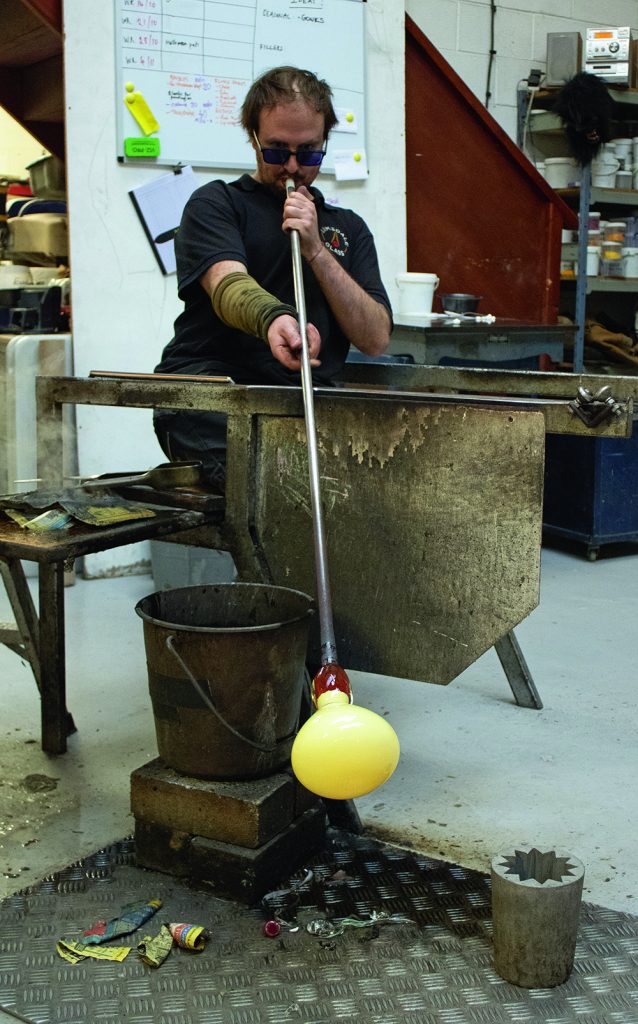
By Steve Orme Glass-blowing is a dying craft that is expected to disappear in the next ten years. But one Derbyshire company is leading the way in ensuring that the unique artistry will continue well into the future. Lumsdale Glass is a traditional glass-blowing studio in the delightful Lumsdale Valley, just above Matlock. Jonathan Abbott has been running the company since April 2023 when he took over from his mentor Anthony Wassell. The firm’s products which include vases, baubles, tumblers, paperweights and tableware are in big demand – not just in Derbyshire but even for some of the biggest Hollywood films. Despite that 39-year-old Jonathan who is a vastly experienced glass-blower feels there are many more skills he would like to perfect. “There are so many different areas of glass-blowing I want to move into. I really want to go into wine glasses, stemware and goblets. There’s probably another few years’ worth of practice and learning before I can get to where I want to be. “We’ve got loads of ideas – different procedures and ways of applying colour and pattern to glass which I’ve never tried because at the moment I don’t really have the time.” Help is at hand: even though Anthony Wassall has retired, he will return to the business once a week to pass on his stemware skills. Jonathan has always been interested in traditional skills and crafts. He went to Liverpool where he studied for a higher national diploma in fine art. His tutors could see that he was hands-on and pointed him towards a scholarship in Bulgaria. “I went there for two or three months and did Bulgarian traditional skills and crafts. When I came back I knew that was what I wanted to do,” says Jonathan. He set up a dry-stone walling business with an old school friend which they ran for about eight years. Then another friend told him his dad, Anthony Wassall who was a glass-blower, was looking for an assistant to help him two days a week. “I was just handing Anthony tools so that he could be more efficient. Instead of making 20 wine glasses in a day he could make 30.” A few months later Anthony saw Jonathan in a supermarket and asked him if he wanted a winter job. Walling in the winter is horrible, so I came on board and never left,” Jonathan explains. “I’d be in here practising every single bit of spare time – that was before I had kids and had spare time. “When I first came in I knew nothing. But I was watching Anthony and realised it was a skill which was absolutely incredible. I just wanted to be able to do it and rise to the challenge of making mistakes, burning yourself and smashing things. “It’s an art and it’s a practical art. That’s my main interest. There’s a massive art to producing something but there’s also a function to what you’re making as well. “I’m very lucky. This is a job I love. I don’t worry about coming in to work. We’re just about to go into the Christmas period which is completely manic and I need to plan my time to get it all done. I’ve got two boys, one’s nearly nine and the other’s six, so I’m juggling family life as well as keeping the business running. But I enjoy what I do.” The technique of glass-blowing has remained unchanged for centuries. The only difference now is furnaces and kilns are much more efficient which ensures a cleaner environment. About 95% of the materials Jonathan uses are recycled and come from Devon-based Dartington Crystal, the only remaining factory-scale producer in the country. According to Jonathan, Lumsdale Glass gets a variety of commissions: “Someone will come in and say they want a vase for a wedding. We’ve recently made some drinking glasses for a lady who’s a bit short-sighted. We made some dark, bold colours which stand out so she’s not going to knock them over. “We get maybe a couple a year where mum and dad have gone away, the kids have stayed at home and had a party. You get a phone call saying ‘we’ve broken this bit of glass and we need it reproducing and they’re back home tomorrow!’ I always enjoy that. I remember being in that situation myself.” As well as taking commissions and selling his creations in his shop, Jonathan makes lighting products which are on display at Wirksworth showroom Curiosa. The company’s founder and designer Esther Patterson worked closely with Anthony Wassell and Jonathan had no hesitation in continuing the partnership. “Esther is the main reason I’m a glass-blower. I’d still be out in the fields putting stones on top of each other if it wasn’t for her.” When Curiosa was approached by the producers of the Barbie movie – the highest-grossing film of 2023 – it led to Jonathan’s lights being seen in the Barbie Dreamhouse at the start of the picture. Then Jonathan was contacted by the producers of a film which should be released next year, the big-screen version of Hamnet. This is Maggie O’Farrell’s fictional story about the life of William Shakespeare and his wife after the death of their 11-year-old son. She is known as Agnes, not Anne Hathaway. “Agnes was into apothecary. We made quite a lot of medicine bottles which went onto the film set. They’re all wonky. You spend years practising glass-blowing and getting it symmetrical and then they come in and say ‘we want it a little bit different.’ But it was great fun. I’m looking forward to seeing the film because I’ve just read the book and really enjoyed it.” Glass-blowing is becoming harder to learn as some universities have stopped courses which have become expensive to run due to massive gas bills and overheads. But the art is continuing in Derbyshire. Jonathan is passing on his skills to Rosie Perrett. She joined the company after graduating from De Montfort University in Leicester
Allestree & Quarndon Living Large with Big Halls and Bigger Histories

by Tom Bell For those familiar with the grand Amber Valley constituency, you will know all about the rolling terrain that presents stunning walks for the novice, weekend rambler, or the experienced, polished-boots-and-waterproof-trousered hiker. But, something very interesting lies within two particularly delightful places, just a mere five-minute drive from each other. Standing on either side of the valley’s border, like us and the Scots staring like wild cats over Hadrian’s wall, we would like to introduce Allestree and Quarndon, the subjects of our latest Derbyshire investigation. Is that Matt Baker and the Countryfile crew coming over the horizon? From some pretty sizable halls (one of which you might be able to get your hands on for a few coins, wink wink), to phenomenal landmarks, why should you care about Quandon and Allestree?… Let’s find out! Allestree sits right alongside the Amber Valley border. Mackworth and Darley Abbey hold tight behind in the south and Breadsall takes up east, just over the River Derwent. For the north, Duffield is the predominant village you will likely come through if you travel down from Blackbrook or Hazelwood. This quaint suburb is one of the furthest northern wards in Derby, and can easily be accessed via the exceptionally long A6 road. Luckily for us, our next stop is only one mile north… Quarndon Village border only covers a handful of minor roads, but boy do they make them count. If you fancy a day out from the hectic rat race of Derby’s city centre, simply make your way to Kedleston Road and follow it through onto Church Road to get into the heart of Quarndon. You could stop off at their very attractive local, The Joiners Arms, for a quick pint after exploring – but that’s a tip only for the walkers, not the drivers! Both Allestree and Quarndon have become something of myth and legend when it comes to their celebrity clientele. Remember Alan Bates, star of Butley (1973), An Englishman Abroad (1984) and Fortune’s Fool (2002)? Passing away in 2003 at the well-lived age of 69, it turns out that he was born in Allestree and was educated at Herbert Strutt Grammar School in Belper. Quarndon does away – in classic East-Midlands style – with the bombast of glitzy, flashing cameras and red-carpet glamour. Instead, its fame emerged through the high-powered automotive engineering of Rolls Royce. Ever wished you could drive one? Admittedly, we can’t help you there, but come on down to Quarndon to visit the resplendent home of its original co-founder, Sir Henry Royce, who lived here between 1908 to 1911. There’s a blue plaque, displayed since 2012 by the Derbyshire Council, honouring his very regally named property, Quarndon House. It’s clear Quarndon and Allestree are more than just two humble English villages dressed in frilly vowels and consonants (we’ll leave that to those down south), nor is it solely past icons that still define them. It’s time that we take you on a two-stop tour of the current landmarks that make Allestree and Quarndon must-see destinations for you, the kids, or your loyal, four-legged companion. In the past, English Medicine was known by modern standards for being untrustworthy with its leeches and lobotomy. Yet, Quarndon may have actually been on the right side of history, as noted through their still-preserved 17th Century Chalybeate Spring Well, just down from The Joiners Arms. Visited by none other than literary genius Daniel Defoe (author of Robinson Crusoe and Moll Flanders) in 1727, he waxed on the glory of the seemingly medicinal waters in his collection of letters and works under “A Tour Through’ The Whole Island Of Great Britain”. For those interested, you can read his passage – Letter II Page 71 – where he states “… and so came to Quarn, or Quarnden, a little ragged, but noted Village, where is a famous Chalybeate Spring, to which abundance of People resort in the Season to drink the Water; as likewise a Cold Bath”. We’re not surprised that the influencers and fashionistas haven’t visited. The water likely stopped around the 19th Century, rendering this Chalybeate Wellhouse a figment of the historical record. However, you can still check out the structure and admire the plaque identifying it. Rats, the plaque was covered by ivy when I saw it! If it’s religious healing you are after, we recommend you take a brief stroll to St Paul’s Church in the heart of Quarndon. This Grade II listed Victorian church, dated back to 1872, is of special interest and is legally required to be preserved. Stepping inside, you will notice the fabulous pipe organ that was installed way back in 1874 by John Mitchell Grunwell of Becket Mill Derby. Taking a look at the NPOR (The National Pipe Organ Register), we understand that it was last tinkered with in 2011 by Derby-based builders, E.R Stow. See that golden clock on the front? That was installed to celebrate Queen Victoria’s Diamond Jubilee in 1897 and the four gargoyles at the base of the spire represent the four Gospel writers, Matthew, Mark, Luke and John, indicated by their tetramorph figures; a man, lion, ox and an eagle. Quarndon Village Hall is the heartbeat of the community. Currently used to host everything from the Amateur Dramatic Society to pre-school sessions, its lineage goes back to 1914 when the Curzon family and the villagers pooled together to finance its construction. Last extended in 2004, this is spotted just beside St Paul’s Church on the very cleverly named, Church Road. For Allestree, grandeur is the name of the game, and we cannot possibly get any more magnificent than the early 1880s landmark, Allestree Hall. Based in Allestree Park, it boasts 8.7 acres of land, stables and an ice-house, plus part of the grounds had been turned into an 18-hole golf course that shut down in November 2020. Our green-fingered readers will be glad to hear that the land has been completely overturned. No longer are there business people signing
Walk Derbyshire

Belper is a lovely little town with many shops, restaurants and a gorgeous cinema. It is situated on the Derwent River and has a vast history. Belper is the birthplace of the factory system. Derwent Valley Mills were inscribed on the UNESCO World Heritage List in 2001. With Cromford Mill hosting a visitors centre to introduce people to the story of Richard Arkwright, Jedediah Strutt, a partner of Richard Arkwright built a water-powered cotton mill in Belper in the late 18th century. The mill is still standing today, however it is no longer used in this industry. Belper is also known for its lovely River Gardens which are worth a visit as they regularly hold brass bands playing at the weekends. In the summer months you can hire a rowing boat and spot the kingfishers. There is a cafe and a play park on site. The walk takes us past Wyver Lane Nature Reserve which also has the Wyver Lane Firing Range wall which you can see within the Derwent Valley Mills World Heritage Site. The Strutt family, who built water-powered cotton mills in Belper from 1776 onwards, used their own militia to protect the mills, in case of visits from mill-wreckers and even invasion, in the time of Napoleon Bonaparte. In 1800, a firing range was provided for Belper volunteers on the Chevin Hill – a large wall which can be seen today by walking along the North Lane footpath, accessed from Sunny Hill at Milford or Farnah Green Road. We see some beautiful vista’s, farmland and in the spring months lambs and calves. There is a pub halfway around the walk too so a great place for a swift pint. THE ROUTE You can park for free on Belper Road or until 6pm at night you can park opposite Angelo’s Restaurant. We start the walk on Wyver Lane. Head down with the river on your right. We pass Wyver Lane nature reserve which has a bird hide where you can spot white heron’s if you are fortunate. Follow the lane all the way down until you see a gate – head through the gate or if you are slim enough, the tiny gap. Here we go a slight left onto the grass field and through the gateway. This part of the walk is seemingly always muddy so boots or similar a must. Head up left to the top of the field and over to the right hand side where there is a little cut through. Sometimes there are cows in the top field here but they have never caused us an issue. Head straight up to the stone wall and over the steps to the right. Pause – take in the beautiful view behind you. From here we head left down Whitewells Lane. This is a 60mph limit area and a single track so be careful if you have dogs or children, but it is not busy. This is a fab place to spot lambs in the spring. Follow this all the way till you get to the pub on the corner, The Bulls Head. The pub is closed Monday and Tuesday’s but is open on bank holiday Mondays. After a swift half, head opposite the pub down Belper Lane End. Follow the road all the way up and start to head down the hill. Look out for a footpath sign on the right where they are building new houses. I’m not sure when they will have finished the houses but for now, follow the visible path and we eventually head through a gate on the right. Head left and follow the path. The view here on the right is beautiful too. The path through the fields looks like they head to the gateway but you can’t actually get that way so just look down to the right where you will see a little path going down slightly and between two big old gate posts where you will see a proper path. Follow Shire Road all the way down until you hit the main road. This is a blind bend and as we need to cross the road please take care. We head left onto the pavement and you will follow this down to where you will see the start of the walk. DETAILS Parking: Next to Belper Mill there is a pay and display car park, also opposite Angelo’s Restaurant is a car park you can park in during the day. Pubs: There’s many to choose from, The Bulls Head is half way round the walk, but there are numerous in Belper just a short walk from the finish. Distance: 6.5km 4miles Time: Approx 1.5 Hours Terrain: Quite easy, not too muddy, with a gentle climb through fields. 00
Celebrity Interview – Kiki Dee

There are few opportunities to see a genuine superstar performing in Derbyshire. One appearing at an intimate venue is even rarer. But Kiki Dee who is coming to Belper this month is no ordinary superstar. Kiki has done virtually everything in the music business. She secured her first recording contract when she was 16, was the first female UK singer to sign for Tamla Motown and her duet with Elton John, Don’t Go Breaking My Heart, went to number one both here and in the USA. For the past 30 years she’s been performing with English guitarist of Italian parents Carmelo Luggeri. Their eclectic mix of old and new songs interspersed with numbers by other great artists is proving hugely popular with audiences. Kiki is still in great demand, performing in front of several thousand people on Elton John’s farewell North American tour and being supported by none other than rock legend Robert Plant at a small venue in Birmingham. She says her show with Carmelo is not what a lot of people expect: “Although I’ve been working with Carmelo for 30 years now – which is hard to believe because it’s half my working life – it’s quite forward-looking. “For example, we do a slowed-down version of Don’t Go Breaking My Heart. It’s fundamentally a semi-acoustic show. We’re quite dynamic. We do I’ve Got The Music In Me and stuff like Amoureuse and some covers as well as original material.” She agrees that some of her well-known songs take on a new quality when they’re done acoustically. “That was the reason Carmelo and I started working together. I’d done the thing about trying to get in the charts and I just more or less wanted to do what my heart told me. “I enjoy singing Don’t Go Breaking My Heart in a slow way because you hear the lyrics differently. You really need a full production to do it in the original way.” Kiki laughs when she points out that Carmelo doesn’t try to be Elton John and doesn’t sing at all: “He said to me when we first met ‘I don’t want to sing Elton’s part!’ He’s very good at arranging songs, so we do quite an unusual version of Running Up That Hill by Kate Bush. “Carmelo is a really great guitarist and producer. We’ve done four albums and a couple of live ones over the years.” He’s worked with huge names including Bill Wyman, Julian Lennon, Billy Connolly, Andy Williams and Ralph McTell. Kiki and Carmelo met when the late Steve Brown, who had a big hand in Elton John’s early career, got them together for a recording session. Kiki pays tribute to Steve who ran Rocket Records. “I’d done the pop thing. The early days were about trying to make it. Of course what you realise is when you do make it, that’s when the work starts. “I’d also done musical theatre – I did Blood Brothers for a long time. Steve was a very open-minded, creative man. He knew that Carmelo and I were both moving on and trying to do something different. Our partnership was a natural progression. “We’ve had guys say to us ‘my wife dragged me along to the show and I’d no idea what it was going to be. I really enjoyed it.’ I feel quite pleased in a way that we’re still moving on.” Pauline Matthews was born on 6 March 1947 in Bradford. She began her recording career as a session singer, providing backing vocals for Dusty Springfield among others. She changed her name to Kiki Dee when she signed as a solo artist to Fontana Records. She joined Tamla Motown but it wasn’t until she signed with Elton John’s Rocket Records that she became a household name. Although she enjoyed working with Motown, she didn’t know what to do next, so she called the label’s UK music manager John Reid who was just about to become Elton John’s manager. “It was a fluke,” says Kiki. “He said ‘we’re starting a label. Would you like to meet Elton John?’ He was beginning to make it quite big then, in 1972. I said I would love to. “I think I would have done okay if I hadn’t met Elton but you have to take advantage of these moments in your life. I’m always grateful to John (Reid) for introducing us.” Kiki explains that when she started in the music business she was ambitious despite her shortcomings. “I wasn’t incredibly confident and pushy but I had this deep-down desire to see the world and do something because my parents never got those opportunities. “I’m very much a glass-half-full person. I appreciate what I’ve done. I could have had a bigger career, I could have been a rock star with a big house and smart cars. But I’ve discovered that I enjoy normality – I can do normal things. I don’t have to put my Kiki Dee hat on all the time. “I’ve just had a weekend with some friends in Oxfordshire, just enjoying life as much as possible. I’ve got some great family around me. I’m very grateful.” Kiki is respected throughout the music industry and recounts the story of how she worked with former Led Zeppelin lead singer Robert Plant about four years ago. “He was starting a new band called Saving Grace which is now established. He rang up and asked if he could support us in a small venue in Birmingham, his neck of the woods. We couldn’t believe that Robert Plant was supporting us! “It was because they didn’t have quite enough material for Saving Grace to go out on their own. We were so flattered. I like artists who move forward. I respect Robert for always trying new things.” Although Kiki likes moving forwards, her fans will be delighted to know all the material she recorded in her early days in the business is now available. The Demon Music Group is offering it on