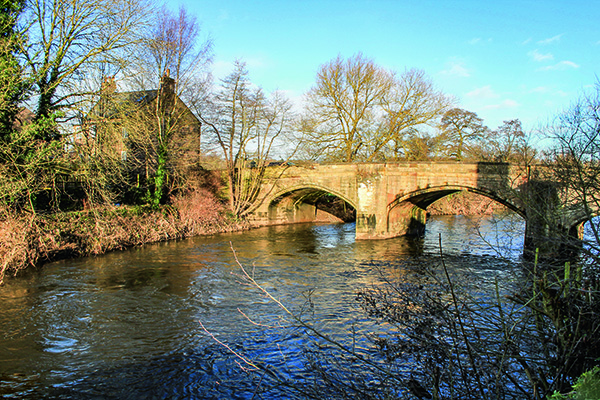
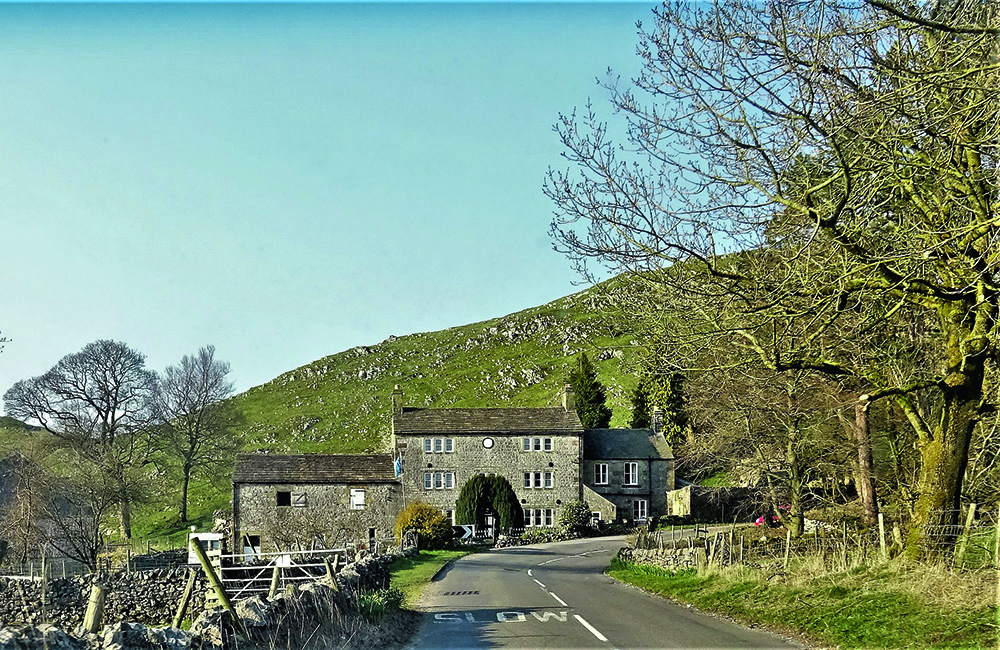
Travelling Through History – Where our Forebears Trod 2

Having looked at a pre-historic thoroughfare last month I thought it opportune to look at some of the roads imposed upon the landscape by the Romans. The Romans, of course, are famous for the straightness of their roads, and much ink has been spilt on the surveying methods used to achieve this. Essentially, sightings were made from one high point to another, and the points joined in as direct a manner as possible, although detours and links were often necessary as the relief – slopes, streams and declivities demanded. Ryknield Street was the road from the north-east to the south west, ultimately from York (Eburacum) via Templeborough and Chesterfield to Gloucester (Glevum) in the south-west via Wall-by-Lichfield (Letocetum), Droitwich (Salinae) and Worcester (Vertis). It crossed the Derwent at its lowest possible bridging point to join another road that ran south-east towards Ermine Street (the modern A1) and west to Chesterton (Staffs.). Within a very few years of the Roman arrival, a fort had been constructed on the ridge overlooking this crossing (footings of the bridge were discovered through the efforts of a local sub-aqua club in the late 1980s) and, by the AD 80s, this fort had been replaced by a more ambitious one beside the crossing itself, which rapidly developed into a small town called Derventio, today’s Little Chester. The ancient name for this NE to SW Roman road, which went from Gloucester (Glevum) in the SW to Doncaster (Danum) in the NE. via Derventio was Rykneild Street. William Woolley, writing in around 1713 added that, ‘. . . it is plainly seen in the meadows from this place [Little Chester] at the latter end of Summer.’ It was named as Ricning Street on William Stukeley’s map of Little Chester from his Itinerarium Curiosum of 1721. In c. 1200 it was rendered Ykenild, and the name is of post-Conquest origin. The alignment from Little Chester northwards was excavated in 1926 by Deputy Borough Surveyor, C. B. Sherwin. As Rykneild Street the road was first named as we now have it with an ‘r’ in front of Ykenild in Ralph Higdon’s Polychronicon of 1344, but the origin of the name is a puzzle, even the late Professor Eilert Ekwall writing that the ‘. . . etymology. . . has not been found’ followed by Professor Cameron who suspects the name was borrowed from the Ickneild Way, in the home Counties. One might think it more likely that they developed in parallel from a similar (or the same) source. The course of the road south from Little Chester is not wholly understood as it passes through the built-up part of Derby, but from Little Chester the route seems to have crossed the river about a quarter of a mile below the Roman small town, where there was a bridge, all vestiges of which have been destroyed by water erosion and distinct from the original crossing noted above, to which we will return on a future occasion. The road probably followed the alignment of the lower portion of Belper Road where it approaches Five Lamps, then down West Avenue (or on an alignment very close to it, then along a modern housing estate pedestrian path called Nuns’ Green and then along Nuns’ Street, Brick Street and across the Friar Gate-Ashbourne Road intersection into Uttoxeter Old Road. The oldest known borough boundary also followed the line here and, in the absence of archaeological data, it is the course of this early boundary that seems also to determine the course of the road. Unfortunately, by the time Lt. Creighton drew his map of Derby c. 1823 (which I have included, with the course of Ryneild Street shown in red) the Improvement Commissioners had expanded the boundary well to the north, although in the SW part of the borough, it still followed the Roman alignment from what is now Rowditch to Rowditch Gate. From Uttoxeter Old Road, the alignment ran to Rowditch, but was slewed in 1876 to accommodate a long bridge over the newly built Great Northern Railway, the line surviving in the hedge line which now marks the NW ends of the gardens/yards of the cottages along the later alignment. The road crossed the new turnpike Uttoxeter Road and ran more or less up the drive to Bemrose school, proceeding under the school itself to meet Constable Lane, Littleover at a boundary called Rowditch Gate, where once stood a toll cottage and the borough boundary veered sharply to the SE.. Today Constable Lane after about 450 yards straight, turns sharply left, but here the Roman road proceeded straight on its course marked by a bosky thoroughfare with a few individual houses on it called Owler’s Lane. After a while, the relief demanded a change of direction and the alignment went left, up the slope and onto a new alignment which took it along the old southern boundary of the City Hospital. When the present Royal Hospital was mooted, I was still at the Museum. Knowing the agger of the road (the raised hump which often marks the course of Roman Roads over flattish ground) was still visible there, we tried to have English Heritage (as it then was) declared a scheduled ancient monument, but to little avail. Hospitals outrank antiquities, especially when they are the pet project of a group of councilors supporting the government of the day! Needless to say it was soon ploughed out. From thence it rose up the hill further to cross Chain Lane and join the surviving alignment near the bottom of Pastures Hill. What used to be thought of as a well-preserved piece of agger beside the old Crest Motel turned out, on excavation, to have been a medieval baulked headland surviving from Littleover’s three field ridge and furrow. The actual road was slightly further to the north. Although the complexities of the junction of the old Burton Road with the new A38, which has obliterated part of the alignment, the modern A38 follows the Roman
Eating Out – Kinara, Willington

Love it or loath it you can not ignore the fact that the A38, when it’s on form, has reduced journey times in our part of the county. We had a table booked at the Kinara in Willington and on a chilly Tuesday evening the relaxed drive from Ripley to the restaurant, situated on The Castle Way in the centre of the village, was less than 40 minutes. The night was getting colder as we hurried through the restaurant entrance in to the reception area and bar. After a warm and friendly greeting we cast our eyes over the well stocked bar which boasted an impressive selection of beers and spirits that included a dozen or more varieties of gin. With the introductions over, we were shown to our table in the spacious dining area. The interior has been decorated with a light and thoughtful touch using a reduced colour palate on everything from the accent wall finish to the linen napkins. In Hindi, Kinara means at the edge and is usually used to mean the edge of water and this is emphasised in one of the large pieces of wall art in the restaurant. The unobtrusive background music is classical Indian that has been given a Bollywood twist. This further enhanced the relaxed atmosphere. We ordered poppadoms and the mixed pickle tray to pick at while we read through the menu. The poppadoms were warm, fresh, crisp and melted in the mouth. The accompanying variety of pickles and dips was so tasty and different that we took our time to nibble while we decided what to order. The Kinara is an authentic Indian restaurant and this is reflected in the number of fish and vegetarian dishes that are available. After a lot of deliberation Susan chose the prawn puri as her starter. This was pan fried prawns who’s delicate flavour was not overwhelmed by the blended spices they were cooked in. The dish was finished with fresh lemon juice and fresh green coriander. It was served on a puri; an unleavened, deep-fried bread. I selected one of the vegetarian dishes: 3 medallions of aloo tikki. This is Indian snack food. Mashed potato is blended with spices, coated with spiced gram flour and carefully pan fried until golden. The warmth of the spices was tempered by a cool salad of green peas, chickpeas and spinach accompanied by a smooth yoghurt and tamarind dressing. The lamb saagwala, a house special, was Susan’s main dish. This was a generous portion of a traditional home cooked dish full of authentic but mild, flavours; made with fresh spinach, onions, tomatoes and green chillies. The lamb was tender and the spinach, added at the last minute, retained its flavour and colour. The final ingredient, yoghurt, made this saagwala smooth and creamy. A Peshwari naan, rich with coconut, was the perfect partner for this dish. My selection was the butter chicken. The tender pieces of locally farmed chicken had been marinated and cooked in a charcoal tandoor oven. Then further cooked in, and served with, a slightly sweet and spicy tomato sauce made smooth with powdered cashew nuts. The sweetness was offset by a smokey, citrus note of, I think, fenugreek and lemon. Finished with a dash of cream and garnished with fresh coriander this was another generous portion I didn’t want to leave. Unable to resist kulfies, especially when flavoured with pistachio, we completed the evening by sharing 2 scoops of the delicious, milk rich, pale green, frozen desert. Everything about the Kinara reflects the owners’ passion to give the diner an enjoyable and memorable experience. The restaurant has a reputation of supporting local producers and takes great pride in its use of fresh ingredients. Everything is cooked to order so you can dictate the level of spice in your chosen dish. They even filter their own still and sparkling table water, presented in impressive proprietary bottles. The Kinara is a place where we will return, with friends, and spend the evening in a relaxed atmosphere enjoying superb Indian cuisine. 00
Walk Derbyshire – A Walk over 2 Dales

The dales this walk covers are within a mile or two of each other and even though they join later, both are entirely different in character. Their names are the Manifold and the Dove. Their character is mostly determined by the rocks over which their rivers flow; gritstone shales for the Manifold and carboniferous limestone for the Dove’s bedrock. Limestone being the main underlying rock of this part of the White Peak, manages to take over lower down the manifold where the river disappears temporarily through cavernous systems carved millennia ago. Starting in Longnor, an attractive one-time market town, the walk follows the broad, middle section of the Manifold before crossing over an airy grassy ridge in order to drop down into the valley of the River Dove. In this dale the scenery is entirely different; to the north beyond Crowdecote, dramatic limestone hills point skywards, looking for all the world like a row of shark’s teeth. In ancient geological times they marked the sea-washed edge of a tropical lagoon and, as a result are technically known as reef knolls. Longnor stands at the boundary of the Dark and White Peak and is also where several pack horse and drove roads meet. Until the beginning of the twentieth century it was an important meeting place for local farmers who came to this upland village in order to sell their produce and animals. The original owners of the village and lands round about, the Harpur Crewe family from Calke Abbey, built the market hall and cobbled its frontage. With the coming of efficient road transport, markets are no longer held there and cars park where cattle pens once stood, but it is easy to imagine the bustle and noise of a busy market. A list of tolls levied against animals sold there stands proudly above the entrance to the market hall. Where farmers’ wives once sold freshly plucked chickens and geese, cheese and eggs, it is now possible to buy light refreshments, or admire the work of local artists in an adjoining studio. There are still pubs where for centuries farmers met their friends and neighbours. Directly opposite the market hall, the Crewe and Harpur Inn was once where it was customary for those farmers to pay their rent to the estate. Further up the road, the Cheshire Cheese, a pub still renowned for its excellent cuisine, takes its name from its origins in 1464 when it was used as a cheese store. Being at the junction of so many ancient paths and trackways makes Longnor a popular venue for walkers and cyclists. In a village where many of its houses were built at least two centuries ago, narrow alleys lead towards the church, which although being ‘improved’ in Victorian times, is built on Saxon foundations. If one of the gravestones is anything to go by, Longnor is a place of longevity. William Billings who died aged 112, was born in a cornfield and became a soldier who took part in the capture of Gibraltar in 1704; he saw action at the Battle of Ramillies in 1706 and fought against the Stuarts in the Jacobite Risings of 1715 and 1745. Another hint of Longnor’s age can be seen by the number of narrow fields’ to the left and close to the paths used soon after the start of the walk beyond Longnor. Known as ‘strip system fields’, they are the width a plough hauled by a pair of oxen could cover in a day. No longer commercially viable for modern farming, they are still marked out by not quite so ancient stone walls, and are preserved for their historical importance. Useful Information 4 miles (6.4km) of moderate walking on field paths and farm tracks. Two moderate climbs and one descent. Muddy sections beyond the second crossing of the River Dove. Recommended map: Ordnance Survey Outdoor Leisure Sheet 24, The Peak District – White Peak Area. Public Transport: High Peak 442 service running daily every two hours between Ashbourne and Buxton calls at Longnor. Car parking in market place or roadside in Longnor village. Refreshments – village pubs and a café in Longnor where there is also a fish and chip café, but be warned – muddy boots and dogs are not welcome! The Pack Horse pub in Crowdicote makes an ideal stopping place half way round the walk. The Walk : Follow the road east for about 150yards away from the market place in Longnor. Turn right along the signposted farm lane to Folds End Farm. Go left through the farmyard and the climb over a stone stile. Turn half left beyond the stile and then right at a path junction to follow a grassy path downhill to the River Manifold. Follow the Manifold’s left bank, downstream. Go forwards where a wider track bears left and then cross three fields. At a four-way path junction, turn left and climb up to Over Boothlow Farm. Keep left through the farmyard and then right along a concrete track. Through a gate the track becomes rougher, follow it uphill to the ridge-top road. Pause on the way up to the road and admire the view. Longnor is to your right beyond the narrow strips of its Saxon fields. The wide basin of the Manifold was once considered suitable for flooding as a shallow reservoir, but as this would leave an ugly muddy scar during periods of drought, the plan was dropped in favour of the much more attractive Carsington Water. Turn right along the road for about 500yds (460m) and then cross a stone stile. Turn sharp left and begin to go steeply downhill across three fields. Turn right on joining the track down to Under Whitle Farm. Pause again to admire the view, this time along the valley of the River Dove. In the valley bottom, to your right, grassy mounds mark the motte and bailey of Pilsbury Castle. In its time it was a wooden-staked fortification built by the Norman overlords
Product Test – Paul Mitchell

Repair Your colour with Paul Mitchell Ultimate Color Repair Shampoo 250ml £17.95 The Paul Mitchell® Ultimate Color Repair® Shampoo works gently to cleanse and protect color-treated hair. Nourishing ingredients such as Quinoa Color Repair, sugar cane and lemon peel extract add shine and manageability while powerful antioxidants help prevent damage for results that are soft, healthy and gorgeous. When using the system of shampoo, conditioner and mask, as compared to untreated hair. Products were tested by an established, independent third-party laboratory. Ultimate Color Repair Triple Rescue 150ml £18.50 The Ultimate Color Repair® Triple Rescue® Thermal Protection from Paul Mitchell® works beautifully to protect against heat that can damage color-treated hair causing a dull, lifeless appearance. The top phase helps against excessive heat while the bottom phase conditions hair with nourishing ingredients including Quinoa Color Repair complex, so hair looks healthy, shiny and vibrant. Ultimate Color Repair Conditioner 200ml £18.50 Color treated hair needs a special conditioner. The Ultimate Color Repair® Conditioner works to both hydrate and detangle with Quinoa Color Repair complex that utilizes the high protein of quinoa to lock in hair color and repair each hair strand. Shea butter, jojoba and soybean oil leave hair feeling and looking soft, shiny and healthy while vitamins work to nourish and moisturize. Ultimate Color Repair Mask 150ml £21.95 A hair repair mask specifically formulated for color- treated hair is the perfect way to keep hair vibrant and moisturized. The Ultimate Color Repair® Mask includes nourishing ingredients such as Color Repair complex, shea butter, jojoba and soybean to make hair soft and shiny for gorgeous, touchable hair. These powerful ingredients help prevent color from fading and further damage from everyday causes. Tried & Tested REPAIR TRIPLE RESCUE Using a hairdryer regularly definitely does dry your hair. I found that this product did combat that well. Unfortunately, it seemed to create a lot of static too. JP REPAIR MASK This is a very intense, nourishing hair mask. You only need a small amount! Great product but slightly to heavy for my fine hair type. VP REPAIR SHAMPOO AND CONDITIONER I found the product left my hair looking healthy but it also left it feeling rather sticky, one good side of this is that it gave it lots of volume – but personally the products didn’t work for me. I have however used it on my daughters hair that is finer and more curly and it suited her type of hair a lot more. 00
Eating Out – The Dog Inn, Pentrich

Many years ago, before man had walked on the moon or The Beatles had got together, one of the simple highlights of a warm summer Sunday evening was to walk with my brother and our parents to The Dog at Pentrich. Our route was via Lowes Hill, Hammersmith, Asher Fields (no A38 in those days) and in to the village. The stroll was timed to put us outside The Dog at precisely 7pm; the time local licensing laws permitted public houses to open on Sunday evenings. Too young to enter the pub, me and my brother would sit outside on a low wall, bottle of Vimto in one hand and a bag of crisps in the other. Our most recent evening visit to the Dog Inn was not going to be for Vimto and crisps but to discover what the new chef, Adam, was offering on the completely re-styled menu. The Dog Inn has changed dramatically over the years; it’s larger; the main extension houses the dining area and has a contemporary interior but still retains many of its period features. It also boasts a wood-burning stove. A welcome site on a cold January night. Jane who, from the start of the New Year, has taken over running the front of house met us. This is a family affair; Jane along with her husband Graham run the bar and restaurant and Chef Adam is their son. Adam has worked in several well-known local restaurants and, until returning to Pentrich, was head chef at one of Sheffield’s top eateries. Some things change for the better and it was a delight to see the array of gins that are now on offer from ‘Bathtub’ through to ‘Rhubarb and Ginger’. Sue ordered a G&T made with the latter. It was served in a long stemmed copa glass which is shaped to enhance the botanicals in the gin. And some things don’t change; I ordered a pint of good old-fashioned Bass and it didn’t fail to delight. We sat and chatted in the cosy bar till our table was ready. Sue started with the soup of the day; a silky, smooth comforting leek and potato with house-baked focaccia; a pillow of soft dough laced through with olive oil infused sundried tomatoes. I chose the salt and chilli squid with a toasted sesame Asian style ketchup. Adam had made a change to the menu and the salad part of the dish was mostly fine strands of mooli. This cool, mild radish provided a counterpoint to the tempura batter on the squid and the hint of mild chilli in the ketchup. This is an ever-evolving menu as I witnessed when my main arrived with spinach; a welcome addition to the rich flavour of the slow cooked marinated blade of beef and the refreshing savoury note of the smooth celeriac fondant. Set on a bed of tangy white onion purée it was accompanied by sliced chestnut mushrooms and just the right amount of deep, dark real ale sauce. A salty note was provided by the crispy cooked pancetta. The plating was thoughtfully balanced and presented a visual feast. For her main Sue chose an 8oz rump steak with a peppercorn and whisky sauce; if there is a grill section to any menu it will always be her first choice. All the steaks are served with, chunky chips, Portobello mushroom, confit tomato, beer battered onion rings and a watercress salad. The steak was grilled beautifully; just the right amount of charring on the outside and still pink on the inside. Throughout the meal we never reached for any extra seasoning. After our unhurried starter and main we had a little room left for desserts; Sue chose the ice cream and I chose the lemon parfait. The ice cream was a trio of flavours, decorated with shards of French meringue, and served with raspberries, blueberries and a buttery, homemade shortbread biscuit. The parfait was served with sherbet, lemon curd and toasted almonds and again decorated with the French meringue. The Dog has a varied and quite extensive bar snacks and meals menu, served till 3pm in the afternoon and 9pm in the evening, which we will be returning to try. There are around 30 wines to choose from ranging from easily affordable whites and reds to some special occasion champagnes. But I still have a soft spot for those warm summer evenings of the late 1950s with a bottle of Vimto. 00
Walk Derbyshire – Viator’s Bridge & The Dove Holes

This short walk can be fitted in with a trip exploring more of Dovedale or simply as a day out combined with lunch at one of the hospitable pubs in villages round and about the valley. It is over 300 years since Izaak Walton fished in the pure waters of the river Dove along with his impecunious friend Charles Cotton of Beresford Hall, near Hartington. Apart from light traffic along the short stretch of modern road through Milldale, the two friends would easily recognise this part of the dale. Dovedale and its famous trout stream have changed little since Walton and Cotton spent time along its banks, angling and philosophising. Walton referred to the Dove as being ‘The finest river that I ever saw and the fullest of fish’; a sentiment true even today. Many of the houses in this tiny hamlet are founded on dwellings that would have been standing in Walton and Cotton’s time. The village takes its name from two mills that once provided employment for people living there; remnants of both mills remain, still capable of taking power from the river. Lode Mill is higher up the valley; converted into a barn, it once ground and separated lead ore from the parent limestone. The mill closest to the village is Ochre Mill; powered by water from the leat which begins a few yards upstream of Viator’s Bridge, is also recognisable as a barn, but in its day it produced powder for making red lead paint. In his angling treatise The Compleat Angler, Izaak Walton refers to himself as ‘Viator’ (traveller), and addresses Cotton as ‘Piscator’. (angler). In the book Walton expresses amazement at the narrowness of the bridge which bears his nom-de-plume, ‘Viator’. The route followed by this walk follows the river downstream from Viator’s Bridge as far as the curious rock formation known as Dove Holes. A secluded dry dale to the left and a few yards prior to the holes, climbs up to Hanson Grange Farm where the walk joins an ancient packhorse way back down to Milldale. The Walk : From the car park walk down to the river and cross narrow Viator’s Bridge. Turn right to follow the riverside path for a little under a mile. The thin alkaline soil on the craggy valley sides, supports many semi-alpine plants such as thyme and dwarf cranesbill. Turn left at the finger post pointing to Alsop-en-le Dale and climb the tree-lined dry dale and go beneath the line of rocky crags known as The Nabs guarding the dale’s exit. Before turning left uphill, walk forwards for about 80yards to visit Dove Holes. These massive water-worn holes appear, at first glance to be the start of an extensive cave system but are, in fact only about 20ft (6m) deep. This is a good vantage point for views up and down the dale. Return to the finger post and turn right to re-join the described walk. Turn left though a stile at the dale head and follow a series of stiles leading to the right of Hanson Grange Farm. Join its exit lane about 100yds (91m) beyond the farm. Hanson Grange Farm. There were several extensive monastic sheep walks in the area, until the Dissolution. Hanson Grange was part of one. The farm house looks Jacobean, but is probably built on older foundations. At the end of the partly walled section of the farm lane, turn left as indicated by a signpost close to an underground reservoir. Follow the sign’s direction across a series of fields, downhill towards Milldale. Zigzag downhill on the ancient packhorse way back into Milldale. The George at nearby Alstonfield is a popular pub for travellers, either by car, on foot, riding or pedalling. The oldest relic in Alstonfield Church is the economically worded inscription on the double decker pulpit which states: ‘Be faithful and etc., and I will give thee a crown etc.’ No doubt the carpenter was in a hurry when he carved those words! Useful Information 2½miles (4km) of valley walking, with one steep climb through woodland beneath The Nabs. Level farm tracks followed by a narrow packhorse track back down to Milldale. Recommended map. Ordnance Survey 1:25,000 scale Outdoor Leisure Sheet 24; The White Peak Area. Car Park. About a quarter mile above the village, west along Hope Dale (free). Refreshments: a cottage in the centre of Milldale serves light refreshments over a half-door. Pubs in several nearby villages. [wpgmza id=”33″] 00
Product Test – Balance Me

the power of nature and the knowledge of science We provide our customers with a natural skincare alternative, to achieve visible results through botanically active formulations that we manufacture in the UK. Our pioneering skincare has been made possible thanks to innovative advances in natural chemistry. Over the years we’ve been able to push the boundaries on what is possible in natural beauty innovation and introduce skincare to solve everyday concerns such as fine lines, loss of tone, pigmentation and sensitivity, without creating others. Flash Cleanse Micellar Water 180ml £16 Perfectly cleansed and radiant skin in a flash Following the success of their Collagen Boost range which launched in 2015, Balance Me is delighted to announce the introduction of Collagen Boost Flash Cleanse Micellar Water. Quicker and easier to use than face wipes, Flash Cleanse is the fool proof, fuss free way to remove make up and dirt. More than just a micellar, Collagen Boost Flash Cleanse’s unique peptide complex boosts skin’s collagen and elastin production, while Chamomile soothes, Bergamot brightens dull complexions and Neroli and Mandarin Oils encourage healthy skin cell regeneration. Key benefits • A quick and effective way to cleanse the face without stripping the skin. • Powerful ingredients that work in synergy to create a smoother, plumper skin surface. Restore and Replenish Face Cream 50ml £40 Firms, smooths and promotes collagen production At the core of the new Collagen Boost line is the Restore and Replenish Face Cream, a super hydrating daily moisturiser containing a unique peptide complex to boost collagen and enhance the skin’s ability to repair and restore itself. Key benefits • A day and night cream that offers multi level protection against premature ageing. • Powerful ingredients that work in synergy to create a smoother, plumper skin surface. • Instantly boosts hydration and radiance. Wonder Eye Cream 15ml £20 Refreshing, awakening and lifting Wonder Eye Cream is hydrating but light and absorbs beautifully, helping to immediately reduce the appearance of fine lines, puffiness and dark circles. Key benefits • The delicate skin around the eyes is strengthened and better able to protect itself against signs of ageing. • An instant hydration hit smooths fine lines and helps to reduce the appearance of fatigue. Key ingredients Hyaluronic Acid A super fine grade that is able to penetrate into the deeper layers of the skin, and can hold up to 1,000 times its own weight in water to help skin instantly hydrate, smooth and plump from within. Cucumber Oil Calms, soothes and brightens the eye area. Witch Hazel Tightens skin, reduces inflammation and puffiness. For more information and to buy online visit www.balanceme.co.uk Restore and Replenish Face Cream is a natural collagen boosting face cream, it quickly absorbs into my skin which is perfect in the mornings for the school rush before applying my makeup. Over time it aims at fine lines and wrinkles, but even after the first use it gave my skin an instant plump and glow. Great Product! CB Wonder Eye Cream, I found this cream really soothing which I imagine is from the cucumber oil and witch hazel that it contains. It was soon absorbed and felt lovely and light. A reassuringly gentle eye cream to use. I loved it. JP Micellar Water has a great pump action dispenser. The product smells lovely and cleansers effortlessly. I’m a big fan of Micellar Water rather than a standard cream cleanser. Love this. VP 00
Derbyshire Antiques & Collectibles – Royal Commemorative Mugs

Most commemorative objects, from coins to china plates, tend to cost a lot more to buy than you get back for re-sale, as the plethora of relatively modern specimens which come up for sale in Bamford’s general sales testify. Today you can expect to pay in the region of £10 or more for a 1953 Coronation mug, given free to most school children (including me) at the time. But it is not so much the occasion commemorated, but the manufacturer that made the item. For instance had one’s parents gone for a Wedgwood one for about £1 with a design after that striking and original inter-war artist Eric Ravilious, then today you might expect £250-280. The best names show the best returns, in other words. The earliest Royal images on mugs (or similar) were those of Charles I and Charles II which turn up on a few extremely rare tin-glaze mugs, for which you may expect to pay £5,000 or more assuming the condition is better than dire. Up until the mid-eighteenth century all commemorative mugs were hand painted, too, but towards the end of that era however, the invention of printing on pottery allowed for mass production. As a result you can find plenty of George III images making that monarch known to far more of his subjects as a result. Consequently, it is possible to put together a selection of mugs that chronicle the most significant events of the King’s 60 year reign. Those that celebrate the return of George to health after his first bout in mental difficulties sell for about £400, depending on condition. The reigns of his two sons George IV and William IV saw mugs to commemorate both their coronations and deaths. These tend to cost £300 or more, although royalty was not the only subject to catch the potters’ eye. Heroes of the wars against France, Nelson and Wellington in particular were at a premium. Today it seems to be Nelson who outshines Wellington in popularity. A Nelson, blue printed mug used to make around £400 but since the bicentenary of Trafalgar in 2005 prices have increased noticeably, whereas the bicentenary of Waterloo had a notably less inflationary effect on Wellington’s. For the new collector, the reign of Queen Victoria from 1837 to 1901 offers the most opportunity with prices starting at £20. Her Coronation (1838) mugs have been the subject of debate amongst collectors as to whether they were made in Staffordshire or South Wales, although in either case auction estimates hover around £750-850 for examples in good condition. Fortunately Victoria’s Golden and Diamond jubilees of 1887 and 1897 offer richer pickings and more affordable ones, too. A good maker such as Doulton produced Jubilee bone china mugs in several colour schemes, now fetching around £120 for a clean example. Earthenware Jubilee mugs by lesser known makers can regularly be found for £30 and less but some of these bear images of the old Queen which she would have found less than flattering. The advent of the new century saw more in the way of Coronation mugs: Edward VII, George V, Edward VIII, George VI and the Queen all provoked a welter of commemoratives of varying quality. For most a price of between £10 and £40 should be the norm, and at Bamfords they turn up our general sales rather than in Fine Art ones. People often mistakenly assume that because Edward VIII reigned only 10 months and abdicated without being crowned, his commemoratives will be scarce, but this is not the case. In fact every enterprising pottery in the country put out commemoratives in anticipation of his coronation, and they had to be sold off inexpensively when he decided to give it all up for love. One of the best is, surprisingly Burleigh earthenware, but designed by Derbyshire’s own Dame Laura Knight, which sells for £50-60. As we are currently remembering the slaughter in the trenches and elsewhere occasioned by the Great War, mugs relating to this conflict have edged up a little being usually in the £30 to £60 bracket. In more recent years subject matter has included our Queen’s two Jubilees but more importantly her children’s rite of passage. At home I found a mug commemorating the inauguration at Caernarvon Castle of the Prince of Wales in 1969 by Delphine pottery, and royal weddings have generated a wide variety from Princess Anne through to that of The Duke and Duchess of Cambridge (with Meghan and Harry to come pretty imminently). The 1981 wedding of Charles and Diana generated a plethora of mugs, some pretty dire, but one in bone china by, say, Caverswall sold for a bit over a fiver in 1981 would now fetch £25 or even a tad more, for Caverswall is a good maker, whereas mugs by less well regarded firms go for prices nearer £8-12. Of course, here in Derbyshire, it is often worth going for Royal Crown Derby examples. They are very good quality, for which initially one would pay a great deal comparatively, but second had examples in good condition with their boxes are still highly collectible, although if you bought one new, it will take a few decades to make your money back. 00
Derbyshires Lost Houses – Meynell’s House, Derby

Francis Meynell (1698-1768) was a member of what was, in the early eighteenth century, a younger branch of the great Derbyshire house of Meynell, recorded in the county as of knightly status from c. 1100. His father had an estate at Anslow in Staffordshire and property elsewhere in that county, but also set up as an apothecary in Derby, building himself, in the first years of Queen Anne a very fine town house immediately adjacent to the surviving house built by his friend Alderman William Franceys. The building, which was destroyed in 1935 to make way for a branch of Martin’s Bank, was without doubt by the same hand as its larger and rather grander next door neighbour, Alderman Franceys’s house of 1694. Although the architect is not known, both houses have very similar detailing, especially in respect to the first floor window surrounds. Indeed the upper storey surrounds are eared and contain rose paterae, a feature still to be found on the former Lloyd’s bank on the corner of Market Place and in Sadler Gate as well as the former George Inn (now Fould’s) a few doors up in Iron Gate, of 1691. Unlike Franceys’s House, Meynell’s three storey brick façade was articulated by a giant Corinthian order enclosing all five bays of windows, with an entrance to the shop part of the premises between bays one and two, and a carriage arch giving access to the family’s entrance and the yard behind, between bays three and four. A large scar in the tiles on the street front of the roof in a photograph of 1855 suggests that when built and until the mid-19th century, there was a row of dormer windows there lighting an attic Inside, the first floor contained two spacious rooms with fielded oak panelling, and entered through eight-panelled doors in muscular eared architraves. The staircase was a fine one, also in oak with two turned balusters per tread. Even the garden was of above average description, boasting a ‘pilastered summerhouse’, presumably a brick edifice built en-suite with the house.. At the time of the ’Forty-five, when Meynell and his family, faced with the imminent arrival of the Jacobite claimant in the shape of Bonnie Prince Charlie, forbore to join the Whig corporation in their flight to Nottingham, they found themselves host to Alexander Forbes, 4th Lord Pitsligo and his entourage. The words ‘Charming Kitty Bailey/Wm. Napier’ were found scratched by a diamond on the pane of a window. But any romantic tale of Jacobite romance it vitiated by the date below – 1747 – and by the absence of any Napiers from the roll of officers in the Highland army! Nevertheless, bearing in mind that ‘Bailey’ may be as mis-spelling of ‘Bayly’ a connection with Francis cousin’s and sometime Derby MP Thomas Bayly might reasonable be postulated. Francis Meynell, had been born at Anslow Park, was baptised at Rolleston, for Anslow is not a separate parish. He had been educated at Derby School and on his father’s death in 1727 inherited his modest landed estate in Anslow, making the Derby residence a true town house, as well as being the place of business, the shop portion being serviced on the ground floor. In their day, apothecaries were the nearest most people got to having a GP, and they were in consequence, the repository of much confidential information concerning their clients. Indeed, this fact is often used to explain why Henry Franceys, the apothecary next door (son of Alderman William), was allowed into the County Assemblies when in fact, not being a member of the gentry (unlike Meynell), he should have been restricted to the separate Borough Assemblies. More likely, Franceys got in because he had married a Harpur of Twyford Hall, and by chance more than intent, Francis Meynell had also married a Harpur, but in his case she was Jane, daughter of John Harpur of Littleover Old Hall, senior cousins to the Twyford branch. The next step up from being an apothecary in those days was to train as a surgeon, and in due time Francis Meynell’s son John (1726-1802) was duly articled in 1740 to a local surgeon and in 1747 – the year that next door neighbour Henry Franceys died, enabling Francis Meynell to take over most of his clientèle – he qualified and worked at first from the house alongside his father. In 1778 he was practising in London, despite having inherited the apothecary’s business in 1768, and married a cousin there, from whom his son Godfrey was eventually to inherit a large portion of the ancient Meynell Langley estate, which had gone out of the family in the fifteenth century. Thus with John in London, the business was run after 1768 by his brother Francis (1738-1825) from Rotten Row – as the area was then called, prior to the demolition of the houses opposite Meynell House in 1870-77. At some stage, this Francis retired, and there is no record of his two sons having succeeded him. The date was, in all probability 1796, for that is the date claimed as that of the initiation of their business by Thomas and James Storer, who took the building on and opened the shop part as a grocery. The section on the right of the ground floor they let off to Benjamin Smith, a hosier who was there for many years. In 1890, the Storer family sold the business to Giles Austin a west-countryman, who traded under his own name. He rebuilt the house, improving the shop façade, adding iron bratishing to the facia and installing a parapet centered by a pediment which read TEAS COFFEES/1796/AUSTIN & Co/GROCERIES which clearly indicates that he considered himself merely a continuator of the concern. In 1910, he moved out of the house itself, building a pleasant detached villa in a couple of acres of Village Street, Normanton-by-Derby called Homelands (later replaced by a large grammar school of the same name, now itself no more) and
Visiting Italy – Naples to Rome

All holidays have to come to an end but we had one last card up our sleeves. We had flown out to Naples but had booked our return flights from Rome. Now being a bounder for adventure I hadn’t quite factored in the distance from Castellabate to Rome (348km) as I had been carried away by visiting the south, but all was not lost, as using the motorways would only take three and a half hours with a coffee break. At this point it was suggested that if we set off early we could pull in a trip to Herculaneum, just south of Naples, before continuing on to Rome for our overnight stay. I’m still mystified by speed limits in Italy but worked out that 150 Km/h is pretty quick and so we did well with time! To say we crammed a lot into these last two days is an understatement. Arriving at Herculaneum before lunch, and being in a rush, we started our tour the wrong way round but stuck at it and did all the numbers in reverse order. Herculaneum, destroyed when Vesuvius erupted in 79 AD, is now a World Heritage Site. Having now visited both Pompei and Herculaneum, I feel that the latter, though less well known is better preserved. Mosaics floors and wall art, timber structured buildings complete with roofs, beds and doors are all in a remarkable state of preservation. You have to get your head round the proximity of Herculaneum to the sea to understand why more than 400 cowering skeletons were discovered in 1981 under old arched boat buildings down by what was once the seashore. The larva deposit that covered Herculaneum differed from the ash that covered Pompei leading to many things surviving intact there. A mix of ash and hot gases, hit the mostly evacuated town of Herculaneum at speeds of 100Mph. Six more flows and surges buried the buildings, causing small damage in some areas and preserving structures, objects and victims almost intact. Other areas suffered significant damage with walls being smashed and columns torn away and in some instances being moved huge distances including the marble statue of Herculaneum’s patron, Marcus Nonius Balbus, being found in two pieces –with head and torso separated. The partially repaired statue now stands in front of the Basilica. Excavation of the site began in the early 1700’s but took a back seat whilst it was found that Pompei was much easier to excavate. When we visited Pompei years ago we had a tour guide and I would recommend doing the same when visiting Herculaneum. As we hadn’t booked one we had to eavesdrop on other tours. Not understanding Chinese, Russian, Swedish and many I couldn’t identify, didn’t help much so I was at a terrible disadvantage, not helped by going the wrong way round too! We didn’t really do this fascinating site much justice as a long hot journey to our hotel just off Via Assisi, not far from The Appian Way in Rome beckoned. A much needed shower, dinner, and a Peroni in the bar ensued as we planned which sights we could pull in before our 7pm flight the next day and then it was lights out. The Trevi fountain for the grandchildren was chosen first (one having to be hauled out because his 5 year old brother, wreaked revenge for earlier holiday misgivings, and shoved him in!) He was rescued before the police got there. It’s sacred you see and you can’t go in. There is a lot of begging on the streets here. One man was so invalided that the only way he could move about was by sitting on a skateboard and using extremely deformed hands to propel him around. On a trip to Egypt we saw worse suffering with some of it inflicted by parents on their children to cause sympathetic people to donate spare cash. What awful times we live in when we have to resort to this. Compared to Paestum and Herculaneum the Trevi Fountain is new! Built in the 1700’s and cramped in by buildings now used as shops to extract money from tourists who jostle to get to the front to get a picture. The ones in the brochure where there isn’t a soul around is far better unless you want a selfie of course. But I didn’t because I know what I look like! I wasn’t as impressed with the Trevi as I should apparently have been. Ah well there’s no accounting for taste. I prefer Aber Falls! We made our way to the Pantheon in Piazza della Rotonda. One of Rome’s best preserved and visited buildings and one of the most recent completed by Hadrian around 126AD. Factoring in queueing time is important and wearing the right clothes too. Ladies with bare shoulders aren’t allowed and one of our party had to wait outside for a jumper swap. “It’s a religious building’ the security man armed with a gun explained in an annoyed voice. The Pantheon is famous amongst other things for its hole in the roof. Let’s face it, not many people invite you round to look at the hole in their roof! I suggested that a big a cork could fix it. But this is a hole with a difference, you do come out with neck ache as you marvel at the superb architectural 142 feet high structure which is still the worlds largest unreinforced concrete dome. Amazing for a 2,000 year old building. The famous painters Raphael and Annibale Carracci, the composer Arcangelo Corelli, and architect Baldassare Peruz are all buried here along with kings and queens. I had read that Voltaire was buried here but that’s an easy mistake to make as he’s buried at The Pantheon in Paris. Changes over the years has seen parts of the building swallowed up by surrounding structures with some of the marble removed and the tops of two pillars are now in the British Museum. We just