The Historic Core of Derby

by Maxwell Craven People often quite reasonably assume that Derby’s Market Place was the original historic core of the borough, but appearances can be deceptive. When King Edward the Elder founded the city as a defended settlement c. 928, the actual core was the area between the Cathedral and old St. Alkmund’s (now part of the inner ring road) with a grid of streets off Queen Street. Derby’s Market Place did not come on stream until about 1100, a fact established by archaeology in advance of the Assembly Rooms being built. It was host to stall holders and ringed by houses with selling spaces in front. The other fact that is not at first apparent, is that there was a road running from a crossing of the Trent at Swarkestone north, through the future site of Derby, to the Derwent by Darley which was in use at least from the Iron Age. The use of the Trent crossing is confirmed by finds of Roman coins along the course of the present Swarkestone Bridge. It was along this road that St. Alkmund’s was founded some two centuries before the city and along it were established most of the medieval churches, except St. Werburgh’s. Iron Gate is part of this ancient former trackway, and if you were to assume that it got its name from hosting the shops of iron mongers, you would be right. In the mid-13th century a Darley Abbey charter calls it (in Latin) ‘the street that leads from St. Mary’s Gate to the Market Place’ but in 1318 it was (again in Latin) ‘the street of the (iron)smiths’ and indeed there are records of iron smiths with premises there in the borough’s charters. All the streets were then exceedingly narrow but, in 1866, the council began a very long-running campaign to widen them and Iron Gate (the suffix ‘gate’ is from the Norse gaeta, meaning ‘street’) was the first, when all the properties on the east side (some very ancient) were bought up, demolished and the much-reduced plots sold off to finance the whole thing. This is why the oldest buildings of Iron Gate line the west side and those opposite are mid-Victorian or later. Meanwhile, the Market Place, by the early 14th century, was home to the first Guildhall, which stood in the middle, of two storeys: a lock-up for miscreants on the ground floor and a meeting room above reached by an outside staircase, much like that which survives at Aldburgh, Suffolk. Around it, the old shops gave way to grander houses, like that built by Bess of Hardwick’s fourth husband, Lord Shrewsbury, later rebuilt in the 1660s as Newcastle House by her grandson, but disastrously demolished, unrecognised, in 1970 to make room for the current Assembly Rooms. Needless to say, Market Place was the focus of a market from the time of the 1154 Royal Charter until some tidy-minded councillors in 1933 erected a new market area on The Morledge, leaving the entire space bereft of purpose. Prior to that though, there had been numerous improvements. In Charles II’s reign a block of buildings was erected facing the west side (traditionally called Market Head) which housed the meat market, known as The Shambles. To this, Samuel Crompton, the banker, in 1708 added a handsome arcaded block backing on to The Shambles facing east called The Piazzas, with warehousing above and shops at ground level. Here people could browse display windows under cover but – strangely enough – it never took on, and from lack of use was eventually demolished, along with The Shambles in 1871-77, to make more room for stalls. In 1731 the old Guildhall was replaced by a fine Georgian building by Richard Jackson, a Staffordshire architect who was then building Mr. Crompton’s House at The Friary. The council wanted to build it on the south side, where the present Guildhall stands, but the property owners were asking too much. It was only in 1828 that this could happen, which meant the demise of the eighteenth century guildhall and the building of a new one which, as luck would have it, burnt down rather spectacularly on the night of Trafalgar Day 1841, to be rapidly replaced (using the original ground floor and south elevation) by the present building, by Henry Duesbury. The Market Place was also, from 1763, home to the combined county and borough Assembly Rooms, removed respectively from Full Street and the Moot Hall in Iron Gate. Lord Ferrers, assisted by Joseph Pickford, built a sumptuous building fitted out by Robert Adam in 1774. That survived as the hub of local social life until damaged by a fire in 1963. It could have easily been repaired – today Historic England would have insisted on it – but the councillors, with grandiose ideas, destroyed it to make way for the present (and terminally empty after yet more fire damage of nine years ago) Assembly Rooms designed by Sir Hugh Casson. At any time from the laying out of the Market Place, you would have set out for Ashbourne by descending Sadler Gate, thence along Bold Lane and Willow Row to Ford Street where one could have crossed Markeaton Brook to reach Nuns’ Green (now Friar Gate) to Ashbourne. In the 13th century it really was a haven for leatherworks; Lawrence the Saddler was recorded there then and Potts the saddlers still had a shop there until the 1980s. Iron Gate was originally the width of Sadler Gate, but the latter was never widened. Indeed, it was 1971 before pressure from then newly-formed Derby Civic Society persuaded the Council to ban motor cars and pedestrianise it. Interestingly, although most of the frontages are 18th or early 19th century – essentially Georgian in style – the buildings behind are mainly much older; Derby thrift preserves many a 16th or 17th century building in Sadler Gate. Only the little shop opposite the end of the 1871-built Strand Arcade, with No. 46 (dated 1675) and
The Lost Houses of Derbyshire – Parkfields, Derby

by Maxwell Craven A notable surge in prosperity in Derby during the Napoleonic wars and afterwards, led to the building of nearly a dozen Regency villas on the fringes, in the suburbs and in the immediate area of the borough, of varying size and quality. Most were built by prosperous merchants and a few by landed gentlemen who, like the Batemans of Hartington Hall, found their town houses becoming unlivable, as the town infilled and industrialised. Unfortunately, many have been demolished, no less than three in the first decade of the millennium. The unfortunate demise of another casualty, Parkfield, occurred even earlier, in summer 1993, despite it being locally listed. Yet, although its merits were perhaps less than apparent in its later years, it was a villa of some style. Parkfield was originally one of the vast common fields belonging to the ancient borough of Derby, grazing and cultivation rents from which helped provide the town with income. However, this kind of income, along with fairs and tolls, did not bring in enough money for the corporation to spend on infrastructure, so in the 18th and early 19th century, improvement acts were obtained enabling parcels of it to be sold off so people build houses, great and small on the land thus released. Ironically, no less than four substantial villas were built on portions of the old Parkfield, three called Parkfield! One lay on the north side of Kedleston Road, called Parkfield House – still standing now on Park Grove, although divided into three dwellings now and listed grade II – another in 1818 just to the west of it, called Parkfield Cedars (lost, see Country Images June 2016) and the third, Parkfields, on the west side of Duffield Road, not far north of Five Lamps. Originally the plot was bought by a family called Bingham, who had iron founding interest in the town, but they later sold it to the Columbell family who were Derby’s fashionable tailors and drapers of the period. One of the improvement commissioners who had originally sold the land on behalf of the Corporation in 1812 was Alderman John Sandars JP (1782-1867). He was a scion of the gentry family long settled at Cauldwell in the south of the country, and of their most notorious son, Col. Thomas Sandars of Little Ireton, the fierce republican commander under Sir John Gell’s command on behalf of Parliament during the Civil War. John himself was a second generation bookseller, however, and he served as Mayor of Derby in 1839-40. Indeed, it was thanks to his fascination with the borough’s ancient records, that he had a considerable number of them at home with him in Parkfield for study when the 1828 Guildhall burnt down on the night of Trafalgar Day, 1841, when those that remained were irretrievably lost. Sandars built his house in 1833-34, although we are not clear who designed it; quite probably it was a fellow Alderman and prolific amateur architect, Richard Leaper (1759-1838), who had built Parkfield Cedars for himself in 1818. It was in brick under a low hipped roof, was sparing of stone dressings, with facades of varying dispositions. Yet it betrayed some sophistication, having brick Tuscan pilasters at the angles, with stone bases and capitals, a moulded frieze and cornice with stone lintels over the sash windows grooved in a Greek revival manner clearly derived from Sir John Soane’s confected Boetian Order, all similar except for a sarcophagus shaped one over the original front door set in its contemporary iron trellis portico. There was a curved bow on the west side, and a service wing adjacent; inside there was a good ironwork balustrade on the cantilevered Hoptonwood stone stair, mahogany doors, moulded plaster cornices, polished limestone chimney-pieces and one room was decorated in French revival neo-classical boiserie-style mouldings. This seems to have been something of a favourite with Richard Leaper, because his surviving (but much extended) villa which now houses the Boys’ Grammar School in Littleover has a similar room and there is another at Allestree Hall (another Derby building at risk!) which Leaper modified for J. C. Girardot. The grounds were landscaped by William Barron and at least one of the stone urns from the 1731 Derby Guildhall ended up being rescued by Sandars and used as garden features. John Sandars died at Parkfield 10th January 1867 at a great age and in 1869 his son sold it to Charles Henry Smith, one of the directors of Boden’s Castlefields Lace Mill. He was succeeded by his nephew, Alderman Sir John (‘Brassy’) Smith, who served as mayor of Derby in 1872 when he was knighted, as was the convention, for being en poste during the Prince of Wales’ visit on 17th December that year. He was also co-founder of Smith’s important white metal (essentially brass for railway rolling stock building) foundry in Cotton Lane which ultimately became a nation-wide concern. Brassy Smith was one of Derby’s super-rich and set about enlarging the house sparing no expense, with a westward extension, essentially a little taller than the original part, but in matching style, even down to the window lintels, and in so doing, he altered the way the interior plan worked. The new entrance had a stone portico with a fanlight resembling one in Becket Street (suggesting R. Ernest Ryley as the architect) and led into a new lobby and a new main stair was installed, lavishly panelled in mahogany, leading to luxuriously fitted out new bedrooms, and plenty of up-to-the-minute modern plumbing, furnished by Thomas Crump of Friar Gate. Needless to say, there was plenty of opulent looking brass fittings almost everywhere. Sir John died in 1909, when the house was sold to Thomas Carline Eastwood, a director of Eastwood and Swingler’s foundry (now the new HQ of Great Northern Classics). Eastwood, however, soon moved out to the country, and let the house to Capt. Lionel Morley but, when he left after the Great War, it was sold to Gerard Hamilton
Ashton Coleman

Ashton & Coleman Furniture Matlock’s latest retail shop, Ashton & Coleman Furniture, may be new to Matlock but they have been busy building the foundations of their business for almost 10 years. Starting the business partnership in late 2014 combining two separate joinery businesses run by Simon Ashton and Peter Coleman. Settling on Ashton & Coleman as a business name wasn’t as easy a choice as you might think. Wanting to build a brand name they considered many alternatives, all of which seemed like a gimmick. After great deliberation they settled on the name Ashton & Coleman which aligns perfectly with their general ethos of keeping things simple. Their brand name exudes a quality that you find in all of their products and the use of their names brings a personal touch that sets them apart from the larger national companies. There are 4 very simple but important reasons to consider Ashton & Coleman Furniture the next time you are looking to revamp or improve your home. 1. Value For Money. In a market that has over the last twenty years slowly pushed independent companies to one side by offering cheaper products, customers are now realising that they have lost one of the most important factors, ‘value for money’. As you might expect, buying a hand-crafted solid wood bed that’s made in Derbyshire and delivered and installed by professionals won’t be as cheap as a flat pack self assembly bed that’s mass produced in a factory and posted out by courier. However in many cases the actual price isn’t much different to some of these brands. The message that Ashton & Coleman are spreading is that as conscientious human beings we shouldn’t simply be looking for the cheapest products, we should be focussing on value for money. The simple fact that their handmade beds have a lifetime guarantee says it all. 2. Choice. The element of ‘choice’ means that you can have one of their stunning dining table designs made exactly the size that you need and if you want to team it up with a sideboard or console table that compliments the dining table design or a tailormade cabinet that fits your vinyl collection in it, you can have that too. Many companies only offer a small amount of table sizes and they certainly don’t have other pieces of furniture in that range in adaptable sizes or layouts, generally because these pieces are bought from overseas manufacturers. Almost all of us have similar yet different needs in our home, and furniture for your home isn’t, and never has been, a one size fits all market. 3. Sustainability. As we all know, the climate change issue isn’t going to go away. If we don’t change the way we live, it will simply worsen, and we can make a big difference if we all make little changes to the way we choose to spend our money. Ashton & Coleman furniture is designed and built to last forever, not one lifetime, forever. This means that if the whole nation slept on Ashton & Coleman beds, no more beds would need to be made, and through responsible reforestation the trees used to make Ashton & Coleman beds would simply keep replacing themselves again and again. Problem solved. It couldn’t be simpler. Adding to that, the fact that all of the wood shavings produced during the manufacture of their furniture are turned into wood briquettes that they use to heat their premises and you have a truly eco friendly business model that they intend on improving still, one day hoping to use an electric vehicle for their deliveries. 4. Wellbeing. Last but not least we have ‘wellbeing’. Today we are very much at the beginning of what is becoming a mental health revolution. The digital world we live in gives us so much, but also takes something from us that we cannot see or measure. The human race for the vast majority of its existence has been immersed in and connected to the natural world in a variety of different ways and in recent years the technology boom has taught us that we have become very much disconnected with nature. Bringing furniture and products made from natural materials into your home along with plants, reconnects you with nature in a way that is so deep it’s actually hard to describe the way it makes you feel, and what it’s doing to your general health and wellbeing. Ashton & Coleman Furniture is a business steeped in traditional values yet simultaneously drives forward with a modern ethos and outlook. They currently run their brand new shop at 66A Dale Road in Matlock which showcases a few of their best selling products from leather sofas, beds and mattresses, dining tables, benches and chairs with additional homeware products from chopping boards and stools to coat hooks, wool throws and cushions, to hand blown glass pendants and recycled glass lamps and shades. Recently adding gifts such as bottle openers, a candle company’s products from Yorkshire and picnic blankets. Their workshop and showroom in Two Dales being much larger comprises many more bed designs and mattresses with additional dining table sets and a variety of wardrobes and cabinetry. For more information visit their showrooms or their website at www.ashtonandcoleman.co.uk. Any questions email info@ashtonandcoleman.co.uk or call 01629 259304. 00
Cosy Garden Rooms & The rise in outdoor living
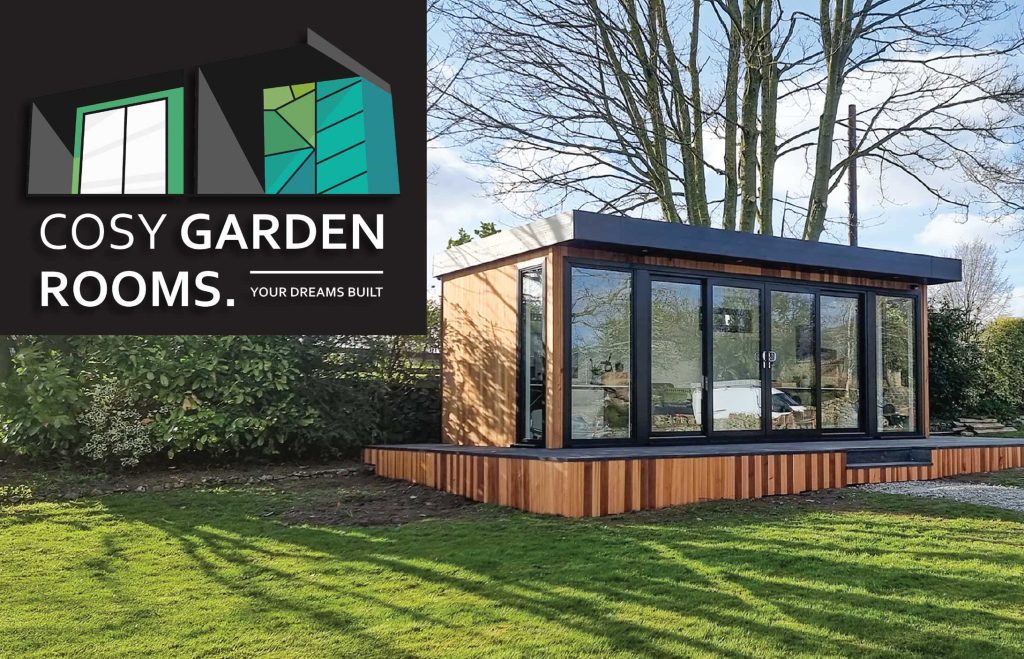
A noticeable trend has emerged in recent years – the rise in popularity of outdoor living. To some extent the pandemic taught us the importance and value of fresh air, nature and outdoor spaces. For the best part of two years our homes and gardens came under scrutiny like never before; our gardens and outdoor spaces became more important than they’d ever been before. People were and are still investing in creating comfortable, functional, and stylish outdoor spaces that serve as extensions of their homes. Whether it’s a cosy patio, decking and fire pit or a sophisticated garden room, the appeal of outdoor living is undeniable. People have used garden rooms to create bars, games rooms, cinema rooms, offices, music studios and gyms. In 2024 what continues to drive this trend forward? Being closer to nature One of the fundamental drivers behind the surge in outdoor living is the desire for a closer connection to nature. Creating inviting outdoor spaces allows people to escape the confines of indoor living, breathe in fresh air, and immerse themselves in the sights and sounds. A room in the garden gives separation from the main house, the hustle and bustle offers peace and quiet and a space to concentrate away from distractions and still deliver the benefits of the outdoors. Working from home Working from home has become a new way of working for many; initially through necessity and secondly home and hybrid working is now very much commonplace. The increase in these remote work and flexible schedules is also playing a role in driving the outdoor living trend. With more individuals working from home and seeking versatile spaces that cater to both work and leisure activities, outdoor areas have become valuable extensions of the traditional home office. Setting up a comfortable outdoor workspace allows people to break away from the confines of a traditional office setting, boost productivity, and find inspiration in the natural surroundings. Increased property value A well-maintained outdoor space can make the world of difference in terms of curb appeal and property value – regardless of its size. Many homeowners are looking to create an extension of their indoor living space by adding features such as garden rooms, decking, hot tubs, outdoor kitchens and additional seating areas including pergolas and covered patios. These spaces not only provide extra room for working, exercising, entertaining friends and family but also increased property value. Increased living space Higher house prices and interest rates have slowed the housing market yet there remains a desire for extra living space and garden rooms and outdoor spaces are a lot cheaper and faster than a traditional extension whilst adding value to our properties. Anecdotal research suggests outdoor space is increasingly important for home owners. Because of this, more and more homeowners are seeking quality products that allow them to utilise their garden by helping to blur the boundaries between indoor and outdoor living. In conclusion, the rise in outdoor living and garden rooms can be attributed to a combination of factors, including a desire for a connection to nature, a focus on health and wellness, the changing work landscape, social trends, and advancements in design and technology. As more people seek to create welcoming and functional outdoor spaces that enrich their lives and provide opportunities for relaxation, recreation, and socialising, the trend of outdoor living is expected to continue its upward trajectory. For more information and some great deals on garden rooms visit www.cosygardenrooms.co.uk 00
The Historic Core of Derby

by Maxwell Craven People often quite reasonably assume that Derby’s Market Place was the original historic core of the borough, but appearances can be deceptive. When King Edward the Elder founded the city as a defended settlement c. 928, the actual core was the area between the Cathedral and old St. Alkmund’s (now part of the inner ring road) with a grid of streets off Queen Street. Derby’s Market Place did not come on stream until about 1100, a fact established by archaeology in advance of the Assembly Rooms being built. It was host to stall holders and ringed by houses with selling spaces in front. The other fact that is not at first apparent, is that there was a road running from a crossing of the Trent at Swarkestone north, through the future site of Derby, to the Derwent by Darley which was in use at least from the Iron Age. The use of the Trent crossing is confirmed by finds of Roman coins along the course of the present Swarkestone Bridge. It was along this road that St. Alkmund’s was founded some two centuries before the city and along it were established most of the medieval churches, except St. Werburgh’s. Iron Gate is part of this ancient former trackway, and if you were to assume that it got its name from hosting the shops of iron mongers, you would be right. In the mid-13th century a Darley Abbey charter calls it (in Latin) ‘the street that leads from St. Mary’s Gate to the Market Place’ but in 1318 it was (again in Latin) ‘the street of the (iron)smiths’ and indeed there are records of iron smiths with premises there in the borough’s charters. All the streets were then exceedingly narrow but, in 1866, the council began a very long-running campaign to widen them and Iron Gate (the suffix ‘gate’ is from the Norse gaeta, meaning ‘street’) was the first, when all the properties on the east side (some very ancient) were bought up, demolished and the much-reduced plots sold off to finance the whole thing. This is why the oldest buildings of Iron Gate line the west side and those opposite are mid-Victorian or later. Meanwhile, the Market Place, by the early 14th century, was home to the first Guildhall, which stood in the middle, of two storeys: a lock-up for miscreants on the ground floor and a meeting room above reached by an outside staircase, much like that which survives at Aldburgh, Suffolk. Around it, the old shops gave way to grander houses, like that built by Bess of Hardwick’s fourth husband, Lord Shrewsbury, later rebuilt in the 1660s as Newcastle House by her grandson, but disastrously demolished, unrecognised, in 1970 to make room for the current Assembly Rooms. Needless to say, Market Place was the focus of a market from the time of the 1154 Royal Charter until some tidy-minded councillors in 1933 erected a new market area on The Morledge, leaving the entire space bereft of purpose. Prior to that though, there had been numerous improvements. In Charles II’s reign a block of buildings was erected facing the west side (traditionally called Market Head) which housed the meat market, known as The Shambles. To this, Samuel Crompton, the banker, in 1708 added a handsome arcaded block backing on to The Shambles facing east called The Piazzas, with warehousing above and shops at ground level. Here people could browse display windows under cover but – strangely enough – it never took on, and from lack of use was eventually demolished, along with The Shambles in 1871-77, to make more room for stalls. In 1731 the old Guildhall was replaced by a fine Georgian building by Richard Jackson, a Staffordshire architect who was then building Mr. Crompton’s House at The Friary. The council wanted to build it on the south side, where the present Guildhall stands, but the property owners were asking too much. It was only in 1828 that this could happen, which meant the demise of the eighteenth century guildhall and the building of a new one which, as luck would have it, burnt down rather spectacularly on the night of Trafalgar Day 1841, to be rapidly replaced (using the original ground floor and south elevation) by the present building, by Henry Duesbury. The Market Place was also, from 1763, home to the combined county and borough Assembly Rooms, removed respectively from Full Street and the Moot Hall in Iron Gate. Lord Ferrers, assisted by Joseph Pickford, built a sumptuous building fitted out by Robert Adam in 1774. That survived as the hub of local social life until damaged by a fire in 1963. It could have easily been repaired – today Historic England would have insisted on it – but the councillors, with grandiose ideas, destroyed it to make way for the present (and terminally empty after yet more fire damage of nine years ago) Assembly Rooms designed by Sir Hugh Casson. At any time from the laying out of the Market Place, you would have set out for Ashbourne by descending Sadler Gate, thence along Bold Lane and Willow Row to Ford Street where one could have crossed Markeaton Brook to reach Nuns’ Green (now Friar Gate) to Ashbourne. In the 13th century it really was a haven for leatherworks; Lawrence the Saddler was recorded there then and Potts the saddlers still had a shop there until the 1980s. Iron Gate was originally the width of Sadler Gate, but the latter was never widened. Indeed, it was 1971 before pressure from then newly-formed Derby Civic Society persuaded the Council to ban motor cars and pedestrianise it. Interestingly, although most of the frontages are 18th or early 19th century – essentially Georgian in style – the buildings behind are mainly much older; Derby thrift preserves many a 16th or 17th century building in Sadler Gate. Only the little shop opposite the end of the 1871-built Strand Arcade, with No. 46 (dated 1675) and
Walk Derbyshire – A Walk Between Monyash & Flagg

If you were living in the Peak District countryside around a hundred years ago, the chances are that you would be following a dual working schedule. Part of your working day would be tending the needs of a dairy herd and maybe carrying out a little ploughing and growing feed crops for those valuable cattle. The other and entirely unrelated occupation could be spent underground, frequently working alone with nothing to help see what was in nearby rocks, other than by candle power. Tools would be a simple pick and shovel. The last independent Peak District lead miner was the late C.H. Millington who lived in Monyash. The name Monyash frequently leads to much argument with pros and cons on two sides. There are those who say the name means ‘Many ash trees’, but the more widely read side disagree, saying the name should be based on Maneas, a title that seems to have been popular as far back as early records indicate. Apparently Maneas means ‘wet lands’ in Saxon, a fitting title for a village built on an ancient clay bed 5million years old. This clay deposit has allowed five ponds to provide drinking water for cattle, (plus one now in-filled as a car park). All those currently in use, are to the south of the village green, with Jack Mere to the north used for parking cars. Monyash is built around a small clusters of cottages and a network of popular footpaths leading into Lathkill Dale form a linked network of field paths where lead miners would plod their weary way home after working underground after a day, still having to tend their cattle, or mow hay for their winter feed. Monyash was an important centre covering a section of the underground riches. The village even had its own Barmote court, an ancient system governing lead mining disputes and transfers of mine ownership. The village church is dedicated to St Leonard and was probably founded on the site of outdoor meetings around a simple wooden cross in the twelfth century. Adjacent to it is the village school and a stone preaching cross stands in the centre of the village green. The village has a small, but well-designed public hall that stands beside the Bakewell road on the east side of the village. The Golden Lion Inn closed in the early part of the 20th century, leaving the Bull’s Head to offer food and drink, together with a café in the converted blacksmith’s smithy next door making a popular venue for walkers, motorcyclists and non-powered cyclists. The pub has always been known as the Bull’s Head, apart from a brief interlude when the landlord decided to change its name to The Hobbit. The change caused such an outrage that it had to revert to its old and trusted Bull’s Head title. The plinth for the village cross is marked by many small holes left by the blacksmith when he tested newly sharpened stone drills. The walk turns for home at Flagg a couple of miles to the North West, unfortunately it no longer has a pub, it closed a few years ago due to lack of custom in this comparatively sparsely populated district. Not enjoying the same size of water deposit, it does have sufficient issuing from underground which provides a supply for each house in the linear village, but little or none beyond. This is a linear village with its own manorial hall, but no longer can it manage to run a pub. While there are abandoned lead mines scattered around nearby fields, the village only supports two or three dairy farms. Many of the remaining dwellings have been modernised, giving the village a look of prosperity. As mentioned earlier, many of the surrounding fields were criss-crossed by farmers-come lead miners on their way to delve far below the surface. These paths are used on this walk, together with a couple of quiet back roads in order to follow this little used circular walk out to Flagg and back to Monyash. It should be easy to follow and makes an ideal walk when the spring flowers are coming into full bloom. Only a little over five miles of gentle meadow walking, it has the choice of two places of refreshment at the end of the walk. USEFULINFORMATION: A five mile (8km) easy walk, using well-made stiles to cross stone walls. RECOMMENDED MAP:Ordnance Survey Outdoor Leisure Sheet 24; 1:25000 Scale. The White Peak Area PUBLIC TRANSPORT:Bakewell to Monyash bus services PARKING:Jack Mere off road parking beside the Flagg road, REFRESHMENTS:Bull’s Head The Old Smithy Café THE WALK THE WALK THE WALK 1. The walk starts at Jack Mere Car Park (free parking) at the Monyash end of the Taddington and Flagg road. Walk northwards, away from Monyash village, to a road junction and then turn right at a signpost for about 30yds (46m). Cross over the stile on the left near the road junction (signposted to Taddington). Cross a series of meadows, using gates or stiles where necessary, closing all gates unless asked to do otherwise. Viewpoint. Look back towards the village. The church steeple is the focal point, but narrow strip fields, fossilised in their medieval plan, are all around. 2. Go to the right of a short belt of trees. Continue to cross boundary walls by their stiles. Reaching stiles to the left, cross a boundary wall as indicated by yellow arrows. Walk on as far as a track junction with the road. Start to walk gently uphill. Strips of mature woodland in the Peak District have a dual purpose. Not only do they provide windbreaks on the exposed upland, but their main purpose was to keep cattle away from poisonous lead waste left by mining activity 3. Cross the road and walk down the cart track. Ignore a waymarked path marked by numbers eight, diverging to the right, and continue uphill along the lane. Notice the heather growing on either side of the lane.
Celebrity Interview – Billy Ivory

Imagine you’re writing a film and you’re asked who you would ideally like to play the two lead roles. That happened to Nottinghamshire-born screenwriter William Ivory on his last project and he had no hesitation: Michael Caine and Glenda Jackson. When approached both actors astonishingly said they wanted parts in The Great Escaper which was released last year. The film is based on the true story of 89-year-old British World War II Royal Navy veteran Bernard Jordan who “broke out” of his nursing home to attend the 70th anniversary D-Day commemorations in France in June 2014. William, also known as Billy, admits he was nervous about working with the two superstars: “It was a huge physical commitment to expect them to do it. We were all set to go and the producer rang me to say Michael’s back was bad and he couldn’t walk. Everything was off. “I was heartbroken. But then incredibly nearly a year later Michael rang up and said he’d had a back operation and was ready to go. He said ‘I want to make this film and I want to tell this story’. “By then Glenda had got other work but she said she could give us an eight-week window to film it. So we were back on, which was great.” It turned out to be the last time she would act on screen. She died last June. “Glenda saw the film and loved it,” says Billy. “It’s a heck of a thing to leave behind. She was the centre of the film which was terrific.” Working with such well-known names is nothing new for Billy. The first show he wrote for television, Common As Muck, a 1990s series about the lives of a crew of binmen, featured Edward Woodward, Tim Healey, Roy Hudd, June Whitfield and Paul Shane. His 2010 comedy drama film Made in Dagenham which dramatised a strike at the Ford car factory that called for equal pay for women starred Bob Hoskins, Miranda Richardson, Geraldine James and Rosamund Pike. And his 2013 TV film Burton And Taylor, based on acting duo Richard Burton and Elizabeth Taylor, boasted Helena Bonham Carter and Dominic West in the title roles. Billy reckons he found working with Michael Caine, “arguably our greatest film actor ever”, and Glenda Jackson an interesting process. “Michael was very funny because right from the start he said ‘it’s quite simple, Bill, I like to make them laugh or make them cry’. He’s extraordinary because he had some big speeches and he was going ‘nah, I don’t need all them words, I can do it with a look’. “You get a lot of younger actors saying ‘I’m a method actor, I’m doing this, I’m doing that.’ None of that with him – he just turned up, asked what lens was on the camera – he knew all the technical stuff – and then he’d just do it. He would inhabit the role so much that it became impossible to say to him ‘they wouldn’t do it like that, they wouldn’t say it like that’ because his reply would be ‘well, I just did’. Michael Caine described The Great Escaper as “the happiest picture I ever worked on”. He’s since announced he’s retired from films. Billy points out that Glenda Jackson was “incredible” but much more analytical. “On the first day she said to me the script says (her character) Rene is slumped on the sofa. I said she was nearly 90 and she wasn’t very well. Glenda said Rene was an ex-ballroom dancing champion and she wouldn’t slump. “She worked it out, she had her motivation and she delivered it beautifully. It was extraordinary. There are times when people do stuff and it’s just magical because you think you’ve rendered it in the most beautiful way or the most effective way and then they make it do a bit more.” William Ivory was born in 1964 in Southwell, Nottinghamshire to Bill, a journalist with the Nottingham Evening Post, and Edna. He always wanted to write and his plan was to get a university degree and become a lecturer so that he could write in his spare time. But he hated university, dropped out and became a dustman “which broke my mum’s heart”. But working on the bins around Nottinghamshire pit villages including Rainworth, Blidworth and Ollerton kept him fit. He told himself if he wanted to be taken seriously as a writer he had to send off examples of his work. Kenneth Alan Taylor had just taken over as artistic director at Nottingham Playhouse “and he was the first person to show me any encouragement. He said come in and we’ll talk about your work. “He said there was stuff he liked but it was nowhere near ready. I didn’t want to go back on the bins – winter was coming! I said ‘have you got any work here?’ He said not unless you can act. I said of course I can act, how hard can it be?” Billy got a part in a play called Me Mam Sez by Mansfield writer Barry Heath which was about kids growing up in the Nottinghamshire town during the war. “I got little bits of work,” says Billy. “I wasn’t the best actor but I wasn’t the worst. Then I got a job on Coronation Street and played a character called Eddie Ramsden for about a year. It was fantastic because I started earning proper money. “For the first time I saw a television script. They just looked to me as though they’d be really easy to write. I thought it would be quick as well.” Billy’s mother had recently died from motor neurone disease and he wanted to write a piece to celebrate her life. “I thought I’d write a telly play rather than a theatre play. I wrote Journey To Knock and one of the producers on Coronation Street said it was really good and I should send it to the BBC.”
The Lost Houses of Derbyshire – West Hallam Hall

No native West Hallam resident, of course, would acknowledge being resident of Ilkeston – they are fiercely independent folk – but the loss of the hall caused this unexpected expansion, and the man responsible was bullish Nottingham developer and bigwig, Alderman Sir Albert Ball (1863-1946), as with one of two other lost Derbyshire houses (not to mention Nottinghamshire ones!) The manorial estate at West Hallam came very early into the hands of the Cromwell family, later famous for giving us Lord Treasurer of England, Ralph, Lord Cromwell KG, who built Wingfield Manor in the 1440s. When he died in 1455 his daughter and heiress was long married to Sir Richard Stanhope KB of Rampton, Nottinghamshire, but her daughter Maude, who inherited the West Hallam element of Lord Cromwell’s estates from her mother, sold it in 1467 to Thomas Smith, otherwise known as Powtrell. The Powtrells were an ancient Nottinghamshire family, seated since the late 12th century at Thrumpton; a junior branch was at Atlow in Derbyshire in the 13th and 14th centuries, another at Prestwold, Leicestershire a little later. Richard Powtrell had been Receiver General of Edward III, but died without issue in 1399; his heiress Isabella, his brother’s daughter, had by 1420 been long married to Thomas Smith of Breaston, and their son, Thomas, is the man who inherited West Hallam in the right of his wife, and assumed the surname and arms of Powtrell in lieu of Smith. The Cromwells may have had a house there in the very early period – there is a moated site called The Mot, fed by the Stanley Brook, in nearby Fox Holes plantation where Ralph de Cromwell II is said to have established a residence – but seem not to have lived there after their rise to fame and power in the 14th century hence, when Thomas Smith (or Powtrell) decided to build a new house, it would have been an entirely new affair, arranged around a courtyard. In 1670 it was taxed on 20 hearths, which is quite a healthy number for a medieval house, so the house was probably a fairly grand affair of coal measures sandstone. Like a number of the grander houses in the county, West Hallam Hall also had a domestic chapel, served by a priest, probably the incumbent of the parish church, which stood immediately to the east of the house. This arrangement was only thrown into sharp contrast after 1536 when Henry VIII broke with Rome and declared himself Supreme Governor of the church in England. John Powtrell (died 1544) could not stomach this upheaval and remained staunchly Roman Catholic, becoming classified as a recusant and being fined for non-attendance at church on a regular basis, thus diminishing (as the Crown intended) the family’s financial resources – in the hope that to save their patrimony – Catholic gentlemen would conform. His son Sir Thomas continued this stance after Queen Mary’s death, although the younger son Nicholas, a lawyer, was content to conform and became ancestor of the Powtrells of Egmanton, Nottinghamshire and Chilwell. This persecution intensified after the arrest of Mary, Queen of Scots, Lord Shrewsbury being the chief instigator of various campaigns of suppression in Derbyshire, culminating in the execution of the Padley Martyrs and Richard Simpson at Derby in 1588. Despite this, the Powtrells seem to have managed to keep their heads down until 1680 when the Catholic priest George Busby was arrested at West Hallam Hall, where his predecessor had had a loyal following of 40 local people. He was tried before a grand jury empanelled with the cream of the local (Protestant) landed gentry, and executed in 1681 – this in the wake of the hysteria surrounding the conspiracy called the Popish Plot which came to a head at that very time. By this time, too, the Powtrells had lost the estate, for in 1666 when Henry Powtrell died, the house and lands passed to Sir Henry Hunloke of Wingerworth, brother of Mrs Powtrell (and of the wife of Henry’s brother, John), by deed of gift which allowed the Powtrell family to continue to live in the house, which they did until the death of John’s younger nephew, William, in 1687. This arrangement was almost certainly because the recusancy penalties had finally taken their toll on the family fortunes. The Hunlokes, also recusants, but, with much coal under their estate just south of Chesterfield, were bullet-proofed against the depredations of recusancy fines, used West Hallam Hall as a place for younger sons and widows to live, but by the mid-18th century it was lying empty, and they demolished it a few years after 1770 – except for the chapel which served a flourishing if select Catholic community in the area. Once the hall had been demolished, a two and a half storey brick farmhouse was built to replace it, yet with the chapel still attached. What did for it, the last surviving fragment of the old hall, was the Duke of Wellington’s Catholic Emancipation Act, passed in 1829. From thence the local Catholics could worship openly again for the first time in 300 years, and could travel to Chapels in Derby, Ilkeston and Nottingham to worship on Sundays and feast days. Hence, in around 1833, the old building was finally taken down. Its stained glass, some of which is claimed to have been rescued by the Powrtrells from the dismantling of the Abbey of Dale nearby, was installed in the parish church next door. The very ancient cruciform sandstone font had, much earlier, found its way to Holy Trinity, Mapperley, but in 1815 it was identified and recovered by Revd. Thomas Bloodworth, who gave it to Sir Robert Wilmot, Bt., of Chaddesden Hall who, in turn, presented it to Revd. William Hope, a Derby bigwig, who bequeathed it to the Museum at Derby. It was subsequently presented to St. Barnabas, Radbourne Street, Derby on its consecration in 1885 where it remains. Meanwhile,
Dining In Derbyshire – MEZZO, Derby

To the south east of Derby, sandwiched between the River Derwent and the old A6 London Road is a vast area of former industrial land that had been part of the larger railway yards. An ambitious project by Derby City Council has transformed the once derelict area in to a thriving business park. The site now hosts offices, from family run to multi-national retail outlets, glitzy car showrooms, Pride Park Stadium – the home of Derby County FC, a nature reserve and the eye catching Derby Arena. Plus many eateries. One of these restaurants, tucked away on a quiet road in the shadow of the Arena, is Mezzo; our destination for a midweek lunch. Susan and myself were looking forward to lunch with the promise of something a little bit different. It was our first visit to Mezzo and although I’d read and seen online how the food was presented we were still a little unsure. We needn’t have worried. First timers, like ourselves, are nothing new and the helpful staff explained the simple lunchtime procedure. Mezzo’s lunchtime service is a pick ’n’ mix buffet. In place of plates the restaurant uses bowls that can be disposed of in the recycling bin. There are four sizes: from extra small to large. The emphasis is on healthy eating. Everything on the menu is cooked fresh daily and from scratch, using quality natural ingredients. Nothing is bought in pre-made or processed. I picked up a medium bowl and selected the chicken breast. I passed the hot selections and went to the 20 dishes on offer at the cold buffet. With every intention of keeping my bowl looking beautiful I added a large scoop of potato salad and then two scoops of the vibrant green mixed salad; a mixture of peas, broad beans, rocket, mange tout and broccoli. A scoop of red cabbage winter coleslaw filled any gaps I had left. I had avoided the delicious looking dishes of chickpeas and the one of couscous but I found room for a few little extras: pickled gherkins, sliced tomato and sliced red onion. All the dishes are labeled on the glazed guard above the buffet bar. From a selection of dressings including mayo, yoghurt and mint, balsamic plus a honey and mustard, I chose the classic French. Every flavour and texture element of the green salad wasn’t lost; from the crunch of the mange tout to the peppery hit from the rocket. Susan picked up a small bowl and selected the salmon, a generous, plump fillet, and made her selection from the hot trays. She chose the baby new potatoes; unpeeled they were full of flavour. Teriyaki noodles, couscous and wild rice were also available. The latter would have been perfect with the curry that is one of the lunch dishes. Susan topped her dish up with a scoop of mixed vegetables: cauliflower, leeks, peas, carrots, fine beans and cavolo nero. And topped it off with dressing of yoghurt and mint. The combination was traditional, generous and packed with flavour. All of the proteins are cooked naturally; nothing added. My generous portion of chicken breast was steamed. It was moist and full of flavour. Susan’s salmon had been oven baked on a pan fried setting. The fish was flavourful and everything you’d expect: the flesh fell apart in pale pink flakes and a perfect crispy, crunchy skin. Also available are roasted falafel, and griddled halloumi. At a table close to us sat a group of five women wearing fleeces emblazoned with Great Britain Cycling Team. I asked how they were enjoying the Arena and lunch at Mezzo. They all agreed that the food was tasty and, very important to them, healthy. Although there are no desserts, for those of us with a sweet tooth there’s a selection of homemade sweet treats. The generous lunch portions had filled us but we couldn’t leave without any of the tempting chocolate goodies. A large piece of rocky road with shortbread (or is it tiffin?) scattered over with tiny marshmallows and an equally large piece of millionaire’s shortbread where acquired for later. In the evening the buffet style service is replaced with bowls assembled to order. The same tasty, fresh ingredients are put together in the restaurant’s kitchen and look far more elegant than my chicken salad stack! Mezzo was started in 2012 by Skevy and her partner, David. Skevy trained at Richard Corrigan’s Michelin starred restaurant in London and has spent her working career in the hospitality industry. Their philosophy at Mezzo is ‘eat well, love life’ and this is reflected in great tasting food. The restaurant is licensed and offers a range of drinks from flavoured water to beers and wine. Mezzo’s location on Victoria Way is ideal; easy to get to, yet away from the busy through roads and a stones throw from the Derby Arena. There’s allocated parking outside the restaurant. Alternatively, at the rear of the restaurant is the Arena with it’s huge car park. By arrangement you can park there free for 3 hours. Just enter your vehicle registration details on Mezzo’s tablet in the restaurant. The restaurant’s contemporary decor leans towards the industrial with exposed brickwork, large exaggerated filament light bulbs and comfortable seating reminiscent of a vintage American diner. And large windows flood the interior with natural day light. The restaurant is one of a number of small businesses in a row of new retail units. The ‘new build’ allows for easy wheelchair access. At the front of the premises there’s an extensive area dedicated to outdoor seating. The winter months may not be ideal for al fresco dining but the sturdy, clean benches are under a transparent canopy and catch the sun; taking advantage of their south westerly aspect. While we sat and enjoyed our lunch I noticed that there was a brisk takeaway service. For the carry-out the bowls are supplied with a lid and wooden cutlery. Also, you can order online for a local home or
Product Test – Odile Lecoin

This exclusive skincare line is carefully curated to provide maximum results, with minimum effort. The luxurious products contain unique natural ingredients, all of the highest quality, to rejuvenate, nourish and smooth even the most delicate skin. OR, j’illumine The Divine Cleansing Milk 200ml £35 For clean, soft, supple skin look no further than the OR, j’illumine. This creamy cleansing milk gently eliminates impurities and make-up from deep inside the pores, whilst respecting the skin’s hydrolipidic film. Rich in fatty acids, it leaves the skin exceptionally soft and soothes the most delicate skin, as well as encouraging cell renewal to stimulate skin repair leaving the complexion luminous and radiant. OR, éclatant Purify and Glow Cleansing Balm £45 Deeply cleanse your skin whilst maintaining its vital barrier with the luxurious OR, éclatant, Purify and Glow Cleansing Balm. The powerfully effective 2-in-1 cleansing balm transforms into a beautiful milky texture as you wash away impurities and all traces of the day to reveal a silky soft and glowing complexion. The luxurious balm cleanser is suitable for any skin type and is especially soothing for those with dry skin thanks to the naturally hydrating ingredients sweet almond oil and shea butter. OR, je veux The Age Defying Cream £140 The age defying cream, OR, je veux is a global anti-ageing cream formulated to treat all signs of ageing. A unique combination of ingredients work together to provide antioxidant and antipollution protection and rejuvenate skin for a radiant and more youthful looking complexion. The super-ingredient, Abyssine 657, discovered in the harsh environment 8,000 feet down on the ocean floor effectively protects and stimulates the skin’s natural defences whilst soothing and nourishing even the most delicate of skins. Apply OR, je veux in upward strokes twice a day to a clean face, neck and décolleté. After 28 days of application wrinkles appear less visible, and the skin looks younger, firmer, softer and rejuvenated. For more information and to buy online visit www.odile.co.uk TRIED & TESTED :: TRIED & TESTED :: TRIED & TESTED Age Defying Cream I’ve used this facial moisture cream twice a day for nearly a month with excellent results. My skin feels smooth and well nourished, testament to all the natural ingredients. Excellent JP. Divine Cleansing Milk This is a really gentle cleanser and great at removing makeup, a little goes a long way! It leaves your skin feeling fresh without drying out. Ideal for delicate skin. CB Cleansing Balm I love the packaging on this product. It applies well and when you add a little water you can make this into a milky texture which glides on really easily. Leaves skin feeling very clean and smooth. VP 00