A look at Derbyshire’s Melbourne
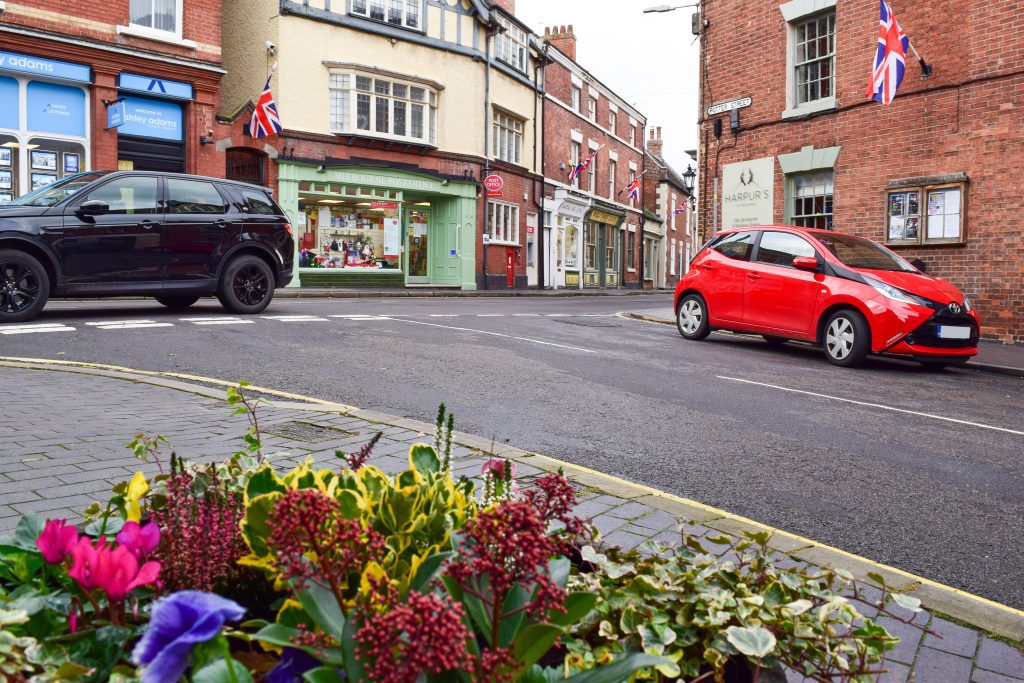
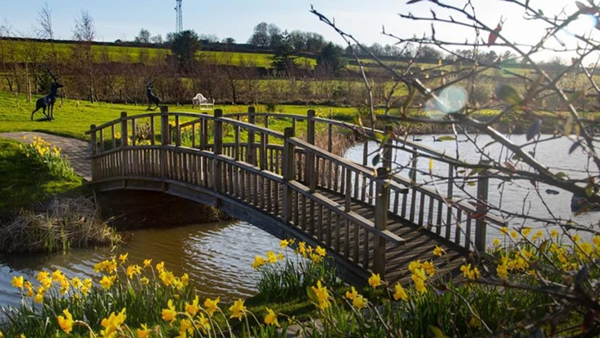
by Brian Spencer Sited comfortably above Trent Valley’s flood plain, and away from busy through roads, Melbourne has grown from the original settlement around the ancient market cross. Georgian town houses and small independent shops and cosy pubs, together with an attractive manor house record the oldest part of Melbourne, allowing modern development to fill spaces beyond the town centre. Australian visitors to Derbyshire are often disappointed when they learn that the illustrious city is not named after an attractive south Derbyshire town, but in honour of Queen Victoria’s first Prime Minister, Lord Melbourne. We went along there recently to learn a little more about its history. Entering the township from the north by way of the sinuous medieval causeway of Swarkstone Bridge, it is soon obvious that Melbourne has become a popular commuter town. Convenient to both Derby and Burton and beyond, it is home for many of those who work either in the air, or on the ground at East Midlands Airport; others are engineers based at Toyota or the highly technical sections of Rolls Royce or, maybe those who travel westwards every morning as part of the massive brewing complex that developed around the special kind of water pumped from deep beneath Burton. The old part of Melbourne town still fits snuggly around its hall and Norman church. With the open space and roofed market stand at the top of the street beyond the hall, the rest of the town centre is mostly late Georgian. Above the frontages of small independent butchers, bakers, florists, tea shops and the odd pub or two, it is easy to trace the elegant lines of what were once the homes of Georgian merchants. As befits a town where tradition still holds sway, Melbourne Hall at the bottom of Church Street dates from Tudor times, but was refashioned around three centuries ago. Most of the work was carried out by Francis Smith of Warwick who added graceful new rooms and with his son, William, completing the work in 1744. The work, it must be added, was a little unusual, for the house has two frontages, one overlooking the garden and the other, more public front, overlooking the large pond, and therefore open to the full gaze of passing strollers. Unusual though the design may be, nevertheless the Hall is attractive, both inside as well as out. Outside and adorned with lead statues, fountains and an ornate wrought-iron summerhouse, dubbed ‘The Birdcage’, the walled garden was laid out by Thomas Coke, who was born at the Hall and is buried in the chancel of the nearby parish church. He was Chamberlain to Queen Anne and it was she who gave him the lovely ornament that stands near one of the urns. It was made by the Dutch craftsman, Jan van Nost, and has carvings represent the four seasons. On the stone pedestal is a lead vase supported by four monkeys crowned by a bowl of fruit and flowers; 24 children play around the edge of the vase. Today, Melbourne Hall is the home of Lord and Lady Ralph Kerr, who open the gardens Wednesdays, Saturdays, Sundays and Bank Holidays from April to September between 1:30 and 5:30pm. The House is open every day in August (except the first three Mondays), from 2:00 until 4:30pm. Pre-booked parties by arrangement with the Administrator. Telephone 01332 862502. Located next to Melbourne Hall in the beautiful Georgian market town of Melbourne, you will find a courtyard teeming with local crafters and craft shops. Whether you have a taste for fine French wines, an Italian stockist, ageless antiques and collectables and the Brew House, you are sure to be able to while away a morning browsing the shops and talking to the local people. The Courtyard is just a couple of minutes walk from the town centre, but before you leave to explore the rest of the town, refresh yourself with a coffee and cake, a savoury snack or hearty meal in Melbourne Hall Tea Rooms – a tasty treat. At the far end of the yard, the Hall’s old kitchen block is now a cosy tea room, a far cry from the time when dishes had to be kept warm on their way to the comfort of the family dining room. Beyond the Hall and its ornate gates (private), the parish church is one of the finest and most complete Norman churches in England. Built in the shape of a cross and with a central tower; the two small unfinished western towers have a fine doorway between them. One row of Norman pillars supporting the nave roof is carefully copied by a second row erected in the 13th century. It is a few feet beyond the originals in order to widen the nave. Unlike many old churches, subsequent builders have added to the original without detracting from the original Norman style; even the Victorians in their zeal for ‘improving’ churches managed to carry out work without altering the designs of the original mason trained architects. Overlooked by the South Front of Melbourne Hall, the pool is said to be a flooded quarry which provided stone for the church and, it is said, for Melbourne Castle to the north of the town centre. How true this may be is open to conjecture, because so little remains of a fortification once governed by Sir Ralph Shirley, who fought at Agincourt. By the time of Charles I, the castle had fallen into ruin, and now its only remains are a fragment of a once massive wall. When Australian visitors arrive they must usually be taught how we pronounce the name of the town. While we place emphasis on the second part of the name, Mel-bourne, their version while still spelled the same way, is pronounced Mel-burn. What became one of the chief cities in the Commonwealth was named after Queen Victoria’s first Prime Minister. Prior to being ennobled, he was plain William Lamb MP and he took his title