Tried & Tested with Weleda

All Purpose Balm 25g £7.95 The tiny tin with big benefits! This neat little pot contains a soothing balm with a multitude of uses – to intensively nourish or protect any dry patches, chapped skin or dry lips. Ideal to pack in a changing bag when out and about. Made with nourishing organic sunflower and avocado oils, luxurious cocoa seed butter, protective candelilla and carnauba waxes, infused with skin-caring calendula extract. Suitable for redness, chafing or dryness – from dribble rash to sore noses. Try it on the upper lip to soothe skin irritated by the constant nose blowing of seasonal sniffles. Or apply a little balm around the rim of each nostril as a barrier to help trap dust, pollen or other allergens. COMFORT Aroma Shower 200ml £8.25 Ease into the sublimely comforting spicy scent of winter holidays with our limited edition Comfort Aroma Shower. The natural fragrance is a mix of pure essential oils and plant extracts – with mellow vanilla, refreshing lemon and warm spicy undertones of star anise, conjuring up memories of cosy winter holidays and leaving mind and body feeling pampered and relaxed. It’s like a hug in a tube. Its formulation, which has been dermatologically-tested for suitability on sensitive skin, contains organic sunflower seed oil and gentle plant-based cleansers that leave skin feeling nourished and soft. The creamy formulation is NATRUE-certified natural and biodegradable* – as eco-friendly as it is skin-friendly. (*as defined by OECD) Sensitive Body Lotion 200ml £12.95 This calming and soothing lotion contains organic coconut and jojoba oils to provide a richer, thicker lotion that protects and comforts reactive and easily irritated skin. The fast-absorbing lotion was developed with dermatologists to deliver long-lasting moisturisation, and bears the ECARF allergy-friendly quality seal. Its fragrance-free formulation contains no essential oils, and just leaves the subtle scent of coconut oil on the skin. The lotion is NATRUE certified natural, with 76% organic content. PRODUCT TEST :: PRODUCT TEST :: PRODUCT TEST All Purpose Balm This all-purpose balm is extremely gentle and is even recommended by midwives to be used on baby’s skin. I chose to use it as a lip balm, with no fragrance and not greasy it was lovely and smooth and long lasting. The little tin also makes it easy to carry with you. CB Comfort Aroma Shower In winter I find a shower comforting and relaxing, and the natural fragrance of this product, enhanced by the warm water did both. No artificially strong perfumes but just a gentle, creamy body wash. Weleda products also give me confidence as I know they use only pure oils and plant extracts. VP Sensitive Body Lotion At first, I found this took a little while to be absorbed but on reflection I think this is due to the rich oils and organic beeswax it contains. The results however were really excellent and long lasting, making my skin feel smooth even the following day. JP 00
Walk Derbyshire – In the footsteps of Florence Nightingale – The Lady with the Lamp

Following her sterling work amongst wounded soldiers in the Crimea, Florence Nightingale returned to England. After spending a few days in London, she boarded the London to Manchester train at St Pancras Station. Leaving it unannounced at the tiny halt serving Whatstandwell, she set off to walk quietly along the hillside road, climbing steadily to Holloway and Lea Hurst, summer home of the wealthy Nightingale family. The only people she met along the climb would have been local quarrymen and one or two farmers, whose polite greeting she acknowledged with a friendly smile. This winter warmer walk follows her hillside route as far as Holloway, before dropping back into the valley and returning along the canal, which would have been far busier in her day, but with more wildlife than today’s. Florence was a member of the Nightingale family, owners of a successful mill and hat factory at Lea Mills, as well as having profitably run lead mining and smelting interests. Her immediate family inherited Lea Hurst, but her mother was unhappy living there so far from London society. Living on a cold hillside was not for her, and in any case, the house was too small, having only 15 bedrooms! As a compromise, Florence’s father bought a more suitable property at Embley Park in Hampshire, but still using Lea Hurst purely as a summer residence. Florence was named after the Italian city where her parents were living at the time, likewise her elder sister Parthenope was named after the Greek settlement in Naples. It was during her visits to Lea Hurst that Florence’s commitments to nursing began to take shape. At first she spent her time ministering to the local sick and poor, along with people living in and around Holloway. This hardly met with the standards of her socially minded mother, but eventually a compromise was reached whereby Florence was allowed to nurse her grandmother in her final years, and following the latter’s death, she looked after her old nurse until she also died. Unfortunately this didn’t satisfy her mother’s idea of the proper way for a gentle young woman to act, but Florence, realising where her vocation lay persuaded her mother to support her scheme, which was to convert the inherited family property of Cromford Bridge House into a nursing home. Realising that it would be almost impossible to find a source for training nurses in England, Florence set about acquiring everything that had been written on the subject, before visiting a German nursing institute in Kaiserwerth. At the end of this hard fought struggle, and despite continuing family opposition, she was appointed to manage The Institution for the Care of Sick Gentlewomen in Distressed Circumstances in London. In 1854 and with little or no logistical planning on the British side, a war broke out in the Crimea. Such was the lack of support at all levels that little or nothing was known at home about conditions on the Crimean battlefield until The Times reporter William Howard Russell sent regular dispatches to London, using the then newly invented electrical telegraph network across Europe. Horrified by the almost daily reports coming out of Crimea practically as soon as they happened, especially his reports about conditions of the wounded, the Government were forced to act with consummate speed. The Secretary for War was prompted to write to Florence, inviting her to lead a small party of nurses to Scutari in neighbouring Turkey – in fact she had already been planning a similar, but privately organised team. In less than a week she left London accompanied by 3 volunteer nurses, arriving in Scutari where she soon had to face the enormity of tasks facing her team. Conditions were so appalling that they had to cope with a death rate of 75% from cholera alone. Such was her strength of will that Florence Nightingale was able to cope with the horrors of wounded soldiers struggling to survive under the terrible conditions surrounding them. Walking through the wards late at night, despite being a strict disciplinarian she managed to offer comfort to all of the sick and wounded, becoming a ministering angel with a gentle touch. Probably the first forces sweetheart, she was known as The Lady of the Lamp, and bed-bound soldiers kissed her shadow as it passed them. Returning to England a little less than two years later, she found herself in the midst of being treated as a national icon, something she hated and made every endeavour to shun publicity, especially when summoned to Balmoral by Queen Victoria. After a short one-night stay in London, she caught the train to Whatstandwell and the home comforts of Lea Hurst. Back home once more, almost immediately she returned to her ‘good works’, helping those in need as well as setting up reading rooms in Holloway and Whatstandwell, along with providing books for pupils at Lea Primary School, she also paid for the services of a doctor to attend to the needs of the poorer inhabitants of the district. Florence set up a penny bank, encouraging the local children to become thrifty. Following her death in 1910, there was a small legacy in her will for the school’s headmaster. From her nursing training, she was able to care for her grandmother and her mother during their final years. Throughout the last years of the nineteenth century typhoid fever became rife and an outbreak overtook Holloway. During the epidemic she arranged for improvements to be made to the water supply and foul water drainage. Florence Nightingale spent the last thirty years of her life in London until her death in 1910. USEFUL INFORMATION: An easy 3½mile 3.5 (5.6km) walk mainly along byways and the canal towpath. With one steady climb along the byroad from Whatstandwell to Holloway. RECOMMENDED MAP: 1:25000 scale Ordnance Survey Outdoor Leisure, White Peak Area. Sheet OL24 PARKING: Canal-side (free) at Whatstandwell, or station car park (pay & display). PUBLIC TRANSPORT: TP from Derby to Whatstandwell railway station. REFRESHMENTS: Family
Celebrity Interview – George Telfer

At the age of 61 many people may be starting to think about retirement. But not Derbyshire actor George Telfer. He’s working on one of the most exciting productions that’s been seen in the West End for many years and regards it as a “huge opportunityâ€. George is understudying four roles in the new version of Harper Lee’s To Kill A Mockingbird. It’s been written by Aaron Sorkin, one of the hottest properties in the entertainment business who penned the television series The West Wing as well as screenplays for the films The Social Network and A Few Good Men. George will go on stage as Mr Cunningham and Boo Radley when the actor playing those roles is away in the middle of January. “They’re rather small parts but they’ve both got really good moments in the play.†He’s also understudying Dr Reynolds and the best part of all, Judge Taylor. “That’s a brilliant part,†says George. “I just need the actor playing him to go on holiday!†He’s excited about appearing in To Kill A Mockingbird because “it’s major, top-tier British theatre. It’s the equivalent of Broadway, top-of-the-range stuff.†He’s contracted to appear until 20th May in the show which features Matthew Modine in the role as Atticus Finch. Modine is known for appearing in Stanley Kubrick’s film Full Metal Jacket as well as playing the villainous Dr Martin Brenner in the Netflix sci-fi horror drama series Stranger Things. “It’s a fantastic production,†says George of To Kill A Mockingbird. “It’s a really good credit to put on my CV.†George has come a long way since he decided to go into acting after realising he wouldn’t follow in his parents’ footsteps by becoming a doctor. “I wanted to be a doctor from when I was three or four but I realised the academic requirements for medical school weren’t going to happen. Science and maths weren’t for me at all.†“I did a few plays at school and they seemed to go quite well, so I thought I’d have a go at that.†George who is from Newcastle had to try for three years before getting into drama school, finally being accepted by the Royal Scottish Academy in Glasgow. After graduating, George began to pick up work and his life changed 35 years ago when he was cast as Jack Worthing in Oscar Wilde’s The Importance Of Being Earnest. Playing Cecely Cardew was Susie Hawthorne. They have been together ever since. For about five years they lived in London but were unable to buy a house in the capital because it was too expensive. They’d already started working for legendary producer Colin McIntyre who had a base in Chesterfield and ran weekly rep sessions all over the country. So George and Susie moved to Derbyshire. “It’s right slap bang in the middle of the country and great for touring. “We did so much for Colin. We did 12 or more years for him doing different plays every week. It was really good training. “There was a period when snooty casting directors would say ‘weekly rep is appalling’ but it’s come back round now and people like Imelda Staunton and Derek Jacobi are saying what brilliant training weekly rep was.†Over the years George has performed a huge number of stage roles. He fondly recalls working for director Pete Meakin and Derby LIVE on two Shakespeare productions, Much Ado About Nothing at the Guildhall in 2009 and The Merchant Of Venice at Derby Theatre in 2011. “I love Shakespeare,†says George. “I’m re-reading Hamlet at the moment because something might happen this year which isn’t Hamlet itself but it’s about Hamlet. “I do struggle to understand it. But if you read it carefully and think very much to the right and left of the words and then trace a word back to four lines before, you suddenly find links. They’re almost like road maps. Shakespeare was so clever. But you have to be patient.†Some non-theatrical people might regard standing on a stage on your own trying to enthral an audience for a couple of hours to be their worst nightmare. But not George who has done several solo shows including ones about Richard Burton, John Gielgud, Graham Chapman of Monty Python fame and Prince Philip, the Duke of Edinburgh. “Generally speaking, you don’t come off script and talk to the audience if something happens – it’s not really right†“But I realised the Duke of Edinburgh solo show was completely different: if you’re doing a solo show about an actor, they’ve become well-known because of stage and cinema where they generally wouldn’t ad lib. But the Duke of Edinburgh is famous for doing just that, making it up as he goes along. So that was just wonderful for me, doing Do You Still Throw Spears At Each Other?†In recent years George has taken parts in plays for Derbyshire-based Rumpus Theatre Company at the Pomegranate in Chesterfield and has appeared in the Classic Thriller Season at the Theatre Royal in Nottingham. Last summer George and Susie’s 26-year-old son Ed played Constable Jones in Agatha Christie’s Spider’s Web alongside his dad who was Inspector Lord in the classic thriller. He usually works backstage for Chesterfield council. George’s daughter Lucy, who is 27, aims to follow in her father’s footsteps. George has also worked with indefatigable Brian Blessed, the man with the unmistakable booming voice, who has directed George in five plays at the Berkshire theatre The Mill at Sonning. That started when George appeared alongside Blessed’s wife Hildegarde Neal in the play The Holly And The Ivy. She told Brian he had to sign George up for the role of the butler in the Agatha Christie thriller The Hollow in Berkshire and further productions followed. “Brian is just extraordinary. A one-off. He’s just as you imagine he would be in day-to-day life. He can literally talk while he breathes in. “We probably lose an hour a day in rehearsals
Lost Houses of Derbyshire – Stapenhill Hall
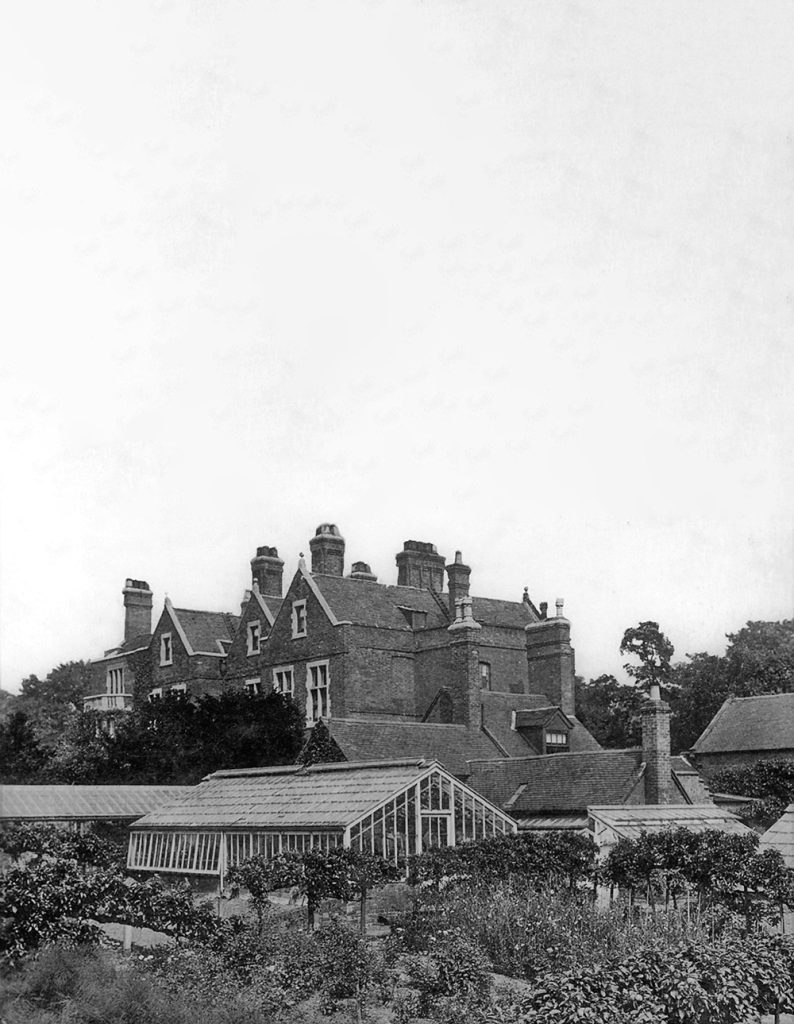
By Maxwell Craven Derbyshire lost more parishes to Staffordshire than it gained under the local government reforms of 1887 and thereafter: Clifton Campville, Croxall, Edingale, Winshill and Stapenhill among them. The desire of the Borough Burton-upon-Trent to increase rating revenue, for instance, added to a sort of municipal tidy mindedness, resulting in the transfer in 1894 of Stapenhill and Winshill to that Borough as well. There was some logic in this, as Stapenhill and Burton face each other across the Trent, the former on a bluff and the latter upon water-meadows prone, since the fourteenth century climate anomaly and the ‘little ice age’ which followed, to flooding. Even by 1894, the great and good of the Borough tended to build opulent villas there (mainly brewers or their well remunerated legal advisors), giving them splendid views west and south west over the river and town. Here, the brewers could keep an eye on their works from the comfort of their smoking room banquettes. Until 1538, Burton was dominated by its Abbey, founded by the Saxon grandee Wulfric Spot in 1004. Their land holdings grew to include part of Stapenhill, enhanced in 1192 by bequest on the death of its long-standing lord, Bertram de Verdon. According to the Staffordshire Victoria County History, there was a capital messuage at Stapenhill by the time the abbey was dissolved which, in 1546, was acquired with the rest of the abbey’s property, by William, 1st Lord Paget of Beaudesert, whose family were to dominate the history of Burton for the next four centuries, rising in eminence to become Marquesses of Anglesey. The Abbey’s leading tenants of the estate were the Abell family, originally recorded at Ticknall in the early 14th century, and who continued in occupation under the Pagets. John Abell was tenant at the dissolution, and his family must have built the first hall. His descendant, George Abell had his coat-of-arms confirmed in 1611, but his son Robert decided for reasons of religion (he was a Puritan) to migrate to America and settled in Massachusetts, where his family continued to flourish. The house as recorded on an early map and later in 1731 by Samuel and Nathaniel Buck, was a relatively simple L-plan brick house of two storeys and attics with an extension added to its rear. The only clue we have to the successors of the Abells as tenants is that Edward Hunt was taxed on nine hearths there in 1670, indicating that the house was of a pretty reasonable size. Nothing much can be discovered about Hunt, who was probably the person who married Dorothy Parker at Lichfield in 1659. It may be that he was steward to 6th Lord Paget, an eminent diplomat and consequently rarely in Staffordshire. However, thanks to Derbyshire historian William Woolley, we know that the house was renewed or replaced in the late 17th century by Hunt’s successor Charles Blount, who, he stated in 1713, ‘… had an estate here and not long since built a pretty good house on the banks of the Trent., which runs under it, who sold it to Paul Ballidon, Esq.’ Charles Blount was the younger son of Sir Henry Blount of Tittenhanger, descended from the Blounts of Blount’s Hall, a long-vanished house in Burton itself. The family, which also had Stenson House for a while, were a junior branch of the Medieval Blounts, Lords Mountjoy, of Barton Blount. The transaction implies, also, that the property had become detached from Lord Paget’s estate by that time, too. Ballidon married Sarah, daughter of Sir Thomas Gresley of Drakelow, Bt., at Stapenhill in 1715, suggesting he was already in residence by that date, but he died in 1729 without leaving any surviving issue, being followed by his widow in 1736, both being interred at Derby, where Paul’s grandfather (another Paul) had been a merchant and his great-grandfather, a mercer, had been Bailiff in 1574. The family took their name from Ballidon, in the White Peak, where one Peter de Ballidon was recorded as early as 1201. It has proved impossible to identify exactly what happened then. There was a cousin, Robert in London and others at Trusley, so one or other branch of the family probably inherited the estate, and perhaps sold it, but to whom is a mystery, although Paul’s will would no doubt make matters a little clearer. Stapenhill Hall next appears on record in 1833 when John Levett (of the family then living at Wychnor Hall) was the owner and also in residence, as a notice in the Derby Mercury assures those interested in the house and 15 acres of gardens, that he would be available to show them round. Clearly the Levetts had acquired the estate and John lived there while his father, Theophilus, was alive, moving to Wychnor once his Stapenhill residence was let. The new tenant was Thomas Allsopp of the brewing family, who later moved to The Mount at Newton Solney. Yet, ten years previously, the Levett family had sold the estate (but retained the house and gardens) to banker and brewer Joseph Clay in 1823. The Clays were directors of Bass, who had been building up a portfolio of property in Stapenhill from 1817 when Joseph had acquired the Stapenhill holdings of Thomas Lea, bankrupt, against a mortgage of £1,280 and, also through marriage with Sarah, only daughter of John Spender of Stapenhill. His eldest son Henry, soon afterwards bought the house as well into which he moved, although he much later settled grandly at now derelict Piercefield Park, on the edge of Chepstow racecourse. He thereupon rebuilt the house, subsequently re-named and described as ‘Stapenhill House…a handsome mansion’. The rebuilding, completed by 1857, was fairly drastic, providing the south (garden) front with three stone coped gables and fairly deep mullion and transom cross windows also in stone. To the west there was an extension of another wide bay, carried towards the rear by a further four bays, the central pair, like the central bay of
Win Tickets to Autosport International

00
A look at Derbyshire’s Melbourne
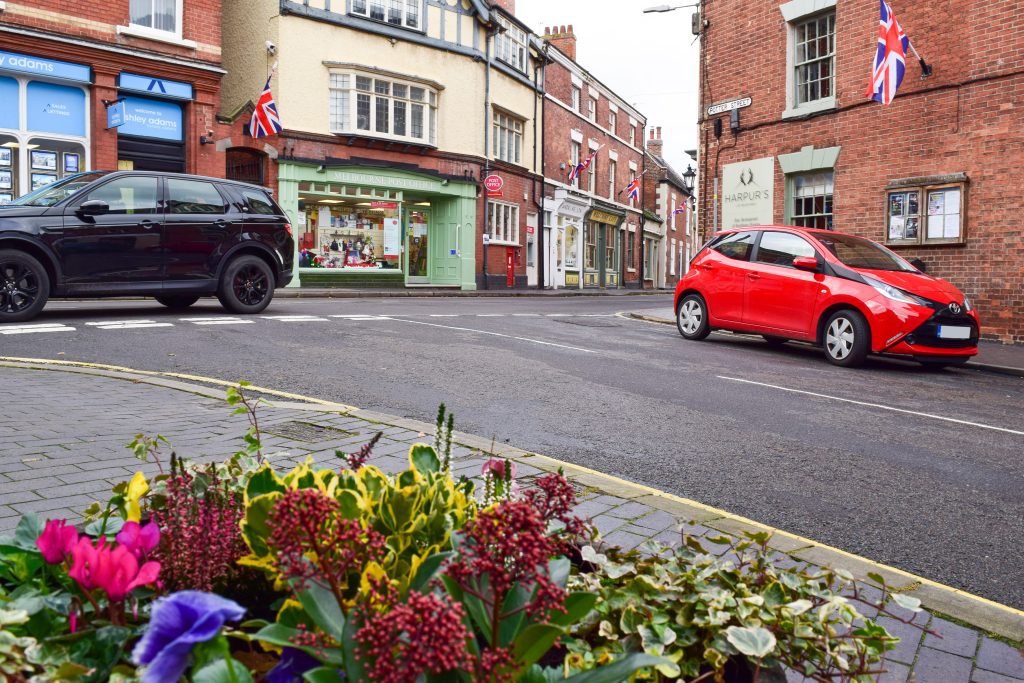
by Brian Spencer Sited comfortably above Trent Valley’s flood plain, and away from busy through roads, Melbourne has grown from the original settlement around the ancient market cross. Georgian town houses and small independent shops and cosy pubs, together with an attractive manor house record the oldest part of Melbourne, allowing modern development to fill spaces beyond the town centre. Australian visitors to Derbyshire are often disappointed when they learn that the illustrious city is not named after an attractive south Derbyshire town, but in honour of Queen Victoria’s first Prime Minister, Lord Melbourne. We went along there recently to learn a little more about its history. Entering the township from the north by way of the sinuous medieval causeway of Swarkstone Bridge, it is soon obvious that Melbourne has become a popular commuter town. Convenient to both Derby and Burton and beyond, it is home for many of those who work either in the air, or on the ground at East Midlands Airport; others are engineers based at Toyota or the highly technical sections of Rolls Royce or, maybe those who travel westwards every morning as part of the massive brewing complex that developed around the special kind of water pumped from deep beneath Burton. The old part of Melbourne town still fits snuggly around its hall and Norman church. With the open space and roofed market stand at the top of the street beyond the hall, the rest of the town centre is mostly late Georgian. Above the frontages of small independent butchers, bakers, florists, tea shops and the odd pub or two, it is easy to trace the elegant lines of what were once the homes of Georgian merchants. As befits a town where tradition still holds sway, Melbourne Hall at the bottom of Church Street dates from Tudor times, but was refashioned around three centuries ago. Most of the work was carried out by Francis Smith of Warwick who added graceful new rooms and with his son, William, completing the work in 1744. The work, it must be added, was a little unusual, for the house has two frontages, one overlooking the garden and the other, more public front, overlooking the large pond, and therefore open to the full gaze of passing strollers. Unusual though the design may be, nevertheless the Hall is attractive, both inside as well as out. Outside and adorned with lead statues, fountains and an ornate wrought-iron summerhouse, dubbed ‘The Birdcage’, the walled garden was laid out by Thomas Coke, who was born at the Hall and is buried in the chancel of the nearby parish church. He was Chamberlain to Queen Anne and it was she who gave him the lovely ornament that stands near one of the urns. It was made by the Dutch craftsman, Jan van Nost, and has carvings represent the four seasons. On the stone pedestal is a lead vase supported by four monkeys crowned by a bowl of fruit and flowers; 24 children play around the edge of the vase. Today, Melbourne Hall is the home of Lord and Lady Ralph Kerr, who open the gardens Wednesdays, Saturdays, Sundays and Bank Holidays from April to September between 1:30 and 5:30pm. The House is open every day in August (except the first three Mondays), from 2:00 until 4:30pm. Pre-booked parties by arrangement with the Administrator. Telephone 01332 862502. Located next to Melbourne Hall in the beautiful Georgian market town of Melbourne, you will find a courtyard teeming with local crafters and craft shops. Whether you have a taste for fine French wines, an Italian stockist, ageless antiques and collectables and the Brew House, you are sure to be able to while away a morning browsing the shops and talking to the local people. The Courtyard is just a couple of minutes walk from the town centre, but before you leave to explore the rest of the town, refresh yourself with a coffee and cake, a savoury snack or hearty meal in Melbourne Hall Tea Rooms – a tasty treat. At the far end of the yard, the Hall’s old kitchen block is now a cosy tea room, a far cry from the time when dishes had to be kept warm on their way to the comfort of the family dining room. Beyond the Hall and its ornate gates (private), the parish church is one of the finest and most complete Norman churches in England. Built in the shape of a cross and with a central tower; the two small unfinished western towers have a fine doorway between them. One row of Norman pillars supporting the nave roof is carefully copied by a second row erected in the 13th century. It is a few feet beyond the originals in order to widen the nave. Unlike many old churches, subsequent builders have added to the original without detracting from the original Norman style; even the Victorians in their zeal for ‘improving’ churches managed to carry out work without altering the designs of the original mason trained architects. Overlooked by the South Front of Melbourne Hall, the pool is said to be a flooded quarry which provided stone for the church and, it is said, for Melbourne Castle to the north of the town centre. How true this may be is open to conjecture, because so little remains of a fortification once governed by Sir Ralph Shirley, who fought at Agincourt. By the time of Charles I, the castle had fallen into ruin, and now its only remains are a fragment of a once massive wall. When Australian visitors arrive they must usually be taught how we pronounce the name of the town. While we place emphasis on the second part of the name, Mel-bourne, their version while still spelled the same way, is pronounced Mel-burn. What became one of the chief cities in the Commonwealth was named after Queen Victoria’s first Prime Minister. Prior to being ennobled, he was plain William Lamb MP and he took his title
DOWNLOAD THE IMAGES APP
00
Celebrity Interview – John Thomson

He’s known for playing one of the main characters in the ITV comedy drama Cold Feet and for being the voice of the Channel 5 show Bargain Loving Brits Under The Sun. Now John Thomson is perfecting his Derby accent to play Abanazar in Aladdin at Derby Arena. The jovial actor, comedian and narrator is delighted to be back in panto, as he told me from his home in Didsbury, Manchester. He explained who was responsible for getting him the part of Abanazar, how a Coronation Street regular is helping him to sound like a Derbyshire native, the debt he owes to Steve Coogan and one of the surprising ambitions he’d like to fulfill. You may have seen John in October making a guest appearance in the ITV crime drama Professor T which stars Ben Miller as Professor Jasper Tempest, a genius criminologist with OCD. John’s on-screen wife was played by Rita Simons, formerly Roxy Mitchell in EastEnders, who was wicked fairy Carabosse in Sleeping Beauty at the Arena last December. Rita spoke to the panto’s producers Little Wolf Entertainment about John’s availability and he was offered the part of Abanazar. “I sent Rita a whopping great big bouquet of flowers for brokering me a panto,†says John. “I’ve not worked for this company before but we shot a promo (at Pickford’s House in Derby) which was great fun. I’ve seen stills of previous pantos at the Arena and it looks really impressive.†It will be his second stint as Abanazar after playing the role at Manchester Opera House in 2016. He’s delighted that the billing for Aladdin in Derby describes Abanazar as a “devilishly handsome rogueâ€. “I’m in my early 50s so I can’t thank them enough for that. I like Aladdin as a panto – I think it works. Some don’t work too well at all. “I like it when a venue is full and the audience are roaring. That’s why I do it. I absolutely love it when the audience is up for it, there’s a real buzz in the auditorium and they’re getting everything.†John is also looking forward to working alongside Morgan Brind from Little Wolf who won best dame in the UK Pantomime Association Awards for his part as nurse Nancy Nightly in Sleeping Beauty. “I think we’ll have a hoot,†says John. He is getting tips on how to speak Derbyshire from his old friend Chris Gascoyne who was Peter Barlow in Coronation Street. “He’s from Mansfield. There’s a very fine line between Derby and Nottingham. I love doing accents and I try to perfect them. I want to know the subtle differences between Nottingham and Derby,†maintains John. John Patrick Thomson was born Patrick Francis McAleer in Lancashire on 2nd April 1969. His mother Mary McAleer gave him up for adoption when he was six weeks old. He was adopted by Andrew and Marita Thomson, a businessman and a bookseller from Didsbury. While at school he was described as “clearly having a talent for comedyâ€. When he went to Manchester Metropolitan University he met Steve Coogan who suggested John sent an audition tape to Spitting Image. The programme signed him up and he impersonated everyone from Brian Clough and Frank Bruno to Robin Day and the Queen Mother. “We got together and we worked together and we wrote together. We just hit it off,†says John of his relationship with Steve Coogan. The two then co-wrote Knowing Me, Knowing You … With Alan Partridge before they won the Perrier Comedy Award in 1992 for their act at the Edinburgh Fringe. Then came Cold Feet, with John playing Pete Gifford for six years and reprising the role when the series was brought back in 2016. “It had been absent for 13 years and people would stop me in the street and ask when it was coming back.†According to John, Cold Feet could return again. “The idea was to shoot a 90-minute special in Barcelona. We were all set to do that but then the pandemic put paid to it. I’d like to think a summer special or a Christmas special could happen because the demand’s there. The public still love the show and they love the characters. I was very fortunate after all that time to have been brought back and for it to be a success. I couldn’t be more grateful. “If it did come back I’m hoping the Giffords would have a lottery win. I had depression (as Pete), my wife got breast cancer and then her mum died. I don’t think our middle name’s Lucky. It’s about time our karma changed.†The pandemic also persuaded John that the time was right to convert a cubbyhole in his house into a studio so that he can record voiceovers for Bargain Loving Brits Under The Sun and the Channel 5 factual programme Police Interceptors which sometimes features the work of the Nottinghamshire force. He points out that voiceovers are his bread and butter: “Bargain Loving Brits started on a Sunday night and when it was repeated in the daytime the viewing figures were amazing. So they commissioned 40 more. I have to try to do four a week if I can.†John admits that acting is a very precarious profession which is why he diversifies as much as possible. As well as being a comedian, impressionist and voiceover artist, he’s also a drummer and a bit of a magician. He can also sing which led to his being cast as Wilbur Turnblad in the musical Hairspray last year. “Norman Pace (of the comedy double act Hale and Pace) was the normal Wilbur and he wanted Christmas off, so I stepped in for the run at Blackpool. “The problem was that because of the pandemic I learned a lot of the choreography on Zoom calls. One review said ‘John Thomson is brilliant but struggles with the dancing’. By the end of the run I was great but it’s hard to learn
Walk Derbyshire – Following the Magpie Sough

By Rambler ‘Sough’ is the lead miner’s term for the method of draining water from a mine. One of the most attractive roads through the Peak District, the one between Bakewell and the A515 Buxton/Ashbourne road takes some beating. Around a mile beyond the cut-off for Monyash, to the right two small chimneys indicate the presence of a major relic of local industrial heritage. The chimneys and ancillary buildings, plus an old stone cottage are all that is left of boom to bust underground activity in the search for lead. This is the site of Magpie Mine where fortunes were made by intense inter-companies rivalry that even lead to murder. While lead ore mining may have been active in small near-surface activity for hundreds of years, the earliest recorded evidence of miners beginning to explore ever-more deeply came in a report dating from 1740, the start of upwards of a dozen small lead mines that developed as time went by. Local and even itinerant Cornish miners, searched for the riches available in upwards of eight major veins running roughly east/west ever deeper beneath the site. It was also quite normal for abandoned mines to be re-opened by other companies, simply by asking permission from the local Barmote Court, the traditional means of controlling lead mining activities in the Peak. Due to the proximity of adjacent veins, two or more mines could be operating within only a few feet of rock between them. This was the case in 1833 when teams of Magpie miners from Maypit and Great Redsoil mines came into dispute over the right of Maypit miners to open a side passage, inevitably connecting to Redsoil. Appeals to the local Barmote seemed to be getting nowhere and arguments, sometimes verging on violence, broke out from time to time. All this came to a head when Magpie miners lit a fire in the connecting Maypit passage. Regrettably this led to a number of Redsoil miners being suffocated by the fumes. Twenty-four Magpie miners were accused of murder and taken for trial at Derby Assizes. Luckily for them their counsel was the wily William Brittlebank of Winster who argued that the Magpie/Maypit miners were carrying out a traditional method of breaking down the rock within the passage. Unfortunately, or so Brittlebank claimed, the wind direction changed, blowing smoke into Redsoil, rather than into the Maypit workings. With this evidence, the Jury acquitted the 24 Magpie/Maypit miners, but they left the court with the widows’ curses ringing in their ears; learning all too soon that their mine would never again make a profit. A boundary wall to the east (right hand) side of the field beyond the cottage and the prominent chimneys leads to the capped-off shaft into Redsoil and Maypit Mines. A few yards away there is the reproduction of a horse-drawn gin, a system operating the lifting of ore to the surface. The gin is just one of the many features to be seen when passing through the Magpie Mine site. Starting with the cottage, a combination of the mine agent or captain’s house and smithy, it sits within the shade of two chimneys, both part of steam engines that once drew ore to the surface and lowered men to their work. The chimneys give a clue of where their builders came from; the round one was built by Cornish miners trying their luck in the north, they built it in the style they were accustomed to. The square profiled chimney was made by Derbyshire Miners. Various small buildings dot the area around both engine houses. There is an ore store, or coe, not far from the square chimney. This was climbed recently by a courageous Duchess of Devonshire while it was being repointed. Apart from Britain’s only Grade II Listed corrugated iron hut near the round chimney, the final building of note while at the site, is another of Cornish design. This is where explosives were stored and the idea behind the stone hut, or powder house design is for the effect of any accidental explosion to travel upwards, not outwards. Passages within the Magpie complex were frequently flooded and in 1873 work began on digging a tunnel, or sough in order to drain the mine. Due to difficult conditions, mainly with very hard rock, and driving the shaft downwards for about 575 feet before it could make contact with the level of the River Wye; all this took until 1881 before it could carry water away from the workings, but the sough did have one extra advantage when small boats could carry ore to the surface, rather than being manhandled along difficult underground passages and then winched by horsepower into daylight. The sough, starting beneath the round chimney engine house follows a route flowing below the village of Sheldon. The walk as described below follows a surface route above the sough all the way to its confluence with the river. In 1973 the sough became blocked which members of the Peak District Historical Mines Association managed to clear. The story goes that when a huge body of withheld water was expected, an angler was spotted tranquilly fishing in the Wye, more or less opposite the sough. Despite being warned, the angler continued to fish, that is until the inevitable happened and a wall of water hurtled towards him. Fortunately he managed to escape in time and in any case, the water level very soon went down to normal. Traditional lead mining was carried on until as recently as the 1950s, or whenever prices became attractive, but that hasn’t happened for a long time now. USEFUL INFORMATION: A moderate walk covering 5 miles (8km) of field paths and woodland tracks. 575feet, (175.09metres) down along Deepdale and then uphill through Great Shaklow Woods. RECOMMENDED MAP: Ordnance Survey Outdoor Leisure Map Number 1, Sheet OL 24; the Peak District, White Peak Area. PARKING: Roadside near Sheldon, but please keep well away from field access gates. Alternately use the roadside car park
Lost Houses of Derbyshire – Eaton Dovedale Hall
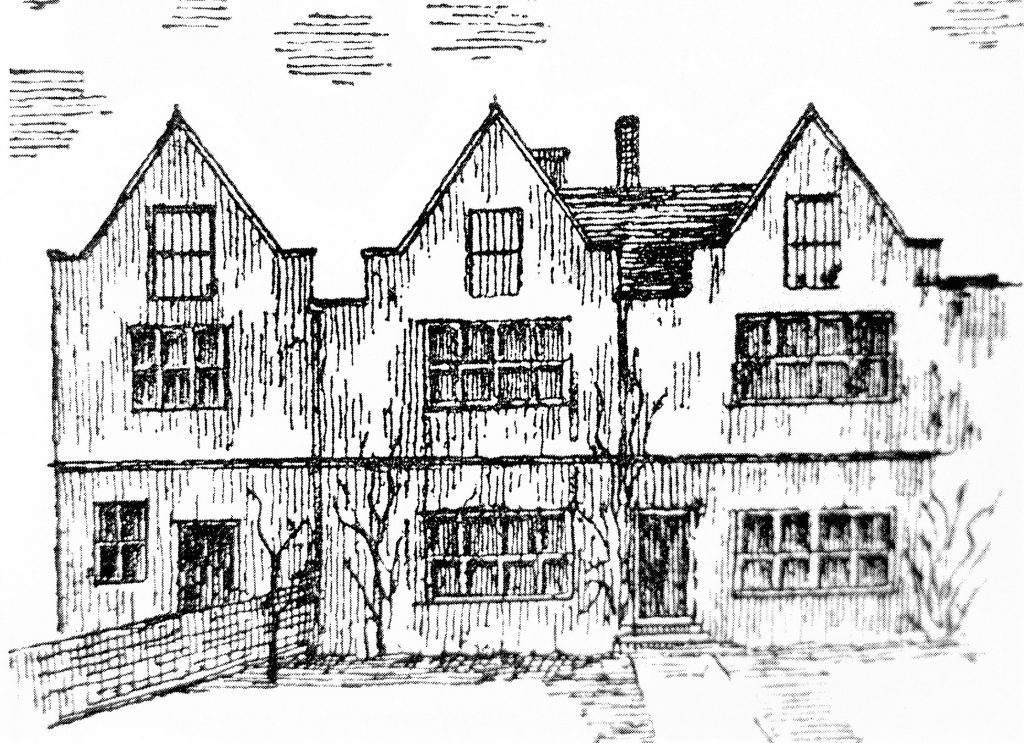
by Maxwell Craven Neither Eaton Dovedale, which sits adjacent to Sedsall, are exactly well known locales, even to keen followers of local history and topography, but they lie just north of the much better known village of Doveridge, in which parish they lie. About thirty years ago I visited to attend a clay shooting tournament, but a quick recce failed to discover any real traces of the old house, but confirmed the belief that Eaton was a deserted medieval village (DMV) as indeed is Sedsall to its north. Whilst Sedsall is only recorded from c. 1200 (the name means ‘Secq’s corner of land’) Eaton Dovedale is recorded in Domesday Book, wherein it was a portion of Doveridge held under Henry de Ferrers by one Alcher, displacing the Saxon Wulfric. Alcher is also known as the lord of Sudbury, and was the ancestor of a Shropshire family called FitzAer. Subsequent record of Eaton resurfaces when it was held in 1231 by the Norman, William de St. Pier(re), who was succeeded by his son Nicholas in 1251. Whether they had a house at Eaton is not clear, but it is possible. There were, however, two daughters and co-heiresses of Nicholas, and the estate was split between them, Sedsall going to the Marshall family of Upton whilst the Eaton part and the original St. Pier house went by marriage to the Cokesay family. They certainly did have a house at Eaton, and a small park by all accounts. In 1356, Sir Walter Cokesay was living there and his daughter and sole heiress eventually brought the estate to the Russel family. They had estates elsewhere, and it may be that the original house was, at this stage abandoned or cleared away. As it was undoubtedly of timber, the structure would have been re-used, as was then invariably the case. Sir John Russel died in 1556 and after an interval, the estate and lordship of the manor were bought by William Milward. He was already living in the locality, his father Robert having acquired land there in 1471. This Robert was fourth in descent from one Owen Milward, living in 1374, and one gets the impression that the family’s rise to the gentry was greatly helped by their having survived the Black Death (1347-1349 locally) when they doubtless bought up property being sold cheaply by the heirs of grander families decimated by the plague. The name Milward (mutated to Millard in their later US branch) means guardian of keeper of a mill, so they may have made their money in just such a manner, although we do not know where the family lived prior to buying land at Eaton-in-the-Dale as it was then sometimes called; circumstantial evidence suggests Staffordshire. The Milwards became very numerous and indeed successful, marring local heiresses: Palmer of West Broughton Hall, in Sudbury, Beresford of Alsop and Fleetwood of Calwich (Staffs.). Sir Thomas Milward (1575-1658) was a successful lawyer and served as Chief Justice of Chester 1638-1647, when the civil war cut his tenure short, for he was a staunch Royalist, in 1651 helping to rescue Charles II’s Garter regalia from falling into Commonwealth hands after the escape from the Battle of Worcester. Sir Thomas’s father William seems to have built the house – judging by a datestone of 1576 recorded as having been set above the door – probably at about the time he was born in 1575; perhaps his parents’ marriage was the spur. What we know of it from a drawing done by (or for) Joseph Tilley in the mid-19th century shows a typically Derbyshire manor house of three gabled bays, quite steep ones, with prominent kneelers, the house being of two storeys with attics. It was presumably of brick, had a string course between the main floors and eight-light mullioned and transomed windows on both main floors at the central bay and the right hand one, but the left bay boasted only a six light window above a rather inconsequential looking door. The engraving also suggests that this left bay was actually the end of a cross wing, perhaps added later, for no roof ridge appears between the left and central gables, which later seem to have acquired Georgian sashes. The first floor windows also appear deeper in the illustration, suggesting that the first floor included the loftier state rooms and that only family rooms inhabited the ground floor. That there were state rooms is reinforced by at least one visit by King Charles I, who left behind (or more likely gave Sir Thomas) a pair of embroidered doeskin gauntlets which have miraculously passed down amongst his descendants. In 1664, the family had to pay tax on no less than fifteen hearths, but what we see in Tilley’s woodcut suggests that the house had later been much reduced. What remained then much resembles contemporary Duffield Hall, which was only taxed on nine hearths. The suspicion is that it boasted a cross wing at either end of the façade, of which only part of one remained. Quite where the ceremonial entrance once was remains something of a mystery. That the house ended up being reduced so drastically was down to the implosion of the Milwards. Sir Thomas’s son Robert was equally successful as his father, despite being a second son, for the eldest William, was settled at the family’s estate at Chilcote, on the Staffordshire border. Robert was born in 1616, was called to the bar (being made a KC in 1668) and was appointed a Justice in the Chester circuit, like his father, in 1661 (probably as a reward for the family’s loyalty to the exiled Charles II during Cromwell’s ‘crowned republic’); he was also Recorder of Stafford and was elected MP for that borough in 1661, serving until his death in 1674. Unfortunately, his wife, Isabella, daughter and co-heiress of Sir John Zouche of Codnor Castle, died without having had children and Robert took up with another lady, unnamed, but called his wife in the