Taste Derbyshire – Bottle shops, tap rooms & micro-pubs

It was 2005 when Thornbridge Brewery, in Derbyshire, started producing one of the UK’s first craft ales. There are now 70 micro-breweries in the county and there’s been a huge rise in the number of outlets – bottle shops, tap rooms and micro-pubs – on a mission to bring these bespoke beers to the public. Taste Derbyshire’s Amanda Volley visited award-winning micro-pub and bottle shop Maison Du Biere in Ashbourne to find out why there is such a thirst for artisan ales. It has been the best part of two years since Matt Warren and his partner Jo Glover opened Maison Du Biere but the couple still savour the slack-jawed reaction of customers confronted by the 400-odd varieties of beers, ales and ciders. “We don’t give too much away as, from the front, the shop gives the illusion of being a little beer shop so the first thing they say is ‘wow’ followed by ‘oh my word’,†explains Jo (51), originally from Barnsley. “Then they notice we also have a bar area and ten cask beers on tap and they get a bit flummoxed by it all.†Her partner Matt (59), laughs; “I wish we had a pound for everyone who says they’ve walked into Willy Wonka’s factory.†“It’s either that or a sweet shop for adults.†The Ashbourne-based bottle shop and bar may contain a mind-boggling amount of beers (and gins) but the couple are confident they can match everyone, from serious ale buffs to timorous first-timers, with their perfect tipple. “We spend a lot of time talking to people about the beers and how and where they’re made,†says Matt who hails from Bristol. “Some people need a lot of help, others know more about beer than we do. It’s a relaxed place where everyone’s welcome and I think people love us for it.†There is a lot of love flowing in the direction of this cracking shop-cum-bar. In the first year, they were named ‘Pub of the Season’ 2018 by the Ashbourne & District sub branch of CAMRA with the couple praised for their ‘friendliness and enthusiasm’. In January, Maison Du Biere was runner-up in CAMRA’s Ashbourne’s Pub of the Year 2020, pipped only by the Barley Mow at Kirk Ireton; one of the area’s oldest pubs. “We’ve had an amazing reception. The minute we opened our doors in July 2018, it was just ‘kaboom’. The shop was packed and we smashed our weekly sales target on the first night,†says Matt. “People like the fact that we’re an independent retailer and that we stock beer from around 40 local breweries. Our customers enjoy taking a bit of the Peak District home.†Incredibly, considering all the praise flowing their way from industry experts, the couple had no experience of the speciality beer market before throwing themselves into Maison Du Biere. Matt and Jo both worked in sales for a national bookseller. “I knew a little about the hospitality industry as I’d had part-time jobs in pubs since my son Luke (now 26) was born,†explains Jo. “My brother, Nigel Mount, opened the original Maison Du Biere in Barnsley and he invited us to spend a day there. We loved it and, with his blessing, we decided to open our own branch.†Matt admits he also owes Nigel a debt of gratitude; “He took me along to a bar specialising in Belgian beer. I bought a round of four beers which came to £35 even though they were all just one third of a pint and mainly froth,†he laughs. “When the beer touched my lips – I got it. That beer blew everything else out of the water. It was beautiful and delicate. I’m now an evangelist on a mission to convert others to great beer.†Deciding they wanted sell beer was one thing, finding the location was another. The couple were living in Cheshire (they’ve since relocated to Clifton, near Ashbourne) but decided the area was too well-served with independent beer shops. “We knew Ashbourne pretty well from coming to walk here but we decided to drive down and have a proper look,†says Matt “I think we knew instantly it was the right spot as it had a lovely vibe. When this shop came up, Jo went on her own to have a look. She walked in and rang me to say ‘This is it.’ It had been an antique shop housed in a gorgeous 18th century mansion built for Lord Beresford. We didn’t have to do anything other than putting in fridges, shelving and second-hand finds like old trunks and church pews – our approach to furnishings has always been ‘no expense spent’.†Matt says local support has been overwhelming; “I like to think we’re helping to put Ashbourne on the map because it’s a beautiful town with amazing people,†“We lived in Cheshire for 16 years and could probably count the number of close friends on one hand. Now I could name at least 20 who I could call on for favours – day or night – and they’re more like family than friends. The same goes for our suppliers. The craft industry as a whole is very tight-knit. A lot of the beer producers are now our besties or ‘crafties’.†With this, Matt bounds over to the shelves to ‘introduce’ some of the beers. “On the one shelf we have world beers with most coming from the great beer producing nations like Belgium, Germany and Czechoslovakia. They are brewed to traditional recipes which haven’t changed in hundreds of years,†he says. “On the adjoining wall, we have craft beers. Typically made by young brewers who are trying to stamp their identity on a beer. This is where you’ll find people really innovating with flavour. For instance, there’s one tasting of marshmallow while another features chocolate, cinnamon, vanilla and chilli. One of our latest additions tastes of caramel brownie and peanut butter, it really is dessert in a can.â€
Walk Derbyshire – Miller’s Dale

DISTANCE: 5 miles (8km) of field and river path walking linked by a mile of walled farm track. Reasonably dry underfoot except during lengthy wet spells. RECOMMENDED MAP: Ordnance Survey1:25,000 scale Outdoor Leisure Series Sheet 24, White Peak area. PUBLIC TRANSPORT: TM Travel service 65 between Sheffield, Miller’s Dale and Buxton, hourly service, Monday to Sunday. G&J Holmes/Hulley’s Buxton/ Miller’s Dale service 66. Monday to Sunday. CAR PARKING: Station yard – pay and display. Toilets on station platform. REFRESHMENTS: Station waiting room on platform. This walk starts and finishes at the Monsal Trail car park on the site of the old Miller’s Dale Station. Considering the fact that it appears at first glance to be only serving a scattered rural community, what was the need for such a large station? The answer lies in the fact that it served two railways, the mainline from London St Pancras to Manchester and the Buxton branch line. Both lines were closed in 1968 following Doctor Beeching’s notorious report. Realising that the mainline passed through some of the finest dale-scenery in Derbyshire, Peak District National Park acquired the section of track between Bakewell and Wyedale, creating the popular Monsal Trail, an all weathers trail for walkers, cyclists and horse riders. A café was opened in what was once the station waiting room, which together with the adjacent car park, made it an ideal starting point for walks along the trail and on the network of surrounding footpaths. I must have inadvertently travelled on one of the last trains to call at Miller’s Dale Station in 1968. I had an appointment in Leicester on what turned out to be a densely foggy day, so as I lived at the time, conveniently near the Buxton/Manchester line, I decided to travel by train. Returning later in the day, I got off the London/Manchester train in order to connect with Buxton. As I stood on the platform I became conscious of an elderly couple being helped down from the First Class coach of the London train, along with their wicker suit cases. Waiting for them was a chauffeur complete with old-fashioned leather gaiters and carrying a plaid rug for their comfort. Who the couple were I never discovered, but for a moment I was convinced I had walked into the set of a 1920s film. This walk starts and finishes at Miller’s Dale Station (pay and display). Dropping down from the Monsal Trail, it follows the road for a quarter of a mile before climbing the hillside in order to join a section of the Limestone Way. This track runs in a northerly direction to join a minor side road where a left turn drops down to and then across the upper reaches of Monk’s Dale. When this road starts to climb it is abandoned by turning left through a narrow stone stile. This is the start of the only significant climb on the walk; it follows a field path up and across a series of ancient fields leading to the farmstead village of Wormhill. Turning left on to the road through the village the route passes the well dedicated to the canal builder James Brindley who was born nearby. Leaving the road beyond the village, a path on the right is joined and followed downhill, going under the Monsal Trail to reach the River Wye. A footpath along the left bank of the river leads to the road bridge connecting the riverside hamlet of Miller’s Dale to Wormhill. Here the planned walk follows either the road or a path climbing back to the station car park. THE WALK 1. Leave the station car park and turn right to walk down the side road. 2. At the bottom turn left and follow the main road, going beneath the twin viaducts which once carried powerful Midland Railway steam trains from London St Pancras to Manchester. 3. About 50 yards beyond a corrugated iron cottage, turn left up the rough side road for about 150 yards (135m). 4. Go to the left on reaching a stony track passing behind a group of farm buildings. Join the access lane to Monksdale Farm where there was a small chapel in the 14th century – hence the name Monk’s Dale. 5. Go through a gate on the right of the farmhouse and out on to a rough farm lane. Follow it towards the upland pastures. 6. Follow the now grassy walled lane up a steep hill at first and then across the gentle open hill top. Continue along this track for about a mile, enjoying the views beyond Monk’s Dale. The dale is a nature reserve famous for its rare wild flowers. 7. Reaching a surfaced road, turn left and go downhill. 8. Continue with the road, across Monk’s Dale for about 20 yards (18m) and turn left through a narrow stone stile about 100yards (92m) uphill. 9. Climb the grassy path through a series of narrow fields until it joins a narrow, walled track. Take a breather now and then to enjoy the views of the eastern White Peak beyond Monk’s Dale. 10. Where the track forks, take the left, continuing left into the farmstead village of Wormhill. 11. Follow the village road, past James Brindley’s memorial well, going to the left, downhill for about 200yds (180m) away from the village. 12. At the bottom of the dip in the road where it bears left, turn right at the footpath signpost and go past a stone cottage, moving downhill through the rocky dell. 13. Walk down the steep scrub-covered hillside as far as the river. Do not cross the footbridge, but turn left and follow the riverside path, downstream, going under the huge railway bridge along the way. 14. Reaching the road, turn left beside the bridge and follow the way marked path up to Miller’s Dale station. There is a good view of the twin viaducts from this point. 00
Celebrity Interview – Robert Daws
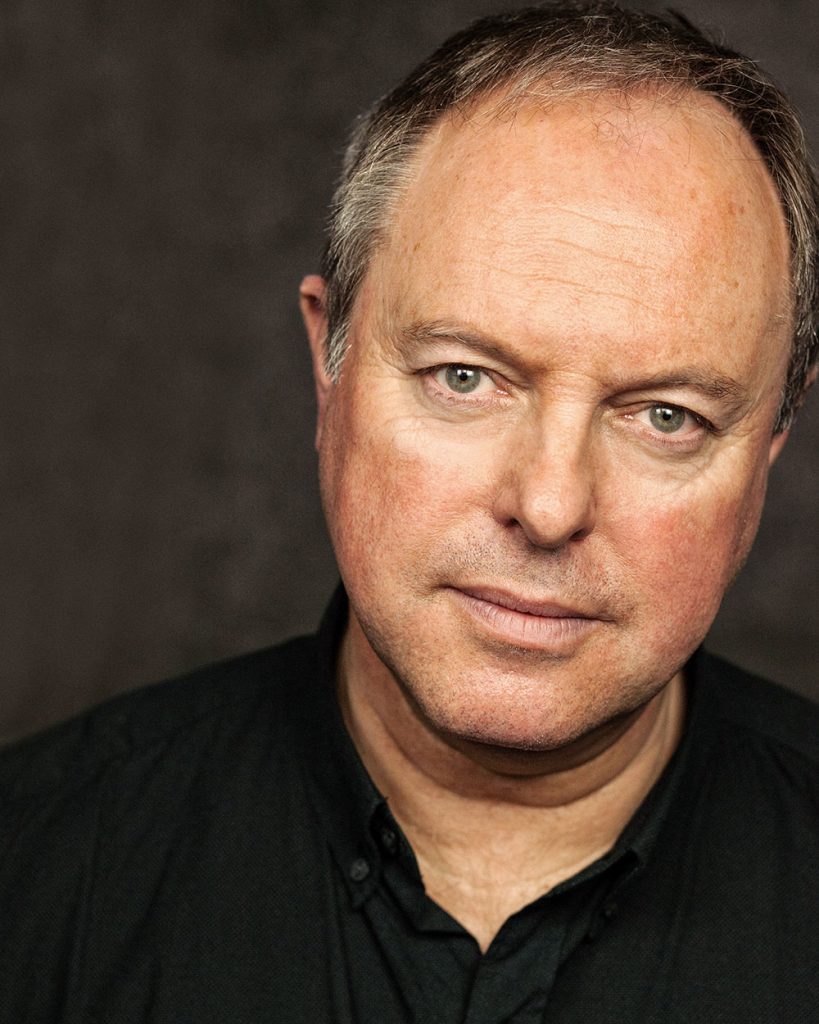
So often one can awake from a reverie in the corner seat of a railway carriage when the train stops and look out through a grimy window to see where one is: a helpful sign on the platform, lamp standard or station building quickly puts one right and allows one to slip back into the arms of Morpheus. Hours after our conversation, Robert took to the York Theatre Royal stage in Alan Ayckbourn’s Ten Times Table. In the audience was the legendary playwright himself. No wonder Robert had a touch of the jitters. He plays “excitable†committee chairman Ray Dixon in the fictional town of Pendon which is trying to organise a pageant. But the committee is divided. “Alan Ayckbourn has dissected the world of the committee and the people on it with wonderful comic observation,†says Robert. “He spent years on committees being stopped at every turn and occasionally getting a green light. He was certainly writing from something that he knows quite a lot about. “The play hasn’t been done professionally, I believe, since about 1978 after it had been in the West End. It’s been done by amateur groups fairly regularly. In fact I can remember my parents doing it at one point 30 years ago.†Speaking about Ayckbourn’s watching from the stalls, Robert says: “That’ll put a little bit of fear on the committee!†He laughs, as he does several times during the interview. It’s obvious Robert, actor, author and more recently podcaster, enjoys what he does. He loves meeting people on his travels across the country almost as much as he relishes being on stage. But the erudite, affable Bedfordshire resident always makes time for his family, even if it means a 10-hour train journey back home from Edinburgh because of Storm Ciara. “That’s the reason for everything,†he declares sincerely. Chesterfield’s Pomegranate is on the list of theatres that Ten Times Table will visit and Robert is really enjoying the play. The cast includes Deborah Grant who was in Bergerac and Not Going Out, Robert Duncan of Drop The Dead Donkey fame and former Blue Peter presenter Mark Curry. “It’s a lovely company of people and everyone gets on well, which is quite nice when you’re doing an ensemble piece. “Alan writes lots of sections where two or three people are talking at the same time. It’s very much like life, of course. Bu it has its technical challenges.†The tour lasts eight weeks and Robert prefers travelling around Britain to acting in the West End which usually involves a long contract. “I try to go out once every two years to keep the old theatre muscles going. On tour you get to visit some wonderful places. Every week is an opening night so you have to keep yourself focused. “Audiences around the country are great. They’ve made an effort to come and see a show. And you get to play some of the most beautiful theatres in the world. “I like the diversity of touring and the constant changes and moving from place to place, theatre to theatre and audience to audience. I find that exciting.†Robert Daws was born on 4th May 1959 at Leigh-on-Sea, Essex. He trained at the Royal Academy of Dramatic Art. His first jobs after graduating were, believe it or not, at the old Derby Playhouse in 1980. He was cast to appear in a stage adaptation of Bram Stoker’s Dracula, Loot by Joe Orton and Richard Brinsley Sheridan’s comedy of manners The School for Scandal. Robert felt nervous as he prepared for his first day at the Playhouse – and struggled to find the building. “I thought ‘I’m lost, I’m going to be late.’ Then someone said ‘you want the Eagle Centre.’ I think the theatre was heavily disguised as a supermarket and then I found this lovely Playhouse. I had a marvellous time.†After that Robert’s career blossomed. He played pompous cricket captain Roger Dervish in the ITV series Outside Edge for which he was nominated for best comedy actor at the British Comedy Awards. He then played the co-owner of Cresta Cabs in Roger Roger and Dr Gordon Ormerod in eight series of The Royal on ITV. It was on set that he met Amy Robbins, the younger sister of entertainers Ted and Kate Robbins. She played Dr Jill Weatherall. Robert and Amy married in 2003. Robert has also had roles in Coronation Street, Doc Martin, Father Brown, Midsomer Murders and Death In Paradise as well as playing Dr Choake in Poldark. So is there one part people remember Robert for? “Some actors become very well known for one particular thing. Because I’ve been fortunate enough to do a variety of work, what tends to happen is that someone will come up and say ‘I loved you in this’ and someone else will say ‘I loved that show.’ And someone else will come up with something I did 30 years ago that I’d completely forgotten about. “It’s one of the fortunate benefits of being what used to be called a character actor. I’ve never been typecast. I’ve been able to play a variety of things.†Eight years ago Robert became an author when his crime novel The Rock, about a couple of detectives on Gibraltar, was published. He’s written two more murder mysteries and he’s currently working on a psychological thriller. Some actors write while they’re on tour – but not Robert. “The thing with theatre is you’re working anti-social hours, so you’re always conserving your energies. “I’m acutely aware that I’ve got to have a bit of mental and physical puff available at the end of the day or on a midweek or Saturday matinee. “But I do use the time to read, cogitate and think a lot which is as much a part of the writing process as anything else. “I tend to work best when I’ve got a clear space of a few weeks when I can just get into a routine
Modern Collectibles – Station Name Signs

So often one can awake from a reverie in the corner seat of a railway carriage when the train stops and look out through a grimy window to see where one is: a helpful sign on the platform, lamp standard or station building quickly puts one right and allows one to slip back into the arms of Morpheus. Such signs go back to the earliest days of railways and stations. By the way, avoid the Americanism ‘train station’: in this country ‘station’ has always meant a railway station (the correct qualification), whereas it was fire, police, feeding and other stations that required qualification! Modern collectible station name signs really begin with the grouping of our railways into the ‘Big Four’ in 1923 and ends more recently with the denationalisation of the railways from 1996. Usually each station used to have a large board towards the ends of the platforms, sometimes two, mounted in a ‘V‘, with timber (occasionally cast iron) letters applied to a wooden board. These are now very rare, especially as, being outside, they tended to decay. Thus from 1923 each of the four companies: the Southern (SR), Great Western (GWR), London Midland & Scottish (LMS) and London & North Eastern (LNER) tended to replace such signs with enamelled metal ones in their own colours. The SR produced target signs, green background with the name horizontally across a central annulet with white centre. The LMS used a maroon background and similarly used a circular centre but it was integral with the banner part of the sign to make a solid effect, whilst the LNER used dark blue rectangular enamel with white lettering. The GWR as a rule used white letters on a black background. These signs can fetch from about £30 up to around £400, depending on condition and most especially, what place’s name they bore. Some places have resonance: large cities (obviously), long lost stations, places where a potential purchaser lives, and those with associations, like Adlestrop (GWR: Edward Thomas’s touching 1917 poem). These factors can push up the price enormously. A typical example of an ex-GWR platform lamp tablet is one for Horsehay & Dawley (Salop) which made £580 at auction last year, whilst a large wooden station sign for Park Hall Halt (GWR) made £750. A similar one for Adlestrop was rescued in 1965 upon closure and was re-erected under the ’bus stop shelter for the replacement ’bus service. Alnwick (LNER blue lamp tablet) made £520. But if one cannot source a sign from before the Railways were nationalised in 1948, there is plenty of scope over the ensuing 20 years (when a boring new corporate image began to eat into the colour) but, oddly, the price tends to rise. British Railways, as the system then became, evolved what is called the totem sign: the round-ended banner being placed across a round angled rectangle and edged in white, with white letters. These were applied universally, although less so on the former Southern, where that company’s rather similar target signs tended to survive in large numbers. What gave the totem signs their interest, apart from the places themselves (many of which ceased to have any function since the start of the slashing and burning régime of Lord Beeching of East Grinstead in the mid-1960s), was that the Nationalised concern split the network up into regions approximately based on the territories of the ‘Big Four’. Thus, the Southern’s signs remained green (albeit of a more virid shade), the GWRs were brown, the Midland (ex-LMS) region was still maroon (a distant echo of ‘Midland Red’ as applied to rolling stock and locomotives at Derby from the 1870s) and the LNER was a blue similar to that used previously. Added to that a region was created for the North East (orange) and another for Scotland (bleu de celeste). Although these signs are much more ubiquitous and prices for unremarkable places can start at £500, resonance again can inflate the cost of acquiring one considerably. Whilst Mablethorpe (Eastern Region) made £2,800 recently, Northampton Castle (Midland) made £6,100, Stourbridge Junction made £1000 whilst Overton (Southern), a measly £960. Waterloo, being common (from the sheer size of the station – 21 platforms) made but £820. Yet on an on-line auction site, Grove Park (Southern Railway target) had failed to make its reserve of £21 in January! Another subject of nostaligic poetry (this time John Betjeman) was totem (SR) for Dilton Marsh Halt, estimated at £2,000-2,500. The value of these later signs, though, have led to a burgeoning trade in replica ones, of the right size and colour. You can order one from any one of a number of firms who will make you one with whatever name you want on it. The problem is, how do you tell the difference? The answer (assuming the name borne is not obviously unlikely) is: wear. The originals were set up in stations either outside or, if under canopy cover, at least open to weather, smoke, steam, aerial pollution and casual vandalism. They will show signs of wear, and signs of fixing. Many were attached to lamp standards with brackets, and the brackets tended to rust whereas the signs, unless damaged, were protected by their enamel. Thus, whilst signs in generally tatty condition are likely to be genuine, those appearing to be in superb condition, need to be looked at much more closely for signs of attachment and wear if they are to pass muster as genuine. Later and post-BR signs tend to lack colour and interest and, although there are substantial numbers out there, they do not appear to be particularly collectible. Their sheer uniformity and lack of colour has militated against that! 00
The Lost Houses of Derbyshire – Allen Hill, Matlock
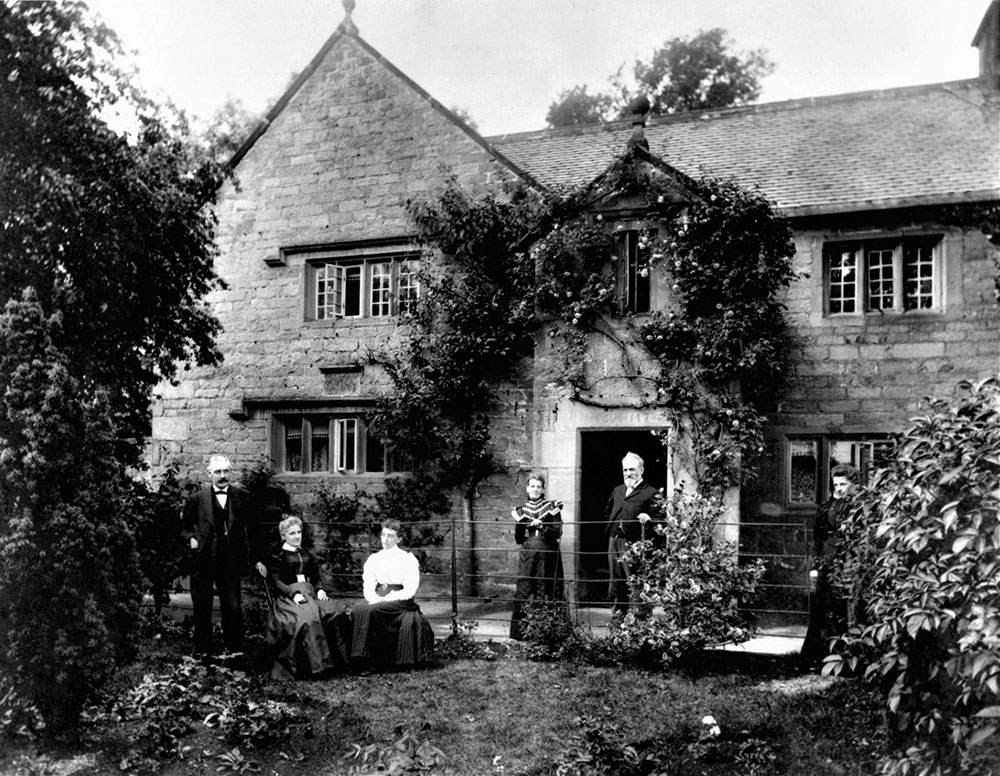
As you proceed out of Matlock going north you will pass on your right the end of Dimple Road, which rises vertiginously up the steepish hillside. Some way up you might just miss Allen Hill a narrow road leading down into a mass of 1960s housing and rising out on the other side as little more than a footpath ending in Woolley Road. From Woolley Road, you will also encounter Edge Road which, although on the hillside, has nothing to do with topography but everything to do with the former ownership of the land. Malpas Road also opens off Woolley Road. All these have resonance with a very modest, very old, minor country house which once graced this hillside, Allen Hill. The house itself – at least in its latter three centuries – was of L-plan, built of rough ashlar blocks of Ashover Grit from a local quarry and edged with long-and-short blocky quoins. The cross wing was to the left of the entrance and had a four light mullioned window lighting the floor above a five light one, both set beneath cranked hood moulds. Between the two was inset a stone plaque under another very short hood moulding which read AW | GC 1624 | V The cross-wing gable was irregular, for the fenestration was by no means central, suggesting a rebuild of an earlier house. The porch was a charming confection of two storeys which projected beyond the cross-wing and like it was topped by stone coping with a ball finial at the apex. A two-light mullioned window under a hood mould lit the tiny room above the entrance, which was a nineteenth century replacement, in smooth ashlar of Stancliffe stone, quite rectangular but with a discreet moulding, but over which was inscribed, probably secondarily rather than transplanted: 16 AOM 74 To the right of the entrance was a four light ground floor mullioned window with a three light one above, neither graced with a hood mould, a pattern repeated on the next bay to the east and the range – unusually long for a Derbyshire small manor house – ended with a superimposed pair of two light mullioned windows. At this end, the walling was closer to random rubble, but it turned the angle with another stone coped and finialled gable. The roof was slated. This front faced southwards, down the slope towards the river, but the west side was blind and interrupted only by a very substantial projecting chimney breast supporting a pair of diamond section stone stacks, the chimney breast probably well pre-dating 1624. The north side seems to have escaped visual record but, with the ground rising steeply and a north aspect, it probably had few windows but a door to the farmyard and stables. There were six hearths taxable in 1670, and ten rooms in the domestic part of the house according to the census of 1911. The stable block appears to have been approximately contemporary with the house at one end and bore yet another inscription, 1653, over the door. Further long, the range had been extended, presumably in the eighteenth century, probably as a carriage shed, and a final stone was inscribed: I W 1774 The estate was reportedly modest, about 800 acres, and the land, which seems to have taken its name from an unrecorded family called Alleyne (to give the earliest recorded spelling, which was how most Allens were spelt prior to the Early Modern period) was originally part of the once extensive estate of the Wendesley family of Wendesley, who, we must presume, inherited it from a branch of the White Peak Alleynes, who had given it their name. The hill itself, called The Dimple had lead mines within it, and at the foot a small spa was later opened on the family’s land. The well head survives, listed grade II and was restored by Adam Wolley in 1821. In Queen Elizabeth’s reign, we find a Richard Wendesley, presumably of a junior branch of the family, selling the estate to one Anthony Wolley (as it was then spelt) of Riber Manor. Although the surviving pedigrees do not show it, it seems likely that Anthony had married Richard Wendesley’s sister, for his coat-of-arms in the heralds’ visitation shows his arms impaled (placed alongside on the same shield) with those of the junior Wendesleys: ermine on a bend engrailed gules three escallops. Thus, the Wolleys of Riber acquired Allen Hill. TheWo[o]lleys had originally come from Wolley in Hollingworth, Cheshire, in the later 13th century. Their arms bear a chevron vairé or and gules, the colouring of the arms of their feudal overlords, the de Ferrers Earls of Derby, who probably granted them at some date prior to their disgrace and attainder in 1268. William, son of Ralph, settled at Broadbottom Hall in Longendale, but in 1460 his descendant in the fourth generation, acquired by marriage with the heiress of John Robotham of Riber a small estate there and, enlarging his holding by purchase, established a house on the site of the present manor house. Anthony Wolley died in 1576 leaving three sons: Adam who inherited Riber, and whose descendants built the present hall, Thomas who settled at Bonsall, and John who was given Allen Hill. John probably built the original house, and his efforts were no doubt the east end of the building where the stone blocks were much rougher and unevenly brought to course, and the west wall of the cross-wing. However, if we may trust the date stones, the house that survived to be photographed was rebuilt by Anthony Wolley (1594-1655). He had married in 1615 and probably began to rebuild gradually, the date probably marking the completion of the works. What the ‘GC’ and the hieroglyph beneath meant is quite unclear: neither his wife nor anyone in the family bear these initials; they may have been re-cut from an unreadable original. The next date, re-cut over the door, is 1674. The A and M stand for
South Wingfield Station – A Lost Beauty

The large, attractive village of South Wingfield no longer relies on mining coal, or producing knitted fabrics for its industries, but has become a quiet dormitory town for the surrounding area. Its one major feature is Wingfield Manor. It was here that Mary Queen of Scots was held captive for several years, all the while and with some justification, complaining bitterly of the smell from the midden directly beneath her bedroom window. It was from here that the abortive Babbington Plot tried to free her, costing its perpetrator his head. About half a mile outside the village, the Midland Mainline railway crosses the Alfreton road. A few yards beyond the railway bridge, a short length of mud covered cobbles leads to a group of abandoned station buildings where the converted station master’s house is now a dual residence, partly hidden in a wild-wood of self-sown trees. This was South Wingfield’s very own station. Until 1967, South Wingfield rail travellers could hop on one of the main line trains stopping at the village station and ride in comfort to do their shopping in Chesterfield and beyond, or Derby and all points south as far as London. Despite the station being designated as a Grade II* listed building, it was deemed unnecessary for this rural part of Derbyshire and was closed in 1967. Express trains still thunder down the Amber Valley and roar through what is left of South Wingfield Station, but nowadays anyone from the village wanting to catch a train going north or south, must travel some distance for the privilege. What was originally called the North Midlands Railway was built by George Stephenson and his son Robert. Funding was initially organised by George Hudson of York, known as the railway king in his short-lived notoriety. During the railway building mania of the mid 1800s, he encouraged investors to put money into his schemes, artificially inflating the value of the railway company shares by paying dividends out of investments rather than profits, a kind of pyramid scheme in its day. When this illegal practice was discovered, Hudson was indicted and sent to prison as a broken and penniless man. Fortunately the plan to build a railway linking Leeds to London by way of Derby was properly funded. So with Derby at the junction of lines from London, Birmingham and Nottingham, the route of the North Midland (later the Midland) Railway was surveyed by George Stephenson assisted by Joseph Locke. Stephenson proposed building the line by using 72 miles of river valleys between Derby and Leeds. This would result in a route designed to mainly carry coal; using gentle gradient; building viaducts and tunnels only where necessary. Although it had the advantage of allowing heavily laden coal trains to run mostly downhill, his route frequently by-passed many large towns such as Sheffield. Connecting them meant building costly branch lines. This led to disagreement between Stephenson and Locke who saw the economic advantages of connecting as many towns and cities as possible along the route, rather than relying on simply carrying coal. Eventually a compromise was reached, just in time to cater for the growing interest in passenger trains, despite the many inconveniences such as travelling in coal wagons. The first train to run along what eventually had become the 73½ mile long railway, left Leeds with suitable Victorian pomp and ceremony on the morning of the 7th of May 1840, with a formal lunch at Derby on arrival at 1.30 p.m., returning to Leeds on time at 6.55 p.m. One part of the ceremonial inaugural run was to formally open Derby Station, then, as now an important junction serving the three lines between London, Birmingham and Leeds. The original Derby Station was designed by the architect Francis Thompson who was commissioned by Robert Stephenson, son of George, to design 24 stations along the Derby to Leeds section of the North Midlands Railway. They were all architectural masterpieces, whether they served a large town or small village. Due to modernising and other schemes in later years, only one survived, it was South Wingfield. Following gradual deterioration and standing empty since its closure over 50 years ago, despite being classified as a Grade II* Listed Building, South Wingfield became what someone described as a ‘maimed beauty, deserving better’, one of the ten most important buildings at risk in the British Isles. In November 2019 a saviour came on the scene in the shape of the Derbyshire Historic Buildings Trust (DHBT), in order to take over South Wingfield Station’s ownership, raise funds, restore the station buildings and find commercial and educational uses for them. With the backing of Historic England, the Architectural Heritage Fund and the local council for Amber Valley, who placed a compulsory purchase order on the semi-ruined building, ownership of the station was transferred to the Derbyshire Historic Buildings Trust. Once over this hurdle, the Trust is beginning to work towards securing full funding for the restoration and adaptation of Wingfield Station. So the trust have begun the massive task of arranging funding for restoring and adapting South Wingfield Station. The plan after removing all the rubbish and invading shrubs and trees, cleaning off graffiti and generally making the building safe and accessible, is to make it available for living history events, telling the story of the station through the recorded memories of those who worked there or travelled from it; arranging bursaries for young people to learn traditional rural craft skills and offering open days for the local community – bringing the station back to life and allowing it to be part of the community once more. Thanks to National Lottery players, funds from The National Lottery Heritage Fund and others, including the Pilgrim Trust Foundation are already generated for the initial work in generally tidying up the site, undertaking surveys, developing plans, consulting with the local community and developing partnerships. An initial development grant of £137,000 from The National Lottery Heritage Fund has been awarded to
Restaurant Review – Shapla Spice

I’ve always thought of Ripley town centre as a comfortable place. A wide variety of shops; well connected by public transport, which runs through the centre of the town, and there’s plenty of car parking. Ripley isn’t overpowering; part of its charm is that it’s all on a human scale. That comfortable feeling doesn’t vanish as night falls and on a blustery, chilly winter’s evening Shapla Spice was a warm welcoming sight as Susan and myself hurried from our taxi and into the restaurant. Situated on the corner of Church Street and Mosley Street, Shapla Spice is very convenient for both buses and taxis. Plus the added advantage of that very large car park across the road; Ripley marketplace. We were greeted by Amin, the owner, and shown to our table. The smart exterior and the contemporary decor of the softly lit interior, reflects the restaurant’s understated elegance. The layout is not overcrowded. The tables, with their white linen tablecloths and napkins and stylish place settings enhance the restaurants modern ambience. We chatted to Amin who told us how a chance meeting with a local businessman persuaded him, with his several decades of experience, to open a restaurant in Ripley. Over the years Shapla Spice has grown in size but always remained on this busy corner of the marketplace. The restaurant does not have an alcohol license but does offer a selection of soft drinks. One advantage of this absence is that you can turn up with your favourite beer or wine. We arrived with both and without asking, the appropriate glasses and ‘openers’ arrived on our table courtesy of one of the attentive but unobtrusive waiters. Shapla Spice specialises in traditional Bangladeshi cuisine. Amin talked us through the extensive menu indicating how spicy, hot, creamy or sweet each dish was. And so for my starter, following his suggestion, I chose the sea bass. Sue, not wanting to spoil her appetite, said she would share it with me. While we waited for our starter we nibbled on two warm poppadoms. These came with the usual lime pickle, a sweet tomato sauce and an onion and tomato salad. Plus a delicious mint and yoghurt sauce; a perfect balance of sweet and sour. My starter, the sea bass fillet, was panfried with a lightly spiced dusting on the skin. It added to, but didn’t mask, the delicate flavour of this perfectly cooked fish. It was served on a bed of sautéed peppers and a few strands of onion, accompanied by a dash of sweet chilli sauce. Light, slightly spicy and full of flavour; this dish is far removed from the pakoras and kebabs that traditionally start an ‘Indian’ meal. For her main Susan had chosen laseez and a garlic naan. Laseez is a chicken tikka dish prepared with diced onion, tomato, garlic and a hint of chilli in a sauce finished with double cream. This mildly spiced dish is combined with spinach and topped with melted cheese. The chicken was moist and tender and the cream sauce, with its many spices, was full of flavour. Rice would have been lost on this dish but the fluffy garlic naan that Susan had ordered was the ideal commitment for mopping up the rich sauce. I had selected the Akbori lamb and pilau rice. The meat had been marinated, barbecued and served in a spicy tomato sauce along with roast potatoes, garlic, crispy onion, fresh coriander and a slice of lemon. The pilau rice, with the fragrant aroma from its traditional spices, was presented in the centre of the dish surrounded by the tender lamb. The rice and lamb made perfect partners. The lamb sauce was mildly spicy but not enough to mask the flavours of the pilau rice. It had been a wonderful evening. We could have stayed longer chatting and drinking the excellent coffee topped up by the ever attentive waiter but the taxi we had booked was waiting. We said our goodbyes and hurried out into the cold night. Settling into the back of the taxi we reflected on how relaxed the evening had been and how we had discovered new delights from that vast subcontinent. 00
Taste Derbyshire – Canine Delights
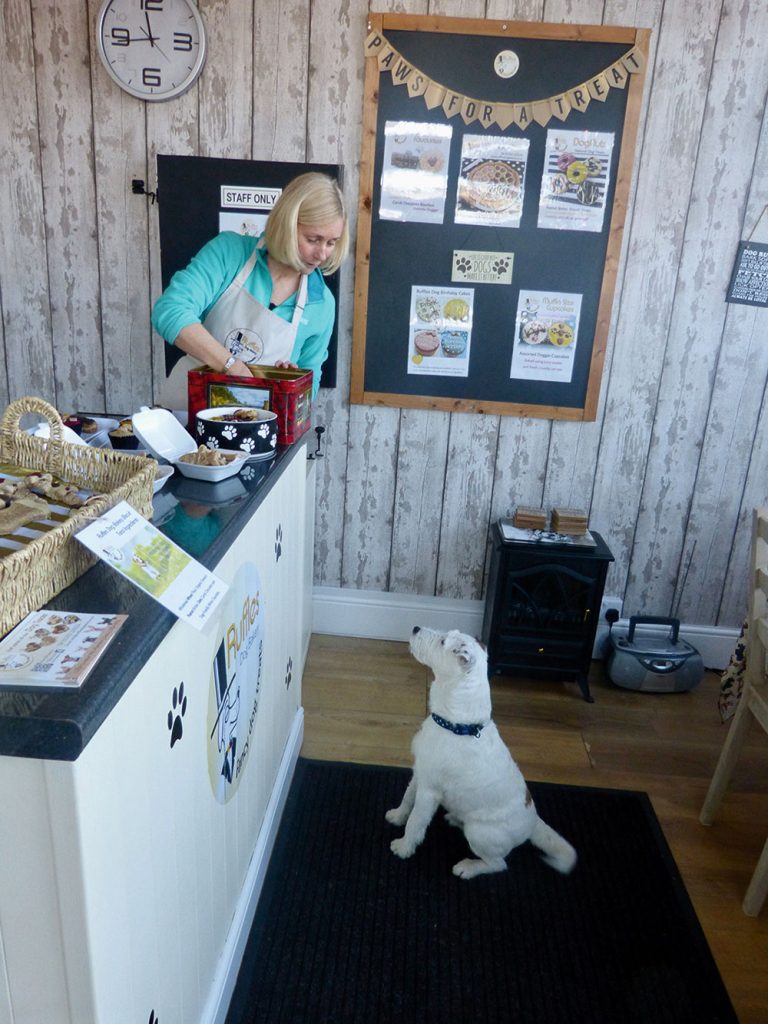
More and more restaurants and cafés are opening their doors to canine customers and Derby even has a fancy bakery exclusively for dogs. Taste Derbyshire’s Amanda Volley went along with her naughty pup Eddie to find out what would happen if you put a Jack Russell in a bakery. My Jack Russell, Eddie, is typical of his breed in that he lacks any kind of self-control around food. I say ‘food’ but some of the snacks he has enjoyed between meals include a clump of squirrel fur, an empty cake box, rabbit droppings and a hair bobble. Moreover, he has no qualms about stealing from shopping bags, picnic mats and the hands of old ladies trying to feed bread to birds. Which explains my trepidation when Eddie and I were invited to sample the culinary delights on offer at Ruffles; an upper-crust bakery on London Road, Alvaston, catering exclusively for dogs. Never mind sugarplums, I had visions of compensation claims dancing through my head. Owner Donna Wakeman, (54), was confident the quality of her bakes would be enough to turn Eddie from a treat-seeking missile into a perfectly behaved pooch worthy of top-notch nibbles. “I’ve never had a problem with a badly-behaved dog,†Donna smiles as she puts a selection of deliciously decorated gourmet bakes onto her counter. “I organise private parties which means all the dogs tend to know each other and we can just lock the door, let them off the lead and everyone can relax. Most dogs are a bit nervous in a new environment but yours seems lovely.†Remarkably, she is right. Subdued by the promise of free samples, Eddie looks ready to take his place in polite café society as Donna talks us through her morning’s baking. “The biscuits are made from healthy ingredients like wholemeal wheat flour, oats, and organic smooth peanut butter,†she says popping the odd morsel into the mouth of my canine companion. “They’re decorated with dog-friendly white chocolate or Carob and I only use natural colourings – the gold is turmeric which is great for doggies with arthritis and the pink is beetroot powder which tastes just like strawberry. They are delicious with no hidden nasties. The only things I ever add are natural ingredients like fresh herbs and grated carrot.†As Eddie casts an approving eye over the delightfully decorated ice cream cones, cup-cakes and DogNuts (dog-friendly doughnuts), Donna explains why she began baking for dogs. “I started making homemade treats because my rescue dog Alfie, now four, was such a fussy eater,†explains Donna, of Boulton Moor. “We were trying to train him with supermarket treats but he’d either ignore them or go and bury them. I found lots of dog treats recipes on the internet but it took three months of trial, error and tweaking to get one Alfie loved.†It wasn’t just Alfie who turned somersaults for the snacks. “My friend’s dogs liked them so much, they started putting in orders and it just snowballed from there,†she laughs.“I’m a web-designer so I decided to launch an on-line business. The bakery’s name was inspired by a visit to Raffles Hotel in Singapore. My logo is a dog in a top hat, monocle and bow tie and people love it so much, I’m thinking about putting it on a range of accessories like feeding bowls.†The on-line bakery business was so successful, Donna soon out-grew her home kitchen. “When I moved here in July 2018, I was attracted by the large kitchen and I knew the position on a busy, main road into Derby was useful for advertising to potential customers,†Donna says. “Last Christmas, they were queuing out the door. One chap, who was just working in the area, came in and bought ten doggie hampers which included treats shaped like fir trees, turkeys and puddings. This month (February) I’ll be making lots of love hearts for Valentines.†There’s room in the bakery for doggy toys and accessories (Eddie was excited to find dog-friendly Prosecco ‘Pawsecco’ and beer on the shelves) and an enormous table for all the doggie events. “I love catering for afternoon teas and birthday parties. I’ll make dog- friendly sandwiches like peanut butter and cream cheese and serve them from a tiered cake stand,†says Donna.“The selection will include biscuits like the bourbons and custard creams, eclairs, cup-cakes and DogNuts. The owners often bring hats and I play doggie themed music and I always make a special cake for the day.†Donna is understandably proud of her occasion cakes and gives me a sneak preview of one smothered in pink frosting which she’s made for a lucky pup called Luna. “The cakes are made from self-raising wholemeal flour, my homemade apple puree, peanut butter and grated carrot,†she explains.“They are made fresh to order and, if kept in the fridge, they should last up to ten days. Not that I’ve heard a dog ever taking that long to eat one.†As if on cue, we are joined by loyal customer Ella Conway who is at the bakery to buy special goodies for her pet chihuahuas Alfie and Ziggy. “They love coming to Ruffles. If I even mention the name, they start barking and run to the door,†laughs Ella Conway (20), of Shelton Lock. “You can’t buy anything like this at the pet stores. Donna even makes spongy treats for Alfie as he’s eleven now and only has a few teeth. Donna sells fish and chip and pizza shaped biscuits so we can all have a take-away night.†In the long-term Donna would love to branch out into offering franchises as she’d love to see a Ruffles Dog Bakery in places up and down the country. For now, she is content with fulfilling her many orders, hosting canine celebrations and developing new lines including a dog-friendly cocktail called ‘Singa-paw Slingâ€. “I do have people who think the idea of a dog bakery is a little crazy or that you
Walk Derbyshire – Walks from Stately Homes – Lyme Park
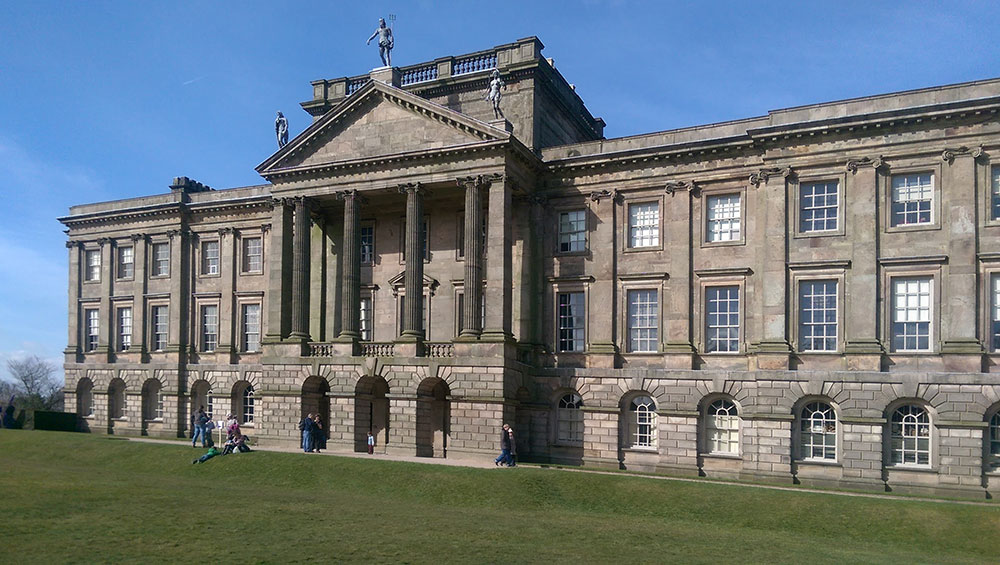
DISTANCE: 3½ miles (5.6km) of moderate forest track, open moorland, surfaced road, waymarked field path and rough access drive. 525 foot (160m) climb. RECOMMENDED MAP: Ordnance Survey Outdoor Leisure Sheet 1, Dark Peak. 1:25,000 scale. PUBLIC TRANSPORT: Hourly TP service buses to Buxton, then bus or train to Disley where a short walk along a back road leads to the driveway beyond North Lodge. CAR PARKING: Official car park below Lyme Hall. Pay and display on entering the park via North Lodge on the A6. Access to Lyme is free for National Trust members. REFRESHMENT: Old Workshop near pond beyond the car park. I thought I had finished my walks from and around the grand houses up and down the Peak District, but recently it was brought to my attention that there is at least one other I have overlooked. This is Lyme Park, the grand Palladian mansion set in the heart of 1,400 acres of woodland and high moors on the north western boundary of the Peak District National Park. A mere ten miles or so from the southern boundary of Greater Manchester, it acts as a popular breathing space for the citizens of towns surrounding what was once called Cottonopolis. Having said that, access is easy for anyone living more to the south; the A6 passes the northern entrance to the park, and regular trains and buses from Buxton stop at nearby Disley. Now jointly owned by Stockport Metropolitan Borough Council and the National Trust, Lyme was the ancestral home of the Legh family for over five and a half centuries. Originally created by King Richard II who in 1398 granted land in the Royal Forest of Macclesfield to Piers Legh and his wife Margaret D’anyers. Over the centuries what was once a hunting lodge became the magnificent Palladian mansion set amongst a rolling moorland background and the attractive formal and informal gardens of today. Orangeries and sheltered rose gardens compete throughout the seasons to the delight of visitors, but it is the Dutch garden on a terrace below the west side of the house which draws the greatest admiration when its formal displays of tulips are at their best. It is not just the house and gardens that visitors come to see. High on a ridge overlooking the main driveway from the A6, a prospect tower known as ‘The Cage’ offers wide ranging views over the Cheshire Plain where, on a clear day the outliers of the Welsh giants of Snowdonia come into view. Another reason why visitors come to admire and enjoy the house and moorland walks on offer, is thanks no less to the BBC. In 1995 Lyme became immortalised as Pemberley in the BBC TV production of Jane Austen’s Pride and Prejudice. The walk passes the pond where semi-naked Mr Darcy (played by Colin Firth) unexpectedly emerges from a lake in full view of Elizabeth Bennet, played by Jennifer Ehle. The walk passes the pond, but be prepared for a surprise, not only will there be no Dashing Mr Darcy, but the pond is usually a muddy slimy affair, hardly something to attract a swimmer on a hot summer’s day. Starting from the car park below the hall, the walk climbs out through Knightslow Wood, out on to Park Moor where you might be rewarded with a view of magnificent red deer, part of the herds roaming unhindered throughout the park. At the top of the climb an enigmatic pair of upright stones known imaginatively as the Bowstones, are probably the remains of two late Saxon preaching crosses, minus their cross pieces. Bowstones is the highest point of the walk. An access lane from the remote farmhouse drops down to a side road linking Kettleshulme and Disley, but the walk does not join it. A left turn on to a farm track leads to open fields as far as the old eastern route into Lyme. Turning left at East Lodge the walk follows this old track back to the hall and the welcoming refreshment stop at the old timber yard and its workshops. The Walk 1 From the car park, turn left away from the hall and follow the surfaced lane curving left, uphill. 2 Turn left on to a wide track at the top of the hill and go through a metal swing-gate. 3 Following a Gritstone Trail signpost, continue uphill with trees on your left and rough moorland fields to the right. Although there is no access from the track you should be able to get a glimpse to your left of the small pond where Colin Firth aka Mr Darcy emerged under the flustered gaze of Elizabeth Bennet (played by Jennifer Ehle in the BBC adaptation of Pride and Prejudice). 4 Enjoying views of Lyme Hall on your left, go through Knightslow Wood, following the track until it reaches the park boundary. 5 Cross or go through the wall and turn left on to a rough path climbing steadily uphill. Aim for a group of telecommunication masts on the ridge-top ahead. 6 Climb over the moorland boundary wall and keeping to the right of Bowstones Farmhouse, aim towards the farmhouse’s access drive. Two enigmatic stones within a small iron-fenced enclosure are the Bowstones. Folklore says they were used for bending new bows in Saxon times, but they are more likely to be the uprights of a pair of late Saxon preaching crosses with their cross pieces broken off by zealots during the Commonwealth following the English Civil War. 7 Walk down the drive for about a mile until it meets the main road and almost immediately turn left on to a farm lane. 8 Follow the lane as far as Cock Knoll Farm. 9 Go through the farmyard as directed by waymarking signs and out through a gate. 10 Following a boundary wall, go down the left side of the couple of fields beyond the farm. 11 Descend into and cross a shallow valley on a waymarked field
Celebrity Interview – Susan Boyle
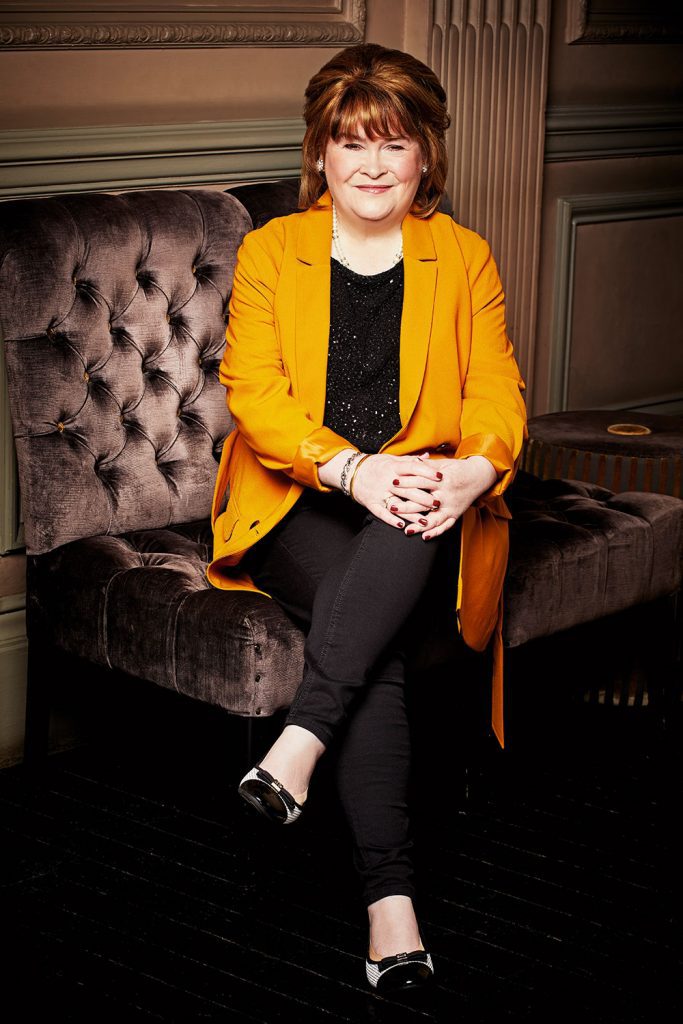
More than ten years on from her unforgettable rendition of I Dreamed A Dream from the musical Les Misérables, Susan is heading out on tour to do what she loves most of all: singing to an audience. When she stepped onto the Britain’s Got Talent stage, few people could have imagined the impact she would have. It would change her life. Despite finishing second in the final to dance troupe Diversity on the show watched by 17.3 million viewers, Susan went on to have unparalleled success. Her first album I Dreamed A Dream is the fastest-selling UK debut album of all time. She became the oldest female to reach number one on the UK albums chart with her second offering The Gift. Only three acts have topped both the UK and the US charts twice in the same year. Susan is one of them. All this from a woman who was bullied at school and was brought up thinking she had a learning disability. It was only after she had become a household name that she was told she had been misdiagnosed: she had Asperger’s syndrome and an above-average IQ. Before I spoke to Susan about coming to Nottingham on her latest tour, her publicist told me that Susan doesn’t like structured interviews and I should regard our conversation as a casual chat. Susan, who was born in Blackburn, West Lothian, has a pronounced Scottish accent. It can be a bit difficult to understand but after a while she comes over as gentle, caring and unruffled by anything the music world can throw at her. So what will she be singing on the tour? “There’ll be a mixture of songs from the latest album and a lot of new stuff. It won’t be as classic as last time – it’ll be more informal. There’ll be songs to get people up and dancing in the aisles. It’s fun!†Naturally she will sing I Dreamed A Dream: “It’s my signature tune. I have to include that. That’s what it’s all about and how I got there in the first place. People expect it.†Susan Magdalane Boyle was born on 1st April 1961. Her father was a miner and a singer while her mother was a shorthand typist. The youngest of four brothers and five sisters, Susan took singing lessons and performed at local venues. Her mother urged her to enter Britain’s Got Talent. She almost abandoned the plan because she thought she was too old. So did she ever think she would get through? “I didn’t think anything, to be honest. I just went on and had some fun.†Was she nervous? “Who wouldn’t be? It’s such a big event. In front of Simon Cowell who can be quite strict with you. Of course I was nervous but you get over it.†When she said her wish was to become as famous as the British singer, actress and presenter Elaine Paige, Simon Cowell smirked. But he was stunned when he heard her sing. One American news organisation described her as “the woman who shut up Simon Cowellâ€. She says: “When they saw me step out on stage, people thought I was going to be awful. I proved them wrong. You don’t judge a book by its cover.†Can she believe it is ten years since her first appearance on the reality TV show? “One day you’re sitting in a room with your cat not doing anything, the next you’re on stage and in a competition. It was a complete turnaround. Ten years – I can’t believe it’s gone by.†Within nine days of her first appearance on Britain’s Got Talent, the video of I Dreamed A Dream was viewed 103 million times on 20 different websites. Newspapers around the world including China, Brazil and the Middle East carried articles about her performance. She was interviewed via satellite by several US television stations. Simon Cowell signed Susan to his recording label and controls much of her output. She pays tribute to the man derided by so many people. “Simon was very supportive and very kind. I can’t say a bad word about him.†Susan’s eighth studio album called Ten – marking a decade in the business – was released last May and another one will follow after the tour. “Being in a recording studio is peaceful. It’s a kind of different world,†she said. “I’ve been entrusted to do another album with Simon himself. The whole album’s being discussed at the moment. It’ll be full of surprises. It’s really exciting and I hope to go on from there. I don’t stop, you know!†So far Susan has sold more than 25 million albums, performed to half a billion people on the final of China’s Got Talent, written her autobiography and had cameo roles in a couple of films. What has the past decade been like? “I’ve been round the globe, I’ve sung for the Pope, I’ve sung for the Queen, the list goes on – I’ve done so much.†In 2012 Susan performed at Windsor Castle for the Queen’s diamond jubilee pageant, singing Paul McCartney’s Mull of Kintyre. Last year she met the Pope at the Vatican in Rome. Susan, Lionel Richie and Bonnie Tyler all sang at an annual Christmas concert there, raising money for the Amazon rainforest. A practising Roman Catholic, Susan was overawed by the experience: “The Pope’s a very family-oriented man. Indescribable, the feeling really. Very close to God himself.†She appears to take everything in her stride and believes it’s because when she went on Britain’s Got Talent she was more mature than many of the contestants who go onto TV reality shows. “When you’re young you’re more fazed than when you get to a certain age – you become more relaxed. I’m living the dream! I’ve enjoyed every second of it.†There are some people whose musical tastes might not include the kind of music that Susan Boyle sings so well. But few people can begrudge her the