The Lost Houses of Derbyshire – Cockpit Hill House, Derby
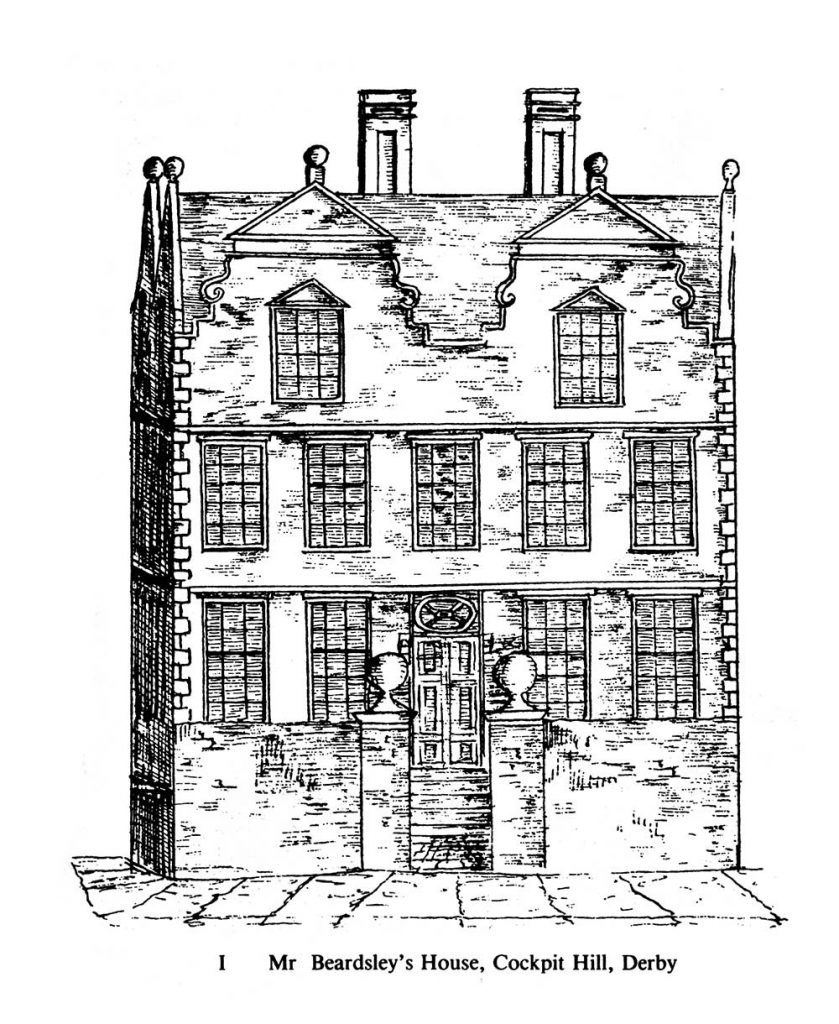
‘On the west side of the Mill Stream is a good house, built by Mr. Beardsley – on the side of a hill on which was formerly a castle still called Castle Hill, but by others Cockpit Hill.’ Written in 1713, William Woolley, Derbyshire’s first historian, of Cockpit Hill House. This enigmatic building suffers from having been demolished before the era of photography, so our only record of it is a sketch made by Woolley himself (not a particularly accurate recorder in this medium), and views included incidentally amongst the plethora of East Prospects of Derby painted or drawn of the Borough between 1695 and 1735. The house also appears in Glover’s History and Gazetteer of Derbyshire as a woodcut by Orlando Jewitt, an excellent artist, but as the house had by the date of first publication been demolished almost a decade, one wonders why it was included at all. Worse, Jewett was unable to draw it from life, so merely made a more workmanlike copy of Woolley’s drawing, thus adding absolutely nothing to our knowledge of its appearance. For all the difficulty of trying to understand what it looked like, there is much we can say of it. It was, for instance, a classic example of the Dutch style of architecture imported into this country after the Restoration and which underwent a revival with the accession of Dutch King William III in 1688, thanks to the desire of the Whig élite to trip over themselves to ingratiate themselves with the new regime: tall, compact and classical. The house was tall and narrow, like an Elizabethan tower house – Wothorpe, just outside Stamford springs to mind, Lincolnshire, as does Tupton Hall, described here a couple of years ago. It was brick built with stone dressings, of three storeys, five close-set bays of windows being grouped together on each of its four sides in stone surrounds with brief entablatures above each and quoins at the angles. We know from two of the East Prospects that the windows were of the mullion and transom cross type, with iron casements (as survive at the Green Man St. Peter’s street), but Woolley wrongly shows it sashed with three over five pane glazing bars. As Woolley’s sketch was probably done in 1712 and the two East Prospects are c. 1730, we have to conclude that Woolley may have made a quick sketch on site and then worked it up at home, giving the house its rather more modern windows in the process. There was a horizontal band between the floors and the second storey was treated by the architect as an attic (despite being full-height) to allow for a parapet from which rose on each side a pair of Dutch gables and the windows here given pediments. Most people call any shaped gable ‘Dutch’ but strictly speaking, they have to be topped with a pediment, as at Cockpit Hill House, where the gables were so treated and supported on curved volutes and topped with ball finials: very correct. Even more true to the Dutch idiom (although not at all apparent in Woolley’s drawing) was a flat top to the roof with a timber balustrade between the panelled chimneys surrounding a tall central lantern or cupola enabling guests to emerge and safely take the air after supper on the roof. Similar ones in Derby surmounted the roof of 3, Market Place (Franceys’s House, where Kieran Mullin is) and Flamsteed’s House in Queen Street. The best surviving example in the Midlands, although on a much grander scale, is the roof of Belton Hall (Lincolnshire); another, part of a house of very similar form to Cockpit Hill, is Lord Craven’s lodge at Ashdown, Berks., intended for Elizabeth, Winter Queen of Bohemia. Woolley’s drawing (and hence Jewitt’s) also endows the side elevation with straight gables, more probably because Woolley had not the draughtsmanship to express them), but we know from the East Prospects (and a South prospect, too) that the gables were Dutch ones all round. The classic views show the entrance gates in Morledge, with ball finials to the gatepiers and a fine oval toplight above the front door, lighting the hall. We have no surviving account of the interior, but taking our cue from similar houses, like Ashdown Park, we may be sure that it boasted fielded oak panelling, at least in the dining room, quite possibly frescoed ceilings, as at Franceys’s House – and therefore likely to have been the work of Derby’s own fresco painter Francis Bassano (1675-1746). We might also suppose an oak staircase with bulgy balusters set upon a string, and a general ambience of understated luxury. The grounds boasted parterres and a small pavilion at the river bank: idyllic in 1692 when the house was built, but progressively less so in the decades that followed. The builder was William Beardsley, a lead merchant with connections in Wirksworth, who married Rebecca Richardson and bought the site of the house, previously part of the grounds of the house near The Spot, latterly called Babington House, from William Sacheverell of Morley (whose town residence it was) for £180. We do not know who the architect was, but it could have been a London man, for Beardsley had trading connections on the capital. However, Beardsley had died without issue by 1715, when it was in the hands of the Sitwells of Renishaw, no doubt intended by them as a town residence, but by 1722 they had sold to Coventry-born Thomas Bayly (1695-1734), who was Whig MP for Derby from that year until 1727, having stepped in for William Stanhope of Elvaston who was temporarily absent abroad. His period in residence had seen the Derwent canalised by engineer George Sorocold to enable loaded boats to reach the Trent, which made access to the house’s garden across the river more difficult. On 25th October 1734 the Derby paper reported: ‘Yesterday morning dyed at his house on Cockpit Hill in this town Thomas Bailey [sic] Esquire who some years
In the footsteps of King Richard III
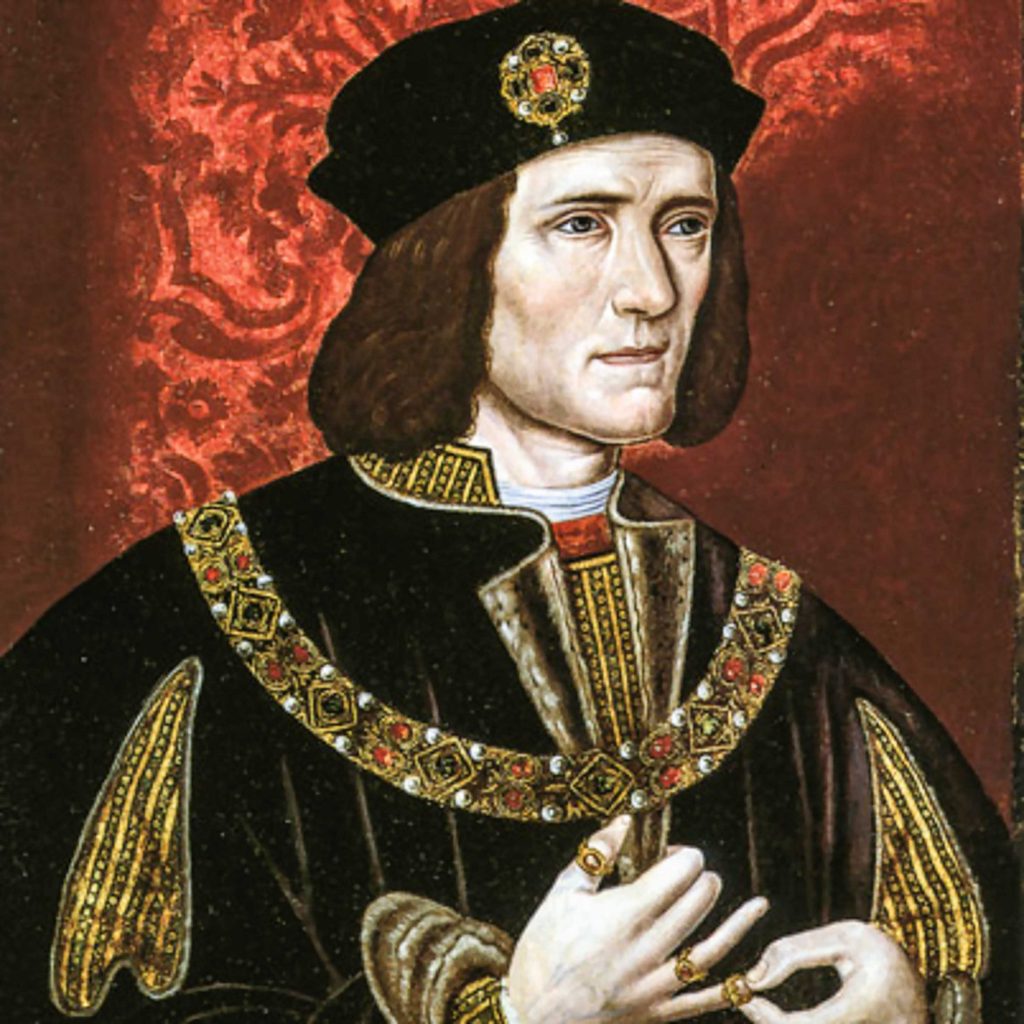
While we know the central and western parts of the Yorkshire Dales, the eastern edges alongside the Vale of York are, to say the least, a bit hazy to us. After doing a bit of research, we found that Richard spent his childhood and trained in knightly skills at Middleham Castle in the lower reaches of Wensleydale. These skills helped him take part in the battle of Tewkesbury (1471) aged just nineteen. It was at Middleham that he met and married Anne, younger daughter of the Earl of Warwick, head of the influential Neville family. Through that marriage young Richard eventually became owner of a whole range of castles, especially those guarding the eastern approaches to the Yorkshire Dales. It therefore seems likely that Richard had a special affection for Middleham, because he appears to have spent much time there, both in childhood and then as a family man, where his son Edward was born. It was this that coloured our decision to make a tour of the countryside Richard would have known so well. Our accommodation in Middleham was an attractive one-time cosy cottage in the shadow of the castle walls. Today, Middleham is home to around 500 young racehorses training for future glories on the flat. Each morning we watched them elegantly trotting away from the village, out towards the training gallops on the nearby Downs; perhaps we were admiring a future Derby winner. Middleham and its friendly locals, most of them involved with racehorse breeding, were always ready to chat over a socially distanced pint of Black Sheep in one of the three pubs; our favourite incidentally was the Richard III. The castle is just off the extensive old market square and is cared for by English Heritage. With the easing of lock-down the castle was open to prior bookings. As there is little or no Wi-Fi in Middleham, that took time, but we eventually managed to book a convenient visit. The castle has suffered as a ready-made source of building material over the centuries, but it still remains in remarkably good shape for its age. Three parts of the outer curtain wall are complete and the central keep could still echo with the sound of feasting lords and ladies enjoying life. There is a modern statue to King Richard inside the castle walls, but his most intriguing memorial is the worn lump of rock on a plinth at the top end of the market place. Although it takes more than a bit of imagination, this is all that remains of the carving of a wild boar, King Richard III’s emblem. Monasteries were at the height of the commercial power and influence during Richard’s lifetime. With their wealth built on wool and careful farming husbandry, lands around the Vale of York are home to a great number of monastic ruins. Attractive ruins the result of Henry VIII’s jealousy, are within easy driving distance of Middleham. We started our tour at Jervaulx Abbey, a short drive along the Ripon road from Middleham. Small by comparison with other abbeys, Jervaulx has attracted visitors over the centuries; the artist JMW Turner came this way while on a sketching tour in 1816. The main claim to fame though, is down to the early monks making the very first Wensleydale cheese. This forerunner of the cheese loved by Wallace and his faithful hound Grommit, was made from ewe’s milk, unlike today which traditionally is made from cow’s milk. Further along the Ripon road, the village of Masham is home to two breweries, both of which can be visited when things are different than today. Theakston’s is the oldest, dating from 1827, and Black Sheep Brewery is the other. Black Sheep was founded by Paul Theakston, fifth generation of master brewers in 1992 when the older company was bought out by one of the national brewing organisations. Travelling via Ripon, we arrived at Fountains Abbey bang on our previously booked time. The abbey is in the bottom of a wooded valley, secluded from car parks and Visitor Centre, but separated only by half a mile of winding path. If there was a competition for the most beautiful abbey ruins, then Fountains would be high on my voting list. No matter how many visitors there might be around once restrictions are removed, Fountains will remain a place of tranquil beauty, a place for quiet contemplation. It was founded in 1132 by a group of 13 disaffected monks who broke away from the mother church of St Mary’s Abbey in York. Here at Fountains they found what they were looking for, hidden from the world in a wild and wooded valley where living an austere life, they could follow a simpler and more devout existence. Members of the Carthusian Order, they were also known as the ‘white monks’ because of the undyed sheep’s wool habits they wore. Spending much of the day in contemplation and prayer, they also found time to develop skills as shepherds, tanners, master-builders and brewers. All these skills helped expand the abbey’s finance’s. By 1200 Fountains was one of the largest and most powerful houses in Britain. Despite damage by Henry VIII’s men who followed his dissolution edict, many of the abbey’s features remain virtually unspoilt, such as the gracefully arched cellars where freshly brewed ale was stored, to the appearance of its almost Victorian Gothic bell tower. A culverted stream which once provided water for the abbey’s needs, winds down the wooded valley for a little way before being slowed by a series of ponds and water gardens. This is part of Studley Royal, an attractive addition to Fountains Abbey created by John Aislabie and his son William in the eighteenth century. John was an over ambitious politician who fell from favour. As a result he retreated here and along with William, the pair managed to buy Fountains Abbey and set about designing the water gardens where their elegantly attired guests could stroll at leisure while
Restaurant Review – Shapla Spice

I’ve always thought of Ripley town centre as a comfortable place. A wide variety of shops; well connected by public transport, which runs through the centre of the town, and there’s plenty of car parking. Ripley isn’t overpowering; part of its charm is that it’s all on a human scale. That comfortable feeling doesn’t vanish as night falls and on a blustery, chilly winter’s evening Shapla Spice was a warm welcoming sight as Susan and myself hurried from our taxi and into the restaurant. Situated on the corner of Church Street and Mosley Street, Shapla Spice is very convenient for both buses and taxis. Plus the added advantage of that very large car park across the road; Ripley marketplace. We were greeted by Amin, the owner, and shown to our table. The smart exterior and the contemporary decor of the softly lit interior, reflects the restaurant’s understated elegance. The layout is not overcrowded. The tables, with their white linen tablecloths and napkins and stylish place settings enhance the restaurants modern ambience. We chatted to Amin who told us how a chance meeting with a local businessman persuaded him, with his several decades of experience, to open a restaurant in Ripley. Over the years Shapla Spice has grown in size but always remained on this busy corner of the marketplace. The restaurant does not have an alcohol license but does offer a selection of soft drinks. One advantage of this absence is that you can turn up with your favourite beer or wine. We arrived with both and without asking, the appropriate glasses and ‘openers’ arrived on our table courtesy of one of the attentive but unobtrusive waiters. Shapla Spice specialises in traditional Bangladeshi cuisine. Amin talked us through the extensive menu indicating how spicy, hot, creamy or sweet each dish was. And so for my starter, following his suggestion, I chose the sea bass. Sue, not wanting to spoil her appetite, said she would share it with me. While we waited for our starter we nibbled on two warm poppadoms. These came with the usual lime pickle, a sweet tomato sauce and an onion and tomato salad. Plus a delicious mint and yoghurt sauce; a perfect balance of sweet and sour. My starter, the sea bass fillet, was panfried with a lightly spiced dusting on the skin. It added to, but didn’t mask, the delicate flavour of this perfectly cooked fish. It was served on a bed of sautéed peppers and a few strands of onion, accompanied by a dash of sweet chilli sauce. Light, slightly spicy and full of flavour; this dish is far removed from the pakoras and kebabs that traditionally start an ‘Indian’ meal. For her main Susan had chosen laseez and a garlic naan. Laseez is a chicken tikka dish prepared with diced onion, tomato, garlic and a hint of chilli in a sauce finished with double cream. This mildly spiced dish is combined with spinach and topped with melted cheese. The chicken was moist and tender and the cream sauce, with its many spices, was full of flavour. Rice would have been lost on this dish but the fluffy garlic naan that Susan had ordered was the ideal commitment for mopping up the rich sauce. I had selected the Akbori lamb and pilau rice. The meat had been marinated, barbecued and served in a spicy tomato sauce along with roast potatoes, garlic, crispy onion, fresh coriander and a slice of lemon. The pilau rice, with the fragrant aroma from its traditional spices, was presented in the centre of the dish surrounded by the tender lamb. The rice and lamb made perfect partners. The lamb sauce was mildly spicy but not enough to mask the flavours of the pilau rice. It had been a wonderful evening. We could have stayed longer chatting and drinking the excellent coffee topped up by the ever attentive waiter but the taxi we had booked was waiting. We said our goodbyes and hurried out into the cold night. Settling into the back of the taxi we reflected on how relaxed the evening had been and how we had discovered new delights from that vast subcontinent. 00
Taste Derbyshire – Canine Delights
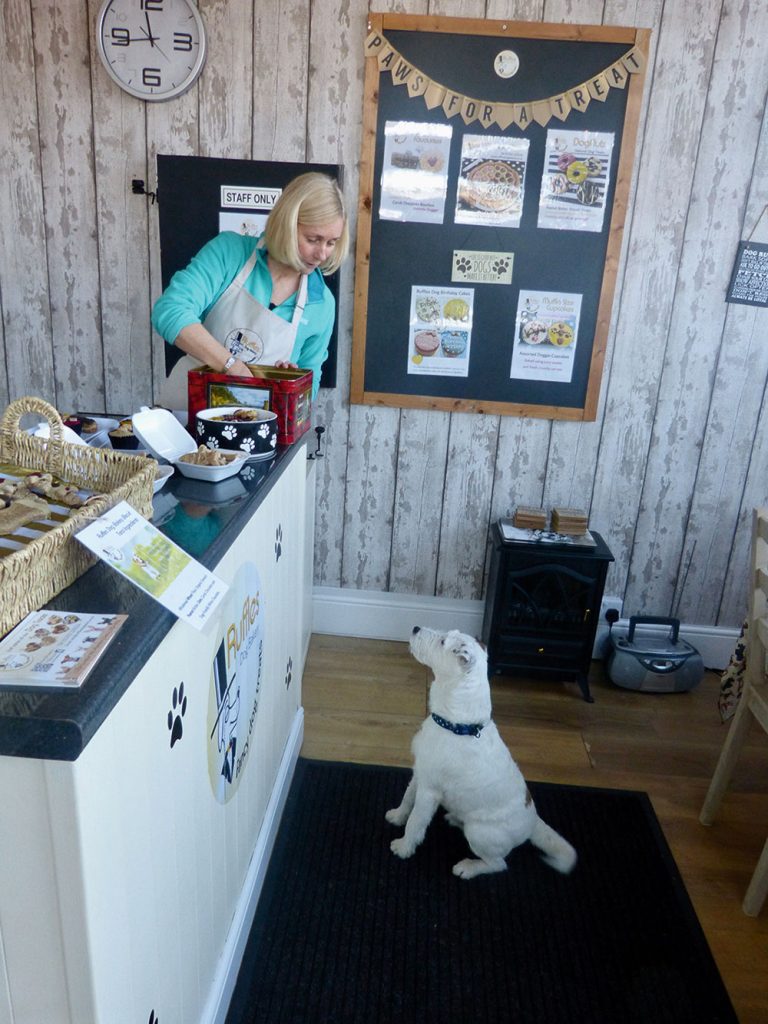
More and more restaurants and cafés are opening their doors to canine customers and Derby even has a fancy bakery exclusively for dogs. Taste Derbyshire’s Amanda Volley went along with her naughty pup Eddie to find out what would happen if you put a Jack Russell in a bakery. My Jack Russell, Eddie, is typical of his breed in that he lacks any kind of self-control around food. I say ‘food’ but some of the snacks he has enjoyed between meals include a clump of squirrel fur, an empty cake box, rabbit droppings and a hair bobble. Moreover, he has no qualms about stealing from shopping bags, picnic mats and the hands of old ladies trying to feed bread to birds. Which explains my trepidation when Eddie and I were invited to sample the culinary delights on offer at Ruffles; an upper-crust bakery on London Road, Alvaston, catering exclusively for dogs. Never mind sugarplums, I had visions of compensation claims dancing through my head. Owner Donna Wakeman, (54), was confident the quality of her bakes would be enough to turn Eddie from a treat-seeking missile into a perfectly behaved pooch worthy of top-notch nibbles. “I’ve never had a problem with a badly-behaved dog,” Donna smiles as she puts a selection of deliciously decorated gourmet bakes onto her counter. “I organise private parties which means all the dogs tend to know each other and we can just lock the door, let them off the lead and everyone can relax. Most dogs are a bit nervous in a new environment but yours seems lovely.” Remarkably, she is right. Subdued by the promise of free samples, Eddie looks ready to take his place in polite café society as Donna talks us through her morning’s baking. “The biscuits are made from healthy ingredients like wholemeal wheat flour, oats, and organic smooth peanut butter,” she says popping the odd morsel into the mouth of my canine companion. “They’re decorated with dog-friendly white chocolate or Carob and I only use natural colourings – the gold is turmeric which is great for doggies with arthritis and the pink is beetroot powder which tastes just like strawberry. They are delicious with no hidden nasties. The only things I ever add are natural ingredients like fresh herbs and grated carrot.” As Eddie casts an approving eye over the delightfully decorated ice cream cones, cup-cakes and DogNuts (dog-friendly doughnuts), Donna explains why she began baking for dogs. “I started making homemade treats because my rescue dog Alfie, now four, was such a fussy eater,” explains Donna, of Boulton Moor. “We were trying to train him with supermarket treats but he’d either ignore them or go and bury them. I found lots of dog treats recipes on the internet but it took three months of trial, error and tweaking to get one Alfie loved.” It wasn’t just Alfie who turned somersaults for the snacks. “My friend’s dogs liked them so much, they started putting in orders and it just snowballed from there,” she laughs.“I’m a web-designer so I decided to launch an on-line business. The bakery’s name was inspired by a visit to Raffles Hotel in Singapore. My logo is a dog in a top hat, monocle and bow tie and people love it so much, I’m thinking about putting it on a range of accessories like feeding bowls.” The on-line bakery business was so successful, Donna soon out-grew her home kitchen. “When I moved here in July 2018, I was attracted by the large kitchen and I knew the position on a busy, main road into Derby was useful for advertising to potential customers,” Donna says. “Last Christmas, they were queuing out the door. One chap, who was just working in the area, came in and bought ten doggie hampers which included treats shaped like fir trees, turkeys and puddings. This month (February) I’ll be making lots of love hearts for Valentines.” There’s room in the bakery for doggy toys and accessories (Eddie was excited to find dog-friendly Prosecco ‘Pawsecco’ and beer on the shelves) and an enormous table for all the doggie events. “I love catering for afternoon teas and birthday parties. I’ll make dog- friendly sandwiches like peanut butter and cream cheese and serve them from a tiered cake stand,” says Donna.“The selection will include biscuits like the bourbons and custard creams, eclairs, cup-cakes and DogNuts. The owners often bring hats and I play doggie themed music and I always make a special cake for the day.” Donna is understandably proud of her occasion cakes and gives me a sneak preview of one smothered in pink frosting which she’s made for a lucky pup called Luna. “The cakes are made from self-raising wholemeal flour, my homemade apple puree, peanut butter and grated carrot,” she explains.“They are made fresh to order and, if kept in the fridge, they should last up to ten days. Not that I’ve heard a dog ever taking that long to eat one.” As if on cue, we are joined by loyal customer Ella Conway who is at the bakery to buy special goodies for her pet chihuahuas Alfie and Ziggy. “They love coming to Ruffles. If I even mention the name, they start barking and run to the door,” laughs Ella Conway (20), of Shelton Lock. “You can’t buy anything like this at the pet stores. Donna even makes spongy treats for Alfie as he’s eleven now and only has a few teeth. Donna sells fish and chip and pizza shaped biscuits so we can all have a take-away night.” In the long-term Donna would love to branch out into offering franchises as she’d love to see a Ruffles Dog Bakery in places up and down the country. For now, she is content with fulfilling her many orders, hosting canine celebrations and developing new lines including a dog-friendly cocktail called ‘Singa-paw Sling”. “I do have people who think the idea of a dog bakery is a little crazy or that you
Walk Derbyshire – Walks from Stately Homes – Lyme Park
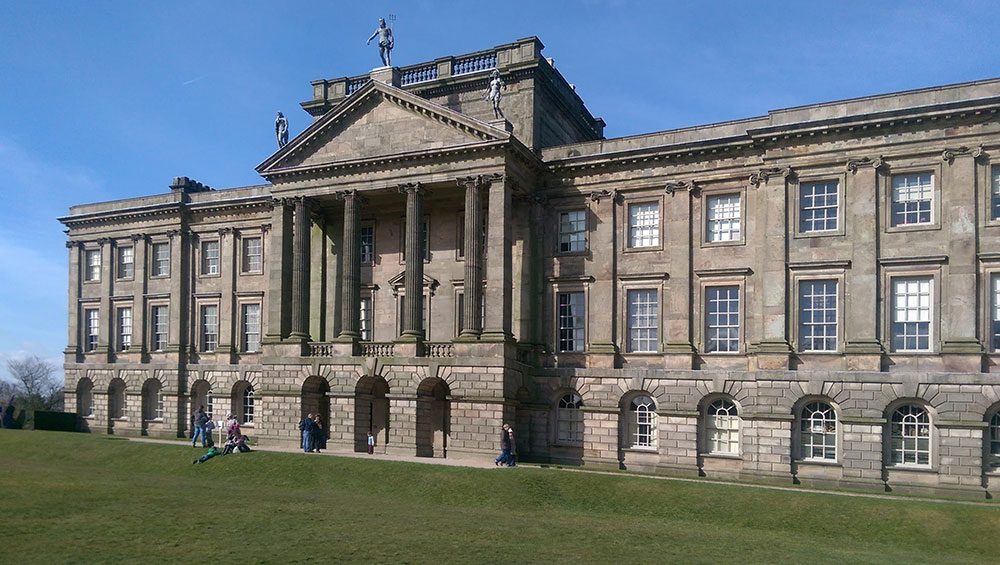
DISTANCE: 3½ miles (5.6km) of moderate forest track, open moorland, surfaced road, waymarked field path and rough access drive. 525 foot (160m) climb. RECOMMENDED MAP: Ordnance Survey Outdoor Leisure Sheet 1, Dark Peak. 1:25,000 scale. PUBLIC TRANSPORT: Hourly TP service buses to Buxton, then bus or train to Disley where a short walk along a back road leads to the driveway beyond North Lodge. CAR PARKING: Official car park below Lyme Hall. Pay and display on entering the park via North Lodge on the A6. Access to Lyme is free for National Trust members. REFRESHMENT: Old Workshop near pond beyond the car park. I thought I had finished my walks from and around the grand houses up and down the Peak District, but recently it was brought to my attention that there is at least one other I have overlooked. This is Lyme Park, the grand Palladian mansion set in the heart of 1,400 acres of woodland and high moors on the north western boundary of the Peak District National Park. A mere ten miles or so from the southern boundary of Greater Manchester, it acts as a popular breathing space for the citizens of towns surrounding what was once called Cottonopolis. Having said that, access is easy for anyone living more to the south; the A6 passes the northern entrance to the park, and regular trains and buses from Buxton stop at nearby Disley. Now jointly owned by Stockport Metropolitan Borough Council and the National Trust, Lyme was the ancestral home of the Legh family for over five and a half centuries. Originally created by King Richard II who in 1398 granted land in the Royal Forest of Macclesfield to Piers Legh and his wife Margaret D’anyers. Over the centuries what was once a hunting lodge became the magnificent Palladian mansion set amongst a rolling moorland background and the attractive formal and informal gardens of today. Orangeries and sheltered rose gardens compete throughout the seasons to the delight of visitors, but it is the Dutch garden on a terrace below the west side of the house which draws the greatest admiration when its formal displays of tulips are at their best. It is not just the house and gardens that visitors come to see. High on a ridge overlooking the main driveway from the A6, a prospect tower known as ‘The Cage’ offers wide ranging views over the Cheshire Plain where, on a clear day the outliers of the Welsh giants of Snowdonia come into view. Another reason why visitors come to admire and enjoy the house and moorland walks on offer, is thanks no less to the BBC. In 1995 Lyme became immortalised as Pemberley in the BBC TV production of Jane Austen’s Pride and Prejudice. The walk passes the pond where semi-naked Mr Darcy (played by Colin Firth) unexpectedly emerges from a lake in full view of Elizabeth Bennet, played by Jennifer Ehle. The walk passes the pond, but be prepared for a surprise, not only will there be no Dashing Mr Darcy, but the pond is usually a muddy slimy affair, hardly something to attract a swimmer on a hot summer’s day. Starting from the car park below the hall, the walk climbs out through Knightslow Wood, out on to Park Moor where you might be rewarded with a view of magnificent red deer, part of the herds roaming unhindered throughout the park. At the top of the climb an enigmatic pair of upright stones known imaginatively as the Bowstones, are probably the remains of two late Saxon preaching crosses, minus their cross pieces. Bowstones is the highest point of the walk. An access lane from the remote farmhouse drops down to a side road linking Kettleshulme and Disley, but the walk does not join it. A left turn on to a farm track leads to open fields as far as the old eastern route into Lyme. Turning left at East Lodge the walk follows this old track back to the hall and the welcoming refreshment stop at the old timber yard and its workshops. The Walk 1 From the car park, turn left away from the hall and follow the surfaced lane curving left, uphill. 2 Turn left on to a wide track at the top of the hill and go through a metal swing-gate. 3 Following a Gritstone Trail signpost, continue uphill with trees on your left and rough moorland fields to the right. Although there is no access from the track you should be able to get a glimpse to your left of the small pond where Colin Firth aka Mr Darcy emerged under the flustered gaze of Elizabeth Bennet (played by Jennifer Ehle in the BBC adaptation of Pride and Prejudice). 4 Enjoying views of Lyme Hall on your left, go through Knightslow Wood, following the track until it reaches the park boundary. 5 Cross or go through the wall and turn left on to a rough path climbing steadily uphill. Aim for a group of telecommunication masts on the ridge-top ahead. 6 Climb over the moorland boundary wall and keeping to the right of Bowstones Farmhouse, aim towards the farmhouse’s access drive. Two enigmatic stones within a small iron-fenced enclosure are the Bowstones. Folklore says they were used for bending new bows in Saxon times, but they are more likely to be the uprights of a pair of late Saxon preaching crosses with their cross pieces broken off by zealots during the Commonwealth following the English Civil War. 7 Walk down the drive for about a mile until it meets the main road and almost immediately turn left on to a farm lane. 8 Follow the lane as far as Cock Knoll Farm. 9 Go through the farmyard as directed by waymarking signs and out through a gate. 10 Following a boundary wall, go down the left side of the couple of fields beyond the farm. 11 Descend into and cross a shallow valley on a waymarked field
Celebrity Interview – Susan Boyle
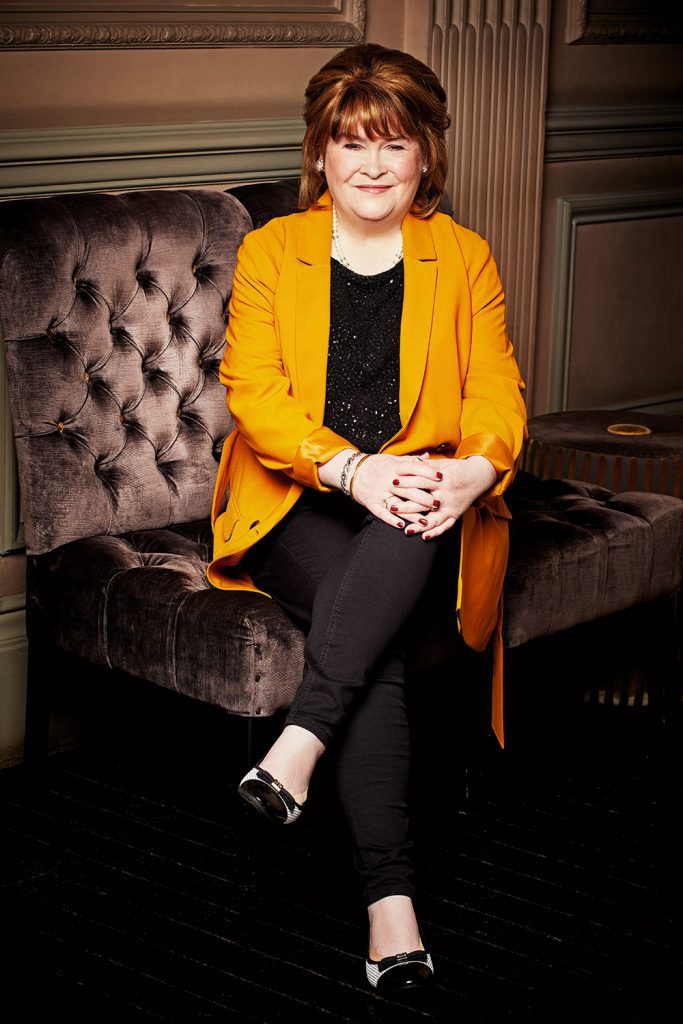
More than ten years on from her unforgettable rendition of I Dreamed A Dream from the musical Les Misérables, Susan is heading out on tour to do what she loves most of all: singing to an audience. When she stepped onto the Britain’s Got Talent stage, few people could have imagined the impact she would have. It would change her life. Despite finishing second in the final to dance troupe Diversity on the show watched by 17.3 million viewers, Susan went on to have unparalleled success. Her first album I Dreamed A Dream is the fastest-selling UK debut album of all time. She became the oldest female to reach number one on the UK albums chart with her second offering The Gift. Only three acts have topped both the UK and the US charts twice in the same year. Susan is one of them. All this from a woman who was bullied at school and was brought up thinking she had a learning disability. It was only after she had become a household name that she was told she had been misdiagnosed: she had Asperger’s syndrome and an above-average IQ. Before I spoke to Susan about coming to Nottingham on her latest tour, her publicist told me that Susan doesn’t like structured interviews and I should regard our conversation as a casual chat. Susan, who was born in Blackburn, West Lothian, has a pronounced Scottish accent. It can be a bit difficult to understand but after a while she comes over as gentle, caring and unruffled by anything the music world can throw at her. So what will she be singing on the tour? “There’ll be a mixture of songs from the latest album and a lot of new stuff. It won’t be as classic as last time – it’ll be more informal. There’ll be songs to get people up and dancing in the aisles. It’s fun!” Naturally she will sing I Dreamed A Dream: “It’s my signature tune. I have to include that. That’s what it’s all about and how I got there in the first place. People expect it.” Susan Magdalane Boyle was born on 1st April 1961. Her father was a miner and a singer while her mother was a shorthand typist. The youngest of four brothers and five sisters, Susan took singing lessons and performed at local venues. Her mother urged her to enter Britain’s Got Talent. She almost abandoned the plan because she thought she was too old. So did she ever think she would get through? “I didn’t think anything, to be honest. I just went on and had some fun.” Was she nervous? “Who wouldn’t be? It’s such a big event. In front of Simon Cowell who can be quite strict with you. Of course I was nervous but you get over it.” When she said her wish was to become as famous as the British singer, actress and presenter Elaine Paige, Simon Cowell smirked. But he was stunned when he heard her sing. One American news organisation described her as “the woman who shut up Simon Cowell”. She says: “When they saw me step out on stage, people thought I was going to be awful. I proved them wrong. You don’t judge a book by its cover.” Can she believe it is ten years since her first appearance on the reality TV show? “One day you’re sitting in a room with your cat not doing anything, the next you’re on stage and in a competition. It was a complete turnaround. Ten years – I can’t believe it’s gone by.” Within nine days of her first appearance on Britain’s Got Talent, the video of I Dreamed A Dream was viewed 103 million times on 20 different websites. Newspapers around the world including China, Brazil and the Middle East carried articles about her performance. She was interviewed via satellite by several US television stations. Simon Cowell signed Susan to his recording label and controls much of her output. She pays tribute to the man derided by so many people. “Simon was very supportive and very kind. I can’t say a bad word about him.” Susan’s eighth studio album called Ten – marking a decade in the business – was released last May and another one will follow after the tour. “Being in a recording studio is peaceful. It’s a kind of different world,” she said. “I’ve been entrusted to do another album with Simon himself. The whole album’s being discussed at the moment. It’ll be full of surprises. It’s really exciting and I hope to go on from there. I don’t stop, you know!” So far Susan has sold more than 25 million albums, performed to half a billion people on the final of China’s Got Talent, written her autobiography and had cameo roles in a couple of films. What has the past decade been like? “I’ve been round the globe, I’ve sung for the Pope, I’ve sung for the Queen, the list goes on – I’ve done so much.” In 2012 Susan performed at Windsor Castle for the Queen’s diamond jubilee pageant, singing Paul McCartney’s Mull of Kintyre. Last year she met the Pope at the Vatican in Rome. Susan, Lionel Richie and Bonnie Tyler all sang at an annual Christmas concert there, raising money for the Amazon rainforest. A practising Roman Catholic, Susan was overawed by the experience: “The Pope’s a very family-oriented man. Indescribable, the feeling really. Very close to God himself.” She appears to take everything in her stride and believes it’s because when she went on Britain’s Got Talent she was more mature than many of the contestants who go onto TV reality shows. “When you’re young you’re more fazed than when you get to a certain age – you become more relaxed. I’m living the dream! I’ve enjoyed every second of it.” There are some people whose musical tastes might not include the kind of music that Susan Boyle sings so well. But few people can begrudge her the
Cruising Up The Rhine

When Brian Spencer went on a Rhine cruise, little did he realise that the high point of the trip was, for more than one reason, several thousand feet above the level of the river. A mere four hours after leaving Matlock, we emerged care of Eurostar into bright sunshine on the French side of the Channel Tunnel. Somewhere near Lille the line branched left and in no time at all we were in Brussels. Here a coach whisked us away over the border to Cologne and our first view of the busy River Rhine. Our home for the next week was the MS George Eliot, one of the luxury river cruisers which tour the major European rivers. These rivers, especially the Rhine, are wide and deep enough to carry huge commercial barges, everyone loaded with anything from liquid gas to sand and gravel. Many of those we saw had comfortable living accommodation above the stern, and some even had a small car perched on top of the wheelhouse. Settled in our cosy cabin and fed like royalty, we could sit back and enjoy the gentle pace of our cruise up Father Rhine. In this lower part of the river, the scenery was of gentle farmland, but as the valley sides steepened, castles and vineyards began to make an appearance. Twin riverside towers are the poignant remains of the Remagen Bridge, the site of the famous battle during World War 2. It must be hard deciding where and when to stop and explore the multitude of interesting places along the river. Our first port of call was the ancient wine centre of Koblenz, standing at the junction of the Moselle and Rhine. Narrow cobbled streets and tiny pedestrianised squares seem timeless, places where there is something new round every corner. In one of the squares, the statue of a boy spits water at irregular intervals, much to the surprise of unwary tourists. The point where the two rivers meet is called the ‘German Corner’ (Deutsches Eck). Above it is the massive equestrian statue of Kaiser William 1st, the first emperor of Unified Germany in 1897. Just a stride or two beyond it is the ground station of a cable car service to the 16th century Ehrenbreitstein Fortress. Meant to guard the river approaches to central Germany, it fell to the French during one of the Franco-Prussian wars in 1799. Entering the Middle Rhine above Koblenz, hillsides above both banks are lined with vineyards, they seem to cling at impossibly steep angles to catch the warm sunlight. Dotted at regular intervals are castles of all shapes and sizes, many no longer the home of some wine growing baron, they now find a modern use as hotels, or schools. Around a point about half way along the 1,000 kilometre length of the Rhine, the 393 metre high Lorelei rock confines the river into a narrow, fast flowing channel. Today’s traffic operates on a one-way system, but in times gone by many ships came to their doom on the treacherous rocks. Romantic German poets founded the legend of a beautiful girl, who lured unsuspecting sailors to their fate. If you look carefully, you should be able to see her riverside statue low down on the riverbank. This is the main German wine country where all the finest vintages are on offer in bars and restaurants. Tiny historic Drosselgasse lies at the heart of Rüdesheim, and attracts visitors from all over the world. Not content with producing fine local wines, the Asbach GMBH distillery produces German brandy (‘weinbrand’). This premium spirit is not made from German wine, but French for some unknown reason. Speyer is a busy place dating from Roman times and whose medieval city centre is built around a cathedral, the largest Romanesque church still in existence in the world. Medieval emperors are buried here, but it is the church’s links with formation of Protestantism when it broke away from the Holy Roman Empire. Speyer cathedral was one of the places where in 1521 Martin Luther posted his 95 Theses and, much to the delight of today’s schoolboys, the Diet of Worms. Down a side street off the cathedral square stand the ruins of the ‘Judenhof’, Jews’ town. Many of its original features can still be found, either as artefacts in the small museum, or within the ancient walls. Steps lead down to the ritual baths that have an uncanny similarity to the gas chambers of Auswitz where the horror of holocaust were played out. Alternating with Brussels, Strasbourg, the capital of Alsace is the meeting place of the Council of Europe. The city has changed hands many times during wars involving France and Germany and, as a result, the architecture is a delightful mix of both styles. Half-timbered buildings hundreds of years old line streets and squares surrounding a 13th century cathedral; its Gothic spire built in 1500 was once the tallest building in the world. Hundreds of biblical figures decorate the west façade, but it is the interior which takes the breath away. Much of the medieval stained glass has a luminous effect in almost any light and in the south transept, the Renaissance astronomical clock and the 13th century Angel Column are special highlights. Still moving upstream, our cruise entered the region of the Black Forest. Mooring at Breisach an attractive little town perched high above the east bank of the river, coaches took us to Titisee, a smart little town built on the north bank of its lake. A base for walkers since Chancellor Otto von Bismarck escaping the rigours of high office, spent many happy hours exploring the Black Forest. Meet and greet ladies dressed in what can be described as a female version of a Yeoman Warder’s uniform were there to answer questions, but not why a man passed us with a pig on a lead! Titisee is famous for its cuckoo clocks, no longer are they assembled by farmers trapped by
Allestree – From Norman Doors to Arts & Crafts

Allestree’s ancient village – the only part of what is now a huge amorphous suburb really worth dawdling round – is remarkably compact, which makes a tour that much less complicated. It is also high enough above the city to the south, to ensure clear, breathable fresh air. Not to be sneezed at, as one might say. The reason for its compactness is that it was always a subordinate settlement. At Domesday Book (1086) it was an outlier of the manorial estate of Markeaton, for instance. Ironically, while the ancient village of Markeaton virtually disappeared in the re-landscaping of William Emes in the 1760s, Allestree ultimately flourished. Given to the Abbey of Darley by one of the Touchet family, then lords of Markeaton, it remained Abbey property until the Dissolution in 1538. Interestingly, during that period the Abbot granted freedom to his villein Elias de Allestrey [sic] ‘and all his brood.’ He is thought to have been a member of a family of free tenants fallen into debt or through some other problem, which resulted in servitude, and his gentry descendants can be traced (some still in the area) to the present day. In 1538 the Mundys of Markeaton re-united the place with Markeaton, and it remained with them until Francis Noel Clarke Mundy sold the estate in 1786 to Bache Thornhill of Stanton-in-Peak, who a decade later began to build the hall. It was not until the inter-war period when the estate was finally broken up, that the village ceased to be a small, compact estate village. From then on housing development filled in the areas closest to the village with standard semis, but after the war, in the 1960s, new building westward to Kedleston Road virtually created a new suburb, served by Park Farm and Woodlands shopping centres. To take in the core of the settlement, park up near the pub, the Red Cow (known locally by a less complimentary name which we cannot be repeated here!), a seventeenth century building a pub by 1753, re-fronted c. 1800, and clunkily extended in the 1930s, complete with stained leaded lights incorporating ‘cigarette packet’ heraldry. Stocks once stood outside, and a mortuary behind, we are told. Inside, a stuffed dog once graced the bar, with a bone ring round its neck. From the pub walk to King’s Croft (take a brief glimpse en route at the steeply gabled pretty stone parsonage, by H I Stevens 1867, just east of the church hall) and then turn right into Robin Croft Road, so as to enjoy the architecture of the old Victorian school and the adjacent school house, the latter really rather nicely done and tactfully extended. As the church was rebuilt in 1866-67 by Derby’s Henry Isaac Stevens, the chances are that his handiwork is on display here too. It is a delight to walk onwards from there past the recreation ground, the gift of the last lord of the manor, Col. Lionel Guy Gisborne CMG and his son Capt. Guy Gisborne MC (had they been reading too much Robin Hood, one wonders?) as a memorial to the casualties of the great War. Given some re-landscaping, this could be a delight. Beyond and on the opposite side of the road, lie a run of exceedingly pretty brick cottages, in groups of four, each with a small coped gable – mid-19th century estate workers’ cottages built for Alderman Sir Thomas William Evans, Bt. MP of the hall (and of Darley Abbey mills). Some have been disfigured by render before designation as a conservation area, but the houses directly opposite the recreation ground, private infills of the early 1930s, were designed somewhat to echo the rhythm of the old cottages. At the place where Cornhill joins, one is faced with a pair of much older cottages and if you look just a little further down the road you can see the early 18th century Hollies Farm, now converted into separate homes. However, it is best to turn right into Cornhill, where you will pass another row of 18th century cottages sporting a substantial chimney-stack, the end part with an arched vehicular entry, marking the whole as the house, forge and yard of the village smithy, although they are today three separate freeholds, the ancient brickwork anaesthetised under a coat of render and the windows replaced by thick uPVC casements. One delight, are the ancient stone walls lining the streets almost everywhere, some original, others reconstructed from stone reclaimed from demolished barns and other estate buildings. Cornhill thereafter turns east again with a raised pathway from which one descends to one of Allestree’s little gems, the group of three delightful buildings: Yew Tree Cottage, 17th century (or earlier) white painted brick and timber with thatched roof, a Victorian school house – almost too pretty to be by Stevens, although of that period – and a substantial late 17th century three storey brick farmhouse, like the cottage, end-on to the road. The downside is that someone sold off part of Yew Tree Cottage’s garden on which development has been allowed. Diagonally opposite, beyond the unlovely Evergreen Hall, is another ancient brick cottage (listed) with what looks like a former Regency shop window lighting the ground floor room. Beyond, a further row, but a bit too primped up to have been listed. At their east end is the village pump, upon reaching which one should turn and look south along St. Edmund’s Close, where the cottages on the right make a fine vernacular show undulating away from you. They, with a row of three opposite and a bit beyond them, with the church and pub beyond, make a really charming sight. On the SE corner the Memorial Hall by that distinguished Arts-and-Crafts architect Percy Currey, rewardingly detailed, and set on an elevated bank. However, resist the temptation to go that way; instead continue along Park Lane, past another two groups of estate cottages, some in early brick and set upon a massive boulder plinth. It
Lost Houses of Derbyshire – New Hall, Castleton

When Mick Stanley and I were researching the first edition of The Derbyshire Country House around 1980 our attention was drawn by a colleague of Mick’s at the Derbyshire Museum Service (of blessed memory) to an item in a north Derbyshire auction. Provenanced from a vendor in Buxton, this was a fine oak 17th century dresser – really a court cupboard – which had come from New Hall, Castleton. This was identified by a friend who knows his oak furniture as probably being of west Derbyshire origin, although the flowing vine frieze and tubby pilasters were of a pattern which appears to have originated in the Wakefield area. We were unable to establish anything about this mysterious house at the time, nor to discover a picture of it, which guaranteed that we would not be able to write about it, for our book was an illustrated one, after all. However, whilst looking into what is known as Sheffield School plasterwork in the late 16th and early 17th century, especially as found in Derbyshire country houses, a colleague at Sheffield Museum sent us a copy of an article in Vol. III of the Transactions of the Hunter Archaeological Society in which a short account of this house appeared. He also found us a fairly scratchy photograph. The house was situated on rising ground on the north side of the road which runs west from the centre of the village, not so far north of the Methodist chapel, build within its immediate surroundings, such a position being favoured by one or two other gentry houses on the edges of the village, like Losehill Hall. In its last phase, the house was a lowish two storey structure of carboniferous limestone rubble with a single crosswing, itself higher and endowed with chunky ashlar quoins. Indeed, it much resembled a slightly scaled up version of Hazelbadge Hall as seen in a mirror, and the crosswing was probably of similar date – later 15th century. The superimposed five-light mullioned windows had a decorative treatment of their heads of a closely similar style and, after all, Hazlebadge is only just over the hill to the south, and the same mason may well have been responsible for both. When the house was originally built, the great hall would have been open to the roof with either a central fireplace venting through a hole in the timber roof, or – here more likely given that we cannot trace the house back that far – by a fireplace and stout chimney breast on the long side opposite the door. Here, right of the door would have been a passage from which the kitchen and other offices opened. Where it differed from Hazelbadge is that the great hall range (missing at Hazelbadge), at right angles to the crosswing, had clearly been demolished at some stage, probably in the very early 19th century and replaced with a simple farmhouse of the most rudimentary architecture. What survived of this part until the demise of the house was a lowish (distinctly lower than the crosswing) two storey range, also of random rubble, albeit latterly harled, with six bays, bays two and four having no fenestration but each a door, the former into the house through a very plain stone surround and the latter into the byre with a re-used stone Tudor doorcase. The windows are all sashes, paired with a mullion in between and set in simple stone surrounds. Both wings had stone slate roofs, and latterly, too, the late Medieval wing had a door crudely inserted at the gable end to the right of the windows. To the left was what was probably a further part of the original house which may, indeed, have been built round a courtyard. What appeared as a ruined barn rejoiced in a six light mullioned window with similarly decorative head, but with some mullions missing. Probably this was moved when the original great hall wing was taken down and saved, whether out of sentiment or a typically Derbyshire desire not to waste something of use and beauty. The crosswing held most of the surviving Sheffield School decorative plasterwork, although mutilated re-positioned scraps were also preserved in the ground floor of the main range, which must have been spared later alterations, probably out of sentiment or through merit. Fortunately, a painting of an unknown house appeared at Bamford’s auctions in December 2003, which we managed to identify, from the topography, provenance and detail, as New Hall, Castleton. Although anonymous, it clearly dated from the Regency period, and the great boon was that it showed the previous range intact. Several changes were discernable. The crosswing originally was steeper to the gable (which had decorative coping) and boasted attics, lit by a two-mullion window, with decorative coping to the gable itself. This was later lowered and simplified. The main range was the same length but originally had five light windows to the left of the four-centered arched entrance, those on the ground floor with a transom too. Beyond the entrance, the fall of the ground enabled there to be an attic, this section running to two bays again with transoms to the ground floor windows. This in itself probably represented a later 17th century rebuilding, where the great hall, to the left of the entrance was floored over and rooms made above it, a common change to surviving medieval houses of the period. Indeed, the portion beyond the entrance may have been added at this time. The house seems to have been built by Thomas Savage, second son of Sir Thomas Savage of Rocksavage, Cheshire, ancestor of the present Marquess of Cholmondeley. Another cadet branch of this family had previously held Tissington, and the senior line were of Stainsby, by Ault Hucknall, until a later Savage sold it to Bess of Hardwick who, needless to say, pulled down their ancient moated manor house. John Savage increased his estate through marriage to Alice, one of the co-heiresses of Humphrey
Product Test – Avon

Game-Changing Skincare from Avon The NEW game-changing skincare brand from Avon celebrates clean beauty without compromise. The collection is composed of 9 innovative skincare and colour products which combine high-performance, vegan-friendly ingredients with beautiful textures, environmentally conscious packaging and an ethical mindset. Lip Rush £12 It’s the unique blend of ingredients combined with the soft, cushiony tip applicator that gives you a pout that’s always on point. With pure colourants for a vibrant, potent lip colour and vegan emollients for a clean conscious, Lip Rush is The One you’ve been waiting for. Unique whipped-up texture and vibrant, potent colour infused with mineral pigments, pure colourants, vitamin E and vegan emollients Available in 9 naturally beautiful shades This lip colour is: Vegan and eco-conscious* Fragrance free Ethanol free Clinically tested Dermatologically tested Allergy tested Shadow Shots Eyeshadow £10 Our mineral eye shadows give you vibrant colour in one guilt-free swipe. The specially purified, high-impact mineral pigments are blended with vegan emollients to deliver a potent punch of buttery-soft colour. Vibrant colour and buttery-soft texture Infused with naturally occurring minerals, vegan emollients and organic corn starch Available in 7 naturally beautiful shades Vitamin C-Shot Powder £22 About me: Vitamin C is at its purest, most potent and effective in powder form. A pure shot of this vitamin C face powder to your moisturiser will leave you with brighter, more luminous looking skin. Oh, and we also added in some vitamin E for extra oomph. • Suitable for all skin types • 100% vitamin C & vitamin E • Vegan & eco-conscious* For more information visit www.avon.uk.com TRIED & TESTED TRIED & TESTED TRIED & TESTED Vitamin C Shot I’ve never used anything like this before which isn’t already added to a moisturiser so it’s great that you can just pop two shakes onto your hand and add to your own. It leaves skin instantly brighter and looks healthier. VP Lip Rush Stunning shades of gloss. Last ages on your lips. Slightly sticky but all glosses are. Lovely product. JP Shadow Shots Eyeshadow Lovely, crease free eyeshadow. Lasts all day. Easy to apply with a brush or finger. CB 00