The Lost Houses of Derbyshire – Norton House, Norton

For any reader who missed my description of Greenhill Hall, I ought to repeat that although Norton is today a fully integrated suburb of Sheffield, this has only been the case since 1936, when the Sheffield Council, greedy to boost rate income, managed to obtain a large chunk of NE Derbyshire during the local government boundary review of the year before. Not that it means that Norton wasn’t already effectively a suburb of Sheffield, not a bit of it; that situation was effectively achieved by the 1890s, and indeed the village and very extensive parish always looked to Sheffield rather than Chesterfield or Derby. Because the parish included several townships with separate manorial estates, there were also quite a number of country houses, of which the Hall survives, most recently as flats along with The Oaks. Several others have gone, including Norton House, although there is a replacement on the same site. If you refer to Samuel and Daniel Lysons’ History of Derbyshire – volume five of their incomplete magnum opus, Magna Britannia – you will find that Norton House ‘was supposed to have been built by the Morewoods’ a claim I find it difficult to substantiate; for the story is a long and complex one. The house that survived into the age of photography, and was photographed by Richard Keene of Derby sometime in the early 1860s, had a seventeenth century core, resulting in an H-shaped plan. It was constructed of two storeys and attics of local coal measures sandstone ashlared into thinnish blocks with smooth dressings of millstone grit. The central section was recessed between the two wings under straight coped gables, and the house was somewhat similar in build to Carnfield Hall near Alfreton. The windows were mullioned (and probably transomed). Inside there were oak pannelled rooms, some very richly carved, with a number of Sheffield school decorated plaster ceilings, that in the dining room being of six compartments with a different decorative motif in each. One chimneypiece bore a similarly styled decorated plaster overmantel bearing the armorial crest and initials of Leonard Gill and the date 1623, which we may reasonably take to be the date of building, although there had been a previous house on the site. This had been acquired and built by the family of Bishop Geoffrey Blythe, one of eight sons of William Blythe of Norton Lees, who had bought the site from the Babington family. Quote how it came to the Gills is, however, unclear, for the Bishop sold the estate to Chesterfield apothecary Richard Wood. Presumably his successor sold it on to the Gills. We get some idea of the appearance of this original house from a drawing in Chantrey Land, presumably done in the nineteenth century, showing wide gables on the projecting wings of the north front and mullioned windows on the principal floors with enhanced (raised) transoms, with string courses along their tops. In the civil war period, Gill died, leaving a widow who had a life’s interest in the house and paid tax on six hearths in 1670, and an only daughter, who was married to Rowland Morewood of Oakes Park, nearby, hence the Lysons’ remarks. But when he died in 1658, his son and heir, John (married to Leonard Gill’s great niece Elizabeth) went to live at Alfreton Hall, whilst his brother took on Oakes Park so, on Mrs. Gill’s death the house and its estate were sold to Samuel Hallowes, High Sheriff of Derbyshire in 1674. But, as we saw in October’s Lost Houses, he was living happily at Glapwell Hall, and his son Thomas sold Norton House once again to the Radcliffes from whom it passed in short order to the Bramhalls who sold it to John Wingfield of Hazelbarrow Hall (another lost house in Norton parish) in 1712 in order for him to endow his daughter Margaret with it on her marriage that year to Robert Newton of Mickleover. Mickleover then had no seat (the Old Hall having found its way into the hands of the Cotchetts) and so Newton established himself at Norton House and decided to modernize it, most of which effort was directed at the south (garden) front. He removed the gables and replaced the attics with a half storey and a plain parapet above. The doorcase was given an open pediment on brackets originally with a swagger coat-of-arms in the gap, and the windows were all sashed, and given moulded stone surrounds, that above the doorcase indeed acquiring a somewhat more elaborate treatment. The central attic window was an oeil-de-boeuf set in an oval surround with four keyblocks. The original string courses were mainly suffered to remain, and the sashes did not extend to the north front. We do not know the identity of the architect. Whilst one might suspect a man from Sheffield being brought in, it is important to bear in mind that Newton had connections further south, and two other country houses in Derbyshire have the same style of pedimented doorcase and oeil-de-boeuf above: Wheston Hall, Tideswell (mainly demolished, see Country Images November 2014) and Winster Hall still, thankfully, extant and lived in by appreciative owners. We do not know for sure who designed either of them – most likely it was John Barker of Rowsley (1668-1727) – except that it looks very much as if they are all by the same hand. All date from exactly the right period, too. Until the death of the bachelor son, Robert, the Newtons occupied the house longer than anyone else, I suspect. However, as by 1789 Newton had acquired Bearwardcote Hall as well, he left his southerly estates to his nephew Robert Leaper (later Robert Newton) Mickleover, and a life’s interest in Norton House to three other kinsmen all kin to his mother: William Cunliffe-Shaw (great-grandfather of R. Cunliffe Shawe FSA, author of that classic of Dark Age arcana, The Men of the North) his father Joseph and great-grand-daughter Harriet, daughter of Wingfield Wildman
One Man & His Coe

Some men when they retire build themselves a shed where they can happily pursue their hobbies, or chat with their pals. When Terry Haughton of Middleton-by-Wirksworth retired, he made a bid for a couple of fields at the top of his property. Possibly his idea was to do a bit of small time farming, but his plans were changed radically when he began to tidy up a pile of rubble at the top of his garden. As the pile began to subside, Terry was shocked to find that it was disguising the top of a mine shaft. One of at least 5,000 sometimes unprotected mine shafts dotting fields throughout the Peak District, it was subsequently thought to be a winding shaft accessing a lead mine following the Stichen Vein which runs from beneath Middleton Moor to what became Dene Quarry near Cromford. With the shaft blocked almost to the top by rubble and rubbish, but certainly a potential hazard, Terry decided to make it safe by encasing the surface around the top of the shaft with concrete. Rather than fill it in, he finished it off with safety glass and a man-hole cover. Thinking ahead, he also installed an LED lamp to help visitors admire the still functioning ginging, or dry-stone lining to the shaft’s upper section. To keep visitors dry when they came to see what he had found, Terry built a corrugated roof to shelter his handiwork, later turning it into a high level wildflower garden. Unfortunately the roof was not proof against Peak District weather, and the shed was in need of walls. To do this as quickly as possible, he used bales of straw instead of time consuming stone and, in an instant, his shed became a coe, or miner’s shelter. All it needed was a bit of carpet, a couple of chairs and a small settee and, hey-presto, the place was ready for visitors. Looking down the shaft, it soon became obvious that it was part-filled with all manner of rubbish. Without any mining knowledge, Terry puzzled over what to do, especially as he was keen to see where the shaft led. Salvation came one Sunday afternoon when a few members of the Goodluck Mine Preservation Club were slaking their thirsts in the Nelson Inn nearby. Goodluck Mine, incidentally, is high on the side of the Via Gellia and runs beneath D.H. Lawrence’s Mountain Cottage, not far down the road from Middleton. Plucking up courage, Terry asked one of the Goodluck people if they would be interested in exploring the mine he had found at the top of his garden. This was an offer they couldn’t resist and, over the span of a few weekends work started on clearing out the shaft. It soon became obvious that the shaft had over the years, been used as a dumping ground for anything from a dead dog and a cow’s jaw, to glass bottles, a treasure trove for anyone interested in picking over old rubbish. Ginging at the top of the shaft was in perfect order, but as the explorers made their way slowly down the shaft it soon became apparent that the quality of workmanship left much to be desired. What they did confirm was that the shaft cuts into the east-west running Stichen Vein. Starting below Middleton Moor, it passes according to nineteenth century Ordnance Survey maps, directly under Terry’s house to continue beneath the Nelson Inn (which has interesting possibilities) and then on in an almost straight line to Dene Quarry. Terry if he so wished, could by following the laws of the ancient Barmote Court, claim ownership to the mine, if no one else claimed ownership, by applying to re-open Stichen Vein Mine. There is just one problem stopping him doing this – he would have to present the jury with a dish full of ore, the miners’ Standard Dish which has been used since the time of King Henry VIII. With Terry’s original plan to do a little small-time farming put on hold, a highland bull called Henry and two heifers together with a pretty calf, the result of Henry’s attentions, graze peacefully in the paddock, blissfully unaware that bales of straw destined for their comfort, now make the eco-friendly walls of Terry’s coe. Anyone interested in visiting a restored lead mine, especially without the need to descend by way of a shaft (this one is accessed horizontally directly into the hillside), can visit the Goodluck Mine in the Via Gellia. Guided tours are offered on the first Sunday in every month. Safety helmets and lamps are provided, just wear walking boots and outdoor gear. Access to Goodluck Mine is from the Via Gellia, on the left of the A5012 coming from Cromford. Park in the layby on the left beyond Tufa Lodge and follow the path over the footbridge and climb steadily uphill. Go past the first side path on the right and turn right at the next. Wood smoke from the restored coe should act as a guide. 00
Tried & Tested – Dr. Hauschka

Natural Cosmetics with a difference. Our brand is much more than a chic logo – it denotes our cosmos. Our selected medicinal plants are certified organic and help the skin to help itself and to regenerate. We respect our inner beauty just as much as our outer beauty. We are obsessed with quality and have been manufacturing on the same Swabian site for over 50 years, using methods that are still largely manual. In a company that is a Foundation and has no need to think about shareholders. It needs only to respect itself, civil society and the natural environment. Colour Correcting Powder £25 Fresh and refined: Dr. Hauschka Colour Correcting Powder. This powder from Dr. Hauschka includes four different translucent shades to perfect and even out the complexion. The pistachio tone neutralises redness, apricot emphasises your natural skin tone, a hint of vanilla brightens shadows, and light brown combines all four shades in our beautifully balancing Colour Correcting Powder. Apply the powder directly to the skin or on top of your chosen foundation. It is suitable for all skin tones. Foundation £30, 30ml The natural make-up base. Dr. Hauschka Foundation provides lightweight, even coverage that blends seamlessly with your natural skin tone and luminosity. The mineral pigments contained in the formulation reliably cover up skin irregularities and redness. Use our Foundation as a natural base for your make-up or to balance parts of your complexion with the concealer brush. Discover the versatility of this Dr. Hauschka Make-up must-have. Allow your regular day cream to absorb before applying the Foundation. Loose Powder £27 The lightest touch: Dr. Hauschka Loose Powder. So delicate yet so effective – our Loose Powder perfects your complexion and sets your make-up. Apply the Loose Powder either with our Powder Brush or with the included powder puff. The transparent composition of mineral pigments blends naturally with the colour nuances of your skin or with previously applied tinted products. For more information visit www.drhauschka.co.uk Product Test Loose Powder This powder is very fine and leaves your skin with a lovely matt finish. Its natural ingredients mean that it doesn’t dry or irritate your skin but gives a lovely finish either straight on to your skin or on top of a foundation cream. A great product. JP Foundation A little goes a long way with this foundation. It smells lovely, sinks into the skin naturally and leaves skin looking fab. VP Colour Correcting Powder This pressed powder is great at colour correcting redness, dark circles and uneven skin tones. Its easy to use and is a light powder. It gives a matt finish. The only down side is there isn’t a brush to apply it with. CB 00
Celebrity Interview – Les Dennis
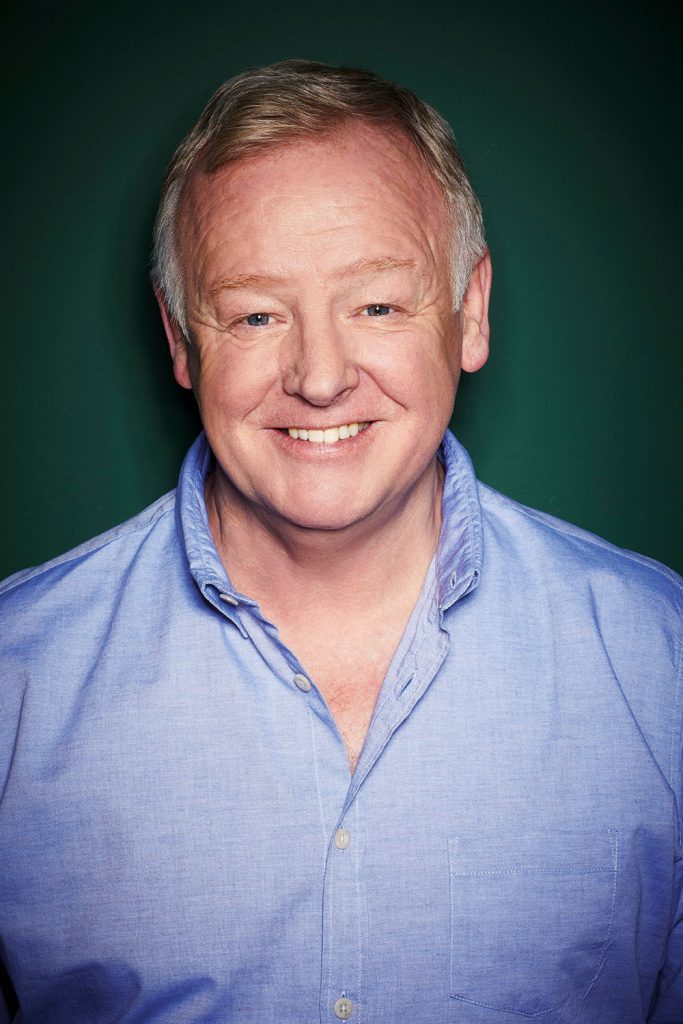
After an amazing year in which he made his Royal Shakespeare Company debut, the all-round entertainer is preparing for a season in panto and he can hardly wait to return to Nottingham, a city that has so many fond memories for him. When we spoke on the phone Les held nothing back as he told me what made him go into the business in the first place, how he credits Ricky Gervais with reviving his career and how he’s determined to return to Stratford to do more serious theatre. Les is relishing coming back to Nottingham where he will appear in the Theatre Royal’s festive feast Cinderella. “I know Nottingham really well. I did panto at the Theatre Royal in 1987, Babes in the Wood. I was also there not long ago when we did The Addams Family musical and then of course I did Family Fortunes from Lenton Lane (Central TV’s studios) for many years. I used to spend at least three weeks a year in Nottingham. “I love the city. I love the atmosphere there. It’s a beautiful theatre to work, intimate and lovely.” In Cinderella Les will be reunited with his Coronation Street nemesis Connor McIntyre. In the soap Les played former convict Michael Rodwell while Connor was Pat Phelan, regarded by some people as “the ultimate soap baddie”. They will team up again in Cinderella as the Ugly Sisters, with their characters renamed Phelina and Michaela. “It works great,” says Les. “The Uglies aren’t dames – it’s men in dresses but they’re the villains. Of course when you get two villains there’s always one badder than the other one and that certainly has to be Phelina.” The pair were in Cinderella in Manchester last year. Now the same show is coming to Nottingham. The only difference is that Sooty and Richard Cadell who plays Buttons have been added to the bill. Les can hardly wait to work with Connor again: “When we were in Corrie we shared a dressing room and when I knew that the end of Michael was going to be at Phelan’s hands, I was delighted. I thought I would rather that than go off in a taxi to the airport. “Michael was his first victim. In a way it was crueller than the others because he didn’t kill me – he let me die, which is in some ways sadistic and weird. But it was great to work with him.” Last year’s Cinderella was Connor’s first panto: “He said ‘I’m completely in your hands’,” says Les. “He let me explain exactly how a gag will work. Once he started he took to it like a duck to water. I should imagine this year he’ll be teaching me a few things.” Les agrees with my assertion that panto is really hard work: “It’s two shows a day every day. I’ll have a holiday in January. “You have a responsibility in panto because the kids are seeing theatre for the first time. You’ve got to get it right and you’ve got to make them want to come back again.” Leslie Dennis Heseltine was born on 12 October 1953 in Garston, Liverpool. When he was 17 he went on a school trip to Stratford to see Shakespeare’s Twelfth Night and thought “Oh, I really want to do this.” But he’d already started playing working men’s clubs as a comedian and an actor’s life seemed out of reach when he won the ITV talent show New Faces. He joined Russ Abbot on his television show before forming a comedy partnership with fellow impressionist Dustin Gee which ended with Gee’s unexpected death in 1986 at the age of 43. Les then hosted Family Fortunes for 15 years. He’d been divorced from his first wife and during the quiz show’s run he married actress Amanda Holden. While they were separated Les appeared on Celebrity Big Brother. Although he finished runner-up he had what the press perceived as a breakdown live on television. Afterwards the phone didn’t ring for a while. Then Ricky Gervais offered him a part in his series Extras as a washed-up, middle-aged television star who is cuckolded by a younger man. “People kept saying it was a brave move but it gave me a chance to show that I’ve got a sense of humour about myself. I took it with both hands and it’s opened me to a whole new demographic. “There was a poll recently about which was the best episode of Extras and I’m in the final. Which is amazing when you consider you’re knocking out Kate Winslett, Samuel L Jackson and people like that.” He worked with Gervais again on the series Life’s Too Short with Warwick Davis, Keith Chegwin and Shaun Williamson. Then, in 2014, it was announced that Les was joining Coronation Street where he stayed for two-and-a-half years. “It was brilliant and I loved it. But it got to the stage where I wasn’t allowed to do other things that I wanted to do because you’ve got to commit to Corrie. In the end I thought it was time to move on. “When I did leave I went straight into The Addams Family and then into other theatre jobs that I really enjoyed. “I think if you’ve got a name before you go into a soap, you’re not defined by that soap when you come out.” In 2014 Les showed his acting prowess at Derby Theatre when he played Victor Smiley in Peter James’ play The Perfect Murder. Then earlier this year Les was cast by the Royal Shakespeare Company in two Restoration plays in its smaller Swan Theatre. He played a corrupt senator in the tragedy Venice Preserved by Thomas Otway, acting alongside his niece Jodie McNee. He was also in John Vanbrugh’s comedy The Provoked Wife. “It was a real bucket list job,” says Les. “I had a ball there and worked with some amazing directors and actors. It’s like a kitemark
Lost Houses of Derbyshire – Measham Hall

Well informed readers might be tempted to say, on seeing the subject of this article, that Measham is not in Derbyshire at all, which seems all wrong in view of the fact that we try to present histories of lost Derbyshire houses. All it not quite as it seems, however, as Measham was until 1897 very definitely part of Derbyshire, one of a number of enclaves entirely surrounded by Leicestershire, which tidy-minded legislation of 1889 set out to resolve. Furthermore, the church of Measham was originally a chapel-of-ease of Repton parish church. These enclaves were formed in the tenth and eleventh centuries by assarting (clearing of woodland for cultivation) by Derbyshire people in land that had not at that time been fully shired in the wake of the unification of re-conquered Mercia with Wessex to form the Kingdom of England. The southernmost was Ravenstone; others included Chilcote, part of Donisthorpe, Oakthorpe, Packington, Snibston, Appleby Parva and part of Magna, Stretton-en-le-Field and Willesley (the hall at which we have already dealt with). We lost Clifton Campville and part of Edingale to Staffordshire and received both Seals, Over and Nether, in return. The ancient manorial estate was from the Conquest with the de Measham family, but in 1308 it passed via an heiress to the Bereforts and thence to the Blounts of Barton Blount, Lords Mountjoy, from whom it came in the Civil War to the Sheffields, Dukes of Buckingham and Normanby, then the Wollastons, who sold much of the land, long heavily mined for its coal, to Robert Abney in 1730. The Abneys probably originated from the village of that name in the Peak, the first known representative being William son of John Abney of Hope, not so far away, living 1310. Just over a century later they inherited Willesley, where they remained until 1858. George Abney of Willesley who died in 1579 left three sons. The eldest continued at Willesley, whilst the second Edmund was a Leicester merchant, married a daughter of a mayor of the place and their son Dannatt Abney was also mayor there. A descendant, Paul, served in the navy on the frigate HMS Josiah and died in Virginia, where his posterity remained and flourished mightily as prominent landowners and attorneys. The youngest son settled on an estate at Newton Burgoland, and his great grandson was Robert, whose elder surviving son became a mill owner at Oldbury, Staffs., in the Black Country (then a lot less black, of course) whilst the younger, William (1713-1800) was given the land at Measham to develop the coal. This must have proved rewarding, for in 1767 he resolved to build a house on the land, and indeed seems to have spared little expense in so doing, being aided in this by his wife, Catherina, who he had married in 1743 and who later inherited an estate at Little Canons, Herts. from her father, Thomas Wootton. By 1767, they had four young sons and two daughters and probably needed a house of sufficient size, commensurate with their status, and to build it at Measham was probably the ideal site. The Palladian building which resulted is not fully understood as there seems to be no proper survey surviving, but it was a two and a half storey brick house, seven bays wide on the main (south) front with the central three bays breaking slightly forward under a pediment. This contained a round carved stone cartouche set unusually low down on the cornice containing the family crest (a demi-lion issuant or holding between the paws an ogress) flanked with palm fronds. The ground floor end bays had each a tripartite window set in rusticated surrounds, whilst the rest of the windows had gauged brick lintels. There was a sill band at first floor level and a plat band between the first and second floors with rusticated quoins at the angles, all topped by a rather perfunctory cornice supporting a hipped roof with central light well. The side elevations were of three bays, where the fenestration was set in stone surrounds and the windows on the first and ground floors were embellished with triangular pediments, whilst the central top-floor window was octagonal. The entrance was to the east. The interior was apparently of some pretension, with a mahogany staircase rising through the height of the house in the central well with three turned balusters per tread. Unfortunately, little detail has survived otherwise, although the portrait of Jedediah Strutt by Joseph Wright, now in Derby Museum, hung in the house from the mid nineteenth century, where it was recorded in 1907. In true Palladian style, the house was flanked by two smaller pavilions joined to the main building by short single storey links. These were on one and a half storeys three bays wide under a pyramidal roof. The ground floor windows were set in a blind arcade and a first-floor sill band extended under a panelled parapet over the links. In all, it made a very satisfying ensemble. The well-wooded park extended to thirty acres. The architect of the house is not known for certain, but in the 2001 third edition of The Derbyshire Country House I opined that it might have been William Henderson of Loughborough, a close contemporary of Joseph Pickford. Now I know more about Henderson, I do not think he was involved, but instead would suggest William Harrison (c. 1740-1794). He started in Derby, son of a joiner and was styled ‘architect and surveyor’ by the time that Measham Hall was begun. He was building the Clergy Widows’ Almshouses at Ashbourne at that same period. It is possible that working for the Abneys brought him in contact with potential clients at Leicester, for he settled there soon afterwards. His magnificent Leicester Asylum has stylistically much in common with the somewhat more elaborate Measham Hall The eldest son, Robert Abney, died without surviving issue, when the estate was inherited by his next brother, the Revd. Edward Abney from whom it
Walk Derbyshire – Tegg’s Nose and the Upper Bollin Valley

5 miles (8km) of moderate to strenuous walking on well-defined footpaths and by-roads. 492-foot (150m) descent and ascent. Recommended map: Ordnance Survey 1:25,000 scale, Outdoor Leisure Map Sheet 2, The White Peak. Bus Services: High Peak number 58, hourly on weekdays and two-hourly on Sundays and Bank Holiday Mondays. Car Parking: Pay and Display Tegg’s Nose Country Park Refreshments: Tegg’s Nose Car Park Café and also Leather’s Smithy on the road between Langley and Macclesfield Forest. For this walk we are going over to the western edge of the Peak District, into the Cheshire Highlands. This region unexpectedly is one of the few places where a real peak can be found in the Peak District National Park. The district’s highest point is Shutlingsloe, the 1660 foot (506m) true peak whose graceful slopes can be seen over to the south west of the A537, Buxton to Macclesfield road. The area is quite historical in its way, as discovered for example, when exploring the footpaths on either side of Wildboarclough, one of the many places where the last wild boar was supposed to have been killed. There are several friendly pubs along the way, many of them gaining high renown for the standard of their catering. In fact, Leather’s Smithy the pub half way round this walk has gained several awards and acclaim. Another feature is Forest Chapel just a little way off the route of the walk. This tiny stone moorland place of worship is one of the few places in the British Isles where the floor is spread with fresh rushes on the nearest Sunday to the 12th August each year. The walk just touches a small part of an area better known by walkers and cyclists coming from east Cheshire and Greater Manchester. Having once lived in that area, we developed a love and knowledge of the moors and valleys surrounding Shutlingsloe, and are still tempted back every now and then to renew our memories of times past. This walk is just one of the many we know and have enjoyed. It starts and finishes at Tegg’s Nose Country Park; its car park is accessed from Buxton Old Road – leave the A537 at Walker Barn and turn left (if coming from Buxton) and drive down the old road; Tegg’s Nose Country Park car park is signposted about half a mile further along the narrow road. Tegg was a mythical giant who inhabited these high moors. The name is possibly a corruption of Tegga, a pre-historic local chieftain who was buried on the Naze, or Nose, again a corruption, in time gone-by. Early on in the walk allow time to explore the collection of restored old quarry machinery displayed in the hill-top sandstone quarry. From the quarry the walk follows part of the Gritstone Trail, a long distance footpath from Lyme Park near Stockport to Mow Cop on the outskirts of the Potteries. Dropping into the headwaters of the River Bollin, a left turn at the first of four reservoirs begins the climb back by way of Macclesfield Forest. The mature plantation of pine forest, along with the reservoirs has been claimed by wildlife, ranging from badgers and foxes, to semi-rare water fowl such as crested grebes. THE WALK 1. Leave the car park by walking back towards the road, but do not join it. Turn left along a wide well-made path leading by way of two kissing gates, to the rear of heather-covered quarry spoil heaps. 2. At the second gate, go through it and turn left to climb the stone-flagged steps, uphill. At the top of the climb, pause for breath in order to admire the view by way of Macclesfield Forest to Shutlingsloe and beyond. A nearby outdoor exhibition on the old quarry floor displays a collection of stone-cutting machinery, together with examples of stone walling and masonry techniques. A yellow boot waymark superimposed by a brown letter ‘G’ indicates that the path is part of the Gritstone Trail. 3. Turn left away from the main path and following Gritstone Trail waymarks, go down a flight of stone steps and follow the path steeply through woodland, downhill to Tegg’s Nose Reservoir. 4. Go through a kissing gate and bear right to cross two adjacent dam walls. Turn left on reaching the valley bottom road. 5. Walk along the road as far as Leather’s Smithy pub and then take the left fork in the road. Follow this side road for about a quarter of a mile. 6. At a small car park, turn left through a narrow belt of trees and then bearing right, walk uphill along a forest access track. 7. Follow a set of waymark arrows uphill and into the forest. 8. Turn left at a four-way signpost and go past an old barn. Follow the forest path downhill. 9. Look out for a sign pointing to Walker Barn, low down by a gap in the wall. Turn right here and follow the path uphill until you reach a wall crossed by a stile in order to reach the access lane to Ashtree Top, an old farm now restored as a modern house. 10. Climb over the stile and go diagonally left across the road to another stile on your left of the large house. Cross this and walk down the field, then across the heads of two shallow side valleys. Climb with the path, half right away from the second and furthest valley. Pause at the crest of the last valley and use it as an excuse to admire the view. Tegg’s Nose is in front and slightly to your right, with Langley Reservoirs in the valley bottom. Beyond and to your left is Sutton Common and its strangely adorned telecommunications tower. In the far distance you can probably make out Jodrell Bank telescope as well as Mow Cop further on into Staffordshire. The prominent little hill of Mow Cop is topped by a folly built in the shape of a ruined
On a Wick & a Prayer
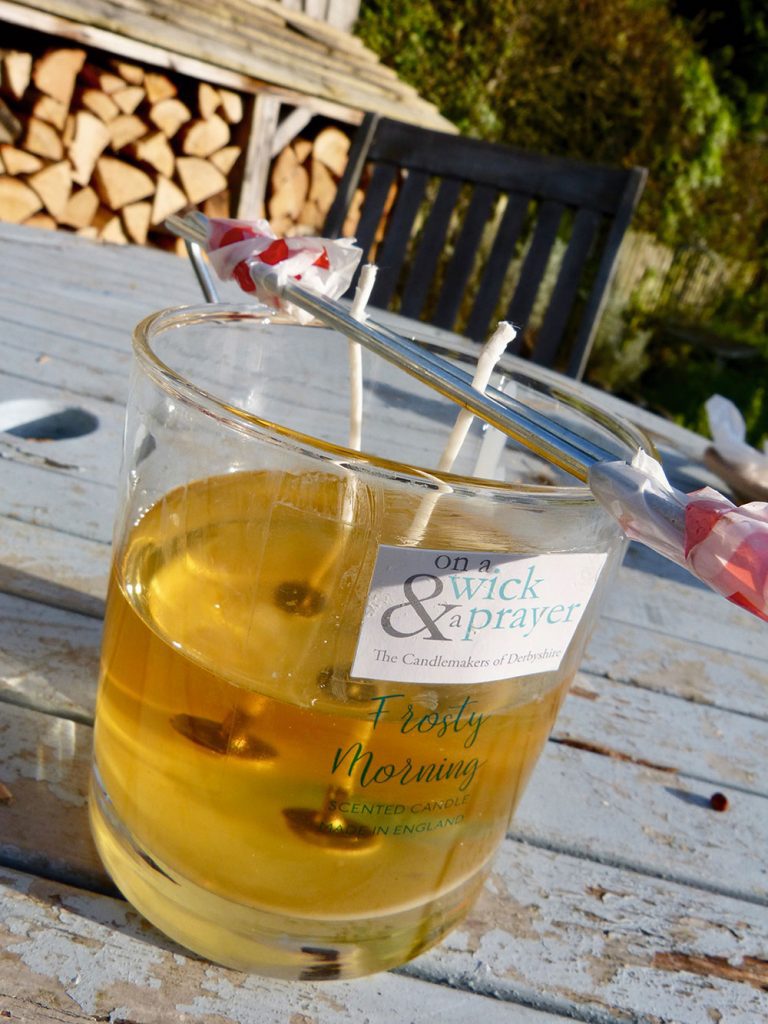
As places go, Tissington is a picture-perfect crowd-pleaser. From the minute you pass the towering lodge gates and meander along the lime tree lined avenue, there’s a sense you have discovered a magical village that time forgot. Tissington’s popularity (as many as 35,000 visitors during well dressing week) explains why a village with around 120 inhabitants has a butcher, some bakers (producing cracking cakes for Tissington Hall’s tearooms) and a nationally renowned candle-maker. Follow your nose to the former village forge and Annie Maudling, founder of On a Wick and Prayer, offers the warmest of Tissington welcomes. In my case – a hug, a mug of coffee and the chance to warm cold hands over a pot of melted wax on the brazier. This enthusiastic greeting is far more than I deserve because – after promising to stay in touch – it’s been 20-years since I last visited On a Wick and a Prayer. Back then, Annie had just moved her candle-making from the kitchen stove at Yew Tree cottage (every inch as gorgeous as it sounds) to a converted pigsty in the garden. “I’ve been very busy,” she laughs when I ask for a ‘quick’ catch-up. “It’s 22 years since I started making candles with my daughter’s unwanted kit and a grotty pan which I could never use again as it made the gravy taste of lavender.” I wonder what happened to the pigsty. “We needed more space so, with the blessing of my landlord Sir Richard FitzHerbert, we moved into the old blacksmith’s forge next-door to the cottage,” Annie says. “We hand-pour around a thousand candles per day – sometimes more – and I have ten part-time members of staff. My husband Ed even asked to join the team as he said it ‘looked like fun’. It works well, as long as he does what he’s told.” Annie says the turning point for her company came about after a chance meeting at a trade show. “Someone came to our stall and explained the National Trust shops were looking to stock more local products and asked if I would be interested,” Annie (54), recalls. “It was a case of ‘Er, give me half a second to think about it’ before saying yes. It proved a massive leap forward. Before I knew it, we were supplying candles to 60 shops throughout the country.” In 2005, with orders coming in thick and fast, Annie took on another unit in nearby Ashbourne. Within a matter of two years – they’d outgrown it. “I have a friend whose husband worked from a base in Dovedale. He was moving to larger premises and she asked if I’d be interested in his unit,” Annie says. “It was perfect – offering four times the space. I’d finally found a place big enough to make custom candles for other businesses (including some top London hotels), store the packaging and do the product photography. It also allowed me to achieve a life-long dream of buying a kiln and making a range of pottery called Dovedale Ceramics.” As Annie and I chat, there is a steady stream of people visiting the small but perfectly fragranced shop which is on the side of her workshop. Even though most visitors are there by chance – hikers, cyclists, tourists – they all leave with a candle, or two. “The workshop is really popular. We often have people who come in – smell a few candles – and because they are out walking or cycling say they’ll come again with the car and fill their boot. I’m pleased to say most do,” she says. “We did a survey recently and asked our customers ‘why us?’ I was expecting a variety of answers but 95 per cent said they loved our fragrances. I remember when I first started I was so desperate to please I’d find myself obliging all requests to make anything from Parma violet to roasted mushroom scented candles. Then I learned to have faith in my own fragrances as each one can take weeks – even years – to perfect.” Annie agrees there has been a craze for candles which evoke a favourite smell as opposed to a parfumier’s scent. Annie’s own collection includes Starched Linen, Vine Tomato and the best-selling Hot Toddy. “I try to avoid trends and, even when I’m developing something new, I ask if it fits in with our story,” she says. “For instance, I’ve fallen in love with Norway and spent six years perfecting a blend which brought to mind the smell of a ‘Nordic Forest’ as opposed to a toilet cleaner.” Annie is unperturbed if people don’t like the scent (known in the trade as the throw) of a certain candle. “Two girls came in the other day and one loved a candle but the other said ‘Ew – no’,” she laughs. “We’ve all got a very different sense of smell. I test my fragrances on the ten members of staff and we’re all experienced enough to know when something is right. The rest is down the to personal taste.” One trend Annie is happy to embrace is that of recycling; “We tried launching a refillable eco candle – made from the bottom of wine bottles – 15 years ago. It was just too far ahead of its time,” she recalls. “I know a lot of my customers have cupboards full of spent candle containers they’d like to reuse. We do offer a popular refill service but I wanted to help those who’d prefer to make their own candles.” Annie wrestled with the idea of how to make candle-making accessible to all; doing away with the need for moulds, thermometer and jugs. As usual, divine inspiration struck. “One night I went out to buy a pint of milk. The next morning, I woke up and had a light bulb moment – put the wax in the bottle. Milk bottles are one of the most re-cyclable of all plastics, they
The Isles of Scilly

The Isles of Scilly form an archipelago of five inhabited islands (six if Gugh is counted separately from Saint Agnes) and numerous other rocky islets (around 140 in total, lying 45km (28 miles) south west of Land’s End. Access is by the Scillonian ferry from Penzance across a notoriously rough section of the North Atlantic. Before the discovery of the way Latitude and Longitude could be properly determined, many proud ships came to grief by sailing too close to the Scilly’s. With a perennially mild climate, the Isles of Scilly were inhabited by pre-historic people, many of them building their round houses on land that is now under water, following the end of the last Ice Age. Since then the islands became home for small scale farmers and fishermen who exploited the benefits of a mild climate. Until recently early daffodils and new potatoes and spring vegetables grown on the islands were brought to market weeks before the rest of the country. The Penzance ferry, the Scillonian, picks its way carefully past the eastern islands and outcropping rocks, to berth at Hugh Town harbour on St Mary’s the largest and most populated island. With plenty of accommodation on offer, St Mary’s is the busiest resort and it comes as a shock to have to deal with traffic, however light it might be. Access to the outlying villages and beaches is easy as there is a fairly good bus service running throughout the year. Please note that despite the volume of local traffic, it is virtually impossible to take your car on a holiday to the isles as all large freight must be craned on and off the Scillonian ferry. To explore St Mary’s we started in the west, high above Hugh Town where the extensive ramparts of the Garrison, a fortress built to ward off Napoleonic forces has become something of a public park and resort. Below it and in the main town proper, a wide range of shops and restaurants, together with cycle hire are on offer and there is a small museum of the island’s history. One of the items covered by the museum is the highly competitive sport of gig racing. This takes place throughout the summer and harks back to the days when experienced local sailors were rowed out to offer to pilot incoming vessels. As there was no way this could be planned in advance, several fast rowing boats known as gigs, would set out at once and it became a race to be first. The sport of gig racing has followers mainly from all over the south west, but competitors travel even from as far away as Holland. The race is from Hugh Town harbour to Nut Rock near Tresco and back: a total distance of about 1½miles. The Labour Prime Minister Harold Wilson and his wife Mary had a holiday home in Hugh Town. Even though there is a rule that only locals can be buried on the island, special dispensation was given when the popular visitor died. He is buried in the graveyard of the tiny medieval chapel at Old Town on St Mary’s south-facing coast. His wife’s ashes were later scattered on his grave when she died. There are plenty of coastal footpaths on the island. We followed the one going eastwards from Hugh Town, in and out of tiny coves and headlands, past Old Town and its friendly café, then inland to St Mary’s to the ‘main road’ that meanders in a tight circuit of the centre of the island. About half a mile from Old Town we were puzzled by a notice warning us of low flying aircraft. The answer soon came when an outgoing plane took off a matter of feet directly above our heads. This was the Isles of Scilly airport. There are regular boat trips going to the outlying islands, not simply for tourists, but also as the main supply link with the regular ferry, the Scillonian. St Martin’s is the most easterly of the inhabited islands. Its single road acts as a link between three hamlets whose names seem to be lacking in imagination – Higher Town, Lower Town and in the middle as you might guess, is Middle Town. The island is popular with sailing enthusiasts and under water explorers who pick their way amongst the remains of countless vessels that came to grief on the uncharted rocks littering the hazardous passage of any captain foolishly attempting to sail between the islands, rather than round them. Tresco, owned by Robert and Lucy Dorrien-Smith is the jewel in the islands’ crown. A luxury holiday resort, it centres on a beautiful garden founded in the nineteenth century by Augustus Smith. Rare sub-tropical plants grow in pine sheltered sun-trapped gardens, enjoying the year-long mild weather. Alongside the flowers, a small museum is devoted to a collection of exotic figureheads taken from wrecked shipping around the coasts of these tiny islands. Tresco was first inhabited at least 3000 years ago by Neolithic farmers and during the English Civil War, Cromwell’s Parliamentary forces built a fortress on the island’s most southerly point in order to control shipping through the narrow channel known as The Roads. Fishermen from the north of England used Tresco as a southern base when following the annual flood of herring – the silver darlings. Possibly feeling homesick, they named their settlement New Grimsby. About 1½miles long and ½mile wide, it is possible to reach Bryher at exceptionally low tides from Tresco. This is the smallest inhabited island in the archipelago and was called Brayer in 1336, then Brear in 1500, obviously the phonetical spelling of the spoken word as interpreted by some government clerk or other. Hell Bay on the north western tip of Bryher was a notorious place for shipwrecks when violent Atlantic storms drove vessels into this remote spot. Bar Quay, the landing place for small ferries, was first built by volunteers in the 1990 production of the TV
Cruising gently along the Rhone

Part One – Arles to Vienne Travelling with Midland Mainlines meant we arrived at St Pancras in good time for the mid-morning Eurostar to Paris, Gare du Nord. What should then have been a quick ride to Gare de Lyon seemed to take an age; Parisian traffic was as bad as I remembered it from my last visit decades ago. What it did do was to give us plenty of time to spot ‘Frexit’ signs everywhere! What have we started? I had never travelled on one of France’s TGV super-fast trains and I must say I was impressed. The only difference between them and our proposed HS2 trains is that the French system runs mostly through open countryside. What seemed a blink of the eye, or maybe because I slept most of the way, the journey from Gare de Lyon to Avignon was the quickest, most comfortable train ride I have ever experienced. Our water-borne home for the next week, MV Lord Byron, was moored about a hundred yards, or should I say metres downstream of Avignon’s famous broken bridge where for some reason ‘l’on y dense tout en rond’. (‘Everyone is dancing in a circle’). The story behind this ancient bridge is that it was half demolished in a flood and when no one bothered to repair it, it became a tourist attraction, helped no doubt by a children’s song. Known officially as the Saint-Bénézet Bridge or Pont d’Avignon, originally the bridge was 899 metres long with 22 arches; but in 1226 it was almost totally destroyed by Louis VIII, and many subsequent floods. Attempts at restoration failed and the bridge has been a ruin since the 17th century. The city was by a Gallic tribe and later settled in turn by the Romans, Goths Saracens, Franks and the Holy Roman Empire. Avignon’s 15th century city wall still keeps traffic to a walking pace, protecting the sumptuous remains of the Papal Palace. Commissioned during the so-called Avignon Papacy when a total of seven popes reigned from Avignon, far away from trouble in Rome, it combines two buildings – the old Palace of Benedict XII which sits on top of the impregnable Rocher des Doms, and the ‘New’ Palace of Clement VI. After the death of Clement VI, the papacy eventually after much argument, reverted to Rome. Remains of brightly coloured frescos adorn the chapel walls where musicians and singers are still attracted by the perfect acoustics. The rest of the medieval city is immaculately preserved within the surrounding walls; pavement cafes, restaurants and colourful shops selling lavender-based products will tempt even the most blasé visitor, for here is a town designed for strollers. An evening cruise took us downstream to Arles. Here we were following in the footsteps of Vincent van Gogh. He came to this Provençal town, seeking its better light than Paris, using the region for many of his well-known works. He started almost immediately with ‘Starry night’, the riverside view he spotted on leaving the train. All around Arles it is easy to imagine him sitting outside places like his favourite ‘yellow’ café, or enjoying the tiny walled garden hidden away behind another of his watering holes. Hopefully he soon found the light he was after, but he wouldn’t have been so lucky if he came with us – it rained cats and dogs, fortunately the only serious rain for the whole trip. Mental problems led to the eccentric ear-severing incident and he spent time in the local hospital. Learning of plans to put him in an asylum he took himself off to nearby Saint-Rémy-de-Provence where he continued to paint. It was here that he produced some of his most renowned outdoor pictures, such as the ‘iris’, or his sunflower studies and mountain views of les alpilles, the bauxite limestone ridge above St Rémy. Long before van Gogh came to Arles, the Romans made it the administrative centre for the lower Rhône Valley. The town has an open-air Roman theatre still capable of accommodating thousands of spectators in the remarkably well preserved auditorium, and close by almost hidden amongst narrow back streets, the arena can still be used for bull fights. In the Provençal form of bull fighting, the bull is not killed and has a number of rosettes tied to various parts of his body. These must be snatched before the bull can attack the participants, who often come off rather badly for their efforts. Coaches took us a few miles to the west, beyond the Rhône to the Pont du Gard. This amazing feat of Roman engineering carries water across the River Gard carrying water from the Fontaine d’Eure to the city of Nîmes 20 km away. Although this city which had over 60,000 citizens was only 20 km away, due to the rough terrain the aqueduct had to travel about 50km. Even so, the difference between the start and finish was a mere 2.5 centimetres, in order to allow the water flow gradually into the wells and fountains of Nîmes. The three tiered aqueduct was built without mortar with each stone interlocking like pieces of Lego, miraculously without any significant loss of water. From the Lord Byron moored overnight back at Avignon, coaches took us into the Ardèche Gorges, a deep-cut ravine cut by a 30km meandering stretch of the River Doux to the west of Tournon, a small riverside town above Valence. The Doux has cut its way through massive layers of limestone, not unlike a series of cliffs like our High Tor as it towers above Matlock. Starting at the village of Lavas the river runs east in sharp twists and turns, flowing downstream until it comes to Aiguèz. A scenic motor road making even more torturous meanders, runs hundreds of feet above the river, following the line of the gorge, with view-points colonised by feral goats waiting for hand-outs. During the war, resistance groups created hideaways in the impenetrable shrub-covered moorland plateau, at one time hiding Jews
The Lost Houses of Derbyshire – Glapwell Hall

Glapwell Hall was a rather rambling stone house of later seventeenth century date, made more rambling by Georgian and Victorian additions, producing, as one former owner put it, ‘a house of comfort rather than conformity’. The rooves were a right jumble from above. It was built of coursed rubble with Permian magnesian Limestone/coal measures sandstone dressings, the earliest part being the west front, latterly stuccoed. This front consisted of two storeys with attics under three coped gables with ball finials, the wide centre one embracing all three bays of the seven bay façade, which was essentially flat. Whilst it no doubt originally had mullioned attic windows and mullion-and-transom ‘cross’ windows below, by the time it came to be photographed the windows had been replaced with glazing bar sashes of later eighteenth century type in the flat stone surrounds, those on the ground floor having been dropped to terrace level in the regency period. The central entrance was crowned by a segmental pediment, and latterly served as the access to the gardens. The general appearance of this façade was not unlike that of Carnfield Hall at Alfreton, which hides a much earlier core, and indeed, this may have been the case at Glapwell, too. The house was a double pile building, consisting of two parallel ranges, their ends facing north and south, the latter boasting a fine set of triple stacks with an original two light mullioned attic window below to show what the main front must have boasted originally. Below again a recessed reserve held a stone carved armorial shield with the arms of Hallowes, the family latterly most associated with the house. To the SE angler of this was added a mid-Victorian two storey range which ran round to the east from a full height canted bay with round arched plate glass windows. To this was added a new single storey entrance range of two arched Serliana or Venetian windows, that on the right included the new entrance door, all beneath a balustraded parapet with further ball finials. This was top lit, forming a bright space which partly masqueraded, aided by aspidistras and exotic plants, as a conservatory. Here with stone was ashlared, too and led to a south facing conservatory to the right of the door. Rising two storeys beyond this was a range of Queen Anne date of two storeys under a steeply pitched roof with attics dormers behind a parapet, and of three bays of sashes to the east, but continuing across the north end of the original house for form a west wing (facing north-south). This was topped be a tiny cupola and bell, marking the presence of a former domestic chapel, the origins of which went back to the twelfth century. There were extensive grounds including a small park, entered from the public road via a pair of Neo-Classical gate piers, today still surviving, listed grade two and supporting a pair of rather flimsy looking modern iron gates. The site’s history is very ancient, a capital mansion there being known since the twelfth century, built by the descendants of Serlo de Pleasley, who held it as feudal under-tenant from Hubert fitz Ralph, Lord of Crich, one of a small number of Domesday tantants. Serlo’s grandson was Simon fitz Serlo de Pleasley, who left three sons. The eldest, Serlo de Pleasley III inherited an estate at Ashover, whilst the third son William came into the manorial estate of Pleasley. His second son, Hugh, came into the manor of Glapwell c. 1180, and took his surname from the place (surnames still being rather fluid at that date and still confined to the upper crust). It was Hugh who probably built the first house on the site, and no doubt the domestic chapel, which needed re-roofing in c. 1260. The family continued there for two centuries, before in 1481 the heiress married into the family of Woolhouse, from whom it eventually passed to Samuel Hallowes of Dethick, by marriage with Elizabeth, daughter and sole heiress of Thomas Woolhouse of Glapwell. It was probably Thomas Woolhouse who built the earliest range, which was taxed in 1670 on nine hearths indicating that it was a house of relatively modest dimensions. His prosperity was, however, being increased by the discovery of coal on the estate. Samuel Hallowes, who no doubt added the Queen Anne range (perhaps on the site of a much earlier range) and probably re-ordered the original façade too, was the grandson of a Derby woollen draper, Nathaniel Hallowes, of a family from Youlgreave originally. He was a Presbyterian, keen supporter of the republican side in the Civil War, and was elected MP for Derby in the Long Parliament (sounds familiar!) replacing the deposed Cavalier MP William Allestrey, and served as Mayor of Derby in 1657. He was also a keen prosecutor of delinquents, as Parliament called the defeated Royalists, and his activities in this respect earned him three landed estates. So notorious was he that at the Restoration his Cromwellian grant of arms was annulled, albeit re-granted to his descendants in 1766. Nevertheless, his grandson was well endowed with property, to which the Glapwell estate no doubt made a happy addition. The family did well from exploiting their coal deposits, which doubtless explains the various additions. No doubt the domestic chapel was de-commissioned, although the land to the south of the house was always called Chapel Yard, as the family’s tradition for the knobblier forms of Anglicanism continued. Samuel’s eldest son, Thomas married well, his bride being Lady Catherine Brabazon, daughter of Chambré, 5th Earl of Meath, by a daughter of Viscount Chaworth, a Nottinghamshire grandee also boasting an Irish peerage. In 1861, Capt. Francis Hallowes, RN, inherited the estate from a cousin and, coming ashore, decided to make alterations. He it was who added the canted bay, the new entrance hall and the conservatory, probably to designs by the Derby partnership of William Giles and John Brookhouse, who were building a new house in Ashover