Clyde Steam Puffers

Coal smoke spiralling its lazy way above the shining inverted keel of Glasgow’s Science Museum guided us to the puffer VIC32, our home for a week’s cruise around the Firth of Clyde. Puffers were once the lifeline for communities throughout Scotland’s west coast, and beyond, carrying everything from coal to livestock. Their curious design was based on canal ‘gabberts’, horse-drawn barges carrying coal between Glasgow and Edinburgh. Short and stubby they had to be less than sixty feet long in order to fit into locks along the way. Around 1870 someone had the bright idea of installing steam engines and doing away with horses, opening the way to working beyond the canal, trade which in any case was declining with the advent of railways. As puffers were flat-bottomed, they could find their way into places lacking conventional harbours. They simply ran into sandy bays, waited for the tide to go out, sat down and unloaded their cargos into whatever wheeled vehicles were available. The result of this change to mechanical power was a curious hybrid of canal barge-cum-sea-going vessel. A blunt bow held the crew’s quarters below a steam-driven winch to operate the simple crane used for unloading cargo out of the cavernous hold. All the important works, from skipper’s cabin to coal-fired boiler were crammed into the tiny space offered by the stern. Steering the boat was hampered by the helmsman having to peer round a funnel directly in front of the wheel-house. This curious arrangement was linked to the reason why the boats were called puffers. As the first engine-powered vessels had unlimited canal water for their boilers, there was no need to economise. Exhaust steam was simply blown directly up the funnel, making a puffing sound which gave the boats their name. Condensers fitted to sea-going puffers in order to avoid using sea-water, removed the need to exhaust waste steam up the funnel, but the name stuck. Anyone who remembers the BBC TV comedy/drama The Vital Spark, will recall the mis-adventures of the motley crew of an aging puffer plying its way around the Western Isles. There was also a full-length Ealing Comedy The Maggie, in which an American tycoon Calvin B Marshall, played by the late Paul Douglas is tricked by the Maggie’s devious skipper into hiring the puffer to deliver expensive furniture to a remote Hebridean island. Suffice to say the furniture never reaches its destination, but along the way the tycoon learns a lot about life from the ‘wee boy’, the Maggie’s cabin boy as well as local people frequently played by local inhabitants of the west coast. Both the BBC series and the Ealing Comedy were based on stories written in the early 1900s by the late Hugh Munro, a Glasgow Evening News journalist. He immortalised the likes of Para Handy or Hurricane Jack and the scallywag crews of the puffer trade around Scotland’s west coast. Never out of print for long his stories brought to life the exploits of characters such as those imprisoned for poaching game, or in one reported case, stealing their boat’s petty cash. It wasn’t just the crews that were characters, puffers also had a life of their own – there was once a puffer tied to Arran’s Lamlash harbour wall for months, waiting for a replacement to its propeller which had lost a blade. Cruising with the Vic 32 While there are several puffers awaiting restoration in harbours up and down the country, the VIC32 is the only one currently sea-worthy and able to carry passengers. Although built to the design of a traditional Clyde puffer, VIC32 started life working for the Royal Navy during WW2. The initials VIC are a naval acronym for Victualling Inshore Craft, one of 100 made during the war to carry supplies ranging from food to high explosives. Built by R Dunston’s of Thorne on Humberside, VIC32 spent the war victualling warships and naval bases around the North Sea. Although these little ships had a mundane existence, they served their country well in time of war. Regrettably only a handful survived into more peaceful times – some ended their days as tramp steamers in the Far East; a few still languish in naval museums or were scrapped, but only the VIC32 carries out its original work, albeit for pleasure not commerce. Enthusiasts Nick and Rachael Walker found VIC32 languishing in a Whitby dock. In 1975 they were on their way home from Northumbria after an abortive attempt to buy a small yacht. Quite by chance they spotted the puffer when they were about to leave Whitby. Even though it looked rather grubby, nevertheless it was in reasonable condition, basically needing only a bit of TLC. Enquiries led the Walkers to the VIC’s owner, Keith Schellenberg one-time owner of the Island of Eigg who proved willing to sell. The boat was sufficiently sea worthy to sail down to St Katherine’s Yacht Haven in London where with the help of volunteers, it spent the next three years undergoing considerably more than simple TLC. The result was an almost unique example of a coal fired steam boat ready to find its way back to the traditional home of the puffers around Scotland’s west coast. In 1978 crewed mainly by teams of volunteers, VIC32 made its way home. Since then it has carried well over 5,000 passengers including narrow boat enthusiasts Timothy West and Prunella Scales featured in their canal series on TV. Passenger accommodation might be a bit cramped on two levels in the converted hold, but it is adequate and cosy, complete with its steam operated 78 rpm gramophone, or the series of steam whistles on the funnel called a calliope. Everyone pitches in, from helping wash dishes, to steering the puffer, or shovelling coal to feed the insatiable engine. We joined the VIC32 at its berth behind Glasgow Science Centre. To one side was the Paddle Steamer Waverley making ready for trips ‘doon the watter’. To our front and under restoration
Celebrity Interview – Aled Jones & Russell Watson

Take two of the world’s greatest classical voices, get them to sing a selection of their favourite hymns, arias and popular songs, and what do you have? One of the fastest-selling albums nowadays of any genre. Aled Jones and Russell Watson are continuing their partnership with their first tour together, stopping off in Nottingham where they will perform numbers from their debut offering In Harmony. And after speaking to the pair of them I reckon they could carve out a new career for themselves: on the stand-up comedy circuit. Aled was in London where he had just presented the breakfast show on the radio station Classic FM while Russell was in Cheshire. Despite being more than 150 miles apart, they continually made each other – and me – laugh. So much so that at one point no one could speak because they were guffawing so much. I ought to have known what to expect when I joined a conference call which linked the three of us. When prompted to state his name, a voice called out “the one who’s not Russell Watson!” The conversation soon had a light-hearted edge. When I asked Aled and Russell, who first sang together on the Songs of Praise show The Big Sing nine years ago, why it had taken them so long to collaborate again, Aled chimed up: “It took us that long to get over how bad it was the first time!” Russell shot back: “I haven’t slept since.” For a brief moment they became serious. “To be honest with you,” said Aled, “we both lead busy lives and the time I suppose wasn’t right. For the first album the time was right. It took a couple of calls, a couple of texts and the next thing we know we’re doing the album.” Russell said the pair had known each other for almost 20 years and had met at a charity event at the Royal Albert Hall. Since then they had become “good pals”. “You can walk into a room, meet somebody for the first time and immediately you know whether you can have a laugh with them and whether you’re going to get on with them. Aled makes me laugh, I enjoy his company and we get on really well.” Russell says he can’t wait to go on tour because they will have fun as well as doing something they both enjoy: singing. Aled agrees. “The thing that’s come out of it which is brilliant is that our voices really blend together. There was no guarantee at all that that would happen.” When I ask who chose the tracks that would go on the album, they were back to their mischievous selves. “We had a massive fight, I won and I got what I wanted,” says Russell. In reality they quickly agreed on the tracks. They also concurred on what the touring show should be. “The tour is very much a reflection of the album,” says Aled. “We’re both used to being on stage on our own but this is the first time properly that we’re doing a tour with somebody else. We’ve sung with other people in one-off concerts but for this tour we’ll be singing duets for all of it.” One of the problems facing any entertainer is “corpsing” – laughing uncontrollably. My fear is that this will happen to the pair of them while they’re on stage. Aled is concerned too – but in Aled’s individual way. “We were having a chat about this the other day. We’re the biggest corpsers in the world. Sometimes Russell has this glint in his eye which sets me off – which is very unprofessional of him.” “We’ve had a couple of moments,” says Russell, “where we’ve been doing certain things that are meant to be very serious and then I’ll give Aled a little look, raise an eyebrow and he’ll start laughing. As soon as he starts laughing I start laughing and that’s it, game over.” But once the tour actually starts, Russell hopes sanity will be restored: “Once we get on stage and there’s an audience, the dynamic changes. You’ve got the adrenalin from being in a big venue and everything else. “Initially I hope I don’t forget the words, remember where to walk on stage, where to come off, say the right things between the songs. There’s all these different things going on in your head.” Aled interjects that he’s hoping to remember the dance routines as well. “Yes, the dance routines are huge,” maintains Russell. “There’s this moment when I do a triple back flip into a full pirouette and then I end up in the splits. I’ve practised that a lot but I’m struggling with the splits.” “I’d pay good money to see that,” states Aled. People have been paying to see Aled and Russell for a number of years and both are successes in their own right. Aled Jones MBE was born on 29 December 1970 in Llandegfan, Anglesey. He became famous for the cover version of Walking In The Air, the song from Channel 4’s animated film The Snowman, based on the book by Raymond Briggs. By the time his voice broke when he was 16 he’d recorded 16 albums, sold more than six million records and sung for Pope John Paul II, the Queen and the Princess of Wales. He married Claire in 2001 and they have two children, one of whom is an actress. Russell Watson was born on 24 November 1966 in Irlam, Lancashire. While he was spending the first eight years of his working life in a factory making nuts and bolts he never imagined he would later be described as one of the world’s greatest classical singers. After winning a local radio talent competition his career took off. His debut album The Voice held the number one spot in the UK classical charts for a record 52 weeks and also held the number one spot in the USA. He suffered
Modern Collectibles – Swatch Originals
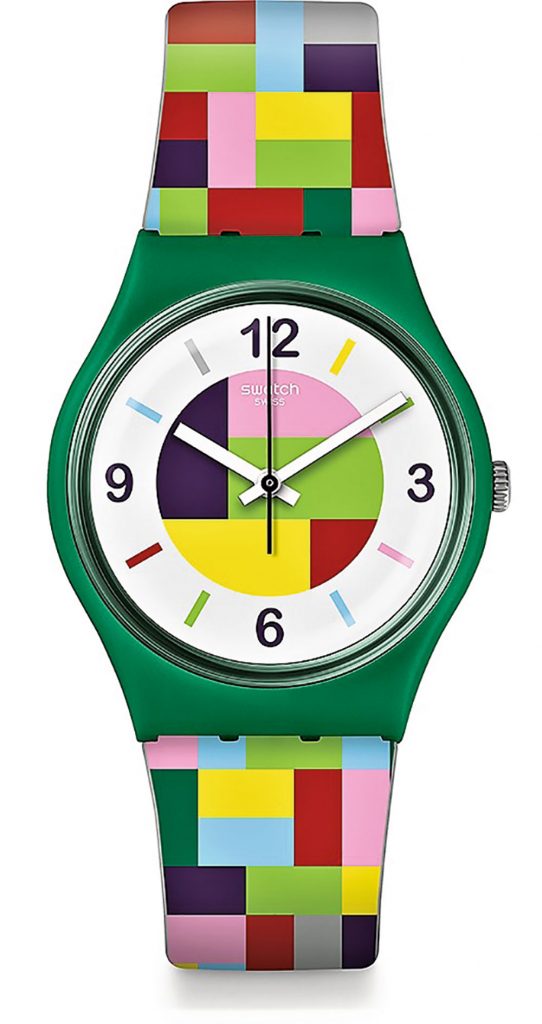
In the early 1980s, when just appointed Keeper of Antiquities at Derby Museum, one of my duties was to scan the more prestigious auction catalogues. The reason was because I had determined to increase our collections relating to the then total unsung Derby clockmaker and Enlightenment scientific pioneer John Whitehurst FSA. Yet by the middle of the decade, I was astonished to find much space in these catalogues devoted to gaudily coloured rubberised plastic watches, bearing the imprimatur of Swatch and attractive, remarkably high, estimates. turned out on investigation that Swatch was (and is) a Swiss maker founded as recently as 1983 by Nicolas Hayek. The product was developed as a response to the 1970s and 1980s flood of inexpensive Asian-made digital watches. The name Swatch is a contraction of second watch, as these watches were intended to be casual, disposable accessories. Development began in the early 1980s, under the leadership of Ernst Thomke with a small team of watch engineers. Conceived as a standard timekeeper in plastic, Franz Sprecher, a marketing consultant hired by Thomke to give the project an outsider’s consideration, sought to create a fashionable line of watches. The Swatch was originally intended to re-capture entry level market share lost by Swiss manufacturers and to re-popularize traditional watches at a time when digital watches had achieved wide popularity. The first collection of twelve Swatch models, introduced in 1983 ranged in price from 39.90 to 49.90 Swiss Francs but was standardized at 50.00. Sales targets were set to one million timepieces for 1983 and 2.5 million the year after. With an aggressive marketing campaign and relatively low price for a Swiss-made watch, it gained instant popularity in its home market. Compared to conventional watches, a Swatch was 80% cheaper to produce by fully automating assembly and reducing the number of parts from the usual 91 or more to 51 components, with no loss of accuracy. This combination of marketing and manufacturing expertise restored Switzerland as a major player in the world wristwatch market. Synthetic materials were used for the watchcases as well as a new ultra-sonic welding process and assembly technology. As I had noticed, the popularity of the Swatch peaked by the mid-1980s. Among the trends associated with Swatches are wearing more than one model, using them as ponytail holders and attaching them to clothing. This era of prosperity also marked the introduction of designs created by artists like Keith Haring, a move that added an air of style swank to Swatch’s trendy reputation. Like other companies, Swatch’s continuing success relies on the steady introduction of new and innovative products, which makes any Swatch manufactured before the mid-1990s somewhat rare. Limited edition or themed Swatches are even harder to find and fetch significant prices at auction. The Swatch Originals are the most widely collected and are plastic-cased. Standard ones can be got for £10-15 but new ones only range between £40 and under £100. But it is the vintage ones that people collect, because they were conceived as virtually disposable, with the result that the reservoir of available ones has shrunk significantly. Other than Originals, limited edition models are the most rare and valuable ones. To form an idea of what constitutes a rarity Swatch, I might draw readers’ attention to the Jelly Fish Chronometer, for instance. Swatch produced only 2,000 numbered Jelly Fishes in 1990, making this one of the rarest early Swatches. It features a completely translucent strap and case through which wearers can watch the precision components in operation. The drawback is that the strap can get yellowed with use, reducing the value to £60-80. Black Nubeo ones can reach £3,000, however. Another is the bizarrely named Cigar Box Putti Pop Swatch. This was designed in 1992 by Vivienne Westwood for the Autumn/Winter collection and features baby angels on the dial and strap. The production of only 9,999 numbered watches, released bizarrely in whimsical cigar boxes assured its rarity. Still with its box one will cost you £80-100. Another is the Trésor Magique of 1993. Although not a Swatch Original (and lacking the plastic case) its solid case and platinum crown make it very collectible and the limited edition release of only 12,999 numbered watches endows it the rarity collectors like. Recently one sold at Bamfords for over £1000. As the foregoing makes clear, Swatch watches are available in various sizes, shapes, and designs and indeed, there are various subsidiary types as well, like the Swatch Irony which is metal cased, some self-winding with a chronograph version introduced about six years ago. Another version is the Skin, an ultra-thin version (an eighth of an inch) of the original Swatch – hence the name. There is also the Bijoux version, incorporating blingy embellishments like Swarovski crystals. More recently, the firm has introduced digital dials and various hi-tech additions that rather cut across the original intention of the brand. That said, the firm introduced in 2013 System51 claimed to be the world’s first mechanical movement with entirely automated assembly, using the 51 components of the movement anchored to a central screw with automatic winding and a 90-hour power reserve. The movement is permanently sealed in its case with structural adhesive securing both the acrylic crystal over the dial and the case back, making it invulnerable to environmental conditions including moisture, dust or foreign objects – and also making it maintenance free (and, of course, impossible to service). To the collector, it is the original, or at least earlier, models that are sought after. 00
The Lost Houses of Derbshire – West House, Chesterfield

About seven years ago I found myself sat next to Sir Nicholas Soames at lunch, which put me on my conversational mettle. What does one say to a grandson of Sir Winston Churchill and the son of a Tory Grandee (the last governor of Southern Rhodesia inter alia) and a man who himself is a bit of a grandee? After a little small talk I suddenly recalled that his grandfather was Arthur Soames, son of the proprietor of the Brampton Brewery, Chesterfield and nephew to Lady Baden Powell. That being so I asked him what he knew of the family brewery, and the family homes, Stubbing Court and the vanished West House Chesterfield. In the event, this got him going splendidly, and I learnt quite a bit about what he had learned from family reminiscences in his childhood. To be fair, I did know a bit about the latter, simply because it was on the reserve list of houses to be included in The Derbyshire Country House, but which failed to make the cut when Mick Stanley and I were planning the second volume in 1982. West House, Chesterfield was a classic piece of rus in urbe: a country villa situated almost in the centre of town, in this case, Chesterfield. It stood on West Bars, the street leading from the SW angle of the Market place towards Brampton, on its north side hardly more than two or three hundred yards from the bustle of the Market Square itself. The land appears originally to have had a confusing succession of owners, but in 1765 George Holland, who had owned the site for eight years (but whose ancestor William Holland had sold it as far back as 1616) sold it to opulent lead mining entrepreneur Nicholas Twigg for £110. He enlarged the plot in 1769 and proceeded to build a new house. The reason may have been his desire to live adjacent to his partner in his mining enterprises, Henry Thornhill, who had acquired neighbouring Rose Hill, upon which I shall have more to say in a later article. Unfortunately, if that was his intent, Thornhill shortly afterwards moved his base to Derby, and Twigge re-sold the land along with his ‘newly erected messuage’ to Anthony Lax in 1770. Lax was the scion of a minor Yorkshire landowner whose mother, Sarah Jefferson, was the great grand-daughter and ultimate heiress of the somewhat grander Maynards of Kirk Levington Hall in that county. The wedding was on the 22nd May 1766 and the settlement would appear to have included the large area called West Fields either side of West Bars so the acquisition of a brand new house adjacent would have made much sense. West House was quite a grand brick house of two and a half storeys, the five-bay entrance front facing West Bars, from which it was artfully shielded by trees. The architect was almost certainly Edmund Stanley, a Nottinghamshire born builder-architect who settled in the town in 1763. Of two and a half storeys, the entrance front had a three-bay centre, which broke slightly forward under a generous pediment centred with an oval patera, although the Doric pilastered door-case below was stone and here the pediment, supported by pilasters and frieze, was modillioned. There was a sill band at first floor level right round. The west front was centred by a wide full height canted bay with a hipped roof, possibly added a generation later, whilst the other show front, that to the east, also of five bays under three gables, looked across lawns to a wall which hid the backs of the buildings of the town. The service accommodation was to the north with a lower stable block running westwards from it enclosing the pleasure grounds and concentrating the semi-rural view westwards. The interior was apparently well fitted up with good joinery including a very fine staircase leading off the hall; as was de rigeur for the whole of the first half of the 18th century, then the dining room was panelled. The grounds were landscaped as a small park. Anthony Lax’s mother Sarah, apparently a redoubtable old girl and keen to be seen as a cut above Chesterfield’s municipal elite, assumed the surname of Maynard in September 1784 and the following March received a grant of arms, so the owners of West House henceforth became Maynards. Anthony died in 1825 without issue, leaving the house and Derbyshire estate to his brother John’s fourth son, Edward Gilling Maynard, then thirty-two and married into the Wallers, local attorneys. His eldest brother received the landed estates in Yorkshire and the family latterly were of Skellingthorpe Hall, Yorkshire. Meanwhile, Edward was appointed to the bench, and to a deputy lieutenancy and kept a pack of harriers at West House. He made few if any changes to the building, however, bar enlarging the stables He died in 1881, to be succeeded by his son Edward Anthony Jefferson Maynard, who found the increasing pollution and expansion of the town too much, and so moved away to Duffield Hall and later Egginton Hall, both of which he rented, eventually building himself a superb Arts-and-Crafts seat called Hoon Ridge just west of Hilton. He had trouble finding a tenant for West House, especially as he had sold much of the land for building, thus cutting his own throat economically. Some of the ground, south of West Bars, called Maynard’s Meadows, went to the upstart Lancashire, Derbyshire and East Coast Railway which built a very impressive station looking more like a country house than a railway terminus, diagonally opposite West House. Nevertheless, in 1889 he found a tenant. This was Harold Soames, the second son of Arthur, of Irnham Park, Lincolnshire, a descendant of an ancient family enriched as London traders in the reign of James I. Harry Soames was the proprietor of the Brampton Brewery and had previously been tenant of the Gladwins of Stubbing Court, where his children were born. He moved the
Wirksworth Heritage Centre
Brian Spencer takes a visit to Wirksworth Heritage Centre where amongst other things, he learns about his ancestors who lived in the town over five hundred years ago. Tucked away almost hidden at the top of the Ecclesbourne Valley; Wirksworth is one of those places where a visit will open the eyes of even the most jaded visitor. Here is a town where its houses speak of a history marked not by decades, but by centuries; Georgian coaching houses and imposing one-time commercial buildings alongside Jacobean gentlemen’s residences, or tiny cottages half hidden within a maze of narrow alleys tell us that Wirksworth is a place where time has marched onwards without being frozen. This is a town where the past is forever with us, but rather than being a museum piece, it is vibrantly living in the twenty-first century. Change has happened, industries have come and gone, but rather than look depressed, Wirksworth is a place where life is for today. The main reason for this change and the way it links its past to today, is summarised in the new(ish) Heritage Centre on St John Street, just a few yards down the road from the market place. It tells in easy to follow displays within a modern setting, the story of what is once more a vibrant town. A short wander around its brightly lit rooms filling three floors brings to life in anecdote and reportage, the story of a place that fascinated HRH Prince Charles, Prince of Wales. At a high level luncheon at the Royal Albert Hall in 1985 he trumpeted the success of a rejuvenated town to a meeting of bewildered town planners and journalists. Many of them had no idea where Wirksworth was and had to delve in gazetteers and timetables before rushing north to see what had excited the prince so much. The exhibition at the Heritage Centre shows how industries have come and gone, but rather than be blighted by it, Wirksworth has picked itself up and literally shaken off the dust before moving on to the next stage in its life. For such a small place, it has seen many changes; Lead mining was the first and for centuries the main source of employment. As far back as Roman times, it’s yet to be found headquarters of Lutudarum, oversaw the production of pigs (ingots) of lead destined to be made into water pipes or to cover the rooftops of Rome’s imperial palaces. Ingots carelessly lost then found along the way are marked Lut. as coming from Lutudarum and Ex. Arg. to confirm that the lead’s silver content had been removed. Lead mining went on throughout the centuries, controlled by a Barmote Court, the oldest legal system in existence which still meets in April every year to settle mining disputes. Although quarrying, which later became the major industry for the area, had an almost disastrous effect upon the town, Wirksworth had a number of smaller industries, ranging from the ubiquitous cotton spinning, to hosiery knitwear silk weaving, and the little known, but important production of tapes. It is said that Wirksworth every year produced enough red tape to go twice round the world. Alongside this symbol of the legal system, everything from decorative ribbons to laces for Edwardian ladies’ corsets, boot laces and the fuse-bindings of Mill’s bombs used in the Great War were also made here. At least two authors had links with Wirksworth. Following a holiday here at the home of an aunt, Anne Elizabeth Evans, better known from her pen name George Eliot, used the town as the setting for Adam Bede. Haarlem Mill, one of the main tape producers where her uncle was manager became the prototype for Mill on the Floss – his tool chest is one of the Heritage Centre’s exhibits. With prosperity came the need for banks. In 1780 John Toplis and later Richard Arkwright, founded a bank to handle the wealth of the town’s prominent citizens: the notorious Georgiana, Duchess of Devonshire was one of its early clients, but she was not over popular due to her uncontrollable gambling habits. The bank produced its own bank notes – quite a courageous act in its day; two printer’s plates for these notes are on display. The bank eventually became known as Lloyds Bank plc which flourishes to this day. The other author to use Wirksworth as his home was D.H Lawrence. For several years he lived with his German-born wife at Mountain Cottage above the Via Gellia. During the Great War, xenophobia put anyone not British under suspicion, insisting they frequently report to the police. At one time Freda being German was considered a spy, especially when she and Lawrence were spotted enjoying a walk along a Cornish cliff-top. As a result they had to move back to the east Midlands, away from the sea and close to a police station. It was quarrying that almost destroyed Wirksworth, yet at the same time it became the catalyst which helped preserve many of the ancient buildings. The massive beds of limestone surrounding the town provided stone for everything from building material, to the 120,000 war grave-markers that were made from a fine-grained stone found in Hopton Wood quarry between Middleton and Wirksworth. What did almost destroy the lovely old market town, was a quarry a matter of yards from the town centre. Known locally as the ‘Big Hole’, daily it covered nearby houses with layers of dust, or worse by bombarding them with flying debris. As a result people began to abandon their homes, leaving historic houses to gradual decay. It was only when the quarry became uneconomical that those with an eye to the potential of the semi-derelict buildings decided to bring them back to life. Part of the exhibition shows how once tumble-down Jacobean houses were rejuvenated. Shops around the market place regained their Victorian ambience; one in particular, Mason’s iron mongers is commemorated by an almost bewildering display of stock
A Local Incident During the English Civil War
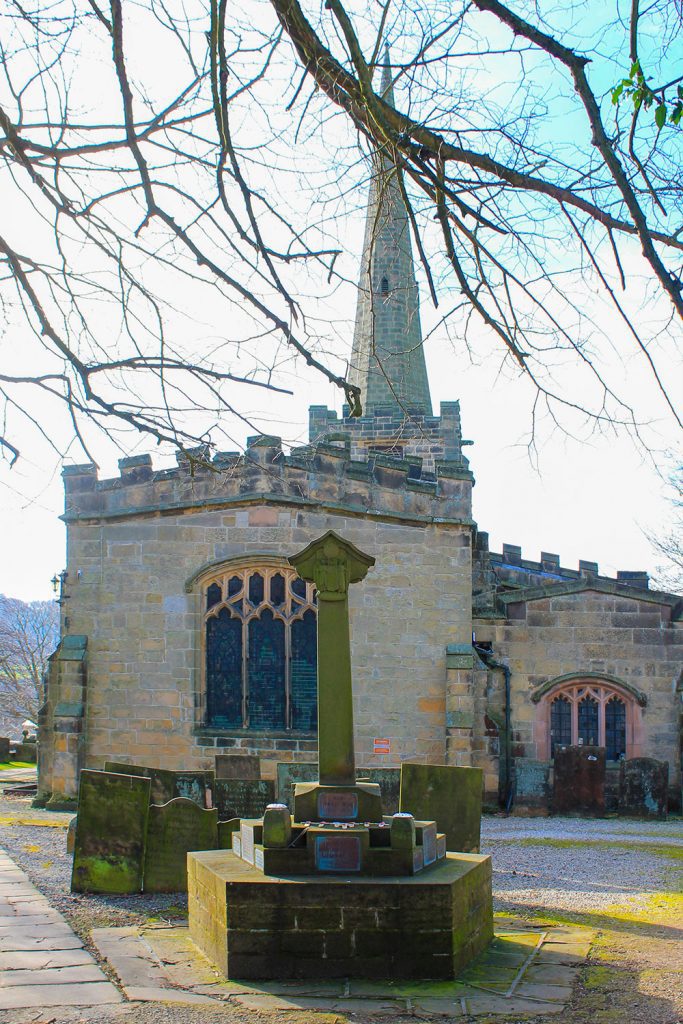
The Civil War brought tragedy to both countryside and town, none more so than in a quiet corner of the Derbyshire countryside. Brian Spencer reports one small, but horrific event which occurred in the sleepy village of Ashover, near the head of the Amber Valley. The quiet village of Ashover sits amidst sunny fields near the head of the Amber Valley, a place of tranquillity, but during the Civil War it, like many other hamlets, did not escape the rigours of a conflict that divided the nation. During the reign of King James I relationships between the crown and parliament were far from easy, and when his son Charles I acceded the throne in 1625, things went from bad to worse. The king’s High Church views and ever increasing demands for war funds, provoked disputes with parliament, which were so severe that in 1630 the king dispensed with it all together and embarked on almost a decade of personal rule. For a time all was relatively stable, but Charles’ lack of understanding and stubbornness led to the collapse of his authority, gradually, culminating in 1642 when the nation fell into a state of rebellion and civil war. Hard fought battles between parliamentary forces and those supporting the crown raged across the country for four years. Neither side could claim to have the upper hand, until a series of major strategic errors by the king led to the royalists suffering crushing defeats at Naseby, Langport, Bristol and finally at Oxford in May 1646. Supported only and on dictated terms by a Scottish army, the autocratic king refused to submit to the will of parliament and following a rumoured plot to assassinate him he escaped to Carisbrooke Castle on the Isle of Wight. Here he was held as a virtual prisoner until he was taken to London for trial and subsequent execution in 1648. History only records the major battles fought in the Civil War, but up and down the country minor scuffles occurred as well as brutish events perpetrated by ill-disciplined troops from both armies. Ill-fed and poorly led, they acted like marauding hosts rampaging up and down the country and it was during this time that Ashover was to suffer not once but three times at the hands of both parliamentarian and royalist troops. Being then as it is now, in something of a backwater, the Rector of Ashover, the Rev Immanuel Bourne tried to keep the village out of harm’s way by supporting neither side while appearing to support both. The war tended to be fought around major towns and cities with Chesterfield and Nottingham being the main garrisons for the conflicting armies. In order to protect the road west out of Chesterfield from incursions by roundhead soldiers of the parliamentary army, a detachment of fifty royalist dragoons were stationed at Eddlestow Hall on the far side of Slack Hill above Ashover. In keeping with the way armies were run at that time they had no provisions and depended on the ‘benevolence’ of whoever they were billeted with, in other words, by levying blackmail. As the owner of Edlestowe, Sir John Pershall was away, they had free run of the place, slaughtering all the stock of pigs, sheep and poultry and drinking his ale and wine in an orgy of high living. Bored by inactivity and well-oiled with Sir John’s wine and ale, a mob of drunken royalist dragoons descended on Ashover looking for more supplies. Stopping at the Crispin Inn next door to the church they were held at bay by the brave landlord Job Wall. He stood at the door refusing to let them in, telling them they had already had too much to drink. Severely outnumbered he was beaten up and thrown out of his own inn from where he could only watch while they literally drank the place dry. Full of bravado the royalists eventually moved out, rampaging around the village, going first to Eastwood Hall about half a mile away, the home of Rev Bourne. Here they demanded he pay them ten pounds for the King’s use, in other words themselves, otherwise they threatened to burn down his house, a threat they again made while extorting similar amounts from two other local notable families, the Dakyns and Hodgkinsons. Not content with this the mob continued round the district demanding smaller sums from miners and farmers in the locality. Hardly the bravest of troops, once the royalists heard that a strong force of roundheads was marching on Chesterfield under the command of Sir John Gell of Hopton Hall near Wirksworth, they quickly retreated to safer climes, leaving the village in comparative safety. But this was not to last. If the Reverent Bourne thought the deserting royalists were the end of his troubles he was sadly mistaken, for Ashover received a visit from a local parliamentarian named White of nearby Milltown, where he had been keeping a low profile while the king’s troops were on the rampage. Hearing that his opponents had been given money, he assembled his own scratch troop of dragoons and fronting the rector demanded that as the latter had been able to pay ten pounds to the royalists he could therefore give double that amount to the other cause. Poor old Immanuel was in a complete quandary and his threat to report White to his superiors was simply answered by the counter-threat that if the rector and all the others did not pay up, their cattle would be taken off them in part payment. Unable to face the loss of their animals, they submitted, thankful in Bourne’s words, ‘to see the back of such a nave’. With the next turn of the tide in the fortunes of war, the Earl of Newcastle took command of Chesterfield in the name of King Charles, so poor Immanuel switched sides yet again, only to find that once things were back in favour of parliament, he was on the wrong side
Dining Out – Afternoon Tea on the Ecclesbourne Valley Railway
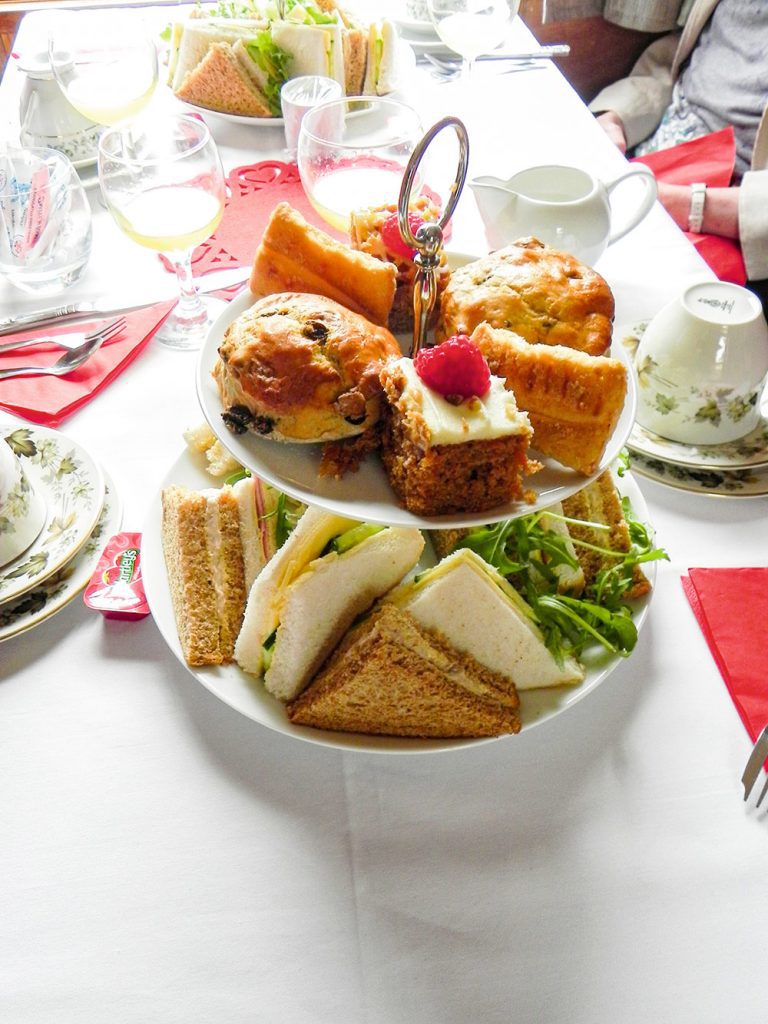
We’ve dined on some memorable trains; breakfast on the Lake Shore Limited as it skirted the edge of Lake Erie on its route from New York to Chicago. Lunch at 190 miles per hour on one of the Frecciarossa trains between Naples and Florence and dinner on board the California Zepher as it made its long trek through the Rockies from the Pacific Ocean to our destination, Denver. So, I jumped at the opportunity for Susan and myself to expand our dining experiences with afternoon tea on the local Ecclesbourne Valley Railway. The line, which runs from Wirksworth to Duffield, was closed to passenger traffic 70 years ago and to freight 40 years later. With the help of volunteers the line has been re-opened and buildings restored. Many years ago the original Wirksworth station building was demolished to make way for a mineral loading dock. That has now been removed and a new station building, on the site of the old one, is under construction; built with modern materials and thankfully, up to date facilities. Our journey started at the headquarters of the heritage railway center situated on Coldwell Street, Wirksworth, once the terminus of the old Duffield Wirksworth Midland Railway branch line. We parked in the large car park attached to the station site and made ourselves known at the souvenir shop; it also doubles as the booking office. We were told that this afternoon’s service would leave from platform 2. The luxury afternoon teas are pre-booked and served on the 14:10 service from Wirksworth to Duffield. When the train arrived at platform 2 one of the many volunteers escorted us to our reserved compartment. The carriages are mid-20th century corridor style with opening top windows, brass door handles and a lot of polished woodwork. We could see that each compartment on the train was set for a party of 4. Tickets are sold in pairs and so, waiting for us in our compartment were 2 ladies we would be sharing the journey with: Barbara and Jane. The compartment is designed to seat 6 people. However, for the afternoon tea, it’s restricted to 4. The table was decked out ready for the service: bright cutlery, china tea service, white table cloth and 4 glasses of buck’s fizz. We introduced ourselves and before the train had left the station all of us had started on the fizz! As the train moved slowly away from Wirksworth station service began. The tea included a varied selection of freshly made sandwiches including tuna, cheese and cucumber and ham served on the bottom plate of a traditional tiered china stand. The top layer contained 2 delicious fruit scones with jam and clotted cream, 2 moist slices of carrot cake and an apricot filled pastry. Our empty glasses were taken away and replaced with a pot of fresh tea and for a coffee drinker like me, a pot of fresh coffee; regular or decaffeinated. Throughout the journey we were asked if we’d like more tea or coffee. Although the journey is only a round trip of 18 miles we discovered a lot to chat about with our fellow travellers; who both had railway connections. We stayed on the train in Duffield for the return journey to Wirksworth. We finished the cakes and scones and were offered yet more tea and coffee. It had been a delightful experience. Afternoon tea at a leisurely pace; watching the countryside glide past. Nothing to do for almost 2 hours but enjoy the food, conversation and scenery. The experience includes a full day rover ticket so that guests can enjoy the freedom of the line on the day and explore the surrounding countryside. A comfortable way to explore is by leaving the train at Idridgehay and walking to Shottle to catch the next train or walking to Idridgehay from Shottle. You can also use the day ticket to start at Duffield before the dining train and return there afterwards on the last train of the day. For the railway enthusiasts the locomotive hauling the train was a diesel BR Class 33 no. 33103, named Swordfish after the bi-plane not the predatory sea creature. 00
Product Test – Soap Co.

The Soap Co. is an ethical luxury brand that creates sophisticated cruetly-free body care products to nuture and care for your skin. Wild Nettle & Sage Hand Lotion 300ml £18 13 natural oils including healing sage, uplifting rosemary and stress relieving thyme provide the delicate herbal notes for our Wild Nettle & Sage hand lotion. It’s fresh scent is a true celebration of the great British countryside and has been crafted with natural, vegan and eco-certified ingredients. It is also enriched with antioxidants, sage oil, natural bee friendly borage and calendula botanicals and organic cocoa butter to nourish and protect your skin. Free from parabens, PEGs, synthetic fragrance, synthetic colour, mineral oils, TEA, petrochemicals, silicones, EDTA and artificial colours. Wild Nettle & Sage Hand Wash 300ml £16 13 natural oils including healing sage, uplifting rosemary and stress relieving thyme provide delicate herbal notes to our Wild Nettle & Sage hand wash. Its fresh scent is a true celebration of the great British countryside and our hand wash is crafted with natural, vegan and eco-certified ingredients. Enriched with skin softening sugar esters from coconut oil, vitamins, sage oil and natural bee friendly botanicals it’s kind to your skin and the environment. Also free from SLS/SLES, PEGs, triclosan, synthetic colour, DEA, petrochemicals, silicones, EDTA, parabens and artificial colours. Now cleanliness is really one step closer to godliness! Wild Nettle & Sage Body Lotion 400ml £22 13 natural oils including healing sage, uplifting rosemary and stress relieving thyme provide the delicate herbal notes for our Wild Nettle & Sage body lotion. A guaranteed hit for those that love herbs this rich body lotion absorbs quickly into the skin and is enriched with antioxidants, sage oil and bee friendly borage and calendula botanicals for soft and healthy glowing skin. Created with natural, vegan and eco-certified ingredients it also contains organic cocoa butter and sweet almond oil for total body happiness. Free from parabens, PEGs, synthetic fragrance, synthetic colour, mineral oils, TEA, petrochemicals, silicones, EDTA and artificial colours. For more information and to buy online visit www.thesoapco.org Tried & Tested Hand Lotion A really light, non greasy hand lotion which sinks into your skin straight away. A light fragrance too, perfect to keep by the kitchen sink. VP Body Lotion This looks, feels and is eco- friendly. Smooth and easy to apply, the fragrance isn’t overpowering but delicate. Simply packaged, this product really impressed me. JP Body Wash I found that this was easy to rinse off and didn’t leave my skin feeling dry. I also like the fact that there are no artificial ingredients. I felt that I really was using a product that was back to nature. CB 00
Celebrity Interview – Julia Watson
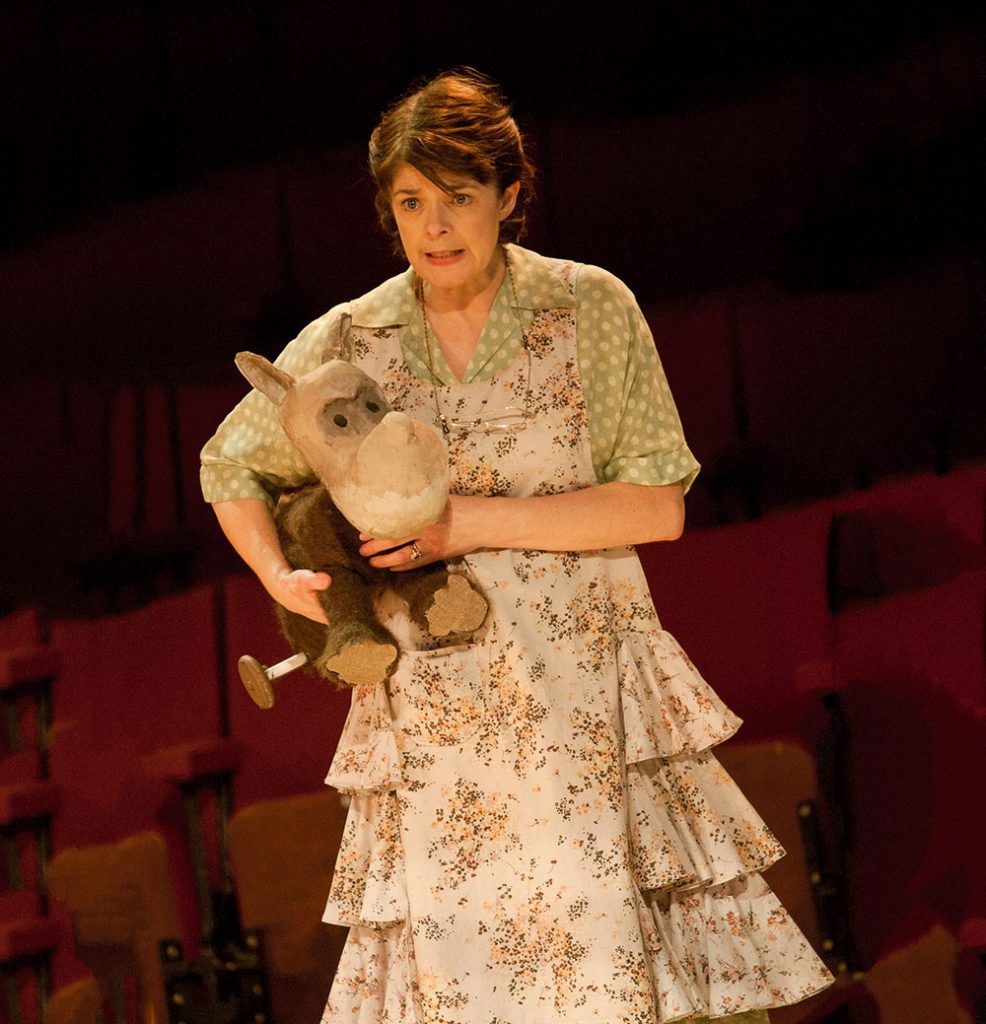
Oozing confidence, charm and charisma, Julia Watson saunters around a church she’s known for many years, entertaining a rapt crowd with tales of her career and reciting some of literature’s greatest lines. It’s obvious that she was cut out to be on stage and it’s no surprise later when she tells me “I love acting”. Brought up in Derby and introduced to the theatre at an early age, Julia is best known for playing Barbara “Baz” Wilder in the BBC medical drama Casualty, a role she returned to on a couple of occasions. But as she demonstrates when appearing at All Saints Church, Mackworth village, she’s a talented all-rounder who completely inhabits a character – including Margaret Thatcher who she played in a theatrical production in 2017. A couple of days later Julia spoke to me from her home in Barnes, south west London about how she loved her time with Derby Shakespeare Theatre Company, why she became a fire-eater and how questions were asked about Baz in Parliament after she was featured on the front page of the Sunday Times. She revealed that she wasn’t desperate to play Baz and told her agent she wasn’t sure if she wanted to be in a medical drama. Her agent replied: “Brenda Fricker and Derek Thompson are in it. You just do it. It’s going to be very high profile.” When talking about her career, Julia often uses the phrases “great fun” and “happy time”. That’s how she describes Casualty. “Originally it was only supposed to be 15 episodes. It’s extraordinary to think it’s still going. I did the first series and then I was offered something else and decided I didn’t want to stay. I was a junior doctor and junior doctors move on, so I would have had to move to another part of the hospital and come back as a love interest with Charlie (Fairhead) and I didn’t want to do that.” Nine years later Julia was asked to return to the series and her relationship with Charlie grew. “I came back two or three times. It was a very happy time, actually. It was great fun to work on.” So how much of Julia was there in Baz? “In a sense those kind of parts on television are about personality acting, I always think. You’re cast for who you are. So of course there’s an element of you within that character. You just have to be careful not to say ‘I don’t think my character would do this’ because it’s actually not you. But there is a point when you’ve played her for so long you start to know her almost better than some of the scriptwriters because they don’t know the back story like you do. She was huge fun to play because in the first series she wasn’t very competent at her job. She was popping pills to keep going and getting drunk. “I ended up on the front page of the Sunday Times and there were questions asked in Parliament about how the NHS and a junior doctor could be portrayed in that way. But of course they’d done their research and it was all accurate. Charlie knew much more about everything than Baz did. And yet she was in charge of him. There were interesting hierarchies that the first series explored very well.” The storyline in which Baz had an affair with Charlie Fairhead provoked some strong reactions from viewers, including nasty letters disapproving of the way Baz behaved. “Charlie is a national treasure,” says Julia. “If Baz wasn’t treating Charlie very well I used to get it in the neck when I bumped into people. But I’d say ‘it’s not me, it’s a character’.” Eventually Julia left the series in 2004 when Baz was killed in a car crash. “I thought there was a limit to how many times I could come back,” she says. “We’d done everything. Charlie and I had been married, divorced, married to other people – there wasn’t really any further for the storyline to go.” She confesses it might have been a bad decision because the casting director of the spin-off series Holby City said if she hadn’t been killed, she could have worked on that programme. “But I never wanted to be a long-running character. I’ve always liked variety and to do stage as well as television. So I thought it was time to leave Casualty.” She also admits there was pressure from her husband, writer David Harsent, and her daughter Hannah to give up Casualty because they hardly saw her as she was away filming in Bristol for ten months of the year. “Although I would have two days off a week, sometimes they weren’t concurrent, so I spent my life on the motorway just driving back and forth. David said ‘this just isn’t working – either you’re part of this family or you’re not’. By that time I was playing consultant head of department so I was in every episode. It became hard and I felt I was missing out on Hannah’s life. This profession is never easy when you’ve got children.” Julia Watson was born on 13 September 1953 in a small village in south Wales. Her father moved to Derby to work at Rolls-Royce when Julia was a baby. She says she had a very happy childhood. “We were perfectly placed. We were only 60 miles from Stratford. My father was passionate about Shakespeare so from the age of eight I saw virtually every play in every season. And there was lots of amateur theatre in Derby. There was lots to keep me occupied.” She joined Derby Shakespeare Theatre Company, working backstage and being cast in small roles before at the age of 16 she got the part of Juliet in Romeo and Juliet. “It was a very happy time. I loved my time at Derby Shakespeare Society. It was wonderful to be around people who were so passionate about theatre and
The Lost Houses of Derbyshire – Old Saint Helen’s House, Derby

One often comes across houses – not always ancient ones – which have names carrying the suffix ‘Priory’ or similar. Very often, such houses were built on former monastic land or even adapted from monastic buildings, although it has to be admitted that sometimes the connection is spurious and the nomenclature arrived at quite vicariously. The present St. Helen’s House in Derby is a case in point. Thanks to the enterprise and dedication of Richard Blunt, this magnificent mansion of 1766-67 by Joseph Pickford, is not qualified as a subject for this series, being now again resplendent on King Street, although a decade ago one might have been forgiven for assuming it was well on the way to being so included. The name goes back to the existence of a lost parish church on a site almost opposite, dedicated to St. Helen. Such dedications, if traceable to the early 12th century and beyond as here, are usually taken to be ancient, possibly even late Roman in origin, the dedicatee being in this case the mother of the Emperor Constantine the Great and discoverer of the True Cross. This parish church, although likely of pre-conquest origin, is not thought to have been one of the six recorded in Domesday Book for, as Dr. David Roffe pointed out – when he was working with us at Derby Museum and with the former Derbyshire Museums Service in 1985 to re-evaluate the Derbyshire Domesday for the nonocentenary of the original – much more than one might imagine were omitted, mainly because they were free of the burden of tax payable to the Crown. This included some proprietory churches, especially in towns, which were often built by a landowner on his town property – his urban fee – as a personal holding. Thus in c. 1135 a burgess of the burgh of Derby, one Tovi, or Towy, probably a man of Norse descent, gave property on King Street, then part of the spinal road passing through Derby from north to south, as a monastery, including a well called St. Helen’s. Within a decade, another grandee, Hugh de Derby, had given land at Little Derby, now Darley Abbey, for the foundation which had then transferred to its new site to become the largest monastic foundation in the county. This donation had the benefit of the support of the Earl of Derby. Thus the small foundation in King Street then became an oratory, a sort of outlier to the main monastic foundation, and by the reformation had become an hospital staffed by nuns. In 1538, it was dissolved with the main abbey in the second round of the dissolution, a move that must have placed many in the town and surrounding area into distress. These days, people forget that the monasteries were the original welfare state, providing mainly medical care both in-patient and external, hospitality for traveller, and educational services for children. All of these were furnished by the Abbey of Darley, and post-dissolution Derby School was formed to replace the latter function, albeit only nominally in continuous succession to the Abbey, until ‘comprehensivised’ in the 1960s and then losing its identity entirely in a move by the County Council thirty years ago. The site was sold in 1545 to an asset-stripper, William Berners (later Sir William) and part at least of the conventual buildings, thus secularised and described as a messuage (house outbuildings and grounds) rather than an hospital, was sold off at a profit. The site of St. Helen’s, apparently including the original church, adapted as an internal chapel, was sold to the powerful knightly family of Foljambe, of Walton Hall, near Chesterfield. They also had a substantial holding in Derby, just south west of the town on the far side of the Odd Brook, called rughedyche, today’s suburb of Rowditch which did not, it would seem include a residence. This later presence of the Foljambes may be reflected in the much earlier foundation of another chapel (or the original chapel re-dedicated), dedicated to St. John, within the Hospital of St. Helen, and endowed with Foljambe lands at Brampton by Chesterfield in the 1220s. It may be that Sir Godfrey Foljambe purchased Berners’s portion and united the holding, enabling him to build a house for the use of his family when in Derby. It is likely that St. Helen’s adapted, was used also by their bailiff for Rowditch and by the family when in Derby on official business, as grandees like the Foljambes were expected to serve as High Sheriff and perform other legal functions as well as looking after their business interest which, in the Foljambes’ case included both coal and lead. In other words, the site became their Derby town house. By the Jacobean period, a new two storey and attics house appears to have existed which had segmentally coped curved attic dormers both on the front and side elevations, with mullioned windows. The presumption is that this was built onto the north side of the existing (and surviving) conventual buildings. These latter were probably of stone, for monastic houses tended toward a more permanent, solid, if expensive, method of construction, although the domestic parts might have been timber framed. It is not clear if the Foljambe addition – probably the work of Sir Francis Foljambe, of Aldwark, 1st Baronet – was of brick or stone, but when the building was drawn in February 1792, the main block had lost its original fenestration and had been adapted as an artist’s studio for our most celebrated painter, Joseph Wright. Such alterations would have been far simpler to have been made in a brick building than stone. The grounds of the house included the King Street frontage at least up to Lodge Lane, which probably took its name from a gatehouse and lodging relating to the convent there. It also included orchards and gardens to the south beyond the present St. Helen’s Street stretching to the NW boundaries of the houses on the