Trams & Trains That Climb Mountains

The Great Orme tramway climbs the hill by a cable operated system from the North Wales coastal resort of Llandudno. It carries holidaymakers almost to the summit of the mountain. nce the preserve of Oxbridge graduates, following the growth of prosperity and the expansion of railway travel during the reign of Queen Victoria, enjoying mountain scenery became open to anyone with the desire to explore the wilder regions of their countryside. Easy access from the industrial Midlands and North West saw hordes of visitors trekking each summer to north Wales’ seaside resorts where, after a short ride along one of the railways snaking up from the coast, they were able to gaze on the dramatic beauty of mountains surrounding Snowdon, the second highest point in the British Isles. Attracted by the dramatic peaks towering above their heads, visitors began to explore the higher ground, but not all had the confidence to find their way in safety amongst the peaks and crags. Quick to grasp the opportunity of an easy income from guiding individuals and groups, shepherds cashed in on their intimate knowledge of the hills, with many turning it into a full-time occupation. Unfortunately some were not as knowledgeable as they thought, while others tried to turn a day amongst the peaks into something more like an alpine expedition; some even demanded the need to carry provisions more suited to a military expedition, even down to the provision of vast quantities of alcohol! With serious hill climbing beyond the ability of the bulk of potential peak-baggers, many were tricked into attempting climbs that were frequently dangerous and life-threatening. It was with this in mind that the idea of a railway to the summit of Snowdon, the most popular mountain was put forward. The suggestion was far from new, trains had been climbing Swiss mountains for a decade or more, so the technology was there, it only needed capital and the encouragement of one or two entrepreneurs to get it off the ground in more ways than one. The man who first had the idea of building a railway to the summit of Mount Snowdon was Sir Richard Moon, Chairman of the London and North Western Railway. In 1869 he came forward with a design using the Swiss ‘rack and pinion’ system where locomotives literally clawed their way up and down steep gradients. The cost to be borne by the LNWR was a staggering £63,800 (almost seven million pounds in today’s money). Naturally this did not meet with immediate approval, with the opposition led by a local landowner, George William Duff-Assheton-Smith, but seeing the potential he became one of the leading members of the Snowdon Mountain Company, with his wife Enid cutting the first sod in a track from Llanberis to the summit of Snowdon. At that time the most popular footpath route to the top of Snowdon was from Portmadog by way of Snowdon Ranger on the mountain’s west flank and for a while building the line as a branch of the Portmadog/Carnarvon line had its backers. However, the northern route from Llanberis was chosen as the means of easing the local economy already suffering from the decline of the Welsh slate industry. Dug by men wielding picks and shovels helped by dynamite alone, working in whatever weather the mountain could throw at them, amazingly it only took fourteen months for the single-track line to reach the summit. The first commercial train ran in time for the summer rush of 6th April 1894. Reaching the summit in good order, unfortunately this journey ended in disaster on the way back down to Llanberis. Possibly due to overloading, locomotive No. 1 Ladas towing two coaches lost the track and ran out of control. The locomotive derailed on the narrow col above Clogwyn Halt and fell into Cwm Glas Mawer on the Llanberis Pass. Amazingly only one passenger died, from loss of blood after jumping from the carriage. This luck continued when due to miscommunication a second downward train hit the carriages of the first, with no fatalities. THE SYSTEM and its ROUTE TO THE SUMMIT The original plan was to use a two-rail system, relying purely on wheel friction for grip. Following the disaster of the first journey, it was decided to adopt the Swiss system and use the rack-and-pinion method for both climbing and descending. A large cog beneath each locomotive was fixed to either side of a central point on the axle and alternately connects with each section of the toothed rack made in the shape of an inverted ‘L’ cross section. The cog alternately connects with individual sections of the rack and literally claws its way up and downhill. Two sections of the line, at the top and bottom being relatively level, do not have a central rail and the boilers on steam locomotives slope downwards in order to keep them as level as possible. Although the majority of trains are pulled by steam engines, there are four diesel locos operating. Five halts are made on the way to the summit and its busy café. Not many passengers use them and their main purpose is to create passing places. Reaching the topmost station it is a rare day when passengers can sunbathe beside the summit cairn built by Ordnance Surveyors; Snowdon has some of the wildest mountain weather in Britain. Below the cairn and a few yards from the summit station platform, the welcoming café offers simple refreshment to shivering would-be mountaineers. The present café stands on the site of earlier attempts to provide hospitality. Originally all that was on offer was a cluster of crude wooden huts later followed by a 1930s structure which by the twenty-first century had become rather scruffy. The present building, Hafod Eryri (literally translated from the Welsh into English as ‘high mountain residence of Snowdonia’ was opened by First Minister Rhodri Morgan on the 12th June 2009 and cost a staggering £8.4 million. Strangely in a region sitting mostly
Taste Derbyshire – How Green is your Kitchen?
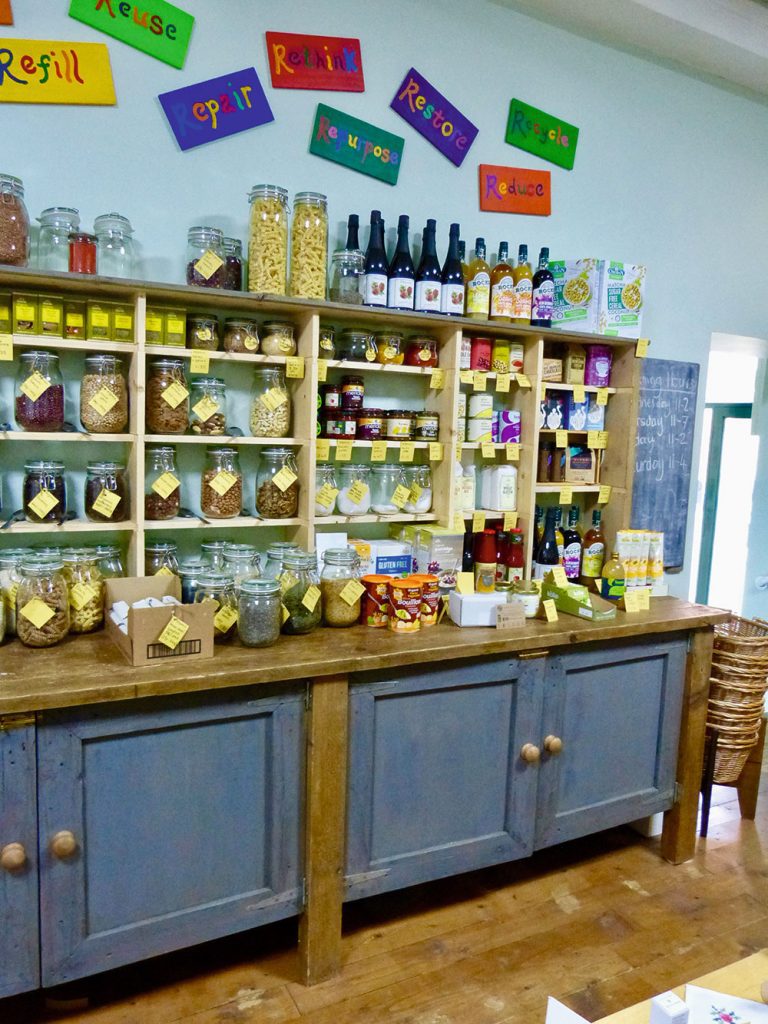
The pine worktops may give off the clean scent of zesty lemon but the kitchen of Taste Derbyshire’s Amanda Volley contains a dirty little secret. Each week she is putting three bags of non-recyclable packaging into her wheelie bin. Desperate to clean-up her act, she reached out to Sue MacFarlane who runs a low impact shop in Belper. A week before meeting with Belper’s Sue MacFarlane, a woman at the forefront of the battle against single use plastic, I saved all the food packaging which normally gets pushed into the deepest recesses of my 30-litre touch top bin. I might recycle seven wine bottles a week, use tatty tote bags for shopping and my old fridge was removed by the council rather than dumped on a country lane, but the shameful amount of non-biodegradable plastic in my bin bags proved two things; – 1. I am no friend of the earth. 2. I have a serious crisp addiction. Fortunately, Sue MacFarlane (58), is happy to act as fairy-godmother to the eco-curious. People who want a greener home but are not ready to exchange loo paper for a family cloth (it’s a thing – Google it). Instead of slapping you across the knuckles with a bamboo dish brush, she guides you gently towards greener habits. Sue runs regular workshops for people who want to cut down on their plastic. A year ago, she launched Sue’s Sustainables – a scoop shop where you can buy loose food for your evening meal and refill on eco-friendly washing-up liquid for the dirty plates afterwards. “Getting started on the sustainable journey can be daunting,” Sue says when I tell her about the pile of plastic waste my two-person household produces in one week. “People are often made to feel they are at fault for all the environmental problems and, if it’s getting worse, it’s because individuals aren’t doing enough. Big businesses are very skilled at putting responsibility on consumers for something they didn’t create.” Then she looks at a picture of my rubbish; “Oh wow – that is a lot,” she laughs. “I think you’re at the start of the journey towards a low impact life.” Sue’s own journey began in 2013 when she and husband Will (63), moved to Belper to pursue a simpler life. “Working for a bank in Sheffield, I saw at first hand the waste that goes on a corporate level – like being asked to fly across the country for a business meeting. When the bank restructured, I decided I didn’t want to be part of that world anymore” she explains. “When Will and I moved back to Belper (the couple had previously lived there from 1997-2004) it was a ‘wow’ moment as the town was more vibrant with lots going on in the community. I became the chair of ‘Sharing not wasting’ which re-distributes food not wanted by supermarkets. In addition to her Green Party commitments, Sue began work as a part-time singing teacher (she is a Natural Voice Practitioner who believes everyone – regardless of talent – should be encouraged to sing) and as a celebrant. She also found time to offer free advice to people who wanted to reduce their own plastic consumption. “I’ve been interested in the environment and ecology all my life,” Sue explains. “In 2017, I decided to look for plastic-free alternatives to everything I was still using in the home and started sharing my tips on-line. The one which really got people talking was finding out that some tea bags contain plastic.” For Sue, a lot of her personal changes meant embracing thrifty habits of the past; “My late my mum Janice was part of the war generation and it was natural for her to re-use things instead of throwing them away, making and mending clothes and never wasting food,” she says. “I can recall her buying the pretty margarine tubs so she could use them as containers afterwards.” Sue became so well-known for her friendly tips; a regional TV news channel did a piece about her low impact life and even followed her to the local chippie where she was filmed getting a glass jar filled with mushy peas. But it was never Sue’s intention to launch an eco-business; “It came about in July 2017 when I went along to the opening of Vegan Revelation Cafe and met the owner Leise Taylor,” she recalls. “I became a regular customer and, when the space next-door to her cafe became available, Leise told me Belper needed a vegan food and refill shop. I asked if she had anyone in mind to take it on and Leise replied ‘Yes – you,’.” Catching up with Leise for a coffee, a week after my meeting with Sue, she tells me there was no one else in the running. “I remember the first time Sue walked into the restaurant – dressed in pink – and she was the picture of positivity. Belper needed a sustainable living shop and there was only one person who could run it,” she laughs. “It had to be Sue.” Sue decided to take on the business in August 2018 and recalls the mad ‘whoosh’ between that decision and opening a month later. Sue timed her launch to coincide with a local screening of Plastic Ocean – a film which documents the devastating effects of plastic pollution on the world’s oceans. “It’s a life-changing film like Blue Planet II. Once seen – you can’t un-see it. When we opened the next day, we saw many of the film-goers,” Sue recalls. “In fact, it was mad all day. A lot of my customers said they’d been waiting for it to open. A massive amount of people just said ‘thank you’. They still do, it makes all the effort worthwhile. It’s such a lovely place to work.” Just over a year later, the shop is a testament to all that effort. Over the past twelve months, she’s doubled the stock
Restaurant Review – Lunch at The New Inn, Milford
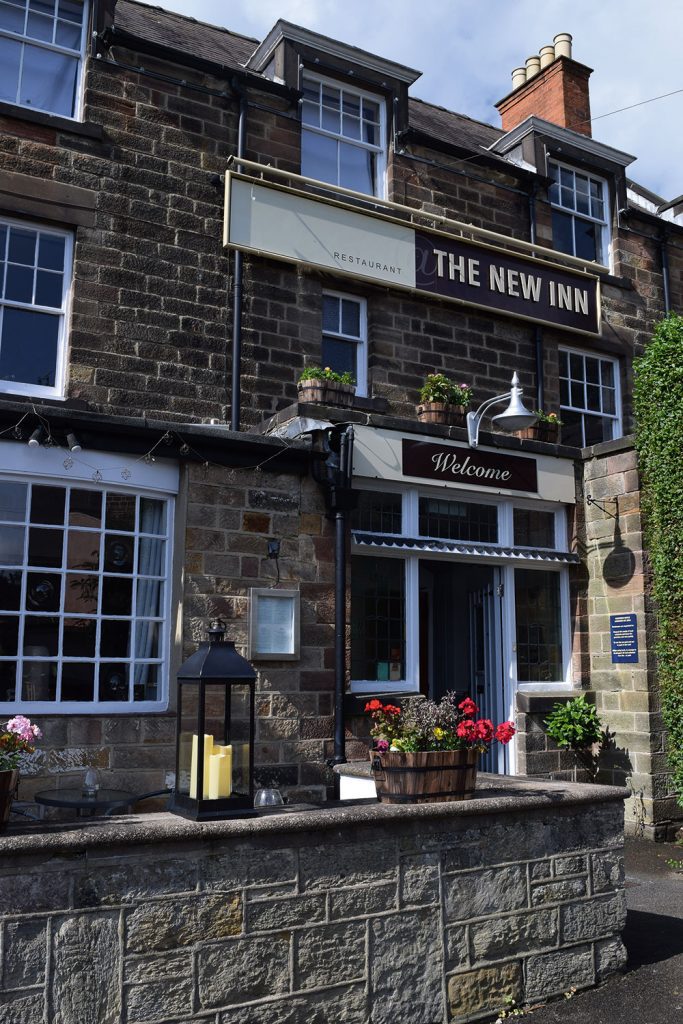
Fresh, seasonal and cooked in a traditional way. The New Inn is situated conveniently on the main A6 just midway between Belper and Duffield. And true to its name it is experiencing a new lease of life under the careful direction of Kyle and Hollie. Make no mistake about it, this isn’t a fast food outlet where the ‘ting, ting’ of the microwave can be heard from the kitchen. On the contrary The New Inn, Milford is a place where all the ingredients are fresh, true to the season and cooked in a traditional way by their young chef. So with this fixed in mind relax, have a nice drink and enjoy the ambience of a light airy restaurant with stunning views over the Chevin, as your food is prepared. We dined at lunchtime where there is a wide variety of dishes, one menu contains ‘light lunches’ and the other a ‘lunch menu’, these encompass both English and Italian cuisine. The pasta dishes caught my eye and funnily enough we both chose a pasta dish but for the purpose of writing this article and adding variety I gallantly gave in to my wife and went for the traditional instead. But before that we began with a starter and I got in first with a traditional Italian risotto prepared with fresh leeks, tender pieces of chicken and topped with parmesan. We don’t always associate rice with Italy but rice has been grown in southern Italy since the 14th century, and it soon spread North to Milan where this dish became a firm favourite. With a soft and creamy constituency this generous dish was lovely although very filling. This unfortunately caught me out and made my main course difficult to do justice to. I think I must change my style and give more thought to balancing my choice from the menu better. The steak and mushroom pie had a puff pastry lid and the meat was really tender and full flavoured. It was accompanied by a dish of fresh vegetables, lightly cooked and with flavour still intact. A small wire basket of chips completed the dish. A generous main course I think you’ll agree! My wife who has a little more common sense chose the baked asparagus with a crumb and Stilton topping, this left her room for her main-course of tagliatelle pasta in a cream sauce. The flat ribbons of pasta were in a rich sauce with chunks of chicken and slithers of pancetta and mushrooms, nicely presented. Was there room for pudding? Sadly no, so we will just have to come another day for my fruit crumble. If however, you have a more strictly allocated lunch time than ours, there are things such as homemade fish finger baguette, steak and Stilton ciabatta and homemade beef burger all served with a side of salad and chips to tempt you. The service at the New Inn definitely deserves a mention as the staff are so kind and attentive, they give you a real, warm welcome. 00
Tried & Tested – Feed Your Skin with Superfood from Elemis

Nourish from the outside-in with these new additions to the vitamin-packed Pre-biotic SUPERFOOD SKINCARE RANGE New Superfood Blackcurrant Jelly Exfoliator £28 | 50ml This super gentle facial scrub is jam-packed with anti-oxidant rich fruit extracts, Black Tea Extract and Glycerin, leaving the complexion smoother, softer and hydrated. • Sustainably-sourced Blackcurrant Fruit Pulp exfoliates for a smoother, more radiant complexion. • Unique jelly texture transforms into a milky smoothie when you add water. • Bilberry Extract, naturally high in vitamins and minerals, locks in moisture and rehydrates. New Superfood Vital Veggie Mask £30 | 75ml Get a shot of green goodness with this treatment mask that nourishes, smoothes and brightens. • Locks in hydration with Avocado and Chia Seed Oils, rich in omega fatty acids 6 and 9 • Passionfruit Acids, naturally rich in Vitamin C, brightens while gently exfoliating. • Nourishes with Wheatgrass Extract, rich in chlorophyll, amino acids, minerals, vitamins and enzymes to leave skin healthy-looking and feeling smooth. New Superfood Berry Boost Mask £30 | 75ml A purifying mask with Brazilian Purple Clay and an omega-rich Superberry Complex balances the T-zone and helps mattify skin. Product Test Blackcurrant Jelly Exfoliator. I found this to be a very gentle exfoliator that I could use every day. There are no harsh, gritty bits so it’s very kind to your skin and yet does give good results. It also doesn’t dry or irritate your skin. JP Vital Veggie Mask My friends verdict of my skin was ‘wow, it looks so bright!’ There you have it. A fantastic skin brightening product. I love this! VP Berry Boost Mask Gentle face mask that can be used twice a week. It smells incredible and can notice the different in my skin after the first use. It controls excess oil and leaves your skin looking more even toned and refreshed. Super face mask! CB 00
Taste Derbyshire – Hooked on Ice Cream

There was a time when it was unnecessary to give a dessert menu to Gavin Murray; it didn’t matter what form or flavour – hard or soft, exotic or everyday – to know Gavin was to know he had a thing for ice cream. “I’ve always loved ice cream, but then who doesn’t?” says Gavin (48), director of Derby’s first not-for-profit, ethical ice cream brand Just-ice. “I got hooked on homemade ice cream thanks to my dad. He used to make ice cream every year in flavours like butterscotch and coffee. I remember him having to get up in the night to stir the bowl so it didn’t develop ice crystals. It was gorgeous.” Gavin’s transition from ice cream fan to ice cream man began when good friends bought him an ice cream making machine in 1999. “I loved all ice cream but Ben and Jerry’s ice cream was a special favourite and the gift came with a recipe book,” Gavin explains. “I’d make it every couple of months for occasions like birthdays. I experimented with flavours like mocha, maple and pecan and I used fresh fruits like raspberries and strawberries. It must have gained a bit of a reputation because, when I donated some as a charity raffle prize, the top bid was £40.” Perhaps this explains why, on a perfectly ordinary day in his kitchen, Gavin found himself making an ‘out-of-the-blue’ declaration to wife Sally. “I just told her that if I was to open a shop, it would sell ice cream and the business would help the survivors of trafficking,” he says. “For years and years, we’d supported Hope for Justice, an organisation whose mission is to put an end to modern slavery. I told Sally and she said ‘Oh, we could call it ‘Just-Ice.’ That’s how it all started.” The ‘all’ involved in starting a business from scratch led to a massive life-change. The couple, along with their three teenage children, had lived in London for twenty years and Gavin was working as a minister for Morden Baptist Church. “If we wanted to launch the business, and really help people, we realised we couldn’t run it alongside Gav’s church commitments,” Sally (49), a physiotherapist, explains. “It was a make or break moment as the family house came with the post. But we decided to take a leap of faith. Life is short and, as someone coming up to 50, I knew we’d regret it if we didn’t follow our dream.” The couple decided they needed a fresh start in a new location. “All roads seemed to lead to Derby,” Sally laughs. “Gavin visited a pub called the Derby Arms and we were watching Pride and Prejudice on the TV, which is set in Derbyshire. We came up to Derby in February 2017 and met with the Marketing Derby team as we were looking for a shop. We were shown a large vacant space in Derby Market Hall and it just made sense as the rent was reasonable and we could make and sell our ice cream there.” Even so, there was still work to be done taking the dream to reality; “It’s amazing what you can get done with the help of Google and a bar of Green and Black’s chocolate,” Sally laughs. “One of the priorities was joining Social Enterprise UK. Becoming a member puts you in touch with a network of other businesses and we were really encouraged by other people’s stories. Plus, we were able to source things from other social enterprises like NEMI tea, a business which supports asylum seekers and refugees.” Gavin, Sally and the family moved to Derby in August 2017, cheered on by their friends from Morden. “They gave us so much help and support,” Sally says. “Before we left, our friends presented us with Fairtrade aprons bearing our company logo. Another came up to Derby for the day to just to wallpaper our stall. A friend who runs Rachel Joy Lettering re-designed our branding for free to make it more exciting and fun.” Sally smiles at the memory; “We try to make everything we do about family, friends, fairness but, above all, about fun. Yes, we want justice for some of society’s most vulnerable people and yes, it’s a dark subject but there is joy – not just in the making of our ice cream but in helping someone gain their freedom.” The family were overwhelmed by the help they received in Derby; “We joined St Werburgh’s Church in Derby and we were invited up to tell our story,” Sally recalls. “We told them we were setting up a not-for-profit business to help people trapped in human trafficking and to support Chance for Childhood, a charity which helps child soldiers. After our talk, we ended up with a fantastic bunch of volunteers. The Murrays were also approached by another member; “A man said he’d been really moved by our story and offered to make something for us,” recalls Sally. “Incredibly, he made ice cream trikes. That’s how we acquired ‘Wilber’, named after William Wilberforce the politician who helped to abolish slavery. He’s since been joined by a gifted horse box called Rosa, after Rosa Parks, which we take to outside events.” The Murrays were finally ready to open for business on March 31 2018 – or so they thought. “We inherited money from a great aunt to buy ice cream making equipment but the first time I came to make a big batch, I had to ring Sally in a panic. I’d followed my normal recipe for homemade ice-cream and produced scrambled eggs,” recalls Gavin. “Our wafer supplier was with me at the time and he was able to spot that, because I use a high percentage of cream, the commercial machine was churning it too fast and I was basically making butter.” This glitch was soon corrected in time for opening. “We had a grand launch for around 200 people, including guests from Leicester, London and even
Limescape – The Shrouded Aesthetic

Captured over a 3 year period, this study by Steve Gresty considers how limestone quarrying – a process which seeks to meet our unrelenting desire for the comforts and conveniences of consumer items – is concealed both from public view and under the veil of the dust it creates. Carboniferous limestone contributes to the natural beauty of areas within the Peak District National Park. This exhibition however draws attention away from the obvious picturesque countryside and reveals the obscure and surreal ‘landscapes’ of the hidden worlds that are the quarry environments. The body of work on display consists of a series of 19 large photographs exploring how our cultural principles influence the way we see and value the land and the way it is used, specifically land utilised for limestone quarrying – an industry that seeks to meet our unrelenting desire for the comforts and conveniences of consumer products. These large colour photographs attempt to capture what Steve sees as metaphoric shrouds that veil the phenomenon of quarrying, beginning with a series that captures the shroud of beauty of the rock with its bewitching colours, fissures and textures that can offer us a Pollock, Kandinsky or a Picasso. The exhibition then moves to the ’shroud of human intervention’ which captures how humans irreversibly alter the landscape in order to procure vast amounts of a raw material that has taken millions of years to form , whilst veiling the trauma of this pursuit from the public eye by the ironic employment of topography and vegetation. We desire this valued commodity of limestone to use it in a long list of modern-day products we feel we need, from cement to indigestion medication, breakfast cereal to chicken feed. The show then highlights the dystopian shroud that coldly processes, conveys and commoditises the extracted mineral in a cloak of human technological activity and the inevitable cloud of dust, into usable forms that be utilised in a myriad of modern commodities. The final series documents after humans have left, neglecting and forgetting about the wounded and corrupted land. But, soon after we have we left, Mother Nature begins to heal by casting her green shroud over this damaged earth, and with calm resolve the monuments to human consumption crumble and dissolve as she reclaims the land and affords beauty to it once again. The main image series are augmented by a mini 2 x 2 series displaying Polaroid type photographs (referencing the wasteful, ’throw-away’ society within which we live) that draw attention to the huge number of these products that we demand, use and discard without a thought of what they are made from and where these constituents come from. With this exhibition Steve wants people to think about why these huge quarries are sited where they are and reflect on the fact that it is us and our relentless desires for modern products that necessitate their existence. 00
Clyde Steam Puffers

Coal smoke spiralling its lazy way above the shining inverted keel of Glasgow’s Science Museum guided us to the puffer VIC32, our home for a week’s cruise around the Firth of Clyde. Puffers were once the lifeline for communities throughout Scotland’s west coast, and beyond, carrying everything from coal to livestock. Their curious design was based on canal ‘gabberts’, horse-drawn barges carrying coal between Glasgow and Edinburgh. Short and stubby they had to be less than sixty feet long in order to fit into locks along the way. Around 1870 someone had the bright idea of installing steam engines and doing away with horses, opening the way to working beyond the canal, trade which in any case was declining with the advent of railways. As puffers were flat-bottomed, they could find their way into places lacking conventional harbours. They simply ran into sandy bays, waited for the tide to go out, sat down and unloaded their cargos into whatever wheeled vehicles were available. The result of this change to mechanical power was a curious hybrid of canal barge-cum-sea-going vessel. A blunt bow held the crew’s quarters below a steam-driven winch to operate the simple crane used for unloading cargo out of the cavernous hold. All the important works, from skipper’s cabin to coal-fired boiler were crammed into the tiny space offered by the stern. Steering the boat was hampered by the helmsman having to peer round a funnel directly in front of the wheel-house. This curious arrangement was linked to the reason why the boats were called puffers. As the first engine-powered vessels had unlimited canal water for their boilers, there was no need to economise. Exhaust steam was simply blown directly up the funnel, making a puffing sound which gave the boats their name. Condensers fitted to sea-going puffers in order to avoid using sea-water, removed the need to exhaust waste steam up the funnel, but the name stuck. Anyone who remembers the BBC TV comedy/drama The Vital Spark, will recall the mis-adventures of the motley crew of an aging puffer plying its way around the Western Isles. There was also a full-length Ealing Comedy The Maggie, in which an American tycoon Calvin B Marshall, played by the late Paul Douglas is tricked by the Maggie’s devious skipper into hiring the puffer to deliver expensive furniture to a remote Hebridean island. Suffice to say the furniture never reaches its destination, but along the way the tycoon learns a lot about life from the ‘wee boy’, the Maggie’s cabin boy as well as local people frequently played by local inhabitants of the west coast. Both the BBC series and the Ealing Comedy were based on stories written in the early 1900s by the late Hugh Munro, a Glasgow Evening News journalist. He immortalised the likes of Para Handy or Hurricane Jack and the scallywag crews of the puffer trade around Scotland’s west coast. Never out of print for long his stories brought to life the exploits of characters such as those imprisoned for poaching game, or in one reported case, stealing their boat’s petty cash. It wasn’t just the crews that were characters, puffers also had a life of their own – there was once a puffer tied to Arran’s Lamlash harbour wall for months, waiting for a replacement to its propeller which had lost a blade. Cruising with the Vic 32 While there are several puffers awaiting restoration in harbours up and down the country, the VIC32 is the only one currently sea-worthy and able to carry passengers. Although built to the design of a traditional Clyde puffer, VIC32 started life working for the Royal Navy during WW2. The initials VIC are a naval acronym for Victualling Inshore Craft, one of 100 made during the war to carry supplies ranging from food to high explosives. Built by R Dunston’s of Thorne on Humberside, VIC32 spent the war victualling warships and naval bases around the North Sea. Although these little ships had a mundane existence, they served their country well in time of war. Regrettably only a handful survived into more peaceful times – some ended their days as tramp steamers in the Far East; a few still languish in naval museums or were scrapped, but only the VIC32 carries out its original work, albeit for pleasure not commerce. Enthusiasts Nick and Rachael Walker found VIC32 languishing in a Whitby dock. In 1975 they were on their way home from Northumbria after an abortive attempt to buy a small yacht. Quite by chance they spotted the puffer when they were about to leave Whitby. Even though it looked rather grubby, nevertheless it was in reasonable condition, basically needing only a bit of TLC. Enquiries led the Walkers to the VIC’s owner, Keith Schellenberg one-time owner of the Island of Eigg who proved willing to sell. The boat was sufficiently sea worthy to sail down to St Katherine’s Yacht Haven in London where with the help of volunteers, it spent the next three years undergoing considerably more than simple TLC. The result was an almost unique example of a coal fired steam boat ready to find its way back to the traditional home of the puffers around Scotland’s west coast. In 1978 crewed mainly by teams of volunteers, VIC32 made its way home. Since then it has carried well over 5,000 passengers including narrow boat enthusiasts Timothy West and Prunella Scales featured in their canal series on TV. Passenger accommodation might be a bit cramped on two levels in the converted hold, but it is adequate and cosy, complete with its steam operated 78 rpm gramophone, or the series of steam whistles on the funnel called a calliope. Everyone pitches in, from helping wash dishes, to steering the puffer, or shovelling coal to feed the insatiable engine. We joined the VIC32 at its berth behind Glasgow Science Centre. To one side was the Paddle Steamer Waverley making ready for trips ‘doon the watter’. To our front and under restoration
Celebrity Interview – Aled Jones & Russell Watson

Take two of the world’s greatest classical voices, get them to sing a selection of their favourite hymns, arias and popular songs, and what do you have? One of the fastest-selling albums nowadays of any genre. Aled Jones and Russell Watson are continuing their partnership with their first tour together, stopping off in Nottingham where they will perform numbers from their debut offering In Harmony. And after speaking to the pair of them I reckon they could carve out a new career for themselves: on the stand-up comedy circuit. Aled was in London where he had just presented the breakfast show on the radio station Classic FM while Russell was in Cheshire. Despite being more than 150 miles apart, they continually made each other – and me – laugh. So much so that at one point no one could speak because they were guffawing so much. I ought to have known what to expect when I joined a conference call which linked the three of us. When prompted to state his name, a voice called out “the one who’s not Russell Watson!” The conversation soon had a light-hearted edge. When I asked Aled and Russell, who first sang together on the Songs of Praise show The Big Sing nine years ago, why it had taken them so long to collaborate again, Aled chimed up: “It took us that long to get over how bad it was the first time!” Russell shot back: “I haven’t slept since.” For a brief moment they became serious. “To be honest with you,” said Aled, “we both lead busy lives and the time I suppose wasn’t right. For the first album the time was right. It took a couple of calls, a couple of texts and the next thing we know we’re doing the album.” Russell said the pair had known each other for almost 20 years and had met at a charity event at the Royal Albert Hall. Since then they had become “good pals”. “You can walk into a room, meet somebody for the first time and immediately you know whether you can have a laugh with them and whether you’re going to get on with them. Aled makes me laugh, I enjoy his company and we get on really well.” Russell says he can’t wait to go on tour because they will have fun as well as doing something they both enjoy: singing. Aled agrees. “The thing that’s come out of it which is brilliant is that our voices really blend together. There was no guarantee at all that that would happen.” When I ask who chose the tracks that would go on the album, they were back to their mischievous selves. “We had a massive fight, I won and I got what I wanted,” says Russell. In reality they quickly agreed on the tracks. They also concurred on what the touring show should be. “The tour is very much a reflection of the album,” says Aled. “We’re both used to being on stage on our own but this is the first time properly that we’re doing a tour with somebody else. We’ve sung with other people in one-off concerts but for this tour we’ll be singing duets for all of it.” One of the problems facing any entertainer is “corpsing” – laughing uncontrollably. My fear is that this will happen to the pair of them while they’re on stage. Aled is concerned too – but in Aled’s individual way. “We were having a chat about this the other day. We’re the biggest corpsers in the world. Sometimes Russell has this glint in his eye which sets me off – which is very unprofessional of him.” “We’ve had a couple of moments,” says Russell, “where we’ve been doing certain things that are meant to be very serious and then I’ll give Aled a little look, raise an eyebrow and he’ll start laughing. As soon as he starts laughing I start laughing and that’s it, game over.” But once the tour actually starts, Russell hopes sanity will be restored: “Once we get on stage and there’s an audience, the dynamic changes. You’ve got the adrenalin from being in a big venue and everything else. “Initially I hope I don’t forget the words, remember where to walk on stage, where to come off, say the right things between the songs. There’s all these different things going on in your head.” Aled interjects that he’s hoping to remember the dance routines as well. “Yes, the dance routines are huge,” maintains Russell. “There’s this moment when I do a triple back flip into a full pirouette and then I end up in the splits. I’ve practised that a lot but I’m struggling with the splits.” “I’d pay good money to see that,” states Aled. People have been paying to see Aled and Russell for a number of years and both are successes in their own right. Aled Jones MBE was born on 29 December 1970 in Llandegfan, Anglesey. He became famous for the cover version of Walking In The Air, the song from Channel 4’s animated film The Snowman, based on the book by Raymond Briggs. By the time his voice broke when he was 16 he’d recorded 16 albums, sold more than six million records and sung for Pope John Paul II, the Queen and the Princess of Wales. He married Claire in 2001 and they have two children, one of whom is an actress. Russell Watson was born on 24 November 1966 in Irlam, Lancashire. While he was spending the first eight years of his working life in a factory making nuts and bolts he never imagined he would later be described as one of the world’s greatest classical singers. After winning a local radio talent competition his career took off. His debut album The Voice held the number one spot in the UK classical charts for a record 52 weeks and also held the number one spot in the USA. He suffered
Modern Collectibles – Swatch Originals
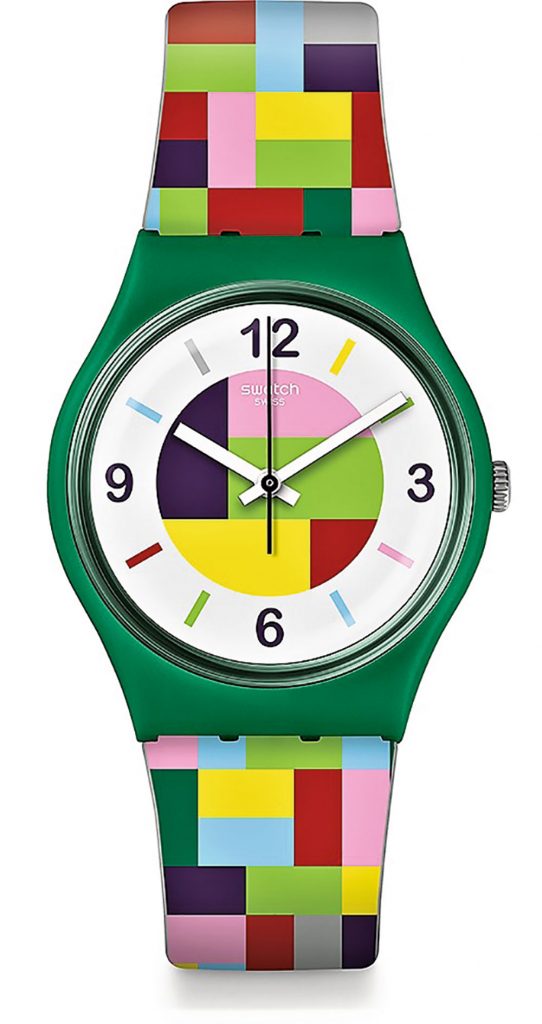
In the early 1980s, when just appointed Keeper of Antiquities at Derby Museum, one of my duties was to scan the more prestigious auction catalogues. The reason was because I had determined to increase our collections relating to the then total unsung Derby clockmaker and Enlightenment scientific pioneer John Whitehurst FSA. Yet by the middle of the decade, I was astonished to find much space in these catalogues devoted to gaudily coloured rubberised plastic watches, bearing the imprimatur of Swatch and attractive, remarkably high, estimates. turned out on investigation that Swatch was (and is) a Swiss maker founded as recently as 1983 by Nicolas Hayek. The product was developed as a response to the 1970s and 1980s flood of inexpensive Asian-made digital watches. The name Swatch is a contraction of second watch, as these watches were intended to be casual, disposable accessories. Development began in the early 1980s, under the leadership of Ernst Thomke with a small team of watch engineers. Conceived as a standard timekeeper in plastic, Franz Sprecher, a marketing consultant hired by Thomke to give the project an outsider’s consideration, sought to create a fashionable line of watches. The Swatch was originally intended to re-capture entry level market share lost by Swiss manufacturers and to re-popularize traditional watches at a time when digital watches had achieved wide popularity. The first collection of twelve Swatch models, introduced in 1983 ranged in price from 39.90 to 49.90 Swiss Francs but was standardized at 50.00. Sales targets were set to one million timepieces for 1983 and 2.5 million the year after. With an aggressive marketing campaign and relatively low price for a Swiss-made watch, it gained instant popularity in its home market. Compared to conventional watches, a Swatch was 80% cheaper to produce by fully automating assembly and reducing the number of parts from the usual 91 or more to 51 components, with no loss of accuracy. This combination of marketing and manufacturing expertise restored Switzerland as a major player in the world wristwatch market. Synthetic materials were used for the watchcases as well as a new ultra-sonic welding process and assembly technology. As I had noticed, the popularity of the Swatch peaked by the mid-1980s. Among the trends associated with Swatches are wearing more than one model, using them as ponytail holders and attaching them to clothing. This era of prosperity also marked the introduction of designs created by artists like Keith Haring, a move that added an air of style swank to Swatch’s trendy reputation. Like other companies, Swatch’s continuing success relies on the steady introduction of new and innovative products, which makes any Swatch manufactured before the mid-1990s somewhat rare. Limited edition or themed Swatches are even harder to find and fetch significant prices at auction. The Swatch Originals are the most widely collected and are plastic-cased. Standard ones can be got for £10-15 but new ones only range between £40 and under £100. But it is the vintage ones that people collect, because they were conceived as virtually disposable, with the result that the reservoir of available ones has shrunk significantly. Other than Originals, limited edition models are the most rare and valuable ones. To form an idea of what constitutes a rarity Swatch, I might draw readers’ attention to the Jelly Fish Chronometer, for instance. Swatch produced only 2,000 numbered Jelly Fishes in 1990, making this one of the rarest early Swatches. It features a completely translucent strap and case through which wearers can watch the precision components in operation. The drawback is that the strap can get yellowed with use, reducing the value to £60-80. Black Nubeo ones can reach £3,000, however. Another is the bizarrely named Cigar Box Putti Pop Swatch. This was designed in 1992 by Vivienne Westwood for the Autumn/Winter collection and features baby angels on the dial and strap. The production of only 9,999 numbered watches, released bizarrely in whimsical cigar boxes assured its rarity. Still with its box one will cost you £80-100. Another is the Trésor Magique of 1993. Although not a Swatch Original (and lacking the plastic case) its solid case and platinum crown make it very collectible and the limited edition release of only 12,999 numbered watches endows it the rarity collectors like. Recently one sold at Bamfords for over £1000. As the foregoing makes clear, Swatch watches are available in various sizes, shapes, and designs and indeed, there are various subsidiary types as well, like the Swatch Irony which is metal cased, some self-winding with a chronograph version introduced about six years ago. Another version is the Skin, an ultra-thin version (an eighth of an inch) of the original Swatch – hence the name. There is also the Bijoux version, incorporating blingy embellishments like Swarovski crystals. More recently, the firm has introduced digital dials and various hi-tech additions that rather cut across the original intention of the brand. That said, the firm introduced in 2013 System51 claimed to be the world’s first mechanical movement with entirely automated assembly, using the 51 components of the movement anchored to a central screw with automatic winding and a 90-hour power reserve. The movement is permanently sealed in its case with structural adhesive securing both the acrylic crystal over the dial and the case back, making it invulnerable to environmental conditions including moisture, dust or foreign objects – and also making it maintenance free (and, of course, impossible to service). To the collector, it is the original, or at least earlier, models that are sought after. 00
The Lost Houses of Derbshire – West House, Chesterfield

About seven years ago I found myself sat next to Sir Nicholas Soames at lunch, which put me on my conversational mettle. What does one say to a grandson of Sir Winston Churchill and the son of a Tory Grandee (the last governor of Southern Rhodesia inter alia) and a man who himself is a bit of a grandee? After a little small talk I suddenly recalled that his grandfather was Arthur Soames, son of the proprietor of the Brampton Brewery, Chesterfield and nephew to Lady Baden Powell. That being so I asked him what he knew of the family brewery, and the family homes, Stubbing Court and the vanished West House Chesterfield. In the event, this got him going splendidly, and I learnt quite a bit about what he had learned from family reminiscences in his childhood. To be fair, I did know a bit about the latter, simply because it was on the reserve list of houses to be included in The Derbyshire Country House, but which failed to make the cut when Mick Stanley and I were planning the second volume in 1982. West House, Chesterfield was a classic piece of rus in urbe: a country villa situated almost in the centre of town, in this case, Chesterfield. It stood on West Bars, the street leading from the SW angle of the Market place towards Brampton, on its north side hardly more than two or three hundred yards from the bustle of the Market Square itself. The land appears originally to have had a confusing succession of owners, but in 1765 George Holland, who had owned the site for eight years (but whose ancestor William Holland had sold it as far back as 1616) sold it to opulent lead mining entrepreneur Nicholas Twigg for £110. He enlarged the plot in 1769 and proceeded to build a new house. The reason may have been his desire to live adjacent to his partner in his mining enterprises, Henry Thornhill, who had acquired neighbouring Rose Hill, upon which I shall have more to say in a later article. Unfortunately, if that was his intent, Thornhill shortly afterwards moved his base to Derby, and Twigge re-sold the land along with his ‘newly erected messuage’ to Anthony Lax in 1770. Lax was the scion of a minor Yorkshire landowner whose mother, Sarah Jefferson, was the great grand-daughter and ultimate heiress of the somewhat grander Maynards of Kirk Levington Hall in that county. The wedding was on the 22nd May 1766 and the settlement would appear to have included the large area called West Fields either side of West Bars so the acquisition of a brand new house adjacent would have made much sense. West House was quite a grand brick house of two and a half storeys, the five-bay entrance front facing West Bars, from which it was artfully shielded by trees. The architect was almost certainly Edmund Stanley, a Nottinghamshire born builder-architect who settled in the town in 1763. Of two and a half storeys, the entrance front had a three-bay centre, which broke slightly forward under a generous pediment centred with an oval patera, although the Doric pilastered door-case below was stone and here the pediment, supported by pilasters and frieze, was modillioned. There was a sill band at first floor level right round. The west front was centred by a wide full height canted bay with a hipped roof, possibly added a generation later, whilst the other show front, that to the east, also of five bays under three gables, looked across lawns to a wall which hid the backs of the buildings of the town. The service accommodation was to the north with a lower stable block running westwards from it enclosing the pleasure grounds and concentrating the semi-rural view westwards. The interior was apparently well fitted up with good joinery including a very fine staircase leading off the hall; as was de rigeur for the whole of the first half of the 18th century, then the dining room was panelled. The grounds were landscaped as a small park. Anthony Lax’s mother Sarah, apparently a redoubtable old girl and keen to be seen as a cut above Chesterfield’s municipal elite, assumed the surname of Maynard in September 1784 and the following March received a grant of arms, so the owners of West House henceforth became Maynards. Anthony died in 1825 without issue, leaving the house and Derbyshire estate to his brother John’s fourth son, Edward Gilling Maynard, then thirty-two and married into the Wallers, local attorneys. His eldest brother received the landed estates in Yorkshire and the family latterly were of Skellingthorpe Hall, Yorkshire. Meanwhile, Edward was appointed to the bench, and to a deputy lieutenancy and kept a pack of harriers at West House. He made few if any changes to the building, however, bar enlarging the stables He died in 1881, to be succeeded by his son Edward Anthony Jefferson Maynard, who found the increasing pollution and expansion of the town too much, and so moved away to Duffield Hall and later Egginton Hall, both of which he rented, eventually building himself a superb Arts-and-Crafts seat called Hoon Ridge just west of Hilton. He had trouble finding a tenant for West House, especially as he had sold much of the land for building, thus cutting his own throat economically. Some of the ground, south of West Bars, called Maynard’s Meadows, went to the upstart Lancashire, Derbyshire and East Coast Railway which built a very impressive station looking more like a country house than a railway terminus, diagonally opposite West House. Nevertheless, in 1889 he found a tenant. This was Harold Soames, the second son of Arthur, of Irnham Park, Lincolnshire, a descendant of an ancient family enriched as London traders in the reign of James I. Harry Soames was the proprietor of the Brampton Brewery and had previously been tenant of the Gladwins of Stubbing Court, where his children were born. He moved the