Celebrity Interview – Kate Humble
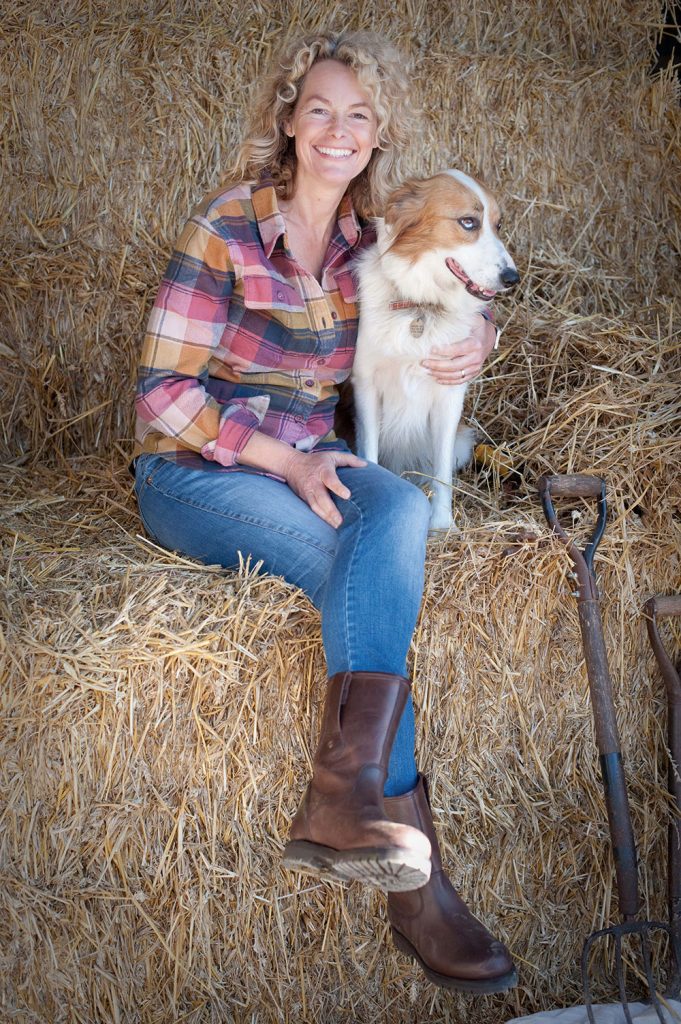
“There’s nothing better than walking into a mucky stable or a mucky barn with a pitchfork and a wheelbarrow and cleaning it out” The feeling of writer and TV presenter Kate Humble who’s known mainly for specialising in wildlife and science programmes for the BBC. She’s also appearing in theatres around the country and will bring her show An Evening With Kate Humble to Derbyshire next month as part of the Buxton International Festival. She broke off from preparing for that show to tell me how she thrives on live television, how appearing in front of an “Evening With” audience can be “scary“ and why she has a lifelong passion for mucking out. Her appearance in Buxton will be one of a series of dates that she’s fitting in around her television work. Kate takes to the stage only a couple of times a week to present an evening of stories and adventures that she’s experienced over a 20-year career in broadcasting. The show is in two halves and during the interval Kate gets the audience to write down questions which she then goes on to discuss. “I show video clips of some of the programmes that I’ve done and I talk about some of the madcap things that I’ve ended up doing in the name of a career,” says Kate. “The second half for me is entirely unpredictable. There are still clips and stories but there’s also this lovely, unplanned element which is dependent on the audience, which I really enjoy.” Kate admits being on stage is very different from appearing on TV: “It’s a lovely opportunity for me to be face to face with an audience. It’s quite scary. I’m nervous before every single show. But it’s lovely to be able to have a more direct connection with the audience.” Our chat actually started more than an hour-and-a-half later than scheduled. That was because Kate had to meet a deadline for an article she was writing for the Daily Telegraph. She’s always been a freelance writer and had her first article published by the Telegraph in 1996. She admits her latest assignment was a tough one. “My father died earlier this year and they asked me to write about that for their Father’s Day edition. It was a really important tribute to my dad and I hope it resonated with people dealing with the incredibly complex emotions that go alongside grief.” Katherine Humble was born on 12 December 1968 in Wimbledon. She grew up in rural Berkshire in a house next to a farm. She had what she describes as a “proper childhood” – building camps, racing snails and climbing trees interspersed with trips to hospital to get patched up when she broke bones. She reckons she’s still a tomboy. When she was 18 she left home and did odd jobs so that she could fund a year travelling in Africa. She wrote for the Telegraph about her adventures. Then she got her first job at the BBC, working as a runner on Animal Hospital and then The Holiday Programme. On her second day in the Holiday office the programme’s editor realised that Kate would make a good presenter despite her reservations. “It was never my plan or intention and when people say ‘how can I have your job?’, the truthful answer is the best thing to do is not to want my job and it might just come along by accident. “In my case it came along because it’s that awful trite line of, I was in the right place at the right time and I could offer the thing that they wanted, which was somebody who was a genuine traveller who enjoyed doing things at a local level. The first bit of filming I did was doing a local journey around France telling people about it. And it went from there.” Since then she’s become well-known for appearing on programmes such as Springwatch, Wild In Africa and Volcano Live. She feels that she’s been “very lucky” to have done lots of different things. “I’ve done documentary series that I’m enormously proud of, things like Living With Nomads (a BBC2 series in 2015, filmed in some of the world’s most remote wildernesses) and Extreme Wives (a 2017 series exploring the roles of women in three communities in Kenya, Israel and India). “I’ve also loved doing things like Animal Park (a BBC documentary series about the lives of keepers and animals at Longleat Safari Park, Wiltshire) which I’m still doing after 20 years. I’m also very lucky that new projects come along. I’m always challenged and excited by those. “I’m very careful about what I choose to do and I only take on projects that I genuinely care about because I think the audience are very smart – they can spot somebody who’s just taking a job because they want to be on telly rather than really believing in the programme.” Live television is known to be hugely problematic but it holds no fears for Kate. “People always say what happens when something goes wrong? Well, in my view nothing goes wrong – you’re just showing exactly what’s happening. Some things may not go according to plan and you may not be able to predict everything, particularly when you’re dealing with wildlife which jolly well does what it wants. “But that’s the exciting thing about doing something like televising wildlife live. And that’s why I love it so much. It’s unpredictable, it’s exciting, there’s a very good reason for it to be live. You want people to be there, to feel absolutely connected with the action. So as far as I’m concerned it’s a lovely, exciting way of broadcasting. I don’t see it as something that’s problematic at all.” When Kate was 23 she married television producer Ludo Graham. Nine years ago they moved from Chiswick, west London to a smallholding in the village of Trellech, Monmouthshire. They live with a variety of feathered and furry livestock
Restaurant Review – The New Inn @ Milford

A Fusion of Flavours I’m not ashamed to say ‘I love Derbyshire’; every bit of it. From the Dark Peak of the moorland above Glossop to the ambling course of the River Trent as it twists and turns through the floodplain at the southern tip of the county. I also love its diverse industrial history. None more so that the Derwent Valley stretching from the cotton mills at Cromford to the Silk Mill in Derby. Now designated a World Heritage Site the valley has, at its half way point, the historically important mill town of Belper. Part of the charm of the town is that it has retained a lot of its original features. One of them being the many alleyways that offer short cuts that can only be used by pedestrians. One of these in Milford links Hopping Hill with Derby Road and, occupying the whole of one side of the pathway is the New Inn. Because of its location it has elevations on to both Hopping Hill and Derby Road; the A6 where the New Inn’s car park is located. Myself and Susan had a table booked at the restaurant at The New Inn. The first thing you notice, before you enter, is the view from the terrace, overlooking the Derwent and on to the Chevin. Even with the poor weather of early June it’s worth a minute to stop and take it in. We made our way into the bar area to a warm welcome from Hollie who asked if we would like a drink while we went through the menu. An extensive refurbishment has given the interior a new look with light, modern colours that are off-set by simple, bold upholstery. Also, there’s cosy seating in the bay window where you can linger with a pre-dinner drink and take in more of that view before you dine. With a chilled white wine for Susan and pint of Doom Bar for myself we nibbled on tasty tomato bruschetta drizzled with sweet Balsamic while we chose our evening meal. The menu is styled as British Italian fusion cuisine and the dishes are created using fresh, seasonal produce, locally sourced. Although it retains a lot of Italian influence from the restaurant’s previous incarnation quite a few English classics are now available. The Italian dishes range from the simple but tasty spaghetti carbonara to a creamy risotto. The majority of the Italian dishes are available in smaller portions as starters as well as mains. Unhurried we finished our drinks and were shown to our table. I took a look at the wine list. It’s not extensive but it’s excellent for a restaurant of this size; with something for most tastes and reasonably priced. We ordered a bottle of Chilean Sauvignon Blanc that proved to be a perfect accompaniment for all of our chosen dishes. I chose my starter from the specials board while Susan was tempted by the cream of vegetable soup. The soup lived up to its billing; creamy with a deep, fresh mixed vegetable flavour. I chose the pan fried chicken livers in a cream and brandy sauce. The livers were cooked beautifully. They had a smooth texture and melted in the mouth. The sauce was rich and full of flavour and I cleaned my plate with the aid of 2 slices of ciabatta. Susan chose her main course of pan fried hake from the specials board. It came on a crushed new potato fondant served with a cream and garlic sauce. Presented skin side up, the fish was a delight to eat. The skin was crispy and the flesh was flaky and white. The garlic sauce was well balanced, not too powerful, and the potato gave the dish texture. I chose the Gressingham duck breast. The succulent pink duck was served with an orange reduction that had a citrus zing and was not too sweet. The duck was tasty, tender and full of flavour. Both dishes were accompanied by carrot batons, broccoli spears and crispy diced potato. To finish we shared a portion of home made tiramisu that had us wanting more! Head chef Kyle is a member of the family that own and run the restaurant. He worked his way up to his current position, starting at the New Inn as a pot washer, with the previous owners. He has now achieved one of his ambitions: to run his own restaurant. The unhurried atmosphere, the smiling, uniformed staff and Kyle’s memorable dishes made the evening one that we want to experience again. +70
Northern Tea Merchants – A World of Teas Under One Roof
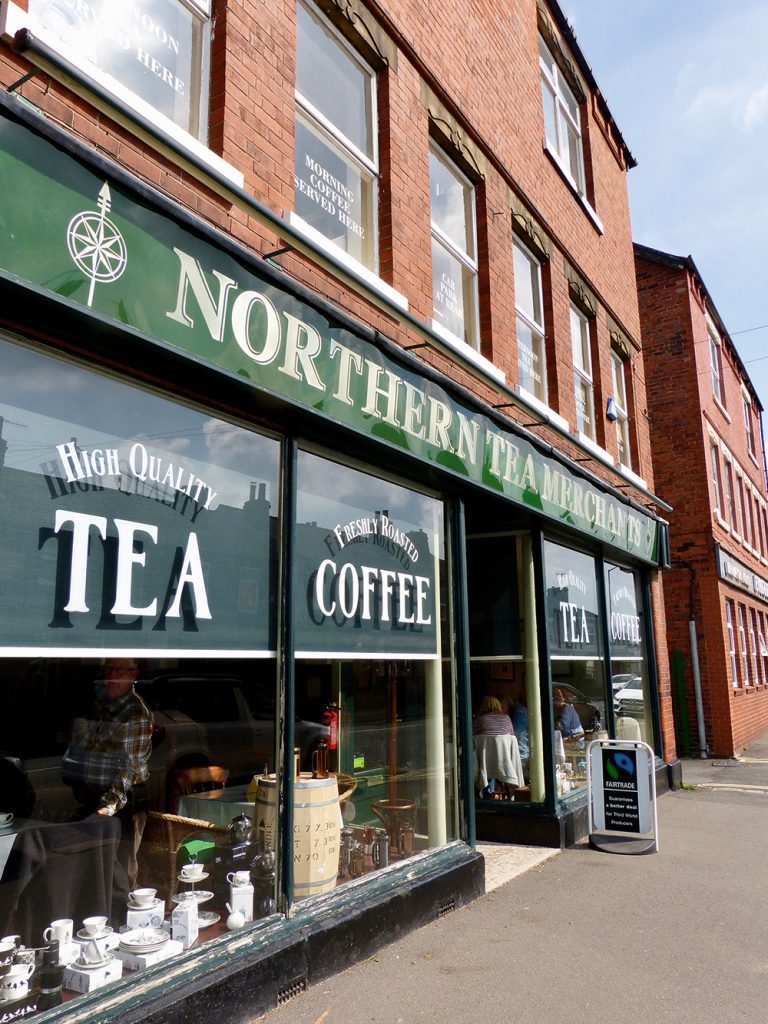
My lack of tea-making skills is legendary. Even workmen choking on brick dust refuse to drink it. It doesn’t matter how much gourmet blend and organic milk I throw into the cup – it always has the slight undernote of a licked battery. In short, if I want people to drink my tea, I get my son to make it. I blame my parents. They were both of solid Northern stock and liked their tea as strong, dark and brooding as the skies. You could stand a spoon in my mum’s tea, and if it was anything lighter than dark shoe polish brown, it was condemned as ‘ribby’. In the UK, making good tea does matter. It’s the first thing offered to a visitor, someone in shock or a stressed colleague. Just as there are an infinite variety of teas – it pays to know your Assam from your oolong – there are as many fuss-pots who claim they’ll drink your tea ‘as it comes’ before laying down a few unbreakable rules about bag shape and brewing times. And it’s wise to establish if your guest is a Mif (milk in first) or someone who thinks this is an abomination on a par with putting trousers on before your underpants. Naturally, when the subject of how to make tea can drive mild mannered people to boiling point, it’s wise to turn to an expert. In tea terms, James Pogson is an undisputed connoisseur of char. As director of the award-winning Northern Tea Merchants, James and his father (David) and his father’s father (Albert) have been trading in quality tea for 60 years. Someone overseeing the production of 100 million tea bags a year must be able to help the likes of me and the four out of five Britons who, according to research by University College London and the British Science Museum, are doing it wrong when it comes making our favourite brew. “For me, there’s no right or wrong,” smiles James Pogson (47), which is a refreshing opening statement from a man who claims that, if you cut him, ‘he bleeds tea’. “If you want to drink your tea out of a wellington boot with clotted cream and brown sugar I really don’t mind – as long as it’s my tea.” James agrees to give me a master-class on tea-making after giving me a potted history of tea at the company’s base on Chatsworth Road in Chesterfield. His office is packed with testing bowls and tiny pots – it’s where much of the testing and blending takes place – which explains why James can sample a 100 cups a week with a further 37 slurped purely for pleasure. “Our kettle is never cold,” he jokes. “If we’re testing tea, we do spit it out otherwise we’d have caffeine over-load. Even so, I bet my father, who is 82, has drunk in excess of half a million cups in his life-time. We both still enjoy tea, it’s just so nice.” James’ devotion to tracking down the world’s finest tea not only has him tasting samples, but travelling to estates and plantations around the world. “Tea isn’t just about the liquid in the pot. I think you appreciate tea so much more if you understand the person behind the process,” he explains, showing me some photographs of a 2017 trip to Hubei tea estate in China where the firm buys some of their black tea for their Keemun Mao Feng. “All our tea is touched by human hands. I like to have a personal relationship with the growers and I enjoy trying the local tipples. In Morocco, tea is made in front of the guest and poured from a height of more than a foot in the air. As the saying goes the taste changes over the course of three cups from ‘as bitter as life, to as strong as love and the third is as gentle as death’.” While tea accounts for a third of his sales, (the firm roasts 250 tonnes of coffee per year and pack 120 tonnes of cocoa and chocolate) James laughs at the suggestion that coffee could take-over as our national drink. “Let’s put it this way, we drink 165 million cups a day in the UK which makes it the most popular drink excluding water. Around 95 per cent is consumed in the home but people tend to go out for coffee – hence all the coffee shops. We’re the fifth biggest consumers of tea in the world,” he says. “Although we think it’s our traditional drink, tea was only imported to Britain in the 1700s and there was such a high tax on it so only the nobility could afford it – that’s why they had lockable tea caddies with the key worn around the neck. It was Queen Victoria who started the fashion for afternoon tea and this habit spread to the middle and lower classes when tea became more affordable.” At this point, James introduces me to his dad David, who tells me his own father started out in in 1926 working for the Ceylon Tea Growers Association going from door to door in Nottingham trying to convince house wives to buy tea for ‘economy and health’. “Tea was promoted as good for the digestion, ‘PG’ in PG tips is short for pre-digested as it was supposed to help dyspepsia,” explains David who also sold tea on the doostep when he established the company in May 1959. “Typhoo is Chinese for doctor.” Even today, James says there are always fresh claims being made about the health benefits of tea – last year green tea was linked with a reduction in the risk of heart attacks – and many of these are investigated by The UK Tea and Infusions Association; an independent body for whom James has been both president and vice president. James is convinced tea gives people a lift; “It’s a treat and the brain registers this and you get
Lost Houses of Derbyshire – Green Hall, Belper

The story of the Strutt family and that of modern Belper, which they more or less created, are intertwined. They built the mills and the workers’ housing (to a very high standard for the period) and over several generations endowed the town with numerous benisons, leaving the built environment the better for it; today it is a settlement with, for its size, an extraordinary number of listed buildings. Some, however, failed to survive to be listed, or at least to benefit from the 1968 planning act. This obliged listed buildings to be put through a series of evaluations, resulting in consent or otherwise to demolish or alter them. Prior to 1st January 1969 one had merely to notify the local authority and the Royal Commission on Historic Monuments (so they could record the building) before doing anything drastic. One Belper building to fall to the wrecking ball was Green Hall, situated at the top of King Street on the north side. It was one of a group of three local country houses built in the period 1790-1810 for various members of the Strutt family: Milford House, Makeney House and Bridge Hill House being the others, of which the latter appeared in these pages in November 2012. Three of these houses were designed by Jedediah Strutt’s eldest son, William Strutt, FRS, an amateur architect who worked in a Neo-Classical style and who was usually sensible enough to employ what we would today call an executant architect, for instance Samuel Brown when he designed the Derbyshire General Infirmary at Derby, 1806-1810. The latter year is that in which the sources agree the house was built at Green Hall. The idea was to provide a house for Jedediah Strutt the younger, second son of George Benson Strutt, younger son of the first Jedediah, and founder of the Belper branch of the family. G. B. Strutt lived at Bridge Hill House, and in 1810, his son married on 12th April, Susannah, daughter of Rotherham steel maker Joshua Walker. Green Hall was to be their home until such time as Jedediah’s father died and they could move to Bridge Hill. The house was nothing like as grand as Bridge Hill, and once extended lacked the latter’s symmetry and elegance, although the hand of uncle William can still be discerned in it. Yet it is a bit of a hotch-potch when viewed from the small garden on its west, nor was the short, south (entrance front) particularly architectonic either. The North side was blank and the east side was aggressively plain and stood flush to the west edge of Green Lane. The west front had five bays and although the entire house was of two storeys, the range to the North was higher, under a hipped roof and dwarf parapet; This contained the high-ceilinged dining room. To the right was a conservatory fronted room beyond which was the only symmetrical portion, three bays with a central pediment under which were superimposed tripartite windows, where were the drawing room with master bedroom above. This part had a slightly higher hipped slate roof, and was the original William Strutt-designed house. On the east side the extension created a recessed court yard which acquired a glazed roof. From the asymmetrical extensions it becomes clear that as Jedediah and Susannah’s family increased, so the house was extended accordingly, hence the taller block at the NW angle and the linking range. The need to entertain may have increased too, after the death of Jedediah’s elder brother George in 1821, unmarried. Jedediah was henceforth the heir and thereafter the manager of the mills. The house was filled with gadgetry of the type pioneered by John Whitehurst and Erasmus Darwin (the latter a mentor of William Strutt) designed to improve what was then called the domestic economy and included improved kitchen ranges with back boilers to heat water for bathing, flushing lavatories and clever ventilation systems, all of which William Strutt had tried out in St. Helen’s House, Derby. There was only a low stone wall in front of the main range and a patch of lawn with a near-circular path, the remainder of the pleasure grounds lay on the other side of King Street, which in 1830 was cut through the grounds between stone retaining walls. Part of the grounds to the west of the house even oversailed shops built into the retaining walls. To ensure continued access to all the pleasure grounds therefore, an iron bridge with a depressed Tudor arch was built, to connect to the land on its south side, called The Paddock. This was cast, at a cost of £42.10s.9d, at a local foundry, the bill being paid on completion in August 1832. All this was probably done at the behest of Jedediah who, as manager of the Strutt mills in the town, was a keen improver, like his father. The Paddock itself was the scene of public celebrations marking the passage of the Reform Act in the autumn of 1832, when the new bridge no doubt proved handy. When George Benson Strutt died aged eighty in 1841, Jedediah and his second wife moved into Bridge Hill House, leaving his own son, able to move into it when he came of age in 1847. In his turn he succeeded to Bridge Hill House on Jedediah’s death in 1854. It then became home to John Strutt, the youngest brother, who died unmarried in 1858. It remained, largely unoccupied until 1867, by which time it had become clear that no member of the family was likely to want it as a residence, a probable exacerbated by the construction of the railway station immediately to the west in 1840. Nor was any likely candidate found to take a lease on the place and in the end, it was let to a boys’ preparatory school and the garden bridge was removed in late autumn 1867. The Paddock itself was given to the Belper UDC in 1921 and the town’s war memorial,
Tried & Tested – Monat

Restore & Renew Your Hair with Monat Hero Ingredients across the Monat Hydrating Collection Are: REJUVENIQE® A blend of 13+ Natural Plant and Essential Oils rich in omega fatty acids, antioxidants and nutrients highly compatible with skin and hair. CAPIXYL™ Effective emollient blend helps safeguard the scalp, strengthen hair and support natural growth for improved thickness over time. PROCATALINE™ Featuring Pea Extract, this high-tech blend supports healthy, younger-looking hair by shielding against UV damage and environmental stressors. CRODASORB™ A powerful ingredient to shield against sun’s damaging UV rays, preserving hair’s natural pigmentation and keeping strands protected and strong. RENEW SHAMPOO £30 Gentle hydrating cleanser penetrates and moisturises the scalp effectively. Restores lost moisture and boosts natural hair growth by improving follicle strength to inhibit shedding and thinning. Salt and sulphate-free and safe to use on coloured and/or chemically treated hair. RESTORE LEAVE-IN CONDITIONER £35 Helps restore essential nutrients to the scalp, boosting natural hair growth and improving follicle strength to reduce hair thinning. Leaves fragile hair fortified, whilst taming frizz and flyaways for a flawless finish. Safe to use on coloured and/or chemically treated hair. Monat is a vegan and cruelty free brand delivering high performance results with luxury formulas. Free from nasties including parabens, SLS/SLES, silicones, mineral oil, phthalates and harmful fragrances. For more information and to buy online visit monatglobal.com Tried & Tested Review : A brilliant new product, but please read the instructions carefully as it says to leave the shampoo (not conditioner) on for 2 or 3 minutes. It really restored my hair to a far better condition than any previous shampoo. It smells beautiful, full of good, healthy ingredients. Gives a good shine, and leaves your hair feeling squeaky clean. I found this an excellent product, and was complimented by the conditioner. JP. 00
Stowe Gardens

One of Capability Brown’s earliest works, Stowe Gardens in Buckinghamshire was looking at its best when Brian Spencer visited it during a recent autumn break. The gardens of Grade 1 listed Stowe House are the idyllic setting for Stowe School. The public school sits at the top of rising ground overlooking grounds that are, as the master gardener Capability Brown probably said, now looking at their best, having matured over three centuries. Our visit coincided with the sturdy beeches being decked in colours ranging from varying shades of yellow to brightest orange; their fallen leaves made patterns on the still waters of ornamental ponds dug by the hands of eighteenth century navvies. The original estate was built by Sir George Gifford (1498-1557) whose wealth was based on wool. Very early in the fortunes of Stowe, the place became a popular venue for visits of the great and the good. This interest prompted later owners to expand the garden, making it an ideal retreat for politicians looking for somewhere to meet and plot with their confrères, and maybe meet up with their lady friends on the odd occasion. Throughout the years the different owners all seem to have been able to extend the work of their predecessors, bringing in the top architects and garden designers of their day. Throughout the 1700s the house and its grounds were a hive of activity, starting with architects of their day, such as Charles Bridgeman and then Sir John Vanbrugh, designer of Blenheim Palace. He worked on Stowe for six years until his sudden death in 1726 and was followed by James Gibbs whose speciality was the English Baroque style – a feature that shows itself in both the house and the garden’s stone-work. Most gardeners will agree that gardens take time to develop. In the case of Stowe, the time lapse was decades, almost running into centuries. Most of the work on Stowe Gardens took place in the mid-1700s. It was during this time that the young Lancelot Brown who had moved to Buckinghamshire as a free-lance garden designer, came to the notice of Lord Cobham at Stowe. He became head gardener, working closely with James Gibbs the architect responsible for the house and William Kent who had already laid out features such as the Elysian Fields, Temple of Ancient Virtue and also the Temple of English Worthies. It was while Brown was developing Stowe’s gardens that he developed the style which was to give him the nickname ‘Capability’. Continuing Kent’s work, he laid out the garden making it look as natural as possible, in what became known as the Serpentine, or English style. As can be seen at Stowe, the central features are inter-linked winding, or ‘serpentine’ lakes joined by bridges and cascades; all this is surrounded by follies, encircling carriage drives and clumps of trees. All of his work has now grown to maturity, confirming Brown’s opinion of the garden’s ‘capability’. It was during Capability Brown’s tenure at Stowe that his ideas and skills came to the notice of the fashionable elite of the country and so in 1751 he left Lord Cobham’s employment at Stowe, to spend the rest of his working life advising the owners of great estates of the ‘capabilities’ of their properties. At the zenith of its popularity, Stowe became the ideal meeting place where politicians came to unwind and discuss strategies with their fellow MPs. Prime Minister William Pitt the Younger rented the estate at one time, making it an early version of Chequers the grace and favour residence of future prime ministers. Like many grand houses and their estates, Stowe has passed its usefulness as a place where the great and good of society could use their wealth. Due to escalating maintenance costs, Stowe had to be found other uses. The result was that the house became a public school and the gardens given over to the care of the National Trust. While the house and the school’s sports facilities are not open to the public, visitors can stroll round the gardens and parkland on any day of the year. Like visitors from earlier times, the entrance to the 750 acre estate and its 40 listed historic monuments and temples is past the imposing Corinthian Arch and the Oxford Gates; the latter incidentally are built of wrought iron salvaged from a World War One German battleship. Long before Stowe gardens became a National Trust property, the then current owners realised that it was necessary to provide somewhere for visitors to stay, or at least rest and take some refreshment. The New Inn close by the entrance was built to provide this and it now serves as an entry and information point at the start of a tour round the gardens. Although no longer providing overnight accommodation it does offer excellent meals and light refreshments, all to the usual high standards of the National Trust. The New Inn also houses a useful information section where, along with a note detailing the birds currently seen around the grounds, as well as being the start of walks guided by experienced National Trust staff. The short Bell Drive leads down to the start of the graded paths that meander over the gently sloping land on either side of the lakes and past monuments and temples. Children are well catered for with the choice of three walks, non-more than 1.3 miles in length. Even for adults, a walk around the garden need not be too exhausting; the following is just one of the strolls on offer and because we did it on our visit, we can say it was most enjoyable. 00
Celebrity Interview – Bill Bailey
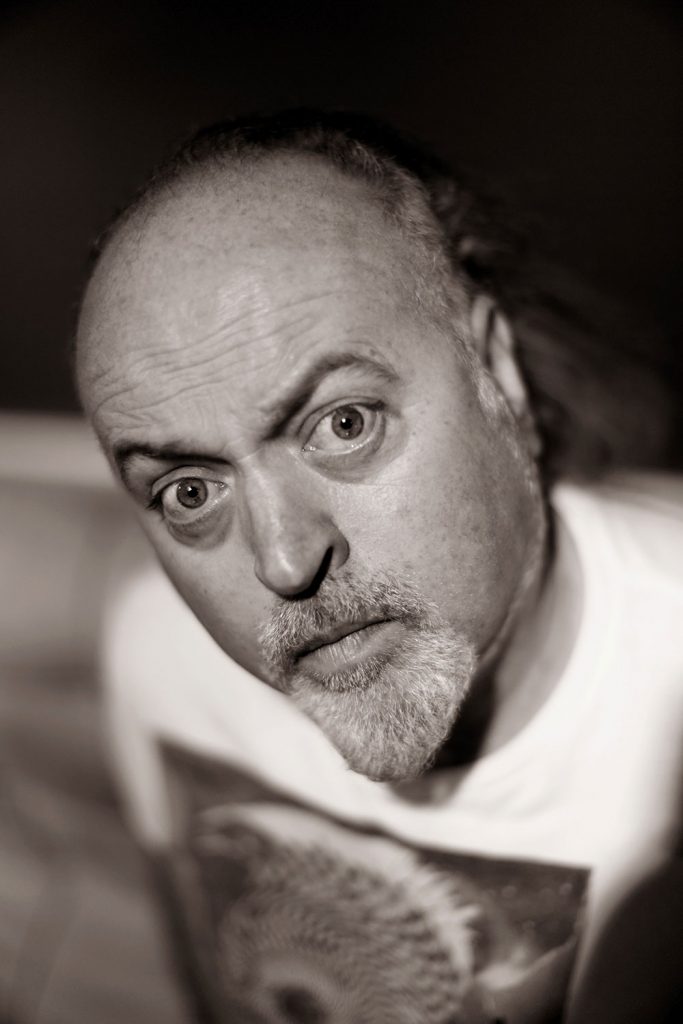
What makes comedy funny? That’s not a question that’s part of a normal everyday conversation. But while speaking to comedian, musician and actor Bill Bailey, the man described as “the brainiest comic of his generation” almost unconsciously analyses how his act has changed to keep in step with comedic trends. His current show Larks In Transit which is flying into Derby Arena this month contains more personal material than his earlier tours and many humourists are moving in a similar direction. He tells me: “In the last ten or 20 years I’ve noticed that comedy has become much more confessional. People like to talk about themselves and their own feelings, and that’s very much reflected in us generally as a society. “We’re almost guilty of over-sharing on social media and the internet plays a big part in that. So there’s a little bit of that in the show but a lot of silliness as well. I get the audience to sing You Are My Sunshine in German which is always a delight to hear.” Bill doesn’t aim to be an educator but he points out: “You might learn something at my show – you might go home with a fact and say ‘blimey, I did not know that and I’ve had a laugh over a couple of hours’. If I can do that, then my job’s done.” We discuss other ways in which comedy has changed. I note how comedians who tell joke after joke seem largely to have disappeared, except for the odd exception like Tim Vine. Bill admits he still likes one-liners and includes all sorts in his act so that you can’t really classify his brand of comedy. “I like the well-turned phrase to describe a politician or a person in power. The use of language is very important to me because English is such a subtle, interesting language, lots of shades of meaning that can be used to great effect in comedy.” Larks In Transit is billed as a “compendium of travellers’ tales and the general shenanigans of 20 years as a travelling companion”. Bill elaborates on the content: “It’s almost a musical spoof lecture about how different kinds of music affects us in different ways, how you can change the nature of familiar tunes by playing them in different keys, exploring lyrically how songs work. “I like to incorporate music, stories, anecdotes, all of that goes into the mix. But really it’s a reflection of where comedy has taken me over the last 20 years.” Bill, a Labour Party supporter, makes references to politics during the show and makes no apology for that. “You can’t avoid it really. It’s dominated the national conversation for three years and there’s no getting away from it. I think it would be weird if you didn’t talk about it. But it’s not the main focus of the show by any means.” Mark Robert Bailey was born on 13 January 1965 in Bath. His father was a medical practitioner and his mother a hospital ward sister. He remembers liking comedy from an early age. “When an elderly aunt died we had a wake at the house and I was making people laugh. I told a joke – I wasn’t very old – and my dad spat his tea out because he couldn’t believe I’d said it. Then my mum swore because my dad had spit his tea out. I’d never heard my mum swear. It was like a chaos bomb going off in the house and I thought ‘wow, this comedy lark is very powerful’.” While he was at school his music teacher gave him the nickname Bill because he was able to play the song Won’t You Come Home Bill Bailey so well on the guitar. Later he became a classically trained musician. But his individual style as a comedian got him noticed. He was nominated for a Perrier Comedy Award for a show he took to the Edinburgh Festival Fringe in 1996 and won the best live stand-up award at the British Comedy Awards three years later. Since then Bill’s trademark hairstyle and goatee have become familiar through television appearances including Have I Got News For You, Never Mind The Buzzcocks and QI. He has also appeared on the small screen in Black Books, a Channel 4 sitcom; the E4 teenage show Skins; and a series of programmes about wildlife and natural history. He loves the variety that comes from the different challenges presented by different sectors of entertainment. “Comedy is my main love and what I’ll continue to do so long as I’m able to stand up – and perhaps even beyond that. Acting is good fun to do now and again because it’s a collaborative process. “Stand-up’s very solitary – I write it, perform it, direct it, pretty much produce the whole thing myself. It’s a lot of pressure, there’s a lot of expectation. It’s very rewarding but it’s also extremely labour-intensive and exhausting. “Being in the cast of a TV show is less pressure because someone else has written it, you’re performing other people’s words so there’s not quite the same pressure on you. You can relax a bit and concentrate on the performance. It really hones your performance skills.” In 2003 I saw Bill on stage in Reginald Rose’s 12 Angry Men at the Edinburgh Fringe. It featured 12 comedians. Some of them had never been in a play before. It was an unforgettable production, one that Bill recalls fondly. “I remember at the time everyone thinking there was no way we’d get a bunch of comics to be in a play and the whole thing would be a complete disaster – you could never trust comedians not to try and outdo each other. “The fact that we even got together at the same time to rehearse was a minor miracle. So no one had any real expectations. Not only did it work very well, it was a big hit and spawned a
Modern Collectibles – Wade Whimsies

Wade is a manufacturer of porcelain and earthenware originally with its headquarters in Burslem, part of what is now Stoke-on-Trent. Its history is complex and tortuous, but goes back to 1867 when three family firms were set up by various Wades in the potteries, now Stoke-on-Trent. The firm which nearly a century later introduced these tiny solid porcelain figures was George Wade & Son, originally Wade & Myatt. A contemporarily founded firm, John Wade & Co. (later Wade, Heath) became famous for making the tiles for the London Underground for many decades. George Wade (1864-1938), was born in Tunstall, Stoke-on-Trent. Son of a potter’s thrower and later manager who founded the business, he was educated at Nottingham College and eventually became Chairman of George Wade & Son Ltd. The firm originally manufactured ceramic products for the cotton industry as well as porcelain figures and groups. The Wade family eventually moved to Watlands Hall in Porthill, Burslem and in 1905, George’s son George junior, left school and joined the family business at their new Manchester Pottery nearby. The younger George, later Sir George (1891-1986), was the driving force throughout much of the twentieth century, latterly in partnership with his son Tony, who unfortunately outlived his father by only a year. One of the firms the entrepreneurial Sir George’s father had taken over had a foundation date way back in 1810, enabling the Wade firms, all brought together by Sir George in 1958, to claim considerable antiquity. Wade products included animal figures for its Collectors Club, whisky flagons, and a variety of industrial ceramics. Needless to say, I have yet to discover a collector of the firm’s industrial ceramics! The whisky flagons form a separate branch of modern collectibles to which, if my constitution will withstand the sampling process, I shall return in due course! The beginning of figure making began in 1954, when Wade introduced what some marketing expert decided should be called ‘Whimsies’. These are very small solid porcelain animal figures first developed by Sir George, which became very popular and caught the imagination of collectors both here and in the USA. Because they are so small, the modelling is just a little less sharp than one might hope for, and a treacly glaze appears on some types which to my mind looks unattractive, but I am sure must have its adherents. They were made continuously from then until the 1980s. One could even obtain a Whimsy free with (now defunct) Red Rose tea from 1967 (in USA from 1983). The first series of Whimsies were a set of animals that included a leaping fawn, a horse, a spaniel with a ball, a poodle and a squirrel. A collectors’ club was founded in 1994 and is currently celebrating its silver jubilee. There are several paperback guides to collecting these items, too, which can be a great help if one is to avoid pitfalls. Wade also produced other lines, also of inexpensive collectable porcelain figures including TV Pets, Whoppas, and Minikins, the inspiration for which was, needless to say, TV shows, comic books, and Disney films, for which they had to obtain a licence, an expensive undertaking even in those days! Following the death of Sir George Wade and then of Tony Wade, their potteries were sold to Beauford Ltd. in 1998 and renamed Wade Ceramics Ltd. This situation did not last long, and became the subject of a management buy-out in 1999,becoming a wholly owned subsidiary of Wade Allied Holdings Ltd. In 2009, they invested £7.9m in a new factory with the latest robotic manufacturing equipment to make ceramic flagons for the whisky industry, but alas, the last Wade factory in Stoke was closed in 2010, and sold for housing development, although the company HQ is still in Etruria but the figures are still made elsewhere. I am afraid that where I work at Bamfords, these little figures tend to get sold in groups in general sales. This doesn’t sound very earth shattering, but is good news for the collector, for it means that to collect these items, you do not need deep pockets. Early figures, from the 1950s up to Set 10 go for quite impressive money. A swan was recently on offer for £60, but then paradoxically, a large group of early ones appeared in an auction catalogue with an estimate of £10-15. The most expensive I have come across was a boxed set (no. 10) of farm animals from c. 1960 offered for £325 which for such miniscule porcelain creatures, is going some. At home we have a 1970s turtle, but so modest in size that we couldn’t find it to photograph it! Those made under a franchise licence, like Bambi (which I spotted for sale at £20) also make more than the standard ones. Needless to say, modern Whimsies are far less collectible, and although they mainly retail on the right side of £10, they are no longer products of the Potteries and will take a lifetime to become desirable elements in anyone’s collection. I might add that car boots are still fruitful ground for acquiring these little items at an affordable price. 00
Restaurant Review – A Relaxing Evening at the Marquis of Ormonde, Codnor

The first thing that strikes you about the Marquis of Ormonde on Codnor Denby Lane, apart from the smart décor of the exterior, is the sleek steel and glass surround to the front terrace. This south facing alfresco seating area is decked out with matching solid wooden tables and benches making it an ideal spot to linger over a leisurely lunch or an evening drink watching the sun go down. Evening temperature’s in the Spring soon drop and so, forgoing the temptation to soak up the last rays of the setting sun, Susan and myself made our way inside. The Marquis of Ormonde styles itself as a traditional pub and dining and part of the interior is clearly set aside as the ‘traditional pub’. The rest is a comfortable dining area; set out with tables for intimate dining and for large family groups. The latter in horseshoe shaped, booth style seating. We were greeted at the bar by Keli who, after taking our drinks order, showed us to our table. The bar is well stocked with draught beers to suit most tastes. I ordered a pint of Doom Bar and Susan ordered a glass of Sauvignon Blanc. The interior of the pub is decorated in a muted style that is homely and relaxing. The walls are a mix of soft greys, the woodwork is a pale honey colour. The exposed brickwork of mottled terracotta has a warming effect that adds to the laidback atmosphere. Keli brought the drinks to our table and informed us of the current specials. We sipped our drinks and studied the menu although one of the specials had grabbed my attention: the Wagyu beef burger! Along with the traditional starters of prawn cocktail and the chef’s homemade soup there is a deep fried brie plus a starter of nachos with dips. The latter two suitable for vegetarians. One of the specials that evening was an Ardennes pate. We chose the pâté. It was served with long pieces of toasted baguette and accompanied by red onion chutney. The pâté was not too course and the rich taste and smooth texture contrasted with the sharp and slightly sweet onion chutney; with the toast and a small salad it was a perfect starter. The mains menu has been well thought out with all the pub favourites putting in an appearance including scampi, lasagne, battered cod and hunter’s chicken; that’s a barbecue sauce with diced bacon and topped with melted cheese. There are vegetarian dishes and a children’s menu plus a grill section, with popular dishes such as gammon and surf and turf. On the mains menu there are 3 types of steak: fillet. flat iron and sirloin, all supplied by local butcher CN Wright of Codnor, and a selection of homemade burgers. Susan chose the beer battered cod, mushy peas and chips. The cod was a generous portion and coated in a light, crispy batter. The crunch of the golden batter gave way to white, succulent flakes of beautifully cooked cod. Hand cut chips accompanied the fish along with a dish of mushy peas and a pot of tartare sauce. This was comfort food in comfortable surroundings. The Wagyu burger had captured my attention and I was anxious to try it. Wagyu beef is highly prized and has a higher fat to meat ratio compared to traditional breeds. The burger was presented in a brioche bun topped with battered onion rings and served with hand cut chips and a salad. Nothing out of the ordinary until I took a bite. The burger had a fine and very tasty crisp outer coating that had formed during the grilling. The inside was divine: a distinctive beef flavour with a melt in the mouth texture. I cannot recall having a better burger. The evening had been a relaxed and delicious affair. We had eaten our fill and sadly didn’t try any of the desserts on offer; they range from the apple pie to my favourite: lemon meringue pie. As we waited for our taxi we chatted with owners Keli and Ed. They mentioned they are about to launch a new menu with some new dishes but plenty of old favourites. I understand that the chef is introducing, along with the other dishes, a new burger for the summer. I think that calls for a return visit. 00
Walk Derbyshire – Through Elton’s Gritstone Countryside

3miles (4,8km): easy/moderate walking. Two short climbs on easy gradients RECOMMENDED MAP: Ordnance Survey 1:25,000 scale, Outdoor Leisure map Sheet 2, The White Peak. BUS SERVICES: Hulleys’ 172 runs at 38 minutes past the hour from Matlock, Monday to Saturday. CAR PARKING: on the village main street – please make sure you do not interfere with private access. The tiny upland village of Elton sits more or less on the junction of the White Peak limestone and a southern outlier of the outlying stretch of gritstone tacked on to the bottom of the Dark Peak. The village has a long history, as far back as the Iron Age when the first settlers built simple farmsteads on the surrounding moors. For possibly ceremonial reasons not yet discerned, they built stone circles on remote places like Harthill Moor and Stanton Moor; there is also a chambered cairn possibly once the burial place of a Neolithic chieftain which seems to have links with nearby Arbor Low, Derbyshire’s Stonehenge. A gold cross found within a Saxon burial near Elton gives rise to the theory that Christianity came to the area as far back as AD700. Travellers along the ancient moorland tracks would stop and pray with the hermit who lived in simple conditions in a small cave beneath Cratcliffe Tor, alongside which the prehistoric Portway can still be traced. Slightly off route for this walk, nevertheless it is worthwhile making a diversion from the main path when passing below Robin Hood’s Stride rocks. A simple 14th century crucifix is carved on the wall above a narrow stone bench, the only passable comfort the hermit could expect. In keeping with the rest of the White Peakland dwellers, many of the locals found meagre employment delving for lead beneath the surrounding fields. While most of the profitable mines worked veins around nearby Winster, Elton’s operated on a far smaller scale. There is a local story of miners digging, contrary to mining law, beneath the local graveyard and almost undermining the church. Apart from hollows in surrounding fields, only the names of these old mines remain; names like the Portway Mine indicate its position next to the ancient way from the river Trent to a sacred site on Mam Tor. The walk starts from the west end of Elton, close by the church. Using ancient tracks and field paths across the gritstone moors, it then moves in a northerly direction to woodland at the back of Harthill Moor Farm, before swinging roughly south east, past Robin Hood’s Stride to the site of the Portway Mine. Here a right turn links to an uphill climb across the village sports field, back into Elton. During the earlier stages of the walk do not be surprised if you come across a flock of llamas; they and a group of Southern Beech lining a private drive are the property of the owner of nearby Rock Farm who has brought a little bit of Patagonia to the Peak District. There are also rare black fallow deer occasionally to be seen on Elton Moor across the dry valley to the north of Elton church. Elton’s church has an unusual history. When it was rebuilt during Victorian times, the original Saxon font was thrown out and dumped in the churchyard along with builder’s rubble. Soon afterwards it found its way to nearby Youlgreave where it remains to this day with Elton eventually having to make-do with a copy. THE WALK : 1. The walk starts by the church at the west end of Elton village. Turn right along the track on the far side of the church and follow it for about 100 yards (91m). Go through a gate and into a field. 2. Follow the path for about a quarter of a mile downhill, in order to cross the dry shallow valley. Go through a stone stile and on to a side road. 3. Cross the narrow road. Go through another stile and follow a field path uphill, for another quarter of a mile, crossing a farm access drive along the way. 4. Keep to the left of a prominent knoll and then skirt Tomlinson Wood by following its stone boundary wall to the left and then a line of telegraph poles. The large village across the wide valley on your left as you skirt Tomlinson Wood is Youlgreave, famous for its annual Well Dressing ceremony. 5. Look out for but do not go up to Harthill Moor Farm on your right. Cross a rough cart track in order to pass a ditch marked by a waymark signpost, and then go through the nearby gate. 6. Bear left climbing up the field and then climb over a stile in order to enter mixed woodland. 7. Follow the woodland track as it bears right within the wood, until it meets a minor road. 8. Turn right, uphill along the road for about 350 yards. Look out for a fingerpost beside a field gate on your left. 9. Go left here and aiming ahead for the prominent rocks of Robin Hood’s Stride, aim towards a gap on their left. If the eponymous outlaw actually jumped the rather long distance between the twin towers, his feat has never been equalled. Locally the rocks are also known as Mock Beggar Hall, because in poor light the outcrop can look like a large house. It was that which attracted wandering beggars looking for somewhere to sleep for the night. In the field to your left over the stone boundary wall, four enigmatic standing stones are all that remains of what was once a circle of nine. 10. Follow the rocky path to your left of Robin Hood’s Stride, downhill to the wooded lower reaches of Cratcliffe Rocks. Continue until the path joins the driveway to an attractive cottage. Use the drive as far as the main road. As you start to descend, a short path to the left leads through mature pines, to the