Dining Out – Harpurs, Melbourne

Harpurs Melbourne is a prime example of why Bespoke Inn’s five-strong lineup has become a tour de force in the culinary, bar, and hotel industries. Invited to see Harpurs Melbourne firsthand, we met General Manager Mark Nellist and Head Chef Daniel Wujkiewicz to learn what makes the venue so popular and to try and make a small dent in their delectable menu. After some gentle ribbing about my South Yorkshire accent and his Lancashire lineage (the grand battle of the Pennines ever rages on), Mark shared his journey. Following a brief voyage to South Wales, he arrived in March 2023 to become Harpurs Melbourne’s General Manager. Despite being a fairly recent addition, his impressive knowledge and loyalty to customers and staff are evident. Mark has overseen impressive events, from hosting a family gathering of 83 to managing bookings for 135 (and counting!) this December. He expects big things for Harpurs, and they’re on track to deliver. Harpurs remain in demand even during the quieter Monday–Thursday period, thanks to deals like two woodfire pizzas for £15.99 and small plates for £4 each from 12–3 pm and 5–9 pm Monday–Friday, and 12–5 pm Saturday. For the cost of living crisis, this is a welcomed addition and allows people to have some good food in a friendly environment, even on a shoestring budget. Takeaway options are also available, so you can enjoy a quick pint and still catch your favourite TV series. Head Chef, Daniel Wujkiewicz, started his role as a significant kitchen player back in 2010. Later cutting his teeth in Buckinghamshire, he became the head chef of an award-winning Italian kitchen. At Harpurs for two months so far, we expect that the end-of-year awards will shortly come pouring in. Well, Daniel certainly hopes so! As noted by Mark, The dishes between Harpurs and their sister restaurant, The Dragon in Willington, bear a consistency in their styles of cuisine. Ever the innovator, Daniel is already looking post-Christmas to keep the dishes refreshed. Keen to get things in motion, he aims to produce new weekly menu specials. He hinted at a possible duck breast and tantalising wine sauce combo, but his mischievous smile left a lot to be interpreted… Daniel has mastered the originals, yet isn’t afraid to shake things up. Seeking to introduce Melbourne to the wonder of Italian calzones, fresh from his wood-fired pizza oven, he similarly insists that none of the classics, like their crunchy fish cakes and a plethora of steak cuts, will be put to pasture. Harpurs sprawling location on the competitive Derby Road is a major draw, plus they seamlessly offer multiple atmospheres to cater for every customer. For a relaxed meal or family gathering, the upstairs seating area provides a quiet, cosy environment with contemporary brickwork walls and an exposed pizza-oven station, alongside rustic country pub vibes with soft pastel paints, wooden beams and more. For those wanting a more lively scene, the bar downstairs is always buzzing, complemented by a separate ground-floor restaurant for a more social dining experience in a modern setting. Along with exceptional food, Harpurs offers nine rooms: six on-site and three in a nearby house. Dare you stay for the champagne breakfast in the morning, or stick around for their great cocktail list? It’s 5 o’clock somewhere! The captious food critic will surely be dismayed as Harpurs culinary capabilities are truly a spectacle to behold. Fresh is what they stand by, including sourcing their meat from a close butcher, Owen Taylor, creating fresh dough for the pizza oven, and utilising the kitchen management tool, Procure Wizard, to ensure that all their vegetables are sourced from local suppliers. The majority of the intoxicants are from equally close proximities, including sourcing their wine and beer from Derby-based Majestic and award-winning Little Brewers Company. After chatting with the team, my partner and I sat upstairs in a pleasant spot, and indulged in sticky beef bao buns and chipotle-dressed calamari, steak and mushroom pizza and whale-sized fish and chips, and a selection of desserts Daniel declared we must try. Fair enough, he did say that some of the desserts require an entire day to make and trust us, a singular chef’s kiss doesn’t quite cut it. Looking ahead, they have set goals to continuously evolve, including further upgrades to the ground floor come January, and a re-imagined outside courtyard area for those warmer months. With its variety of atmospheres and top-notch food, Harpurs has become a staple of the Melbourne dining scene. Their only challenge? Getting people to leave! To book a table or learn about upcoming events, visitharpursofmelbourne.co.uk or call 01332 862134. Harpurs, 2 Derby Road, Melbourne, Derby, DE73 8FE 00
Celebrity Interview – Paul Chuckle

by Steve Orme On his first show on his own: “I was a bit nervous. The music was just about to start playing and I looked across the stage. We always used to come on from opposite sides and I could swear I saw Barry standing there putting his thumbs up. I felt great. I walked on and the audience were brilliant.” There’s an old showbiz saying that goes “old actors never die – they simply lose the plot.” But that doesn’t apply to one comedy legend who at 77 is still going strong despite losing his best friend and theatrical partner. Paul Chuckle is preparing for his 58th panto and will return to Nottingham’s Theatre Royal to play Starkey in Peter Pan. He was last there eight years ago when he and his late brother Barry created havoc in Jack And The Beanstalk. So will it be bittersweet for Paul to be on stage without his mate? “Not really because I feel he’s still with me,” says Paul who is billed as the funniest man in showbusiness. “We always told everybody this is our favourite theatre. It was always mine and Barry’s as well. I’m looking forward to coming back.” What’s so good about it? “The atmosphere, the whole auditorium. It feels like you’re talking to everybody person to person. Everyone feels that close to you.” Barry died of bone cancer in August 2018 at the age of 73. Only a few months later Paul had to go on stage on his own for the first time in 56 years. “I was a bit nervous. The music was just about to start playing and I looked across the stage. We always used to come on from opposite sides and I could swear I saw him standing there putting his thumbs up. I felt great. I walked on and the audience were brilliant. “I expected they probably would be because it was the first panto I’d done on my own. They gave me a massive cheer and from then on I grew in confidence and enjoyed it.” Paul Harman Elliott was born on 18 October 1947 in Rotherham. He came from a theatrical family; his father, James Patton Elliott, worked with a young Peter Sellers, performing in the Far East, India and Burma as well as in this country. Paul’s mother Amy was a dancer. Paul and Barry came to prominence when, as the Harman Brothers, they won the television talent show Opportunity Knocks in 1967. Seven years later they had similar success on New Faces. They started to work regularly on the small screen and on children’s television they cemented their reputation as one of the finest comedy acts in the country. Their show ChuckleVision allowed them to excel as their slapstick, visual gags and wordplay went down fantastically well with youngsters and their parents. There are few people who don’t recognise their catchphrases “to me, to you” and “oh dear, oh dear”. ChuckleVision ran for 22 years, earning them a lifetime achievement award at the 2008 BAFTAs. The Chuckle Brothers revelled in panto. So why does Paul come back to it every year? “Money!” he laughs before becoming serious. “It was just Barry and myself wherever we went all the time. Panto is the one time of the year you work with other people, actors – proper thespians. “The only problem with that is you’ve got to give them the exact line for them to come in. Otherwise they get thrown a lot because that’s the way they’re taught. “Sometimes it’s quite fun to give them the wrong line, to see the glazed look across their eyes,” he says with a mischievous grin. However, Paul admits that a panto run can be taxing: “It gets tiring. I’ve been used to doing four weeks for many years now. Peter Pan is a long run. It’s five weeks, twice a day six days a week. It’s hard but it’s nice – the audiences are brilliant, especially the ones in Nottingham.” Over the years Paul and Barry raised a huge amount of money for charity. Paul is continuing to do that and is an ambassador for end-of-life charity Marie Curie. It started about 12 years ago. “I’d just reached 50,000 followers on Twitter and I tweeted ‘do you realise if you all donated £1 each to Marie Curie there’d be a massive amount of money for the charity’. “Marie Curie were there for Barry at the end. They’re brilliant, they’re fabulous. It’s nice to give something back. Giving your time doesn’t cost anything.” Paul who is also an ambassador for the Midlands Air Ambulance and Yorkshire Children’s Air Ambulance has another passion: football. He is honorary president of Rotherham United, the team that used to be managed by Derby County’s head coach Paul Warne. “Lovely guy, great mate,” says Paul Chuckle. “We’d love him back. He’s a great manager.” Paul is still incredibly busy, thanks in no small way to becoming an unexpected pop star. The brothers teamed up in 2014 with rapper Tinchy Stryder to release a charity single, To Me, To You (Bruv) to raise funds for the African-Caribbean Leukaemia Trust. The song was downloaded three million times at £1 per download. “I always wanted to do music stuff,” says Paul. “As a teenager I would have loved to have been in a heavy rock band. Now I’m playing music (as a DJ) and people are dancing to it. It’s a great feeling. “The song was number one in the hip hop charts for weeks! From that, nightclubs started booking us to go and do meet-and-greets and lots of clubs said ‘why don’t you DJ?’ “Barry never wanted to do that. When Barry became ill right at the end, we’d got a couple of clubs already booked in. Barry said ‘you must carry on doing them’. I did a couple and about 12 other clubs came in for me after that.” Plans are in the early stages for
Lumsdale Glass
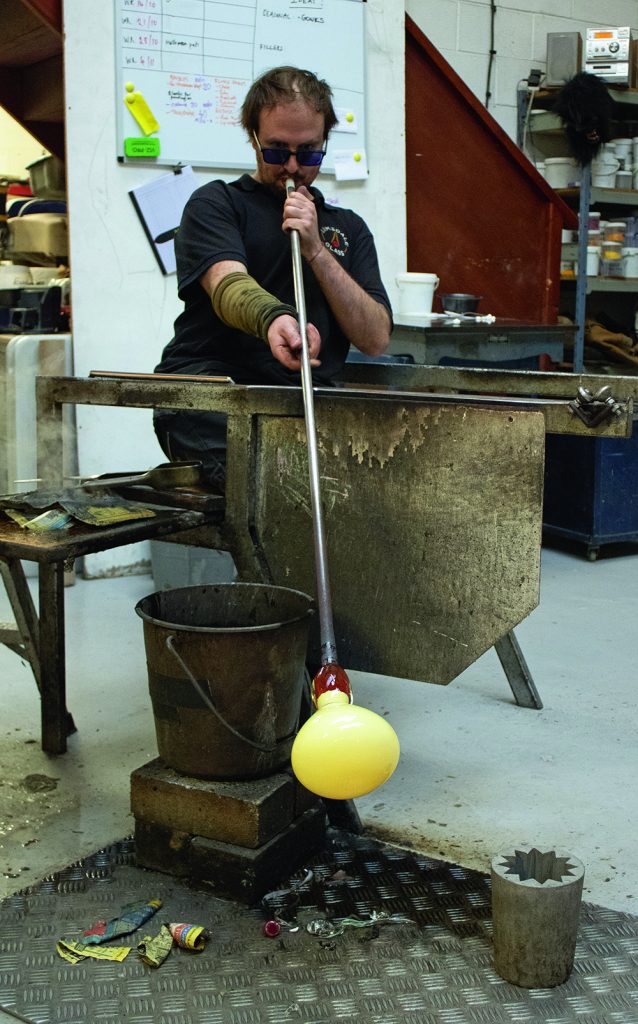
By Steve Orme Glass-blowing is a dying craft that is expected to disappear in the next ten years. But one Derbyshire company is leading the way in ensuring that the unique artistry will continue well into the future. Lumsdale Glass is a traditional glass-blowing studio in the delightful Lumsdale Valley, just above Matlock. Jonathan Abbott has been running the company since April 2023 when he took over from his mentor Anthony Wassell. The firm’s products which include vases, baubles, tumblers, paperweights and tableware are in big demand – not just in Derbyshire but even for some of the biggest Hollywood films. Despite that 39-year-old Jonathan who is a vastly experienced glass-blower feels there are many more skills he would like to perfect. “There are so many different areas of glass-blowing I want to move into. I really want to go into wine glasses, stemware and goblets. There’s probably another few years’ worth of practice and learning before I can get to where I want to be. “We’ve got loads of ideas – different procedures and ways of applying colour and pattern to glass which I’ve never tried because at the moment I don’t really have the time.” Help is at hand: even though Anthony Wassall has retired, he will return to the business once a week to pass on his stemware skills. Jonathan has always been interested in traditional skills and crafts. He went to Liverpool where he studied for a higher national diploma in fine art. His tutors could see that he was hands-on and pointed him towards a scholarship in Bulgaria. “I went there for two or three months and did Bulgarian traditional skills and crafts. When I came back I knew that was what I wanted to do,” says Jonathan. He set up a dry-stone walling business with an old school friend which they ran for about eight years. Then another friend told him his dad, Anthony Wassall who was a glass-blower, was looking for an assistant to help him two days a week. “I was just handing Anthony tools so that he could be more efficient. Instead of making 20 wine glasses in a day he could make 30.” A few months later Anthony saw Jonathan in a supermarket and asked him if he wanted a winter job. Walling in the winter is horrible, so I came on board and never left,” Jonathan explains. “I’d be in here practising every single bit of spare time – that was before I had kids and had spare time. “When I first came in I knew nothing. But I was watching Anthony and realised it was a skill which was absolutely incredible. I just wanted to be able to do it and rise to the challenge of making mistakes, burning yourself and smashing things. “It’s an art and it’s a practical art. That’s my main interest. There’s a massive art to producing something but there’s also a function to what you’re making as well. “I’m very lucky. This is a job I love. I don’t worry about coming in to work. We’re just about to go into the Christmas period which is completely manic and I need to plan my time to get it all done. I’ve got two boys, one’s nearly nine and the other’s six, so I’m juggling family life as well as keeping the business running. But I enjoy what I do.” The technique of glass-blowing has remained unchanged for centuries. The only difference now is furnaces and kilns are much more efficient which ensures a cleaner environment. About 95% of the materials Jonathan uses are recycled and come from Devon-based Dartington Crystal, the only remaining factory-scale producer in the country. According to Jonathan, Lumsdale Glass gets a variety of commissions: “Someone will come in and say they want a vase for a wedding. We’ve recently made some drinking glasses for a lady who’s a bit short-sighted. We made some dark, bold colours which stand out so she’s not going to knock them over. “We get maybe a couple a year where mum and dad have gone away, the kids have stayed at home and had a party. You get a phone call saying ‘we’ve broken this bit of glass and we need it reproducing and they’re back home tomorrow!’ I always enjoy that. I remember being in that situation myself.” As well as taking commissions and selling his creations in his shop, Jonathan makes lighting products which are on display at Wirksworth showroom Curiosa. The company’s founder and designer Esther Patterson worked closely with Anthony Wassell and Jonathan had no hesitation in continuing the partnership. “Esther is the main reason I’m a glass-blower. I’d still be out in the fields putting stones on top of each other if it wasn’t for her.” When Curiosa was approached by the producers of the Barbie movie – the highest-grossing film of 2023 – it led to Jonathan’s lights being seen in the Barbie Dreamhouse at the start of the picture. Then Jonathan was contacted by the producers of a film which should be released next year, the big-screen version of Hamnet. This is Maggie O’Farrell’s fictional story about the life of William Shakespeare and his wife after the death of their 11-year-old son. She is known as Agnes, not Anne Hathaway. “Agnes was into apothecary. We made quite a lot of medicine bottles which went onto the film set. They’re all wonky. You spend years practising glass-blowing and getting it symmetrical and then they come in and say ‘we want it a little bit different.’ But it was great fun. I’m looking forward to seeing the film because I’ve just read the book and really enjoyed it.” Glass-blowing is becoming harder to learn as some universities have stopped courses which have become expensive to run due to massive gas bills and overheads. But the art is continuing in Derbyshire. Jonathan is passing on his skills to Rosie Perrett. She joined the company after graduating from De Montfort University in Leicester
Allestree & Quarndon Living Large with Big Halls and Bigger Histories

by Tom Bell For those familiar with the grand Amber Valley constituency, you will know all about the rolling terrain that presents stunning walks for the novice, weekend rambler, or the experienced, polished-boots-and-waterproof-trousered hiker. But, something very interesting lies within two particularly delightful places, just a mere five-minute drive from each other. Standing on either side of the valley’s border, like us and the Scots staring like wild cats over Hadrian’s wall, we would like to introduce Allestree and Quarndon, the subjects of our latest Derbyshire investigation. Is that Matt Baker and the Countryfile crew coming over the horizon? From some pretty sizable halls (one of which you might be able to get your hands on for a few coins, wink wink), to phenomenal landmarks, why should you care about Quandon and Allestree?… Let’s find out! Allestree sits right alongside the Amber Valley border. Mackworth and Darley Abbey hold tight behind in the south and Breadsall takes up east, just over the River Derwent. For the north, Duffield is the predominant village you will likely come through if you travel down from Blackbrook or Hazelwood. This quaint suburb is one of the furthest northern wards in Derby, and can easily be accessed via the exceptionally long A6 road. Luckily for us, our next stop is only one mile north… Quarndon Village border only covers a handful of minor roads, but boy do they make them count. If you fancy a day out from the hectic rat race of Derby’s city centre, simply make your way to Kedleston Road and follow it through onto Church Road to get into the heart of Quarndon. You could stop off at their very attractive local, The Joiners Arms, for a quick pint after exploring – but that’s a tip only for the walkers, not the drivers! Both Allestree and Quarndon have become something of myth and legend when it comes to their celebrity clientele. Remember Alan Bates, star of Butley (1973), An Englishman Abroad (1984) and Fortune’s Fool (2002)? Passing away in 2003 at the well-lived age of 69, it turns out that he was born in Allestree and was educated at Herbert Strutt Grammar School in Belper. Quarndon does away – in classic East-Midlands style – with the bombast of glitzy, flashing cameras and red-carpet glamour. Instead, its fame emerged through the high-powered automotive engineering of Rolls Royce. Ever wished you could drive one? Admittedly, we can’t help you there, but come on down to Quarndon to visit the resplendent home of its original co-founder, Sir Henry Royce, who lived here between 1908 to 1911. There’s a blue plaque, displayed since 2012 by the Derbyshire Council, honouring his very regally named property, Quarndon House. It’s clear Quarndon and Allestree are more than just two humble English villages dressed in frilly vowels and consonants (we’ll leave that to those down south), nor is it solely past icons that still define them. It’s time that we take you on a two-stop tour of the current landmarks that make Allestree and Quarndon must-see destinations for you, the kids, or your loyal, four-legged companion. In the past, English Medicine was known by modern standards for being untrustworthy with its leeches and lobotomy. Yet, Quarndon may have actually been on the right side of history, as noted through their still-preserved 17th Century Chalybeate Spring Well, just down from The Joiners Arms. Visited by none other than literary genius Daniel Defoe (author of Robinson Crusoe and Moll Flanders) in 1727, he waxed on the glory of the seemingly medicinal waters in his collection of letters and works under “A Tour Through’ The Whole Island Of Great Britain”. For those interested, you can read his passage – Letter II Page 71 – where he states “… and so came to Quarn, or Quarnden, a little ragged, but noted Village, where is a famous Chalybeate Spring, to which abundance of People resort in the Season to drink the Water; as likewise a Cold Bath”. We’re not surprised that the influencers and fashionistas haven’t visited. The water likely stopped around the 19th Century, rendering this Chalybeate Wellhouse a figment of the historical record. However, you can still check out the structure and admire the plaque identifying it. Rats, the plaque was covered by ivy when I saw it! If it’s religious healing you are after, we recommend you take a brief stroll to St Paul’s Church in the heart of Quarndon. This Grade II listed Victorian church, dated back to 1872, is of special interest and is legally required to be preserved. Stepping inside, you will notice the fabulous pipe organ that was installed way back in 1874 by John Mitchell Grunwell of Becket Mill Derby. Taking a look at the NPOR (The National Pipe Organ Register), we understand that it was last tinkered with in 2011 by Derby-based builders, E.R Stow. See that golden clock on the front? That was installed to celebrate Queen Victoria’s Diamond Jubilee in 1897 and the four gargoyles at the base of the spire represent the four Gospel writers, Matthew, Mark, Luke and John, indicated by their tetramorph figures; a man, lion, ox and an eagle. Quarndon Village Hall is the heartbeat of the community. Currently used to host everything from the Amateur Dramatic Society to pre-school sessions, its lineage goes back to 1914 when the Curzon family and the villagers pooled together to finance its construction. Last extended in 2004, this is spotted just beside St Paul’s Church on the very cleverly named, Church Road. For Allestree, grandeur is the name of the game, and we cannot possibly get any more magnificent than the early 1880s landmark, Allestree Hall. Based in Allestree Park, it boasts 8.7 acres of land, stables and an ice-house, plus part of the grounds had been turned into an 18-hole golf course that shut down in November 2020. Our green-fingered readers will be glad to hear that the land has been completely overturned. No longer are there business people signing
Walk Belper

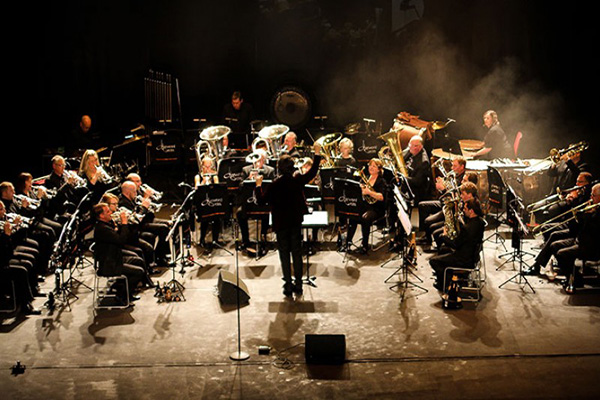
Belper is also known for its lovely River Gardens which are worth a visit as they regularly hold brass bands playing at the weekends. In the summer months you can hire a rowing boat and spot the kingfishers. There is a cafe and a play park on site. The walk takes us past Wyver Lane Nature Reserve which also has the Wyver Lane Firing Range wall which you can see within the Derwent Valley Mills World Heritage Site. The Strutt family, who built water-powered cotton mills in Belper from 1776 onwards, used their own militia to protect the mills, in case of visits from mill-wreckers and even invasion, in the time of Napoleon Bonaparte. In 1800, a firing range was provided for Belper volunteers on the Chevin Hill – a large wall which can be seen today by walking along the North Lane footpath, accessed from Sunny Hill at Milford or Farnah Green Road. We see some beautiful vista’s, farmland and in the spring months lambs and calves. There is a pub halfway around the walk too so a great place for a swift pint. THE ROUTE You can park for free on Belper Road or until 6pm at night you can park opposite Angelo’s Restaurant. We start the walk on Wyver Lane. Head down with the river on your right. We pass Wyver Lane nature reserve which has a bird hide where you can spot white heron’s if you are fortunate. Follow the lane all the way down until you see a gate – head through the gate or if you are slim enough, the tiny gap. Here we go a slight left onto the grass field and through the gateway. This part of the walk is seemingly always muddy so boots or similar a must. Head up left to the top of the field and over to the right hand side where there is a little cut through. Sometimes there are cows in the top field here but they have never caused us an issue. Head straight up to the stone wall and over the steps to the right. Pause – take in the beautiful view behind you. From here we head left down Whitewells Lane. This is a 60mph limit area and a single track so be careful if you have dogs or children, but it is not busy. This is a fab place to spot lambs in the spring. Follow this all the way till you get to the pub on the corner, The Bulls Head. The pub is closed Monday and Tuesday’s but is open on bank holiday Mondays. After a swift half, head opposite the pub down Belper Lane End. Follow the road all the way up and start to head down the hill. Look out for a footpath sign on the right where they are building new houses. I’m not sure when they will have finished the houses but for now, follow the visible path and we eventually head through a gate on the right. Head left and follow the path. The view here on the right is beautiful too. The path through the fields looks like they head to the gateway but you can’t actually get that way so just look down to the right where you will see a little path going down slightly and between two big old gate posts where you will see a proper path. Follow Shire Road all the way down until you hit the main road. This is a blind bend and as we need to cross the road please take care. We head left onto the pavement and you will follow this down to where you will see the start of the walk. DETAILS Parking: Next to Belper Mill there is a pay and display car park, also opposite Angelo’s Restaurant is a car park you can park in during the day. Pubs: There’s many to choose from, The Bulls Head is half way round the walk, but there are numerous in Belper just a short walk from the finish. Distance: 6.5km 4miles Time: Approx 1.5 Hours Terrain: Quite easy, not too muddy, with a gentle climb through fields. 00
Celebrity Interview – Kiki Dee

There are few opportunities to see a genuine superstar performing in Derbyshire. One appearing at an intimate venue is even rarer. But Kiki Dee who is coming to Belper this month is no ordinary superstar. Kiki has done virtually everything in the music business. She secured her first recording contract when she was 16, was the first female UK singer to sign for Tamla Motown and her duet with Elton John, Don’t Go Breaking My Heart, went to number one both here and in the USA. For the past 30 years she’s been performing with English guitarist of Italian parents Carmelo Luggeri. Their eclectic mix of old and new songs interspersed with numbers by other great artists is proving hugely popular with audiences. Kiki is still in great demand, performing in front of several thousand people on Elton John’s farewell North American tour and being supported by none other than rock legend Robert Plant at a small venue in Birmingham. She says her show with Carmelo is not what a lot of people expect: “Although I’ve been working with Carmelo for 30 years now – which is hard to believe because it’s half my working life – it’s quite forward-looking. “For example, we do a slowed-down version of Don’t Go Breaking My Heart. It’s fundamentally a semi-acoustic show. We’re quite dynamic. We do I’ve Got The Music In Me and stuff like Amoureuse and some covers as well as original material.” She agrees that some of her well-known songs take on a new quality when they’re done acoustically. “That was the reason Carmelo and I started working together. I’d done the thing about trying to get in the charts and I just more or less wanted to do what my heart told me. “I enjoy singing Don’t Go Breaking My Heart in a slow way because you hear the lyrics differently. You really need a full production to do it in the original way.” Kiki laughs when she points out that Carmelo doesn’t try to be Elton John and doesn’t sing at all: “He said to me when we first met ‘I don’t want to sing Elton’s part!’ He’s very good at arranging songs, so we do quite an unusual version of Running Up That Hill by Kate Bush. “Carmelo is a really great guitarist and producer. We’ve done four albums and a couple of live ones over the years.” He’s worked with huge names including Bill Wyman, Julian Lennon, Billy Connolly, Andy Williams and Ralph McTell. Kiki and Carmelo met when the late Steve Brown, who had a big hand in Elton John’s early career, got them together for a recording session. Kiki pays tribute to Steve who ran Rocket Records. “I’d done the pop thing. The early days were about trying to make it. Of course what you realise is when you do make it, that’s when the work starts. “I’d also done musical theatre – I did Blood Brothers for a long time. Steve was a very open-minded, creative man. He knew that Carmelo and I were both moving on and trying to do something different. Our partnership was a natural progression. “We’ve had guys say to us ‘my wife dragged me along to the show and I’d no idea what it was going to be. I really enjoyed it.’ I feel quite pleased in a way that we’re still moving on.” Pauline Matthews was born on 6 March 1947 in Bradford. She began her recording career as a session singer, providing backing vocals for Dusty Springfield among others. She changed her name to Kiki Dee when she signed as a solo artist to Fontana Records. She joined Tamla Motown but it wasn’t until she signed with Elton John’s Rocket Records that she became a household name. Although she enjoyed working with Motown, she didn’t know what to do next, so she called the label’s UK music manager John Reid who was just about to become Elton John’s manager. “It was a fluke,” says Kiki. “He said ‘we’re starting a label. Would you like to meet Elton John?’ He was beginning to make it quite big then, in 1972. I said I would love to. “I think I would have done okay if I hadn’t met Elton but you have to take advantage of these moments in your life. I’m always grateful to John (Reid) for introducing us.” Kiki explains that when she started in the music business she was ambitious despite her shortcomings. “I wasn’t incredibly confident and pushy but I had this deep-down desire to see the world and do something because my parents never got those opportunities. “I’m very much a glass-half-full person. I appreciate what I’ve done. I could have had a bigger career, I could have been a rock star with a big house and smart cars. But I’ve discovered that I enjoy normality – I can do normal things. I don’t have to put my Kiki Dee hat on all the time. “I’ve just had a weekend with some friends in Oxfordshire, just enjoying life as much as possible. I’ve got some great family around me. I’m very grateful.” Kiki is respected throughout the music industry and recounts the story of how she worked with former Led Zeppelin lead singer Robert Plant about four years ago. “He was starting a new band called Saving Grace which is now established. He rang up and asked if he could support us in a small venue in Birmingham, his neck of the woods. We couldn’t believe that Robert Plant was supporting us! “It was because they didn’t have quite enough material for Saving Grace to go out on their own. We were so flattered. I like artists who move forward. I respect Robert for always trying new things.” Although Kiki likes moving forwards, her fans will be delighted to know all the material she recorded in her early days in the business is now available. The Demon Music Group is offering it on
Dining Out – The Little Kitchen, Little Eaton

Over my very long and undistinguished working lifetime I’ve done many and varied jobs. One, was working with my father. The work was physically demanding and required, what I would call, an early start; with no time to eat before leaving home. So, after the first of the day’s deliveries had been loaded onto the lorry, we would stop en-route to the first drop for a proper breakfast. It was the early 1970s and there was a cafe at every major road junction; family run with wholesome food and the place alive with the buzz of conversation. We’d be out on the road all day, knowing that when the time came for the mid-day break it would be our busiest time with just a few minutes to snatch a greasy sausage roll for lunch. That’s why I put great store on a good breakfast – the most important meal of the day. There are places where you can get a flat, under seasoned, circular sausage, one dry rasher of bacon and a homogenised egg in a split bun eaten ‘on the hoof’; along with coffee in a cardboard mug. But is that a breakfast? If I’m out for breakfast I want pleasant surroundings, table service and a menu that reflects the variety that the first meal of the day can offer. Only a few minutes drive from the centre of Derby and on a busy bus route, the family run Little Kitchen in Little Eaton is a breakfast lovers dream. Voted number four on Tripadvisor’s list of top restaurants in Derby, it’s a popular destination not only for breakfast, but also lunch and afternoon tea. It’s a magnate for cyclists, walkers and groups meeting up for a cup of tea and a scone. Susan and myself arrived in time for a late breakfast or was it brunch! There was outside seating available but we chose a table for two inside. The attractive contemporary decor, both inside and out, gives the cafe a warm and welcoming appearance. There’s a buzz about the atmosphere in The Little Kitchen. Its village location and proximity to a junction on the A38 attracts a variety of customers from mums with children meeting up for a chat, dog walkers enjoying the out-door seating and, in my imagination, a father and son taking a break from their busy deliveries. We placed our order for drinks with Emily: two Americano with milk on the side. The coffee was generous; served in large cups branded with the Little Kitchen logo. The coffee was smooth and fragrant. Had a rich flavour with a hint of dark chocolate. Breakfast at The Little Kitchen is served from eight o’clock in the morning and the choice is wide and tempting. From the full English – large, small, vegan or vegetarian to the classics – eggs Benedict, Florentine and Royal. There’s also a very trendy posh toast: a slice from a granary loaf smothered in cream cheese and topped with avocado and smoked salmon. I chose the bagel stack. A fresh split, bagel spread with cream cheese. The bagel was crispy on the outside and slightly chewy in the middle as it should be. My towering breakfast was also filled with a meaty sausage from a local butcher – Maycock and Sons, a thick rasher of back bacon and a hand full of refreshing and vibrant green spinach. It was topped with half a grilled fresh tomato and a pile of mushrooms. A ‘balanced’ combination of meat, vegetables, dairy and a very tasty carbohydrate! You can make additions, such as haloumi, to the stack. Susan chose the eggs royal and our breakfasts could not have been further apart in terms of style. While mine was a tower of full English, Susan’s was a platter of elegance. A slice of wholegrain toast was topped with thin slices of melt-in-the-mouth smoked salmon. The delicate and distinctive flavour of the fish was enhanced by two perfectly poached eggs. All served covered with a plain hollandaise sauce. Toast, egg and smoked fish: a perfect combination of textures and flavours. The kitchen in the cafe is not hidden from view. From our table we could see the cook, Sara, at work in the open plan cooking space where everything is cooked fresh to order. Many of the cakes and pastries, such as the cinnamon swirls and scones, are baked on the premises. And we couldn’t leave without taking away a slice each of one of the delicious looking, butter-cream filled, sponge cakes. This was the perfect way to start the day. The Little Kitchen, 156 Alfreton Road, Little Eaton, Derby DE21 5DE 00
The Lost Houses of Derbyshire – Burdett’s House, Full Street, Derby
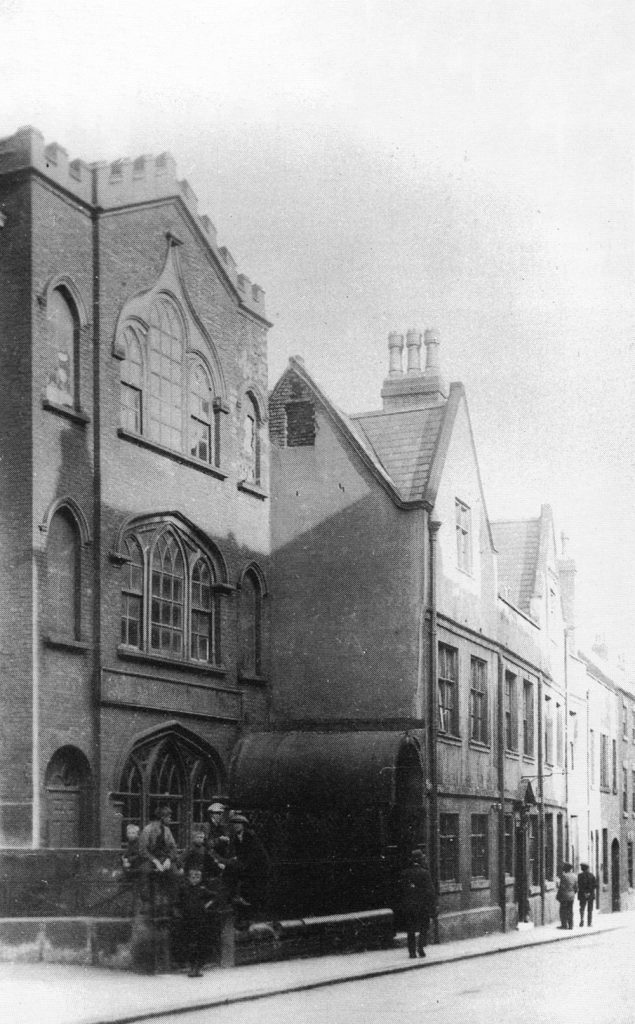
Peter Perez Burdett is an important, enigmatic and tantalizing figure. He is best remembered as a cartographer, having surveyed and drawn only the second one inch to one mile UK county map of Derbyshire and he repeated the exercise with Cheshire. He was also a talented artist, he claimed to have invented the mezzotint, and was an amateur astronomer, a talent that drew him into the circle of Washington Shirley 45th Earl Ferrers FRS. He appears to have been born in 1734 or 1735 — making him a contemporary of Joseph Wright — the son of William Burdett and his wife Elizabeth, younger daughter and sole heiress of the Revd. Peter Perez, vicar of Eastwood, Essex, who died in 1750. It is also unknown what his background was, for he moved in the highest circles throughout his life with the greatest ease. It seems clear that a double portrait of Peter Burdett and his wife Hannah by Wright was carefully posed at Knowle Hill, the (then) dismantled secondary seat of the Burdetts of Foremark, the background being the still stunning vista towards the north east — the topography is unmistakable. Yet, whilst staying with Earl Ferrers at Staunton Harold c. 1760-1764 and later, living in Derby he was never exposed as a fraud by the Burdetts or anyone else. Burdett may have been in the army, for he must have learnt his surveying skills somewhere, but the 1750s finds him in Manchester – doing precisely what has never been clear – where he married and had a family. Yet by the time he appeared in Derby, we hear no more of them and he re-marries the widow of a Leicester businessman and much later still, the daughter of a Bohemian count! He was certainly a very accomplished man; he even played the ’cello to a good enough standard to perform with the Derby Society of Musicians: a good quality education is implicit. Certainly, he and Ferrers were close enough to observe the Transit of Venus in 1761 and to write up their findings for the Transactions of the Royal Society and for the latter to lend him considerable sums of money. In 1763 Burdett had a bond from Lord Ferrers which allowed him to pay Joseph Wright – clearly by then a friend – £160 plus interest from the 200 guinea (£210) fee that Wright charged Lord Ferrers for painting A Philosopher Lecturing upon an Orrery in 1763. This sum, however, was thought by the late art historian Judy Egerton to have been in part a disguised loan to Burdett. Hence, Wright only received the first £50 of his fee and we find him chasing Burdett for the balance for years thereafter and right up until the ever-impecunious Burdett, hard pressed by creditors, left Derby in a hurry in 1768. He was still chasing some of the money when Peter Burdett left Liverpool for the Continent in 1774, when Wright was still £80 short! The original idea of the bond was for Lord Ferrers to pay Burdett the whole sum to pass on to Wright, deducting from it as a loan half to Burdett. The intention was to tide Burdett over whilst he built himself a house in Derby (and thus get Ferrers’ lodger out of Staunton Harold, then being extensively rebuilt to his own design). Once settled, the idea was for Burdett to pay the balance back to Wright when he had got established and recovered his financial position by publishing his map of Derbyshire, which happened in 1767. So where did the money go? What we strongly suspect is that it was spent on his new house in Derby’s Full Street, separated by one substantial building from Bess of Hardwick’s almshouses. Burdett’s house was later 11, Full Street, and was unique in Derby in being of brick with stone dressings and designed in Strawberry Hill Gothic – invariably termed ‘Gothick’ by architectural historians – the form of Gothic revival pioneered (indeed, trumpeted) by man of mode, the Hon. Horatio (‘Horace’) Walpole, later 4th Earl of Orford, 1717-1797) and much taken up amongst the cognoscenti in the middle years of the 18th century. As Burdett seems to have only paid £100 or a little more for his house, it also seem likely that it was an existing building which he merely re-fronted and internally up-dated before moving in early in 1764 (in which year he was first described as ‘of Derby, Gent.’) The house narrow end to the street, was of a full three storeys, with a wide central section breaking slightly forward under a crenellated parapet the middle section being a broken pediment, into which protruded the crocketed top floor window, a Gothicised Venetian window set in an ogee panel. The first floor central window was tripartite set in a Tudor-style four-centered arch as was that on the ground floor, which was flanked by a door on each side. The fact that the top floor was the tallest, suggests that the original building may well have been 16th century or early Jacobean in origin. The late Edward Saunders, Joseph Pickford’s biographer, has plausibly attributed this re-fronting to the Derby architect who is known to have been a close friend of both Wright and Burdett. Pickford is not notable for having worked in Gothick, but his Gothick Temple at Kedleston is closely related to 11, Full Street, as was Knowle Hill (since reduced) and the Chalybeate Well head at Quarndon, also attributed to Pickford by Edward. Pickford also competently restored parish churches at Coventry and Nottingham St. Mary. Regrettably, we have no record of the interior, although, like his neighbours, Burdett’s garden ran down to the bank of the Derwent and included a patch of ground on the bank opposite, too. Burdett was a Strict Observance Freemason – a continental and rather strange version of Freemasonry – and appears to have been fairly high up in its ranks, too, for he was visited at the house by a
Win Tickets to the The Good Food Show

Enter below for your chance to win a pair of tickets 00
Walk Derbyshire – A Hike Through Dovedale & Beyond
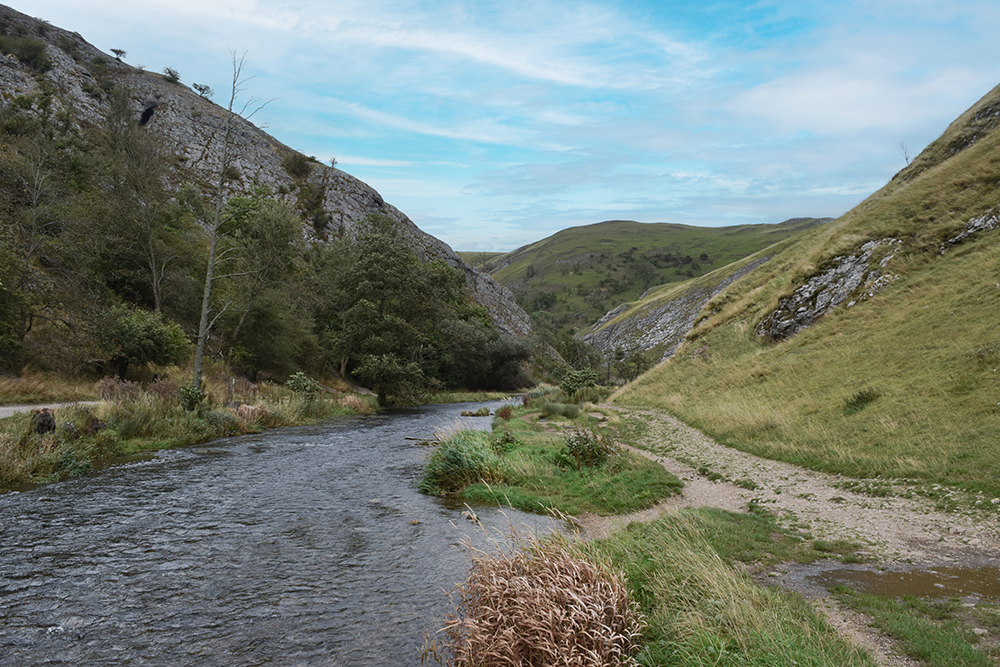
Dovedale is one of those iconic places in Derbyshire which everyone knows about, but finding a circular route can be a little tricky. You have a few choices on this walk to either walk down to the stepping stones, have a paddle, head up to Thorpe Cloud for the views or just picnic by the river. However, on an extremely wet September day we decided to venture a little further and enjoy a circular walk we had done once before. It is challenging though so best to be enjoyed on a dry day as the rocks are very slippery in parts. Also, the ascent is tough but there are a few tree stumps on the way up, should you need to rest your little legs. Along the way, we pass the stunning River Dove which is always teeming in wildlife. We pass by Thorpe Cloud (summit 287m) on your right, which you can always head up to before you start the walk if you want a really long hike. Thorpe Cloud and Dovedale were used as filming locations for Robin Hood (2010) with Russell Crowe. Dovedale is well known for its many limestone rock formations. On this walk you will pass Lover’s Leap where a young woman who believed her lover had been killed in the Napoleonic War, threw herself from the hill. Her skirt got caught in the branches of a tree as she fell which saved her life. When she returned home, she heard that her lover was alive. When you reach Ilam Rock, you can then turn around to see a formation called the Twelve Apostles. Details Parking: National Trust car park at Dovedale (£4 for 4 hours or £7 all day unless you are a NT member then it is free). Pubs: The Old Dog at Thorpe or a number to choose from just a short 5 minute drive away in Ashbourne. Distance: 7.85km 4.9 Miles Time: Approx 2.5 Hours Terrain: Quite tough, one big climb including steps. A few rocky scrambles. When wet many areas can be quite slippery. Walking boots are a must! THE ROUTE Head with the river on your right – you have a choice of straight ahead for the easy route to the stepping stones or cross the bridge on your right, then stick to the river to you left for a slightly more tricky (but more interesting) route to the stepping stones. If you went left of the river, you’ll need to cross the stepping stones when you get to them. If you went to the right you’ll already be on the right side to go through the gate and carry along with the river on your left. Follow the walk all the way along. You may spot Dippers and Kingfishers if you are lucky. Along the way you may also spot fossils in the limestone rocks on the path. You will eventually come to a bridge with a huge rock (Ilam Rock) to your left – cross the bridge and you will see a cave in front of you – bring a torch as this is well worth a look inside. However it’s usually flooded, so you may need wellies. We want to follow the public footpath to the right, then to Ilam via the steep ascent. And boy – is it a steep ascent! You will need good walking shoes. When you get to the top of the hill and it may make your ears pop– follow the sign left to Ilam. Follow the path through the trees, occasionally taking in the view on the left of the valley that appears between the gaps in the trees. You’ll eventually come to a gate, which you head through and turn left, follow along the steep grass (children will love sliding down here!) and you’ll eventually see a well worn little path in front of you amongst all the rabbits. When you get to the top, be careful, admire the view but the rocks are a little slippery. You will see a post on your left hand side. You can use either path here and you will come to a yellow footpath arrow signpost. When you come to the trees, you will notice that the path stops, so head right between two bushes up towards the top of the hill and then you will see a couple of yellow footpath signposts pointing to the right. Head up this hill towards the farm house. You will come to a wooden gate next to a barn – go through it and head left. There are farm eggs for sale here so bring some cash and a bag. Here you will see a random gorilla and a giraffe to your right– I kid you not! There is sometimes livestock in this field so be mindful. When you come to a gate head left, keeping the stone wall on your right as you walk up a track lined with trees. Carry on up the farm track where you will see a signpost on your right hand side ‘Bunster Hill’. Carry on up towards Bunster Hill. You have a choice here, there is a very steep path to the left or you can go straight to the bottom of the field to the stone wall. Head through the gate and down the field. When you come to the bottom where you can see the road and a farmhouse on your right – we are following the footpaths left all the way through the fields to eventually hit the car park. There is a choice at one point to not go through the livestock field. Gratefully back at the car park, the little kiosk was open so we were able to enjoy a well earned cup of tea and sausage roll! 00