Dining Out – The Little Kitchen, Little Eaton

Over my very long and undistinguished working lifetime I’ve done many and varied jobs. One, was working with my father. The work was physically demanding and required, what I would call, an early start; with no time to eat before leaving home. So, after the first of the day’s deliveries had been loaded onto the lorry, we would stop en-route to the first drop for a proper breakfast. It was the early 1970s and there was a cafe at every major road junction; family run with wholesome food and the place alive with the buzz of conversation. We’d be out on the road all day, knowing that when the time came for the mid-day break it would be our busiest time with just a few minutes to snatch a greasy sausage roll for lunch. That’s why I put great store on a good breakfast – the most important meal of the day. There are places where you can get a flat, under seasoned, circular sausage, one dry rasher of bacon and a homogenised egg in a split bun eaten ‘on the hoof’; along with coffee in a cardboard mug. But is that a breakfast? If I’m out for breakfast I want pleasant surroundings, table service and a menu that reflects the variety that the first meal of the day can offer. Only a few minutes drive from the centre of Derby and on a busy bus route, the family run Little Kitchen in Little Eaton is a breakfast lovers dream. Voted number four on Tripadvisor’s list of top restaurants in Derby, it’s a popular destination not only for breakfast, but also lunch and afternoon tea. It’s a magnate for cyclists, walkers and groups meeting up for a cup of tea and a scone. Susan and myself arrived in time for a late breakfast or was it brunch! There was outside seating available but we chose a table for two inside. The attractive contemporary decor, both inside and out, gives the cafe a warm and welcoming appearance. There’s a buzz about the atmosphere in The Little Kitchen. Its village location and proximity to a junction on the A38 attracts a variety of customers from mums with children meeting up for a chat, dog walkers enjoying the out-door seating and, in my imagination, a father and son taking a break from their busy deliveries. We placed our order for drinks with Emily: two Americano with milk on the side. The coffee was generous; served in large cups branded with the Little Kitchen logo. The coffee was smooth and fragrant. Had a rich flavour with a hint of dark chocolate. Breakfast at The Little Kitchen is served from eight o’clock in the morning and the choice is wide and tempting. From the full English – large, small, vegan or vegetarian to the classics – eggs Benedict, Florentine and Royal. There’s also a very trendy posh toast: a slice from a granary loaf smothered in cream cheese and topped with avocado and smoked salmon. I chose the bagel stack. A fresh split, bagel spread with cream cheese. The bagel was crispy on the outside and slightly chewy in the middle as it should be. My towering breakfast was also filled with a meaty sausage from a local butcher – Maycock and Sons, a thick rasher of back bacon and a hand full of refreshing and vibrant green spinach. It was topped with half a grilled fresh tomato and a pile of mushrooms. A ‘balanced’ combination of meat, vegetables, dairy and a very tasty carbohydrate! You can make additions, such as haloumi, to the stack. Susan chose the eggs royal and our breakfasts could not have been further apart in terms of style. While mine was a tower of full English, Susan’s was a platter of elegance. A slice of wholegrain toast was topped with thin slices of melt-in-the-mouth smoked salmon. The delicate and distinctive flavour of the fish was enhanced by two perfectly poached eggs. All served covered with a plain hollandaise sauce. Toast, egg and smoked fish: a perfect combination of textures and flavours. The kitchen in the cafe is not hidden from view. From our table we could see the cook, Sara, at work in the open plan cooking space where everything is cooked fresh to order. Many of the cakes and pastries, such as the cinnamon swirls and scones, are baked on the premises. And we couldn’t leave without taking away a slice each of one of the delicious looking, butter-cream filled, sponge cakes. This was the perfect way to start the day. The Little Kitchen, 156 Alfreton Road, Little Eaton, Derby DE21 5DE 00
The Lost Houses of Derbyshire – Burdett’s House, Full Street, Derby
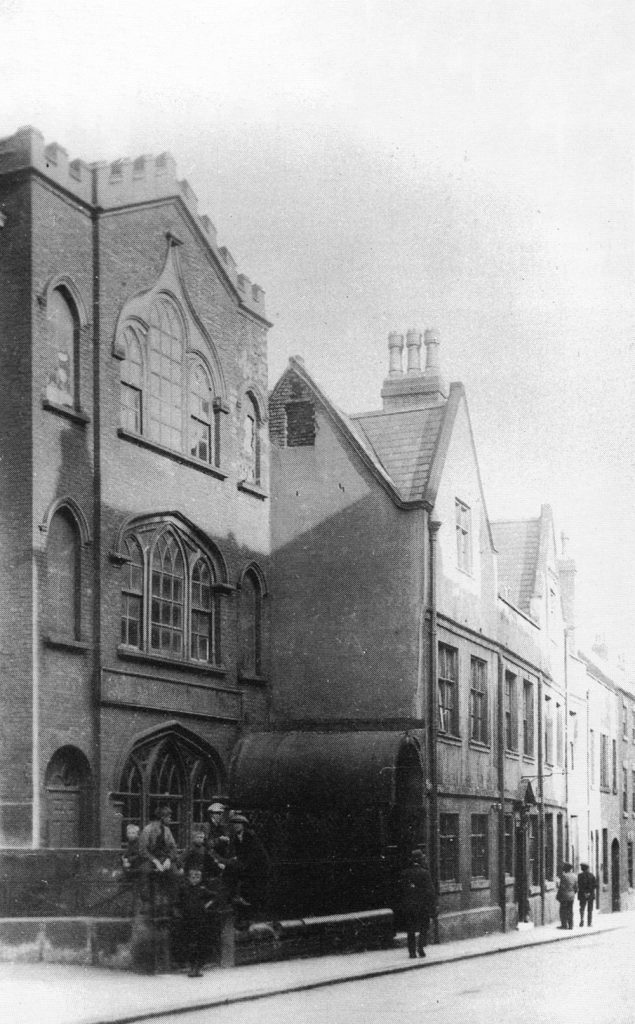
Peter Perez Burdett is an important, enigmatic and tantalizing figure. He is best remembered as a cartographer, having surveyed and drawn only the second one inch to one mile UK county map of Derbyshire and he repeated the exercise with Cheshire. He was also a talented artist, he claimed to have invented the mezzotint, and was an amateur astronomer, a talent that drew him into the circle of Washington Shirley 45th Earl Ferrers FRS. He appears to have been born in 1734 or 1735 — making him a contemporary of Joseph Wright — the son of William Burdett and his wife Elizabeth, younger daughter and sole heiress of the Revd. Peter Perez, vicar of Eastwood, Essex, who died in 1750. It is also unknown what his background was, for he moved in the highest circles throughout his life with the greatest ease. It seems clear that a double portrait of Peter Burdett and his wife Hannah by Wright was carefully posed at Knowle Hill, the (then) dismantled secondary seat of the Burdetts of Foremark, the background being the still stunning vista towards the north east — the topography is unmistakable. Yet, whilst staying with Earl Ferrers at Staunton Harold c. 1760-1764 and later, living in Derby he was never exposed as a fraud by the Burdetts or anyone else. Burdett may have been in the army, for he must have learnt his surveying skills somewhere, but the 1750s finds him in Manchester – doing precisely what has never been clear – where he married and had a family. Yet by the time he appeared in Derby, we hear no more of them and he re-marries the widow of a Leicester businessman and much later still, the daughter of a Bohemian count! He was certainly a very accomplished man; he even played the ’cello to a good enough standard to perform with the Derby Society of Musicians: a good quality education is implicit. Certainly, he and Ferrers were close enough to observe the Transit of Venus in 1761 and to write up their findings for the Transactions of the Royal Society and for the latter to lend him considerable sums of money. In 1763 Burdett had a bond from Lord Ferrers which allowed him to pay Joseph Wright – clearly by then a friend – £160 plus interest from the 200 guinea (£210) fee that Wright charged Lord Ferrers for painting A Philosopher Lecturing upon an Orrery in 1763. This sum, however, was thought by the late art historian Judy Egerton to have been in part a disguised loan to Burdett. Hence, Wright only received the first £50 of his fee and we find him chasing Burdett for the balance for years thereafter and right up until the ever-impecunious Burdett, hard pressed by creditors, left Derby in a hurry in 1768. He was still chasing some of the money when Peter Burdett left Liverpool for the Continent in 1774, when Wright was still £80 short! The original idea of the bond was for Lord Ferrers to pay Burdett the whole sum to pass on to Wright, deducting from it as a loan half to Burdett. The intention was to tide Burdett over whilst he built himself a house in Derby (and thus get Ferrers’ lodger out of Staunton Harold, then being extensively rebuilt to his own design). Once settled, the idea was for Burdett to pay the balance back to Wright when he had got established and recovered his financial position by publishing his map of Derbyshire, which happened in 1767. So where did the money go? What we strongly suspect is that it was spent on his new house in Derby’s Full Street, separated by one substantial building from Bess of Hardwick’s almshouses. Burdett’s house was later 11, Full Street, and was unique in Derby in being of brick with stone dressings and designed in Strawberry Hill Gothic – invariably termed ‘Gothick’ by architectural historians – the form of Gothic revival pioneered (indeed, trumpeted) by man of mode, the Hon. Horatio (‘Horace’) Walpole, later 4th Earl of Orford, 1717-1797) and much taken up amongst the cognoscenti in the middle years of the 18th century. As Burdett seems to have only paid £100 or a little more for his house, it also seem likely that it was an existing building which he merely re-fronted and internally up-dated before moving in early in 1764 (in which year he was first described as ‘of Derby, Gent.’) The house narrow end to the street, was of a full three storeys, with a wide central section breaking slightly forward under a crenellated parapet the middle section being a broken pediment, into which protruded the crocketed top floor window, a Gothicised Venetian window set in an ogee panel. The first floor central window was tripartite set in a Tudor-style four-centered arch as was that on the ground floor, which was flanked by a door on each side. The fact that the top floor was the tallest, suggests that the original building may well have been 16th century or early Jacobean in origin. The late Edward Saunders, Joseph Pickford’s biographer, has plausibly attributed this re-fronting to the Derby architect who is known to have been a close friend of both Wright and Burdett. Pickford is not notable for having worked in Gothick, but his Gothick Temple at Kedleston is closely related to 11, Full Street, as was Knowle Hill (since reduced) and the Chalybeate Well head at Quarndon, also attributed to Pickford by Edward. Pickford also competently restored parish churches at Coventry and Nottingham St. Mary. Regrettably, we have no record of the interior, although, like his neighbours, Burdett’s garden ran down to the bank of the Derwent and included a patch of ground on the bank opposite, too. Burdett was a Strict Observance Freemason – a continental and rather strange version of Freemasonry – and appears to have been fairly high up in its ranks, too, for he was visited at the house by a
Win Tickets to the The Good Food Show

Enter below for your chance to win a pair of tickets 00
Walk Derbyshire – A Hike Through Dovedale & Beyond
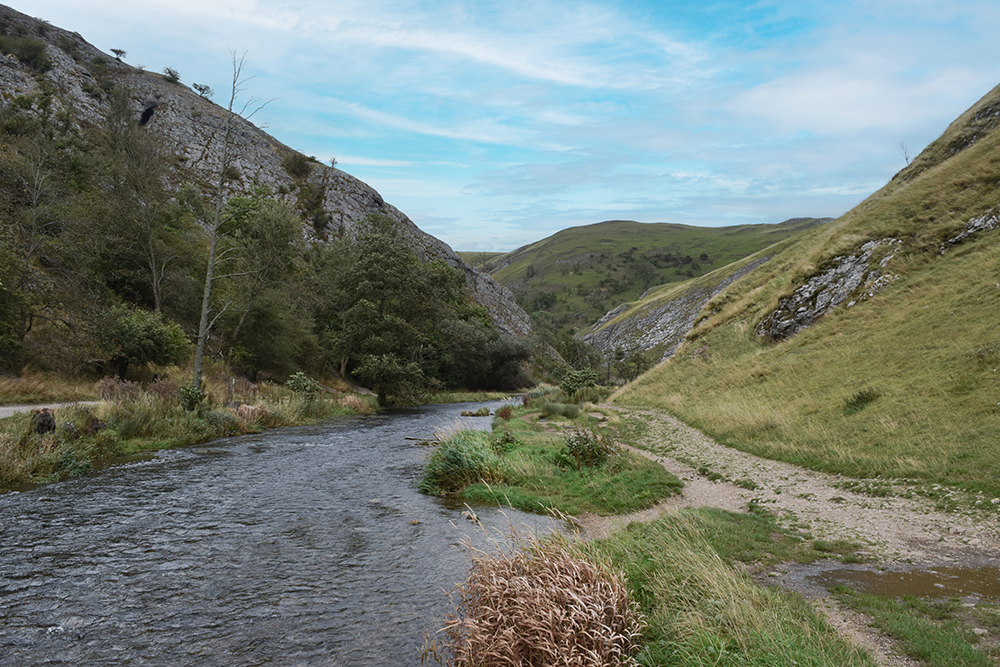
Dovedale is one of those iconic places in Derbyshire which everyone knows about, but finding a circular route can be a little tricky. You have a few choices on this walk to either walk down to the stepping stones, have a paddle, head up to Thorpe Cloud for the views or just picnic by the river. However, on an extremely wet September day we decided to venture a little further and enjoy a circular walk we had done once before. It is challenging though so best to be enjoyed on a dry day as the rocks are very slippery in parts. Also, the ascent is tough but there are a few tree stumps on the way up, should you need to rest your little legs. Along the way, we pass the stunning River Dove which is always teeming in wildlife. We pass by Thorpe Cloud (summit 287m) on your right, which you can always head up to before you start the walk if you want a really long hike. Thorpe Cloud and Dovedale were used as filming locations for Robin Hood (2010) with Russell Crowe. Dovedale is well known for its many limestone rock formations. On this walk you will pass Lover’s Leap where a young woman who believed her lover had been killed in the Napoleonic War, threw herself from the hill. Her skirt got caught in the branches of a tree as she fell which saved her life. When she returned home, she heard that her lover was alive. When you reach Ilam Rock, you can then turn around to see a formation called the Twelve Apostles. Details Parking: National Trust car park at Dovedale (£4 for 4 hours or £7 all day unless you are a NT member then it is free). Pubs: The Old Dog at Thorpe or a number to choose from just a short 5 minute drive away in Ashbourne. Distance: 7.85km 4.9 Miles Time: Approx 2.5 Hours Terrain: Quite tough, one big climb including steps. A few rocky scrambles. When wet many areas can be quite slippery. Walking boots are a must! THE ROUTE Head with the river on your right – you have a choice of straight ahead for the easy route to the stepping stones or cross the bridge on your right, then stick to the river to you left for a slightly more tricky (but more interesting) route to the stepping stones. If you went left of the river, you’ll need to cross the stepping stones when you get to them. If you went to the right you’ll already be on the right side to go through the gate and carry along with the river on your left. Follow the walk all the way along. You may spot Dippers and Kingfishers if you are lucky. Along the way you may also spot fossils in the limestone rocks on the path. You will eventually come to a bridge with a huge rock (Ilam Rock) to your left – cross the bridge and you will see a cave in front of you – bring a torch as this is well worth a look inside. However it’s usually flooded, so you may need wellies. We want to follow the public footpath to the right, then to Ilam via the steep ascent. And boy – is it a steep ascent! You will need good walking shoes. When you get to the top of the hill and it may make your ears pop– follow the sign left to Ilam. Follow the path through the trees, occasionally taking in the view on the left of the valley that appears between the gaps in the trees. You’ll eventually come to a gate, which you head through and turn left, follow along the steep grass (children will love sliding down here!) and you’ll eventually see a well worn little path in front of you amongst all the rabbits. When you get to the top, be careful, admire the view but the rocks are a little slippery. You will see a post on your left hand side. You can use either path here and you will come to a yellow footpath arrow signpost. When you come to the trees, you will notice that the path stops, so head right between two bushes up towards the top of the hill and then you will see a couple of yellow footpath signposts pointing to the right. Head up this hill towards the farm house. You will come to a wooden gate next to a barn – go through it and head left. There are farm eggs for sale here so bring some cash and a bag. Here you will see a random gorilla and a giraffe to your right– I kid you not! There is sometimes livestock in this field so be mindful. When you come to a gate head left, keeping the stone wall on your right as you walk up a track lined with trees. Carry on up the farm track where you will see a signpost on your right hand side ‘Bunster Hill’. Carry on up towards Bunster Hill. You have a choice here, there is a very steep path to the left or you can go straight to the bottom of the field to the stone wall. Head through the gate and down the field. When you come to the bottom where you can see the road and a farmhouse on your right – we are following the footpaths left all the way through the fields to eventually hit the car park. There is a choice at one point to not go through the livestock field. Gratefully back at the car park, the little kiosk was open so we were able to enjoy a well earned cup of tea and sausage roll! 00
Dining Out – Meynell Langley Garden Centre & Tea Rooms

Meynell Langley gardens is one of an increasingly rare genre of plant nurseries. If you’re looking for gifts or ornaments, silk flowers or garden fairies then you are going to be sorely disappointed. Turning off the busy Ashbourne to Derby road you immediately enter the calming green countryside of south Derbyshire. Winding country lanes soon lead you to the sign directing you down a tree lined unmade lane at the bottom of which high red brick walls, a feature of this area, surround glass houses and nursery beds in what once was Meynell Hall’s kitchen gardens. But here the nostalgia ends as the plants which fill and overflow the garden are mostly grown on site and encompass many of the new disease resistant varieties being developed. The trial gardens which are open over the summer months are resplendent with their vivid colours and blousy blooms. Adapting to our quickly changing climate is a constant challenge, so you can see the success of newly developed varieties. Key too is the advice, freely offered by staff and family members who are very much hands on and can be easily found. On a personal note, over the years we have planted an orchard with a selection of old and new varieties of fruit trees, all purchased from here following the sound advice of Robert and his team. They are all thriving and provide food and shelter for wildlife as well as apple pies and jams for our own table. One newer feature is the cafe, efficiently run by Karen, with its rustic charm where in the winter a wood burning stove ticks quietly away at one end. Light lunches are served, and on our recent visit we enjoyed the homemade mushroom soup. The ploughman’s lunch had pickled yellow beetroot and sweet onion pickle to accompany two generous portions of cheese and pork pie. Seasonal salads and coleslaw are served too with paninis, baked potatoes, quiche and lasagnes. Most of the dishes are homemade and contain ingredients grown on site. The array of cakes is mouth-watering, again all homemade, a particular favourite of mine is the apple and coconut slice although it’s truly hard to choose a favourite. A visit to Meynell Langley gardens is a real pleasure, to be surrounded by so many wonderful plants, shrubs and trees…..and lunch at the cafe after is, well “icing on the cake“ as they say! 00
A Century In The Making – The Grand Unveiling of the Restored ‘Bluebird’ Tram at Crich Tramway Village”

There was quite a hush as the doors to the conservation shed were slid open at an event for special guests and Tramway Museum Society (TMS) members on Friday 13th September 2024 at Crich Tramway Village. Ten years of hard work was about to be revealed. It’s amazing how nostalgia sparks such interest in a fast modern world where technology causes us to rush about, and yet here is a form of transport with a maximum speed of 30 mph and creditable acceleration rate of 3.5 feet per second crammed full of people excited to share in its 100 year history. Twelve years ago a budget was predicted as the cost of restoring London County Council (LCC) No. 1 tramcar ‘Bluebird’. As she rolled out fully restored the budget had been exceeded by only 3%. If only other projects around the country came in at that sort of price HS2 would have reached Carlisle by now! A testimony I feel, to true forecasting and those who work hard to keep tight reign on a budget knowing that exceeding it would result in an unfinished project. No corners have been cut. Skill, graft and careful sourcing of materials plus a workforce dedicated to the cause resulted in the tramcar gracing the tracks ready for all to enjoy at Crich tramway museum. With opening speeches singing the praises of all concerned and a handing over of the key ceremony complete, it was time for all to enjoy a ride. The quality workmanship was immediately visible with the shiny new paintwork and plush upholstery. The ride afforded great views of the surrounding countryside from angles not always appreciated by car. When we hit the end of the tracks it was time to turn round and face the other way for the return journey. We turned, not the tram! Up we jumped pulled the back of our seat back and sat down again. Simple, no expensive turntable and the driver gets to go to the other end. The sunny day made it all the more enjoyable as everyone wandered around in and out of the museum, jumping on another tram for a trip or having a drink and a spot of lunch at the Red Lion. Whilst having lunch I managed to get a chat with 87 year old Eric Smith, a born traveller who goes to Brussels three times a year even though wheelchair bound and who had travelled from Leeds for the day to enjoy the experience of riding on a tramcar that he was privileged to be conductor on in the early 50’s. He was a lovely man who had thoroughly enjoyed his trip into nostalgia. It was a most enjoyable day and, for anyone who hasn’t made it yet, put it on your to do list. Now it’s over to the experts to tell you the story of this lovely old tram, here is its story… London County CouncilNo. 1 (aka Bluebird) Launch at Crich Tramway Village. After ten years and a cost of around £500,000, London County Council (LCC) No. 1 tramcar ‘Bluebird’ was launched. The restoration of the tram links firmly to the Tramway Museum’s core purposes to “share, inspire and educate through telling the story of tramways.” The tramcar was initially launched in London, on 5 May 1932 and was formally designated as LCC No. 1 entering service one month later, on 10 June 1932. The press reviews heralded “A tramcar revolution” and spoke of “Rolls-Royce” levels of passenger comfort. One of the most distinctive features of the new tramcar was its striking royal blue and ivory livery, which accentuated its streamlined appearance and set it apart from the rest of the LCC fleet and which led to it acquiring the nickname ‘Bluebird’. Within five years the tramcar itself had lost its distinctive livery and the days of all tramcars in London were limited following the London Passenger Transport Board’s (LPTB) adoption of a policy of tramway abandonment. LCC No. 1 was sent to Leeds in June 1951, and entered service as Leeds 301 on 1 December of that year, operating from Chapeltown Depot. It had cost Leeds £500 to buy, with a further £300 being spent on overhaul costs. According to Eric Smith, the son of Tom Smith who served on the Leeds Transport Committee, Victor Matterface personally negotiated the transfer of LCC No. 1 in lieu of the fire-damaged Feltham tramcars. Had Matterface not intervened and arranged for LCC No. 1 to enjoy a new lease of life in Leeds it may not have survived. Records from London Transport reveal that LCC No. 1 was placed along with 529 other redundant tramcars on a list sent to the scrap trade with a quoted scrap value of £61. In 1957, 301 departed Leeds and returned to London. In 1959 it was moved from Charlton Works to Clapham and in 1963 moved to the large exhibits section of the Museum of British Transport at Clapham. In 1972 London Transport decided to donate the tramcar to the Tramway Museum Society, so in December 1972, LCC No. 1 was transferred to Crich. London County Council Tramways Trust (LCCTT), a registered Charity whose objective as set out in the Trust Deed is “to educate the public in the history of tramways and the technical details, engineering and performance of such transport” asked the Tramway Museum Society to consider restoring the tramcar to its original condition, focusing on the tramcar’s period of operation from July 1932 – July 1933. They had started fundraising for the restoration, and eventually had raised the money, which the Tramway Museum Society had originally anticipated it would cost to complete. On Saturday 14 June 2014, after 18 months of preparation, tramcar moves, programming, research, and allocation of resources, London County Council No. 1 made its much-anticipated move into the Conservation Workshop at the National Tramway Museum, and the physical restoration of the tramcar to operational condition officially commenced. In March 1978, LCC No. 1
The Lost Houses of Derbyshire – Grangefields, Trusley
Grangefields lies in the northern part of the parish of Trusley and has a long history going back to the compilation of the Domesday Book in 1086, and maybe before, for it lies only a quarter of a mile south of Long Lane, the alignment of the Roman Road from Derventio (Little Chester) to Salinae (Middlewich, Cheshire) via the fort at Chesterton, Staffs. A Roman villa has never been identified in Derbyshire, but if one ever was, a gentle south facing, well-drained slope is the most likely place and the area of Long Lane is a promising one. Whether Grangefields was on or near one has yet to be ascertained, but it would not surprise me if one day such a villa did turn up nearby. Thus, in 1086, both the manorial estates at Trusley had been bestowed on a great lord, Henry de Ferrers, who made a man called Hugh his hereditary tenant of both there. Later charters establish that Hugh’s full name was Hugh le Arbalaster. The name derives from arcuballista a Latin term for a crossbow, which rather suggests that Hugh might have acquired this name from his day-job, so to speak, as a leader of a group of crossbow-men. It would be fun to think that he was wielding one at the battle of Hastings and that Trusley was his reward! Hugh had a son called Serlo, who adopted the surname of Beaufei (spelt in a number of confusing ways), indicating that, whatever Hugh had been up to at Hastings, he probably hailed from the small Norman settlement of Beaufai, Département de l’Orne, not far from the Mesnil, in Normandy. Serlo’s great grandson, Robert de Beaufei, started granting pieces of land to various monastic houses, a habit which his like-named son continued. Between them, the two Roberts made grants to the Abbeys of Croxden, and Burton in Staffordshire, the Priory of St. Mary de Pratis in Derby and the Knights of St. John of Jerusalem at Yeaveley. These were nearly all made from the northern part of Trusley, from just one of the two manorial estates, that away from the village, manor and church, and all between the 1260s and 1290. Indeed, this part of Trusley seems to have originally had its own name, Thurmundesley, as a pair of early charters make clear. This derives from the old Norse personal name ‘Thormund’ + leah = ‘ley’, a meadow or clearing. It would probably have mutated to ‘Thurmandsley’, ‘Thurmsley’ or even ‘Thursley’ today. This may be a clue, indeed as to which of the two men holding Trusley in 1066 had this part of the settlement, for as Ulfketel is also a Norse name, it would be tempting to think of him as Thormund’s descendant or heir, and that Thormund himself must have arrived long before, cleared the land and settled. It was the Cistercian monks of Croxden Abbey, however, who were granted the site of Grangefields, part of a 40-acre gift made by the younger Robert de Beaufei in 1180 and topped up with further land later. Here they established or took over a farm. Sometimes, monks were sent to work such farms, which were called ‘granges’, but more usually lay families were given the tenancies. In time, therefore, the place became known, not as Thurmundesley, but Grangefields, just as a nearby holding granted to the Nuns of Kings Mead Priory in Derby, gradually came to be called ‘the meadow of the nuns of Trusely’, eventually Nunsfield. Certainly, the name Grangefields was recorded (as Graungefeld) in the documents relating the dissolution of Croxden Abbey in 1538. The land and farm at Grangefield was assessed in value by King Henry VIII’s bean-counters at £4 – 6s – 3d (£4.33) – worth £1,817.10 in today’s values, or three cows, or 143 days’ wages in 1538. Thus, Grangefields was acquired speculatively by Dr. Thomas Leigh and William Cavendish (later to become the second husband of Bess of Hardwick) on 17th September 1538 to be assessed, the price fixed and offered for sale. The tenant at the time was William Glossop, of a Wirksworth family and when the estate was sold on in 1545 to Robert Fitch, he appears to have been left in place. Indeed, the sparse surviving records suggest that the Glossops continued as tenants before buying the freehold some time between 1571 and 1598. He did not keep it long though, for he sold it on again first to Edward Kynnersley of Brailsford and then to Francis Curzon a younger son of Francis, of Kedleston. However, at some stage, Francis Curzon seems to have decided to sell it on yet again and it would appear that Robert Glossop, or his father, had become wealthy enough to buy the farm, for Robert was in possession in 1600 when, on 26th October, he mortgaged it to raise money. Unfortunately, whatever Robert needed the money for, the mortgage appears to have been foreclosed with the result that it passed by 1608 to John Gregson ‘yeoman’ of Sutton-on-the-Hill who immediately sold it on to Robert Hope. Unfortunately, not much is known of the family, but Robert was born to Charles Hope at Etwall, not only did Robert Hope buy the estate, but he also appears to have built a fine new house, or more probably, rebuilt the late medieval house which he acquired, adding a crosswing and generally modifying the building, producing an irregular but delightful timber façade. It was described by William Woolley in 1713 as ‘,,, a pretty private seat formerly a grange belonging to Croxden Abbey’, whilst Stephen Bagshaw added, ‘it is a long, half-timbered building having many gables.’ The only comparable house locally are perhaps the earlier West Broughton Old Hall or the slightly later and more symmetrical Wakelyn Old Hall at Hilton. The house fortunately lasted into the age of photography (by a whisker) being the subject of the Calotype photograph which may have been taken by photographic pioneer W. H. Fox-Talbot, who was married
Walk Derbyshire – A Wander With An Ogston View

This has got to be one of our favourite walks which we discovered just coming out of lockdown. It takes in the beautiful views over Ogston Reservoir. You also get a bit of height on this walk so the view down the hills at one or two points is pretty stunning. Ogston Reservoir is owned by Severn Trent Water and is a Site of Special Scientific Interest. There is a public hide overlooking the reservoir in the West Bank Car Park. Ogston Reservoir is known for its sailing club and many twitchers come here to view the vast array of migrating birds. You can’t actually walk all the way around the reservoir directly, but there are some beautiful places to walk and where you can take in the views, it really is idyllic and so is a firm favourite. Ogston Sailing Club is worth checking out as they have paddle-boarding sessions and social sailing sessions, so take a look at their website for more details. The walk starts from the West Bank Car Park at the reservoir. It is a moderate walk but after we have had a downpour, you will find you definitely need wellies to go through the farmers field as it can be very muddy – also they sometimes have the cows in one specific field so please be aware and extremely cautious when walking with dogs. THE ROUTE There is free parking in the West Bank car park, then walk back towards the entrance and follow the road straight up ahead. Don’t go around to the right but straight up and you will see a house. Follow the track to the right and walk to the top of the track where you will already start to take in the views. Follow this up until you get to the farm in front of you and go straight through the gate, keeping to the right. The footpath is clearly signed so be respectful of the livestock and property. This can be the very muddy field in wet conditions. Go straight ahead and over the stile at the other side. Follow to the left of the field and it will eventually bend right. Follow this till you see a stile heading left through another field. Walk diagonally through the field and you will eventually come to a metal gate where you can go over the stile. You will walk through a garden with a house on the right. Keep walking and you will end up on the road, White Carr Lane. Be careful as it is a little narrow here. Turn right at the end of the drive. Follow the road to the right and up the hill. At the top of the hill you will see a footpath sign to your left which looks like you are going up someone’s drive. This is the correct way! All the way to the top and through the gate. Carry on a little and take time to take in the panoramic views!! Be careful underfoot as you pass through this next field as it does slant a bit to the right and we don’t want any roly-poly’s down the hill. Keep going till you end up on the road. Turn right here and continue to the T-Junction. Here we go left and walk down the road, keeping your eye open for a track on the right which is past the place which currently has a yurt on the land. Go down the lane all the way and keep following the lane– it is really straight forward. You head into the woods here so be careful underfoot. Upon the clearing keep heading along the footpath and you will eventually come out onto the Dark Lane. You should recognise where you are now. Go across the road and follow the road to the car park on your left hand side. THE DETAILS Parking: There is free parking in the West Bank car park. Pubs: The White Horse at Wolley Moor is a fantastic pub that servers great food and real, local ales. Distance: Short =3.5 miles, 6k Time: Short = 1hr 30min Terrain: Moderate, a couple of steep hills to climb, but well worth it for the amazing views. 00
Celebrity Interview – Fairground Attraction
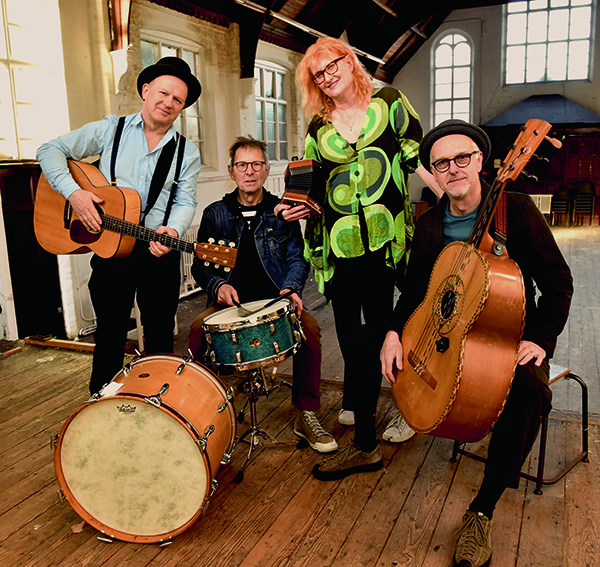
by Steve Orme Thirty-five years after splitting up, the four original members of the group Fairground Attraction are back together – and they reckon they’ve still got their unique sound which propelled them to the top of the charts. The band had a stratospheric rise to fame in the late 1980s. Their first single Perfect became a UK number one and won best single at the 1989 Brit Awards. Their debut studio album, The First of a Million Kisses, got to number two and picked up best album at the same awards ceremony. They don’t agree on why they went their separate ways. There were reportedly arguments before the band’s guitarist and producer Mark Nevin abandoned a recording session for their second LP. But now Mark, singer Eddi Reader, Simon Edwards who plays guitarrón – a Mexican acoustic bass guitar – and drummer Roy Dodds are preparing to release a new album which they will be promoting on a UK tour which will stop off in Nottingham. Eddi and Mark took time out to tell me they had no regrets about splitting up, their hopes for the band’s future and why their music is still popular. Born in Glasgow, Eddi who is 65 and has had a successful solo career since leaving Fairground explained why the group split up around 1990. “It was definitely ‘this isn’t working. We’re not aligning together.’ There was no way either of us had the skills to figure it out. “The music was the most important thing, so honouring that while you’re young is really difficult. It’s great now because we can honour what it was and look at what’s new about it too. “I’m noticing that the old songs, when we play them, they’re just timeless pieces of work .” Mark who appears to be the driving force behind Fairground Attraction and writes most of their material puts their music into perspective. “We were very conscious when we made the (first) record to make sure we didn’t use any sound that would date. So there are no synthesisers, there’s nothing that was of the era. Everything was classic in the sense that it was acoustic. There were natural instruments, Eddi’s amazing voice and songs with proper, traditional values. We really did prove ourselves correct in that decision because it is timeless.” Another reason Fairground Attraction were successful was that they wouldn’t put up with any interference from their record company RCA. “They wanted to provide us with producers,” says Eddi “but we’re actually pig-headed in our artistry. Both of us.” “We said if it’s not pure, forget it,” adds Mark. “Their producer would have made us sound modern. We had to fight them. “We played the music and recorded it as purely as possible. The song Perfect is us playing live. The actual record is just the second take.” Two years ago the four members of Fairground got together in Mark’s kitchen and they soon rekindled the spark that had made the band such an attraction. “We just played together and suddenly it was there,” says Mark. “It’s got a unique sound. It was like when you pour some hot water into a Cup A Soup and it comes to life.” Eddi experienced a difference in that session: “Something unconsciously happened to my physical approach which was nothing to do with my head. It was like someone had turned a key inside me. Everybody in that kitchen changed my physiology.” All the songs on the new album Beautiful Happening have been penned by Mark apart from two which he co-wrote. So where does he get his songs from? “I find them in the garden like mushrooms. There are songs floating around everywhere. For some reason early on I didn’t know how to catch them. “In a way I’m like a radio receiver. I turn it on to the right frequency and music comes. It’s not from me – I’m just the receiver.” The music business has changed considerably since Fairground released their first LP. They’ve been able to record their new album without a record company behind them – but it’s meant so much work for Mark. “You have to become a full-time executive, manager and all these things, so you’re doing about 40 people’s jobs. It’s very hard work day in day out to make this a reality and get the things done in time.” Eddi has had a varied career since leaving Fairground. At one stage she recorded an album of material by Robert Burns with the Royal Scottish National Orchestra. She was awarded an MBE for services to singing in 2006. She has had a strained relationship with record companies and cites an example of a festival she played in Australia. “There were 5,000 people in front of me and every one wanted to buy a record. But the distributor had only sent 20 copies which soon sold out! That’s what we as artists had to deal with for years. They didn’t have any love for what you were doing.” Mark called in a few favours to make new videos of the band because they didn’t have a budget. One of the videos was made by John Sorapure, director of photography on blockbuster films including Paddington and Barbie. “He happens to be an old friend of mine who lives around the corner. So he did that video of us for nothing.” Eddi jumps in with her assessment of the band’s current standing: “We’re doing this off our own back but we’ve also got this heritage. We’ve got a foot in the door. “I’ve been touring for 35 years and a lot of people who come to my (solo) shows will come to see the band. There’ll be extra people that’ll come who remember just the Fairground Attraction album. “There’ll be people coming back with their daughters and sisters and friends. And then there’ll be people who are older than us. My mother’s coming to the Glasgow gig.” The re-formed band
The Lost Houses of Derbyshire – Ockbrook Manor
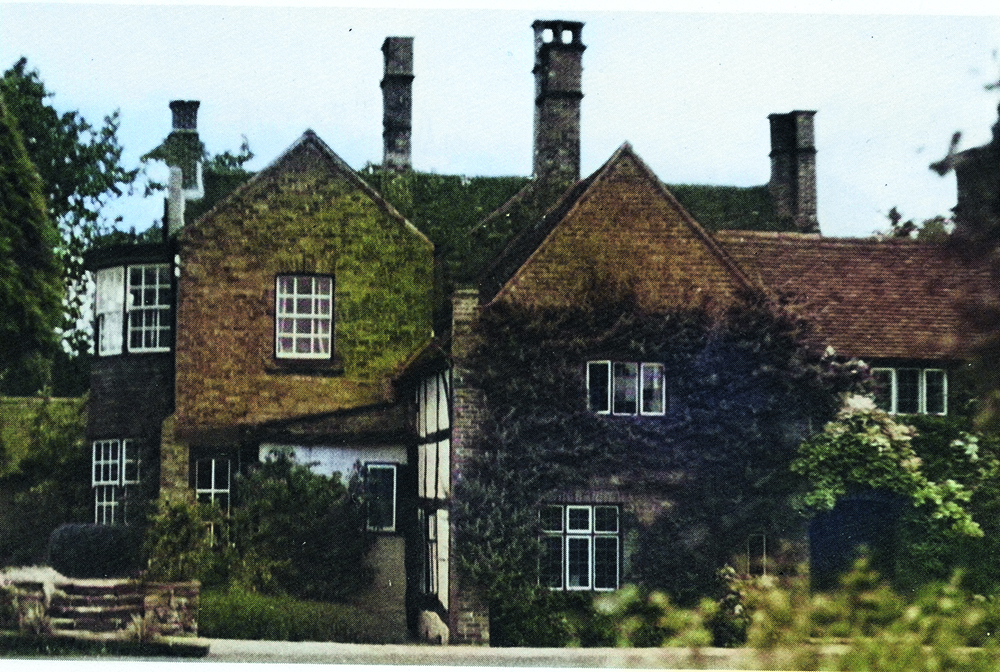
by Maxwell Craven Ockbrook Manor was a wonderful old house which one could only describe as ‘multi-period’ having, seemingly a portion of its fabric from virtually every post-modern era. The other thing is, that by being called ‘Manor’, one might assume that it was the capital mansion of an estate going back well into the Medieval period, yet that is not quite true either. It is well known that Ockbrook was granted by William I to Geoffrey Hanselin, from whom the estate had passed, by 1290, to Hugh, 1st Lord Bardolph, whose son was recorded as having a park there. The Lords Bardolph lived at Wormegay in Norfolk as their principal seat, but the fact that they had a park presumably suggests that they used Ockbrook as a hunting lodge. At some stage, too, much of the land had been granted by the Hanselins to Dale Abbey. In 1358 John, 3rd Lord Bardolph, sold the manorial rights and his Dale tenancy to Sir Godfrey Foljambe of Tideswell, whose seat and prolific lead interests remained in the north of the county. This suggests that any hunting lodge at Ockbrook was either abandoned or let, either to a bailiff or to a sub-tenant, although any such detail remains elusive. The Foljambes’ estates passed eventually to Yorkshire grandee Sir William Plumpton, who died in 1481 from whom Ockbrook came to Sir Thomas Seymour. He sold it to Sir Andrew Windsor, created 1st Lord Windsor (ancestor of the present Earl of Plymouth) and in due time, Frederick, 4th Lord Windsor, succeeding to the family estates in 1559, sold the manorial rights to the resident freeholders of the village. Meanwhile, when Dale Abbey was dissolved in 1536, their land at Ockbrook was acquired by Francis Pole of Langley whose posterity also sold it to the Stanhopes of Elvaston. The freeholders who bought the land and shares of the manor from Lord Windsor included several local families who remained in the village until the early 20th century: Battelle, Columbell, Piggen and Windley. The purchasers of the land on which stood the original manor house (and three shares of the manorial rights) were the Piggens, They almost certainly built the first residential capital mansion on the site – although whether their new house actually stood on the ancient site is impossible to tell – and a timber box-framed wing remained embedded in the fabric until the house was eventually demolished dated from this mid-Tudor period. The site was on the NE angle of the junction between Church Lane, The Riddings and Bare Lane, 150 yards due north of the church, a proximity that might suggest that it was indeed built on the ancient manorial site. We get an indication of the size of the house from the 1664 hearth tax record, which shows Richard Piggen assessed for tax on three hearths, which suggests something pretty modest: possibly there was still the great hall, open to the rafters with a large hearth, a parlour with chamber above providing the other two. Not long after Richard Piggen’s time, the house was rebuilt and enlarged by his successor in brick, two gabled two storey ranges being added to the SE front between which lay the front door. This probably led into the former great hall, which this rebuilding would have floored over to provide two chambers above it. The new gables were straight and coped with stone and included chimney shafts, latterly drafted by the addition of flat tops raided on stone slabs set on end, giving the skyline a distinct profile. In 1713 the Keys family of Hopwell Hall acquired Piggen’s three shares of the manorial estate and his land, and incorporated it into their Hopwell estate, and it then descended as a tenanted farm, first to Henry Thornhill and then to Sir Bibye Lake, Bt. who, in 1786, sold the estate to Thomas Pares, a rich Leicester tradesman. The Pares family were great improvers of their estate, and in the Regency period they rebuilt the old house to improve its viability. They added a short two storey service range and put in sashes where previously there were mullion and transom cross windows with casements, although they left the old timber framed wing alone bar up-grading the original mullioned casements. The reason for this up-grading was not so much to improve it as a farm house, but to make it suitable with a view to letting to Derby businessmen and gentlemen, keen to rent a villa as near as possible to Derby but far enough away from the rapidly increasing smoke and grime of Derby’s foundries. The first tenant, as it happens, was Bryan Thomas Balguy, the second son of John Balguy of Duffield Park (pronounced ‘bawgy’), a descendant of the Bulguys of Derwent Hall. The father had become an Alfreton coal-owner but was professionally a barrister and a very eminent judge. Bryan Thomas (1785-1857) was also a barrister and in 1818 was appointed Town Clerk of Derby and as a result, he built Field House Spondon (see Country Images June 2021) needing a house within striking distance of the Guildhall at Derby. Bryan Balguy married a young wife, Emma Broadhurst Portmore (who was born in Duffield in 1808) in London in 1827 when he was 42 and she was 19. It seems likely either that she disliked Spondon (how could she?) or she fell out with the locals, for he sold Field House in 1829 and moved to Ockbrook Manor, on which he took a long lease from, the Pares family, whose lawyer he (conveniently) was. He obviously missed the double Regency bowed façade of Field House, and promptly made alterations to the Manor, including on the SEW side – a full height Regency bow. He was obviously not satisfied with the three sashes to each bow fitted to his old house in Spondon, so at Ockbrook he crammed in five sashes per floor to the bow, dividing them with hung tiles, a very un-Derbyshire conceit