Walk Derbyshire – A walk around Ilam Hall

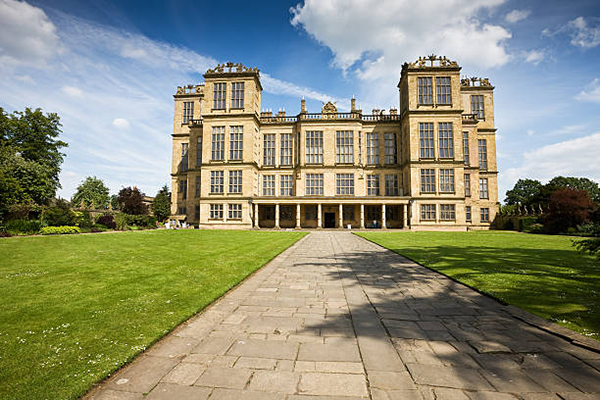
Tucked away on a bend of the Manifold river, Ilam Hall village was built in the 1820s on the instructions of Jesse Watts-Russell. The original Victorian houses of the village echo the fairy-tale image of the hall, built at a time when skilled labour was cheap. It was also a time when tenants could be moved at the whim of their landlords if, as in this case, he wanted more space or privacy. The Ilam Hall we see today, with its Tudor-style chimneys and mock Gothic architecture, is only part of the original building; the central tower and most of the formal rooms were demolished in the 1930s. The rest of the building was due to suffer the same fate when it was bought by Sir Robert McDougall, a Manchester businessman. He had the remaining parts of the hall made habitable and presented it, together with the grounds, to the National Trust, instructing that the hall be used as a youth hostel. Hall and village replaced dwellings of a much earlier vintage, whose history can be traced back to Saxon times. St Bertram, an early Christian missionary, hid himself in a cell near where the river bubbles to the surface below the hall. By his pious example, he persuaded the locals to abandon their pagan beliefs. It is possible he preached at the foot of the rough cross which now stands by his church. Carving on the cross is Viking, dating from around AD900-1000. The church was ‘improved’ by Watts-Russell and its original 17th – century lines are broken by an octagonal mausoleum. The shaft of another stone cross, known as the Battle Cross, was found in the foundations of a cottage during the rebuilding of the village. It now stands to one side of the riverside walk and is thought to commemorate a battle in AD1050 between local Saxons and invading Danes. The walk starts by following a riverside terrace where the 17th -century dramatist Congreve wrote part of his comedy ‘The Old Bachelor’, then climbs above Hinkley Wood on the opposite bank of the river. Crossing pasture, the walk then joins the abandoned turnpike road from Cheadle (Staffs) to South Yorkshire via Thorpe. The barely discernable line of the old road is followed to Coldwall Bridge where a left turn follows the river back to Ilam. The Walk : From the car park walk down steps towards the river and turn right along a terraced woodland and riverside path, passing St Bertram’s Well along the way. St Bertram lived in the little cave below which the river bubbles out from a rocky overhang. The water, part of the River Manifold, has travelled about 5 miles (8km) underground from Darfur Bridge near Wetton to emerge at this point. The trees being mostly beech are magnificent in their autumn colours. Battle Cross is a little further on along the path. Ignore the footbridge on the far side of a field as you pass, but turn left and cross the next and which starts almost next to the path you have followed. Go over the small field as far as a stile. Climb this and bear left, steeply uphill on a faint path close to the side of Hinkley Wood until the path joins a grassy track. Turn left along this and follow a boundary wall on your right. Pausing for breath, look back for the view of Ilam Hall seen through its sheltering trees. Beyond it rise Bunster Hill and Thorpe Cloud at the southern entrance to Dovedale. Cross the dip of a dry valley and aim for a broad track which curves uphill around wooded Hazelton Clump. Climb over an awkward stile and turn left along the metalled by-road. Follow it across Blore cross roads to Coldwall Farm. Turn left away from the road; go through the farmyard and into a field. Walk downhill, tracing the curving route of the abandoned turnpike road. The 16th-century farmhouse, which is set back from the road, was formerly Blore Hall. Walk down to the bridge, but do not cross and turn left keeping to the west (Blore side), of the river. At first follow a fence above the hawthorn-covered slopes until a gap gives access to the river bank. Follow the river upstream from Coldwall Bridge. Sturdy buttresses show how this long-abandoned bridge over the River Dove has outlasted its need. On reaching the road into Ilam village, climb the short flight of steps beside the bridge and turn right, past the memorial cross and into the village. Ilam village. The elaborate cross is a memorial to Mrs Watts-Russell, a constant reminder to the villagers of this not over-popular lady. Admire the attractive cottage gardens of the ‘ginger-bread’ styled cottages of Ilam Village. Turn left into the drive leading to Ilam Hall, then left again past Dovedale House and along a path to the church where a right turn reaches the hall. There is a National Trust shop and café in the grounds. [wpgmza id=”44″] Useful Information 4½ miles (7.2km). 393 feet (120 metres) of easy woodland ascent, with fieldpaths throughout. Refreshments at Ilam Hall. Nearest pubs at Thorpe and Alstonefield. Parking in the grounds of Ilam Hall near the youth hostel. 00
Taste Derbyshire – Charlies Garden

Every so often I get the urge to become a self-sufficient Earth goddess, growing gigantic marrows and making jam from fruit I have nurtured from a pip. Sadly, the only things which get to munch on my apples are worms and, once again, the rhubarb has wilted all over the path. Which is why I feel humbled, fascinated and thrilled to meet Charlie Stayt; a home-grower who utilises every nook and cranny of her pretty cottage garden as a bountiful larder which supplies food for her family and forms the basis of a thriving food business, Charlie’s Country Garden. In a whirl-wind tour of the lush, multi-level garden on a hillside in Bakewell, Charlie tells me why her shrubs, trees and plants are more than their leafy, flowering parts. The plant pots by the door contain everything Charlie could ever need for an instant salad. The clump of hot pink daisy flowers is echinacea; used as a tincture to treat family colds. The over-grown shrub is not simply there as shade for the patio – it’s a rosehip which Charlie plunders for fruit and turns into a syrup which has become a must-have for her older customers. “They remember it from their childhood and love its traditional flavour,” Charlie (40), says while showing me a green, as yet unripe, Rosehip berry. “But some of my customers say it has a beneficial effect on their joints. It’s also a good source of Vitamin C, as is my raspberry vinegar. You can use a dessert spoon of it in boiled water and gargle. It’s also great on salads.” And if Charlie’s own garden cannot come up with the goods; she’ll take a trip to her allotment – currently home to 30 fine lettuces – or embark on a foraging mission accompanied by partner Lee Woodall and children George, who is three and Robin, who has just turned one. “The Peak District is such a great location for us; we practically live outdoors,” Charlie says. “There are around four or five places along the Wye Valley which, in the Spring, are great for picking wild garlic. My customers cannot get enough of it. But we’re responsible foragers – we only take what we need and only a few leaves from each plant. Using this method, rather than taking from a few plants, can sometimes take up to two hours to collect five kilograms of wild garlic which is enough for a two-litre batch of pesto or salad dressing.” Talking to Charlie, you sense how important it is for each and every ingredient to be home-grown, foraged or donated by willing friends and neighbours (often in exchange for a jar of chutney or bottle of dressing). “We used to live in Devon but I can’t see us moving south again because people have been so friendly and supportive. For instance, I have a friend near Chesterfield who has an orchard and she lets me pick apples, pears and blackberries in return for a few lifts as she doesn’t drive,” Charlie explains. “I also have neighbours and customers who let me have their apples or rhubarb. I try to give them some of the finished products as a thank you – but they’ll usually only take one. I think they can see I’m just running a small company and people are happy to help.” Charlie is also keen to pass on support to other local businesses; “Lee and I hardly use the car as we like to support independent local shops. “I like to use local suppliers. My herbs come from Hathersage, I’ve picked berries at a nursery in Dronfield and the cold pressed rape seed is by Brock and Morton, who are based in Ashford in the Water. They don’t spray the crop and it’s got a lovely earthy, nutty flavour.” It’s clear Charlie puts her all into each and every product. Charlie’s jars and bottles are crammed with good stuff – her jam is 65 per cent fruit – and low in cheaper ingredients like vinegar and sugar. This explains why some customers arrange their holidays to the Peak District around Charlie’s appearances at local markets and food festivals. “I’d say 60 per cent of my customers are regulars – both locals and tourists. One lady plans her holidays around the wild garlic season in the spring so she can buy my pesto and dressing,” Charlie says. “The feed-back we get has been amazing.” Charlie has always had a fascination with the countryside and cooking; “My mum and gran inspired my love of cooking.” “I was the youngest of three and, when my mum went back to work part-time, I’d stay with my gran who lived in a picture-perfect Cotswold’s village called Laverton. My grandparents were farm workers and lived a traditional country life. They didn’t have a TV, telephone or car so we’d cook for hours often using berries we’d foraged on our walks.” Charlie’s gran died in 1996; “I inherited one of her cook books.” “It’s a National Trust cookery book and must be one of the first of its kind. It’s full of traditional recipes like the one for the rosehip syrup and something called ‘Imperial Pop’ which is a drink using ginger and spices made just after the war. It also shows you how to make jams, preserves and chutneys using ‘old fashioned’ fruits like quince and meddlers. I cherish this book so much, it’s full of her hand-written comments.” Charlie used her gran’s recipes as a basis for her own cookery; “I worked as a nanny for 18 years. One of the couples I worked for were big foodies and I’d help them cook for dinners and parties,” she explains. “They also had a huge orchard so I’d make things with the fruit like stewed apples, tarts, pies and sloe gin. I couldn’t bear fruit going to waste so I’d even take apples and pears to give out when I collected the children from school.” Charlie also
The Dahlias of Biddulph Grange Garden

A little way beyond the northern limits of the Potteries, just off the Congleton road, Biddulph Grange Garden is one of those places where each season has something to offer. It is this special changing of interest and variation of plants looking their best which draws us back, time after time. This year our visit coincided with the dahlias at their flamboyant best, but while admiring them we discovered a hidden secret in the history surrounding their position in this unique garden. Biddulph Grange Garden was created in 27years from 1842-1868 by James Bateman, a local businessman and his wife Maria, together with Edward Cooke, a marine artist friend. The garden was dug out of the side of a valley that flows down to the River Trent and by constructing ‘compartments’, microclimates were created to make homes for the trees and shrubs collected by famous plant explorers commissioned by Bateman. With differing areas created by the microclimates, the garden was divided into small, inter-connected zones, some warm, others damp and cool and sometimes almost shadeless. Each ‘compartment’ became home for magnificent trees, shrubs like rhododendrons, azaleas and ferns as they settled into a copy of their original environments. In this way it is possible to walk from country to country without travelling more than say, half a mile. Within the space of a few yards inter-connected rocky paths lead from Italy, to Asia, then onwards to a Scottish glen. Beyond a rocky tunnel the garden explorer will find themselves inside the tranquillity of a Chinese temple complete with tinkling bells and a bamboo shaded pond full of golden carp; a Willow Pattern bridge completes the effect of being on the other side of the world. Passing beneath the gaze of a magnificently gilded buffalo, the path climbs past a short section of the ‘Great Wall of China’, by way of a ‘stumpery’, inverted trees roots, to arrive at a half-timbered Cheshire cottage. Beyond the ‘cottage’ Egypt is described from the imagination of some Victorian sculptor who, it must be said had obviously never been to that ancient country. Round the corner from the rather strange reproductions of the sphynx and the ape god, Thoth, is the long double-sided avenue lined with Deodar Cedars, backed by Red Horse Chestnuts. Although still known by its original title of the Wellingtonia Avenue, there are no specimens of this most ancient of trees. They were removed by Robert Heath, a later owner of Biddulph Grange who possibly could not wait until the Giant Sequoias, Californian Redwoods, mature in 3,500 years. The beds where the dahlias we had come to see are grown, disappeared beneath a mountain of rubble during a less prosperous time for the garden. Throughout its life, Biddulph Grange and its garden has had several owners, many of whom could not afford, or be interested in its upkeep. Almost from the start, Bateman almost bankrupted himself with the cost of developing such an imaginative project. Other owners did not have quite the drive or interest as he had and to cap it all, the house was almost totally destroyed by fire in 1896. With the passing of time, two wars and sundry recessions, Biddulph Grange Garden became a vandalised wilderness. In 1923 the house was turned into a cottage hospital, then in the 1960s the NHS took over the hospital, but with the inevitable demands on finance the NHS could only afford to pay one gardener to care for the 15acre garden. Vandalism and neglect took its toll and it was at this time that the Dahlia Walk as it is called, was filled to the brim with rubble from building work on the hospital. What had been one of James Bateman’s pride and joys simply disappeared. When the National Trust took over the garden in April 1988, it embarked on its most ambitious restoration project: to return Biddulph to the glory of its Victorian heyday. Fortunately the garden despite its neglect was resilient and over the intervening years James and Maria’s vision came back to life. One of the major projects was to open up the Dahlia Walk, rediscovered in 1988, and this meant removing the tons of rubble and junk dumped there by builders. Beds making up the ‘Walk’ follow a gentle slope rising to the east towards the vantage point of the Shelter House. A series of neatly clipped yew hedges create small interlinking beds, each filled with what is possibly the most exotic plant to flower in British gardens. Dahlias similar to now extinct cultivars that were popular in Victorian times, together with herbaceous plants of which Mrs Bateman was especially fond make a pleasing spectacle in late summer, almost until the first frosts. Tight-headed pompoms vie with flamboyant larger flowered varieties, all in the brightest of colours bring the ‘Walk’ to life. This would surely have met with the Bateman’s approval, especially if the stroll leads up to the Shelter House, another result of the National Trust’s successful knack of restoring something for which only plans and old photographs remain. When the dahlias finish in autumn, the garden has one last explosion of colour as leaves on the deciduous trees turn to different shades of reds and yellow. 00
Restaurant Review – The Dovecote, Morley Hayes

As the year drifts slowly in to Autumn the chill in the air indicates that it’s time to put away the short sleeve shirts and shorts and consign the thoughts of dining al fresco to next Summer. The longer nights need a cosy atmosphere, pleasant surroundings, attentive service and, of course, excellent food. One Saturday evening, in search of this quartet of goodies, we made our way to Morley Hayes. The hotel and golf complex is home to three restaurants, The Dovecote, Roosters, and The Spike Bar, offering a range of dining experiences from fine dining to informal bar snacks. Our destination was the Dovecote; a restaurant that has earned a reputation as one of the finest in Derbyshire. We were greeted with a warm welcome as we stepped in to the stylish, contemporary surroundings of the Dovecote’s bar and without any fuss our pre-dinner drinks order was taken and canapés served. These were a selection of green and black olives and 2 bite sized tomato shortbreads toped with cream cheese and diced black olives. Ideal savoury accompaniments to the first drinks of the evening. We relaxed in the bar, chatted, read through the menu and with a little advice from restaurant manager Simon, made our choices. The chefs use seasonal, locally-sourced ingredients to create the mouth-watering menu, so local that the Dexter ribeye is from a farm in the neighbouring village. Just as we finished our drinks our waitress appeared and showed us to our candlelit table in the restaurant. The Dovecote’s interior has been designed in such a way that it doesn’t hide the original structure but still creates a variety of spaces and, with the creative use of lighting and fabrics, a cosy atmosphere. As we waited we nibbled on a selection of warm breads. For her starter Susan chose the duck liver parfait with cherries and whole wheat crackers. The fruity black cherry cut through the rich, silky-smooth parfait and, along with the crisp texture of the cracker, it created a perfect first course. I selected the cep mushroom velouté. The velouté was rich with mushroom flavour. It was served with pickled mushrooms and egg yoke on a lightly grilled piece of sour dough. This added a sweet note and a crisp texture in contrast to the earthy, smooth bowl of tasty mushrooms. Our mains arrived picture perfect. Susan’s was the dry aged duck breast which she’d asked to be served just a little pink. It was soft and perfectly pink. The sliced duck was served with crispy edged panhaggerty potatoes and French beans that had retained all their flavour and still had a little ‘snap’. A revelation was the elderberry sauce. It enhanced the duck with its floral taste; it was not too sweet and not too fruity. My main was the rare breed belly pork with sweetcorn, roasted shallots and char grilled baby leeks. This was served with a generous slice of Spanish morcilla sausage. The shallots and leeks complimented the melt in the mouth pork which had the ‘just right’ balance of meat to fat ratio. Susan chose a pleasant Sauvignon Blanc to go with her meal and I opted for a glass of Malbec; with its inky dark colour and robust tannins it was an ideal partner to the pork. We decided to end the evening with a dessert each. For Susan it was the Dovecote’s baba. A calvados soaked yeast cake; topped with fresh black berries and a quenelle of fruity ice cream. The treacle tart was my choice. An incredibly thin, crisp pastry case was filled with a toffee flavoured, treacle mixture that only attained its full sweetness when it warmed and hit the back of my mouth. A pudding from my childhood served with clotted cream. We thanked Simon and his staff for their faultless, professional service throughout the evening and made our way out to the well lit car park. It was a mild September evening and I wondered if perhaps Summer hadn’t quite said ‘goodbye’ to 2018. The Dovecote deserves its fine dining status. Within easy reach of Derby and Nottingham and set in the Derbyshire countryside with delightful views over the golf course, the restaurant is ideal for family celebrations or enjoying a quiet candle-lit meal for two. With set lunch and dinner menus along with an a la carte menu, you’ll be spoilt for choice. It also offers indulgent afternoon teas and champagne breakfasts for that special celebration. +10
Collecting Vintage Fountain Pens

When I was first sent to school it was de rigeur that one wrote in ink with a pen. As six and seven year olds we had cheap dip pens with a ceramic ink-well inserted into our desks, but by the time I reached prep school at ten one had to be equipped with a proper fountain pen along with a bottle of ink from which to refill it. Consequently, I was sent off on my first day in September 1955 with a blue Swan pen and an angular bottle of blue Waterman’s ink. Had I realised it, I should have kept that old pen (which I didn’t really like – I much preferred my friends’ Parker 51s), for vintage fountain pens (those made prior to 1960) are highly collectible. After centuries of writing with goose quills and later, pens with steel nibs dipped in ink, pens with internal ink reservoirs that were filled with eyedroppers called fountain pens slowly came into fashion from the mid-19th century. Yet they were notoriously fickle, routinely leaked and the flow of ink onto the writing surface was uneven. This changed in 1889 when Louis Waterman, an insurance salesman, developed a new type of ink feed that allowed air to flow into the pen as ink flowed out, reducing the number of ink blots and making the ink flow more reliably. Pens were at first of hard rubber but the discovery of Bakelite (followed by celluloid and plastic) made the mass production of such pens simple. Soon, firms like Waterman’s own, Parker, Shaeffer, Wahl-Eversharp, Conway Stewart and others (at first mostly American) began producing pens of increasing quality, and embellishing them with gold nibs, gold or gilt metal inlays and plastic bodies using increasingly diverse surface colourings and patterns. Other fountain-pen manufacturers from this era include Mabie, Todd & Company, whose top model was the Swan, like the one Mama pressed into my hand in 1955, and the Moore Pen Company, whose Maniflex pens (£70 and above today) often had gorgeous tiger-eye bodies. Aiken Lambert made pens with engraved, gilt or silver bodies; Gold Bond and John Holland made pens with equally beautiful plastic bodies; and Wahl ranged from metal to hard rubber, both of which featured Greek key patterns on their handling surfaces; its Doric pens from the 1930s are considered some of the handsomest ever made. The most elite category of vintage pens, include Dunhill-Namiki maki-e (Japanese lacquer). The urushi lacquer barrels were painstakingly decorated with layers of fine gold dust and other pigments, in a time-consuming process by a master artisan. First-rate early examples are notoriously rare, and have sold for over a quarter of a million dollars; a fine such pen was recently sold on E-bay for £138,346. Another prestige firm was German, founded in Hamburg in 1908: the Simplo Filler Pen Company whose Montblanc, with its built-in inkwell has survived the years in production. Montblanc first placed a white tip on the pens’ caps in 1910, this evolving in 1913 into a rounded star. A 1960s Monterosa version was sold at Bamfords for £195. The most collectable pens include the Waterman Ideal No. 52, a lever-filled pen that continued to be made between 1910 and 1934 with a hard rubber (or ebonite) barrel even after other manufacturers started making their barrels out of celluloid, later plastic. The nibs were both flexible and fine. Shaeffer’s were the first firm to turn to celluloid bodies, and used lever filling reservoirs from 1908. Like Conway Stewart, they also pioneered colour effects and overall shape, pioneering a move away from the strictly cylindrical, like their Balance pen. George Parker founded his company in 1888, later inventing a new type of feed called the ‘Lucky Curve’ that returned ink to the sac when the pen was stored, instead of drying in the feed and causing an ink blot when the pen was used again.1921 saw the first Parker Duofold, so named because it was claimed to be twice the pen that any other company could offer. The Duofold was originally available only in red hard rubber (the ‘Big Red’) and was also over-large – almost 51/2 inches long. The other of Parker success was the Parker 51, that was introduced in 1941 – a simple pen with clean lines, a hooded nib, not ornate, but one of the most popular of pens, being made in various degrees of ornament and quality for over thirty years. Prices used from £20 to as much as £300 – with gold trim and original case. We encountered Messrs. Wahl-Eversharp when I wrote about their Eversharp propelling pencils earlier this year. As a result, the firm didn’t begin manufacturing fountain pens until 1917. In 1931 the Doric was released, a twelve-sided pen inspired by ancient Greek architecture, later coming with their adjustable nib. They were later taken over by Parker. There are two areas of collecting, the vintage one (up to about 1960) as discussed here and modern, often limited edition, one, a chancier matter entirely. The two are very separate. In collecting, condition is, as ever, everything, especially with regard to nibs and filling mechanisms. Discolouration is a problem especially with early pens with bodies of hard rubber, bakelite and celluloid. Nibs should not have been bent and straightened. Whilst pens are rarely if ever going to be forgeries (there are reproductions, though but they are usually obvious) well concealed repairs are to be looked for – keep a loop handy. As with most things, the rarer a pen is, the more expensive it will be. Restored pens will command a higher price than pens in need of restoration. Gold nibs and furniture will be pricier than stainless steel and nickel-plated alternatives. Many excellent restored pens can be picked up for around £5-40 whilst for other good quality models you will be looking at £75 to £100 or more. A Parker Duofold Senior, for example, will usually an expenditure of over £160 when in good condition. Even
The Lost Houses of Derbyshire – Romeley Hall, Clowne

At Romeley, one gets two lost houses for the price of one. The early history of Romeley (or Romiley) in the extreme SW of the parish of Clowne, but often erroneously listed under Barlborough, is obscure to say the least, but the first we hear of a capatial mansion there is in 1455 when one on site was in the possession of Stephen atte Wode, (Wood), a member of the same Eckington family whose name later mutated into Sitwell, as of Renishaw. A descendant, William Wood sold the estate in 1604 to William Routhe of Birley and Waleswood (now Wales) both just over the county line in Yorkshire. They seem to have rebuilt the house in coursed rubble of High Hazels Coal, quarried locally, of which the main surviving doorcase is carved from a single block. Unfortunately, this house was abandoned towards the end of the nineteenth century, having been described as an ‘ancient farm house’ since the mid-18th century, in favour of a new house built contiguously, of which more anon. No illustration of the old house survives, but the L-shaped surviving portion has two storeys over a high basement, suggesting a house of some pretension, the more so for Thomas Bulmer in 1895 recorded a lost first floor long gallery of some sixty feet, a four yard (12 foot) square rannel balk and chimney and a kitchen fireplace boasting a twelve foot wide cambered bressumer, the latter still in situ (or was when Mick Stanley and I visited in 1980). The house under consideration today, however, is its successor, Romeley House, occasionally and confusingly also called Romeley Hall. This was built by Thomas Wright Bridgehouses, in Sheffield (1679-1741), who bought the estate from the heirs of Francis Routh of Brenley, Kent, whose father, Sir John, had left Yorkshire and had been financially hammered for loyalty to the King during the Civil War. This villa, built possibly as a place to which he could retire from the smoke and pollution of Georgian Sheffield, seems to have been erected immediately after his purchase in 1711. The need for a new house being that the Clayton family had a three-lives lease of the old hall and were still in occupation. In 1741 this new house passed to Wright’s nephew, Revd. Thomas Wright, who lived in the rectory at Birley, Yorkshire and did not use Romeley House, which fell into some disrepair by the 1780s. Thus in 1788 he sold house and estate to Daniel Thomas Hill. He was the well-heeled son of a London distiller, living near Aylesbury, Bucks., but had business interests locally, living at Chesterfield, where he died in 1811. Daniel Hill clearly had no desire to live at Romeley either, so he let the new house and estate for life to Dr. Thomas Gisborne (1725-1806), a member of a prominent local dynasty, a noted physician, Fellow of St. John’s Cambridge and President of the Royal College of Physicians in 1791, 1794 and 1796 to 1803. He had also been appointed Physician in Ordinary to George III on the recommendation of Erasmus Darwin, FRS, made when the latter had been approached but was keen to avoid being appointed himself.1 Although a bachelor, Gisborne decided to put the house into good repair and to improve it as a fashionable country seat for himself and to improve the setting to create a modest Elysium around it. The brick building he acquired was nothing if not architecturally quirky. It was of five closely- set bays facing south, with side elevations also of three bays, and boasted two storeys and attics. The main façade was notably arresting, rising from a prominent podium and approached by a full width set of stone steps with end and central balustrades. The ground floor was enclosed by angle pilasters rising above the plat band into plinths (or chimneys), whilst at first floor level the façade rose at a slope in a series of reverse curves separated by steps to attic level where they ended against two further full height pilasters which enclosed the central three bays and all of the attic, forming a sort of giant shaped gable. The attic itself consisted of a single sash flanked by a pair of blind lights. The windows had stone lintels and those on the ground floor moulded brick labels beneath the sills, although the sashes one sees on the only view of it, drawn by Samuel Hieronymus Grimm (1733-1794) in 1774, probably replaced stone mullion-and-transom cross windows. There is a naive sophistication about this extraordinary provincial Baroque façade, and its impression on the viewer of a giant shaped pediment is very reminiscent of a group of south Yorkshire houses, one of them, Hellaby Hall, only some ten miles away at Maltby on the east edge of Rotherham, just north of Junction 32 of the M1. This was built on the same scale, with similarly shaped gable (albeit resting upon volutes) and banding, although its façade, of smooth local stone, is not broken up by odd pilasters as is Romeley’s. Another house, Grimethorpe Hall, just NE of Barnsley, is, like Romeley, in brick with stone dressings, and again of five bays. The pediment was once shaped but got simplified in a Georgian rebuild that led to the installation of sash windows. Both houses seem to lack the odd plasters, but in fact Grimethorpe does have attenuated ones to first floor level, flanking the entrance. Both houses have lain derelict and at risk for decades, although the former has been rescued and is now a thriving hotel. Hellaby was built in 1692 by West India merchant Ralph Fretwell (a remote descendant of the Freschevilles of Staveley), whilst Grimethorpe dates to a similar period – at least between 1670 and 1713 , being the adult lifetime of its builder Robert Se(a)ton. This trio probably owe their inspiration to Robert Trollope of York an architect who revelled in the provincial Baroque and who died in 1686 having designed a very similar but
Celebrity Interview – Ian Rankin

Examine any list of the finest fictional detectives of all time and you won’t need a magnifying glass to spot Inspector John Rebus. The creation of Edinburgh writer Ian Rankin was beaten to the number one spot only by Sherlock Holmes in a poll of W H Smith readers and his popularity is about to increase even more in the next couple of months. The curmudgeonly crime-solver is taking to the stage for the first time in Rebus: Lost Shadows which will visit Nottingham, one of only eight venues on a two-month tour. Meanwhile Ian is promoting his 22nd novel featuring the detective who specialises in flouting authority and doesn’t play by the rules. In A House Of Lies is in the shops this month. With book-signing tours in the UK, Canada and the US, Ian wasn’t able to watch rehearsals for Long Shadows and didn’t get to see the show until it actually opened at Birmingham REP. I chatted with him while he was at home in Edinburgh about whether he found it a problem writing for the stage, why he’s never watched a complete episode of Rebus on television and whether the character who’s now a retired policeman has any life left in him. Ian wrote his first play, Dark Road, with Mark Thomson, artistic director of Edinburgh’s Royal Lyceum Theatre, in 2013. Recently producer Daniel Schumann approached Ian, said he loved the character of Rebus and wanted to put him on the stage. The idea appealed to Ian. “We decided quite early on that we weren’t interested in taking an existing novel or story and trying to adapt it. We wanted to tell a new story that could really only be told as a stage drama. “He put me in touch with (playwright) Rona Munro, we met and it turned out that she’s a fan of the Rebus novels. Between us we came up with a story that we thought would work really well on stage and then we just started writing. “I think if you asked Rona she would say it was hard work. It wasn’t for me – it was really good fun.” Ian didn’t have a huge say in who would play Rebus on stage. The man chosen is Charlie Lawson, known to millions as Jim McDonald in Coronation Street. I met Charlie at Birmingham REP and he told me Rebus: Long Shadows is the most difficult thing he’s done in the 38 years he’s been an actor. “It’s enormous: it’s 109 pages and 108 of them are me. The challenge is the length and the size of the piece. Parts like this come along once in a blue moon. Sometimes it’s really good to challenge yourself.” The cast also includes John Stahl who plays Rebus’ nemesis, the notorious crime boss “Big Ger” Cafferty, and Golden Globe and BAFTA nominated Cathy Tyson who takes the role of Detective Inspector Siobhan Clarke. “These are great actors,” says Ian who is excited about seeing the play. “You put great actors and a great script together and you should get some electricity on stage.” It will be fascinating to see Charlie Lawson as Rebus. Some people will no doubt compare him to both John Hannah and Ken Stott who played the detective in four TV series broadcast between 2000 and 2007. But Ian didn’t watch either actor. “You can’t help but see clips and trailers but I’ve never actually sat through a whole episode. I didn’t want actors’ voices and mannerisms to get in the way of the character as I saw it in my head. “I’m less fussy about that now. I think Rebus is ingrained. I don’t think watching it on a stage for a couple of hours is going to change how I write about the characters in the way that watching it over the course of a TV series would. “I remember writers like Colin Dexter who did Inspector Morse saying he changed his Morse to be more like John Thaw because he was so taken by the portrayal on TV. “I didn’t want that to happen; I didn’t want Rebus to start to resemble an actor and not be his own person because for me he was a complete package.” Ian James Rankin OBE was born on 28 April 1960 at Cardenden, Fife. He graduated from the University of Edinburgh in 1982 and then spent three years writing novels when he was supposed to be working towards a PhD in Scottish Literature. He had a number of jobs including working as a grape-picker, a swineherd, a journalist for a hi-fi magazine and a taxman. The first novel he had published was The Flood in 1986 and the following year Rebus came to the public’s attention in Knotts & Crosses. Rebus wasn’t supposed to become a series of books; he died at the end of the first draft of Knotts & Crosses. Thankfully during the editing process Ian gave him a reprieve. Anyone who has ever read one of the Rebus novels which have been translated into 22 languages will no doubt express their gratitude. Ian has also penned standalone novels as well as books under the pseudonym Jack Harvey. His latest book, In A House Of Lies, features a cold case of a missing private investigator’s body being found locked in a car hidden deep in the woods. It seems every officer on the case has something to hide. Rebus knows where the trail may lead – and it could be the end of him. “Rebus has got older, he can’t use his physical heft to intimidate suspects, he can’t get into fights because these days he would lose. As he gets older, his health isn’t what it was. He now realises he’s not immortal. He’s looking to see if he can still make sense of the world as it keeps changing and what role he can play in that changing world,” says Ian. “I’ve really enjoyed the fact that in
Kim’s Derbyshire rocked the Aussies

ACTION was needed when Derbyshire failed to win a Championship match in 2016 so the board turned to a man who had been there and done it. During his career with the county from 1979-98 as an aggressive right-hand batsman who played in four Test matches, three of them in the heat of an Ashes series, Kim Barnett scored more runs (23,854) and made more hundreds (53) than anyone in the club’s history. He became their youngest-ever captain – 22 years 315 days – in 1983 and led the team in more matches than anyone before or since until he stood down in 1995. He was a member of the 1981 NatWest Trophy-winning side and skippered the side to the Benson & Hedges Cup final in 1988, going on to win it in 1993 as well as the Sunday League in 1990. His team reached third place in the 1991 Championship and he was in the side which finished runners-up in 1996 – their highest position since winning the title in 1936. His aggregate in limited-overs matches is another county record and he enjoyed further glory in Lord’s finals with Gloucestershire. With Barnett as Derbyshire’s director of cricket (later cricket advisor) the coaching set-up was streamlined. Genuine pace was introduced into the attack. His sudden resignation from this position on 2 July came as a shock to the county’s followers, although he always said he saw his role as having a limited period. As captain, his cricket was played in an era dominated by fast bowling and he lost no time in pursuing his dream of a Caribbean-style attack. It was a policy which touched the heights during an epic game against the Australians at the County Ground in 1989. But how did a cricketer who joined the county “as a young leg-spinner who could bat a bit” progress into a player who would be in anybody’s all-time Derbyshire side and has been such an influential figure in the club? Kim John Barnett was born at Stoke-on-Trent on 17 July 1960 and attended Leek High School. He excelled at youth level and made an impressive start for Derbyshire. Playing under Eddie Barlow with Boland in South Africa was a massive influence and, with the backing of Charlie Elliott, Guy Willatt and cricket-manager-in-all-but name Phil Russell, he adopted a dynamic and aggressive approach to his captaincy. Towards the end of the 1983 season he began to go in first, regularly in the Championship, rapidly becoming one of the most adventurous and entertaining opening batsmen on the circuit. With effortless and crisp timing and a glittering array of forceful and attacking strokes either side of the wicket, he could shred an attack. Perhaps a little impetuous outside the off-stump, where he played the percentages with hundreds of runs coming from square cuts or superb cover drives to compensate for the occasional edge, he was still capable of digging in when the occasion demanded. For example, at Folkestone in 1985, he occupied 50 overs in making 14 to defy Kent’s spin bowlers and help save the game. The West Indies had raised the art of using four genuinely fast bowlers as a unit to a new level. Barnett and Russell looked on enviously but it is one thing to employ such an attack over a five-match Tests series. It is quite another to attempt it on English pitches through the varied conditions of a Championship season. The answer was a rotation-policy which was ahead of its time. Barnett said: “With covering producing hard pitches bowlers were finding it more difficult to take wickets and unless you found a pitch which was seam-friendly you needed genuine pace to make a difference. Covering the ends made it tougher for the bowlers, who had to run in hard and were landing in their delivery stride on what must have felt like concrete. It all added to the stress and the risk of injury.” A policy evolved which was based on quality allied to numerical strength. In 1989, with Ian Bishop’s arrival to share the overseas place with Michael Holding, the permutations appeared endless. Nine bowlers – Ole Mortensen, Devon Malcolm, Allan Warner, Martin Jean-Jaques, Simon Base, Frankie Griffith, Paul Newman and either Bishop or Holding as the overseas choice launched fusillades of pace, either fast or fast-medium, at the County Ground. By now Barnett was attracting the attention of the Test selectors. In 1988 he made a dazzling 175 against Gloucestershire at Derby which included a century before lunch off an attack which included the Australian fast-medium bowler Terry Alderman, who had taken 42 wickets in the 1981 six-Test series. He followed this with an unbeaten 239 at Leicester and he was selected for the fifth Test against the West Indies at The Oval only for a hand injury to compel his withdrawal. His chance came in the Lord’s Test against Sri Lanka when he made 66 and 0 and he followed this with 84 in the Texaco Trophy limited-over game at The Oval. His selection for the subsequently cancelled tour of India (the Indian government would not grant visas to eight players, including Barnett, because of links with South Africa) followed as a matter of course. And then, in 1989, the Australians, led by Allan Border, arrived. England, with Ted Dexter as chairman of selectors, Micky Stewart as team manager and David Gower appointed captain, held the Ashes and were favourites to retain them. In their final match before the first Test at Headingley, the Australians met Derbyshire at the County Ground on Saturday, Sunday and Monday June 3, 4 and 5. Barnett recalls it as probably the best match in which he played: “Castlemaine, an Australian brewing company, had offered a share of £25,000 for victories in county matches and while the prize money was a factor we needed no financial incentives to turn out our best side against the Australians. They had lost by three wickets against Worcestershire on a well-grassed wicket
Product Test – Elemis

Put the Spring Back In Your Skin with Pro-Collagen Pro-Collagen Marine Cream £85 50ml Imagine the bloom of youth regained. Imagine an anti-ageing cream so advanced and so natural, it mimics the skin’s own function, transforming your complexion in just two weeks. Introducing revolutionary Pro-Collagen Marine Cream from leading British Spa Brand ELEMIS, clinically proven to increase hydration by up to 177% in 1 hour and by 248% in 12 hours*. With 1 now sold every 9 seconds globally Pro-Collagen Marine Cream challenges traditional anti-ageing skincare by combining ground-breaking natural marine ingredients, with the very latest in scientific research, producing a dynamic anti-ageing cream which dramatically increases skin elasticity, suppleness, firmness and hydration levels. On application, this high-tech cream penetrates the skin’s layers at a deeper level, moisturising the cells and increasing hydration by 177%*. The cream also works on smoothing the skin’s surface, providing an accelerated lifting effect through increased collagen support. After 14 days the skin takes on a smoother, plumper more youthful appearance. Pro-Collagen Quartz Lift Serum £110 30ml The jewel of the Pro-Collagen Collection, Quartz Lift Serum contains the purest concentration of the marine extract Padina Pavonica empowered with precious minerals, to help support cell structure and strengthen the epidermis. A powerful light serum that imparts an immediate lifting and firming effect on the skin. Utilising Padina Pavonica, precious minerals Quartz and Rhodochrosite and Argan Tree Oil, this breakthrough serum helps to promote cellular activity, stimulate cell renewal and support cell structure. Pro-Collagen Eye Renewal £67.50 15ml An intensive eye cream containing a unique synergy of potent seaweeds and volcanic algaes that cleverly mimic the skin’s function for a visible restructuring effect on the eye area. This revolutionary cream-gel texture is lightweight and glides on easily to dramatically smooth fine lines without overloading the delicate eye area or causing puffiness. Tried & Tested Pro-Collagen quartz lift serum. I didn’t notice an immediate difference, however after 3 weeks the tone of my skin feels firmer and the fine lines at the corners of my eyes are softening. Applying moisturiser on top is easy, and my skin felt healthy. VP Pro-Collagen Marine cream. Firstly, this lovely product smelled just fresh and clean, no overpowering herbs or florals. Although it hydrated my skin really well it did so without greasiness or feeling sticky. It seemed to boost my complexion. Great product. JP Eye cream. Going into the autumn the skin around my eyes always feels dry and flaky. I found this soothing and it slowly helped to restore my skin to normal. CB 00
Tried & Tested – Green People

Rejuvenating Eye Cream £14.00 10ml A nurturing certified organic night-time eye treatment rich in essential fatty acids, vitamins, minerals and antioxidants from Evening Primrose, Seaweed, Perilla and Avocado. Squalane and Aloe Vera provide an instant moisture infusion whilst Baicalin, Green Algae and Tara bush work in synergy for powerful anti-ageing results. Hydrating Firming Serum £19.50 50ml This is a dual-purpose certified organic formulation that effectively more than doubles the production of collagen whilst helping to reduce wrinkles by 7%. Used over time and as part of a daily skin care regime, this nutrient concentrate will improve the skins elasticity and offer increased long-term firming and toning. Use with Anti-Ageing Facial Oil to lock-in moisture – the perfect combination for soft, toned skin and the perfect primer for Green People’s organic mineral make-up. Certified Organic. Age Defy+ 24 Hour Brightening £36.00 30ml The Bright Solution to Hyperpigmentation Age Defy+ 24 Hour Brightening is an active-packed, high-potency natural moisturiser with a difference. Not content with offering superior skin nourishment and a mild exfoliating action, this revolutionary organic product also actively reduces skin pigmentation and age spots when used daily. It also offers impressive skin benefits which include boosting cellular metabolism, hydrating and smoothing the texture of the skin and reducing fine lines and wrinkles. • Cucumber Seed, White Mulberry Bark and Hibiscus Flower extracts have a synergistic action to reduce melanin production and lighten and even skin tone • Pineapple enzyme gently eases excess pigmented cells from the skins surface to further lighten skin tone • Beech Bud Extract stimulates cell metabolism to increase cell turnover, refining the skin tone Enriched with 33 beauty-enhancing actives to brighten and lighten for a youthful you. 100% certified product made with 87.8% organic ingredients For more information and to buy online visit www.greenpeople.co.uk. Product Test FIRMING SERUM This melts into your skin easily and has a lovely natural scent. I could feel a slight tightening sensation after application. My skin definitely looks healthier with a glow. VP REJUVENATING EYE CREAM Firstly, I was impressed with the 87% organic ingredients, secondly with the effect of the cream. Not only does it seem to have diminished the dark circles, but it hydrates without being too oily or greasy. CB AGE DEFY This has definitely improved the tone of my skin and made it look less tired, it also feels more healthy. The White Mulberry, Hibiscus, Beech Bud, Cucumber and Pineapple gives this a delicate scent, and I was happy to be using such a natural product. JP 00