Taste Derbyshire – Stella’s Kitchen Eyam

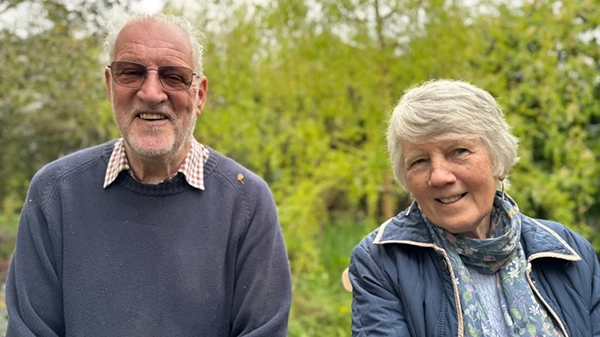
It is 11.30am on a blissfully sunny day in North Derbyshire and a pair of holiday-makers have pitched up at a farmhouse restaurant for a late breakfast. A few bites into a ‘fluffy as a cloud omelette made-for-two’, one of them gasps. “Hot, hot, hot,” he manages to splutter. Stella Kisob Knowles, cook and flamboyant front-of-house at Stella’s Kitchen, runs to his aid. “I told you it wasn’t tomato ketchup; can I get you some water?” A few moments later, when the unexpected encounter with Stella’s famous chilli sauce (made with Scotch bonnets) has been forgotten – the couple make plans to come back to Stella’s for an evening meal. It’s that sort of a place, once Stella’s food has been tasted; people always want more. The fact there is lip-scorching chilli sauce on the table (and a milder and sweet alternative) at all tells you this cuisine is unlike anything you’d expect to find at a Derbyshire farmhouse which lies on a quiet road between the village of Eyam and the hamlet of Foolow. You can get tea and scones but the tea is African; often from Cameroon, the country of her birth. While the scones might be fresh out of Mary Berry’s cookbook, they have been given an exotic tweak to turn it into a ‘Stella creation’. “The recipe called for sultanas but I substituted them with crystallised ginger,” Stella says quietly as though embarrassed to admit she’s customised a scone recipe laid down by the queen of puddings. “My ginger scones are very popular. People love the idea of taking an English delicacy and giving it a little West African flavour.” Even a toned-down version attracted local praise; “I entered my scones in the Eyam village show last summer. I just dropped them off at the hall and didn’t think about them again until a lady appeared at the door to drop off a red rosette,” she says. “I thought it was for my son Adey’s sunflower. When she gave me a first prize, I was shocked and thrilled.” These two words just about sum up the reaction of tourists who – on asking in the tourist hotspot of Eyam about good local eateries – are told about the fantastic Afro-Caribbean place nearby. Fortunately, Stella is more than happy to explain how a woman, raised in Africa, ended up running a business from a remote farm in Derbyshire. But first things first. “You must eat,” Stella pronounces as though I am a waif likely to be blown away by the light summer breeze. “Have some hot banana and apricot cake, my recipe. I serve it hot, never cold. It’s gluten-free with almond flour which makes it very light. I’ll give you a good slice. In Africa we have a saying ‘food is never small’. This saying clearly applies to portions but could equally sum up Stella’s childhood during which food was always at the centre of family life. “I grew up in English-speaking North-Western Cameroon. It was just after we had gained independence from colonial rule by Britain. My father, who was a senior divisional officer in the government, took over from an English colleague who also passed on his chef, Mr Philip.” Stella admits she had a privileged up-bringing enjoying dishes cooked by a talented local chef; also schooled in European cooking methods. “Mr Philip was an amazing cook who picked up a lot of ideas from his employer’s British wife. I was the fourth child of seven and we had English delicacies like pancakes for afternoon tea. We’d go to church and when the church bell rang at the end of the service, Mr Philip would put a batch of scones in the oven, we all loved them,” Stella recalls. “From the age of three, I was fascinated by food. I would follow Mr Philip around the kitchen. He called me the ‘kitchen dog’ as I was under his feet all day long.” Stella spent a lot of time making play food; “My mother brought me a fancy doll back from one of her trips but I didn’t want it – I preferred playing in the mud making pies and cakes in old milk cans,” she laughs. “Someone bought me a toy kitchen set and it was my pride and joy. I learned a lot of African cooking from my mother. She loved to prepare certain dishes for my father but – even when Mr Philip was cooking – she’d be in the kitchen laughing and chatting about food and what we were going to eat. If someone is born – you eat, if someone gets married – you eat, when someone dies – you eat. Getting together to share food is central to African life.” Stella was so passionate about cooking, everyone assumed she’d make it her career. “I had sisters but I was always ‘the cook’ of the family. If people had parties or weddings, they used to ask me to do the catering. I even started a couple of restaurants in Cameroon but I didn’t have enough money to make them a success,” she explains. “But my late father always said ‘one day Stella, you’ll make your fortune from cooking’ and I may just prove him right.” In 1996, Stella went to Rundu Namibia to do volunteer work for the United Nations; “Our brief was to talk to woman about gender and reproductive health,” Stella recalls. “But you only get so far giving formal talks about contraception. I looked into ways we could generate some income for the women – like starting up a bakery – and we’d chat more informally while we worked. I loved my time there as I was mixing with people from all nationalities like Australians, Americans and the Portuguese, and learning about what people love to eat. Eventually, a friend and I founded a little restaurant called ‘Afrika House.” Stella, who is now 55, was encouraged by her British UN colleagues to move to England to
Restaurant Review – An Evening of Tapas at The Denby Lodge

I’ve never been to mainland Spain although I once took a winter break on Lanzorote, the northernmost part of the Canary Islands. That was over 47 years ago. We flew from a misty, sub-zero Manchester on New Year’s Day, before it was a Bank Holiday in England, on a Freddie Laker Airways flight; landing at Arrecife in a balmy 21˚ of brilliant sunshine. In those days there was just a handful of hotels on the island and one tarmacked road. One of my memories is of the tapas bar at the Mirador del Rio at the north of the island and the incredible vista across the tiny strait of El Rio (so narrow it’s just called the river) to the islands of the Chinijo Archipelago. I remember the stunning view but I don’t remember the tapas. So when an opportunity arose to sample tapas again, closer to home, myself and Susan jumped at the chance. The venue was the recently refurbished Denby Lodge, Denby Village, Derbyshire. Famous for their steaks they have added tapas to the main menu. Traditionally, a tapa is a small snack served as you stand at a crowded bar but at the Denby Lodge it’s been elevated to a dining experience. Although we visited the pub on a busy Friday evening there was no problem parking in the large and well lit car park. The double doors of The Denby Lodge lead in to a large and relaxing lounge bar. It was busy but not crowded. The layout of the bar guides your eye to the entrance of the spacious restaurant area. We made our way over to it, introduced ourselves and were shown to a quiet table. The seating in the restaurant is flexible; we had a table for 2 and around us were tables for 4, a party of 6 and a birthday party of 12. The pub has recently launched a brand new menu with a wide range of new dishes including, for the first time, a tapas selection; with 15 dishes to choose from. We decided to follow the suggestion on the menu and order 3 dishes each but asked them to stagger their arrival so that we could use the first 2 as our starter. Susan chose the mussels with chilli and chorizo and I ordered the seafood stew. The stew was pieces of fresh cod and salmon, shellfish and prawns in a white wine, cream and garlic sauce. The fish was cooked perfectly and the light sauce didn’t over power the delicate flavours. The mussels with chorizo was again a perfect balance of spices and succulent shellfish. There was just a hint of chilli in the tomato and chorizo sauce. The main event was 4 dishes that we could share: Portuguese baked egg, cauliflower bites with sweet chilli jam, calamari rings and halloumi fries. It’s a colourful spectacle to see your table laden with all 4 dishes and with so many inviting aromas it makes you want to tuck in. We both sampled the halloumi fries first. The fried cheese takes on a crisp coat but has a soft, melting centre. We very quickly cleared the plate. The cauliflower bites were fresh, deep fried florets coated in a crispy batter. If you love fritters you’ll love this tender, white vegetable dipped in the sweet chilli jam. The crunchy coated calamari rings were tender and served on a bed of salad. The Portuguese baked egg dish is a lightly cooked egg sitting in the middle of a bed of spiced tomato and red onion topped by sliced chorizo and served in a hot, metal skillet. Susan sipped a glass of chilled, white wine and I drank a cold lager as we shared our meal and chatted the evening away. The restaurant has a lively but relaxed atmosphere and the ever attentive staff, who persuaded us to finish with a shared dark and squidgy chocolate torte, leave you wanting for nothing. Our thanks go to Sally, Ben and their staff for creating an evening where we could feel comfortable; take our time and chat while enjoying a very relaxed meal with a difference. 00
Restaurant Review – Lunch at The Dragon, Willington

Situated near Bridge number 23 next to the 93 mile long Trent and Mersey canal sits Willington’s original public house, the 150 year old Dragon Inn, serving fine food and quality ales. If that isn’t enough information to get you down there I don’t know what it is that floats your boat! With a population in 1828 of around 400, Willington has grown to become an extremely popular village, partly due to its situation only six miles south of Derby. Our journey by car from the office in Alfreton to The Dragon, down the A38 took us under 30 minutes or five hours by canal boat! With a car park to the rear and also a public car park next-door, parking is easy and convenient. The Dragon boasts the same standard that we have come to expect from Bespoke Inns, who also have The Boot at Repton, and Harpurs in Melbourne in their repertoire. Originally purchased in 2011, the past 7 years have seen extensive developments including the purchase of the cottages adjoining The Dragon which now incorporate boutique bedrooms, conservatory and function rooms and a formal dining room all decorated and furnished with flourish and style in keeping with this 17th building. It still retains a traditional pub feel, and from the bar you can choose from a growing selection of quality, locally brewed beers from the famous Boot Brewery. I was privileged a few months ago to test the new ‘rhubarb’ ale while still in its early stage but now in full production. Worth a try I feel. The latest addition to The Dragon is a beautiful out door area encased in glass giving you the option of dining ‘inside -outdoors’ or in the garden, which is ‘outside-outdoors’. With so much to see on this busy part of the canal you can watch as the prettily decorated boats carefully pass each other, some with skill and care and others who are decidedly novices, but hugely entertaining. Sheltered from the breeze and weather, dining here still has a classic ‘alfresco’ feel with none of the inconvenience. It was here in the new 360 degree glass garden room, only a few feet away from the Trent and Mersey canal that we settled for our lunch on a partly sunny, partly breezy, cloudy day, but that didn’t matter. The lunch menu is set to cater for all and we watched as platters of sandwiches loaded with filling, and chunky burgers passed us. We however chose the salmon from the specials board and the pasta Amatriciana from the lunch menu. My wife’s salmon was golden at the edges and beautifully cooked, served with purple sprouting and crushed new potatoes with buttered spinach, a dash of Grenoble sauce, and an addition of finely diced relish, she said it was the perfect lunchtime dish. The penne pasta chosen by myself was also delicious, scattered with pinenuts and sunblush tomatoes and a basil sauce, it also had a generous piece of grilled chicken. Feeling in a relaxed mood, we indulged in a pudding, choosing an all time favourite; summer pudding with Prosecco soaked berries, a hint of tarragon and vanilla crème fraiche, such a clean, fresh taste to finish with. The large new kitchen, spec’d up with all the latest fittings certainly produces great food and is well abreast of providing meals for 400 guests on a Sunday lunch as well as hearty breakfasts served from 8am to 11.30 weekdays and until 11am Sundays. The main menu starts from 12 noon until 9pm every day. Every sunny day a very professional looking barbeque area comes into play which is extremely popular. Offering an eclectic mix, The Dragon has quiet areas for dinning or, if you are looking to enjoy a family celebration, you can hire one of their larger rooms. The new glass garden room is also available to hire, and I can imagine what a perfect venue it would be as the sun goes down, with the boats as a backdrop We were quite disappointed when it was time to leave, I was enjoying the ambience, the food and the Clod Hopper bitter. Given a little longer I’m sure we would have seen Tim and Prunella go by along with David and Victoria, or is that fanciful thinking, such was the atmosphere. 00
Historic Steam Railway Posters

When I was just five Maude, my nanny, was charged to take me off on holiday to Plymouth. I have no idea to this day why my parents could not go with me, but we were to stay with a relative of Maude’s for a few days. Clearly my parents were staying behind for some special reason, for no expense was spared: we were to travel on the Devon Belle, a short-lived Pullman express as it turned out. As a consequence, I was beside myself with excitement! At Waterloo, I was allowed to go down to the head of the train to admire the big blue Merchant Navy class engine (so coloured as an abortive experiment by the newly fledged British Railways) and say hello to the driver and his fireman; we were also given a small paper-covered illustrated booklet which I still have. I recall the journey vividly, but apart from being on Plymouth Ho, I cannot remember the holiday at all. It was not so long afterwards that I saw a very famous poster used by Southern Railway before the war, of a child in almost the same posture as I had been at Waterloo (albeit down at track level), looking up at the crew of ex-LSWR N-15 King Arthur class No. 755 The Red Knight, preparing to head the Atlantic Coast Express. It was memorably captioned in supposedly child’s handwriting, ‘I am taking an early holiday ’cos I know summer comes soonest in the south’. A 1925 black and white version (showing the engine number), was taken from a photograph by Charles E. Brown of 1924 which has ‘South for Sunshine’ below the illustration, and a modified version of the child’s declaration ending ‘….because it’s safer and quicker by rail.’ Today that poster in a sale would be estimated at over £1,500, and the earlier version at around £800. Which tells you that collecting original British steam railway posters is a rich man’s hobby. Yet they combine two elements for the collector: railway history and astonishingly fine work by distinguished artists. The railway companies which existed in some profusion prior to their grouping into four in 1923, all issued promotional posters of varying types. Some Edwardian ones are only worth £350-450 simply because they’re not especially artistic, yet these early ones are still collected and some can be amongst the least expensive. Yet the most memorable is the 1908 Great Northern Railway image by John Hassall of the ‘Jolly Fisherman’ accompanied by the ‘Skegness is so Bracing’ slogan; an originally will set you back over £2000 in good condition. From Grouping in 1923 to Nationalisation in 1948 the four companies – Southern, Great Western, London North Eastern and London, Midland and Scottish – really took poster design to new levels, employing a number of very famous artists, including Norman Wilkinson. I mention him, because his first work was in 1905 for the LNWR, but it was his work for the LMS that is most striking. Indeed, his view of the launch of TSS Duke of York brings to mind his wonderful frescoes in the entrance hall of Derby’s Railway School of Transport at Wilmorton, not to mention his work in several famous cruise liners. Other well-known views include the GWR’s Cornish Riviera posters, Stanhope Forbes’s LMS ‘Permanent Way – Re-laying’ and my favourite, Fred Taylor’s LNER Cambridge showing James Gibb’s King’s College with the Chapel behind. These tend to sell for £1,000-1,250 or above, depending on the artist and indeed the status of the subject. Some can comfortably reach £4,000 in good condition. The years of Nationalisation were dog days indeed for those of us who were obliged to use the railways regularly, the 1950s and 1960s especially – filthy carriages, abominable time-keeping, out-of-date stock, surly station staff, closures of services and constant strikes – only those over sixty or so will remember them now and smile wryly, whilst those of tender years continue to insist that all the ills of our now much more heavily used railways can be cured by a re-nationalisation, to being run by civil servants and political stooges. Yet in poster-making, dear old BR excelled, notably by employing artists like Frank Sherwin, Leslie Carr, Reg Lander, Claude Buckle and above all Terence Cuneo (1907-1996). Needless to say it is the latter’s posters which invariably make the best prices, and his genius of draughtsmanship, mastery of composition and facility with oils (not to mention his trade-mark mouse, invariably hidden somewhere in the composition) mark him out as exceptional. At the time I loved his early 1960s view of Clapham Junction, taken in an era when I was going back to school via the Atlantic Coast Express and loving every second of it. His view of Brunel’s Royal Albert Bridge at Saltash (painted for BR (W) to mark its centenary) is also most memorable, and £2,000 is around the minimum you might expect to pay for one of his, although we at Bamfords usually estimate slightly worn ones at £500 to £800 (expecting and usually getting better), although his ‘Tracklaying by Night’ poster was recently estimated by Bonhams at £1500-2000 in excellent condition, although the original painting for a poster of the Golden Arrow express, c. 1962 also with them, failed to sell against an estimate of £40,000 to £60,000. Nevertheless, for the original oils, therefore, add noughts! Yet the inter-war years were a golden age for the railways, for people didn’t go abroad for holidays, they travelled to places in England; they’d go on golfing holidays or shooting to Scotland, eat dinner and sleep on the train, and then get woken up with a cup of tea and kippers in the morning. Accordingly it was a golden age, too, for railway poster art. Another notable example was the colourful and then slightly risqué scene of mainly female bathers advertising the charms of Southport, painted for the LMS in 1937 by the Italian artist Fortunino Matania. Recently one sold for over £10,000. Yet
Lost Houses of Derbyshire – Devonshire House, Derby

A great friend who is the senior caseworker for the Georgian Group, was asked by the City Council to comment on an application to convert the upper floors of 35, Cornmarket into flats. Our own Conservation Area Advisory committee, which until recently I chaired, had already questioned the applicant’s desire to remove the surviving staircase of a building which is the surviving portion of one of Derby’s greatest lost houses, Devonshire House, 34-36 Corn Market. This was where 18th century Dukes of Devonshire would reside when in Derby to preside over the three annual Race Balls and various civic business – bearing in mind that the Dukes were hereditary patrons of the Borough until 1974. In his report, in The Georgian, the house was described as ‘said to have been’ the town house of the Dukes of Devonshire. However, there is no doubt about the identification, for although little seems to have come to light at Chatsworth in the archive, other pieces of evidence confirm the identification of a building that was outwardly intact until 1969, when much of it was heedlessly destroyed in favour of an ugly brutalist Littlewood’s store (now Primark). The origin of the house goes back to the time following the death of Bess of Hardwick, whose last (fourth) husband, George, Talbot, Earl of Shrewsbury, was the builder of a grand house on the north side of the Market Place, which passed to his elder stepson Charles Cavendish, whose son William later rose to become 1st Duke of Newcastle. This house, Newcastle House was demolished to build Derby’s Assembly Rooms and its tale was recounted in Images for July 2014. The Dukes of Devonshire descend from Charles Cavendish’s younger brother, William, Lord Cavendish of Hardwick and later 1st Earl of Devonshire. A catalogue in Derby Museum asserts that the family town house was built in Corn Market in 1750 and although the catalogue was compiled in the late 19th century, the information was drawn from ‘jottings’ of John Ward FSA which include material dating back to the early 19th century. Tantalisingly, John Speed’s famous map of Derby, in showing the houses on the east side of Corn Market – then a bustling area funnelled out southwards towards St. Peter’s Bridge where grains were bought and sold from raised basins, set up on posts, called stoops – adds a number 25 just behind the position where we know the 1755 house stood. If you look up No. 25 in the key at the bottom, it says ‘Town House’. Could it be that Lord Cavendish even then had an important residence there? The house built in 1755 was in fact a re-fronting job, as early plans reveal three burgage plots on the site and later plans reveal a thoroughly irregular plan suggesting that the work was largely a re-fronting of more than one existing building. The resulting brick façade was very impressive, however, and very Palladian. There were three floors plus attics, and the building was nine bays wide. The ground floor was originally rusticated: that is faced in stone with prominent grooving between the blocks, a typically Palladian conceit, and traces of this appeared during demolition in 1969, as the later shop-fronts were being ripped away. The central three bays broke forward slightly under a pediment itself flanked by a stone coped parapet with recessed panels over the bays and originally without doubt embellished with urns. The bracket cornice below was deeply moulded and the windows on the first and second floors had bracketed entablatures over whereas on the central three bays, the middle windows had segmental pediments those flanking triangular ones. The attic windows were embellished with stone rusticated lintels, wavy along the bottom edge. Originally, the maps and plans inform us that there was a central carriage arch leading to a rather constricted courtyard behind, flanked by two non-matching rear extensions. No record seems to exist of the interior of the house, although there is a passing mention of fine plasterwork, earlier panelling and a fine oak staircase. At Chatsworth a bill survives dated 1777 from William Whitehurst, brother and works manager to John Whitehurst FRS, for a timepiece and case, which an attached voucher identifies as one installed in the kitchens at the Derby house. Probably it was a typical round dial oak cased long case clock, which are very rare as non-striking/chiming timepieces. A very similar one still stands in the almoner’s office at Chatsworth. There were also extensive gardens to the east, stretching to the Morledge and the Markeaton Brook as it swung NE through what is now Osnabruck Square. A stable block and carriage house were attached to close the rear courtyard off. The builder of this impressive occasional residence was William Cavendish, 3rd Duke of Devonshire who died in 1755. The identity of his architect for the house remains a mystery, for although James Paine was working at Chatsworth for the 4th Duke (from 1756), the façade in The Corn Market shows few of his usual conceits and if the 1750 date is correct, it is too early. William Kent had been employed by the same Duke to completely rebuild the fire-wrecked Devonshire House in Piccadilly, but apart from being severe and equally Palladian, there the resemblance ends. Personally, I suspect the house was built and the façade designed by the young James Denstone (five years later the architect of Markeaton Hall) perhaps working under his former master, Solomon Browne, but until some hitherto un-discovered payment vouchers appear in the Chatsworth archive, speculation will prevail. The curly lower edge of the attic story lintels, however, reappear on Leaper & Newton’s Bank (not the Thomas Leaper bar) in Iron Gate and once on the fenestration of the Babington Arms, Babington Lane, demolished in the 1920s. By about 1814, the area in front of the house had become too noisome and insalubrious for the 6th (Bachelor) Duke and, pulling rank as Lord Lieutenant of the County, he thenceforth requisitioned the 1811
Celebrity Interview – Isy Suttie

There must be scores of people in the entertainment business who’ve left Derbyshire for a career-boosting move in London. But there can hardly be anyone who’s a better ambassador for Derbyshire and Matlock in particular than the stand-up comedian, musician and actress Isy Suttie – and she wasn’t even born in the county. Two series of her BBC Radio 4 award-winning programme Isy Suttie’s Love Letters were set in Matlock; some of her Edinburgh Fringe shows were also based in the former spa resort; and her first book was about Matlock. “I love it so much and I also love the Peak District,” she enthuses. “I just feel really lucky to have moved to a place with such character and such beauty where lots went on. I can never get away from Matlock – not that I want to.” Isy chooses her words carefully, thinks before she answers each question and has little trace of an accent. She sounds completely different from her Radio 4 show in which you can’t fail to notice her Derbyshire lilt as she performs sketches with a rapid-fire delivery. She was back in Derbyshire recently but this time in the south of the county after being cast in the feature film Pin Cushion. It was written and directed by Deborah Haywood who grew up in Swadlincote. Much of it was shot in and around the former mining town. It stars Joanna Scanlan who was in the television comedy series The Thick Of It for seven years and Lily Newmark who has been nominated in the most promising newcomer category at the British Independent Film Awards for her role in the film. Pin Cushion is the story of a mother and daughter who can’t get away from bullies, and the terrible strain it puts on their relationship. Isy plays Ann, the leader of a community centre “friendship” group who lacks the confidence to stand up to the bullies. She admits the film is hard to watch. “I’m really proud to have been involved in it. It doesn’t pull any punches in terms of exploring bullying. It’s really funny as well. It doesn’t sugar-coat anything. I think the way it’s filmed is quite fairy tale-like and in a way that softens what it’s exploring.” Although the film is difficult to watch, Isy didn’t find it hard to act in. “When I initially read the script I thought it was brilliant writing. “Once we came to film it, I was so into the scenes that I didn’t think about how the character might come across as not very nice. I just enjoyed doing it.” She also revelled in being back in Derbyshire. “It was funny because Deborah knew so many people. When we were filming in the town centre her mum’s mates kept coming up and saying hello. “It was lovely to be in quite a small community with no frills. It was a low-budget British film so we didn’t have dressing rooms or trailers. We were all in a hall so we hung out and chatted. It felt really nice. No one could have any airs and graces.” Isy has appeared in a couple of short films but Pin Cushion was a new experience. “I’m so pleased that this film was my first feature because Deborah is such a talented person and a natural filmmaker who follows her instincts. It’s a very bold film and I feel really lucky to have been involved in it. I absolutely loved doing it.” Isobel Jane Suttie was born on 11 August 1978 in Hull. Her English mother and Scottish father moved to Matlock when Isy was six. About five years later she wanted to learn the saxophone – “at that time there were a lot of songs in the charts with saxophone solos in them” – but her mother thought she wouldn’t stick at it, so she bought Isy a guitar. She started writing songs almost immediately but it wasn’t until 2003, after she had trained as an actress at the Guildford School of Acting, that she included the songs when she began performing stand-up. Her breakthrough year was 2008. She was nominated for best female newcomer at the British Comedy Awards and was cast as IT technician Dobby in the Channel 4 sitcom Peep Show which starred David Mitchell and Robert Webb. She appeared in five series of the show until it finished in 2015 and remembers it with affection. “I’d done a bit of telly before that but not much. People have got really fond memories of Peep Show. I feel lucky that that was the first show I was a regular in. I think the writing was so brilliant.” Since then she’s appeared in dramas such as Holby City and Shameless as well as guesting on panel games including Would I Lie To You?, Never Mind The Buzzcocks, QI and 8 Out Of 10 Cats Does Countdown. So does she prefer film, television, radio or stand-up? “I like the variety. I quite like mixing it up really. I feel lucky that I get to do lots of different stuff.” Two years ago she wrote her first book, The Actual One: How I Tried, And Failed, To Remain Twenty-Something For Ever. It outlines how a bet with her mother resulted in a mad scramble to find a boyfriend within a month. Now she’s writing her first novel which is due out next year, although she’s struggling with the discipline of writing a certain number of words each day. “I can’t believe how long it takes to write a novel. I’m absolutely in awe of anyone who finishes one.” Nearly four years ago Isy, whose partner is Welsh comedian Elis James, gave birth to daughter Beti. That meant stand-up came off second best. “I found it quite hard to leave the house at night when she was going to bed. So I just naturally pulled back a bit but I definitely will do more stand-up in the future.”
The Brecon Beacons

Possibly the Brecon Beacons is the least known mountainous national park in England and Wales, but as Brian Spencer discovered on a recent visit, it is easy to reach and the scenery is superb. The irregular oval of the Brecon Beacons National Park stretches from the long arrow-straight ridges of the eastern Black Mountains. Barren and wind-blown, they climb between Abergavenny and Hay-on-Wye, in sharp contrast to the more rounded hills of the western Black Mountains. Rising to 2906 feet high Pen y Van at its central point, the region is cut in two by the River Usk, one of South Wales’ major trout and salmon rivers. Resting on red sandstone and gritstone except for a large area of limestone towards the west, the mountains are deeply cut by narrow coal-bearing south running valleys beyond the southern boundary of the national park. High wild moorland stretches north between the A40 and A483, but this area, especially around Mynydd Eppynt is very much the preserve of the armed forces and tends to be out of bounds to the rest of us. Arriving by way of the A40, visitors reach the first and only major town in the Brecon Beacons National Park. Abergavenny is a busy market town, often referred to as the ‘Gateway to the Vale of Usk’. Surrounded by green hills, including the symmetrical cone of the Sugar Loaf, the town is almost like something out of a picture book. The castle of which little remains, was built on the site of a Roman fort. Originally erected by the conquering Normans, for centuries it was a bastion against the Welsh. Today, the ruins sit as an attractive background to an attractive small garden. The town is renowned for its selection of antique shops, and makes an ideal base for visitors to the Beacons South west from Abergavenny and high on the moors sheltering the first of the colliery valleys, Blaenavon is the home of the Big Pit Visitor Centre where you can go underground to experience what it was like to work far from the light of day. The pit in its hey-day was part of an industrial complex that included an ironworks. Traveling upstream following the Usk as it flows alongside the A40, the next place along the way is Crickhowell. The name of this attractive little market town is derived from the Iron Age fort on top of a hill to the north of the town; Craig Hywel (Howell’s Cairn) is set on the summit of 1481 foot high Table Mountain. The ancient stronghold protected the town from the north and is said to have been the home of 9th century King Hywel Dda, who laid down the first Welsh laws. People have lived in and around Crickhowell since Neolithic times, but its most memorable son was Sir George Everest, who as director general of the survey of India gave his name to the highest mountain in the world, even though he never saw it. The Abergavenny branch of the Monmouthshire Canal passes close by, following the contours of the Usk Valley. Built to carry limestone and iron ore to the industrial regions to the south, by bringing coal back it halved the cost of fuel for the inhabitants of the Vale of Usk. The canal has been restored and nowadays used by holidaymakers enjoying the sylvan tranquility of gentle travel. A side road leads north from Brecon, climbing along a narrow route once used by drovers slowly moving cattle and sheep to markets serving the industrial south. All that is left of this once essential activity is the Drovers’ Arms pub about half way between Brecon and Llanelwedd. Brecon (Aberhonddu) is a market town with a history going back to the 12th century, but it is its cathedral which holds most of the town’s history. Built in the 13th and 14th centuries, as the Priory of St John the Evangelist, it became Brecon Cathedral in 1923. A base for salmon fishing, it is also the home of the South Wales Borderers’ Regimental Museum, commemorating amongst other events the regiment’s epic stand at Rourke’s Drift during the Zulu War. The town uniquely also has a distillery making Welsh Whiskey (Chwisgi); if you want to try it you must buy a glass or two in a local pub, as there are no ‘free-taster’ trips on offer at this distillery! Although there are many reservoirs in valleys within the Brecon Beacons, there is only one true lake. Llangorse Lake (Llyn Syfadan) was created when the retreating ice sheet left behind a clay-lined hole. Today it is the haunt of sailing enthusiasts, anglers, bird watchers and walkers, but in prehistoric times, a group of people built their homes on the protection of a man-made island created by patiently piled up stones. Legend speaks of a town which, destroyed by an earthquake, now lies deep beneath the lake; the tolling of its church bells can still be heard, or so they say, when the water is rough. The A470 climbs away from Brecon, on its way to the coal mining valleys. In about five miles, a right turn in the tiny village of Libanus and you will come to the Brecon Beacons National Park Mountain Centre. Standing at 1100ft on the slopes of Mynydd Illtud, It covers almost every aspect of the 519 square miles of the national park. Offering excellent views of the surrounding hills, it is an ideal starting point for guided or self-led walks. More or less at the highest point of the A470, a footpath climbs steadily to the twin summits of Pen y Fan and Corn Du. These two mountains are the highest in the Brecon Beacons National Park, offering wide ranging views, especially to the north over the Vale of Usk. Although Pen y Fan is flat topped, Corn Du has a more pointed summit, the variance being caused by slightly differing strata. As a warning to anyone considering something foolhardy, such as wandering ill-equipped in mist
Tried & Tested – Clinique Fit

Life’s a marathon. Look good running it. Active beauty for an active lifestyle. Every day is jam-packed and full of surprises, look good no matter what you’re doing—whether that’s hiking or heading to Sunday brunch straight from yoga. Introducing CliniqueFit, a carefully curated line of athletic-inspired, high performance skin care and makeup that’s long-wearing and designed to fit seamlessly into your on-the-go lifestyle. Get that post-workout glow (without the workout), mascara that won’t run when you’re on a run…or running around town, and skin care that helps you keep your cool, even as your day heats up. These game-changing products feel as comfortable as they look, stay in place while you move and go wherever the day takes you. CliniqueFit helps you look as good as you feel—high-performance formulas for your highly active life. CliniqueFit Post-Workout Mattifying Moisturizer £26 A double action moisturizer that hydrates skin for up to 8 hours while keeping surface oil in check. This lightweight, oil-free gel formula provides a matte, shine-free finish leaving skin soft, comfortable and nourished. Talk about instant mattification. CliniqueFit is perfect for before, during and after your workout. Go ahead, put it to the sweat-test. CliniqueFit Workout 24-Hour Mascara £20 Separates, lengthens and curls lashes without flaking or clumping for a full 24 hours. The unique maneuverable brush has four faceted sides and a pointed tip to define each and every lash and deliver full, voluminous body from root to tip. Sweat and humidity resistant. Cold water proof, yet easily removed with warm water. CliniqueFit Workout Makeup SPF 40 £29.50 A refreshing, lightweight foundation that wears for a full 12 hours and provides broad spectrum protection with a blend of chemical and physical sunscreens. Moderate coverage immediately evens skin tone and conceals the appearance of pores, without causing breakouts. Simply shake and blend for a shine-free, natural matte finish that is both sweat and humidity resistant. Ideal for oilier skin types. Available in four shades. POST-WORKOUT MATTIFYING MOISTURISER I’m not sure how this works but having just joined the gymn, I can honestly say it works well. I’ve also used it every day during this hot summer because it hydrates with none of the oiliness, it’s excellent. JP WORKOUT FOUNDATION This is not only great for workouts but perfect for hot days, it has a matt finish and lasts all day. It has a runny consistency so a little goes a long way. It gave a medium coverage but can be built up. With a SPF of 40 too its a great all round foundation. CB Workout 24-Hour Mascara This survived an hour long gym session followed by a high intensity spin class. Looked like I’d just put it on! Fab product that really does last. VP 00
Walk Derbyshire – Around Winster

Winster is a haphazard cluster of seventeenth and eighteenth- century houses linked by narrow hillside alleys or ginnels as they are known locally. They sit in a pattern which suited the lead miners and their families in the hey-day of this now extinguished Peak District industry. The walk follows paths once trodden by miners who, usually in small groups, delved beneath the surrounding heights. Often run on a part-time basis, the miners would be satisfied with a daily input of enough ore to fill their wes’kit (waistcoat) pockets. Small abandoned stone barns, used as stores by these miners, still dot the surrounding fields. At the side of the nearby B5056 Cromford/Bakewell road, close to its junction with the Newhaven road, a communal lead store has been preserved as an interpretive feature. A little way down the road from it, the Miners’ Standard pub takes its name from the standard dish used to measure quantities of ore. In contrast with this small-time mining activity, the last and most productive lead mine in Derbyshire was nearby at Mill Close. It was still in operation until 1939 when flooding led to its abandonment. The central feature of Winster is a two-storied, late seventeenth-century Market Hall. Standing opposite the co-operatively run village store and post office, it was the first National Trust property in Derbyshire. Winster has its own team of Morris Dancers, and every Shrovetide the women and children of the village hold pancake races along the main street. Parking is difficult in the centre of Winster, but can usually be found roadside to the west (Elton) side of the church, or at a dedicated car park above the village near the Miners’ Standard. The Matlock to Bakewell via Elton bus runs through Winster (but not on a Sunday). The Walk : Walk up the side street away from the Market Hall and go past the Bowling Green Inn. Turn left at Hope Cottage to follow a footpath signposted to Bonsall. Bear left with it, passing the public toilets and follow a narrow alley, head out of the village. Using stiles to keep to the grassy path, climb diagonally right across a series of fields. From fields disturbed by ancient lead mining activity, look to your left across the wooded valley. Stanton Moor is to the right and beyond it are the rocks of Robin Hood’s Stride, once known as Mock Beggar’s Hall from its apparent shape in poor light at dusk. Further on, the deep trough of Lathkill Dale cuts a swathe through the limestone plateau. Looking to your right again beyond Stanton Moor, the wide swathe of the Derwent Valley carves its way past Chatsworth and into the gritstone moors of the Dark Peak. Go through a stile in the wall on your right and turn left following a wall close by Luntor Rocks. Then, following waymarks, incline right, uphill. A fenced-off area below Luntor Rocks marks the site of an abandoned mine shaft. Most mines but not all, are blanked off with concrete beams, or by beehive cairns. Treat every mine shaft with respect for many have unstable sides. At the top of the rise, go diagonally left across the level field, heading for a stile in the top wall. Cross the stile and turn left to follow the moor road for about a quarter of a mile. By the weight restriction sign, turn left down the first of two adjacent tracks. Keep to your right of the farm house, and then bear left to walk round the lip of a quarry. Begin to go downhill across open fields, bearing right at a path junction marked by a yellow arrow. Head towards a ruined barn. Turn left and descend towards a dry dale running roughly left and right. Cross it and climb to the right towards the outskirts of Wensley village. Follow the narrow street leading into the village and main road. Cross and, keeping to the right of the cottage opposite, follow a signposted path indicating the way to Stanton Moor and Birchover. Aim ahead towards woodland. Cross two fields and then follow a forest track. Climb over a stile and turn left, uphill along a surfaced lane. Fork left at the lane end, to bear left along a woodland track. The factory seen through trees on the right of the lane stands on the site of Mill Close Mine, once the most productive lead mine in the Peak. Starting in the 1700s, it had a chequered career until the mid-nineteenth century when more efficient pumping equipment made it viable for the next hundred years or so. The factory began by extracting residual lead from the spoil heaps, but now specialises in extracting lead and other metals from worn-out batteries etc. The preserved surface remains of the Old Mill Close Mine are passed close by on the next section of the walk. Take the left fork at the finger post and walk down into the valley bottom and bear right. The imposing tower of the Old Mill Close Mine winding house is to your right. A short diversion here is worthwhile, but do not follow the path in front of the winding house; return to the valley bottom path and turn right. Follow the path upstream through woodland. Bear left with the path in order to cross the stream and go over a stile. Using two old gate posts and stone stiles to indicate the way, go half-right then diagonally left uphill. Cross the stile at the valley head and turn right along the road back into Winster. Useful Information 5½ mile (9km), of easy/moderate walking on field paths. The path between Clough Wood and Winster has muddy sections after prolonged rain. Recommended Map: Ordnance Survey 1:25,000 scale Explorer Map, Sheet OL24: White Peak area. Parking: above the village near the Miners’ Standard, or roadside on the Elton road beyond the church. Public Transport: Hulleys 172 Matlock, Winster and Bakewell service runs at 38minutes past the hour
Taste Derbyshire – A Taste of North Derbyshire Yogurt

Driving along a single-track road, which meanders through the craggy hill and grassy dales of North Derbyshire, I am forced to perform an emergency stop. It’s not a good time. I am – thanks to a Sat Nav intent on herding me back to an A-road – twenty minutes late for an appointment with yogurt-maker Laura Howe. But what can I do? A hare has decided to hop slowly down the road in front of my car. Unlike me, he is clearly not late for an important date. When I finally reach my destination – Leisure Farm at Cressbrook – it’s well worth all the U-turns. Sitting at the kitchen table, with a restorative mug of tea in hand, my eyes keep straying to the window. Laura’s home is surrounded on all sides by never-ending fields on which husband Tom, and his family, keep their free-range dairy herd. The cows graze over 265 acres of land known as Litton Slack at the heart of Derbyshire’s White Peak. This is rambler country; luscious green meadows dissected only by centuries old limestone walls and sheer, breath-taking ascents falling into verdant valleys. It’s easy to see why Laura wanted to create a business inspired by the location. Never mind yogurt-makers – artists and poets would be moved by this countryside setting. “We were on a family holiday in Pembrokeshire when I realised how many people were running a rural business from their farms and homes and I wanted to do something like that,” Laura recalls. “My favourite was a tea shop in Bosherston Lilypond, which was in the front garden of a ladies’ cottage. She just did simple things like cream teas and cakes. I came away thinking I’d love to put that ethos into a business of my own.” Back in North Derbyshire, Laura began to think of products which could be made using milk from the family herd. The cows are mainly made up from pedigree Dairy Shorthorns; renown for producing creamy, protein-rich milk ideal for making dairy products like cheese and butter. “My first idea was to make ice-cream but one free from any preservatives and additives,” says Laura who launched her eponymous ‘Laura’s Dairy’ in December 2014. “I did a few trial-runs and got as far as looking at machinery. But a relative of ours spoke to the manager at the Chatsworth Estate Farm Shop. He told her the real gap in the market was for a yogurt produced in Derbyshire. I did a bit of research and realised farms which make yogurt from their own milk are few and far between. The nearest one is in Leicestershire.” For Laura, the suggestion was like lighting a touch-paper. Somehow – in-between juggling a job in the public sector in Matlock and looking after her three boys William (12), George (10), and four-year-old Ted – Laura turned every bit of spare time over to developing a ‘really good’ yogurt unsullied by superfluous ingredients. “My job involves a lot research but, even with the help of my sister-in-law, it still took two years to get up and running as we had to jump through so many hoops,” Laura recalls. “We also tested a lot of yogurt. I wonder what the staff in Waitrose at Buxton thought when we were buying £20-worth at a time?” Laura says the help she got from Derbyshire Dales District Council was invaluable. “They were able to give everything from practical advice on yogurt making to advising us on what funding was available,” Laura says. “Also, we got a massive amount of input from other food producers including a lady called Christine Ashby who has worked in the dairy industry for years.” Christine, an award-winning cheese-maker, teaches dairy and cheese courses at colleges and food schools. “We met thanks to Reaseheath College in Cheshire,” Laura explained. “I’d planned to do their yogurt-making course but they thought it might be too basic and gave me the tutor’s number. Christine ended up coming to teach at my home for two days.” Laura’s aim was to make a stripped down, ‘grown-up’ yogurt; low on sugar but naturally creamy due to the protein-rich milk. “When Christine said I’d have to put skimmed milk powder to control the amount of liquid whey, I wasn’t keen on adding anything,” she says. “But she was right. The small batches were fine but once we started making yogurt in bigger quantities, a puddle appeared on the top. It tasted fine, but the texture was too runny.” Christine’s advice also proved to be invaluable when it came to perfecting the products. “I think it helped that she wasn’t a fan of yogurt,” Laura smiled. “The honesty of her feed-back was fantastic. The first batch of natural yogurt wasn’t quite right and so I spent a few months tweaking it. Getting the consistency right was the biggest challenge. When I found out Christine was running a cheese-making course in Bakewell I took her another sample. She really liked it.” With the natural yogurt perfected, Laura decided to branch out on different flavours and roped in friends, family and colleagues as ‘tasters’. “I was very popular in the office as I’d often come in with samples,” she recalls. “I’m pleased to say they loved all the yogurts. In fact, I still get lots of orders from work. My colleague Barbara uses yogurt instead of butter in a delicious orange cake.” Talking to Laura, it’s clear why the yogurts have been attracting such glowing praise from customers. Her social media page is liberally sprinkled with positive reviews; the most common adjectives used are ‘creamy’ and ‘delicious’. Small wonder two of Laura’s yogurts scooped prestigious prizes at the Bakewell Show last summer. Her salted caramel – inspired by her children’s love of caramel desserts – was pipped by her own lemon curd which won a highly contested 1st prize. “I love homemade lemon curd but wasn’t sure about making my own as I am no baker,” Laura explained. “I approached