Walk Derbyshire – A Winter Warmer – To Riber & High Tor

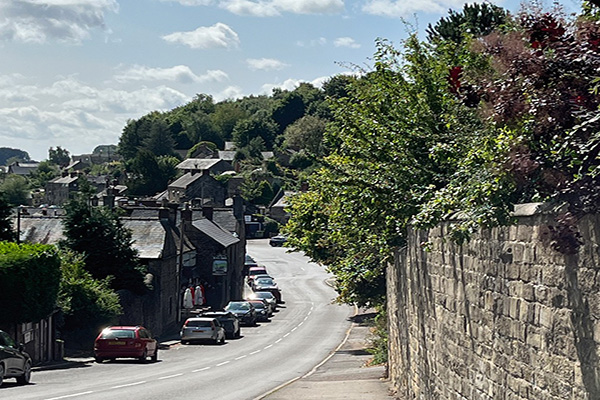
This winter’s walk is one of my favourites, both in summer as well as winter. I can see Riber Castle quite easily from our bedroom window, in fact most of the walk is visible from where we live, high above the Derwent Valley. I followed the walk on a wintery day last February, when the silent fields were covered by softly falling snow. As this offering is to be published in the March 2022 edition of Country Images, let’s see what nature has in store. Starting in the centre of Matlock by the Crown Square entrance to the Hall Leys Park, the walk climbs steadily up to Starkholmes, one of Matlock’s residential neighbourhoods extending beyond Old Matlock. Metesford’s original hamlet grew around St Giles Church, still the town’s parish church after at least six or seven hundred years. A steep footpath was used by servants every day and in all weathers to reach Riber Hall and later on, Smedley’s short-lived masterpiece, Riber Castle. Fortunately this is the end of steep climbing for the day and the way downhill is by a narrow winding country lane, back into Starkholmes. Here a right turn for about a hundred yards along Starkholmes Road, leads to High Tor Road on the left. This back road takes us into High Tor Grounds, Matlock’s ‘alpine’ park. From the top of a winding lane, an old stony track drops back downhill into the riverside path leading back into Hall Leys Park. The three major points of interest visited or seen on this walk are, in chronological order, Hall Leys Park, Riber Castle and its Jacobean village, then High Tor Grounds as the final part of the walk. THE WALK From Crown Square, Matlock’s busy cross roads, the walk immediately enters Hall Leys Park. It was originally developed from two riverside fields, called the Haw Lees, on land bought from Henry Knowles in 1898 by Matlock Urban District Council for visitors and locals to use as a ‘promenade and pleasure resort’. The park was officially opened on 23rd June 1911, commemorating the coronation of King George V, and is now managed by Derbyshire Dales District Council, through whom the park has won several awards for its appearance and facilities. These range from attractive flower beds, to band concerts as well as a popular skate board park, tennis courts, electrically powered boats and a miniature diesel train, alongside a well-used children’s play area. The Café in the Park makes a perfect place to stop and refuel at the end of the walk. Matlock’s south-eastern skyline is dominated by what has become the town’s unofficial logo, Riber Castle. This Grade II listed building dates from the 1860s when John Smedley, a local textile magnate who brought fame to the town by promulgating the use of water to cure all manner of aches and pains. From his main hydropathic establishment on what became known as Smedley Street, now used successfully as the headquarters of Derbyshire County Council, Britain’s great and the good, flocked to Matlock for the dubious privilege of being sprayed by powerful jets of cold water, but the town never became another Bath or Harrogate; the lack of natural hot water even stopped it from competing with nearby Buxton. During World War 2, the building already working against impossible odds to attract visitors, became a secret training college for British and allied forces involved in various forms of subterfuge against the enemy. Already struggling to attract wealthy visitors, the birth of the National Health Service with its free medicine to all, drove devotees away from the dubious advantages of the ‘water cure’. John Smedley decided to build Riber Castle as his personal residence, making a statement, it was the self-appointed accolade commemorating a lifetime’s work, putting Matlock on the map as a spa. Unfortunately the place couldn’t double as somewhere to experience his ‘water cure’ as an added incentive, because the one thing the site was lacking, was water in large enough quantity. When he died without anyone wanting to live at what became known in some quarters as ‘Smedley’s Folly’, the place gradually fell into disuse, first becoming a boys’ minor public school, then as a store for emergency food supplies during World War 2. Finally its ruins were temporarily used as a European Wildlife Zoo. The latest attempts at rejuvenating the place came to a temporary standstill a couple of years ago, but plans are still in hand to convert Riber into a high class block of apartments complete with helicopter service to North Midlands and other regional airports. The third and final feature of interest is High Tor, a real mountain and within easy access to Matlock town centre. The walk follows trails once trodden by ponies carrying Victorian ladies in crinolines up to its summit café, a place that mysteriously burned down soon after Derbyshire Dales District Council bought High Tor and its woodlands. DIRECTIONS Enter Hall Leys Park from Crown Square and follow the riverside path starting from the War Memorial stone and an old tram shelter that once stood at the centre of Crown Square. This was where passengers could catch a cable-drawn vehicle up Bank Road, thereby saving a relentlessly steep climb. (In wintry days before the onset of motorised traffic, small boys used the tram to take their toboggans to the top of Bank Road, from where they had a glorious downhill run). Go past the foot-bridge on your right and walk on past the boating pool and children’s play area. Follow the Knowleston Place back-road for a few yards, and then turn right into a small park. Cross a small footbridge and bear right following Bentley Brook beneath the wooded limestone crag topped by Pic Tor to the brook’s confluence with the River Derwent. Following the riverside path downstream until it joins a macadamed path immediately in front of the railway bridge, and rising to your left. Use this to reach the Starkholmes road. Cross the
Celebrity Interview – Sara Blizzard

Getting up at 3am to go to work is enough to bring a deep depression on many people. But not Sara Blizzard – she has a sunny outlook whenever she comes into our living rooms presenting the weather on BBC Television. This month marks the 23rd anniversary of Sarah’s East Midlands Today debut. She breezed onto our screens with her elfin looks and appears hardly any different now. She still enjoys telling everyone whether they need to get out their sun cream or their sou’wester. What you may not know is that she was a shy child who didn’t want to be in the spotlight. But she overcame her shyness to have a successful radio and television career, being at the helm of the cable TV equivalent of Crimewatch before turning her sunny disposition to presenting the weather. Do people in the street have a go at her if she gets the weather wrong? “We always say it’s not an exact science but there are days when the forecast has gone one way and by the afternoon I might be out with the dogs and I’m like ‘this isn’t doing what we said it was going to do!’ “You’re very much aware of that because you don’t want to be giving people not quite the right forecast. I think they pull your leg more than have a go.†She recalls one incident on a day that should have been dry when there was an unexpected shower. “A farmer was putting very expensive fertiliser on his fields and that one shower just happened to be over where he was. I’ve never forgotten that because I didn’t appreciate it at the time but the cost that goes into what they do and all their hard work – it wasn’t really our fault, it was just nature doing its thing. “People are more likely to pull your leg rather than say you’ve ruined my life or ruined my day out.†Sara Louise Blizzard was born on 17th August 1970 in Coventry. Her father Kelvin was a sheetmetal worker and a welder, making engines for Rolls-Royce. Her mother Gladys, nicknamed Robbie, worked in advertising in London. After meeting Kelvin she moved to the Midlands and joined the NHS. They did not urge Sara to follow a particular career. Her mother’s main concern was the large classes at the nearest comprehensive school, so only child Sara went to the independent Pattison College – a stage school. “Mum thought it might bring me out of my shell. It was full-time education with dancing in between. We were on the go all the time. It was definitely a different way of having an education but I think it gave me a background for presenting. “I never wanted to go on stage because I don’t think I’d have remembered the lines, believe it or not. I can remember the weather but I can’t remember a script onstage.†While at school she appeared in a few professional shows including Tim Rice and Andrew Lloyd Webber’s Joseph And The Amazing Technicolor Dreamcoat and Chitty Chitty Bang Bang which toured to Coventry. Sara did not go to university. Her broadcasting career began on hospital radio at Walsgrave General. She had a friend who was diagnosed with cancer when he was only 18. “The one thing he really loved was people coming onto the ward and taking his requests. And I thought ‘what a nice thing to do.’ I applied to be a volunteer.†She was accepted and was given her own show, Sentimental Sunday, playing easy-listening music and people’s requests. Another volunteer knew the boss of Coventry’s commercial station Mercia FM and told him about Sara. “There weren’t many women in radio at the time and he offered me a job on the air. It was in the middle of the night – it was five hours long from midnight onwards. “It was a killer shift but it’s amazing how many people are up for whatever reason in the night. You were their companion whether they were ill or working, so it was an interesting five hours.†When Mercia FM was bought out, the new owners moved Sara along the M69 and came up with the idea of having three people doing the Leicester Sound breakfast show, called Two Guys And A Girl. That was because her fellow presenters were both called Guy. After three years the station was sold again. But every cloud has a silver lining and Sara got wind that L!VE TV, the new cable channel headed by media heavyweights Kelvin MacKenzie and Nick Ferrari, was looking for staff. Sara threw caution to the wind and became part of the news team, being assigned to the north west. “I was given Liverpool and two days’ notice to pack my bags. It was quite a shock to the system but I did it. I ended up living in hotels for a couple of weeks until I could find somewhere to live. I have to say Liverpool was the best two years of my life.†She recalls her first job for L!VE TV in 1997, a bomb scare at Aintree when an IRA bomb threat forced the evacuation of the racecourse and the Grand National was postponed for two days. “I hadn’t got a clue what I was doing. The boss at the time said ‘can you go down there, even if you’re only at the front gates, and get the reaction from the people as they’re coming out.’ “This chap walked past me, quite smartly dressed and I asked him for his thoughts. It turned out to be (racehorse trainer) Jenny Pitman’s son Mark. He was actually working for Sky as a presenter and gave me a really good interview live on air. “That was one of those very lucky moments in broadcasting. I’ll never forget that day because it really was a baptism of fire.†One of the programmes Sara worked on was Merseybeat, with Merseyside Police
Places Pevsner Forgot – Hilcote

It seemed incredible to us that a settlement containing perhaps the finest miners’ cottages in the Midlands should have been missed by Sir Nikolaus Pevsner in his travels. Possibly, in 1953, when compiling the first edition of his guide to Derbyshire in his historic series The Buildings of England and having visited Blackwell, of which Hilcote is historically a part, he steered clear of what then was the off-putting sight of the B. Winning pit of the Blackwell colliery as he passed along the B6406 (Berristow Lane) en route to Pinxton. After all, there was then no M1 (from which he would have had a view of most of Hilcote, at least in winter) nor an improved A38, nor a MacArthur Park shopping experience encroaching on the flanks of Pinxton Castle. Who could blame him? Mind you, Hilcote infrequently gets mentioned in the usual sources for the history of local settlements. All the usually informative Bulmer could say in 1895 was ‘Hilcote is a long scattered village a quarter of a mile south of Blackwell.’ No mention here of coal mining, although it was then in full swing! Indeed, the first mention we could discover about the place was one of 1323 when Joan de Somerville, a considerable co-heiress of the Chaworths of Alfreton, married a Welsh grandee called Rhys ap Gruffydd, better known at the English court (in which he served under three monarchs) as Syr Rhys, having been knighted by Edward III in the field for his efforts against the Scots in 1346. Hilcote was a minor portion of the very considerable estates she brought to this illustrious Welsh family, descended from Ednyved Fychan, seneschal to the Kings of Gwynedd and Princes of All Wales. Henry VII was a direct descendant, although the manor of Blackwell (including Hilcote) was sold by Rhys’s posterity to the Babingtons, by whom it was divided into two manors bearing impenetrable names Sulney and Trussebut, the latter including Hilcote. The tiny hamlet was acquired in 1586 on the downfall of Anthony Babington, by the Holles family of Nottinghamshire and descended from them to the Cavendish Dukes of Newcastle, whose heirs sold them in 1742 to their cousins the Dukes of Devonshire. At that time, it consisted of a scatter of houses due south of Old Blackwell Church on Hilcote Lane but, even then, there were coal workings in the north part of the hamlet. They seem to have waned in the later 18th century, though, the directory for 1846 claims that Hilcote was ‘noted for its collieries, at present not worked.’ In 1857 Nathan Mellor a coal master is listed as resident there, so something must have been stirring below ground, and in 1864 there was a family of colliers resident. But in 1870 the big firms moved in, the Blackwell Colliery opening the B Winning pit at the south end of Hilcote in 1873-1874. Adjacent to the site, which lay on the east side of Berristow Lane and south of Pasture Lane, straddling the Normanton Brook, was a mass of railway lines coming in from the west, smithy, coke oven, brickworks with four kilns, an old shaft (presumably that worked previously) and a row of cottages on Berristow Lane, along with a pub, the Hilcote Arms. In 1964 the site closed as loss-making,d and over the following decades the land was reclaimed, in this case fairly successfully. We chose to enter Hilcote from the A38 junction, and by so doing soon found the brick terraced cottages of the first phase of mining flanking the road, the Hilcote Arms occupying a corner position at the junction with Hilcote Lane. It is a sturdy and attractive piece of brick building, entirely en suite with the surrounding cottages, which also appear superior, in constructional terms at least, to many we have seen in the area, with cambered stone lintels and gauged brick arches to the entrances; we thought Pevsner might have appreciated it. Further up the lane the houses are later, mainly terraced but less well designed on the west side, whilst on the east side there is nothing but post-1964 bungaloid growth, presumably on what had been slag heaps or other manifestations of a large colliery, although in 1898 there were still two open fields on this side of the Lane. As the colliers’ cottages fizzle out at the north end of the village, the round bulges out to the east (now called New Road) only to rejoin the same alignment half a mile further on, leaving a straight vestige of the previous alignment visible in a line of hedgerows. Quite what the road had to be diverted to avoid, we were not sure. We chose to return south along Berristow Lane and turn left into Pasture Lane, entirely rural on the north but to the south, bungalows, until the road is almost about to turn into a track to a farm, when we encountered a terrace of twelve Edwardian miners’ cottages, facing south and only accessible from their gabled rear extensions. The looked pretty substantial, though. Retreating a few hundred yards and we turned left into New Street, to encounter the true glory of the settlement, for the Blackwell Colliery Company, clearly an enlightened employer, had built this road to run all the way down to the Normanton Brook, positioning a miners’ welfare hall at the lower end opposite a primitive Methodist Chapel and school. It thereupon lined the street with no less than twenty pairs of well built, excellently designed brick houses – one could hardly call them cottages – three storeys, with blue brick banding, side entrances through small arched and gabled porches from a small easy-to-manage garden, stone lintels to what had been sash windows (but are now largely disfigured with a motley variety of uPVC substitutes) and substantial gabled attic dormers. They appear to date from the late 1880s to the early 1890s; they certainly appear on the 1898 OS map. Who, we wondered, was the Company’s architect,
Lost Houses of Derbyshire – Old Foremark Hall
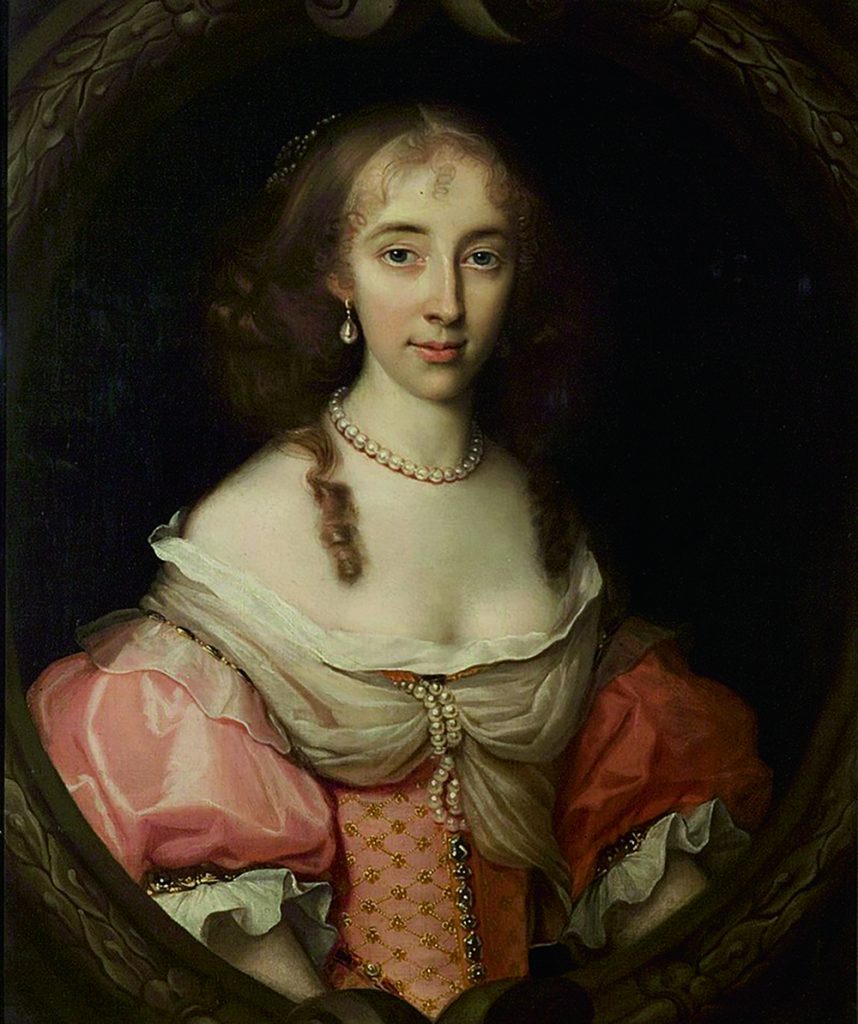
The estate at Foremark, where once the invading Vikings over-wintered in 783-784, was granted to Nigel de Stafford,a (genuine) comrade-in-arms of the Conqueror and ancestor in the male line of the Stafford, Longford and Gresley families. His family’s later sub-tenant was a junior member of the powerful de Ferrers family, whence it passed through an heiress to Bertram de Verdon, a substantial south Derbyshire land holder, in the later twelfth century. In 1387 the de Verdons sold it to Sir Robert Franceys, one of whose descendants two centuries later married the heiress of his close relations, the Franceys family of neighbouring Ticknall. The family seat then was at Knowle Hill, on a plateau at the top of the west edge of the ravine, in which lay the later house there, which I wrote about in these pages just over three years ago. It is presumed to have been a timber framed courtyard house; the surviving remnant of the present house lies on the footprint of the east range of its predecessor. Jane, daughter and heiress of William Franceys of Foremark married in 1602 Thomas Burdett of Bramcote – not the Bramcote down the end of the A52 from Derbv in Nottinghamshire, but that near Polesworth in Warwickshire, albeit not so very far from the SW edge of Derbyshire. The Burdetts, who originated at Lowesby in Leicestershire, had been at Bramcote since 1327, but the couple decided to live at Foremark in an old stone house that the Franceys family had built in Queen Elizabeth’s time. Thomas was High Sheriff of Derbyshire in 1610, and in 1619 was created a baronet, taking his title from his ancestral estate at Bramcote – mainly because his father-in-law was still alive at that time, and to be ‘of Foremark’ would have been more than a trifle presumptuous! It was their son Sir Franceys, who seems to have set about rebuilding or enlarging the house at the Restoration. He also replaced the parish church of St. Saviour at the same time, positioning it a few yards due east of the house, to serve almost as a domestic chapel as well as for spiritual nourishment of the villagers of Foremark and Milton. We are fortunate in that a painting, attributed to Jacob Esselins and believed to be of this house, was sold at Christie’s in May 1998. It was painted around 1665, so the building was then largely new, although very traditional in style, probably dictated by the portions of the existing house that Sir Franceys wished to include. The house we see was of locally quarried Keuper Sandstone, U-plan with four straight coped gables, the central pair recessed over the great hall – almost certainly a hangover from the Franceys’ house – divided by a chimneystack. The western cross wing terminated in a matching gable with six and three light mullioned windows, whilst its counterpart of the east of the façade was clearly of the later build, with mullion and transom cross windows throughout. The west front also appears to have had two further gables like the other, coped and with ball finials. The stables (replaced in the 1720s by the present range) were also on this west side and the whole ensemble was set within a wall pierced by a pair of imposing gate piers (clearly of Sir Franceys’ day) from which one descended into the forecourt. In 1713 William Woolley described it as ‘large and convenient with a large well wooded park and coney warren adjoining.’ In 1662 it was assessed on a substantial 24 hearths for tax purposes. Regrettably, there is no hint as to the interior, bar an enumeration of the rooms in an inventory. The church (listed grade I) may have been begun during the Civil War, for a sundial dated 1650 graces the exterior but, unlike Sir Robert Shirley at Staunton Harold, Sir Franceys clearly did not risk continuing until the return of better times; the building was sufficiently complete to be dedicated in 1662. There are two other sundials, too, and the four bells are by George Oldfield and bear various dates between 1660 and 1668. The east end has the arms of the family above the Gothic window, surrounded by positively Elizabeth carved strapwork, despite the late date. Inside, there are box pews, a delightful arcaded oak screen, probably locally carved in a style well out of date by 1660, a medieval font, a timber altar with a later Hoptonwood stone top and in 1710 ironsmith Robert Bakewell added a pretty communion rail, and a splendid pair of iron gates under an elaborate overthrow at the east end through which the Burdetts had to pass on their way to worship. The gallery was only installed in 1819. Whilst Sir Franceys Burdett’s house stood, the three, house, park and church, could be read together as a coherent ensemble, and in a particularly fine setting. Sir Robert Burdett, 3rd Bt. was a long serving MP and was thrice married, although of his five sons only one survived but even he managed to pre-decease his father by two months. Hence, by the time of his death in 1716 aged 76, his younger brother Walter was expected to succeed to the title, but Sir Robert seems to have been a game old soul, for Elizabeth, his widow, was pregnant when he died in the January, and was duly delivered of a boy in May, named after his father and who succeeded at birth. This Sir Robert came of age in 1737, and it is thought that the fête champêtre depicted that year by Thomas Smith of Derby in front of the ancient heritage by the river at Ingleby on the estate was held to mark his coming-of-age. The caves there were enlarge at about this time to enable such convivial events to be made more convenient, just as Knowle Hill was demolished and rebuilt as a folly by Sir Robert in the 1760s for similar reasons. The year after this
Product Test – Odile Lecoin

This exclusive skincare line is carefully curated to provide maximum results, with minimum effort. The luxurious products contain unique natural ingredients, all of the highest quality, to rejuvenate, nourish and smooth even the most delicate skin. OR, j’illumine The Divine Cleansing Milk 200ml £35 For clean, soft, supple skin look no further than the OR, j’illumine. This creamy cleansing milk gently eliminates impurities and make-up from deep inside the pores, whilst respecting the skin’s hydrolipidic film. Rich in fatty acids, it leaves the skin exceptionally soft and soothes the most delicate skin, as well as encouraging cell renewal to stimulate skin repair leaving the complexion luminous and radiant. OR, éclatant Purify and Glow Cleansing Balm £45 Deeply cleanse your skin whilst maintaining its vital barrier with the luxurious OR, éclatant, Purify and Glow Cleansing Balm. The powerfully effective 2-in-1 cleansing balm transforms into a beautiful milky texture as you wash away impurities and all traces of the day to reveal a silky soft and glowing complexion. The luxurious balm cleanser is suitable for any skin type and is especially soothing for those with dry skin thanks to the naturally hydrating ingredients sweet almond oil and shea butter. OR, je veux The Age Defying Cream £140 The age defying cream, OR, je veux is a global anti-ageing cream formulated to treat all signs of ageing. A unique combination of ingredients work together to provide antioxidant and antipollution protection and rejuvenate skin for a radiant and more youthful looking complexion. The super-ingredient, Abyssine 657, discovered in the harsh environment 8,000 feet down on the ocean floor effectively protects and stimulates the skin’s natural defences whilst soothing and nourishing even the most delicate of skins. Apply OR, je veux in upward strokes twice a day to a clean face, neck and décolleté. After 28 days of application wrinkles appear less visible, and the skin looks younger, firmer, softer and rejuvenated. For more information and to buy online visit www.odile.co.uk TRIED & TESTED :: TRIED & TESTED :: TRIED & TESTED Age Defying Cream I’ve used this facial moisture cream twice a day for nearly a month with excellent results. My skin feels smooth and well nourished, testament to all the natural ingredients. Excellent JP. Divine Cleansing Milk This is a really gentle cleanser and great at removing makeup, a little goes a long way! It leaves your skin feeling fresh without drying out. Ideal for delicate skin. CB Cleansing Balm I love the packaging on this product. It applies well and when you add a little water you can make this into a milky texture which glides on really easily. Leaves skin feeling very clean and smooth. VP 00
Walk Derbyshire – Where Izaak Walton Fished – Hartington

Izaak Walton, seventeenth century author of ‘The Campleat (sic) Angler – The Contemplative Man’s Recreation’ would have been familiar with at least half of this walk. The Dove was one of his favourite places to cast a fly, along with his younger friend, the impecunious Hartington landowner, Charles Cotton. They regularly fished the river’s clear waters, mostly below Hartington, especially favouring the quiet pool opposite Cotton’s home at Beresford Hall. This quiet spot they named Pike Pool in acknowledgement of a monster pike that traditionally lay in wait beneath the shadow of the tall pillar, or spike of rock rising from the deepest and shadiest part of the pool. In the treatise, Walton calls himself VENATOR (traveller) and Cotton is known as PISCATOR (angler). Charles Cotton had a fishing temple built as a resting place for them, it still stands behind a high stone wall in the grounds of now demolished Beresford Hall, but being on private land the only time to catch a glimpse of it is in winter when the surrounding trees are bare. The Dove flows through two accessible dales below Hartington which are followed on this walk. Named in some far off time, these are Beresford and Wolfscote Dales, just waiting to be explored after the walker climbs down through comparatively dry Biggin Dale on the way back to Hartington. Leaving the riverside path and following a short walk across fields beyond the head of Beresford Dale that would have been familiar to the two angling friends, the village is reached after a mere fifty yards of road walking. Hartington has long been a busy village. A market place for locals until a few decades ago, but now the only agricultural industry is the delicious Stilton cheese, made in one of only a handful of places allowed to call the product of its dairy, Stilton cheese. A small converted cottage beside the lane down to the dairy now serves as a shop selling this and other locally made cheeses. The closest the village comes to running a market is on one of the annual events organised locally. Ancient Britons would have known the rich valley land on either side of Hartington and it is believed they fought Roman legionaries on nearby Hartington Moor, perhaps in a dispute over the Roman plan to build their road from Derventio, Derby to Aquae Arnemetiae, their spa which still produces warm water in present day Buxton. Many great and famous personalities have either lived or stayed briefly in and around the village. Literary giants and philosophers, such as Doctor Johnson, fully enjoyed the delights of the shady dale, still unchanged thanks mainly to the care given by the Peak District National Park Authority, or the National Trust, an organisation that owns many sections of the dale, mainly acquired through the generosity of donors. While the walk passes through these three secluded dales and over lush meadows, it runs close to Biggin, one of the least known villages in the Peak District. It is hard to believe that during World War 2, there was a large POW camp close to the village on land now used for sheep auctions. A degree of freedom was offered to trustworthy prisoners who worked on surrounding farms, many of them later recalling their affection towards the Peak District countryside. Hartington Hall, a Jacobean manor house at least 300 years old is now a high standard youth hostel, very much in keeping with a resting place where Bonnie Prince Charlie is said to have stayed on his abortive march on London, a march strangely abandoned for little or no reason at Derby. Useful Information A moderate 5 miles (8km) walk across fields, followed by two dales alongside a famous trout stream, beyond a short walk through a dry dale famous for its semi-alpine flowers every summer. Recommended Map: Ordnance Survey Explorer map, Sheet OL24, 1:25000 scale; White Peak Area. Public Transport: buses from Ashbourne and Buxton. Car Parking: Market Square (free), or pay and display in the car park next to the road towards the Manifold Valley. Refreshments: Two pubs in centre of village and a scattering of small cafés and shops around the market place. Refreshments can also be bought at the youth hostel. Directions From the market place follow the road eastwards, past shops and a café until it reaches a side road marked by a small war memorial commemorating the village dead in two World Wars. Turn right here and walk up the steep hill. Follow the road, uphill to the youth hostel, then turn right opposite its garden gates, into a walled un-surfaced track heading towards fields stocked with grazing cattle. At the end of the lane, go over a stone stile, then turn half right to cross two fields by an indistinct path – aim towards a clump of trees ahead next to a minor road. There are many interesting views both near and distant to be enjoyed as you walk across the elevated open fields. The prominent rise to the south west beyond the cleft marking Dovedale is Ecton Hill above the Manifold Valley, a one-time valuable source of copper, zinc and lead ore deposits. It is said that a Duke of Devonshire in the eighteenth century was able to use the profits from the mine to build the Devonshire Royal Hospital and its dome. Cross the stile beside the trees and turn left along the narrow metalled lane as far as a cross roads. Continue ahead on a rough cart track. Pass a well-made stone barn, then leave the walled track at a gate to walk downhill on an open path into Biggin Dale. Turn right and walk along the rocky dale bottom. Join the main dale as you pass a high limestone crag where harebells and other semi-alpine plants bloom in early summer. Turn right on to a rocky path and walk upstream beside the River Dove. The path fills a narrow ledge between the riverbank and
Celebrity Interview – Michelle Collins
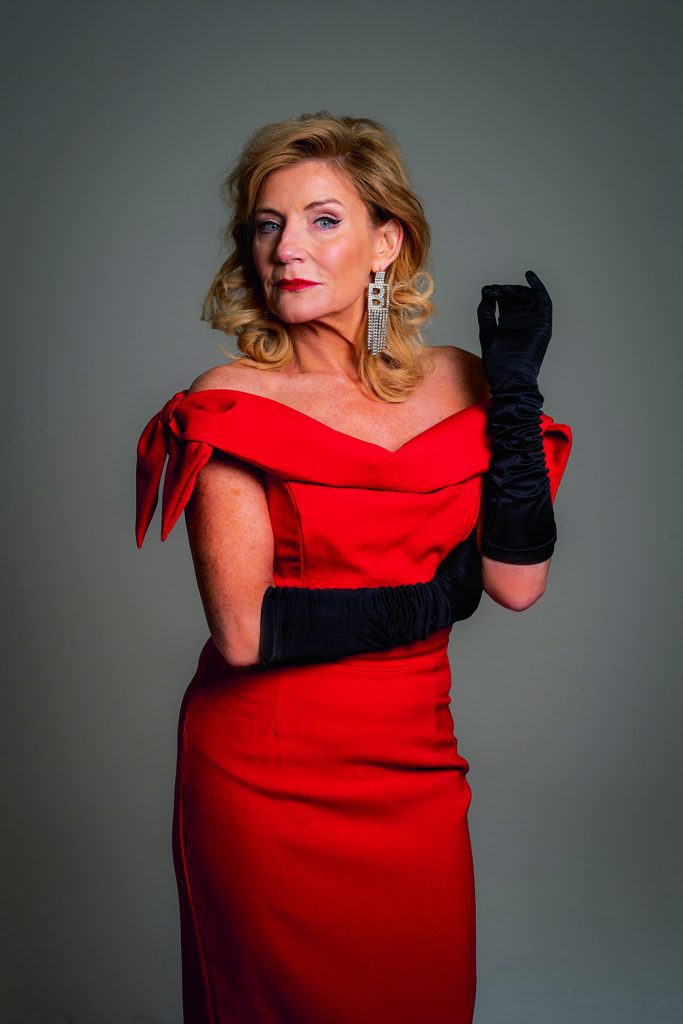
She played Ian Beale’s wife in EastEnders for eight years and the landlady of the Rovers Return in Coronation Street. Now Michelle Collins is taking on what she describes as the role of a lifetime. Michelle will be getting dolled up for the role of Miss Scarlett in Cluedo, a new play based on the addictive board game that she was obsessed with as a child. “We all need a bit of glamour in our lives, don’t we, darling?†says Michelle. She reveals that whenever she played Cluedo with her family, everyone wanted to be Miss Scarlett, the femme fatale who is regarded as young, cunning and highly attractive. “Miss Scarlett is one of the most iconic characters, along with Colonel Mustard and maybe Professor Plum, which makes it more difficult to play. “Me and my sister would go and stay with my five cousins and we would all fight for that part. But because I’m the bossy one I would always get it,†she laughs. “I think because of lockdown people have gone back to board games. It’s funny that they’ve brought us back together when you find out that Cluedo was actually invented almost out of boredom during the Second World War when people were stuck at home during air raids. “It adds a lovely dollop of nostalgia to the fun – and the murder! – of Cluedo.†If you’ve never played Cluedo, you may not know that the object of the game is to determine who murdered a victim, where the crime took place and which weapon was used. Each player assumes the role of one of the six suspects and attempts to deduce the correct answer by strategically moving around a board representing the rooms of a mansion. Hollywood turned the game into a film called Clue in 1985. Now the play is on tour and is slightly different from the board game. Miss Scarlett, Professor Plum, Mrs Peacock, Reverend Green, Mrs White and Colonel Mustard arrive at a country house one dark and stormy evening. They are surprised to find they have all received the same intriguing invitation from Lord Boddy. There are shades of Agatha Christie’s mystery And Then There Were None as the inhabitants and guests of Boddy Manor are killed off one by one with a variety of weapons. The play, described as a “hilarious spoof of a thriller†will “keep you guessing right up to the finale as both the guests and audience try to work out whodunnit with what and whereâ€. “It’s a comedy whodunnit,†says Michelle. “I’ve done a Miss Marple and everyone loves those. It’s great to dress up in period clothes, 1940s clothes which are so glamorous. “We’re in the hands of the perfect director in Mark Bell. He did the smash hits The Play That Goes Wrong and A Comedy About A Bank Robbery. “It takes a very particular director to get the best out of something as fun and escapist as this.†She says she will put her own stamp on the role of Miss Scarlett. “It’s really exciting to play someone who, like most women, has more going on than you see on the surface. She has a history. She looks glam and dressed up but she’s a smart cookie. “I’ve never seen the film but this will be very different: very funny, very dry, a little dark at times but ultimately great entertainment. “I think it’s the perfect climate for something feelgood like this. People are desperate to get back to the theatre. They miss that creativity in their lives. It’s great that the play is something for all the family, something everyone can enjoy after the couple of years we’ve had.†Michelle Danielle Collins was born on 28 May 1962 in Hackney, east London to a Welsh mother and a father who had English and Flemish heritage. After getting her first theatre job her career changed direction when she performed in the video for the Squeeze hit Cool For Cats in 1978. She went on an 18-month tour with the band who worked with artists including Marc Almond, Level 42, Altered Images and Kid Creole and the Coconuts. When the band broke up Michelle went back to acting. While she was filming a BBC play in 1988 she was spotted by EastEnders’ producer Julia Smith who asked her to audition for the role of Cindy Beale, a character featuring in 11 episodes of the soap. She excelled in the role of renowned villain, so much so that she became a regular in the series. When she left EastEnders she had a string of drama roles for the BBC. She acted in two series of Real Women, two series of Sunburn for which she also sang the theme tune and three series of Two Thousand Acres of Sky. Michelle then moved to Weatherfield, playing Stella Price, the landlady of the Rovers Return, for three years. She left after claiming she was “unhappy†about the lack of screen time for her character. But she has continued to appear on the small screen, guesting in Casualty several times as well as Death In Paradise and Midsomer Murders. A former Midsomer detective, Daniel Casey who played Gavin Troy, joins Michelle in Cluedo as Professor Plum. Michelle is excited to be doing Cluedo which is on tour for six months. She lost a lot of her work because of lockdown. “I was in the middle of doing a tour of Pinter’s The Birthday Party – Meg, a dream role. Then I was doing a one-woman show in Edinburgh and that had to close.†Michelle thinks the Cluedo tour will fly by and will be a real antidote to what she describes as “a real rubbish yearâ€. She explains: “My mum died. A really good friend of mine died of Covid and I was quite ill for a while. It’s been horrible. “My mum was fine during Covid but she had cancer and couldn’t have her immunotherapy
Places Pevsner Forgot – Makeney, Derbyshire
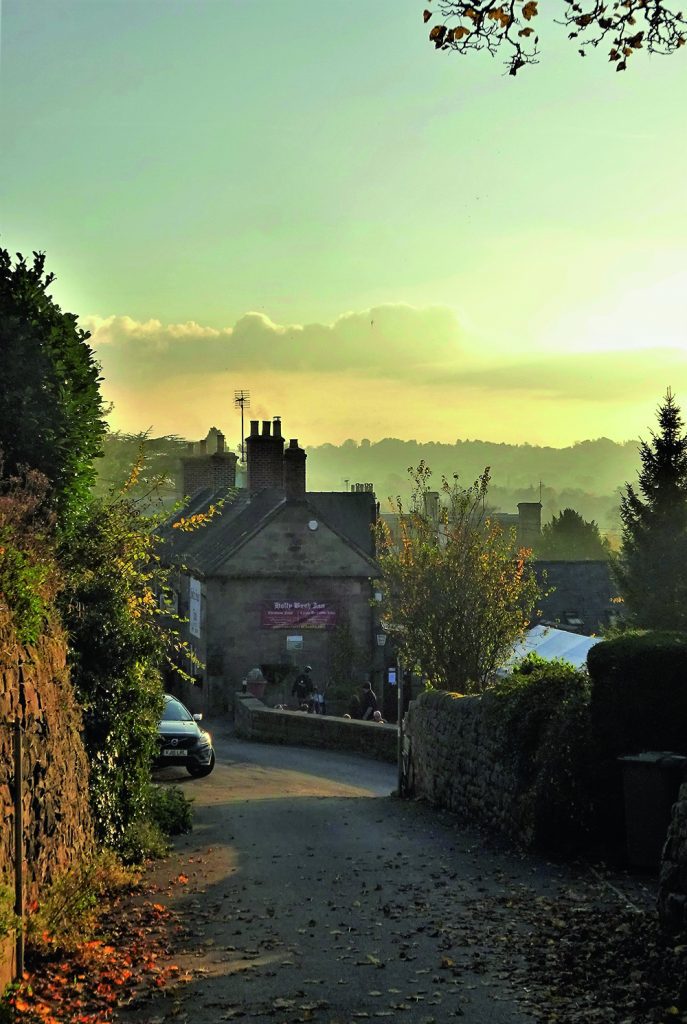
As we wandered round sunny Makeney, we wondered how Pevsner could ever have forgotten to include the place, for although historically a miniscule hamlet within the huge parish of Duffield, it gained in importance in the 19th century through its proximity to the various expanding Strutt family enterprises at Milford and gained two important houses as a result, although there never was either church or chapel. Furthermore, there is an historic inn, the Holly Bush, probably of 17th century origin with an historic turnpike trust way-marker set against its wall. How could he possibly have missed it, we wondered, especially as the hamlet is clearly visible from the A6 going north. No matter, however, we were on hand to make our own assessment. The village is situated on the east side of the Derwent on the unclassified (but remarkably busy) former turnpike road from Duffield church, along Duffield Bank to Milford, which originally ran past the pub and down the other side, but which acquired a new section cutting off this loop, now Holly Bush Lane, pitched around 1870. Holly Bush Lane also has a steep lane leading off from its apex called Dark Lane. We decided to park well clear of the Holly Bush, the narrow road outside which tends to clog up with parked Chelsea tractors, instead leaving the state chariot parked on the road near Red Lane, which winds up from a point just south of the village to Holbrook. This enabled us to see a very smart Regency cottage orné by the junction called Makeney Lodge, still with its original cast iron sliding jalousies at the windows, an adjunct to refined living famously made in Derby at Weatherhead, Glover & Co.’s Britannia foundry, Duke Street. The interior is very fine, and is illustrated in Bobby Innes-Smith’s 1972 Derbyshire Life book on local houses, from which we may infer that the cranked-out stair balustrade was also sourced from the Duke Street foundry. This should occasion no surprise, as the house in its current form was built around 1825 for Anthony Strutt (1791-1875), and probably designed by his uncle, William Strutt FRS, a keen amateur architect. It also incorporates a datestone bearing the legend HP/1784 which are apparently the initials of Henry Peat, who is believed to have rebuilt an earlier farm house there, dating from c. 1730. This may be true, for a Henry Peat married Elizabeth Beardall at Duffield in 1730, and a son may have effected a rebuild. Either way, there is no visual evidence in the existing fabric that the house you see today is anything but a new build. Why it escaped being added to the statutory list defied us; perhaps in 1981 when the County was re-listed they failed to drive along on that side of the Derwent! By 1846, Strutt had moved up Dark Lane to another new house, confusingly named the Old Hall, and sold the Lodge to Maj. Alfred Holmes (1816-1895) son of Charles, of the famous Derby coach building company. His heirs sold it to Judge Henry Raikes, chairman of Derbyshire quarter Sessions, and his family sold it to the Heyworths in 1954, connections by marriage of our own family. It has changed hands again since, most recently in 2015. Strutt was a restless fellow, however and he acquired yet a third large house in the hamlet. This we never saw as we wandered along past Hollybush Lane, because it failed to survive, its site being taken over by the stable block (now converted as residences and a business) built by George Herbert Strutt, Anthony’s great-nephew, when Makeney House was built. We reached this point by walking along the main road, past an elevated row of eight artisans’ cottages under a continuous roof built by Anthony Strutt for the Milford Mill workers in the 1820s and called Makeney Terrace. These, although a little altered, are listed grade II. Beyond them is a real gem: the original Makeney Hall, later Old Hall farm. Built by Richard Fletcher around 1814, and later sold to a branch of the Bradshaws of Duffield. The old guides claim that Judge John Bradshaw, a regicide in 1649 was born there, but in fact he was a Cheshire Bradshaw with no connection here. It was later acquired by the Heath family, which in the 18th century produced three brothers who founded a bank in Derby (which went bust in 1779). They turned it into a farm, sold it back to the Bradshaws, from whom it passed to Charles Mould who built the house Anthony Strutt acquired, and remained a farm until the mid-twentieth century, when it was divided into four tenements under the name Makeney Yard (deservedly listed grade II). It is a stone gabled building of considerable charm, but the frontage of which is rather marred by the parked cars of the four occupying families. It was immediately north of that where the converted stables are positioned. The house (called the Hall) was built in 1813 on his marriage, possibly by adapting a wing of the old hall, by local iron founder Charles Mould on land bought from the Bradshaws. However, in 1856, a sale was agreed between Mould and Anthony Strutt of both house and estate, most of which lay on the water meadows to the west of the road. In a letter of 10th March 1869, Strutt wrote to a friend, “I found it [Mould’s house] a strange mixture of some modern additions and ornaments made when the young Charles Mould got married, very absurd indeed, [but the] main stone work of old building very good.†He goes on to say that he had begun work to ‘make the house habitable’ but by 1869, had lost heart and offered the place to let. The rebuilding works, which were begun in 1858, were probably overseen by the Derby-born architect of Buckingham Palace, Edward Blore (1787-1879), who had recently built Kingston Hall (Notts.) for Strutt’s nephew, Edward, recently elevated to the peerage
The Lost Houses of Derbyshire – Old Thornbridge Hall – Ashford in the Water

Thornbridge was once part of the estate of the Longsdon family of Little Longstone, who claim a descent (never securely sorted out, but nevertheless highly likely) from Serlo de Longstone living around 1100 and, although the estate was held by that family (latterly spelling their name Longsdon) from the twelfth century until 1790, there seems no evidence that there was ever a house there, although there certainly may have been. Nevertheless, the family were numerous and still flourish today, although the claim made by G. T. Wright, JP in his very substantial book, Longstone Records (Bakewell 1900) that he himself and the Wrights of Eyam were descended from them in the male line does not really stand up to scrutiny. Thomas Longsdon of Little Longstone (1706-1780) was twice married and produced no less than eight sons, who began rebuilding the family’s fortunes after some decades of decline, for the eldest son, James Longsdon (1745-1821) was a partner until 1786 of Andrew Morewood, a Manchester cotton merchant, as were his younger half-brothers Anthony, Matthew and Peter, all of whom actually lived in Manchester, not to mention David, a grandson. This effective family migration towards Manchester in pursuit of cotton riches, led to the sale of Thornbridge by James, in 1786 when he inherited Little Longstone. The purchaser, after over three years without a taker, was his former business partner, Andrew Morewood (1714-1794), of a younger branch of the Morewoods (later Palmer-Morewoods) of Alfreton. The sale was probably to raise capital to invest in the remaining Longsdon estates. The price for the estate was apparently £10,000, and did include a house about which little is known. It was most likely a modest farmhouse, conceivably that upon which hearth tax was assessed in 1670 for one hearth when it was inhabited by a member of the family. Andrew Morewood, had made a considerable fortune in the cotton trade, although it should be remembered that, contrary to what one might read on various websites, Manchester at this period traded cotton, not from the southern states of the USA (as later in the 19th century), where it was picked by slaves, but from India and Egypt, where cotton was picked by paid labour (although I would not vouch for the free status of those who picked for the Mamluks, Ottoman Egypt’s de facto rulers). He therefore decided to build himself a modest country villa, the first Thornbridge Hall, completed in about 1792, and died there two years later. His new seat was a typical later Georgian country house, built of Carboniferous Limestone with Millstone Grit sandstone dressings, probably from Bakewell Edge, and of two storeys. The entrance front was five bays wide with a three-bay pedimented central section which broke slightly forward. The right return was of one wide bay under each pile of the building, expressed as Venetian windows, superimposed, one above the other, with flat mouldings, and there were quoins at the angles. Who designed it is difficult to say; probably an architect who was also a builder, as was then usual, although from the relative sophistication of the design it was unlikely to have been a local man armed only with a pattern book; perhaps he chose someone from Manchester. John Morewood (1754-1811), who soon succeeded, extended the house by adding a matching range at right angles to that already existing, but with an oeuil-de-boeuf or oculus in the pediment. A modest park of 20 acres was also laid out around the house, to which he added a further 20 acres leased from the Duke of Devonshire. The situation of the house cannot have lacked grandeur in the first place, and it is doubtful whether a professional landscaper was involved. John Morewood was succeeded by his brother, George and, after his death in 1854, by his third daughter’s husband, James McConnell, a Prestwich cotton spinner who in 1835 had bought nearby Cressbrook Mill and built the hall there to the designs of Thomas Johnson of Lichfield. He soon decided that Thornbridge was not quite to his taste after all and decided that he preferred the more overtly Gothic Cressbrook which was set in an even more spectacular setting. Therefore, in 1856 McConnell decided to move on, placing an advertisement in The Times for 17th December 1856 offering it to let, but, receiving no takers, eventually sold it in 1859. The buyer, rather surprisingly, was the Revd. Henry Longsdon (1826-1899) of Little Longstone Hall, whose ancestor had sold it in the first place. He had inherited the family estate at Little Longstone aged 18 months in 1827, but his senior line of the family had not benefited quite so royally from the family’s excursion into cotton trading, and he was then the newly appointed vicar of Eyam. However, he still needed somewhere nearby to live, as the Joseph Pickford designed vicarage at Eyam had not then become available, and the family manor house was occupied by his mother. However, after a year or two this situation resolved itself, and Thornbridge was again put on the market, shorn of much of its estate, which was retained as part of that of Little Longstone. The next new owner was John Sleigh of Leek, whose exhaustive History of Leek came out in 1862, with a second edition (less desirable to the collector, but slightly more helpful to the researcher) followed in 1883. He also wrote frequent antiquarian articles for The Reliquary, an historical periodical edited by his friend Llewellyn Jewitt of Winster Hall. The Sleigh family ultimately descended out of Hartington and had at one time acquired the Etwall estate too, but quite why Sleigh wanted to move from Leek, which he clearly loved, is not clear. Nevertheless, he was prepared to spend £10,000 on it (the same price as Andrew Morewood had splashed out in 1790, but, of course, with much less land) remained there until 1871, when it again came onto the market. One attractive feature which enhanced the value of Thornbridge
Lumsdale – Matlock’s First Industrial Estate

Hidden away in a deeply wooded ravine, Lumsdale is unknown to many who live nearby, but as Brian Spencer discovered, it is a unique link with the early days of industry in Matlock. Bentley Brook rises in the rough moorland above Cuckoostone Dale and flows gently past Matlock Golf Club, then dives beneath the A632 Chesterfield road to pass Highfields School, before dropping into the valley bottom where it joins the Derwent at Matlock Green. Once away from the school and a scattering of houses, the brook crashes over a series of small but spectacular waterfalls trapped within a deeply wooded gorge. By harnessing the stream’s power and in particular its cascades, a series of small mills driven by waterwheels carried out a whole range of industries that began in the 16th century, and with adaptations continued until 1920. Abandoned by their owners, the mills fell into disuse, their stone often removed for building elsewhere and it was only by the efforts of a far-sighted lady, that the now romantically tranquil ruins have been preserved as memorials of past industry. Frequently vandalised for their building stone, the ancient mills were fast disappearing until a local lady called Marjorie Mills bought Lumsdale to prevent further demolition. Throughout the rest of her life until her death in 1996 she maintained a passionate interest in the valley, but by 1976 when she realised that her failing health no longer allowed her to take an active interest in its preservation, she transferred ownership of Lumsdale to the Arkwright Society, who together with a group of local residents, continue her work. The three upper ponds nearest to Highfields School are silted-up and have as a result become wild-life havens for bog plants and amphibians such as crested newts and frogs. Of the others the one at the head of the ravine is arguably the most beautiful, but the others still have their attractions, especially for anglers. By parking in the lay-by opposite the entrance to Highfields School on Lumsdale Road, the valley and its ruins can be explored by a rocky footpath winding its way steeply into the valley bottom. Walk gently downhill past the boggy remnants of the first two ponds and with a little care you can see the overgrown ruins of the 16th century Bone Mill. The still recognisable wheel pit and its tail race back into Bentley Brook drove massive grindstones and pulverising hammers to break down calcined bones for use in the pottery industry or as fertiliser. Following the path past the third dam and a group of cottages, the next mill was until the twentieth century used as a saw mill, but initially it was a corn mill, and the huge grindstone imported from the Massif Central in France lies close to the tail-race. The next group of cottages that stand above the waters of the fourth pond, Farm Dam, were once part of a lead smelter and with a little care, it is possible to trace the remains of many of the earlier industrial buildings. For example the smelting cupola is incorporated within part of the cottages. The modern house across the way is known as ‘Pine Trees’ and stands on the site of the smelter’s counting house and smithy. A horizontal condensing flue to remove poisonous fumes and collect by-products ran away from the smelter; with a little bit of investigation, an access trap can still be seen, but certainly not entered. It was into this that small boys were sent to scrape noxious substances like arsenic from the walls – no wonder they led short lives. Below Farm Dam and its bulrushes, is the hiding place of mallards. Hard by adjacent picnic seats, water pours through a still viable sluice, then down a spectacular waterfall part hidden by beech shaded rocks. A now dry side leat carried water into a deep wheel pit where a mill was later adapted for sawing timber, or ground lead oxides for the paint industry. The square sided Derbyshire chimney half hidden in trees above the mill was part of a system designed to dry ore minerals before crushing. This mill was built for the Bonsall School Trustees in 1770 and is well worth a closer look, for it is built, quite spectacularly into the rocky hillside where the nearby waterfall creates an open space. The footpath leads down to a fifth mill known as the Upper Bleaching Mill where you can see the remains of the bleaching vats. This mill was connected to Garton Mill in the lower valley by an ingenious tram system whereby loads of heavy cotton fabrics were carried between the two mills. Turning left as the path reaches the nearby road, it is still possible to see the remains of the tracks which were cleared by the pupils of Highfields School a few years back. It will be necessary to follow the road at this point, past an overgrown mill pond that was used to guide water to the wheels and processing plant at the Lower Bleach Works, or Garton Mill as it was once called. Very much expanded in the 20th century and used by a variety of industries, including Messrs Paton and Baldwin for woollen manufacture, the first mill on the site was built around 1785 by Watts and Co as a cotton spinning mill but went bankrupt in 1813. This was when it became a bleach works in the ownership of John Garton, retaining its function, along with cotton fabric finishing, continuing well into the 20th century. Two groups of solid stone-built terraced cottages were made to serve the mill and are now private homes, then next come two further ponds that served Tansley Wood Cotton Mill, the largest mill in the Lumsdale complex. The first structure was leased from its builder Banks-Hodgkinson of Ashover in 1783 by Messrs Osgathorpe & Prestwidge. If anything they were the most unusual names in the Matlock area, but nevertheless the two