A Glimpse of Today’s Buxton

With the restoration of the historic Crescent fully completed and open to visitors, Buxton can once again bask in its early glory. Brian Spencer explores this, the highest market town in England. Buxton retains the best of its Victorian spa-town layout, especially around the town centre, managing to ignore the massive limestone quarries on its doorstep. The town can trace its roots to the Celts who discovered thermally heated water and dedicated its flow to their goddess Santan. Later on this well provided warm water for a Roman Bath built to cleanse and relax troops garrisoning the nearby fort of Aquae Arnemetiae, thought to lie somewhere near Buxton’s present market place. Heated to a constant 28°C (82°F), rising from deep within the earth, the waters have never failed and from medieval times onwards, people came to Buxton on pilgrimage. Dedicated to St Ann, a Christianised version of the Celtic name, at one time the well was thought to have miraculous powers; pilgrims left mementos of their alleged cure, but Henry VIII thought it was going too far and ordered it to be closed. Canny folk still collect their drinking water from the constant flow of pure water that gushes from the ornamental well next to the Tourist Information office opposite the Crescent. The development of modern Buxton began with the fashion of ‘taking the waters’ for their curative powers. The well was visited by the great and the good, including Mary Queen of Scots during her imprisonment at Chatsworth, but the major expansion of the town came about in the eighteenth century. This was when the 5th Duke of Devonshire by using the £120,000 annual profits from his copper mines in the Manifold Valley planned to create the northern version of Bath. For the centre piece of his grand design, he appointed the architect John Carr of York to build the splendid Crescent which originally contained hotels, lodging houses, grand assembly rooms and several baths. Failing with the decline of spas, the Crescent fell into disrepair, but following restoration has now come back to life as Grade I listed building as a thermal spa and 79-bed five star Buxton Crescent Hotel. Included in the development are eight specialist shops, the refurbished pump room. Around the corner from the Crescent, arcaded shops now fill the space where bathers once eased their rheumatic limbs. Across the way from the Crescent a short queue of devotees can usually be seen waiting their turn to collect free spa water flowing constantly from St Ann’s Well – the same water that is bottled close by and sold throughout the land. Behind the well, graded paths known as the ‘The Slopes’ that once tested the benefits of the water cure, were laid out by Sir Jeffry Wyatville in 1811. It was he who also designed the classical church of St John, situated behind the Crescent. Bright and spacious within, fine stained glass windows light the massive marble and alabaster pulpit and attractive font. Outside and above the imposing portico, the stately cupola oddly enough only holds one bell. Opposite the church and overlooking roads to the north and west, the circular dome of the Devonshire Hospital was originally a riding school. Now used by the High Peak section of Derby University, when it was built in 1790, the central part was open to the skies and used for equestrian events, together with stabling and grooms’ accommodation built around the side of the circle. In 1858 the 6th Duke converted half of the building into a hospital specialising in orthopaedic treatments, and then in 1880 it was decided to cover the central space with what is still the world’s largest unsupported dome, with a span of 154ft. Along with visitors from far and wide, it became fashionable for Manchester textile barons’ families to move in for the ‘season’, with fathers commuting at weekend. The stately Palace Hotel was built about this time to accommodate the increased numbers of visitors, and to entertain them, the Pavilion together with its attractive riverside gardens was opened in 1871. The gardens still evoke their Victorian splendour, but what was lacking in those days was a public swimming pool. Using the readily available thermal water, a modern indoor pool now fits into one corner of the park. Of all the buildings from this bygone era, the opulently ornate Opera House, ‘The Theatre in the Hills’, the masterwork of the theatrical architect, Frank Matcham, still evokes its Edwardian elegance. Throughout the year, concerts and plays with nationally acclaimed actors and performers are staged; Gilbert and Sullivan productions as well as festivals are a regular feature, drawing groups from all over the world as well as local societies. Buxton and its Opera house now plays host to the internationally renowned Buxton Festival for Music and the Arts. Opposite the entrance and often missed there is an angular shaped Victorian pillar box, a rarity in this day and age, which has stood there almost as long as the theatre. Buxton’s history from the dawn of time almost to the present day is explained in the award winning Museum and Art Gallery near the market place. Dioramas, complete with sound effects, graphically bring back the time of the dinosaurs. Along with the archaeological remains and fine examples of objects made from Derbyshire black and coloured marbles and Blue John stone, the study of the local philosopher, Sir William Boyd-Dawkins has been lovingly recreated as it would have looked a hundred years or so ago. The town is old and new, Higher and Lower Buxton. Higher Buxton is the older part beyond The Slopes, and where the village green is now the market place and bus terminus. The remains of a Saxon stone preaching cross which was once a central feature has been moved for its safety to the side of the square. Set back a little in a secluded corner is Buxton’s oldest church. It was built in 1625 to replace the well-chapel closed by
Celebrity Interview – Amanda Owen

Running a 2,000-acre hill farm in one of the most remote parts of the Yorkshire Dales might not be everyone’s cup of tea. But Amanda Owen takes everything as it comes – which you have to do when you’re a shepherdess, writer, photographer, public speaker and mother to nine children! Amanda is known to millions as The Yorkshire Shepherdess through the Channel 5 factual television programme Our Yorkshire Farm. She may be considered a TV personality whose fifth book is currently being loaded onto the shelves of bookshops around the country. But in reality Amanda is first and foremost a farmer who has 1,000 sheep to look after. And she never shies away from getting her hands dirty. The day before our conversation, Amanda received an early-morning telephone call to say some of her cows had escaped and were running amok. “They were heading down the road, they’d knocked someone’s wing mirror off and they were making for a camp site. I couldn’t have woken up and anticipated that, could I?†But Amanda, who points out she is definitely not a domestic goddess, found a bonus to the problem. “While I was putting the cows back I found a load of raspberry bushes. I thought ‘what I should do now is go back home, tidy up, load the dishwasher and get my baking done.’ But actually my head was saying ‘get the raspberries before anybody else or the birds find them.’ “There’s a thing called prioritising. Sometimes I go with my heart and not my head. The kids all had big smiles on their faces even though they were covered with raspberries. The point is we’re happy, we’re getting on and that’ll do.†Yorkshire people are known for being down to earth, straight-talking and unpretentious. Amanda who laughs a lot during our chat fits the bill perfectly. “There’s always summat to do and fitting it all in can be a bit of a nightmare. It’s hard, it’s tough but it’s also inspiring†says Amanda of her way of life at Ravenseat, the traditional farm in Upper Swaledale that she runs with her husband Clive. Despite being a townie – she was born in Huddersfield in 1974 – Amanda developed a love of the great outdoors at an early age. After accidentally stumbling on a book called Hill Shepherd by John and Eliza Forder, she set her heart on becoming a shepherdess. So does reality live up to the young Amanda’s expectations? “It’s a bit of a rollercoaster ride because there are so many variables that affect your daily life. It’s a never-ending circle that you don’t really understand until you’re doing it. It’s not all sunshine and birds. At the end of the day, what we’re doing is real.†Amanda approaches everything with energy and charm. It’s one of the reasons why so many people tune into the Channel 5 series about life on her farm. But she never had a plan to have a television career and, like most things, it started accidentally. Just after getting married Amanda and Clive pitched a tent in one of their fields. Walkers passing by asked if it was there to supply refreshments. “That sparked an idea in my mind that there were 16,000 people a year walking through the farm and I simply offered to make them a cup of tea. “One day a person came who was dressed like a walker. He turned out to be a TV scout. He was looking for people to be involved in a show called The Dales with Ade Edmondson. “We were one of the families who signed up to do that. Afterwards I was approached by a literary agent who asked me if I’d be interested in writing a book to tell my story. Being a bit of a chancer, I thought ‘why not? I’ll give it a go.’†The Yorkshire Shepherdess book got to number three in the best sellers chart, leading to an approach to make a television series. But she doesn’t see herself as a TV personality. “When people say ‘author’, I shudder. When people say ‘photographer’, I shake. I’m just myself, Jill of all trades, master of none. I just take opportunities and see if I’m any good at it,†she says modestly. Three more books followed, A Year In The Life Of The Yorkshire Shepherdess, The Adventures Of The Yorkshire Shepherdess and Tales From The Farm. Her new tome, Celebrating The Seasons, published by Pan Macmillan and costing £20, appears to be ground-breaking as it’s part photography book, part recipe book and part memoir. “The fact that it’s a bit of all those things probably sums me up perfectly. When it comes to order and planning, is there any? Not really. “Once I start writing and once I start talking and once I start thinking, my mind goes all over the place. I think that’s the best thing about living in the countryside in a place like this: it gives you head space.†Amanda took inspiration from Hill Shepherd, the book which she says was visually beautiful. “Those pictures were real and gritty. They told the story. And that’s where I wanted to go because I take pictures. I do a virtual diary. Every day, whatever I’m doing, I’m taking pictures. It reminds me of what’s been happening. “My camera is the worst in the history of the world. It’s held together with gaffer tape and I’m having real trouble with the on-off switch for the simple reason there was a ripe banana in the camera case and somehow it managed to get itself into the switch.†Obviously Amanda’s family plays a large part in her photos and she stresses it’s essential for them to be involved in life on the farm. “For the children to feel a sense of self-worth and to feel they’re important, they must take some responsibility. Ooh, that sounds terrible, doesn’t it? “Is it really that bad to ask them to go and
Product Test – Smell Good with River Island Fragrances
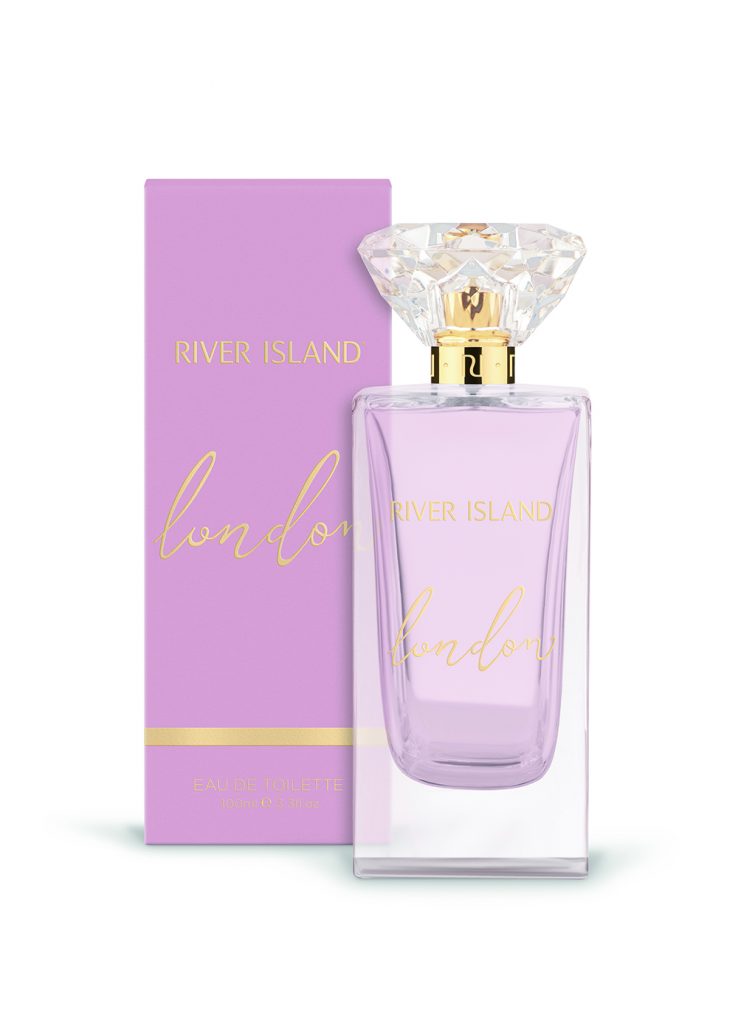
Womenswear fragrance fashion Capitals of the World. Inspired by the fashion capitals of the world, Paris, Milan and London, these fragrances have been designed to complement your style, day or night. Leaders, not followers, take cues from iconic cities and push your boundaries. Nothing will complete your looks like a deliciously unique scent. London – NEW London is River Island’s new fragrance withing the collection. The perfume is beautiful, bold and crowned with confidence, inspired by the capital city. The notes of Jasmine are fresh and vibrant and are combined with the top note of neroli, which has a sweet-floral scent with an element of citrus, creating a refreshing summery London EDT: 100ml RRP £16 Milan Inspired by the glamour and elegance of Milan, the fragrance has a sweet floral scent. Bergamot is the top note, which has a gorgeous citrus-like scent. This being combined with the sweetness of the peach, lavender and jasmine Milan the ideal fruity perfume for a summer’s day. Milan EDT: 75ml RRP £14 Paris by Night Paris by night embodies the mystery and allure of the fashion capital. An oriental floral scent is built through the inclusion of mandarin, grapefruit and orange flower note to ensure that the fragrance has a light feel to it. However, additional warmth is created through caramel and vanilla notes. Paris by Night EDT: 75ml RRP £14 Paris It’s as easy to fall in love with this fragrance as it is the fashion capital. In River Island’s Paris perfume, the top notes of cut grass, combined with Italian lemon, bergamot, and apple blossom, create a beautiful oriental summer scent. Paris EDT: 75ml RRP £14 For more information and to buy online visit www.riverisland.com TRIED & TESTED :: TRIED & TESTED :: TRIED & TESTED London This has really good quality packaging and glass bottle. A sweet scent lasts most of the day. Very impressed with this. VP Paris A very feminine perfume, long lasting and individual. Beautifully presented to sit elegantly on any dressing table.JP 00
Walk Derbyshire – Taddington to Flagg & Chelmorton

This month’s walk has a little bit of archaeology thrown in for good measure. All it takes is a strong pair of legs, keen eyesight and maybe but not essentially, a lightweight set of binoculars. Starting and finishing in the delightful village of Taddington, a place where winter snows seem to come long before other Peakland settlements. Walking almost due south at first, the way begins by crossing seven tiny fields; small strip fields seem to be a feature locally. Crossing the Bakewell/Chelmorton road, a field path follows the length of one of the narrow strips to reach Flagg where they have races for riders ranging from teenagers to mature middle aged farmers every Easter Sunday, a day when nature invariably arranges a snow storm to keep everybody on their toes. The long narrow fields date back to Saxon times when their shape was dictated by how much land a man and two oxen could plough in a day. From Flagg a sharp right-hand turn leads through a series of slightly larger fields, traditionally left unploughed. The walk then follows minor roads and footpaths all the way to re-join the Bakewell/Chelmorton road; a left turn here for about 150 yards and steadily descends beyond a moorland cross-roads, as far as a minor road going right, downhill into Chelmorton, arriving conveniently opposite the Church Inn. This village has the best preserved collection of unspoilt narrow, strip fields. Its church is dedicated to Saint John the Baptist, the saint who the Bible tells us, spent time in the wilderness, where he lived on locusts: a locust weather vane on top of the church steeple commemorates the event. After a little under half a mile of walking on field paths over an airy limestone upland filled with tiny flowers, the path crosses an unsurfaced lane. Here you can make a short diversion by turning left to the lane end, and then right over the grassy moor to reach one of the Peak’s finest pre-historic sites. This is Five Wells chambered cairn, a unique remnant from Neolithic (latest stone age) times. The site has been excavated in the distant past, when remains of skeletons were found alongside small fragments of flint tools. The remains of long abandoned lead mines show themselves by path-side humps and hollows along the way to the descent back into Taddington where the Queen’s Arms welcomes walkers. USEFUL INFORMATION An easy to moderate 5¾ mile (9.25km) walk on field paths and a short section of a couple of rural roads. RECOMMENDED MAP Ordnance Survey1:25000 scale Peak District, White Peak Area: Explorer Map, Sheet OL24. PUBLIC TRANSPORT Trans Peak Derby/Buxton hourly service via Matlock as far as the Queen’s Arms in Taddington. REFRESHMENTS Pubs in Chelmorton and Taddington. CAR PARKING Roadside on the outskirts of Taddington, but please ensure you do not interfere with anyone’s rightful access. DIRECTIONS Take one of the side paths, southwards and away from the village main street. Pass a dew pond on your left at the bottom of Slipper Low. (Water was always a problem around Taddington, causing villagers to walk considerable distances carrying pails of the precious liquid). Cross a stile and turn left on a back road, known locally as The Jarnett. Where The Jarnett makes a ‘Y’ junction with another minor road, Moor Lane, climb a stile and walk diagonally right across the middle of the intervening fields. Cross field boundaries by stiles or gates in order to keep to the official right of way. Go diagonally again over three more fields, all the time walking down their centres, until you reach a path ‘cross roads’. Go forwards again down the centre of the fields until the path reaches a field access track via yet another stile. Turn left and follow the grassy lane, down to Flagg Lane. Turn right here for about 45 yards and turn left into the first of three long, narrow fields. Go round the back of Flagg Hall, then down its drive to reach a road at a ‘Y’ junction. Turn right and follow the road through Flagg until the road joins Pasture Lane at this junction. Turn left and follow the side road for about 150 yards until it makes a sharp left turn at the apex of a sharp bend. Do not follow the road round the bend, but turn right on to a field path crossing six medium sized fields. Use stiles and gates in their boundaries to follow the correct route. Turn left on to Flagg Lane and follow this road (can be busy, so keep to your right and walk in single file). Go over a cross roads and then begin to walk downhill as far as a minor road going right. Turn right and follow the minor road down into Chelmorton village, conveniently opposite the Church Inn. (Dogs are welcome and are even accommodated with their own barrel on tap). Turn right on entering the village and walk past the church. Climb steadily uphill on a rough track, past the village water supply until the track is joined by a path coming round from the side of Chelmorton Low. The rough surface around the path, is an indication of one-time lead mining activity. A diversion going left along an unmade lane will lead, beyond its end, to a concessionary path to Five Wells Chambered Cairn. Return to the lane to continue the walk. Follow the lane back to the point where it is crossed by the path from Chelmorton. Follow this path (to your left if you have been to Five Wells Cairn. Follow the high level, airy path, forwards alongside a boundary wall over Sough Top, the highest point of the walk, then downhill, crossing a minor road back to Taddington, reaching the village opposite the church. 00
Places Pevsner Forgot III – Aston & Thornhill-in-Peak

If Sir Nikolaus Pevsner had included scenery as well as buildings, the hamlets of the Hope Valley might have taken up as much room in his Buildings of England volume on Derbyshire as Chatsworth but, of course, it’s buildings that he is attempting to record and they are a little sparse in these places, but what charm they have! Aston (one of three Astons in Derbyshire) and Thornhill lie in the lee of Win Hill just east of Hope. All three are what historians call discrete settlements, in that they have no real nuclei, but consist of scattered farms and cottages. In this, they are a legacy of the kind of rural settlement which existed prior to the evolution of the modern village, mainly after the Norman conquest; such settlements were the Norm in the Iron Age, under the Roman Empire and subsequently. They are far more common in Wales and Cornwall, where the cultural impact of Saxon expansion had little effect, nor indeed that of the Norman, who imposed castles but few new settlements. Anglo-Saxon control of the Peak came late – probably from the middle of the seventh century – the Pecsaetan, much later called the Peakrells, were a distinct element in the make-up of early Mercia. Eventually, the whole tract of the Dark Peak was absorbed at the Norman conquest and became under the direct jurisdiction of the King. Parishes were enormous, those of Hope and Hathersage particularly so. Hope, in which Aston and Thornhill still lie, still contained ten townships (essentially scattered settlements retaining little more than an identity) and nine formal hamlets, even in the 19th century, when the majority of the land was part of the Eyres’ vast Hassop Hall estate, later inherited by the Leslies of Balquhain and broken up by sale in 1919. Aston is best visited from the A6187 (Station Road) just east of the Netherhall Bridge over the Noe. It contains a couple of fine farmhouses, of which Kilncroft on your left as you ascend Aston Lane is the most architecturally formal, being two storeyed, three bays and stuccoed, work carried out in the 19th century for one Scott Wells. The name implies some kind of industrial activity on site at some distant time in the past, but unlikely to have been pottery, for the area is devoid of suitable clay. It is more likely to have been connected to lead smelting. To the NW lies a virtually invisible gem, one of the township’s two seriously impressive buildings, Birchfield Lodge. This was built as a shooting box for Sheffield steel magnate Mark Firth in 1875. It is a very plain house, the very palest reflection of Jacobean revival, but of three blocks, two ranges at right angles joined by a three-storey castellated octagonal tower containing the hall, and with a third, later, Arts-and Crafts block to the NW, very tall; the main façade is plentifully gabled and the whole once sat in a glorious park, now somewhat truncated but still identifiable on the ground. Firth embellished the interior of his occasional residence to a high quality, despite mixing Classical with Gothic elements. He also embellished the house with that rare thing, a Blue John window in the porch, which we saw during a visit during renovations in 1981 when my colleague Mick Stanley (then assistant director of the long defunct Derbyshire Museum Service) suggested it be removed for safe keeping to Buxton Museum, where it arrived in 1983. This move was simplified by the fact that the house was then, and is still, unlisted: no consents required! By 1914 it had been let as Win Hill Holiday Home but in 1932 was sold as an hotel, but in the war became an hostel for Sheffield steelworkers. From the 1950s to 1981 it belonged to the Wood St. Mission, Manchester, later the Greater Manchester Youth Association, these uses being facilitated by the proximity of Hope Station (never, as so often today, ‘train station’ an egregious Americanism) – actually also in Aston. It is now divided as three luxurious private homes, and is not really visitable. If one continues along Aston Lane, which turns to the east, one reaches the core of the settlement, lying in a picturesque declivity, with a former stone clapper stile allowing access to a footpath to Hope. Proceeding up the hill, the lane meets at the summit Parson’s Lane, which also rises thence from the valley. Here, at the junction, stands Aston’s gem, Aston Hall farm, its centrepiece a small Elizabethan manor house, set behind a low wall amidst its later outbuildings. Despite its remoteness from the latest metropolitan trends in the architecture of the era, its builder miraculously managed to embrace the basic Classical dispositions of the symmetrical façade, decorating it with a top pediment centered by a three light mullioned window beneath a subsidiary pediment, parapet with ball finials and a delightful front door set under a broken pediment supported on fluted and stop-fluted Doric columns – absolutely charming. Above the top central window stands the little carved figure of a naked man (the builder? a lead miner? a Classical deity?) and below, amidst chunky strapwork, appear the arms of its builder – or three lozenges azure, a roundel for difference – the opulent lead trader Thomas Balguy (the ‘L’ is silent and the ‘A’ long as ’aw’) and the date 1578. When this branch of the Balguys died out (the other branch built Derwent Hall four miles to the north – see Country Images July 2016) the estate came to the Bournes of Ashover, from whom it descended to another Sheffield family the Nodders. They let the house and its modest estate to the Walkers, also Sheffield ironmasters. Later it was for several generation farmed by the Daltons local farm biliffs to the Hassop estate, but was later sold to the Shuttleworths of Hathersage who sold to Miss H. Cuthbert who entertained us to tea and cake there in 1981. Whilst Aston
The Lost Houses of Derbyshire – Foston Hall
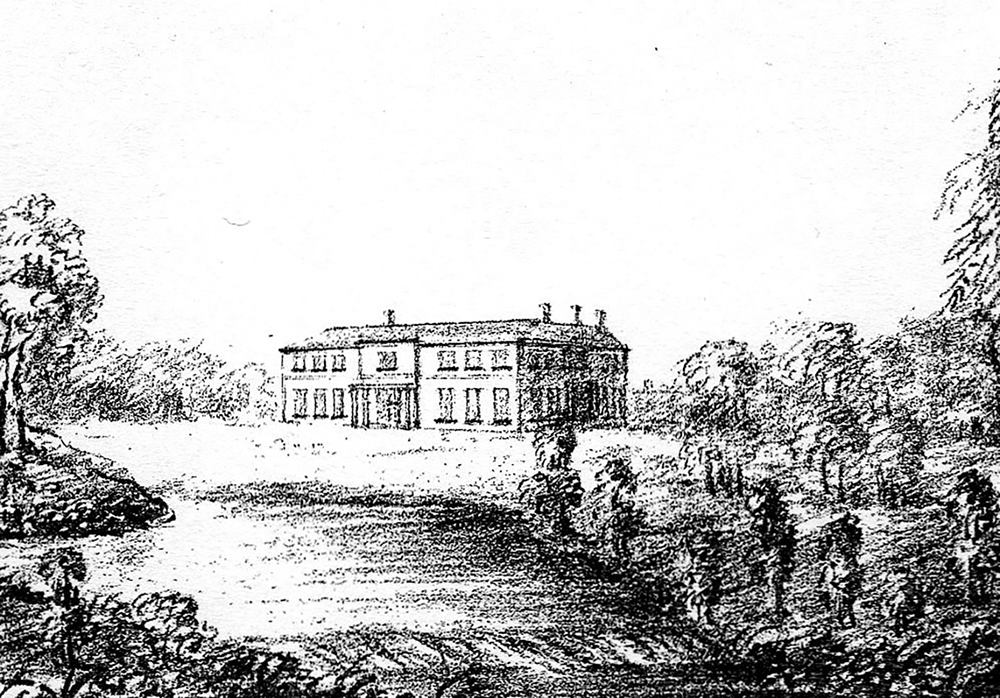
Most readers, on seeing the title of this piece, might instantly be tempted to pen a letter to the editor complaining that Foston Hall is not lost at all, but a prison for convicted women criminals, easily seen from the modern A50. Well, that is true, but we know of two previous houses on the site, both significant and worth recording. The first, of which no known picture exists, was built in the Tudor or early Stuart period, but was replaced in 1809 by a very stylish Regency house, of which some vestiges remain embedded in the present structure. We do not know who the sub-tenant of Henry de Ferrers was at Foston at the time of the Domesday Book in 1086, but it came to Henry de Derby in around 1100 (he may have married the heiress of the first sub-tenant) and was in the hands of his son Robert when the latter died without issue in 1130 and left the manorial estate to his younger brother John. It is unclear exactly who these de Derbys were; a family of that name (and of Norse descent) were virtual rulers of Derby from shortly after the Conquest until they were finally decimated during the Black Death, but Henry does not show up on their pedigree as reconstructed from surviving charters. By 1286 one Walter de Agard held Foston and we are told by one ancient document that he was fifth in descent from the first of his family to settle at Foston (presumably by marrying the heiress of the de Derbys) and that this man, Richard de Agard, was from Lancashire. Allowing 25 years per generation this would suggest that Richard Agard married a daughter or sister of John de Derby, which at least fits: only positive documentation is missing. All this suggests that there must have been a capital mansion at Foston from an early date, but where it stood is unclear. The park was landscaped in the late 18th century (perhaps by William Emes, a lake enthusiast) and the complex of lakes to the south of the present house, fed by the Foston Brook, may have been adapted from a moat. (I must confess to being unable to say whether these survive, for on my visit to Foston over thirty years ago, I was told by my personable hostess, Miss Scriven the then governor, that a survey of the grounds was understandably not possible for security reasons, and of course, I forgot to ask about any surviving features.. The Agards take their name from the Danish Ǻgǻrd, a habitation name (which does not appear to have survived to be entered into modern gazetteers) comprising the Norse elements à (= river) and gard (= enclosure), which hardly hands us any clues as to where in Lancashire they may have come from! They continued as proprietors of Foston, Scropton, Sapperton and Osleston into the Tudor period, when Clement Agard’s second son Arthur (1540-1615), was appointed Escheator and Coroner to the Honour of Tutbury and of the Bailiwick of Leek (Staffs.), a post he held for an astonishing 45 years. He was succeeded by his nephew, Sir Henry whose right to hold these profitable offices was challenged by the Crown, but he maintained he held it by tenure of ‘A white hunter’s horn, garnished with silver, inlaid with gold, in the middle and at both ends. To which is fixed a girdle of black silk, adorned with certain buckles of silver embellished with the arms of England’ which he claimed Arthur had received on appointment by and from his predecessor, and that the item had descended from Walter de Agard in the late 13th century. The coat of arms on the horn (which still exists) is in fact that of John of Gaunt, as Duke of Lancaster (but used to represent the honour of Tutbury, the seat of the Duchy’s control in our area) impaling the arms of Ferrers, once Earls of Derby, which confirms its status as a hereditable badge of office so the article must date from after about 1375. The horn continued in the family until the death of Sir Henry in 1635, when it passed to as distant cousin, Sir Charles Agard, previously of Mackworth, Croxall and Osleston. He was assessed for tax on 12 hearths at Foston, suggesting a medium sized Tudor or slightly later manor house, the first hint we get of anything about the place. Unfortunately Sir Charles found himself, at the Restoration, facing financial disaster as a result of having supported the King in the Civil War, a predicament that even holding the High Shrievalty of the County in 1660 had failed to ameliorate. His son John, having died before him, he sold Foston in 1675 and died five years later, when his remaining property passed through marriage of his daughter to the Stanhopes of Elvaston, including the horn and what by then was its remaining perk, the right to appoint the coroner for the area. Later, one of the Earls of Harrington sold it with its privileges to Samuel Foxlowe and from him it descended to the Bagshawes of Ford. The Foston estate, was sold to Col. William Bate, who owned an estate in Barbados too and was a colonel of militia there. His father had come into the property through shrew conduct, having arrived in the Caribbean as a surgeon. William’s son Richard married Mary, daughter of John Newton of King’s Bromley and it was her brother Samuel who was living in the hall when Woolley wrote of him in 1712 as ‘…having a very good commodious seat there and to complete its pleasantness there is a pretty brook runs through his garden.’ The brook being the same that probably formed a medieval moat round the first house and was later to be dammed to created the double lake which was the centrepiece of the modest parkland from the end of the 18th century. Richard’s son married Arabella, one
Return to the Isle of Wight
The mere few miles of Solent waters separating Hampshire and the Isle of Wight starts the journey to an island where Queen Victoria spent much of her widowhood in isolation, feel like moving to a foreign land. Brian Spencer took the opportunity of renewing his love for the island when he and his wife joined one of Matlock based Slack’s Coaches tours. Having spent a few years living near Winchester in the past, where I was able to join my sailing friend Terry on day jaunts around the Solent, dodging massive tankers on their way to Esso’s Fawley refinery – they never seemed to remember the rule about steam giving way to sail! This time we took a more leisurely route by way of Red Funnel Ferries, past a clutch of monstrous cruise liners. The last time I visited the island was planned to coincide with a few hours pottering about on the water. Unfortunately I hadn’t taken any notice of the weather, after all it looked quite fine when I joined the Portsmouth to Ryde ferry. Things began to change rapidly as we left harbour and the ferry tried to copy some nautical jig; up down, side to side, the boat never seemed to know which way it should be heading. Terry’s first words when I set foot on solid earth were some of the best I have ever heard, they were: ‘it’s a bit too rough for my little boat, so I suggest we go for a walk instead’. A walk on Tennyson Down (the poet spent his holidays on the island), seemed an excellent alternative, especially when I found a huge ring of blue caps, a mushroom favoured by Nottingham folk, but not apparently by passing walkers; all I could hear was the one word ‘poisonous’. As a result I had no qualms in filling my rucksack with the delicious fungi which kept us going for months. The land to the west of Tennyson Down narrows to the awe inspiring Needles, a place where many a small boat has come to grief. During that last visit to the island, due to the occasional ‘Blue Streak’ rocket whizzing out from trial launching pads high above the Needles, a close view of these attractive chalk stacks was strictly out of bounds. However, since Britain’s love affair with space flight was abandoned, the land immediately to the east of the Needles is now owned by the National Trust. We took a short stroll along the cliff-edge path before going for a look at Alum Bay and its famous coloured sands where a chair lift now takes the strain of climbing up and down the steep path. During the Napoleonic Wars and even as far back as Henry VIII’s time, the Isle of Wight being strategically placed across the mouth of the Solent became a land-based gun-ship. Remains of Prime Minister Lord Palmerston’s folly (the guns were never fired in anger) line the cliff tops near that more modern folly, the rocket launching pads. Slack’s coach drivers are a knowledgeable lot. We had met Steve before and knew we could trust him to find the sort of place his passengers would enjoy. Everywhere we stopped was conveniently close to somewhere new to explore. From Alum Bay we were dropped off right next to Yarmouth, where the sturdy RNLI rescue lifeboat was ready and waiting to rush off at a moment’s notice. Yarmouth Castle was one of Henry VIII’s strongholds, its guns could blast away at any French privateer trying to sneak past. Considering its age, the tiny castle still looks ready to mount its cannons. As a plus to our visit to Yarmouth, we found a perfect little pub down one of the streets leading to the marina. We stayed at the Trouville in Sandown, a sea front hotel with only a narrow strip of road between it and the sandy beach. As usual with a Slack’s tour, everything at the hotel was just right – pleasant staff, excellent food and rooms with a view out to sea where all manner of shipping waited patiently to nip up the Solent and into dock. Our stay coincided with the annual scooter rally, when the promenade became a similar version of Matlock Bath, but with smaller bikes. Any concerns about ‘mods and rockers’ rioting were soon dispelled when we realised that the polite middle aged riders were probably the grandsons of those mods and rockers of the late fifties. Queen Victoria’s beloved Prince Albert had Osborne House built to his design. It was here she came out of her lengthy widow-hood, helped by Scotsman John Brown. This was our only disappointment. We would have liked to combine a trip to Cowed with a private visit to Osborne House, but due to Covid restrictions, only pre-booked visits can be made just now. Fortunately both Sheila and I have been there before, but maybe next time, who knows. We were able to enjoy an afternoon in Ryde as a pleasant alternative. The place is an unspoilt Victorian gem, everything one could wish for in a holiday resort, sandy beach, a long pier and carefully tended municipal flower beds and children’s play parks and, not a single kiss-me-quick hat or candy floss stall anywhere. Although it wasn’t on the itinerary, we both wanted to see the Roman Villa at nearby Brading. It must be thirty years since I first saw it. Then it was the centre of an archaeological dig busy discovering the beautiful mosaics the Romans used before carpets were invented. Now the villa’s main rooms and other features are protected within a light catching, airy museum. Nothing has been removed from the time when archaeologists ranging from John Philip Munns (1809 – 1864), who first found the villa, to modern explorers still discovering wonders beneath surrounding fields. We were enthralled by mosaics, ranging from portraits of Roman gods such as Orpheus and angry looking Medusa with her head dress of snakes, to
How Eyam Dealt With Two Epidemics

Hopefully the Covid – 19 pandemic is beginning to show signs of at least slowing down. Members of the Peakland village of Eyam like the rest of us, must be grateful for the slow easing of restrictions, while at the same time taking sensible precautions in case yet another Covid variant comes along. The folk memory of this village, more than anywhere, must have been jogged in wondering whether this was going to be a repeat of the Great Plague that ravaged the country in 1665.  In 1665 it was an outbreak of Bubonic Plague, imported into Eyam from London within a parcel of cloth that brought with it an unwelcome guest. Unlike now, there were no wonder drugs available and it had to be dealt with by a successful form of Social Distancing led by a courageous vicar, the Rev. William Mompesson. In the early autumn of 1665, life in Eyam was pleasantly relaxed. The rigours of Oliver Cromwell’s Commonwealth were fast disappearing with the restoration of King Charles II to the throne, and with a particularly good harvest safely gathered in, village folk were looking forwards to an easier time, enjoying themselves on the run-up to the new year. No doubt news of a plague that was currently ravaging London, was brought, word of mouth by travellers, but there was no need to be too bothered, wasn’t London far away to the south of Derbyshire, needing a journey lasting at least three days. Bubonic Plague had been around since at least Roman times. Bacillus yarsinia pestris had entered the country at Bristol from Europe where it was running out of control. Carried by fleas, it soon found its way to densely overcrowded London where rats passed the infected fleas to human beings. Within a matter of a month around 7000 deaths were occurring each week. We have to thank the diarist Samuel Pepys and other writers for their descriptions of masses of victims needing to be buried in plague pits rather than in conventional churchyard graves. It was from this horrific situation that the disease found its way to the quiet Peakland village of Eyam, coming as part of an innocent parcel of cloth. George Viccars an itinerant tailor was lodging with Alexander Hadfield in the centre of a row of terraced cottages that still stand, close to the church gate. It was he who waited for the parcel, but when it arrived it was found to be slightly damp and so he spread its contents in front of the kitchen stove in order to dry. Unfortunately the material was full of flea eggs that began to hatch in the warm atmosphere. They then spread rapidly around the cottage and also began to move next door to the Hadfields on the handy backs of wandering rats, inevitably beginning to spread plague around the village. Symptoms of the plague started with swellings which spread rapidly around the victim’s neck, immediately followed by a high fever, soon ending in death. Within three days George Viccars and the Hadfields were the first to die, followed rapidly by their next door neighbours. All too soon the disease was rampaging around Eyam and surrounding farms. People began to panic as the plague spread through the village and those who could escape, including Squire Bradshaw, moved away. Of the 350 who remained, 260 were to die before the disease had run its course. With the squire gone the only person the villagers could turn to was the vicar, William Mompesson who, with the help of his ‘Puritan’ predecessor Thomas Stanley who had been sacked from his living on the accession of King Charles II. Sinking their ideological differences the two men set about finding a way to save as many members of their flock as possible, but at the same time preventing the plague from spreading to other parts of the district. Mompesson wanted to send his family away to stay with relatives near Barnburgh in west Yorkshire, but while his wife Katherine agreed to send the children she insisted on staying at her husband’s side, an action that effectively became her death warrant. As the plague began to inexorably spread around the village, people turned to strange remedies, such as drinking molten pig fat, simply because a woman who eventually survived had drunk it towards the end of her illness. Other weird and wonderful ‘cures’ ranged from breathing into the rear of a chicken in order to ‘draw’ the plague, or letting a frog sit on a victim’s stomach. None of these could possibly work, but the plan devised by Mompesson prevented the plague from spreading, simply sitting-out the disease until it had run its deadly course. In this way survivors built up a form of group immunity. Like the early days of the Covid pandemic, villagers were instructed not to travel, or congregate anywhere indoors, adopting an early form of Social Distancing. No funerals were allowed in the churchyard, which led to the horrific sight of survivors burying their dead relatives in back gardens or nearby fields. Elizabeth Hancock from Riley Farm on the outskirts of Eyam buried her husband and six of their children within the space of eight days. Somehow the poor distraught woman became immune and was able to move to Sheffield and stay with her eldest son who happened to be away when the plague struck. The family graves – Riley Graves as they are known, lie inside a circular wall in a field above the old lane leading from Eyam to Stoke Wood to the east of Eyam, while others are dotted around the village. Katherine Mompesson who died of the plague while courageously helping her husband, is the only person to be buried in the churchyard Mompesson’s courageous plan to quarantine Eyam was simple, but effective. Backed by the Earl of Devonshire (the dukedom was to follow in later years), who agreed to supply the village with food and fuel left at various
Celebrity Interview – Adam Buss

Are we going to spend the rest of our lives bemoaning the fact that something’s not happening or are we as a city going to do something collectively about it? Critics have found it comical that Derby, whose leading entertainment venue has been closed for more than seven years, has submitted a bid to become UK City of Culture in 2025. They may also titter at the fact that the executive leading the bid was once classed as Derby’s funniest man. But Adam Buss who runs QUAD, Derby’s £11 million art gallery and cinema, isn’t laughing. He regards it as a “massively tough†competition, especially as a record number of applications, 20, have been submitted for the 2025 accolade. So, does Derby have a chance of success? “Absolutely.†Adam, a former actor, stand-up comedian and marketing expert, explains how Derby can come out on top despite being without the Assembly Rooms since March 2014 because of a fire that caused extensive damage. “City of Culture isn’t a beauty contest. In terms of the challenge that Derby’s got, we’ve been very open about them in our bid and said we want City of Culture to be a catalyst for change. “In terms of the Assembly Rooms, it would have been great if it was all sorted six months after the fire happened but it wasn’t. “Are we going to spend the rest of our lives bemoaning the fact that something’s not happening or are we as a city going to do something collectively about it?†Adam, Derby’s City of Culture interim bid director, is loath to criticise previous UK City of Culture winners Derry-Londonderry, Hull and Coventry. He points out that Derby would do things differently. “What other Cities of Culture have done is they’ve largely brought in a group of culture professionals to deliver a year of exciting stuff. What we’re saying is we want to build from within, so we want to prioritise the talent that exists within Derby.†This is from a man who grew up on a council estate in Hastings, East Sussex, with little access to the arts. When he was at secondary school Adam showed an aptitude for drama and his teacher impressed on him that he could have a career in the creative industries. When it came to choosing a university that offered a drama course, Adam drew up a shortlist of four. He rejected Winchester – “not the sort of place you want to go to when you’re 18 or 19†– before turning down Birmingham because it felt “too big†and Bretton Hall, part of the University of Leeds, which was “too remoteâ€. “Derby was the only place that I didn’t go and visit. I chose Derby because I didn’t want to go to the other places! “It wasn’t a big city but it was a city and it had a course that was a bit more flexible that gave me the opportunity to try out different things. “It was by far the best decision I’ve ever made in my life, coming here in the first place.†While at university Adam met a lecturer who was a former stand-up comedian. He started up a group for budding comics. He had contacts which enabled Adam to get short slots as a stand-up and he was on the comedy circuit for about three years. The pinnacle was when Adam reached the final of the Leicester Mercury comedian of the year contest in which he came up against Jimmy Carr, John Bishop and Miles Jupp. “Basically everyone else who was in the final is now a very successful, professional stand-up comedian and I’m not. So that tells you all you need to know!†Adam didn’t win the competition, so he decided a change of career was necessary. But there’s one title he hasn’t relinquished. “The university and the Students’ Union ran a comedy competition for about three years. I was the last person to win it, so I’m still Derby’s funniest man!†Adam then secured a job at a London marketing agency working with big companies including Sony PlayStation, mobile phone provider Orange, Top Man and Air France. “Our job was to turn commercial brands into live experiences for people to be able to understand the brand and ultimately sell more stuff. “It was a great experience and I learned a lot. But one of the key things I learned was that I’m not well suited to the commercial world. I understand it but I don’t care enough about it, to be honest.†Adam began to look at other jobs that were not in London. A vacancy for a press officer at Derby Playhouse, as it then was, brought him back to the city. “It just felt right straightaway because it was a venue I knew from my time at the university, I knew the city and I still had friends here. Fortunately I got that job and I’ve been in Derby ever since.†Adam had been doing odd acting jobs which enabled him to get his Equity card and an agent. But he never fully committed to being on stage. “I was able to do work with people like 1623 theatre company and do some really interesting Shakespeare stuff. Artistic director Ben Spiller is the person who got me to understand Shakespeare and love it.†Adam performed at the National Theatre and in a Royal Shakespeare Company festival but he still regarded it as a second job. His full-time work changed again when he joined Q Arts, the organisation which merged with the Metro Cinema to become QUAD, although it would be another two years before its £11 million building took shape and became its Market Place home in 2008. There was a feeling at the time, says Adam, that there was a lack of ambition in Derby. “Maybe that’s unfair. Maybe it was a sense of ‘things are okay as they are’. QUAD was a disruptor to that and said we can
Product Test – Weleda

This month we’re testing the 100 year old beauty brand Weleda. Since it was established, Weleda has followed aims which sprang from its founding principles. Our products are intended to support people in their personal development, in maintaining, promoting and restoring their health and in their efforts to achieve physical well-being and a balanced lifestyle. This company philosophy determines Weleda’s economic approach and will remain the guiding principle for our future. Following the launch of Weleda’s beautifully indulgent Skin Food Body Butter last year, as a range extension to Weleda’s iconic Skin Food, the company is now repackaging the sumptuous Body Butter in a premium glass jar for Weleda’s Centenary year. Skin Food Body Butter enjoyed a meteoric rise – from zero to hero – to no.4 in the Weleda best sellers list, and regardless of season has featured continually in the Top 10, which also includes the Skin Food Original, Skin Food Light and Skin Food Lip Balm. Its vegan formulation has proved particularly popular.   Harmony Shower Gel 200ml £8.25 Weleda is excited to introduce its new AROMA SHOWERS which have been scientifically proven to positively impact emotional wellbeing. Growing focus on mental health means adults are increasingly seeking out solutions to help ease stress levels. HARMONY – this shower gel combines essential oils of silver fir, Siberian fir and lavandin, for an invigorating ‘forest bathing’ experience. Skin Food Body Butter 150ml £19.75 Weleda is excited to introduce its new AROMA SHOWERS which have been scientifically proven to positively impact emotional wellbeing. Growing focus on mental health means adults are increasingly seeking out solutions to help ease stress levels. HARMONY – this shower gel combines essential oils of silver fir, Siberian fir and lavandin, for an invigorating ‘forest bathing’ experience. Prickly Pear 24h Hydrating Facial Cream 30ml £11.95Vegan NATRUE-certified The solution to thirsty skin, this long-lasting cream absorbs quickly and delivers weightless moisture, leaving skin feeling softer and healthier with a beautiful dewy sheen. The silky formulation, made with 90.5% organic ingredients including organic shea butter and safflower oil, is truly a master at keeping the skin looking and feeling hydrated, supple and radiant all day long. A natural glow-getter, the light non-comedogenic cream is proven to provide day-long hydration. For normal to dry skin. TRIED & TESTED :: TRIED & TESTED :: TRIED & TESTED Skin Food Body Butter I love the fact that Weleda use so many natural and organic ingredients. I found this was smooth to use, quickly absorbed and left my skin feeling supple and well nourished. I’m also grateful that the fragrance is subtle. JP Shower Gel Smells like a spa in a bottle – lovely scent. Lathers up great. A good price too. Definitely worth getting. VP Weleda 24h hydrating facial lotion Keeps skin super hydrate all day – will be a perfect product for the winter months when your skin tends to be drier. It doesn’t leave your skin too oily or greasy and smells amazing! CB 00