Places Pevsner Forgot 2 – Foston
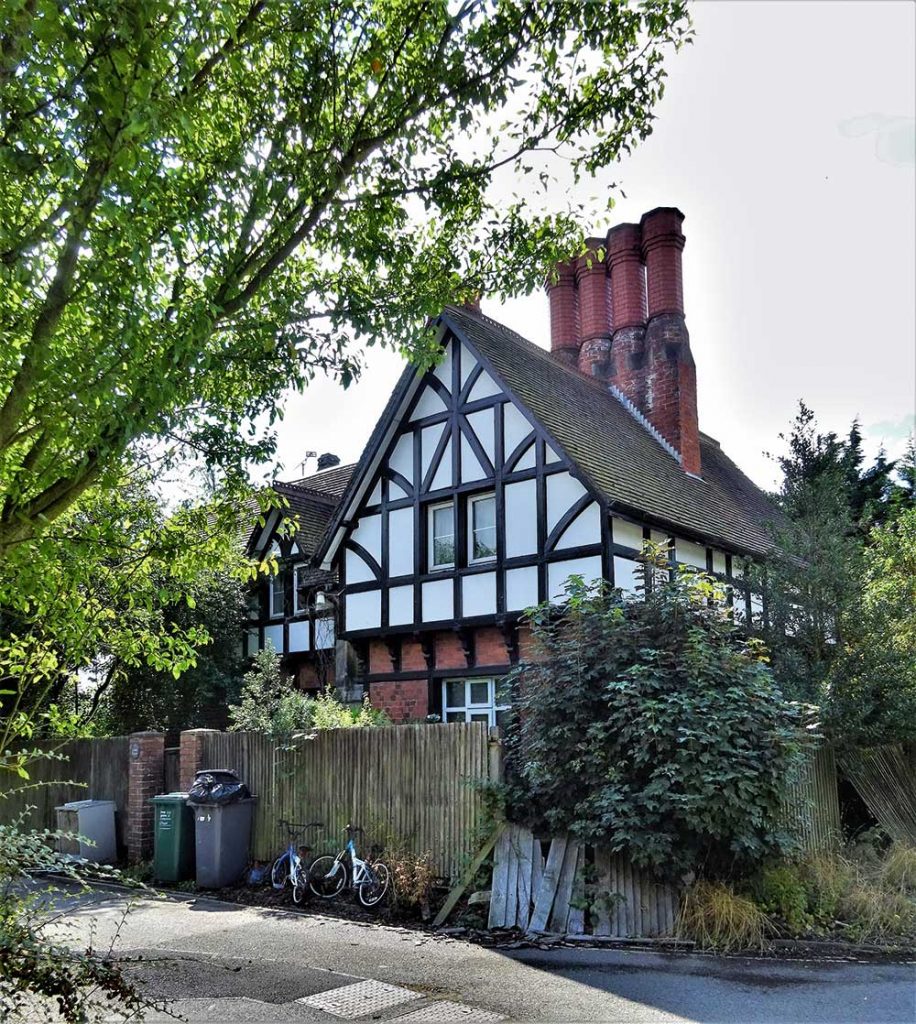
It might reasonably be argued that the reason that Sir Nikolaus Pevsner omitted certain settlements from his magisterial series The Buildings of England was that they contained no buildings worthy of note. Yet times change, tastes change, scholarship uncovers matters closed to Sir Nikolaus when he began his project in 1948. Last time, we looked at Milton, a forgotten gem of an estate village, really quite formal, and which today its omission would seem inexplicable. Hence, we chose another estate village today, but one much less formal, and which has suffered a great disaster. It is also one where even the listed hall did not attract the compilers’ attention. The village is Foston, west of Derby along the old Uttoxeter Road. A recent issue of Country Images looked at the early history of the place and the hall up to the moment it burnt down in 1836 and left, as Samuel Bagshaw, the compiler of the 1846 Directory of Derbyshire says, ‘a smoking ruin, which it still remains.’ The great disaster, the destruction of the Regency hall aside, was the completion of the A50 trunk road in 1996. This went right through the centre of the village, involving some destruction of buildings, and sundered the historic hall, on the south side, from the community built to serve it, on the north. Not only that, but the incessant roar of the traffic is overpowering, and left us glad to find a few places where intervening buildings managed to muffle it. It must have totally destroyed property values there; inside one’s house armed with triple glazing is one thing, but how can one sit out in one’s garden with that continuous roar? We parked in the main street, formerly the A511 old Uttoxeter Road, which merges with the A50 here. The only listed building this side of the A50 is Broomhill farm to the north and not accessible to the public, but is a pleasant if unremarkable brick built farmhouse with outbuildings dating from the second quarter of the 18th century but given a rebuild in the early 19th century. If one walks to the junction with the A50 (using ear defenders!)where one may cross on a steel footbridge, the stub of the old road veers off right, which brings one to the walled kitchen garden of the hall. This is undoubtedly impressive, and the bricks employed suggest a mid-19th century date. Furthermore, it has two divisions, the southernmost one full of caravans and the northern one, grassed over, faces the 19th century buildings of home farm, which has an equestrian adjunct and of which some of the outbuildings have been converted as residences. Returning to the road, a number of modern residences have been built on the left as one walks away from the A50, whilst on the right a long low building with an oeuil-de-boeuf gable window would appear to have been the estate’s wheelwright’s shop, probably mid-19th century. Probably the Broadhurst family turned their attention to improving the village once the new hall was complete. From before 1827 until almost the turn of the century the wheelwright (also a farmer) was William Alsop and his son William after him. Beyond it, end-on to the road, is an early 19th century brick cottage which without doubt started off as more than one, perhaps part of it was chez Alsop. Beyond this, is a range of what must once have been three cottages, gable end to the road, and partly harled with pebbledash, with the easterly gable-ended cottage joined to the others by a link. From 1827 there had been a grocer and a butcher in the hamlet, and by 1891 the grocer had also become the Post Office, which continued to flourish until 1980s. The door of the westerly gabled range is currently blocked with new herringbone brickwork, but its tiled canopy suggest that this must have been the former Post Office and store. Indeed, the Post Office might have moved, for in 1891 it was run by the blacksmith, John Hollis but, by 1908, it was run from the general store. It might be added that in 1846, there was also a pub, The Crown. The parish historian claims there is a record of a pub in the village as far back as 1577 and recorded again (un-named) in 1686. Whether there was any continuity or not is obscure, but The Crown closed its doors in 1890, leaving the villagers to traipse off to Scropton for a drink to a pub that is also now closed! Opposite these relatively pleasing buildings, is the only substantial house in the hamlet bar the outlying farms and the hall and The Cottage, which we failed to locate (if it still exists). This is The Firs, a two storey rendered brick villa which took on it present form sometime after the Second War, one suspects. On the old 6 inch OS maps, it is L-plan with a range end-on to the road, its end wall actually on it, and another range at right angles, parallel to the street. Today, this end-on-to-street range has disappeared to be replaced with a substantial brick gable separated from the other range by what appears to be a newish two storey porch with re-used stone quoins enclosing a room over the stone entrance, all topped by a stone coped gable with prominent kneelers. The range to the right, though, is clearly older, possibly much older. Although rendered, the bricks in the chimneys with their decorated stacks are narrower than standard, suggesting older work than c. 1830s. Beyond are a range of outbuildings, once stabling, farriery and hay barns, all now converted into separate homes. The Firs is not listed in the directories until 1891, when Fraser Tytler lived there, followed for well over 20 years by Edwin Caldecott JP, and I suspect it was the house for the agent of the hall estate. Having been privatised when the estate was finally sold up it probably underwent
Walk Derbyshire – Walking Eyam, Bretton Edge and Foolow
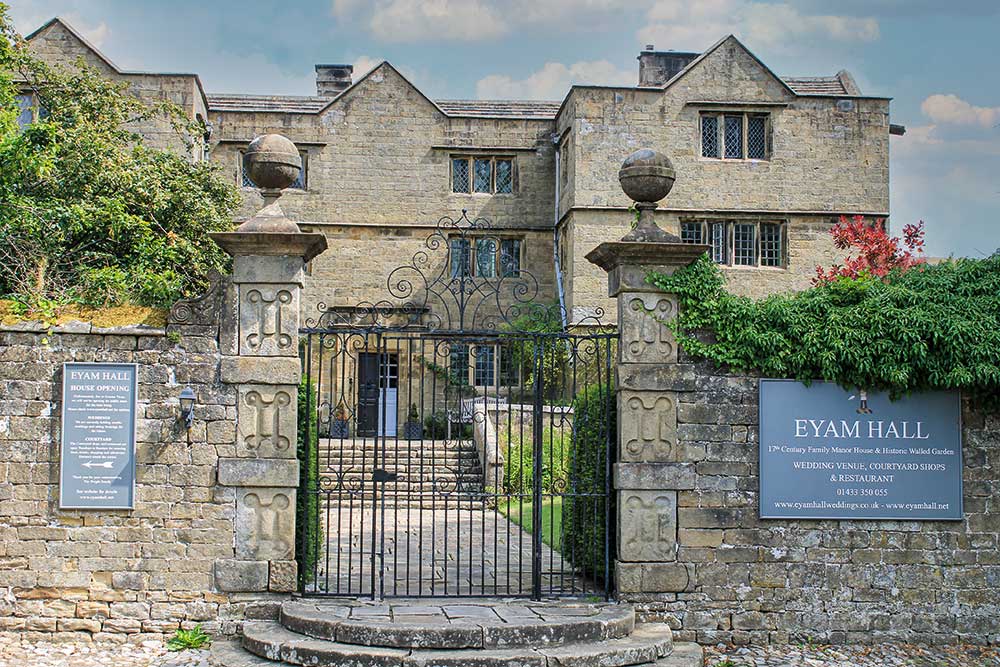
Here is a walk through some of the historical countryside surrounding the plague village of Eyam, a village where the Covid-19 pandemic must have jogged some deep folk memories from a time when the inhabitants of Eyam made a courageous stand against an outbreak far worse than that which beset them in more recent days. The walk starts logically one might say, from the car park directly opposite a small, but fascinating museum devoted to the stand made by those villagers in 1665/6, when led by a far sited young rector, the Reverent William Mompesson and assisted by his friend and predecessor, Puritan minister Thomas Stanley. Simply by what was surely firm and sensible leadership, they managed to persuade the people of Eyam to hold themselves in total isolation, despite more than half their number succumbing to the dreaded virus known as Bubonic Plague. All around Eyam village you can find relics of that terrible experience, from the natural pulpit in Cucklet Dell where Mompesson preached in the open air. Other relics are Mompesson’s Well high above the village on the edge of Eyam Moor where the far sighted vicar aided by the local landowner, the Earl of Devonshire, arranged for kind hearted suppliers to leave essential supplies, paid for by cash left in the purifying waters of the well. Another transfer point is the limestone boulder beside the path leading down to Stoney Middleton. Money dropped into holes filled with vinegar carved in its surface was rendered safe by the purifying action of the vinegar. Along with these exchange points are the number of simple graves dug into places well away from the village church; they were dug by survivors who had the onerous task of burying their nearest and dearest in places ranging from local fields and even gardens. This is a walk that starts by tasking the ability of all those who are prepared to make the steep climb up to the Sir William Hill road, high up on the edge of Eyam Moor. Fortunately this is the one and only climb, and a climb where the effort offers a reward of some of the finest views in the Peakland. Descending from Bretton Edge, the walk passes through Foolow followed by a mile or so of field paths leading all the way back to Eyam. USEFUL INFORMATION 6 miles (9.6km) of moderate walking , beginning with a steep climb from Eyam up a woodland path, followed by open fields leading to moorland road walking, then by a fairly level path across small fields, back into Eyam. Excellent wide-ranging views from Bretton Edge. RECOMMENDED MAP Ordnance Survey 1:25000 scale Explorer Map, Sheet OL24; The Peak District, White Peak Area. PUBLIC TRANSPORT Buses from Bakewell and Sheffield via Grindleford. REFRESHMENTS Eyam village. The Barrel at Bretton and the Bull’s Head in Foolow (open Sat & Sun from 12 noon) CAR PARKING On outskirts of Eyam village, opposite the village museum. Directions : From the car park opposite Eyam Museum, turn left and left again to follow the village’s main street, past the Jacobean hall and then the plague cottages where the dreadful virus first struck. Go through the church gates on your left and follow the path through the graveyard, past the church and then climb out into open fields. (Look out for the amusing memorial stone to a famous county cricketer). Cross the road and climb steeply up the woodland path a few yards uphill from the entrance to Beech Hurst Youth Hostel. Continue steadily uphill across three small fields above the wood, until the path reaches a side lane. (Mompesson’s Well is a little over a quarter of a mile to your right if you wish to make a diversion to this historical place). The walk turns left and crosses the lane for a couple of yards and then turns right to climb over a stone stile in the gritstone boundary wall. Keeping on the left of a boundary wall, climb steadily over Bole Hill which was the site of a small lead smelter for nearby Ladywash Mine. After a quarter of a mile of walking through pasture above Ladywash Mine whose chimney can be seen in trees over to the right, climb over a ladder stile and join the Sir William Hill road. Turn left and walk down the unsurfaced road until it joins a narrow lane at a sharp bend near the start of Bretton Edge. Spend time admiring the wide ranging views, both north and south across the Peak District moors and pastures. Walk along the road for about a hundred yards and then turn right along a descending rough track. The track becomes a narrow surfaced lane servicing the scattered cottages overlooking Bretton Clough. Keep with the lane as it climbs to the left past Bretton hostel in order to reach the ridge-top road once more. It is next to the Barrel Inn. (Food available, both inside the pub and out). Turn right on joining the top road beside the Barrel and begin to walk downhill. After about a quarter of a mile, take the left-hand fork and continue downhill along the road, past a small well and for about three quarters of a mile until it reaches Foolow. (There have never been any people who can be classed as foolish living in and around Foolow. The name actually means Foo’s Hill – Foo would have been the name of an early Saxon settler in these parts). Turn left beside the tiny non-conformist chapel on entering the village and walk past the duck pond overlooked by the village cross on your right and a bull ring almost lost in the grass. With the Bull’s Head pub on your left, follow the Bretton road, bearing left at the fork for about 150 yds. Look out for a stone stile in the wall on your right. Go through the stile and bear left to cross four narrow fields, using stiles in their boundary
Lost Houses of Derbyshire – Rivetts House
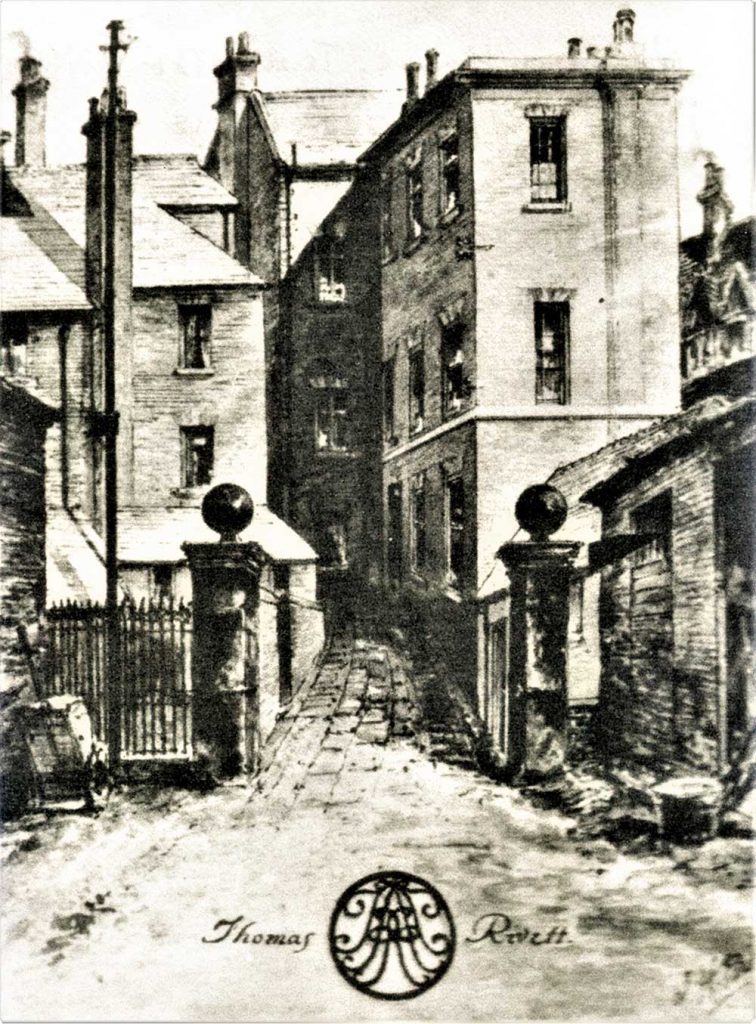
Alderman Thomas Rivett (1713-1763) was an example of the astonishing social mobility that was far more commonplace in the 17th and 18th centuries than professional social commentators like to admit. Rivett was a third generation maltster in Derby, a city which was then famous for the quality of its beer, long pre-dating the fame of Burton. His great-grandfather, also Thomas, had come to Derby from Repton before the Civil War and had set up as a blacksmith. His son, Thomas II (died 1679) was sufficiently well off on his father’s death in 1660 to become a maltster, a trade that revived with the lifting of the puritanical strictures of the Commonwealth on the return of Charles II. His son, Thomas III continued the trade and married Rebecca, daughter of Charles Agard of Mackworth (of a junior branch of the Agards of Foston Hall). The fourth generation, however, started to spread their wings. Thomas and Rebecca had an eldest son, yet another Thomas (IV) who was born in 1678. In 1708 he married Elizabeth daughter of Humphrey Eaton of Derby and was then already a brother of the Corporation, becoming Alderman in 1710 and Mayor of Derby in 1715. In 1718 he was wealthy enough to begin to piece together an estate in Staffordshire at Blore, and by 1720 he was lord of the manor and impropriator of the church (that is, he acquired the right to nominate a new rector). However, he died in 1724 leaving Elizabeth with seven young children, his fourth child and eldest son being – yes, you guessed it! – Thomas (V), born in 1713. Thomas’s responsibilities began early when he was required to nominate a new incumbent for Blore in 1728, the lucky person being his mother’s cousin, Revd. Richard Blackwall, although he died in 1732, requiring a successor, who was Revd. Charles Sibley, previously of Bath. Thomas came of age in 1734, becoming a brother of the Corporation in 1740, having gained his freedom of the borough in 1738. He had attended the Inner Temple in 1732 and was called to the bar in 1738, too. He was elected to Parliament in the Whig interest a decade later, continuing until 1754, and in 1749 married ‘the celebrated’ Anna Maria, daughter of Mr. Sibley, the rector of Blore (although the rector had died by this time). Incidentally, her uncle, Revd. George Gretton, later also Rector of Blore, was father of Elizabeth, who married Thomas’s exact contemporary and Derby neighbour, John Whitehurst FRS. In 1757 he was High Sheriff of the County, and the same year he also purchased an estate at Mapleton, building the handsome Mapleton Manor shortly afterwards, a house in which he subsequently resided. He served as Mayor of Derby in 1761 and was appointed High Sheriff for the second time two years later, but died at Bath in the April before taking up office. Needless to say, he was also a JP. He left four sons and four daughters. He was also an entrepreneur, and in 1751 with local banker John Heath, put up the money to found the Cockpit Hill pottery works, run by potter William Butts, just a few yards along from the rather spacious house he built in Tenant Street, two doors down from the Thorn Tree inn, and adjacent to the Old Mayors Parlour (see Country Images May 2014), on reaching his majority. This became his permanent home until he moved to Mapleton, after which it was his town house which he used when in Derby on business. This house was of brick, four bays wide and three stories high with a parapet to the front hiding a hipped roof. The sashed windows had gauged brick lintels centered by a stone keyblock, and it had a fine timber staircase and some interior ornamental plasterwork. The house also boasted a garden running down to the river bank, where Rivett added a small brick Gothick summerhouse in which to sit and read of an evening, although the expanding copper rolling mills, established opposite only a year or two later on The Holmes, must have quickly rendered it less idyllic fairly quickly. Robert Bakewell made a handsome set of gates with an arched overthrow with his monogram in a roundel below his crest – an arm holding a broken sword – at the top. These stood at the rear of the house between a pair of simple stone piers topped with ball finials with attendant spear-headed railings and led onto an avenue leading down to the banks of the Derwent Navigation. When the Jacobite army was nearing Derby in autumn 1745, Thomas Rivett was hastily made a deputy lieutenant of the county by the Duke of Devonshire (the Lord Lieutenant) and commissioned as a Captain into the hastily raised militia then being recruited. Once Bonnie Prince Charlie had arrived, on December 4th, this militia, called The Blues, made a strategic withdrawal to Nottingham, Rivett included. This left Rivett’s aged mother landed with the duty of having to billet no less a personage than the Prince’s joint commanding officer, James Drummond, 6th Earl and 3rd (Jacobite) Duke of Perth as a guest in the house, although his stay was just two nights, as he was obliged to lead the army back to Scotland at dawn on the 6th. After Thomas’s death, his wealth relatively undiminished, despite the bankruptcy of John Heath and his brothers in 1779 and the consequent failure of the Cockpit Hill pot works. The house remained in the family, although lived in by the third son, Peter Charles Sibley Rivett, who died unmarried there in 1784. It was then occupied by his sister Anna Maria, but she married William Richards in 1788 after which she lived at Penglais, his house in Cardiganshire. Meanwhile the youngest son, James Rivett-Carnac was assistant governor of Bombay (and father of Sir James, also governor of Bombay and the man who suppressed the practice of infanticide in Gujerat, made a baronet in 1836)
Bowes Museum – Barnard Castle
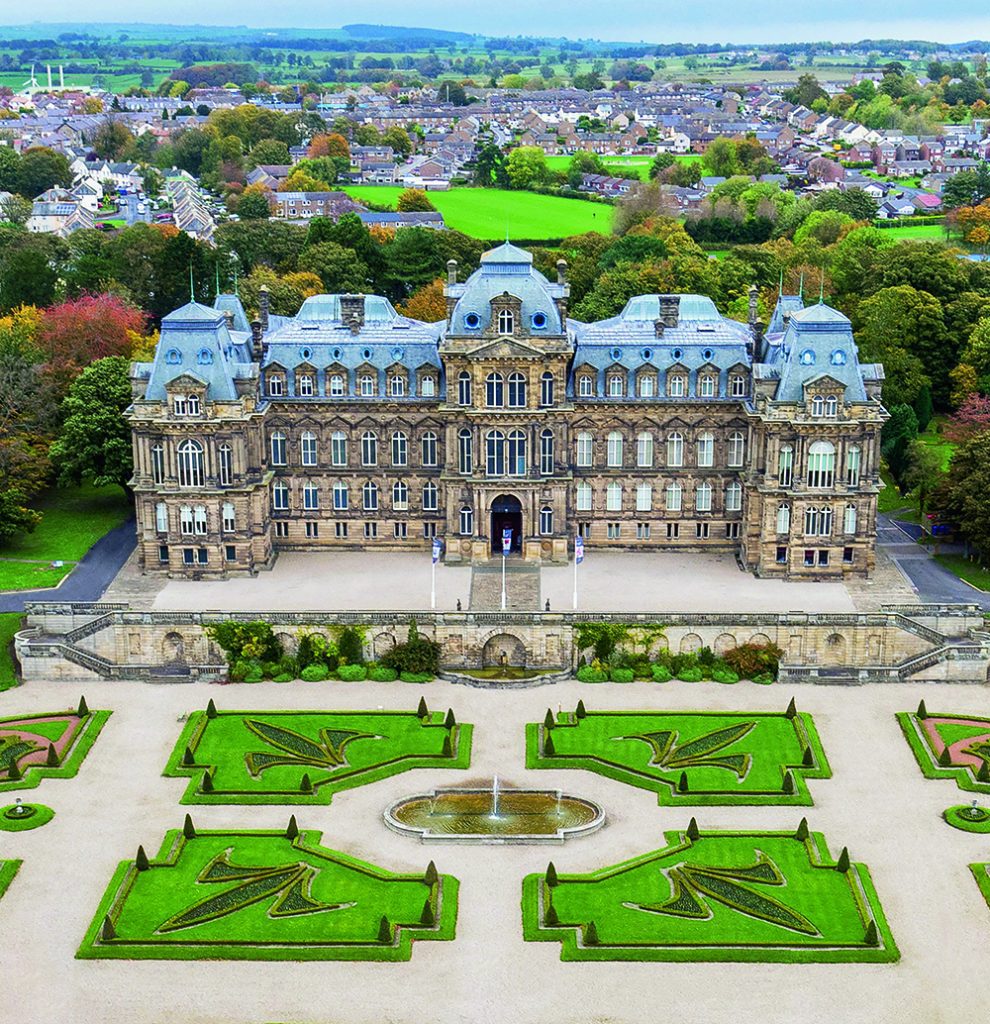
When Dominic Cummings, Prime Minister Boris Johnson MP’s political aid made his controversial dash to Specsavers in Barnard Castle, it is doubtful he had the time to visit the Bowes Museum. This was a pity, because it is nearby, on the outskirts of the town. If he had managed the short diversion away from the town centre, he and his family would have been rewarded by a trip round what is arguably Britain’s most unique museum. It is not simply the collections of treasures within Bowes Museum that is the attraction. The result of a lifetime’s collection by a philanthropist couple, it is it’s venue that first hits the senses, making jaws drop and eyes widen. The reason? No matter how well prepared visitors might be, here in the heart of the Durham countryside is a French château. It was built for John and Joséphine Bowes in order to display a lifetime’s varied collection of European fine and decorative arts. John Bowes was a wealthy landowner with coal mining and shipping interests – through family connections he was an ancestor of the late Queen Elizabeth, the Queen Mother. His French wife Joséphine also inherited wealth. A talented amateur artist, she became a moderately successful actress on the French stage. From all accounts the relationship was a happy one, despite their inability to produce a family, probably due to John Bowes catching a venereal disease during one of his European journeys. Even though their individually accrued wealth suggested an introduction into high society, Joséphine’s Bohemian background did not meet the snobbish Victorian standards of the day. Such was their joint affection that they were able to ignore this snub allowing them to devote their energies by increasing a joint art collection along with planning a suitable home for it. Together they worked tirelessly, developing their unlikely plan to open a French-style, purpose-built museum in rural Teesdale. Sadly both died before it was opened in 1892, but were buried in the museum garden. A collection which John started in his youthful travels around Europe grew steadily, so much so that he had to employ a team of specialist agents to scour major exhibitions. His working relationship with his agents grew on mutual trust, especially when he accepted their suggestion to move on to the work of up and coming artists. This seems to have worked and as a result, the galleries at Bowes now hold paintings ranging from 17th century Dutch and Flemish masters to Impressionists and English landscape masters like J.M.W. Turner, a policy continued by recent purchases of modernistic works. One of the results of this policy based on mutual trust was that many paintings now worth hundreds of thousands of pounds, were frequently bought for as little as £10. Although their purchase price is uncertain, two large paintings by the Venetian artist Canaletto were bought this way. They are displayed alongside works by el Greco and Francisco Goya, just a selection of the famous artists whose work adorns the walls of Bowes Museum. Paintings by Joséphine Bowes mingle at Bowes Museum along with those by better known artists, but they can claim to be there by their own quality and not simply due to her influence. Joséphine worked tirelessly alongside her husband, each keeping to the idea of building a museum in England where anyone could enjoy the results of the Bowes couple’s ambition. For a time the collection was held in the Château du Barry near Louveciennes west of Paris, the one-time home of the mistress of Louis XV, which John Bowes gave to Joséphine as a wedding gift. During the Second Revolution (les Miserables is set in this era), an attempt was made to use the château as a store for military equipment. Concerned about the safety of his prized collection, John Bowes managed to pay off the authorities. A French architect who specialised in designing museums was employed to design the building housing the Bowes collection. It was planned to build on the site outside Barnard Castle, but unfortunately for the Bowes couple, although comparatively small the site was divided into several small parcels, each owned by a separate person. John must have had almost bottomless pockets, for after extensive negotiations, he managed to start building his dream museum. As Joséphine did not relish the thought of crossing the Channel, she kept her visits to England to the bare minimum. However, she braved the hazardous journey and arrived in Barnard Castle in time to lay the foundation stone, and turning to her husband, said ‘I lay the foundation of our dream. You John, will lay the cap stone’. Three stories high and built of locally quarried sandstone, building Bowes Museum, more château than municipal began in 1869 and, costing around £100,000 (equivalent to £9.3 million in today’s money), was ready to receive its valuable collection by 1892. Far sighted as well as being a philanthropist, John Bowes left a substantial legacy to help with the future running of the museum; but by dying comparatively young, this was something neither of the Bowes could predict, and what is there is for all to enjoy. In the heart of rural County Durham there now stands a light and airy building housing a well-run museum and art gallery, open for all to enjoy. Entering through the imposing wrought iron gates, visitors can wander past the well-kept parterre garden, onward to the steps climbing to this unexpected addition to the local countryside. To the left of the main doors, a heraldic shield with three archer’s bows makes a pun on the name Bowes. The ground floor is divided, on the right, the reception and shop area, then, to the left two rooms, one for toys enjoyed by children in Victorian times, the other a small area given over to prehistoric items such as an urn found in a neolithic grave, or enigmatic cup and ring stones. Alongside these curios is a Penny Farthing bicycle and of all things, a
Product Test – UpCircle Beauty

As well as being 100% natural, our skincare range is also 100% brilliant. Because you shouldn’t have to choose between doing the right thing and getting the best results. With UpCircle, you get to enjoy the uplifting benefits of nature’s own skin rejuvenators – and do the planet some good, too. That’s all round better skincare. BODY CREAM, 125ml £24.99 An award-winning hydrating body cream for all skin types with nourishing shea butter, linseed and olive oil. This body cream is made with the anti-inflammatory extract of leftover date seeds, a by-product of date farming. Soothe dry or irritated skin with this calming blend of ingredients. This cream will help to reduce inflammation and leave your skin feeling smooth and supple. Winner of the Eco Hero category in the Get The Gloss Beauty and Wellness Awards 2020. Housed in a glass jar with an aluminium lid and a cardboard outer box. 100% plastic-free packaging. Natural, vegan, cruelty-free, 100% recyclable and handmade in the UK. FACE SERUM, 30ml £14.99 Our multi-award-winning Face Serum brightens the skin with coffee oil from repurposed grounds Applied after moisturiser, this 100% oil-based serum is suitable for all skin types and helps to brighten and nourish the skin. The serum is formulated with hydrating rosehip and skin supporting sea buckthorn oil. The face serum is our best-selling product and with over 1,300 5* reviews it’s easy to see why. Housed in a glass bottle with a plastic dropper and a cardboard outer box. Each bottle can be returned and reused as part of our refill scheme. Natural, vegan, cruelty-free, 100% recyclable and handmade in the UK. Tried & Tested :: Tried & Tested :: Tried & Tested Body Cream Super smooth and melts into the skin really well. Nicely scented throughout the day. You can feel the hydration of this product. I love the fact this is using a by-product of farming. Wish more brands would do things like this – well done! VP Face Moisturiser Using natural ingredients, this is a rich face moisturiser that felt extremely soothing and was easily absorbed into my skin. Made with fine powder of discarded Argan shells this lovely moisturiser is natural, suitable for vegans, sustainable and cruelty free. LOR Face Serum Suitable for all skin types. This serum instantly is absorbed and leaves the skin bright! CB 00
Walk Derbyshire – Walking from Golden Valley to Codnor Castle

Here is a walk through history – from medieval times through the industrial revolution to the present day. Starting at the quaintly named Golden Valley, it passes the monument to a Victorian ironmaster and civil engineer, before crossing farmland slowly recovering from the depredation of open-cast coal mining in order. From here farm lanes reach a castle built by one of William the Conqueror’s knights. On the way back the walk follows the line of an abandoned section of the Cromford Canal. When the tunnel taking the Cromford Canal was dug beneath Butterley Park near Ripley, extensive amounts of ironstone and lime were discovered, making the raw materials founding the Butterley Ironworks. Specialising in large innovative projects, the company is best known for its construction of the Falkirk Wheel in recent times, to the famous pillars that still support St Pancras Station roof. What is not so well known is that the company made the cast-iron ‘trough’ carrying the Llangollen Canal over the river Dee. Such was the value and range of useful ores found during the canal tunnel’s construction that gave the name to Golden Valley. Although later roof falls made it necessary to close Butterley Tunnel, a long narrow lake that once held water to top up canal locks lower downstream, has settled into the countryside. It is popular with both walkers and anglers, some of whom were startled when their hook snagged an unexploded German bomb. Cottages, many of them once the homes of ironstone or coal miners exploiting the mineral wealth of Golden Valley. Codnor and Ironville are relics of that industrial past, but now mainly offer accommodation to those working in nearby factories dotted around the modern industrial estates. The walk starts from any one of the car parking spaces dotted around the valley road alongside Codnor Park Reservoir. Actual walking starts a few yards below the dam and follows a village street through Codnor, climbing out into open fields. Very soon a 70 foot high pillar comes into view; this is a memorial to William Jessop, civil engineer and canal builder, one of the founders of Butterley ironworks. An attractive feature for today’s visitor, it created great controversy when it was first proposed. Although it may not have pleased the pundits, it did however, soon become a popular attraction, with parties of school children coming out into the countryside and even train loads of visitors from as far afield as Sheffield. Following a farm lane, the way carries on beyond the pillar, past a farmhouse, until it reaches a crossing of four tracks where Codnor Castle’s ruins are a hundred yards or so further on, half right across a rough field. From the castle, another track to the left of the crossing, drops down towards the valley bottom and the railway line. This is crossed by way of a footbridge and the path now descends further through woodland until it reaches a dried up section of the canal. The towpath runs to the right towards Langley Mill; and to the left back to Codnor: this is the one we must follow. After passing beneath the railway line, the path swings to the left and then follows a straight track all the way back to the reservoir, where if luck is with you, there will be a portable refreshment cabin offering all things necessary to slake your thirst, or fill an empty gap in your stomach. The Walk : From the car park walk along the road towards the reservoir dam. Continue further for about 200 yards and turn right, uphill, along a side road through the built-up part of Codnor village. At the top of the village road, turn right at the junction with another road. Follow this as it swings left, uphill as a farm lane into lightly spaced trees. Lookout for the tall pillar of Jessop’s Monument. Also look out for a large circular concrete water tank above and to your left. Continue forwards to a four-way track junction and turn hard right. After a quick look at the monument and making the right hand turn, continue as far as a ‘T’ junction. Turn left here and follow the track, over a low rise for about half a mile to another four way track junction. Turn left here and begin to go downhill. Codnor Castle is directly to your front on the far side of a meadow reached by a stile. On the left of the track it is possible to get closer to the castle, but only as far as the surrounding fence. Continue down the track and then cross the footbridge over the railway line. Almost immediately cross a narrow footbridge over a drainage ditch. Walk on, past a narrow wood until you reach the abandoned canal. Follow the remnant of a towpath for a little over a mile alongside woodland covering the far side of the old canal. Bearing left, go under the railway and follow the towpath for a little under half a mile, past Codnor village on your left and Ironville to your right, as far as the canal’s dam wall. Continue along the road and back to your parked car. USEFUL INFORMATION An easy 4 mile (6.4km) rural walk along farm tracks and old canal tow paths. RECOMMENDED MAP Ordnance Survey 1:25,000 scale Outdoor Leisure Explorer Sheet 269. Chesterfield and Alfreton. PUBLIC TRANSPORT Busses between Ripley and Alfreton via Leabrooks stop near the turning for Codnor. REFRESHMENTS Mobile kiosk usually parked above the reservoir. CAR PARKING Roadside along the south bank of Codnor Park Reservoir. 00
Celebrity Interview – Paul Jones of the Manfreds
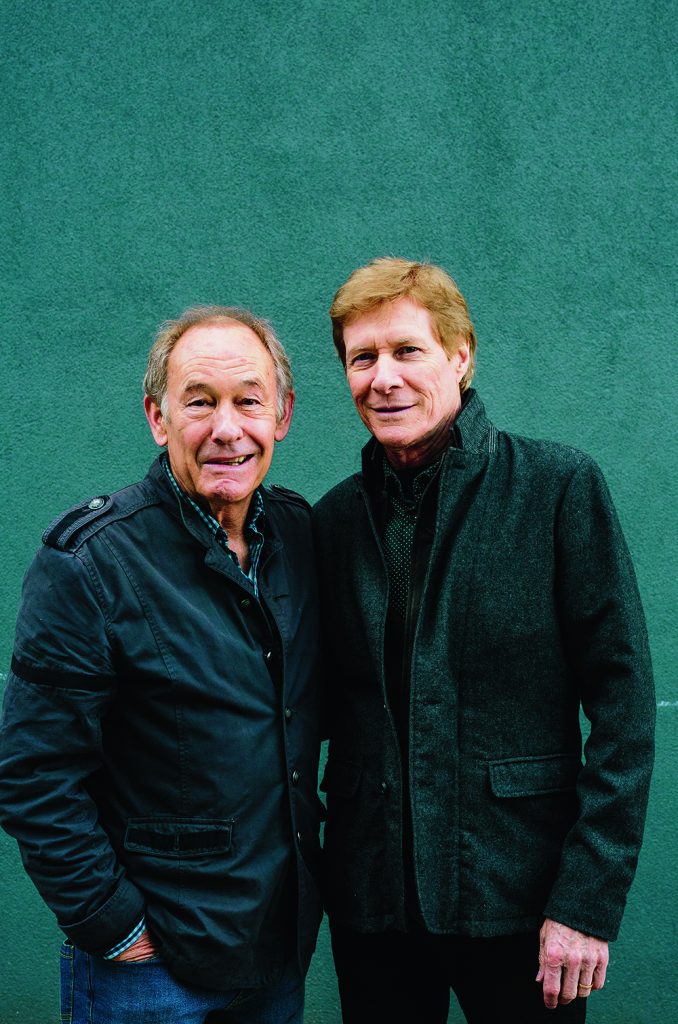
Paul Jones laughs a lot as he happily looks forward to the next few months. The singer, harmonica player, actor, radio personality and television presenter has had a stellar career – yet at the age of 79 he’s going on the road again with the band he made his name with, the Manfreds. Not only that: the group will be joined by legendary keyboard player Georgie Fame, described by Paul as his favourite. Paul reveals he tried many times to persuade Georgie that he would really enjoy touring with the Manfreds, as other guests had done including Alan Price, Colin Blunstone and Long John Baldry. Eventually Georgie agreed. “A couple of years ago we had such fun on the road. Georgie obviously enjoyed it because when we said ‘how about doing it again?’ he said, ‘yes, I’m your man.’ “Georgie is the best,†says Paul. “I suppose he’s exactly in the place that I consider to be the right place musically – with a strong helping of jazz, an equally strong helping of blues and rhythm and blues, and basically an ability to enjoy audiences and relate to them.†Many music fans consider Paul Jones to be their favourite. He was the vocalist on three number one singles by Manfred Mann, as they were originally known: Do Wah Diddy Diddy, Pretty Flamingo and Mighty Quinn. He left to go solo and had a successful career in musical theatre before becoming a presenter on BBC Radio 2, hosting The Blues Show for 32 years. Preparing for the new tour, he tells me why he loves playing Buxton Opera House, why so many of today’s stars want to work with him and how he turned down the chance to become the Rolling Stones’ singer. Paul Jones was born Paul Pond in Portsmouth, Hampshire on 24 February 1942. When he was 20 he joined Manfred Mann and three others in a group that took the keyboard player’s name. They shared a love of jazz and blues but the success of Do Wah Diddy Diddy meant they turned into a pop band – which was not a direction Paul wanted to pursue. So he left. “As an adult I’ve always been interested in what’s sometimes called music of black origin. That means blues, rhythm and blues, soul, jazz. When we started with the Manfreds that’s exactly what we did. “Gradually, as time went by, we started to do other things. I suppose it was the preponderance of Bob Dylan songs (that made him want to leave). Not that I’ve got anything against Bob Dylan but it just wasn’t what I wanted to do.†As a solo artist Paul had hits with High Time which reached number four in the charts and I’ve Been A Bad, Bad Boy which peaked one place lower. After that he turned to acting, appearing on television in The Sweeney and The Protectors. On stage he took roles in Andrew Lloyd Webber’s Cats and played Petruchio in the Royal Shakespeare Company production of Kiss Me Kate. “The acting was very important to me when I first started to do it. I studied hard and I did take it very seriously. But because I’d been a singer, people tended to cast me in musicals. “I found I was doing music but it wasn’t quite the music that I wanted to do. That’s why I started The Blues Band.†Paul has released seven solo albums over the years although only two are still available, Starting All Over Again which was released in 2009 and features Eric Clapton and Percy Sledge; and Suddenly I Like It from 2012, with Jools Holland on keyboards for three of the tracks and one of the world’s greatest guitar players Joe Bonamassa playing on another number. Paul has met so many musicians over the years that it seems they will help out on his albums without a second thought. But, according to Paul, “not everybody gets asked!†He has come a long way since turning down an offer from the late Brian Jones to become the Stones’ vocalist. Does he have any regrets about that? “No, not really. When I say not really, it hides a reservation. Musically I have no regrets at all. In every way I’ve had a career I wanted and I’m still having it, whereas if I’d joined the Rolling Stones I don’t know what it would have been. It only became the Rolling Stones when Mick (Jagger) and Keith (Richards) were involved as well as Brian. “The only thing I would say is that if I had got into that band Brian might not have developed some of the bad habits that he did and he might still be with us. But that’s pure speculation.†The Manfreds got back together in 1991 and the new tour will almost be like a who’s who of 1960s music. As well as Paul and Georgie Fame, the band features Mike D’Abo who replaced Paul; drummer Rob Townsend who used to be with rockers Family; Simon Currie and Marcus Cliffe who have worked with Mark Knopfler, Eric Clapton and Rod Stewart; and Manfred Mann founder members Mike Hugg and Tom McGuinness. Tom will also be presenting McGuinness Flint hits including When I’m Dead And Gone as everyone gets their turn in the spotlight. “It’s all quite a melting pot, but he won’t be doing any Blue Mink hits!†jokes Paul. “Everybody gets a moment or several moments to shine.†But will some fans be disappointed because the Manfreds will have to leave out some of their hits because there simply won’t be time for all of them? “There’s always a risk when you go and hear a band that’s had a lot of hits that you’re going to miss one you wanted. But, hey, you get all the others.†Paul is looking forward to returning to Buxton where he has played several times before: “I’m very familiar with the Opera House and love it to
Places Pevsner Missed: Milton

It is exactly seventy years since the late Sir Nikolaus Pevsner’s Buildings of England county guides were first published by Penguin, six years after Sir Nikolaus began work on the research. These invaluable pocket books have been helping us to appreciate what we look at whilst travelling round England ever since. In Derbyshire, we were subject of a guide first published in paperback in 1953 and revised by Elizabeth Williamson (with some help from the author and a great deal from the late Edward Saunders and other local experts) in 1978 as a hardback version. In 2016 came the third edition, undertaken with local input by Claire Hartwell, much enlarged in scope and in format, too. These days, instead of a side pocket, one needs a poacher’s pocket to lodge one about one’s person! Sir Nikolaus is said to have written them by being driven around by one of his Birkbeck students in a Land Rover whilst standing up behind the cab with another student beside him, jotting down his musings and the guides cover most of the important sites, settlements and buildings in each historic county. However, a fair number of lesser settlements were omitted (probably through sheer lack of space) and not restored in later revisions. This is also true for Derbyshire, and indeed, some of the omissions are quite significant, although they might well have appeared less so in the 1940s and ’50s. I recently analysed the contents of the Derbyshire edition, following which Carole and I decided to visit each of the omitted places and record what we saw in terms of buildings for posterity, starting, we decided, with Milton. Milton is a linear village running either side of the road which hereabouts runs south from Repton towards Foremark reservoir and Ticknall. It is one of Derbyshire’s best estate villages and a complete delight visually, greatly worthy of a visit. Pevsner’s accounts of settlements invariably begin with a description of the church, usually followed by the most important buildings, but as Milton lacks a church, we thought to forego this formula. Thus, if one enters the village from Repton, the road turns right (southwards) and a fork continues east to Foremark. The junction is marked by the sight of a good white stuccoed classical villa behind a wall, built very much in the post-Regency tradition. This was erected on the site of a stone-built farm house between 1878 and 1891 (and probably much nearer the latter) for John Edward Harpur Crewe, formerly of Repton Park. Historically, Milton was divided between the Harpurs of Calke and the Burdetts of Foremark but, in 1821, a rationalisation led to the lot passing into the hands of Sir Francis Burdett 5th Bt., in exchange for land elsewhere. Ironically therefore, J E Harpur Crewe was forced to re-acquire the land for his new house from the Burdetts. He called it The Grange, but after his death, it was let to a Mrs. Garton before passing again to the Burdetts, who installed their upper-crust Welsh agent, Llewellyn Caradoc Picton JP and re-named it Bramcote Lodge, after the family’s original estate in Warwickshire. Having turned into Main Street, one finds either side lined with delightful brick estate cottages, almost all built or rebuilt by the Burdetts after 1821. The village would appear to have been historically largely stone built with cottages on crofts end-on to the road and many original stone courses have been retained or re-used. The rebuilding was done in brick and deploys various conceits, like blind arcading (even in small cottages) to splendid effect. The only reservation is that far too many have had uPVC and lumpy hardwood windows installed, wrecking their appearance. This must have been allowed by the local authority sadly. Amidst all this, a number of buildings stand out. The most obvious is brick and stucco Kirby Holt, on the west side some way along, built in the 1820s as a well-proportioned but modest sized Regency villa of two storeys, bays and with a Doric portico. It was built for corn miller Thomas Somers (‘Gent. and freeholder’ according to the directory – and of a notable Repton family) in the 1820s, probably to the designs of James Smith (1782-1862) of Repton, a builder/architect capable of some excellent work, like Repton Hayes and Laurel Hill there. One suspects that the Burdetts engaged him to aid their estate foreman in rebuilding much of the rest of the village, too. Whilst Kirby Holt and its pretty Regency cottage to its left (sold to the Foremark estate in 1869 and later the home of their equally upper-crust farm bailiff, Richard Hesketh) is striking visually, the most sophisticated building in the hamlet architecturally, which Pevsner would have loved, was The Farm, slightly further north of the same side as Main Street. It is of 1820s date, in brick, of two storeys and gabled attic, three bays wide, lit by extraordinarily wide sash windows in the outer bays, of five panes over four under gauged brick lintels. The whole is slightly set back from the road’s edge and flanked by a pair of two storey pavilions with similar fenestration, really of Palladian inspiration, with hipped roofs, with a fine plain iron railing on a stone plinth running between them: why it’s not listed I cannot imagine. If this is Smith’s work, he goes up in my imagination no end. Kirby Holt is listed, as is Common Farm, to its south, a pattern book three bay, two and a half storey farmhouse but again, with the same extraordinarily wide five-over-four sashed which embellish The Farm thus assuring us of a late Regency date. The local authority’s Conservation Area Appraisal claims this as dating from 1766 on the strength of an inscribed brick bearing farmer John Brown’s initials, but this survivor must have been retained in what must have been a thorough rebuild, done after 1821. Opposite, should you be feeling in need of refreshment after viewing these delights, stands the Swan inn,
Beamish – The Living Museum of the North

Maybe Durham folk have collecting genes in their make-up, but it led three individuals to create two unique museums, one in the Victorian era and the other more recently around fifty years ago.  John and Joséphine Bowes used their wealth for the public good, while at the same time indulging their passion by creating a French château to hold their priceless art collection. A few miles to the east of Bowes, Frank Atkinson, a museum curator by profession realising that traditional industries such as coal mining, ship building and other traditions were fast disappearing, set about collecting relics from the recent past. His policy of ‘unselective collecting’ as he called it, needed somewhere to display everything. This he found in the fields surrounding traditionally run farms on the Pockerley Old Hall estate near Beamish. His idea soon gained public interest and with help coming from many sources; everything from family heirlooms to volunteer labour willingly arrived along with a wide range of financial grants. Working within Covid-19 rules, we travelled north on a Slacks coach for their three-day excursion to Durham; this feature is about the day we spent at Beamish Open Air Museum. The twin legs of a huge drop hammer known as ‘Tiny Tim’, made a fitting entrance to the museum, and soon we were clambering on one of the vintage buses alternating with rattling old trams along the perimeter road around wild flower hayfields where two magnificent shire horses were dragging a dusty chain harrow. All the fully restored exhibits are laid out within their particular era. Ranging from the 1820s landscape around Pockerley Old Hall, there is a ‘Doctor Who’ kind of time travel through a pit village as it would have looked in the 1900s, to two farms each showing how agriculture changed rapidly between 1940 and the 1950s. We began our tour in the ‘Town’, a collection of restored houses and businesses that flourished around the time of Queen Victoria’s last years on the throne. A typical Co-op emporium fills half of the south side of Town Street prior to the small public park with its traditional band stand. The store was moved lock, stock and barrel, from its position in the mining village of Anfield Plain near Consett. All the departments were fully stocked, ranging from grocery to drapery where I shuddered at the thought of struggling to wear one of the stiff collars on sale. All the basic foods like flour, butter and sugar were sold from bulk and had to be carefully weighed and packed – no plastic pre-wrapped shopping for the Edwardian housewife. What did catch my eye and brought back childhood memories, was the contraption that fed cash held in a screwed container, and when after a sharp tug on a chain, ran all the way round the departmental ceiling to a hidden den. Here the account’s clerk would unload the container, check the bill, make a note appropriate to the customer in a ledger and send the container back to the counter where the customer was waiting. One of the advantages she would have had was the annual dividend or ‘divi’, from her purchases. According to the poster, this became an important part of the lady’s housekeeping, especially when the divi was, according to the poster, forty (old) pennies in the pound! No question of fitting manufacturer’s parts in the garage next door to the Co-op, the mechanics would make whatever was needed. Petrol didn’t come out of a pipe, but from two gallon cans carefully packed in a wooden case. If you wanted to buy a new car, there was a rare 1906 Armstrong Whitworth on sale, or locally made SHEW (Seaham Harbour Engine Works), one of scores of back street car makers up and down Britain at the time. Incidentally the garage once featured in an edition of the TV drama Downton Abbey. Fortunately with modern surgery, a truss is something few if any of us need, but in the early part of the twentieth century they must have been quite common. That is if the advert in the chemist’s shop is anything to go by. Fitting such implements appears to have been a husband and wife team affair – wife to look after ladies and husband for the men. All this is on offer at W. Smith’s chemist shop where prescriptions were made to order, no doubt working closely with John R. Edis the local photographer who had a small shop-cum-studio next door. But if it was bread or pastries you wanted then the warm aroma of freshly baked bread directed you to Joseph Heron’s Bakery at the end of the row. The bakery currently marks the end of the south side of Town Street, but fairly soon now there will be a new development when a row of 1950s houses will bring the Town closer to date. A substantial looking building stands across the road, a place where many of the local businessmen would meet. When the Masonic hall in Sunderland’s Park Terrace closed, rather than destroy the building, it was rebuilt on Beamish Town Street. Nowadays visitors can wander and explore the mysteries of what outsiders often look on as a secret society. Much of the society’s regalia is on show, together with such items as the voting box used to decide on admitting a new member. This was done by placing a white ball in a closed box if they decided to admit, or black if not, hence the term ‘to be blackballed’. Hopefully though, they could expect to be held in higher esteem by the bank manager residing next door. Set out rather like the bank where Private Pike laboured when not on duty in Dad’s Army, it still has its high-level desks and safe-rooms in the cellar which look as though they could withstand a bomb. Moving west along Town Street, the next set of buildings after the tram waiting room, is a sweet shop and its enticing
Celebrity Interview – Gaynor Faye

Eighteen months after last appearing on the stage of Nottingham’s Theatre Royal, Gaynor Faye is coming back to the city which she says has a “special place in my heartâ€. That’s because the 49-year-old actor who is recognisable for stints in two television soap operas began her professional career in the city in 1992. She played a secretary in John Godber’s play The Office Party at the Playhouse and says she is always drawn to Nottingham. Now she is to appear in the stage adaptation of Peter James’s best-selling crime novel Looking Good Dead which stops off in the East Midlands at the end of the month. During a break in rehearsals Gaynor revealed that working on her last television job didn’t have the usual sparkle. She also explained why she’s given up skating despite winning the first series of Dancing On Ice and what it’s like working alongside her mum – writer and director Kay Mellor. In Looking Good Dead Gaynor is Kellie Bryce, the wife of Tom Bryce, played by Adam Woodyatt – Ian Beale from EastEnders – who will be taking to a stage for the first time in 39 years. She tells me she’d worked with producer Josh Andrews on a previous show and he asked if she’d be interested in a part in Looking Good Dead. “He sent me the script and I really enjoyed it. I’d seen a couple of the other ones (adaptations of James’s books) and I thought they were fantastic. “I really wanted to work with Josh again and I wanted to get back into theatre. I’ve been really excited to get going and now we’re in it, it’s brilliant.†Looking Good Dead features Tom Bryce inadvertently becoming a witness to a vicious murder. Reporting the crime to the police has disastrous consequences, placing him and his family in grave danger. “I’ve never worked with Adam before,†says Gaynor. “He’s very funny. He’s down to earth and lovely to work with. “What I’m really excited about is the fact that people have got a thirst for wanting to go to see live theatre. Peter James’s play is going to be just what people want. People can get lost in theatre for a while and forget about Covid.†Gaynor Kay Mellor was born on 26 August 1971 to Kay and Anthony Mellor. She started performing her mother’s plays in their garden. After her professional career started with a year-long tour of The Office Party, she was given the part of Judy Mallett in Coronation Street. “Wow! I loved that character. She changed my life around, really. It was such a fantastic time to be in Coronation Street. It was like a golden era with Sarah Lancashire, Julie Goodyear, Betty Driver – all iconic soap queens. I was so lucky: I got loads of brilliant storylines.†After returning to the stage in the original West End production of Calendar Girls – based on a true story of a group of middle-aged Yorkshire women who produced a nude calendar to raise money for charity – Gaynor did Corrie!, the play about Coronation Street. Then she took part in the first series of Dancing On Ice, winning it with her partner Dan Whiston. “I really concentrated on the skating. I learned how to skate forwards, backwards, the disciplines and the technical skills, but what the audience wanted to see was people being flung around and lifted above people’s heads. “There were quite a few accidents but luckily I came off unscathed. Dan looked after me so well. He was such a great partner and we’re still really good mates now.†Lunch with Stuart Blackburn, producer of Emmerdale, led to Gaynor playing Megan Macey in that soap for seven years. It came at the perfect time for her: she has a boy and a girl with her long-term partner Mark Pickering, so she was able to spend plenty of time with them because Emmerdale is shot near her home in Leeds. “Emmerdale was fantastic too. Absolutely wonderful. Again I was lucky with some good storylines.†Then came a dilemma for Gaynor: she wanted to return to the stage to be in the world premiere of Band of Gold, the TV show written by her mum. “It was a really tough choice,†says Gaynor. “I knew I wanted to do Band of Gold, so I left Emmerdale. But the door’s open and that’s wonderful to know.†So is working with her mum difficult? Does she tell Gaynor what to do all the time? “Well, she’s my mum. Of course she does. Put it this way: she doesn’t hold back because I’m her daughter. It’s the opposite. She doesn’t let me off the hook but we have a short cut – it’s a telepathy kind of thing with family.†In Band of Gold Gaynor played Rose, the character portrayed so memorably on television by Geraldine James. Gaynor’s mum had faith in her that she could fill Geraldine James’s shoes. “I had to make sure I filled them as well as I could. I was first out on the stage with a monologue and addressing the audience, so the pressure was on. “Obviously you always want a project to be a success. But I wanted it to work on so many different levels. You can’t help but take on everything when it’s family.†The last show Gaynor appeared in on television was The Syndicate, the fourth series of the BBC One drama written by her mum about a group of people who win the lottery. Gaynor played Cheryl Armitage, the fiancée of a convenience store owner, played by Neil Morrissey, who steals the winning £27 million ticket and disappears to Monaco. The series was shot in the middle of the pandemic. “As much as it was wonderful to be working as an actor within that time, it was hard and a little bit of the sparkle wasn’t there because we had to adhere to Covid rules which were very